

Field note 09 The Silk Road
Most riders cross this part of Russia in two days. I took five.
September 2025, on the way to Kazakhstan. Foreign cards stopped working in Russia when the war began, so I crossed North Ossetia, Chechnya and Dagestan on the cash in my pocket. I kept stopping anyway.From Rodrigo's road archive
Touch or hover a marker on the route to see what is there.
The Silk Road
Most riders cross this part of Russia in two days. I took five.
September 2025, on the way to Kazakhstan. Foreign cards stopped working in Russia when the war began, so I crossed North Ossetia, Chechnya and Dagestan on the cash in my pocket. I kept stopping anyway.
- 5 daysAcross Russia
- 80 eurosThe cash I had for it
- 30+Ethnic groups in Dagestan
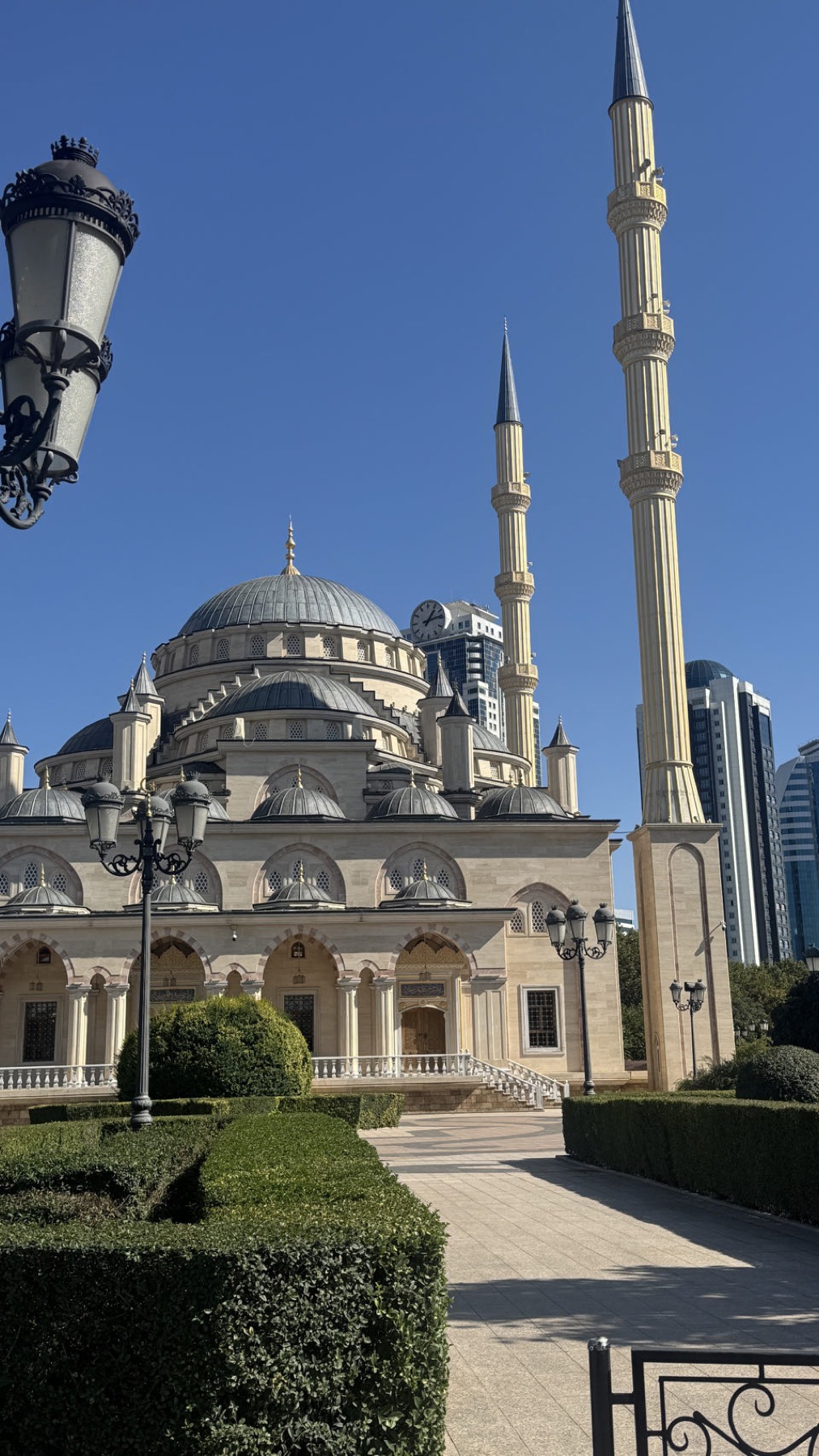
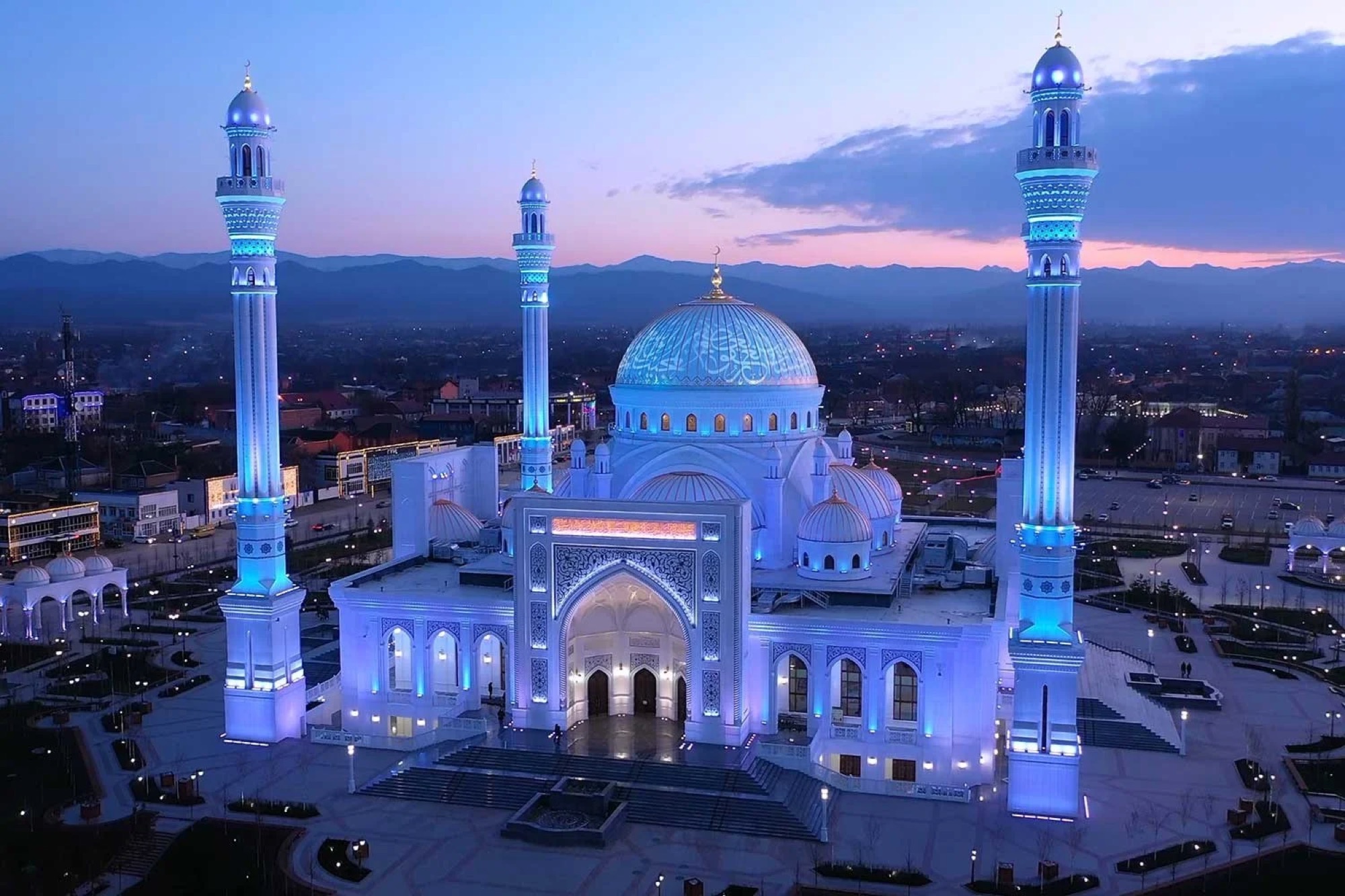
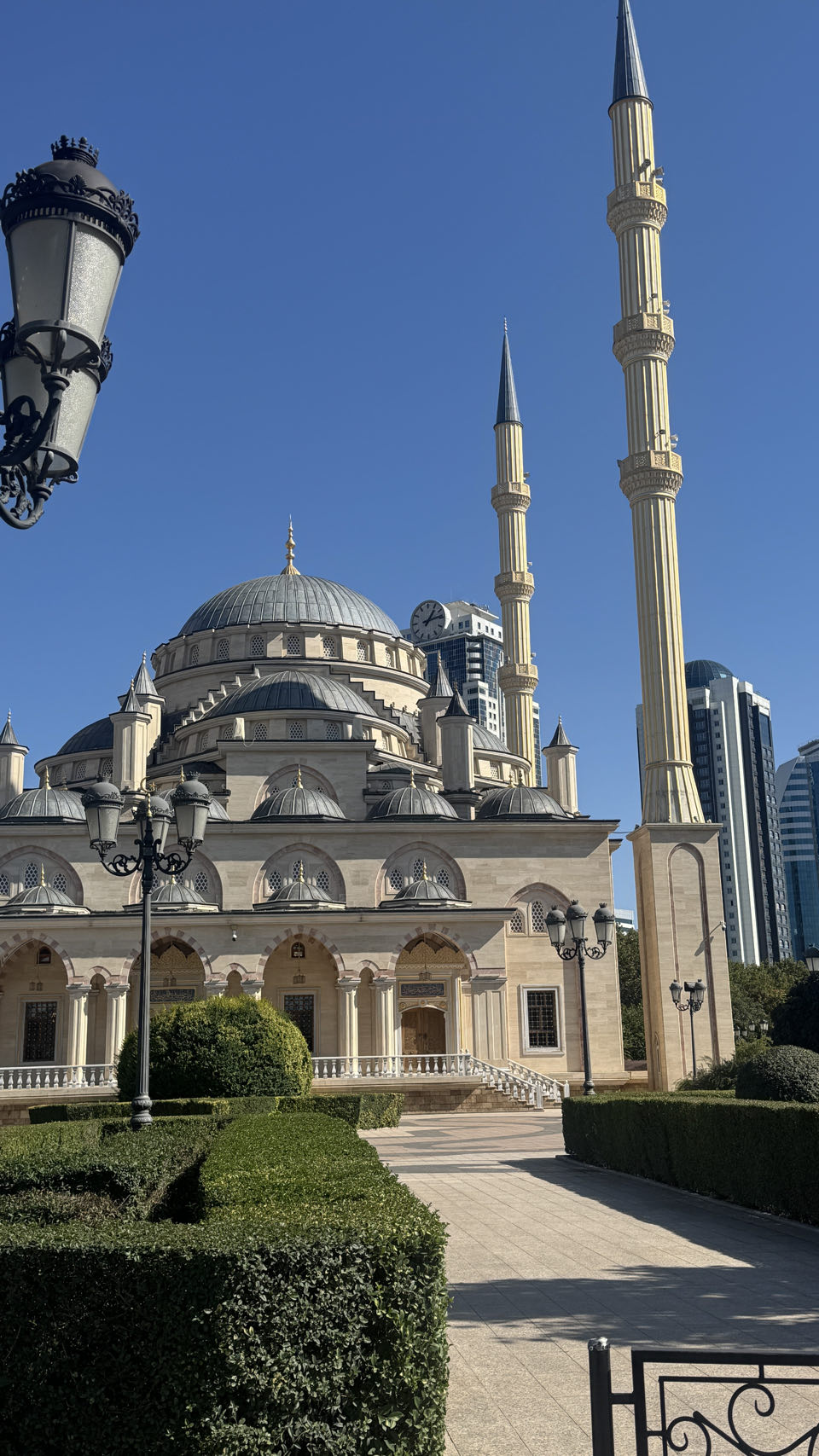
09.1The Heart of Chechnya mosque in Grozny, one of the largest in Europe. The city was levelled in the wars of the 1990s and rebuilt from nothing.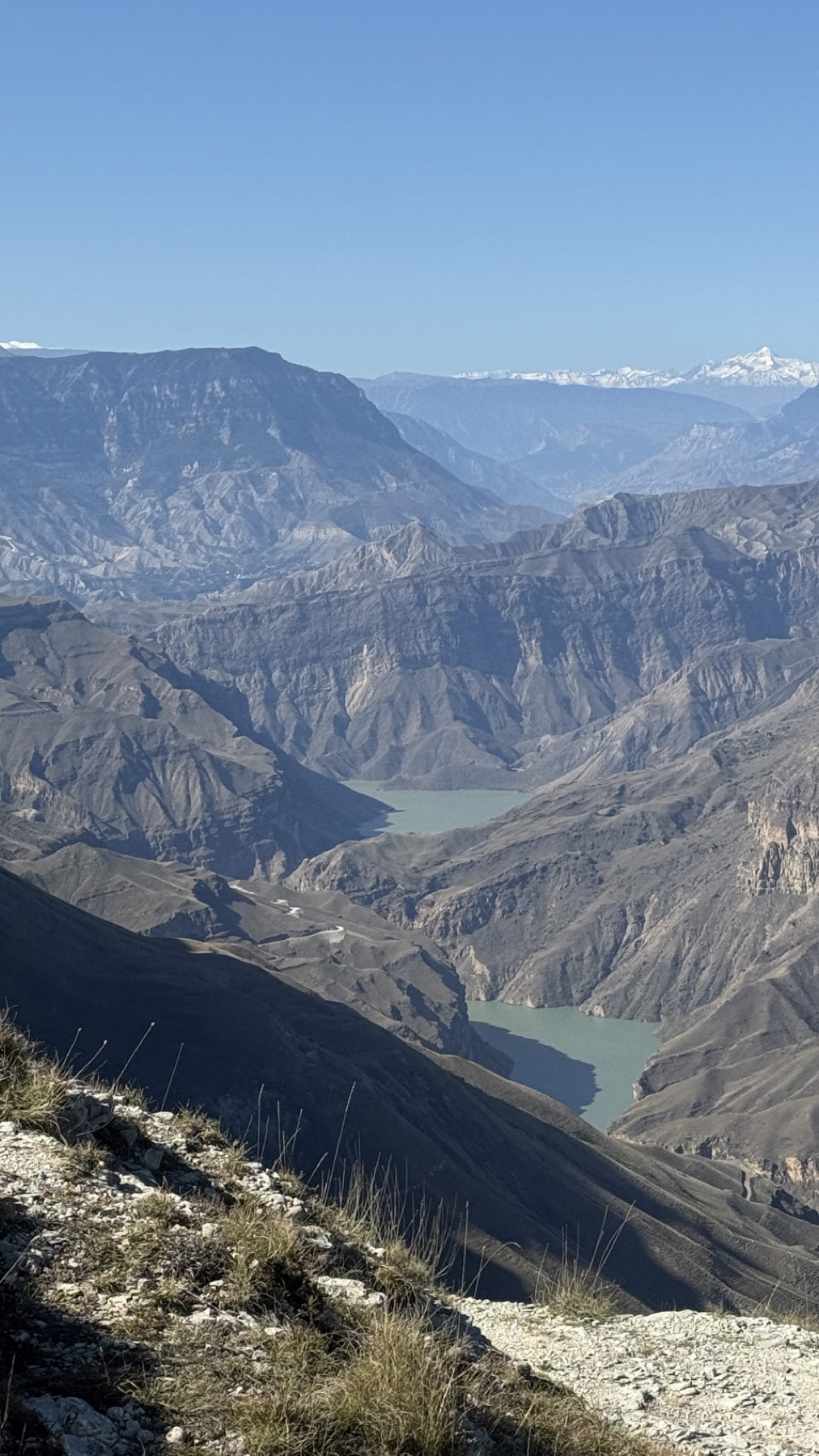 09.2The canyon runs for more than fifty kilometres through the mountains.
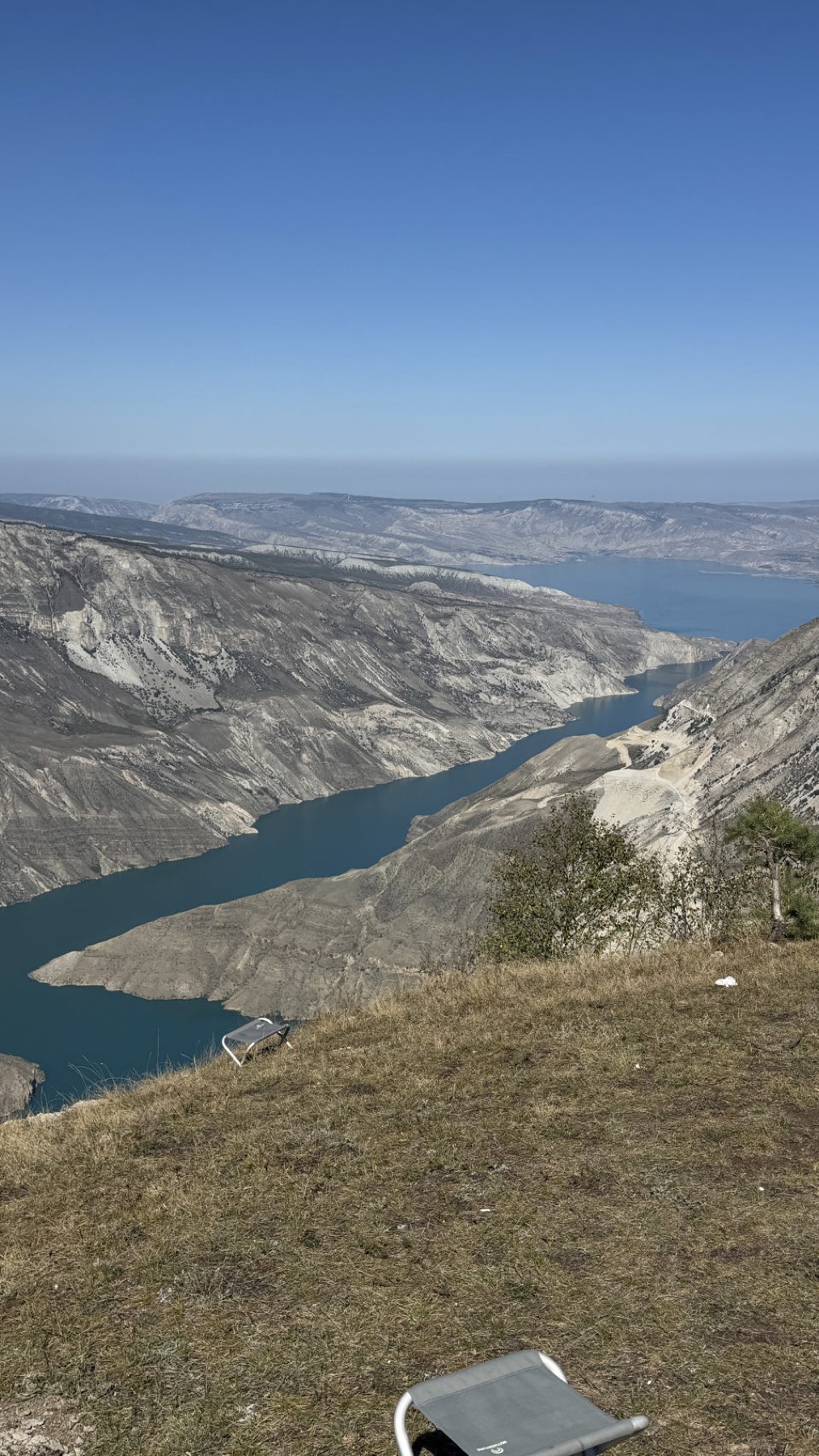 09.3The reservoir at the bottom. I rode in after dark and saw none of this until the morning.
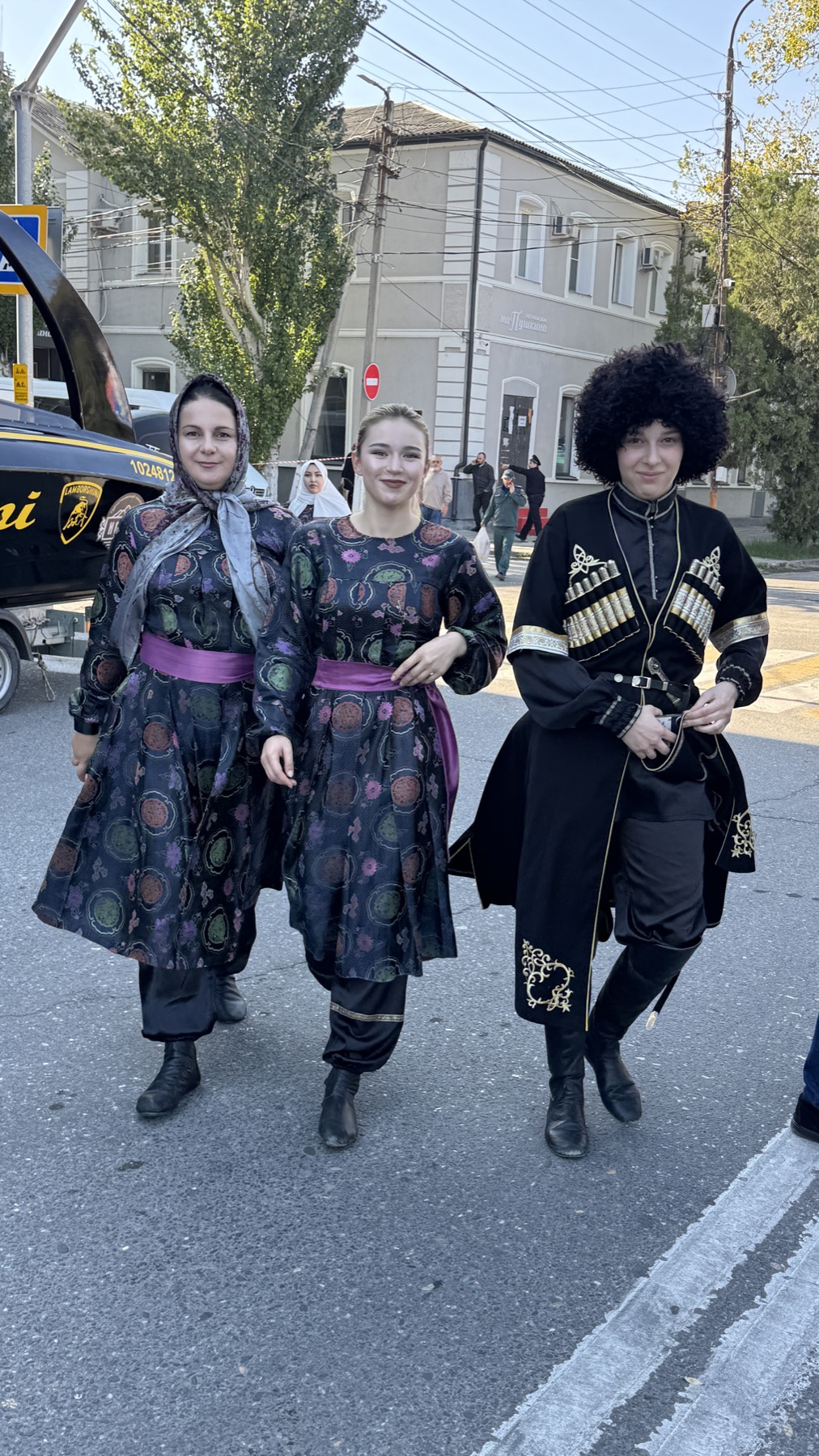
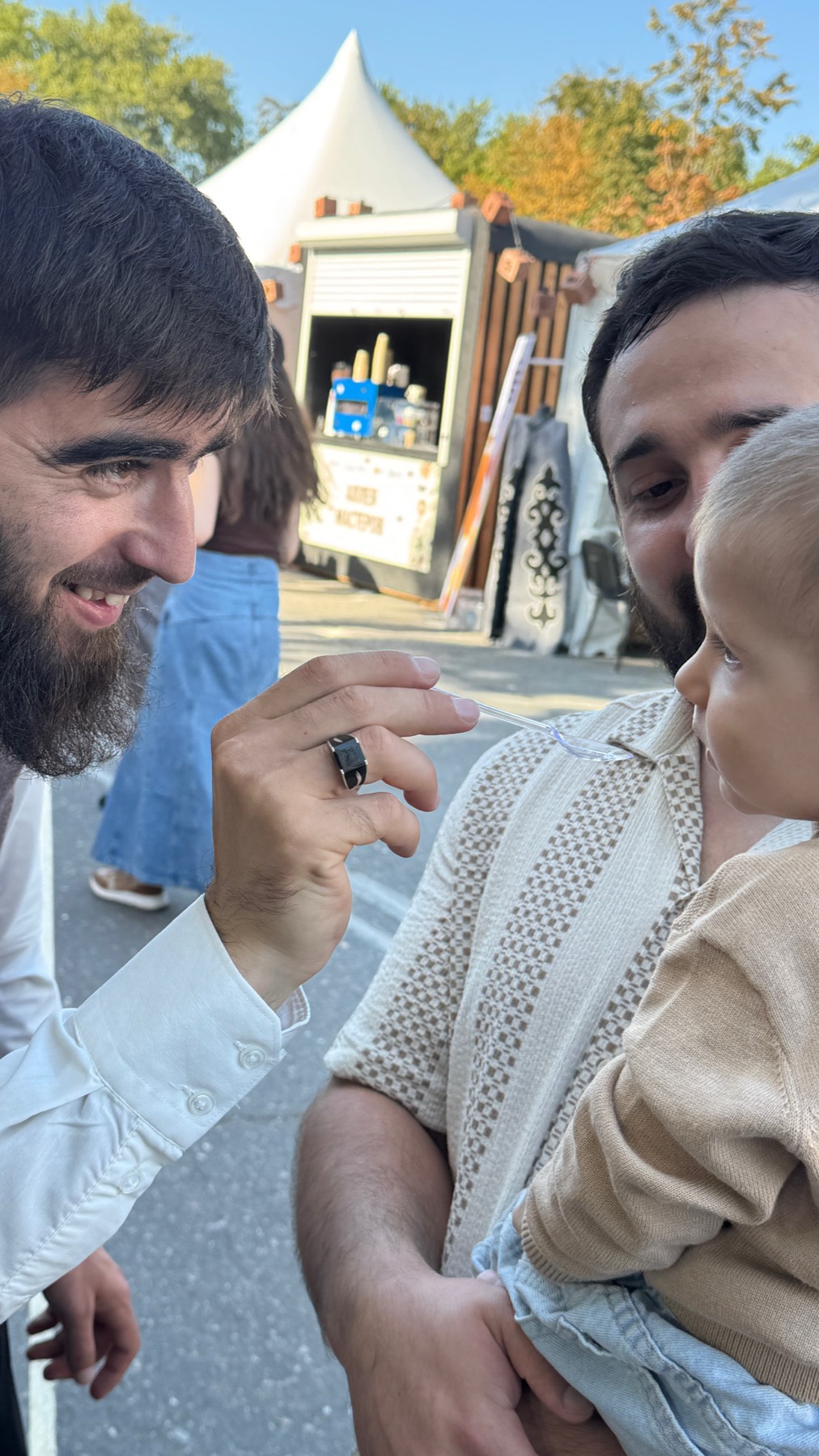
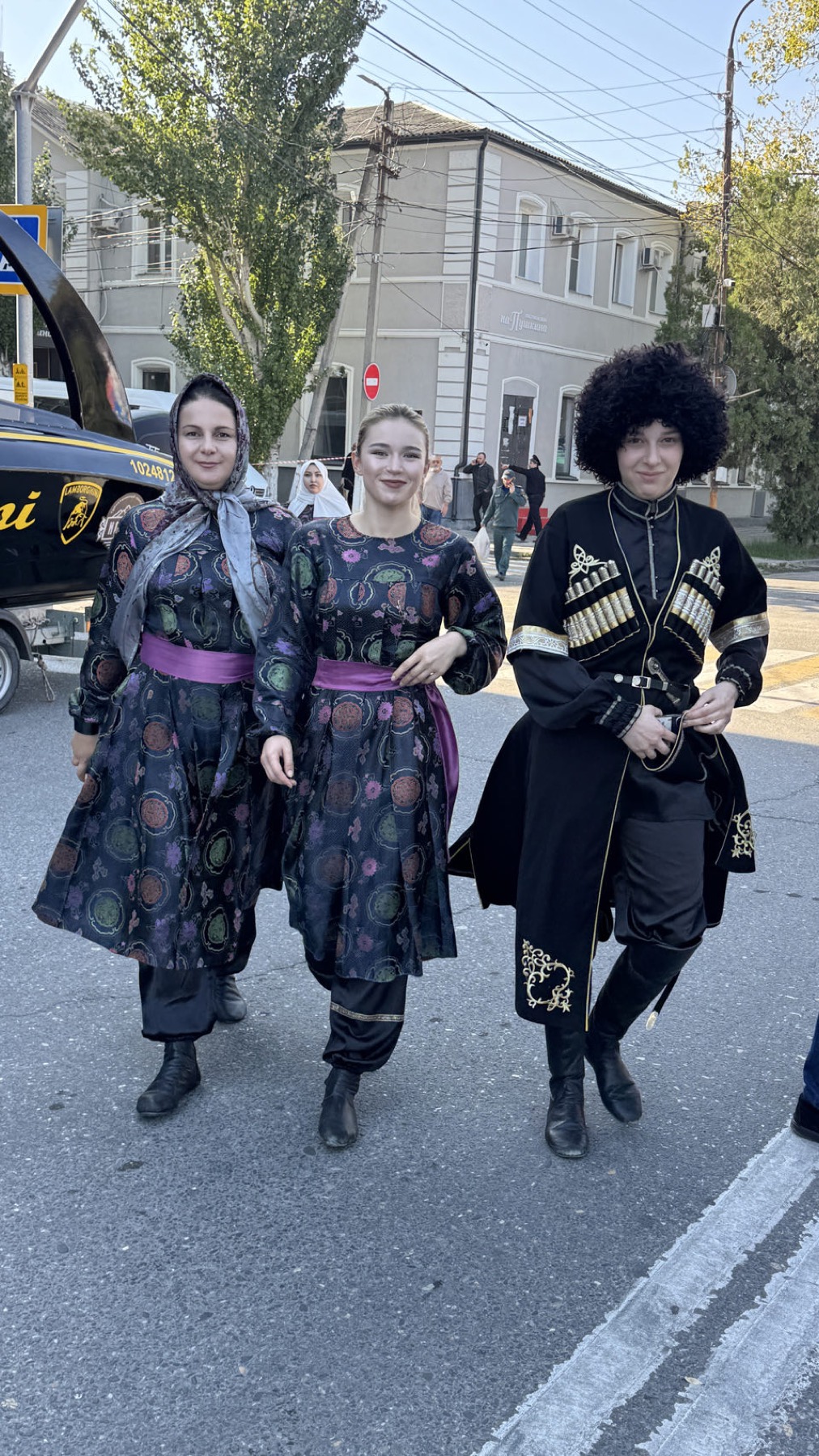 09.4On the street outside the annual cultural festival in Makhachkala, which I found by accident an hour after the police moved me off a square.
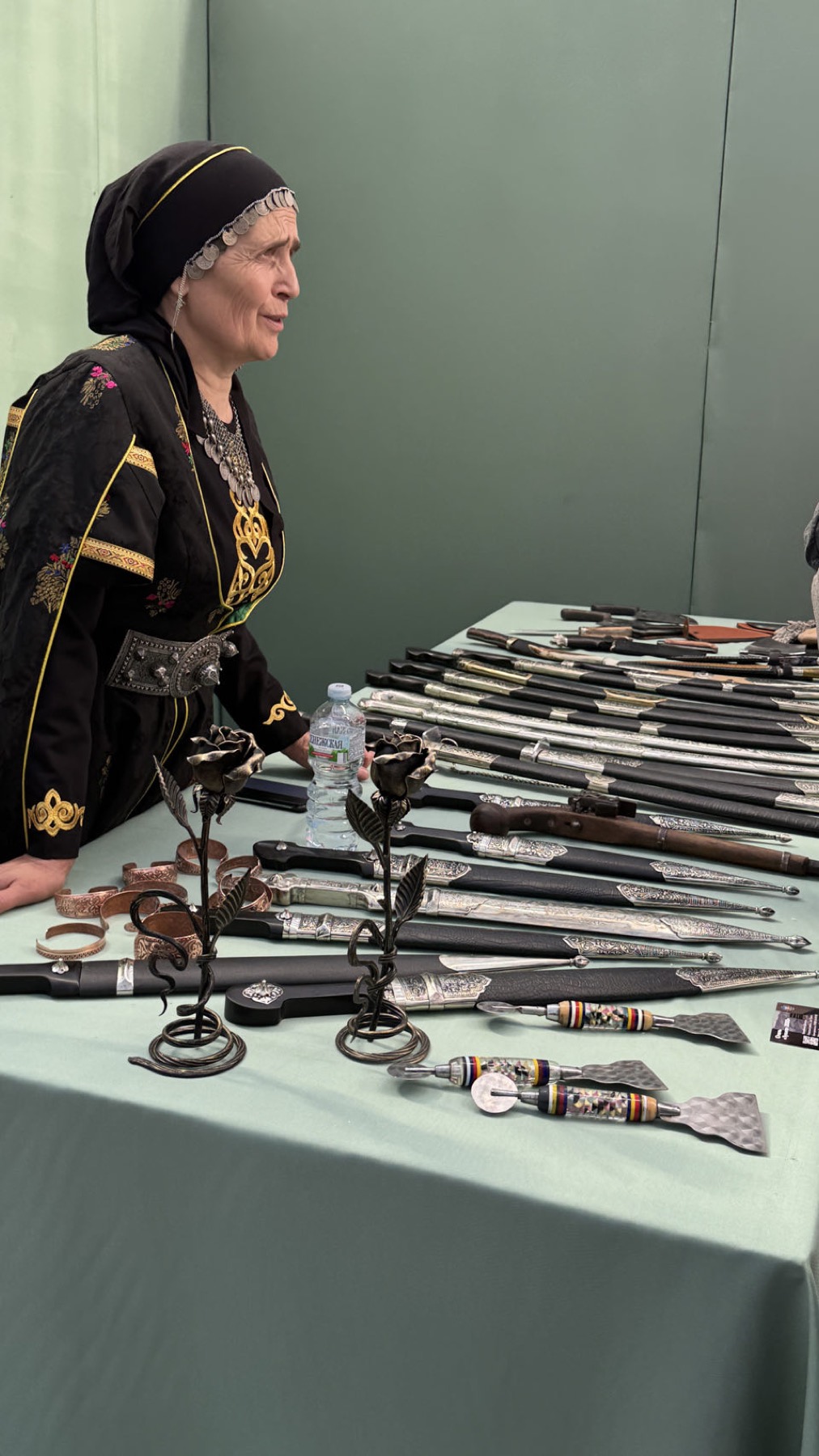
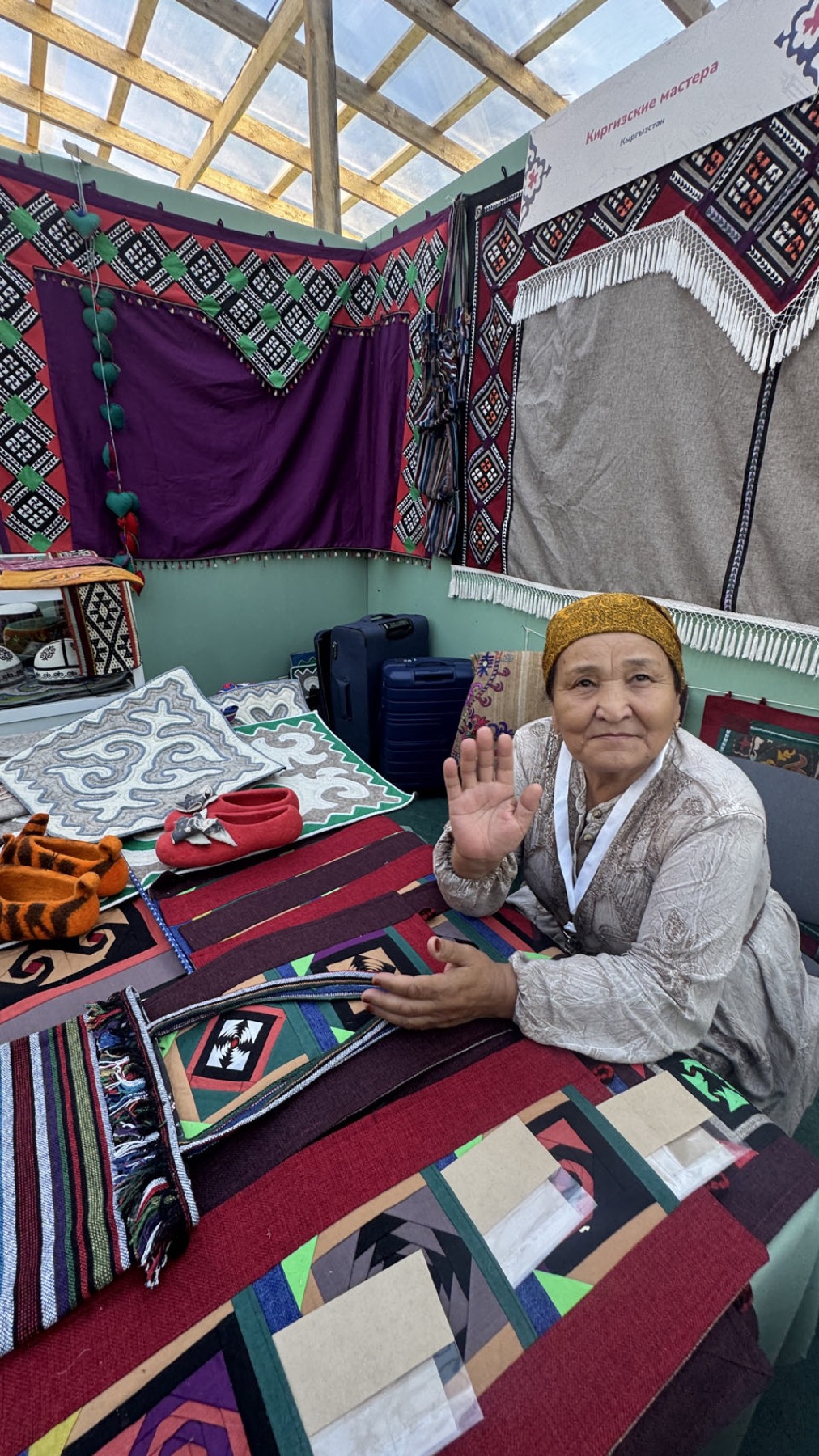
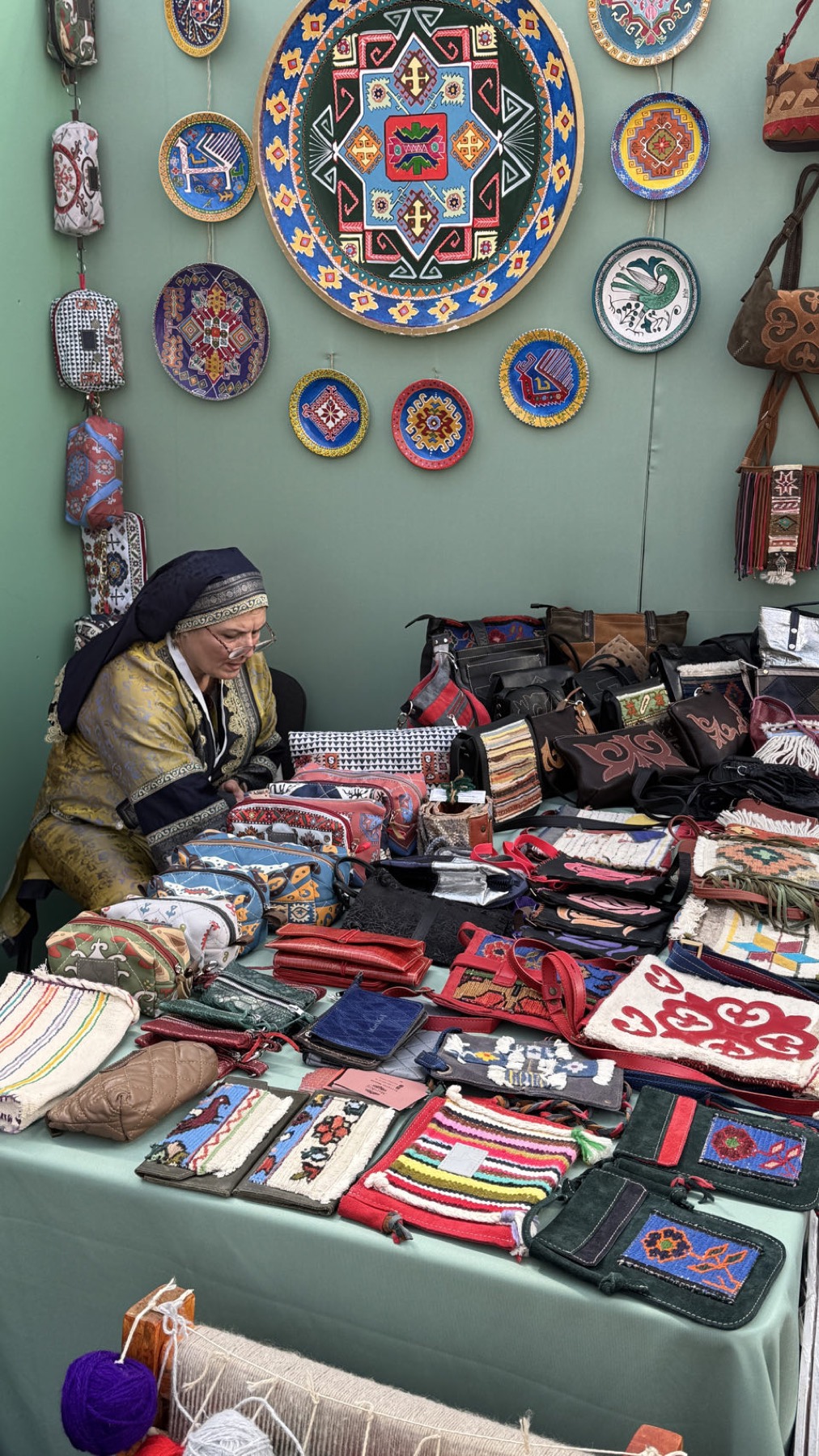 09.5Embroidery and beadwork on the next table along, the patterns different again from one valley to the next.
 09.0
09.0 09.0
09.0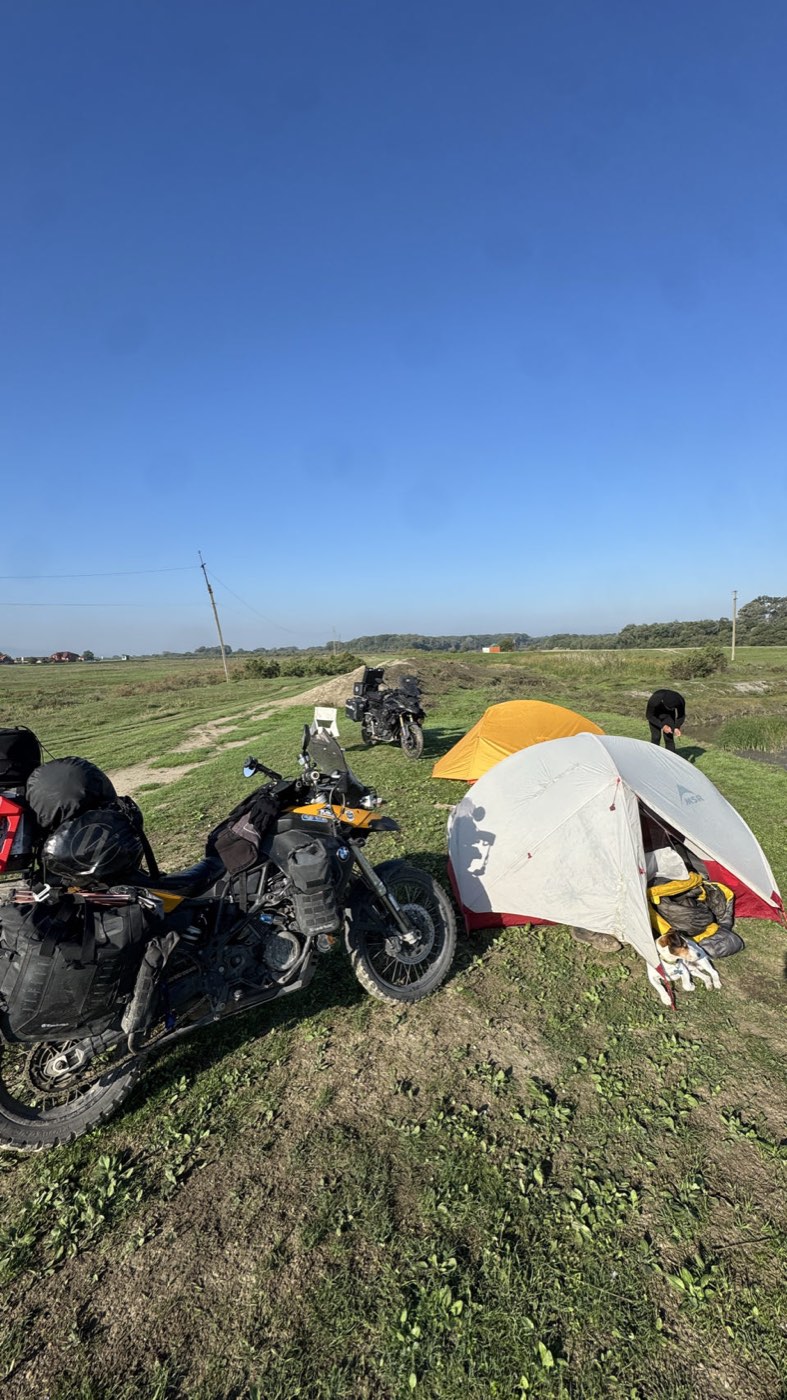 09.0
09.0September 2025, on the way to Kazakhstan. Foreign cards stopped working in Russia when the war began, so I crossed North Ossetia, Chechnya and Dagestan on the cash in my pocket. I kept stopping anyway.
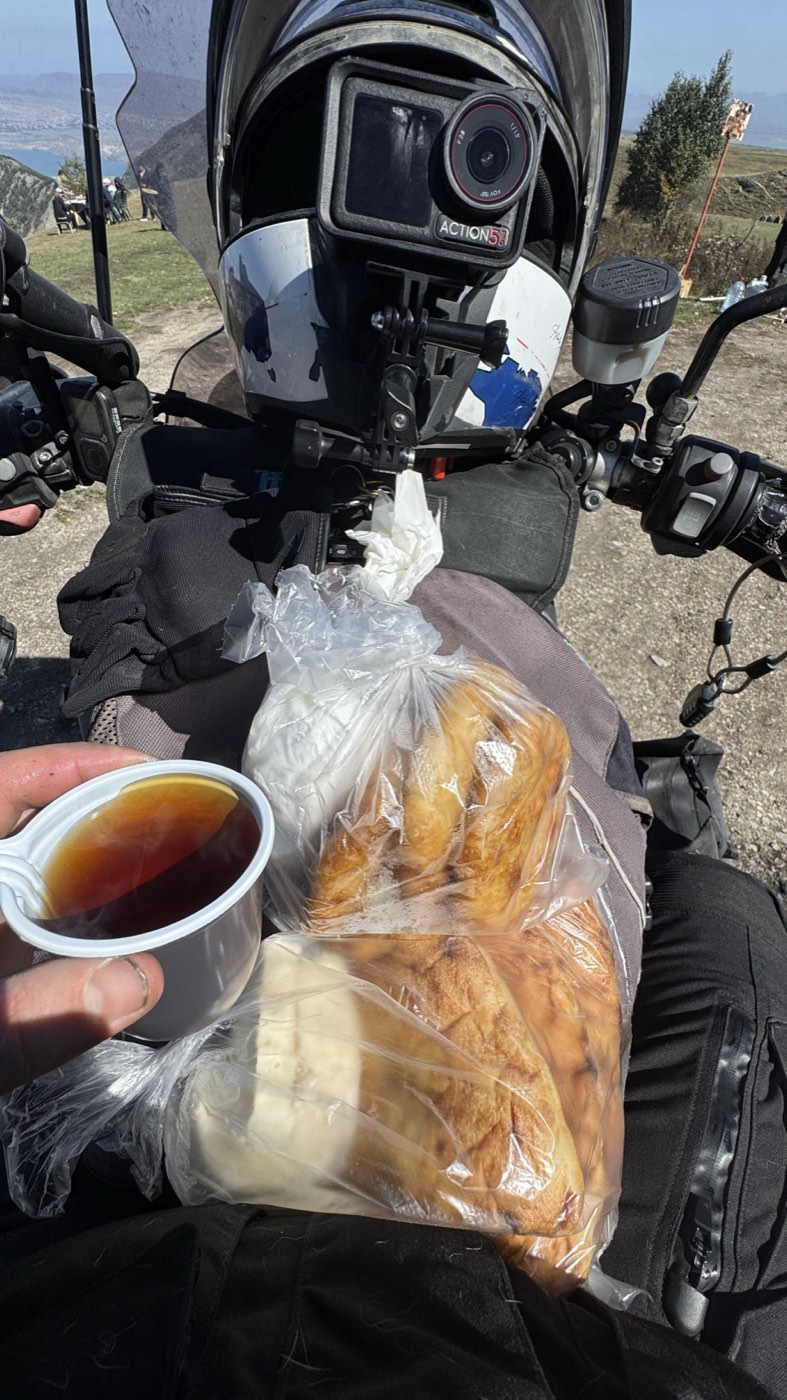
Coffee at 2,379 metres, and a loaf too big for the panniers.
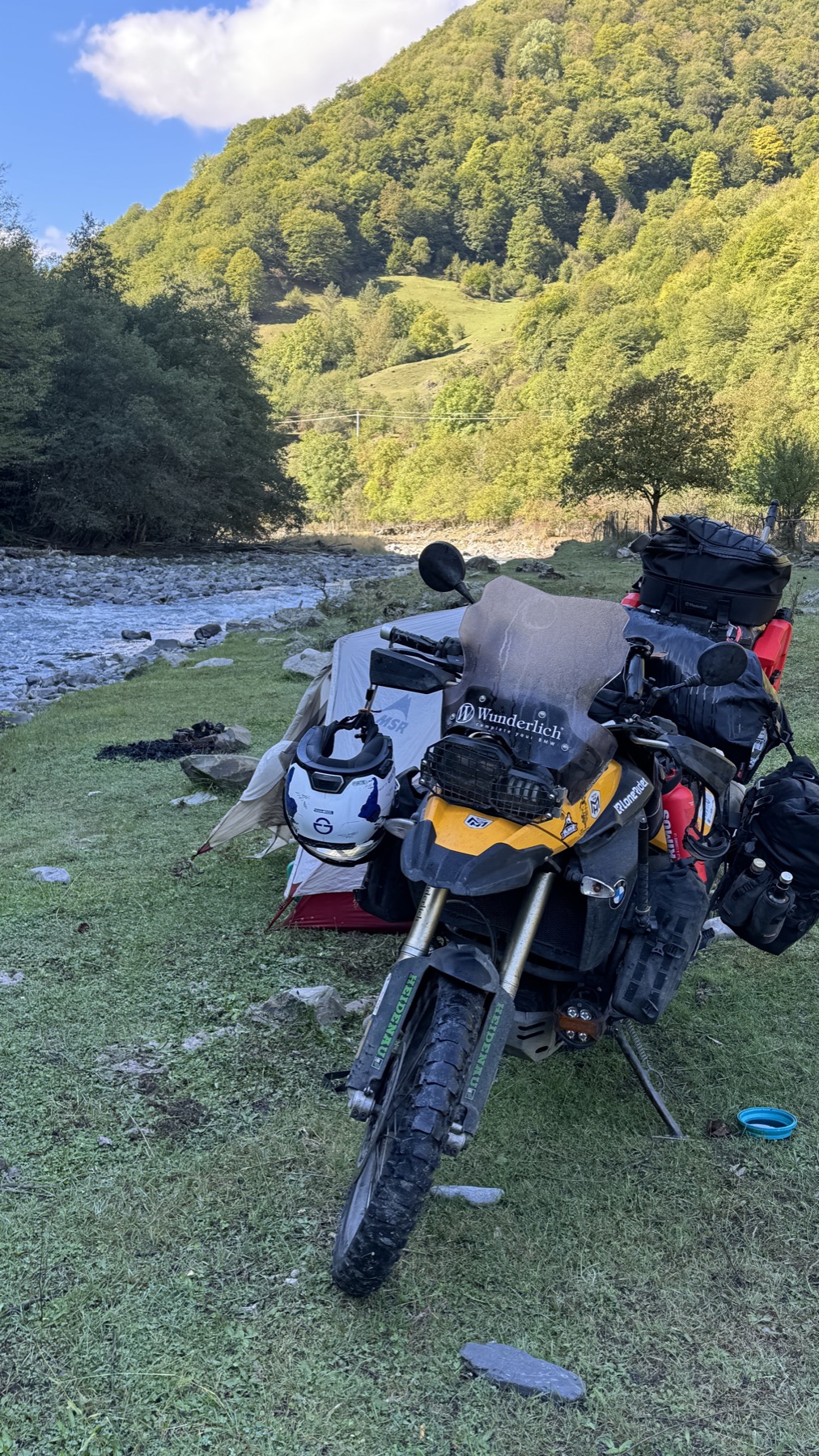
I left Tbilisi at half past five with an hour of light left and no auxiliary lights, because the workshop had killed them that morning, and got ninety kilometres. Past Pasanauri, in the dark, I stopped at a stall for a hot coffee and a plate of khinkali with the coins I had left, and used the last of the internet to find a camp on iOverlander. A dirt track dropped off the road into a valley with a river running through it and rock walls standing over it. I pitched beside the water. In the morning there were cows a metre from the tent, and Jacko went after them.
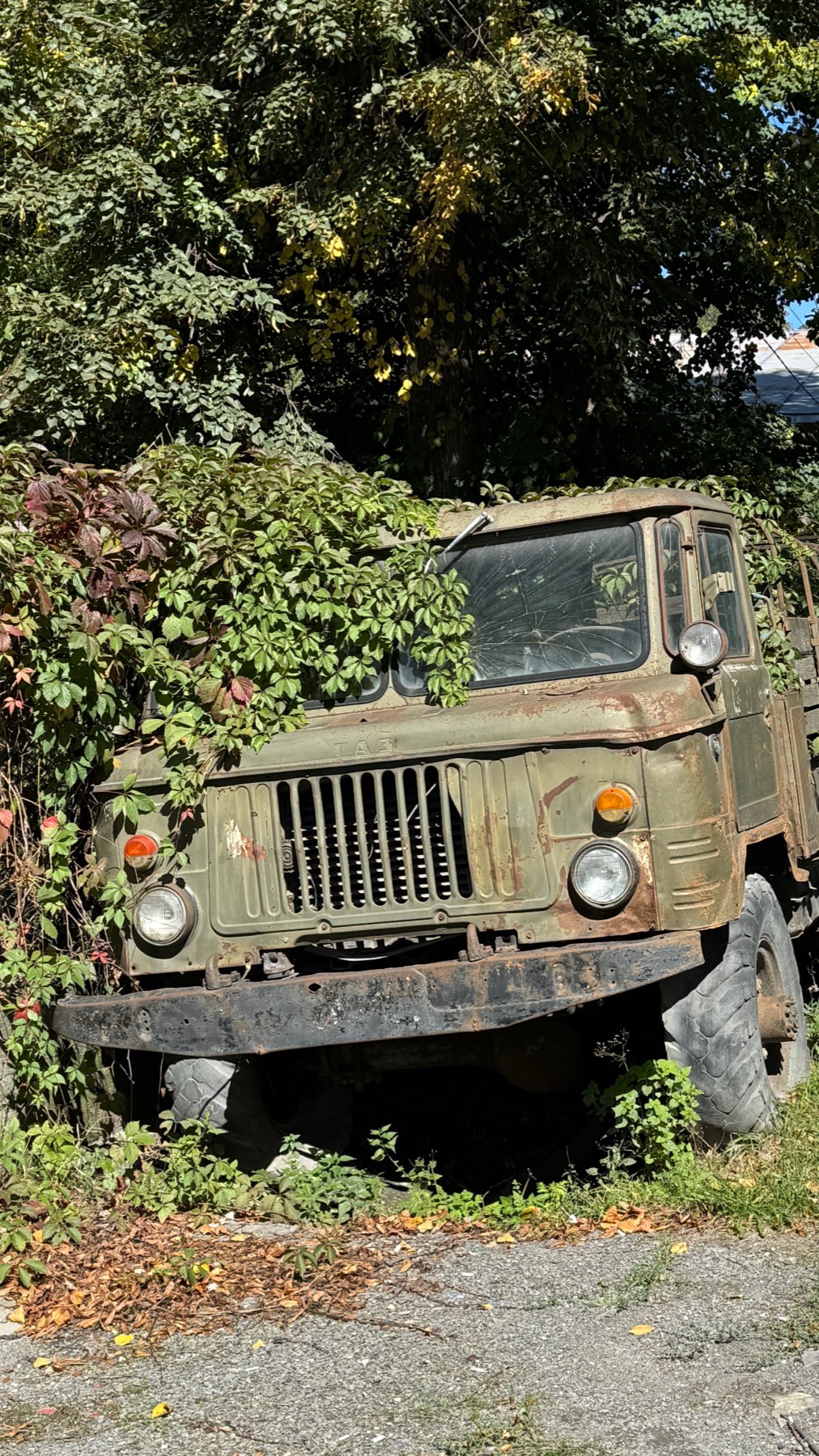
The way into Russia from Georgia is the Georgian Military Highway, a road the Russian Empire widened and paved in the nineteenth century to move troops over the mountains. Soviet tanks and army trucks still sit in the verge with ivy growing over them, parked long enough ago that nobody bothers to move them.
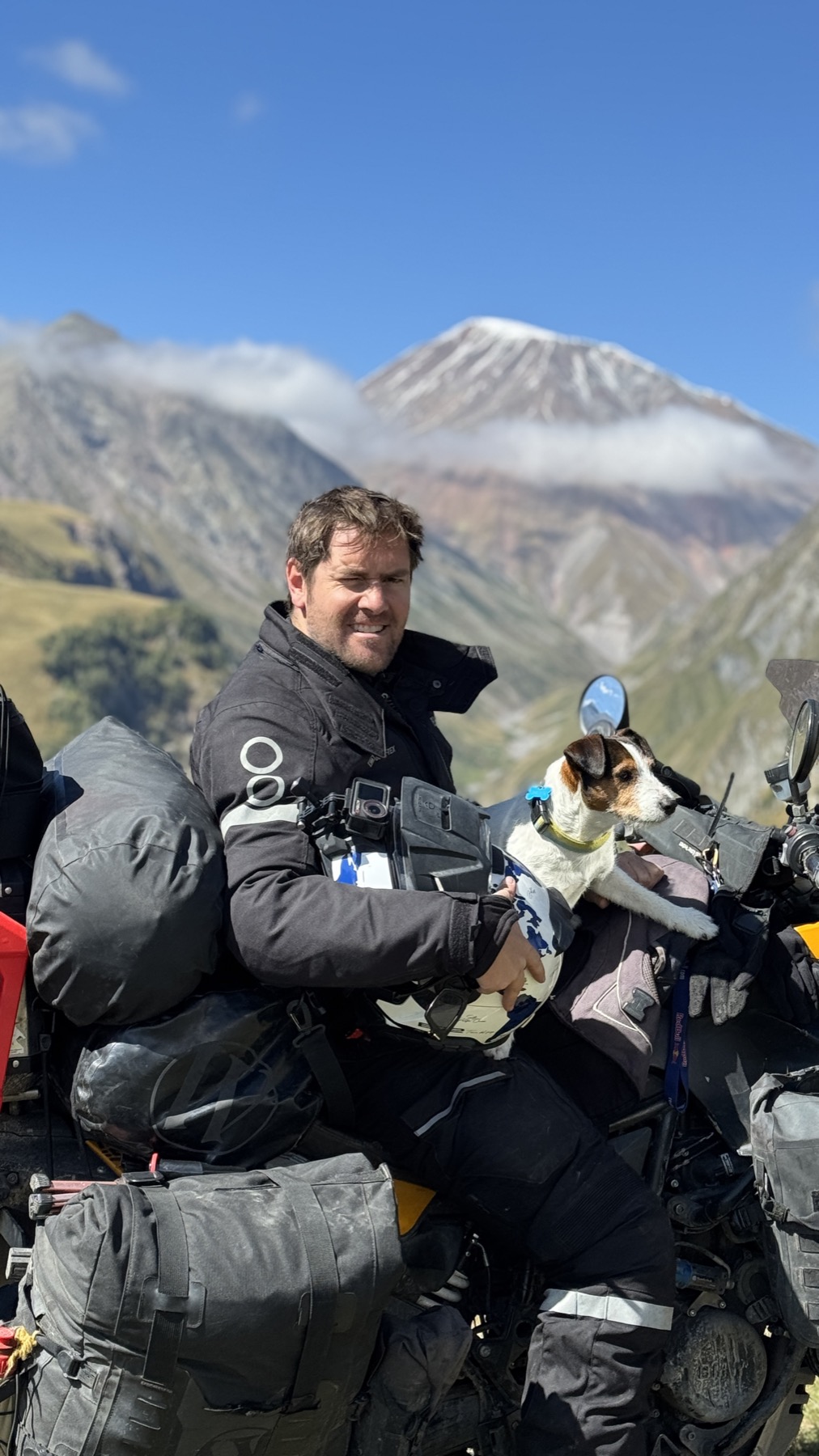
At the Jvari pass, 2,379 metres up, a couple who had pulled over ahead of me were boiling Turkish coffee in a small pot on the side of the road. They waved me across without a word of shared language, and I understood enough to work out they were from Dagestan, the region I was riding towards. Before I left, the woman handed me a loaf of bread so large I had to fold it to get it into a pannier.
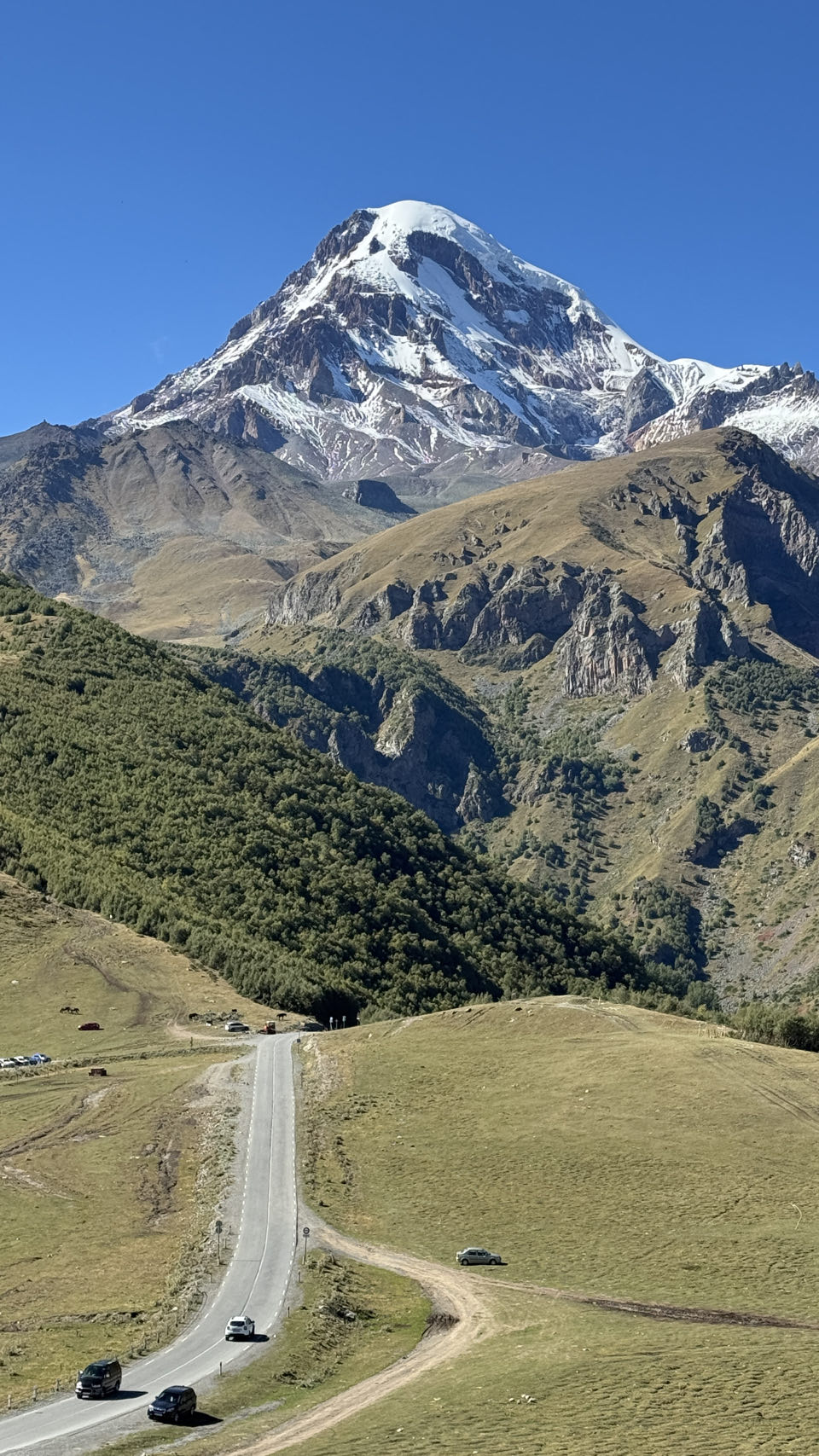
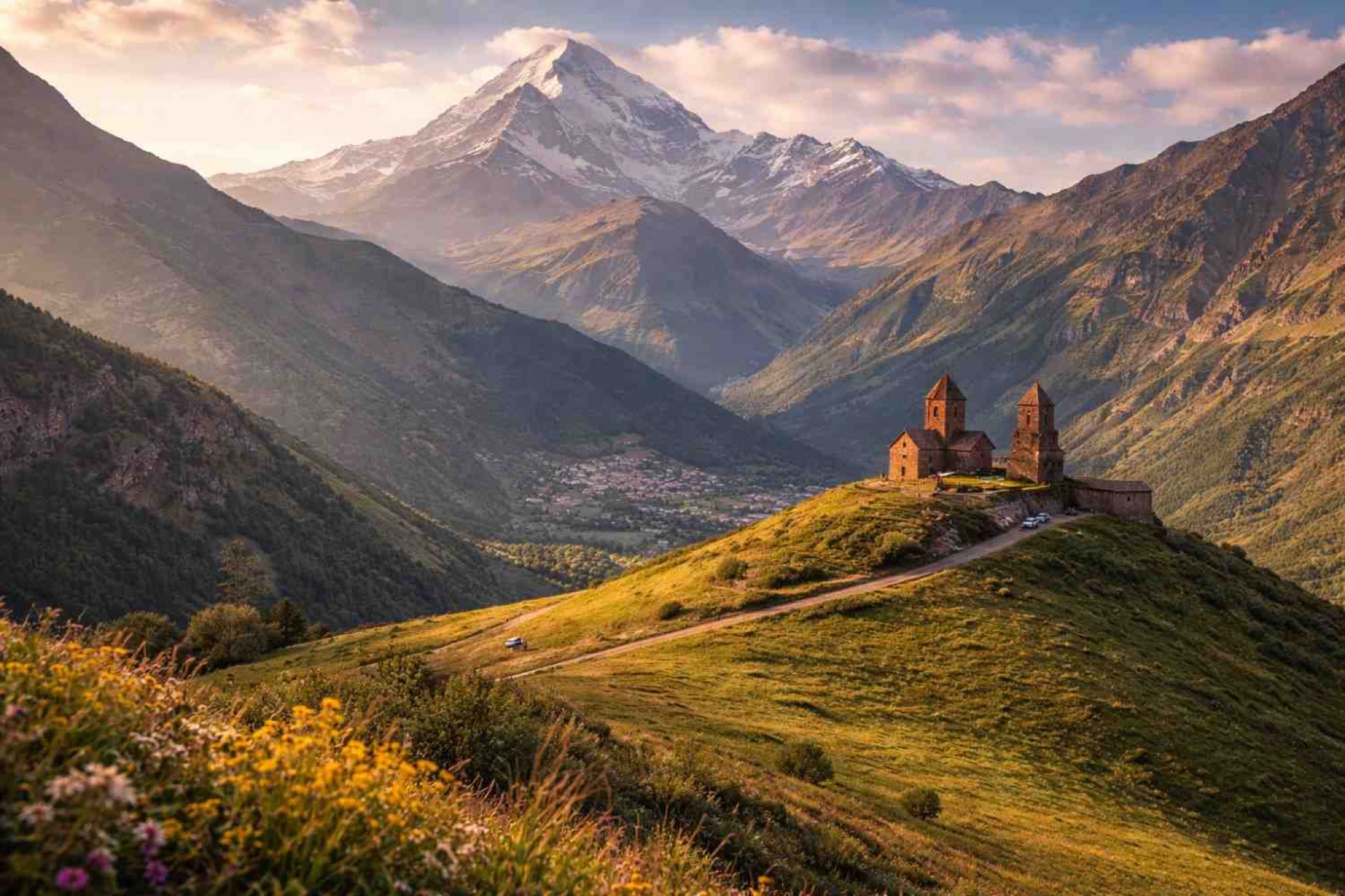
Below the pass, Stepantsminda sits under Mount Kazbek, 5,047 metres of snow cone with a small church perched impossibly high beneath it. There was no obvious way up to it. I found a sign, took the road, and rode until the village looked like a model underneath me.
I folded the loaf in half to make it fit, and ate it that afternoon looking at the mountain.
What the road kept
The detour is the trip.
Everything worth remembering here came from the parts I could have skipped. The coffee at the pass, the two hundred kilometres backwards to Grozny, the festival I stumbled into after being moved on by the police, the family in Kizlyar, a town I was leaving when I found them. Riders who cross this in two days are not doing it wrong. They just do not get any of that.Eighty euros, for the whole of Russia.
Visa and Mastercard stopped working in Russia when the war began. There is no card, no app, no fallback. Whatever cash you change before the border is what you have.
I had learned this the hard way three years earlier in Karelia, where I ran out of money completely and the Russian border police ended up filling my tank and feeding me for a few days. What I had on me was a hundred and fifty euros in notes, the emergency money my brother gave me a long time ago, and it had to last until I met Mario. At a stall on the Georgian side I changed a hundred of it: seventy in roubles and the rest in lari, because the tank was on empty. Twenty of that went straight into the fuel before the border, and the last fifty I kept back for Kazakhstan.
That left eighty euros for the whole crossing. I had planned two days. It took more than twice that, and every stop after the first was a calculation.
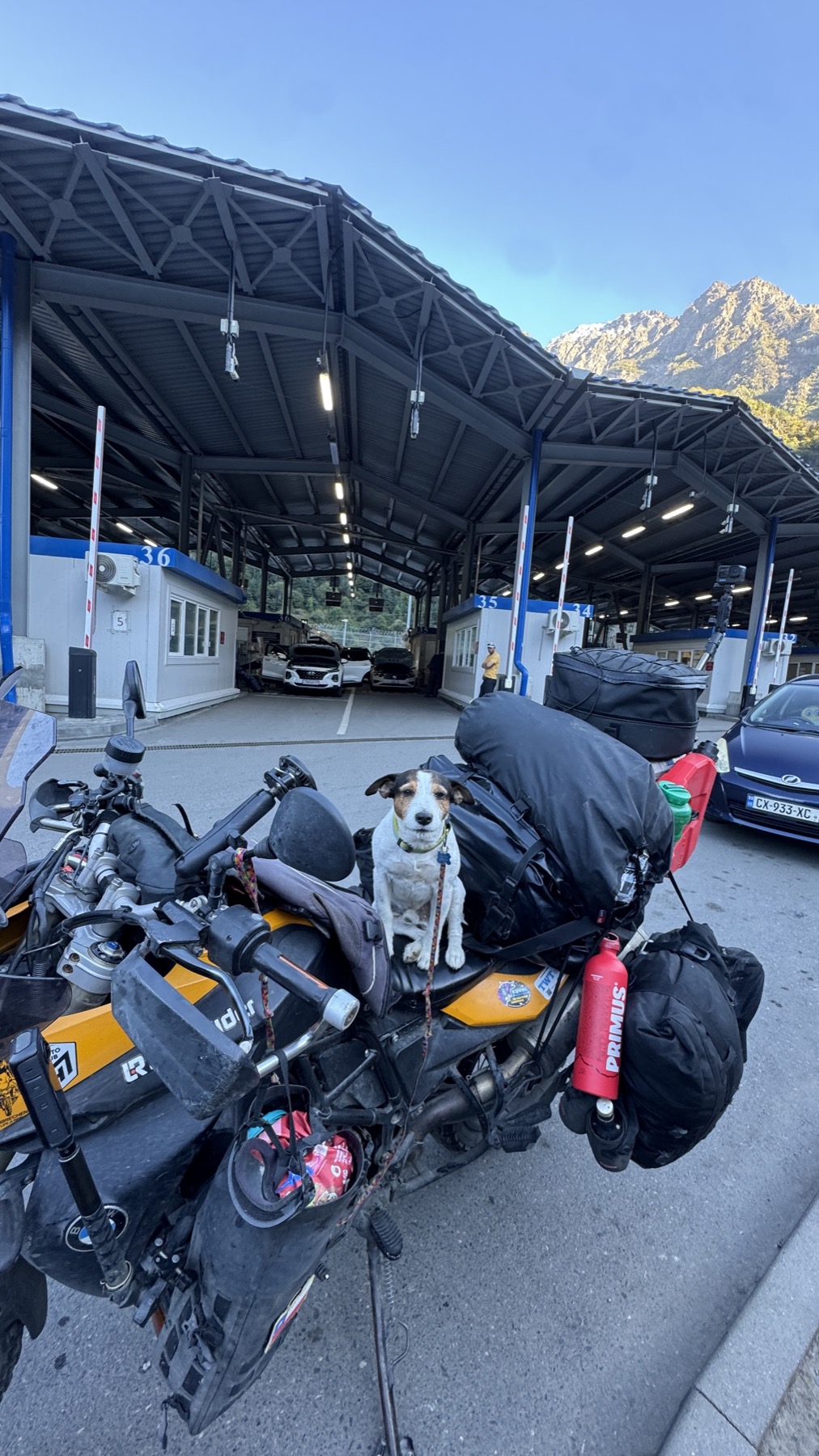
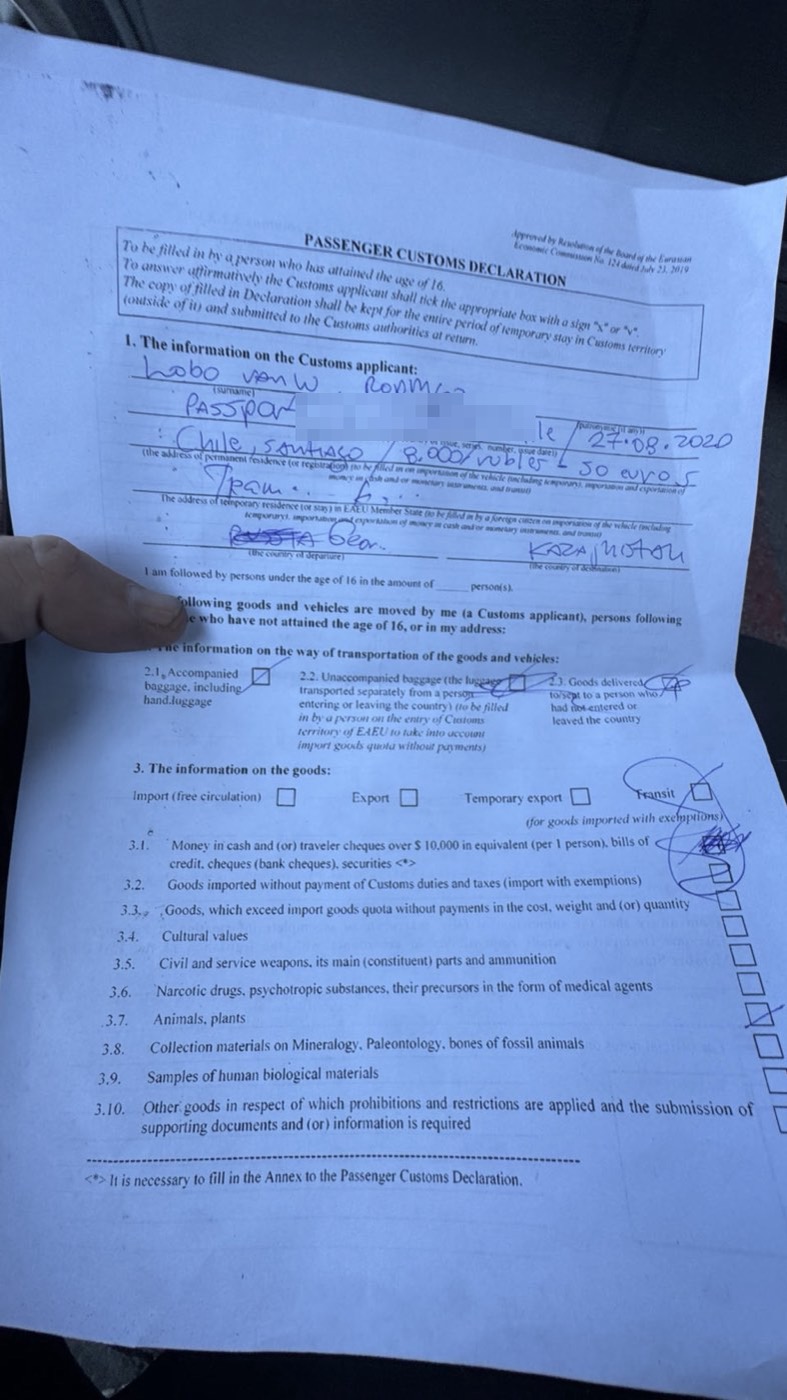
On the Russian side the paperwork was in English for the first time. Three forms, two of them identical copies because there was no photocopier, and one mistake meant filling in both again. Ninety minutes, and a stamp. The Chilean passport needs no visa for Russia, so the officer checked her list, found Chile on it and waved me through.
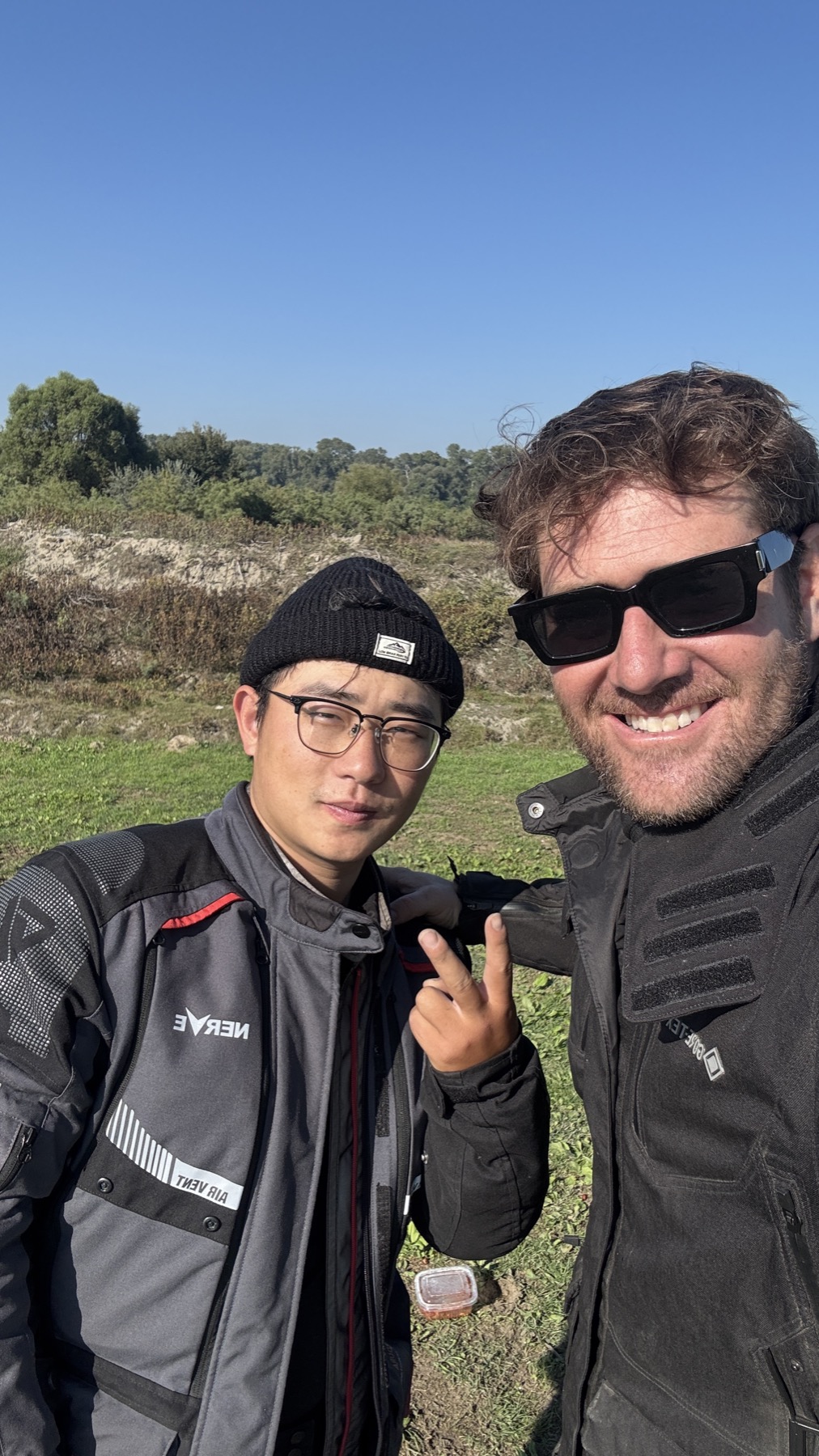
I still had paperwork to do when the Chinese rider came out of the booths with his folder finished. He had been in there three hours and he was ready to go, riding home to China and in a hurry about it. He left an hour before me, so we swapped Instagram and agreed to sort out a place to camp over the internet once we were both on the road.
I rode out with no maps at all. Google Maps does not work in Russia, so the route drifted and the blue dot never appeared, and I got lost enough times in Vladikavkaz to end up asking people in the street and then the police. On the way north the flags changed to white, red and yellow, which I had never seen before: North Ossetia. Between them, billboard after billboard advertising for men to sign up for the army.
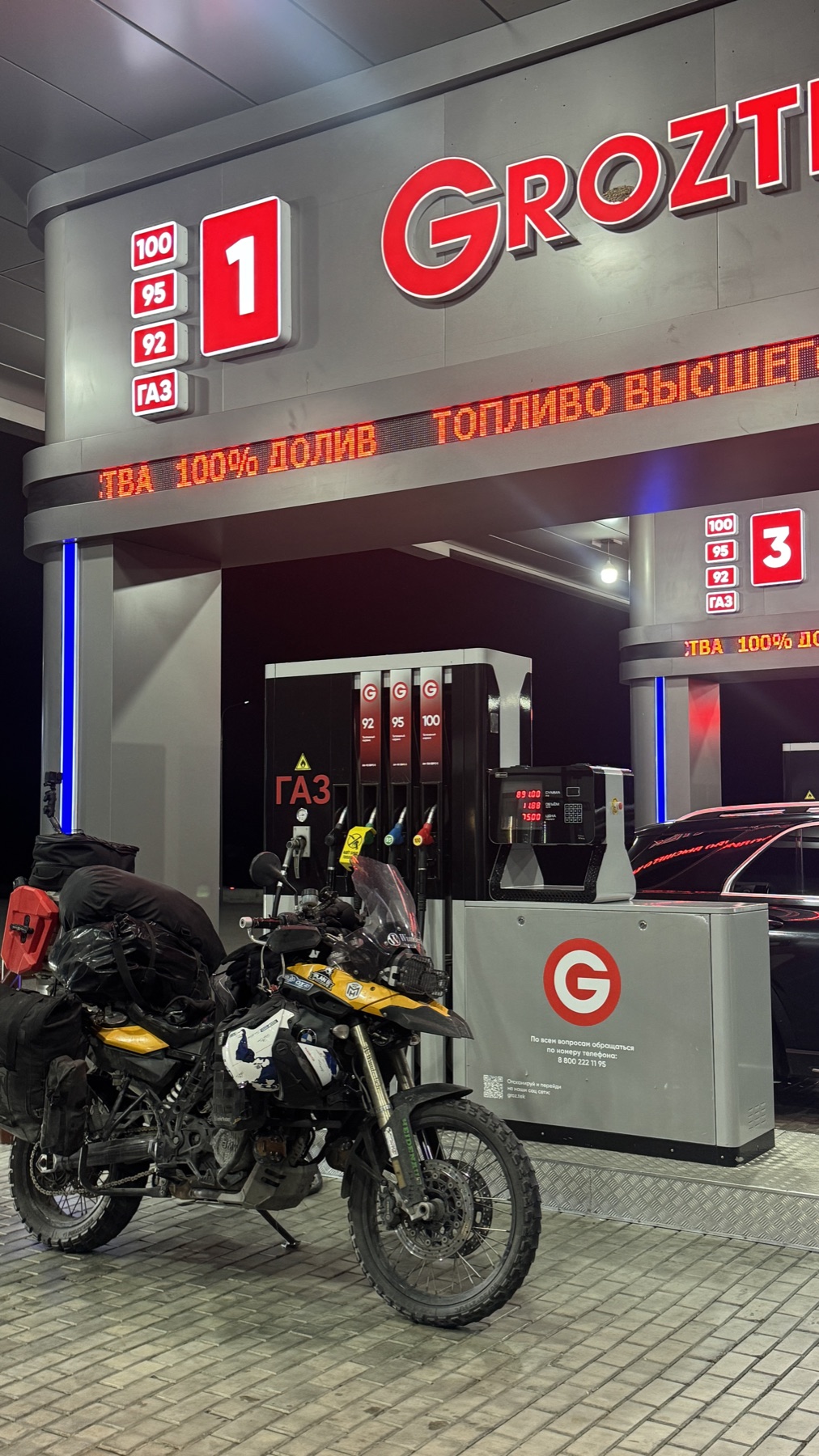
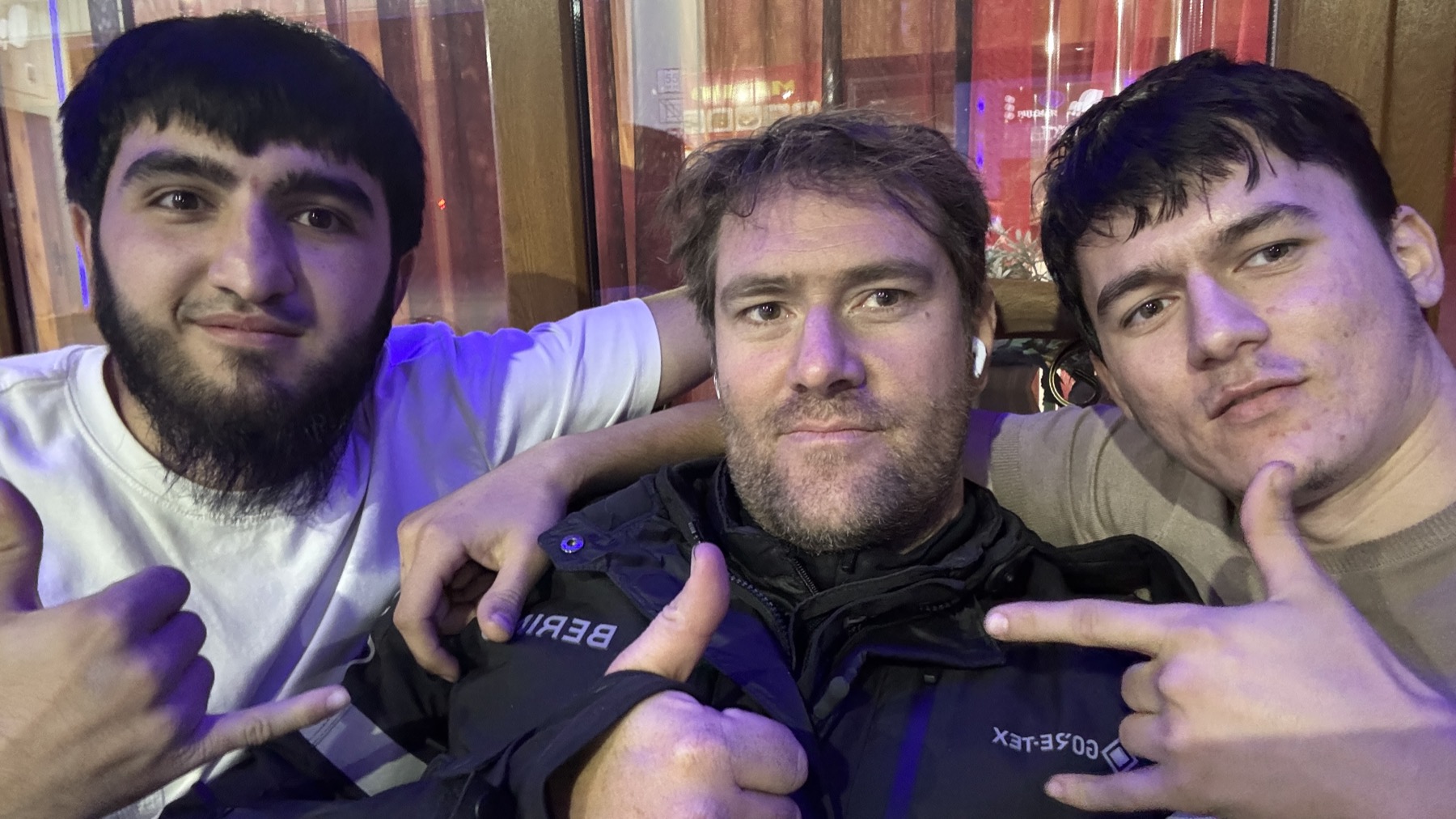
At a petrol station after dark two teenagers sat down at my table, both with the beard and no moustache I would see on every man for the next three days. I asked if they were from Dagestan. No, they said. Chechnya. That was how I found out where I was.
It got dark long before I caught up with him. Chechnya at night is lit up: petrol stations, billboards at the roadside, whole towers picked out in coloured light. I never went into Grozny that night. I passed the turning for it in the dark and carried on east towards Gudermes.
Half lost and still looking for the camp, I came round on a mosque the size of a stadium, all domes and minarets like something out of Aladdin, the whole of it floodlit green. I could not believe what I was looking at. My phone was flat, with nothing left in it to take a photograph or even to navigate by.
It was the Pride of Muslims, in Shali. It opened in 2019, dedicated to the Prophet Muhammad, and it is faced in white marble from the Greek island of Thassos: a dome forty three metres high, minarets of sixty three, room for thirty thousand people inside and seventy thousand more on the ground around it. It is the largest mosque in Europe, which I only found out later.
Further on I found a petrol station, put the phone on charge and got on their wifi. That was where the Chinese rider sent me the exact spot: a field past Grozny, near Gudermes.
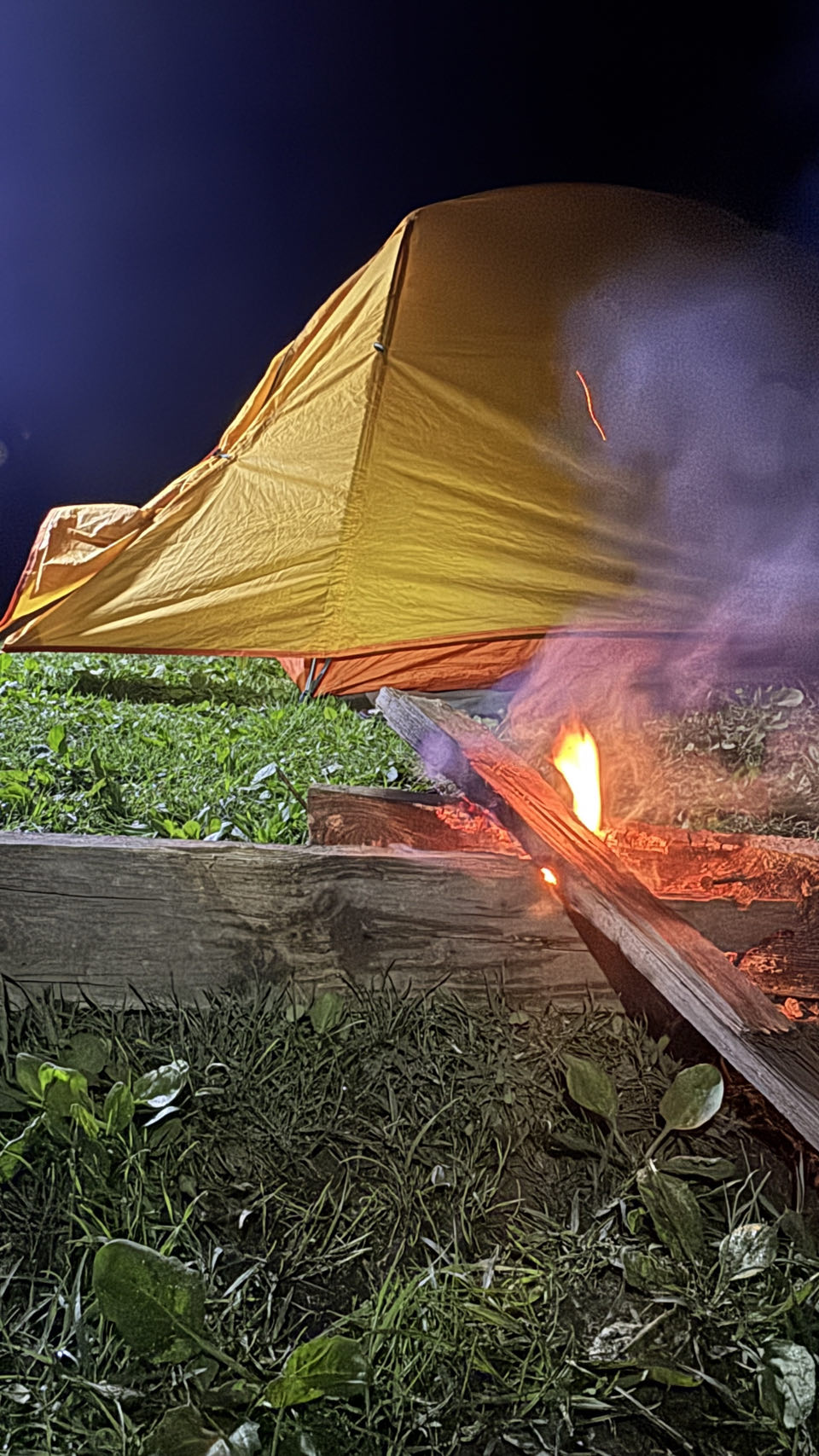
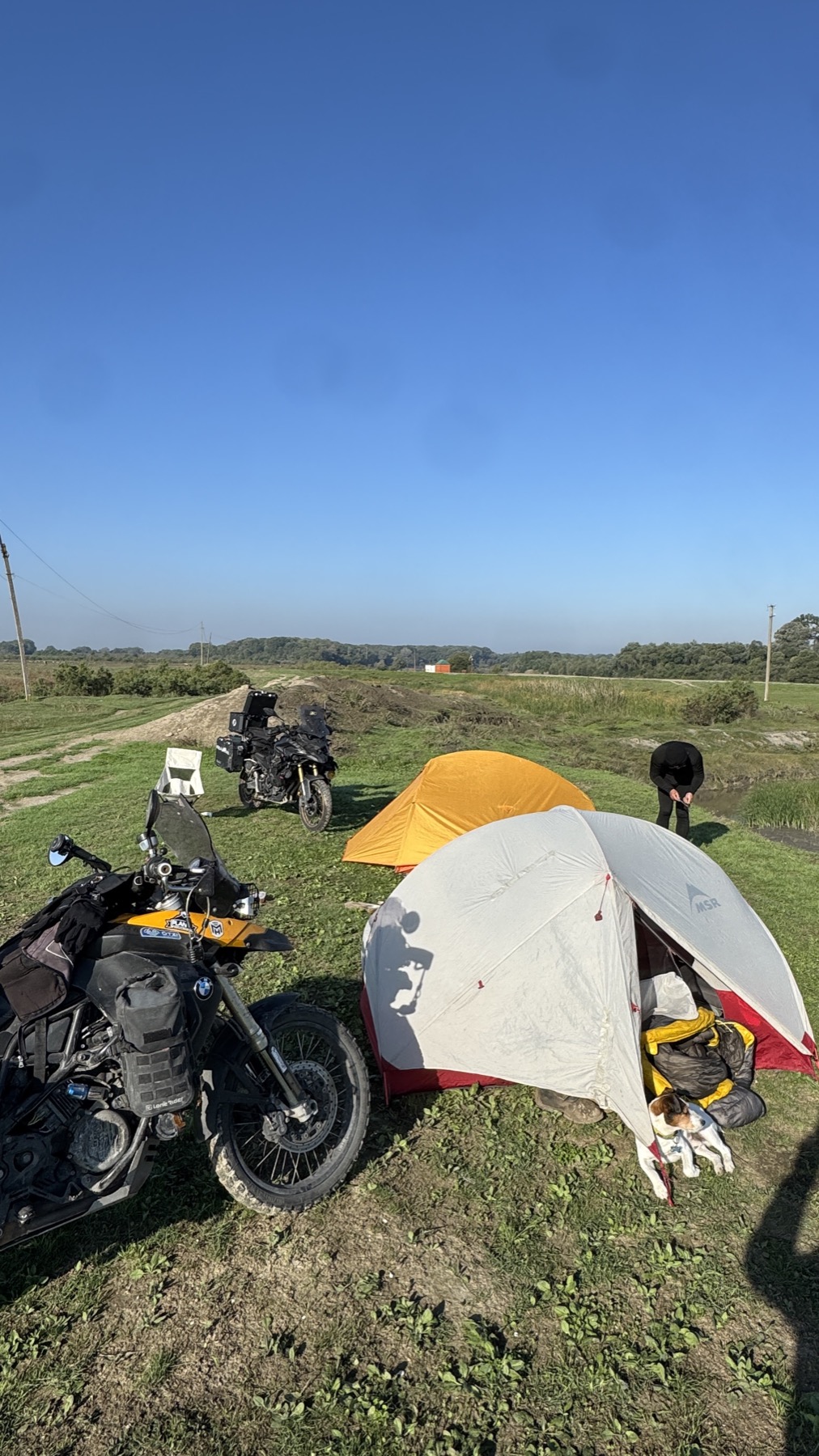
He had found a field near Gudermes and the yellow tent was already up when I got there at half past nine, with a small fire going beside it that he had built with a lot of care. He put out a big tub of peanuts and offered me beer out of a large plastic bottle, and we sat and talked while he ate his own spicy Chinese food, which I turned down as politely as I could. He was three months into his ride, had gone as far as Istanbul and turned around, and had four days to be in China for a wedding.
Chechnya, rebuilt from nothing in glass and gold.
In the morning I packed the tent and carried on east to a petrol station sitting on the fork: one road north, one west, back the way I had come, and one east into Dagestan. They had internet. I stayed about half an hour turning it over, and left with my mind made up: straight on into Dagestan, no Grozny.
Most riders cross this corner of Russia in two days, on their way to Kazakhstan and the Silk Road. Some do it in one. I had already passed the turning for Grozny the night before, and going back meant a hundred kilometres in the wrong direction and a hundred back, for a city I was not sure I should visit. Travellers I had met in Tbilisi had told me not to.
Five kilometres east I turned around and rode back to the same counter, for the second time that morning and to the visible confusion of the man behind it. This time it was decided: Grozny.
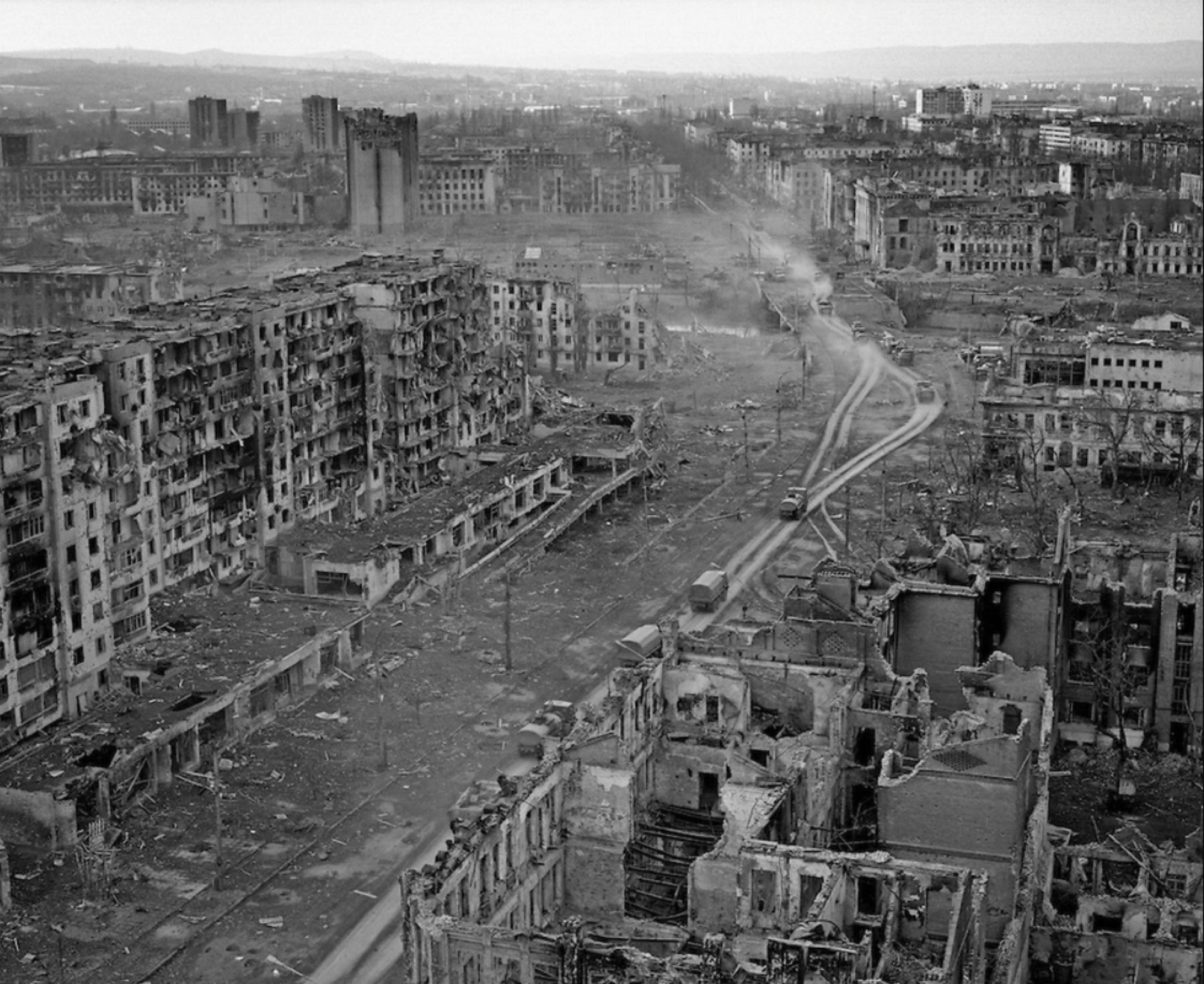
When the Soviet Union fell they declared independence. The Russian army came in on 11 December 1994 and took Grozny, levelling it, in March 1995. That is the answer to why the city is built new. A second war followed from 1999. Between the two, the estimates run to a hundred thousand dead and four hundred thousand people driven out of their homes.
The second time was worse. Russian forces besieged the city through the winter of 1999 and took it street by street in February 2000, and the aid workers who came in behind them found a wasteland with bodies still in it. Between five and eight thousand civilians were killed in that siege alone. In 2003 the United Nations named Grozny the most destroyed city on earth.
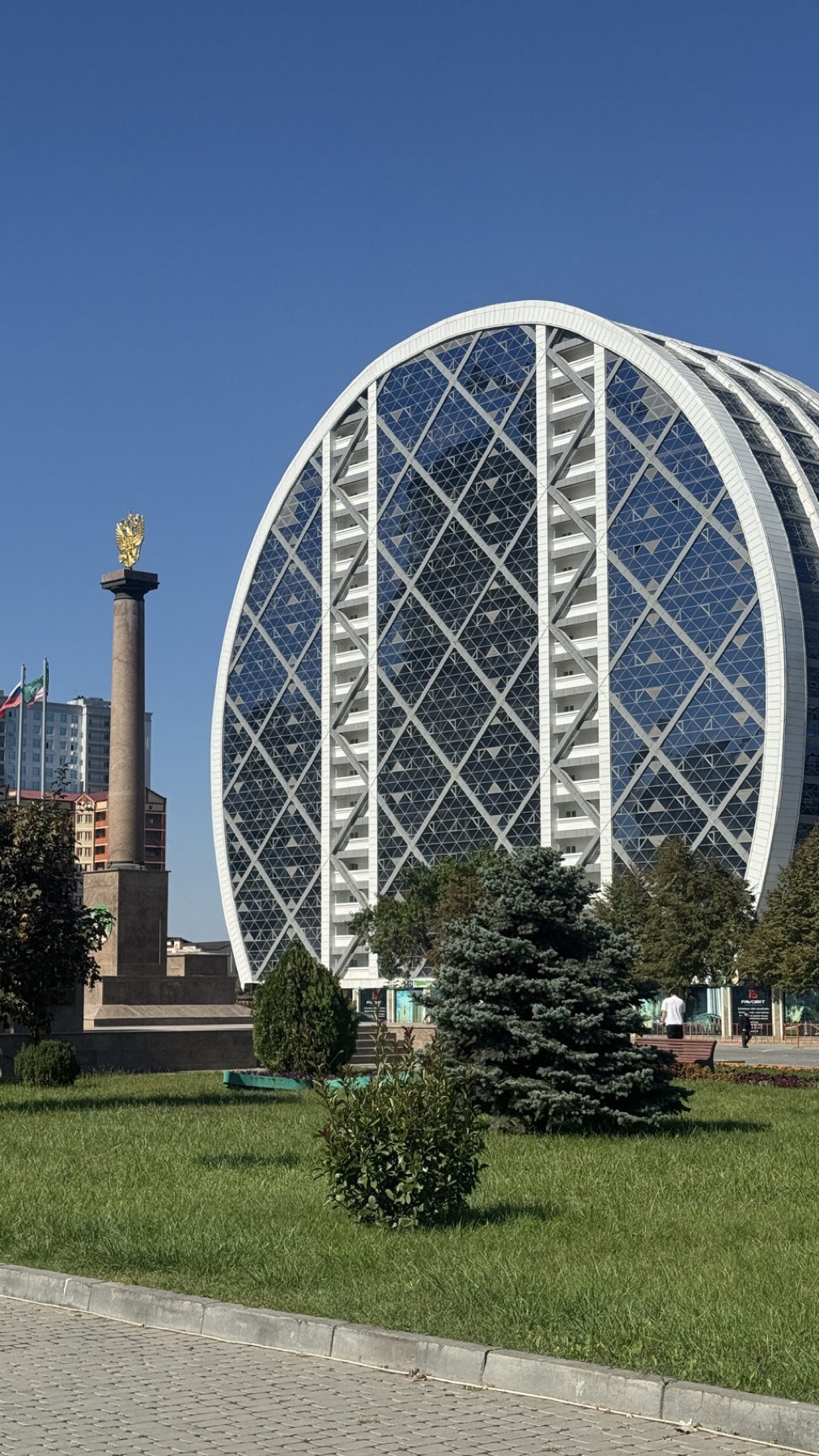
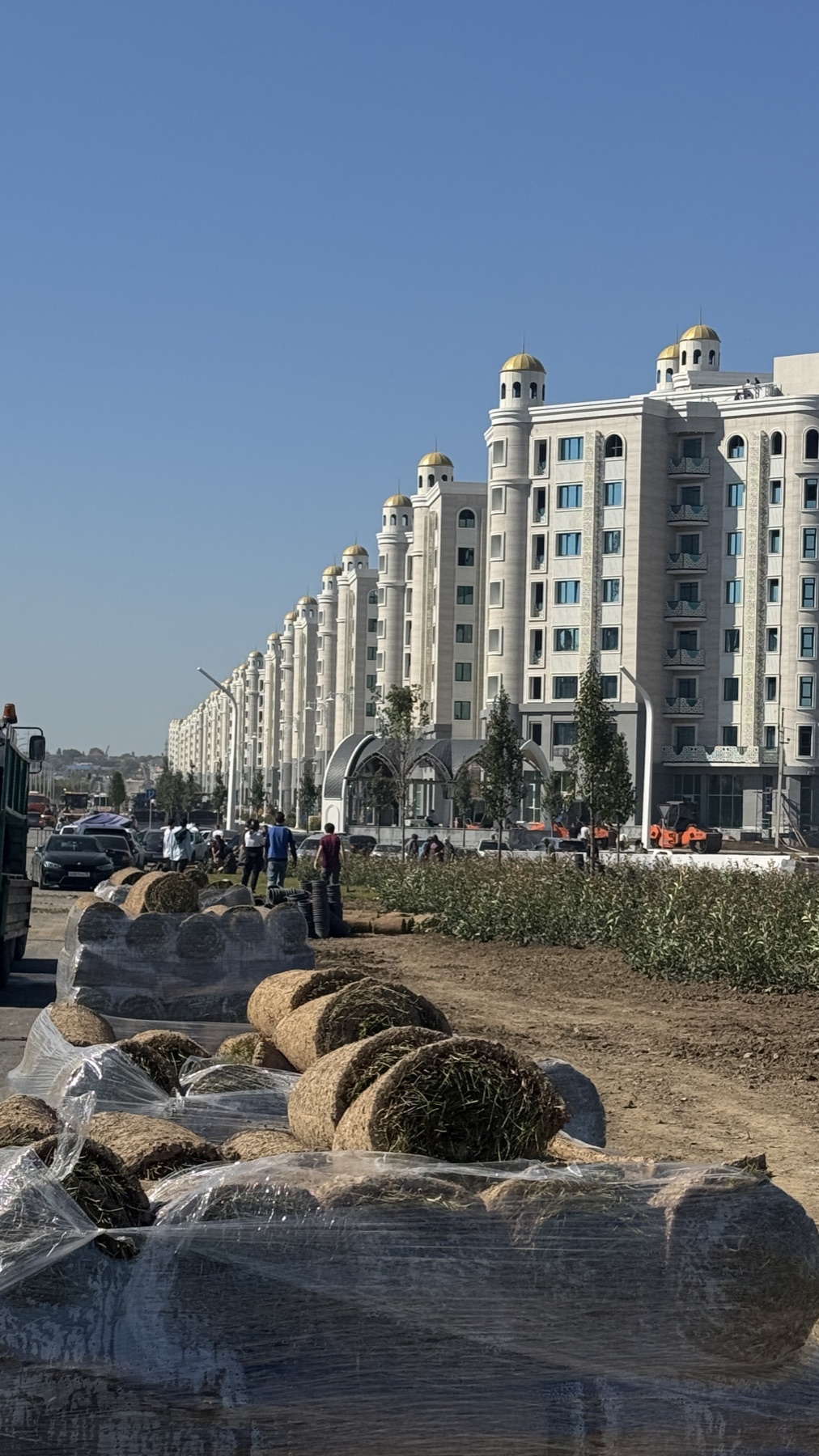
What stands now went up afterwards and all of it at once: mirror glass towers, one of them a vast oval, boulevards swept clean, and the Heart of Chechnya, one of the largest mosques in Europe. Cranes are still working. Nothing looks old because almost nothing is.
When you think of Russia you picture Soviet concrete. This is the opposite of that, and more modern than anything in Santiago.
Chechens are not Russian and do not look it. They are a Caucasus people with their own language, and Muslim for centuries. That is where the beards on every man in the street come from, and the headscarves. Russia took thirty years to conquer them in the nineteenth century, and even that did not settle it: Stalin deported the whole people to Central Asia in 1944, accused of collaborating with the Germans, and they were not allowed home until 1957.
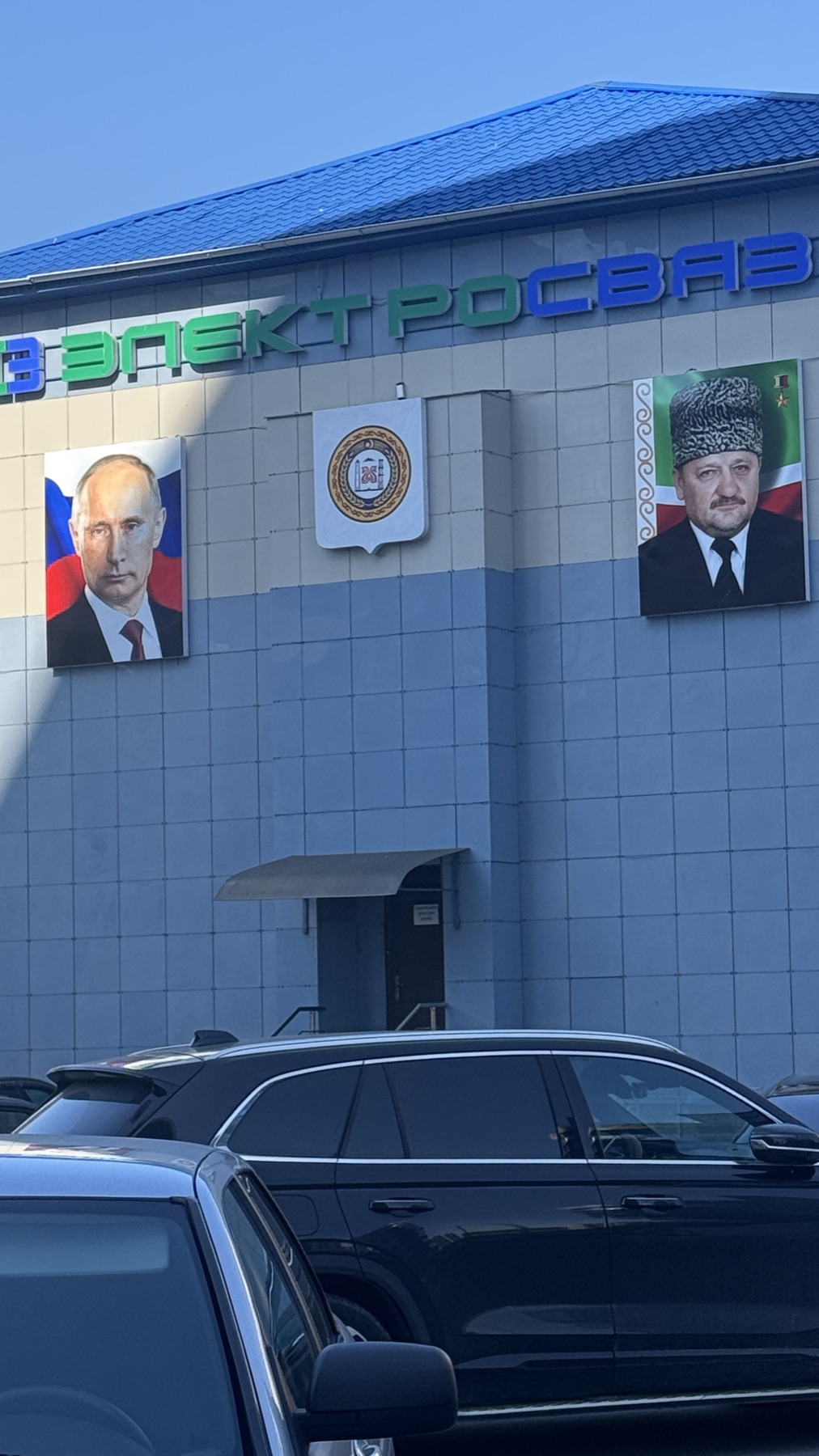
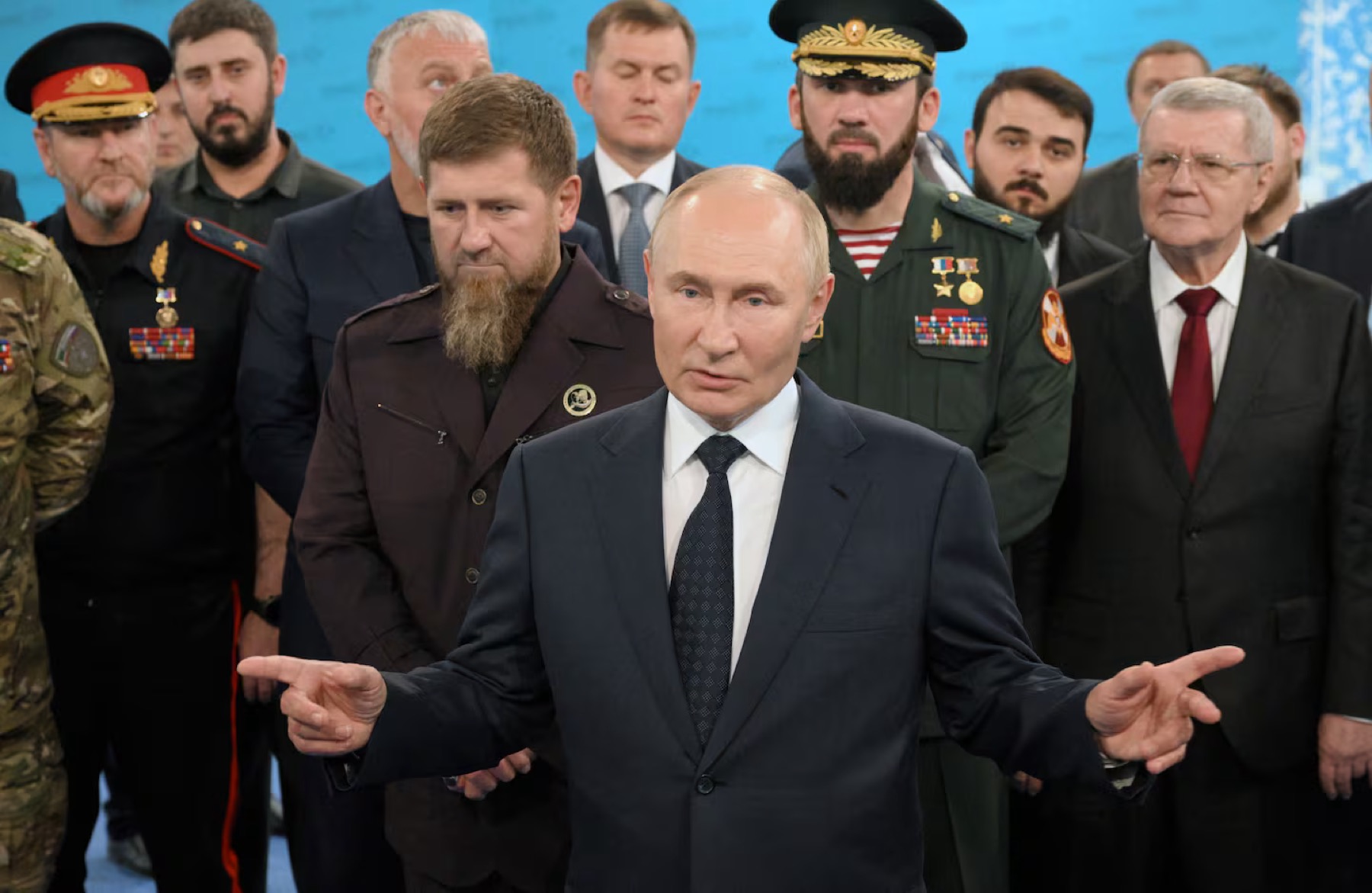
The faces you see everywhere are the Kadyrovs. The father, Akhmad, changed sides to Russia and was president until a bomb killed him at a parade in Grozny in 2004. The son, Ramzan, has run the place since 2007 with Putin behind him, which is why the three of them turn up together on building fronts and on monuments. Human rights organisations accuse him of abductions, torture and killings to put down opposition. Russia declared the war over in 2009.
After a day of it you stop seeing the portraits, which is presumably what that many of them are for.
Nothing looks old because almost nothing is.
Nobody would let me pay for anything.
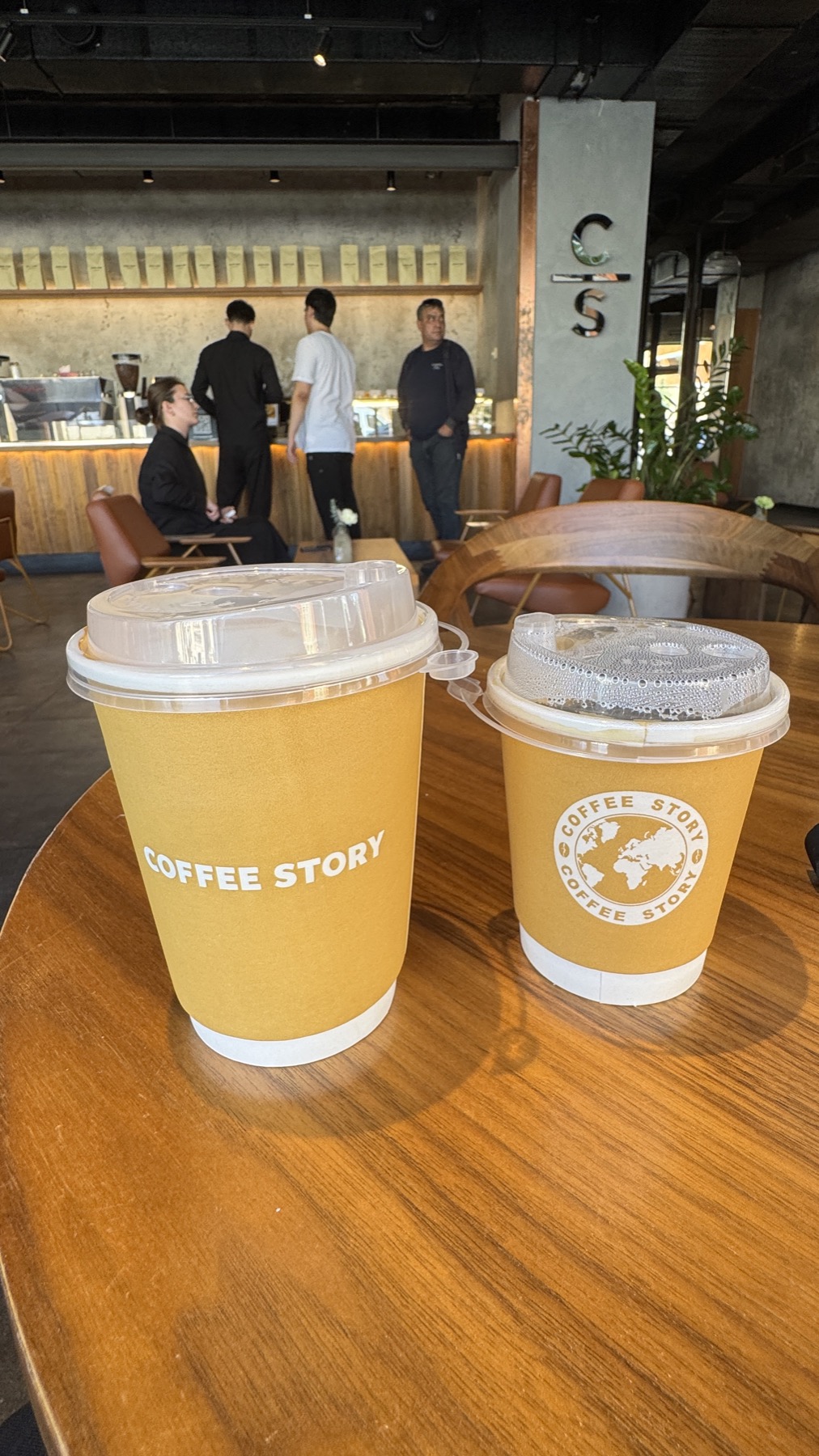
I stopped for an americano in a cafe that could have been lifted out of any European capital. The owner came over because no foreigner had ever walked in, would not take my money, and brought two more coffees for me to try while he stood there watching. Jacko waited outside on the bike, which he has got used to in this part of the world, and did not complain about it once.
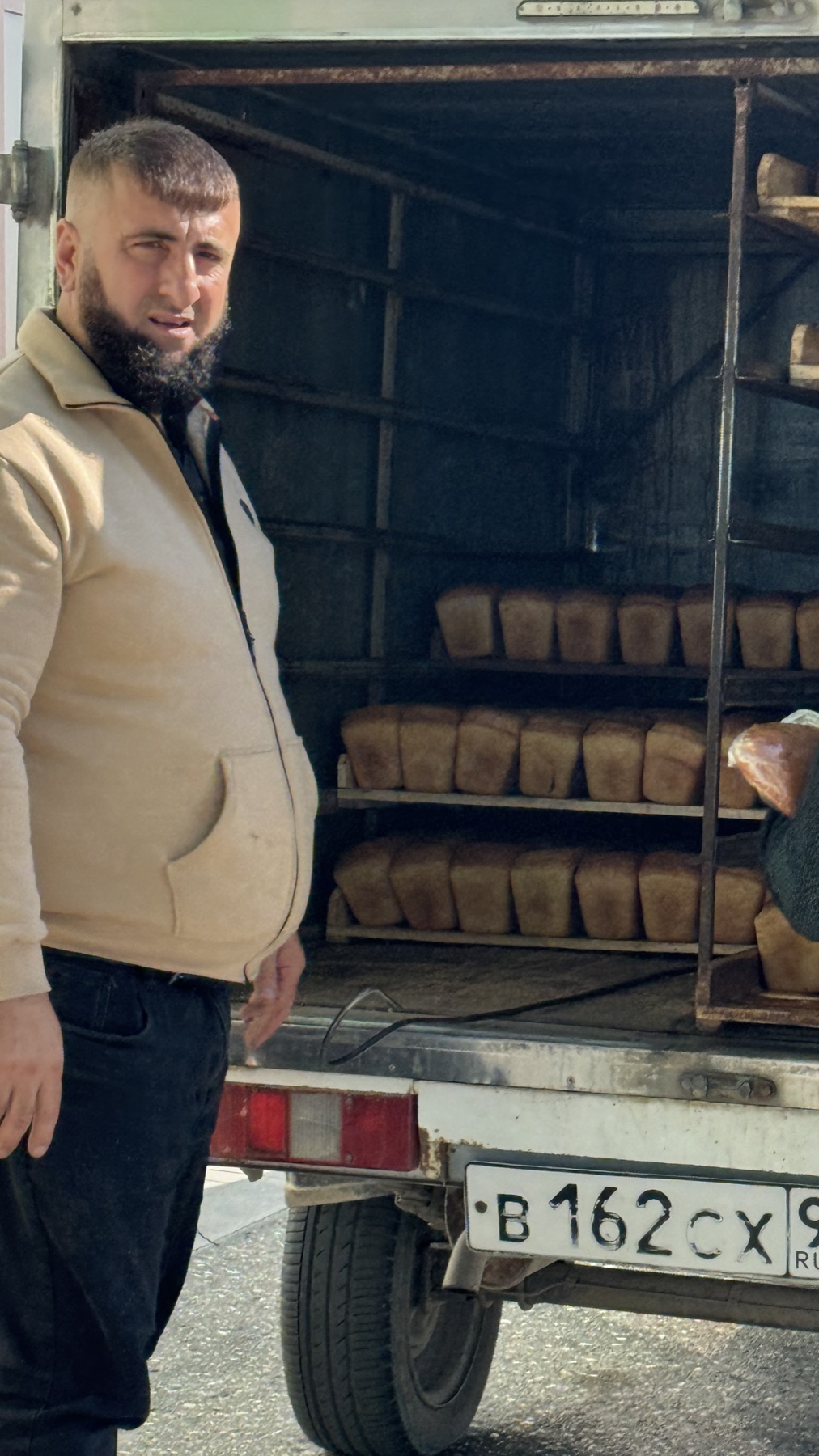
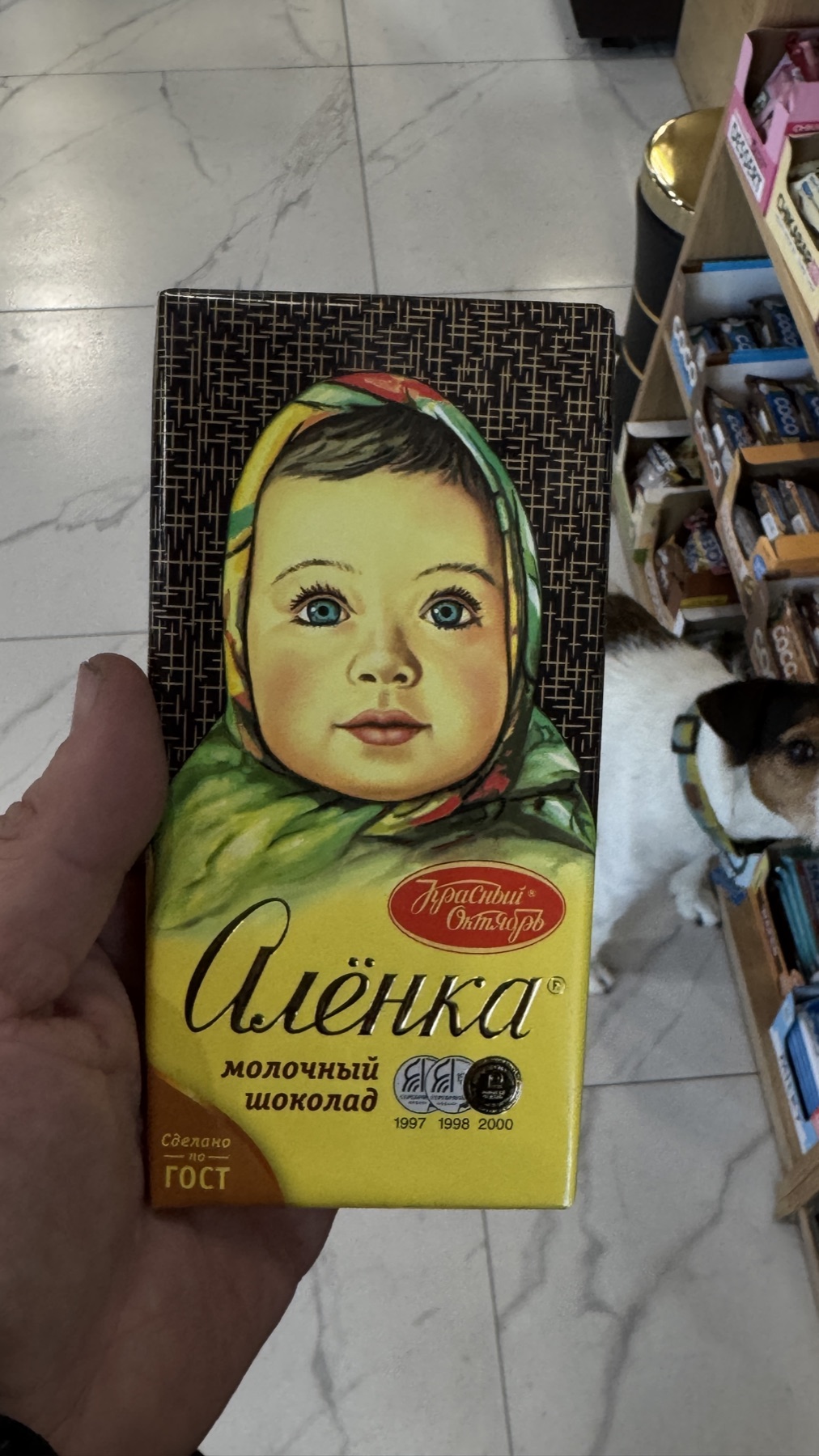
Away from the boulevards it is an ordinary working city. The bread arrives on steel racks in the back of a van and is handed over at the kerb. The shops still stock Alionka, the Soviet chocolate with the girl in the headscarf on the wrapper, the same face it has had since the sixties.
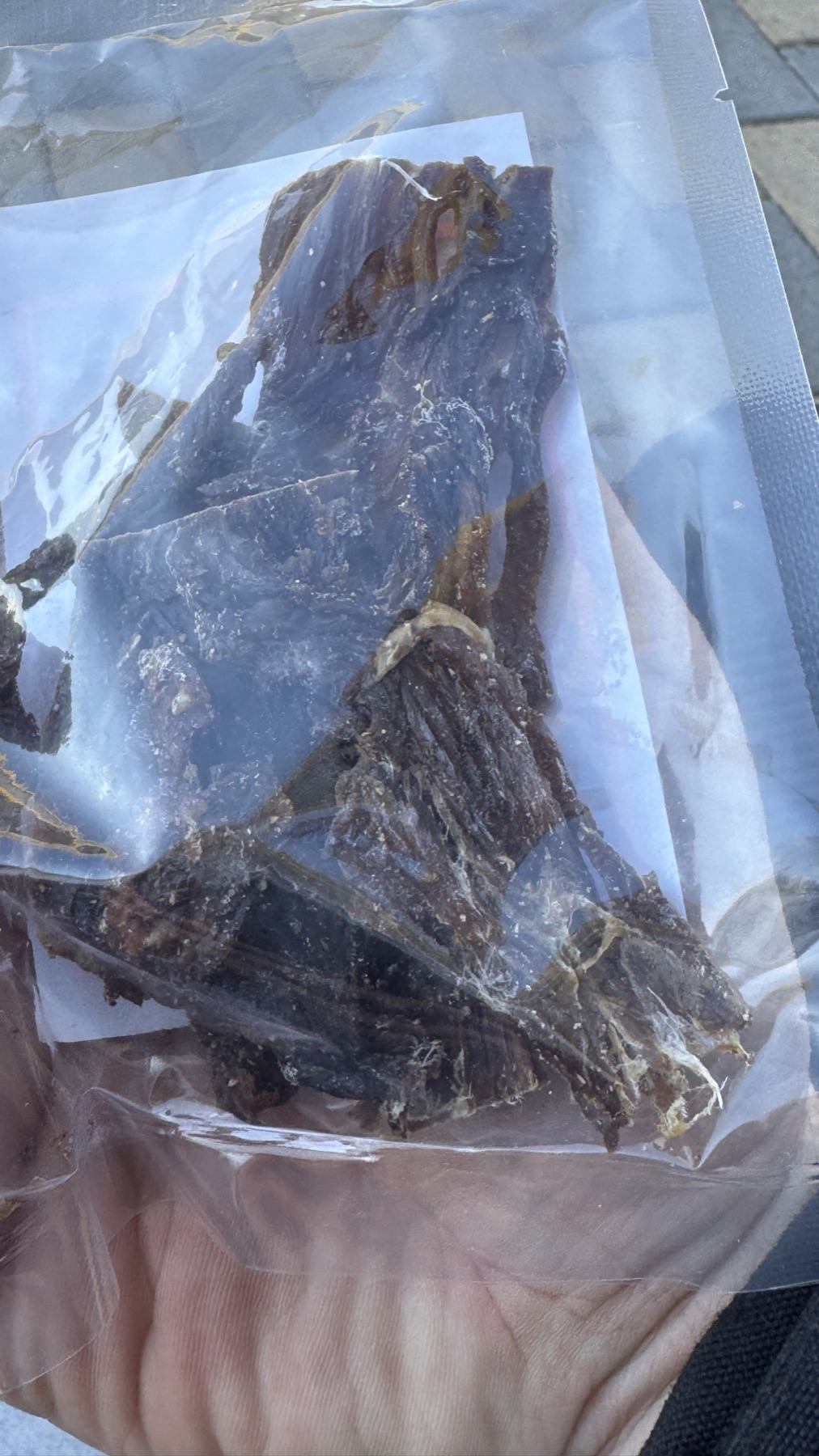
At two in the afternoon I turned back east for Dagestan, and stopped at that same roadside cafe for the third time in a day. A man saw me pick up a packet of dried meat, took it to the counter and paid for it before I could get my money out.
I arrived in the dark at a place I could not see.
The camp was a set of coordinates from iOverlander and nothing else. I copied them into maps.me, which had the Dagestan region downloaded in advance, because the other map drifted and the blue dot never appeared. Getting there was hard work. The pin took me up to a village high in the mountains, curve after curve with no lights at all, and then off the road altogether onto a rough track that crossed streams in the dark, until it ran out at a small flat piece of ground.
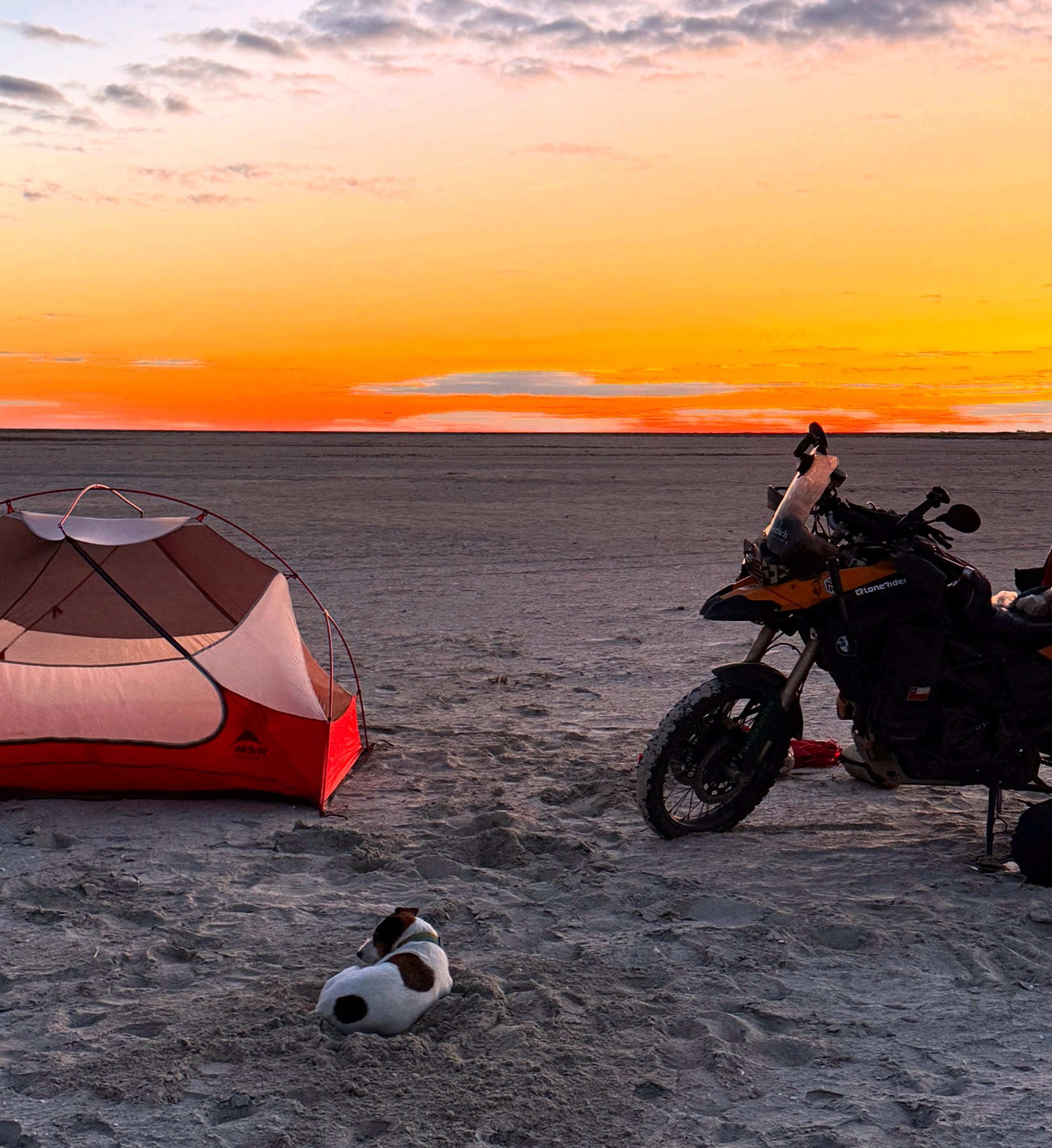
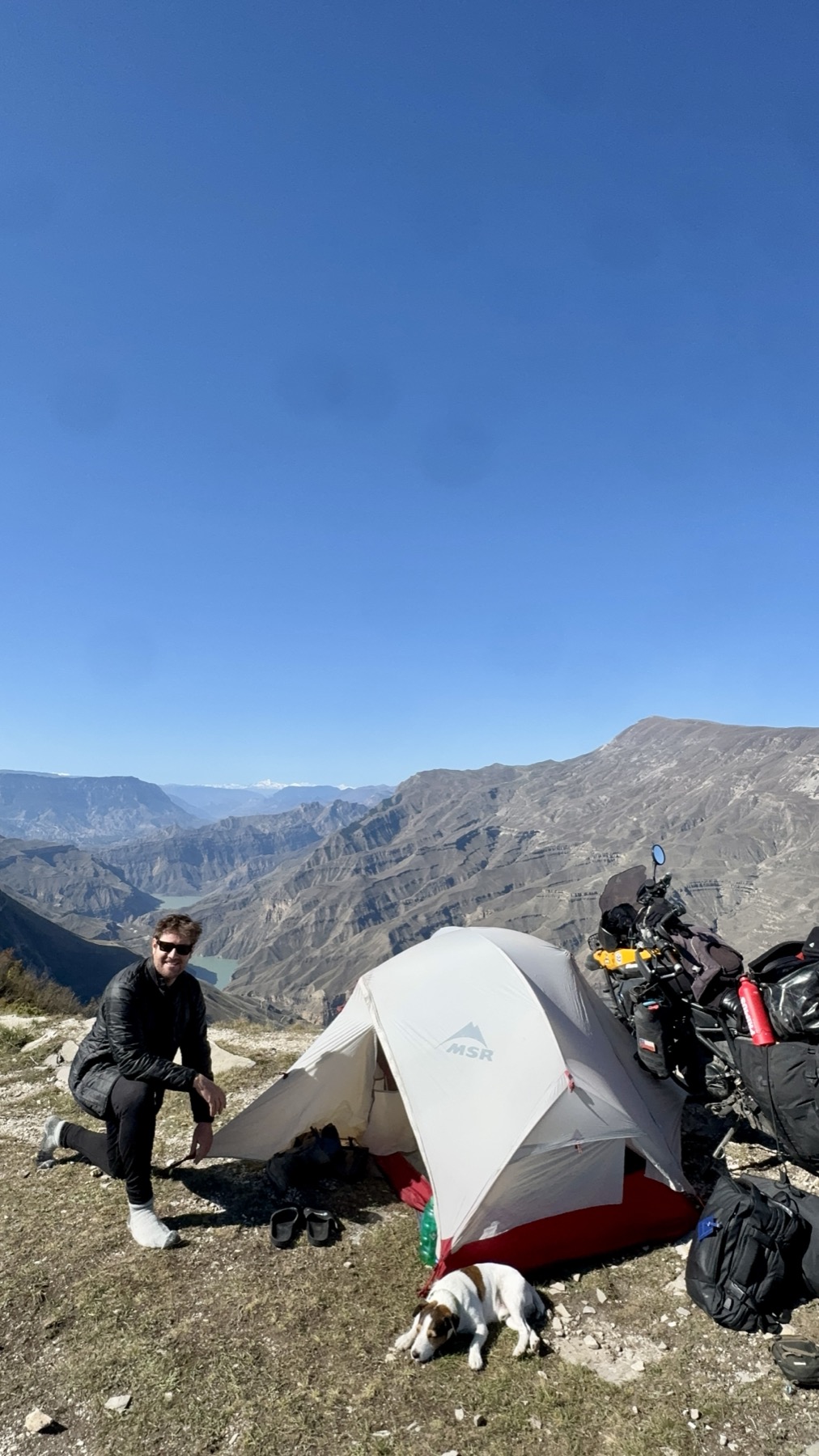
I pitched by feel beside the ashes of somebody's old fire, and could tell there was something enormous open in front of me only by the sound of the wind coming out of it.
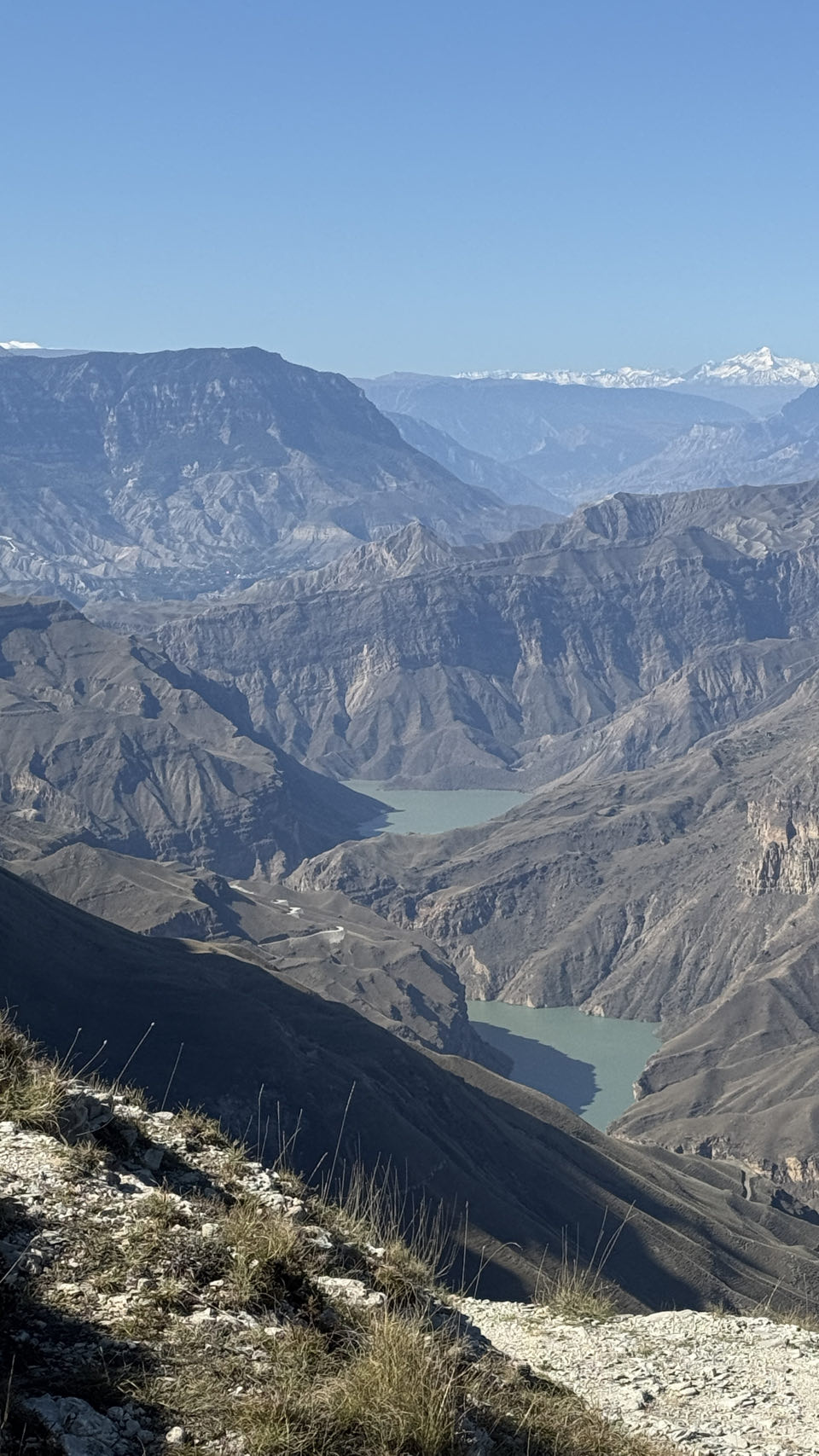
In the morning it was the Sulak canyon. Fifty three kilometres of it, and 1,920 metres deep where it is deepest, which makes it deeper than the Grand Canyon and the deepest in Europe. The Sulak river cut it, and the turquoise water at the bottom is the Chirkey reservoir, held in by a dam wedged into the narrowest part of the gorge. I had made about forty wild camps by that point in the trip. I wrote that this was the best view of any of them.
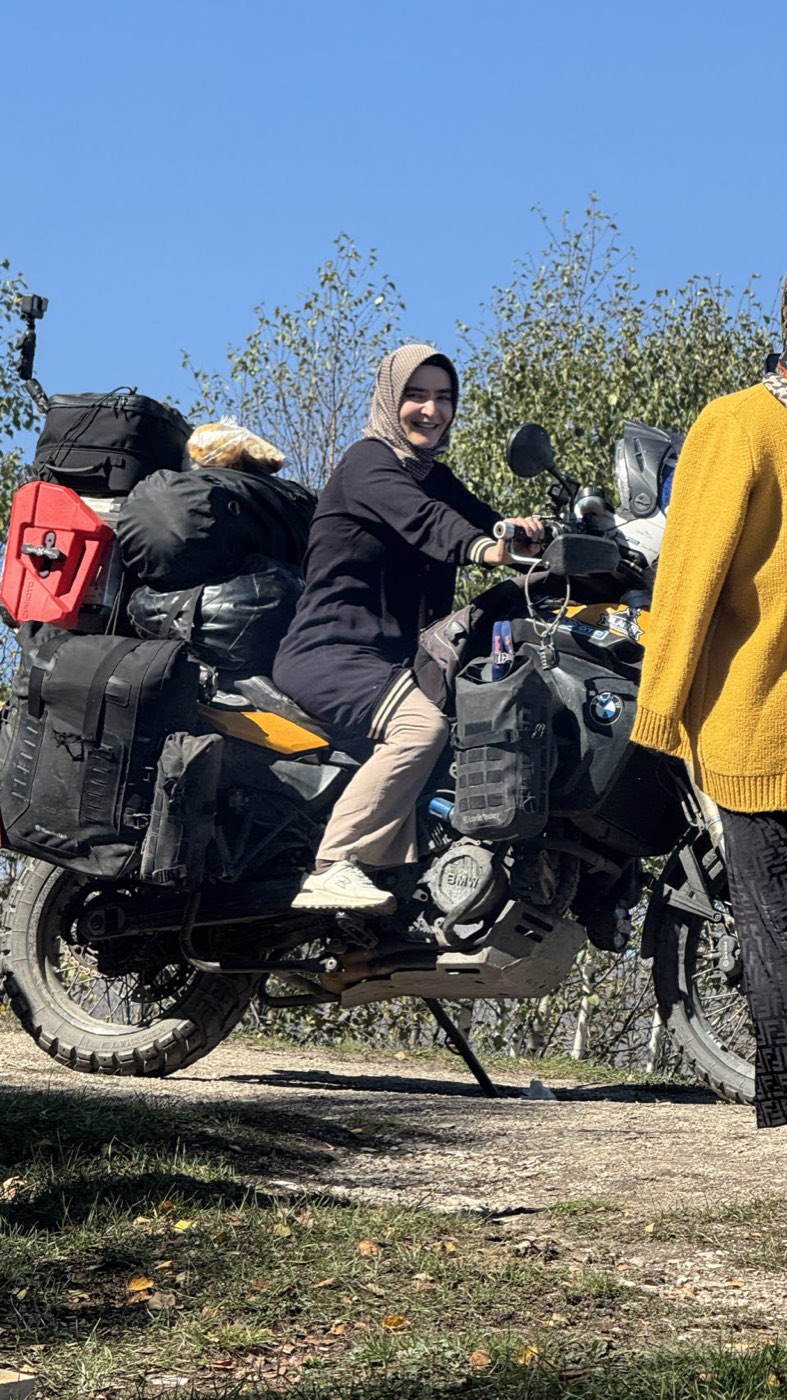
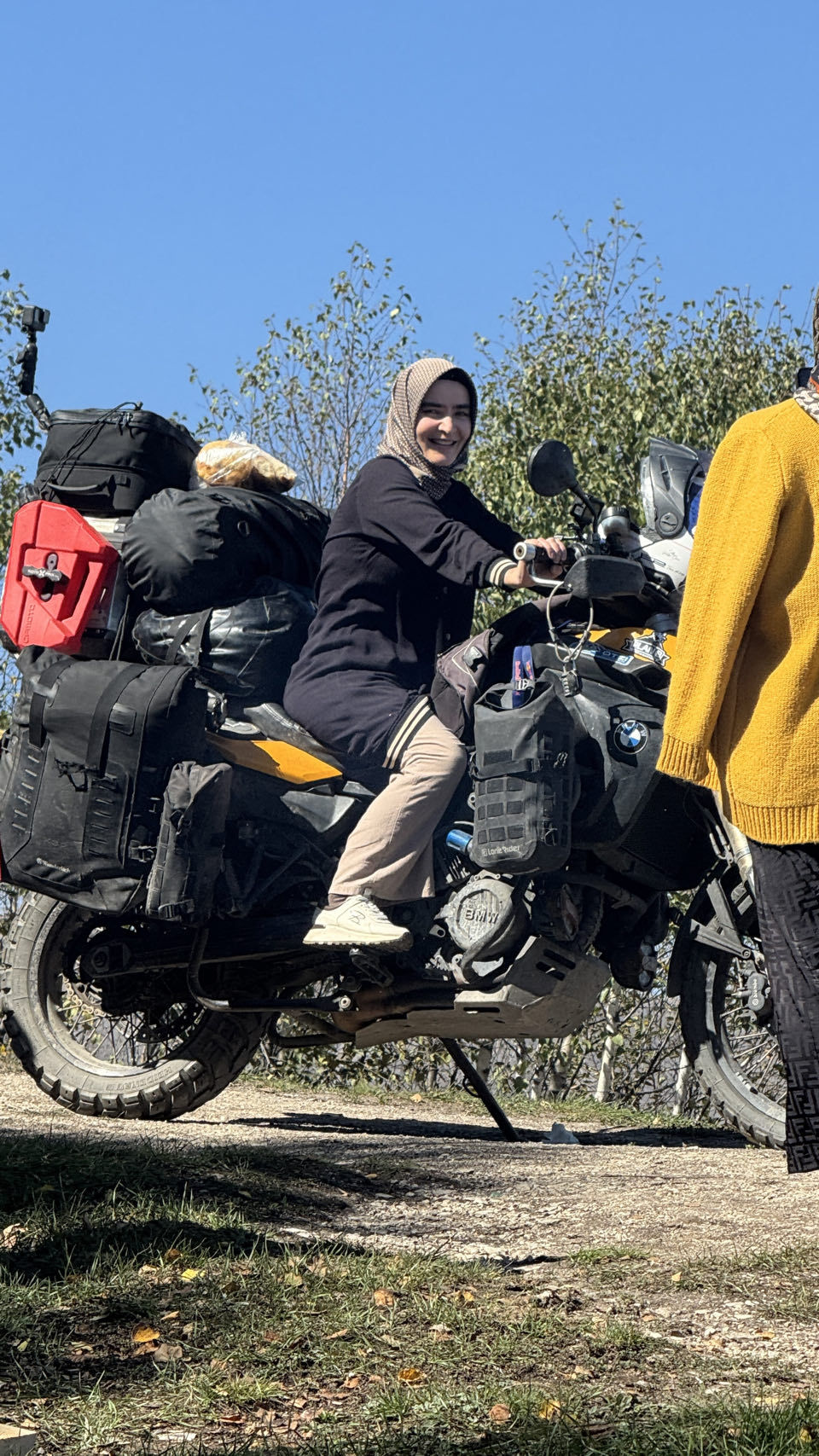
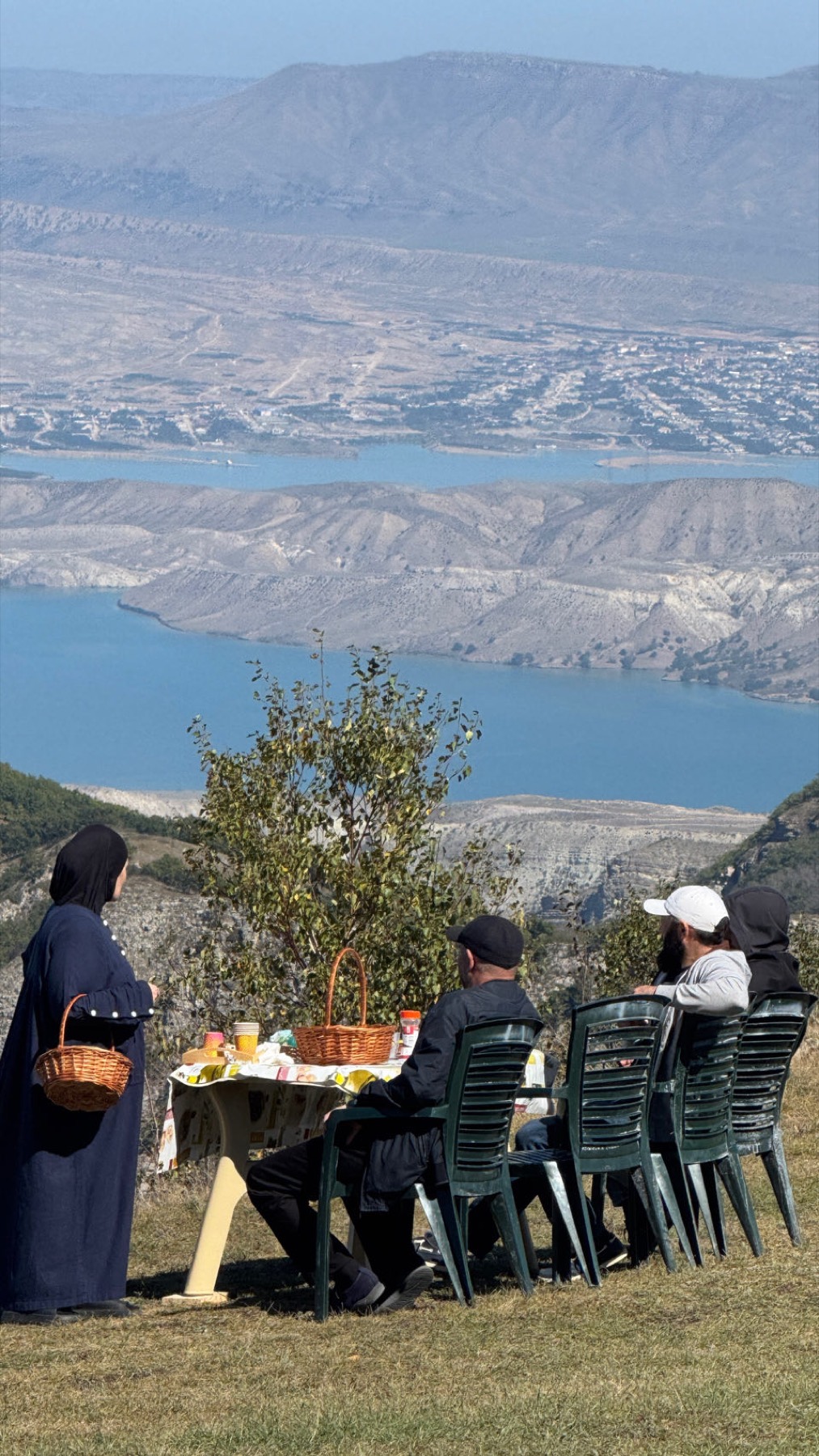
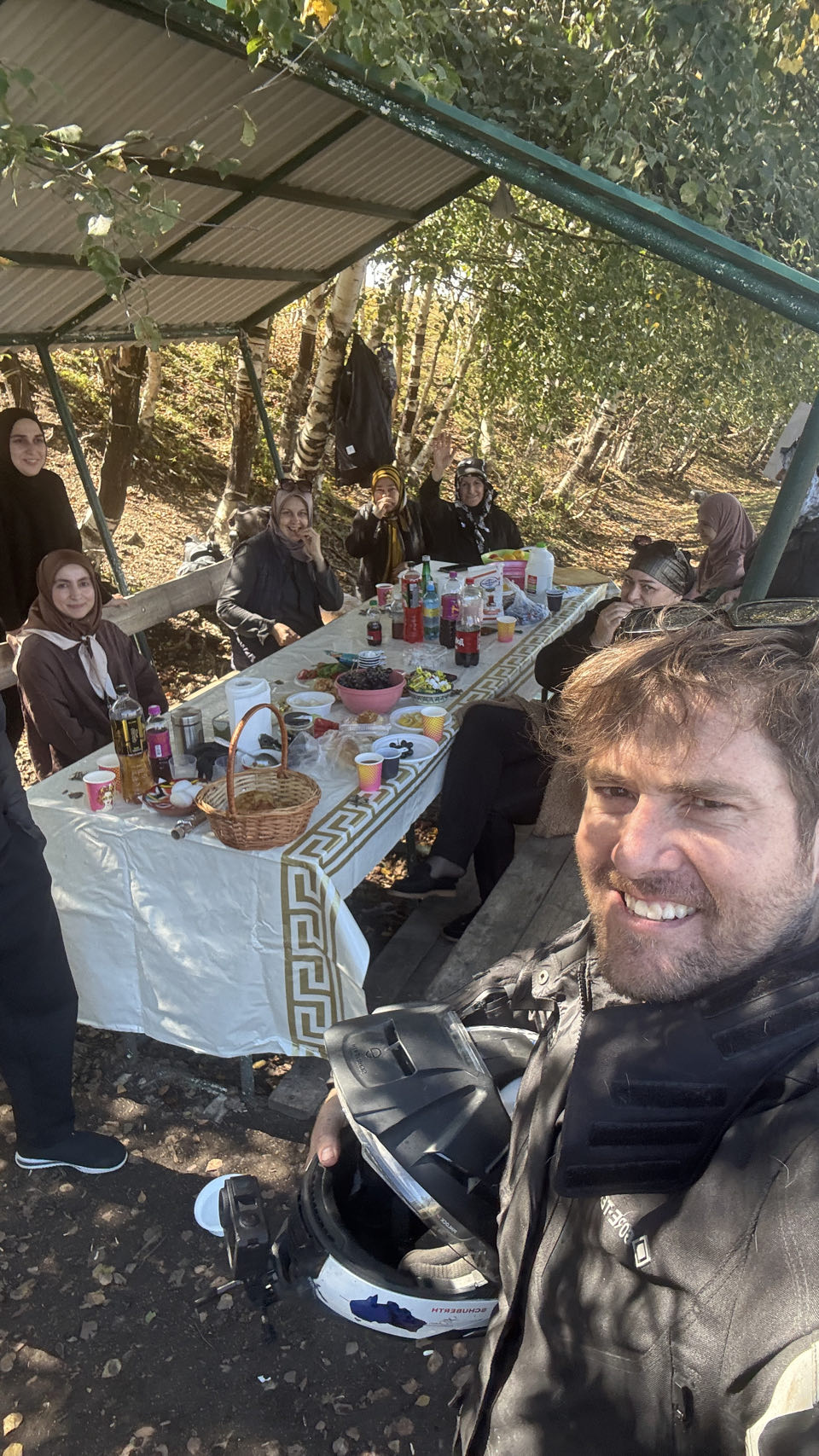
A family had a table laid on the grass along the rim, out for the day with chairs, a cloth and a basket of bread. I ended up sitting at it: tea, pastries, and somebody wanting a turn on the bike before I left.
I was in Dagestan. I had been hearing about this place for years and had never expected to see it from the inside.
I could tell there was something enormous in front of me only by the sound of the wind coming out of it.
Dagestan, thirty peoples and a festival I walked into by accident.
Dagestan is the far south-eastern corner of Russia, mountain almost all the way, and the most mixed place in the country: more than thirty peoples live in it, many with a language of their own, kept apart long enough by the valleys to stay that way. It is also, pound for pound, the best wrestling ground on earth. Freestyle wrestling is the national sport here and the republic turns out Olympic champions the way other places turn out footballers: Abdulrashid Sadulaev, two Olympic golds, is from a village up in these mountains, and Khabib Nurmagomedov and Islam Makhachev, both of them world champions in the cage, learned to wrestle in Makhachkala.
Makhachkala is the Dagestani capital and my first sight of the Caspian, the largest inland body of water on earth, and a coast I had spent years imagining from the wrong side of a closed border. Before 2020 this was the standard way east. Now most European riders cannot use it at all: the Russian visa costs around 250 euros and takes a month, and the electronic one is not accepted at this crossing, so they ship their bikes from Tbilisi and take the ferry from Baku instead. A Chilean passport needs no visa, which is the only reason I was there.
It started badly. I parked on the edge of a pedestrian square to walk into the old town, was shouted at by a man in plain clothes who then produced a police badge, and left backwards with my feet on the ground, ignoring the whistles.
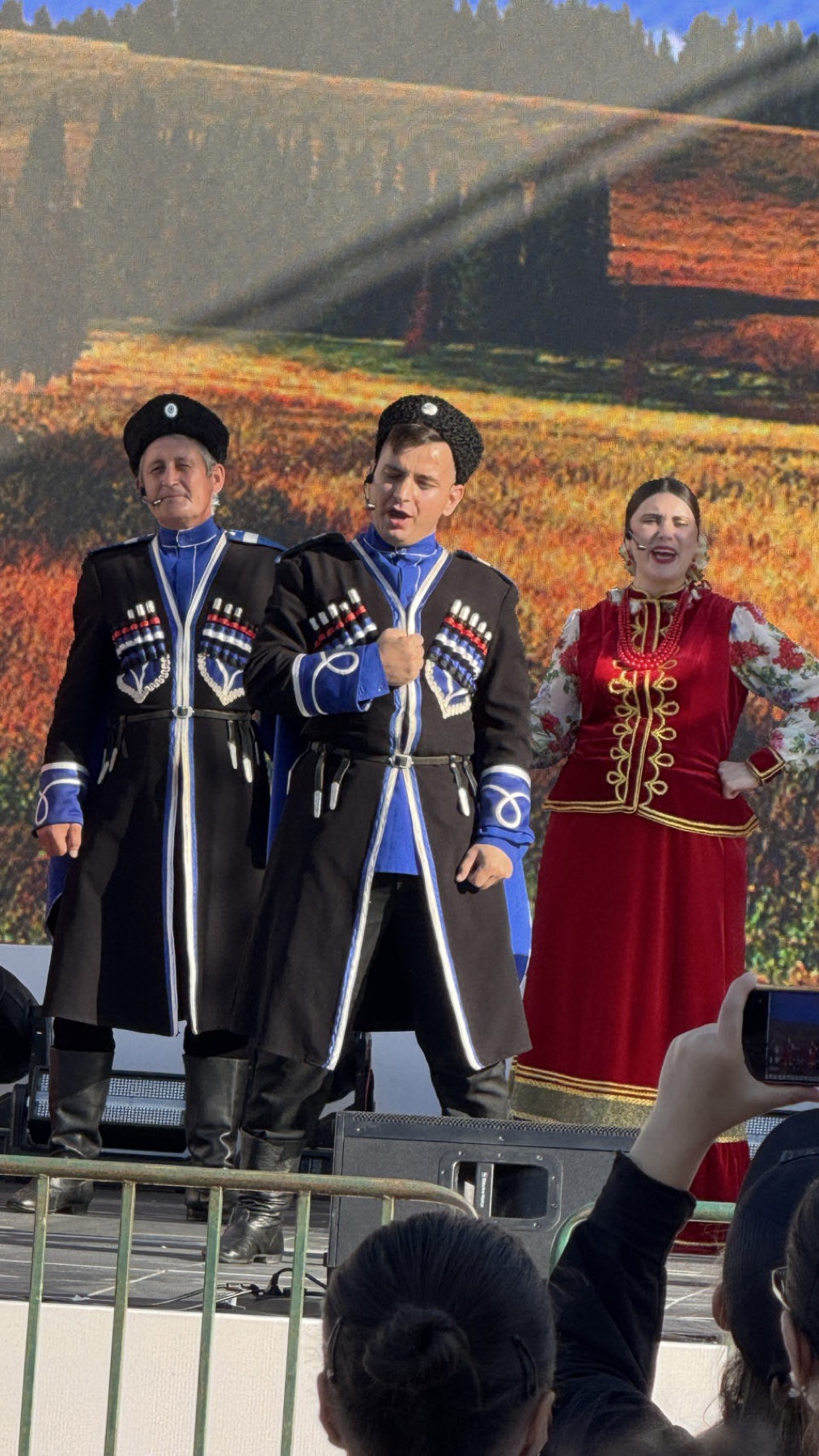
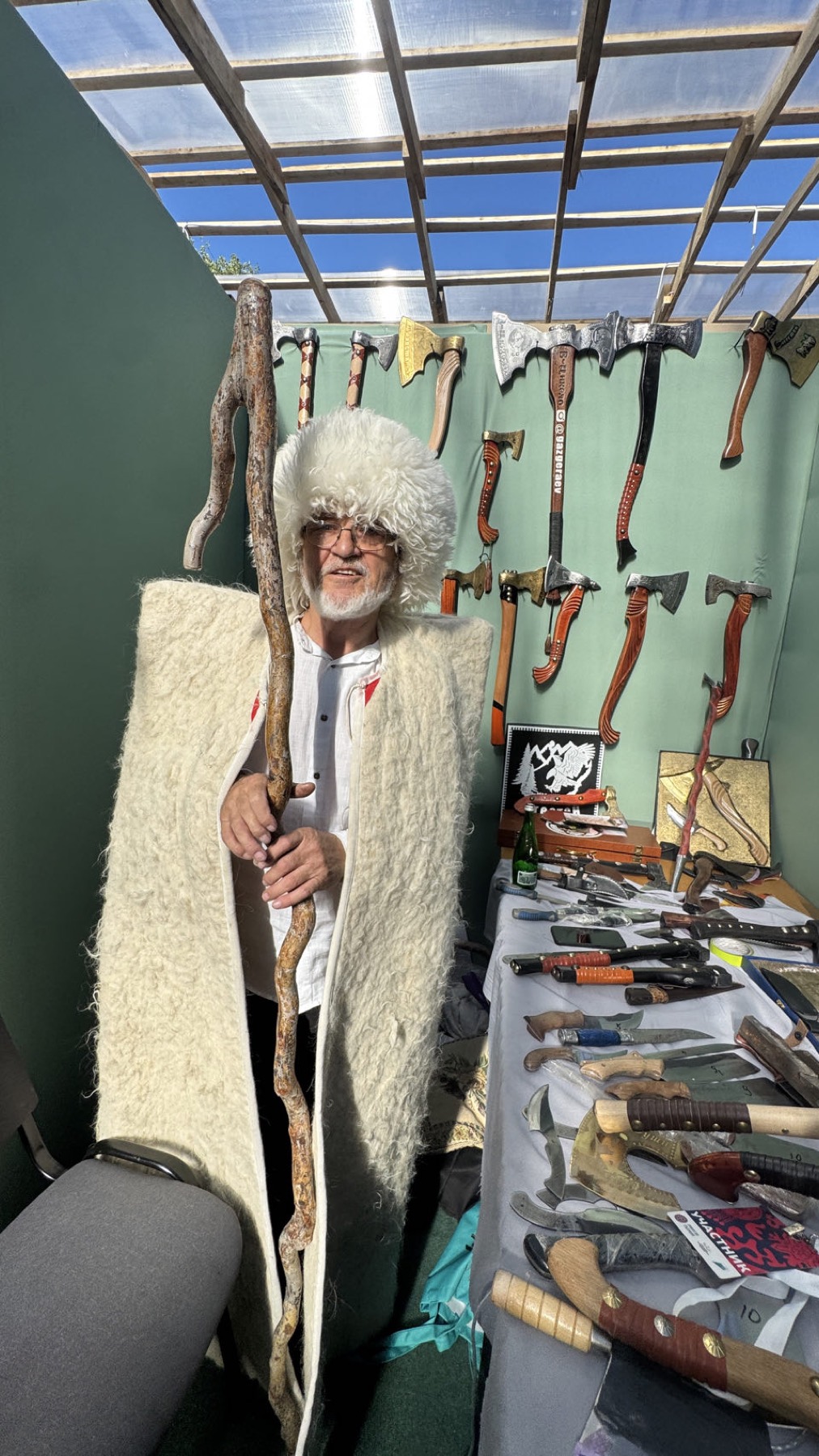
Riding away from that I found a street closed off and a crowd filing through a police check, so I asked. It was the region's cultural festival, held once a year, and it happened to be that day. Inside were Cossack singers on a stage, women in full Dagestani dress behind tables of kindjals, a knifemaker in a white sheepskin cloak and a fleece hat standing among his axes, and weavers selling carpets and embroidery they had made themselves.
Dagestan counts more than thirty ethnic groups, many with their own language. The mountain valleys kept them separate for long enough that they stayed that way.
The town nobody should have recommended.
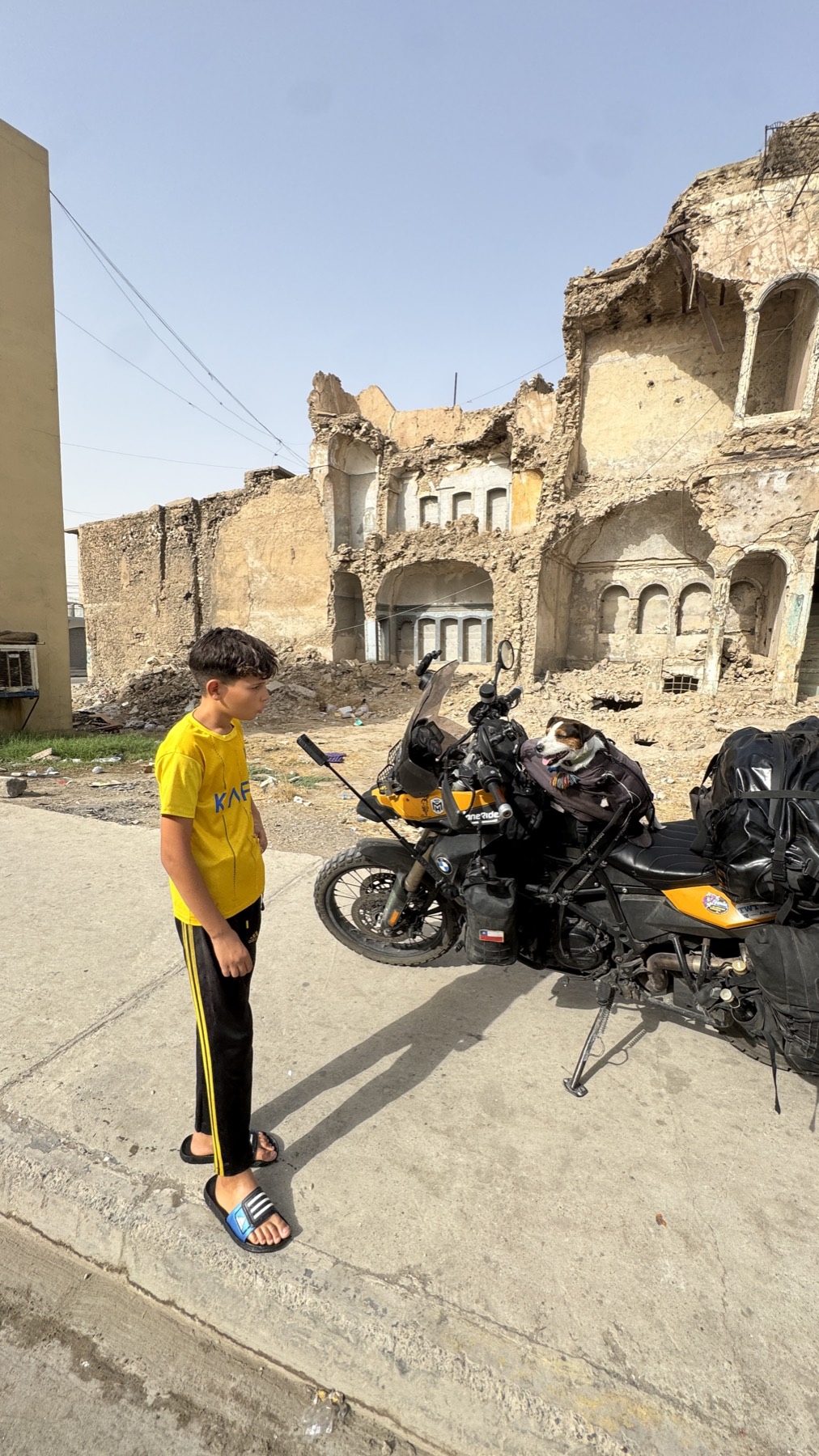
Somebody in Makhachkala told me to go to Kizlyar, so I went. It turned out to be dusty and broken and I could not work out why it had been recommended. I was almost out of cash, it was already dark, and I was on my way out of town when a woman walking the other way smiled at me.
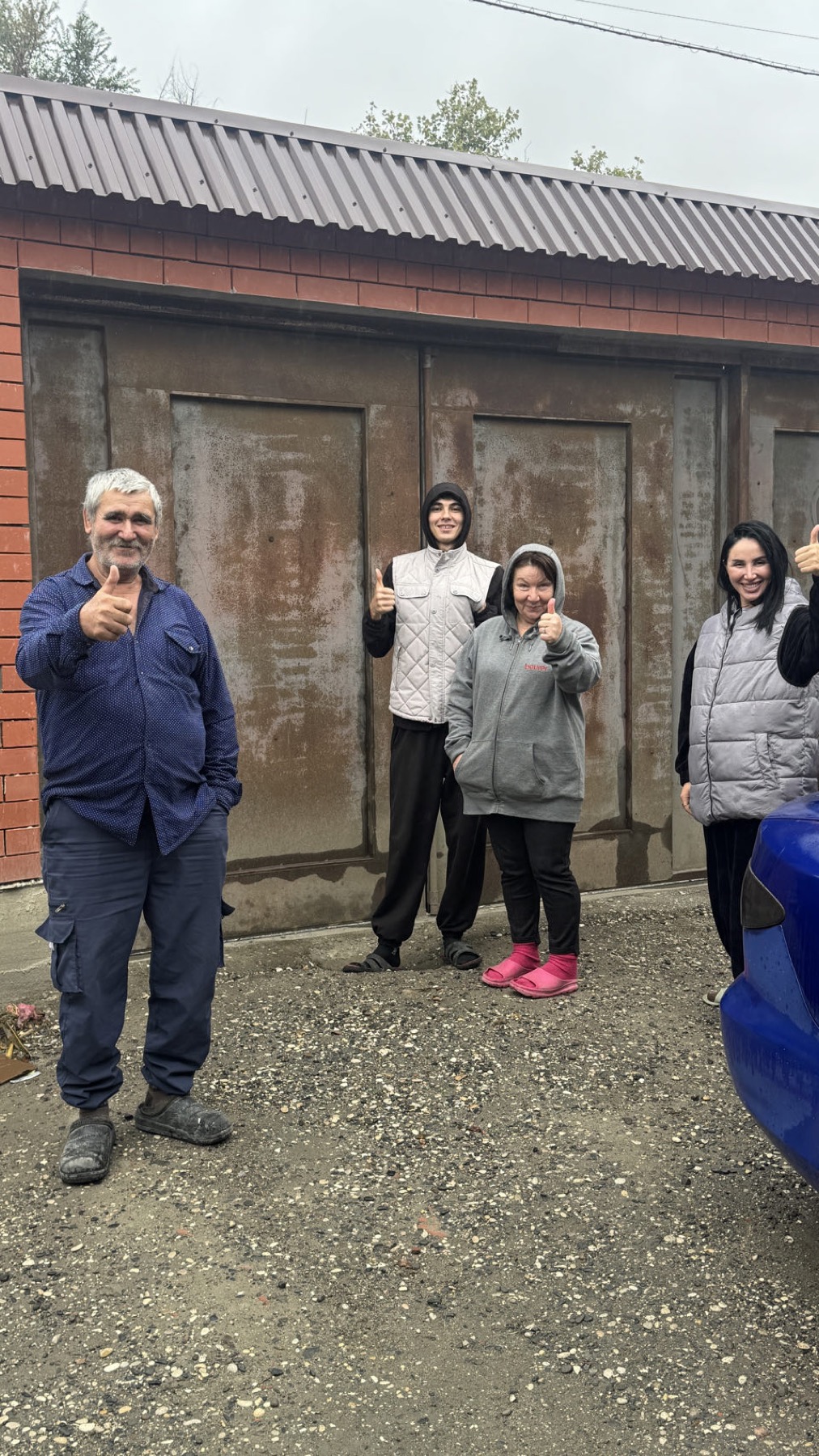
I turned the bike around. She spoke almost no English, so I mimed sleeping. She made a phone call, said yes, and a few metres further on opened a heavy iron gate.
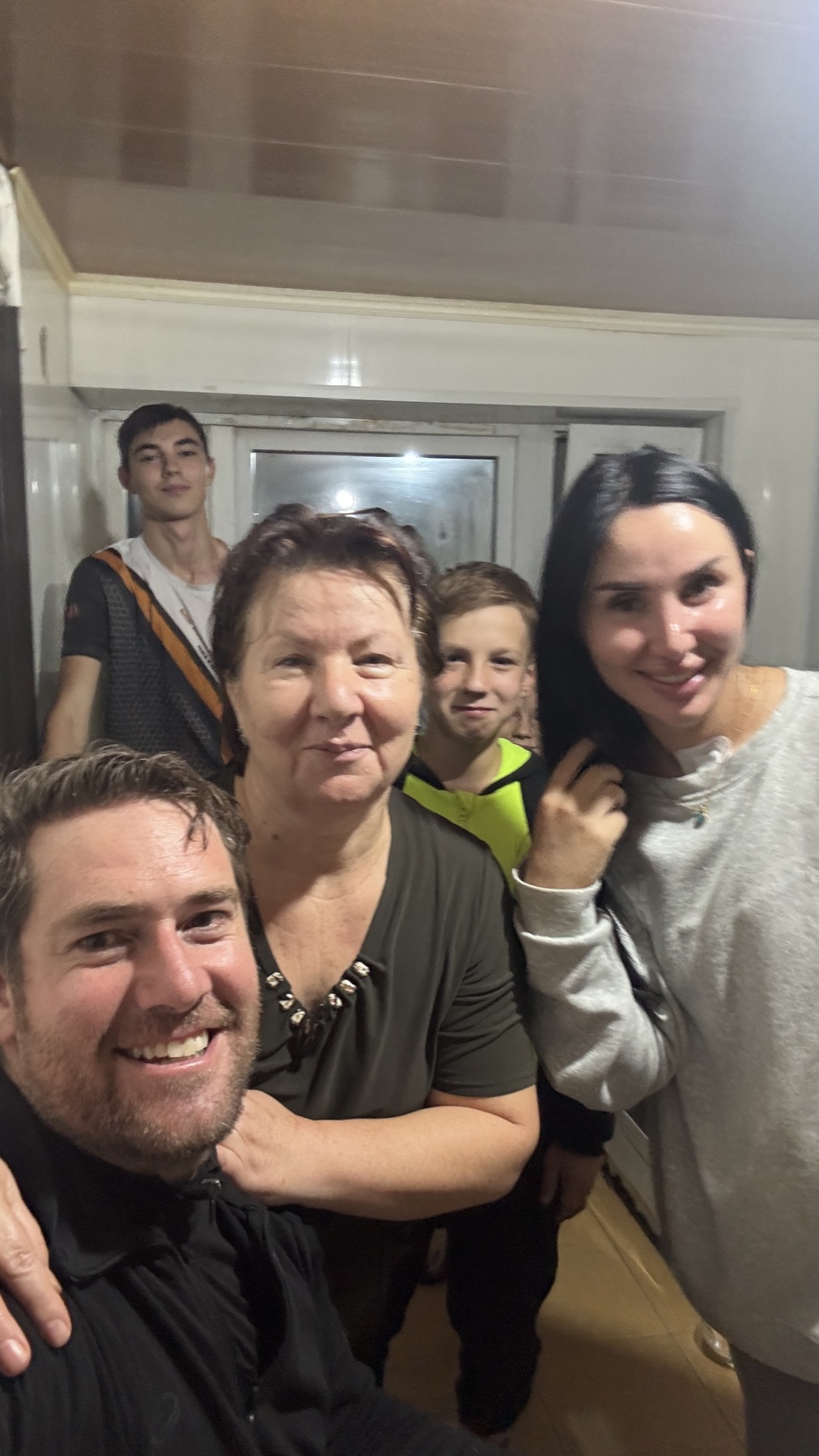
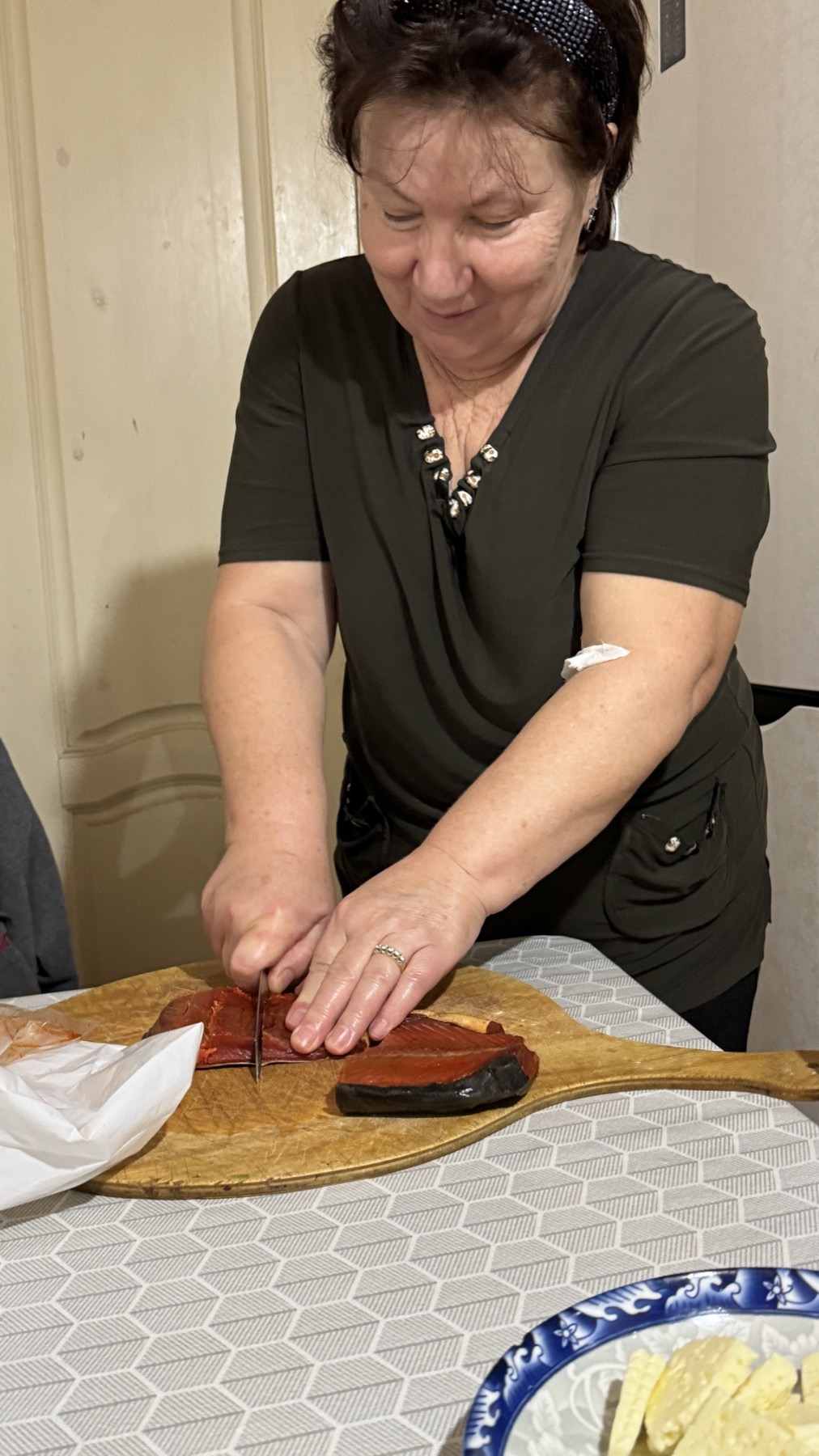
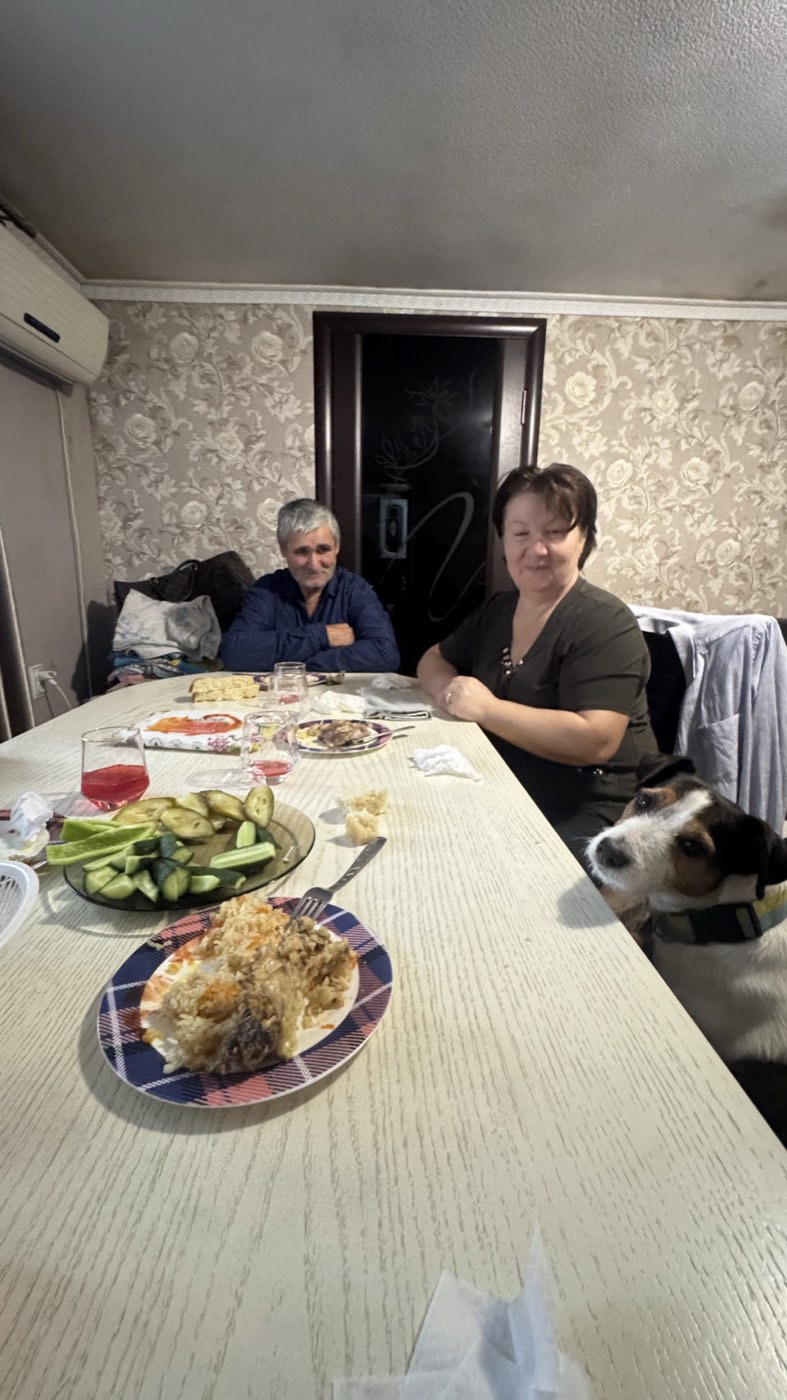
The family kept me for a day and a night while it rained, fed me until I could not move, and made it fairly clear they would have kept me longer. Good people, all of them.
And I got a shower. The first since the hostel in Tbilisi, four or five days earlier, with every night since spent in the tent. That shower was worth more than the food. The whole stop worked as a break in the middle of the trip: eat properly, charge everything, get clean, and then carry on.
I left at three in the afternoon, in drizzle, wearing borrowed gloves.
Straight north out of Kizlyar with the Caspian on my right.
I left Kizlyar at three in the afternoon in drizzle, in borrowed gloves, on the long road north that runs up the side of the Caspian. It rained most of the way. Two police checks waved me through without stopping me: a foreign bike loaded like that answers the question before they ask it.
The first fill cost a thousand roubles. I took a hot chocolate inside while a large Russian woman watched me with suspicion, and would not have Jacko in the shop until he stood up on his back legs to ask for food, at which point she softened. Further north the sky cleared, and I passed a man with clearly Asian features for the first time, which told me Kazakhstan was getting close.
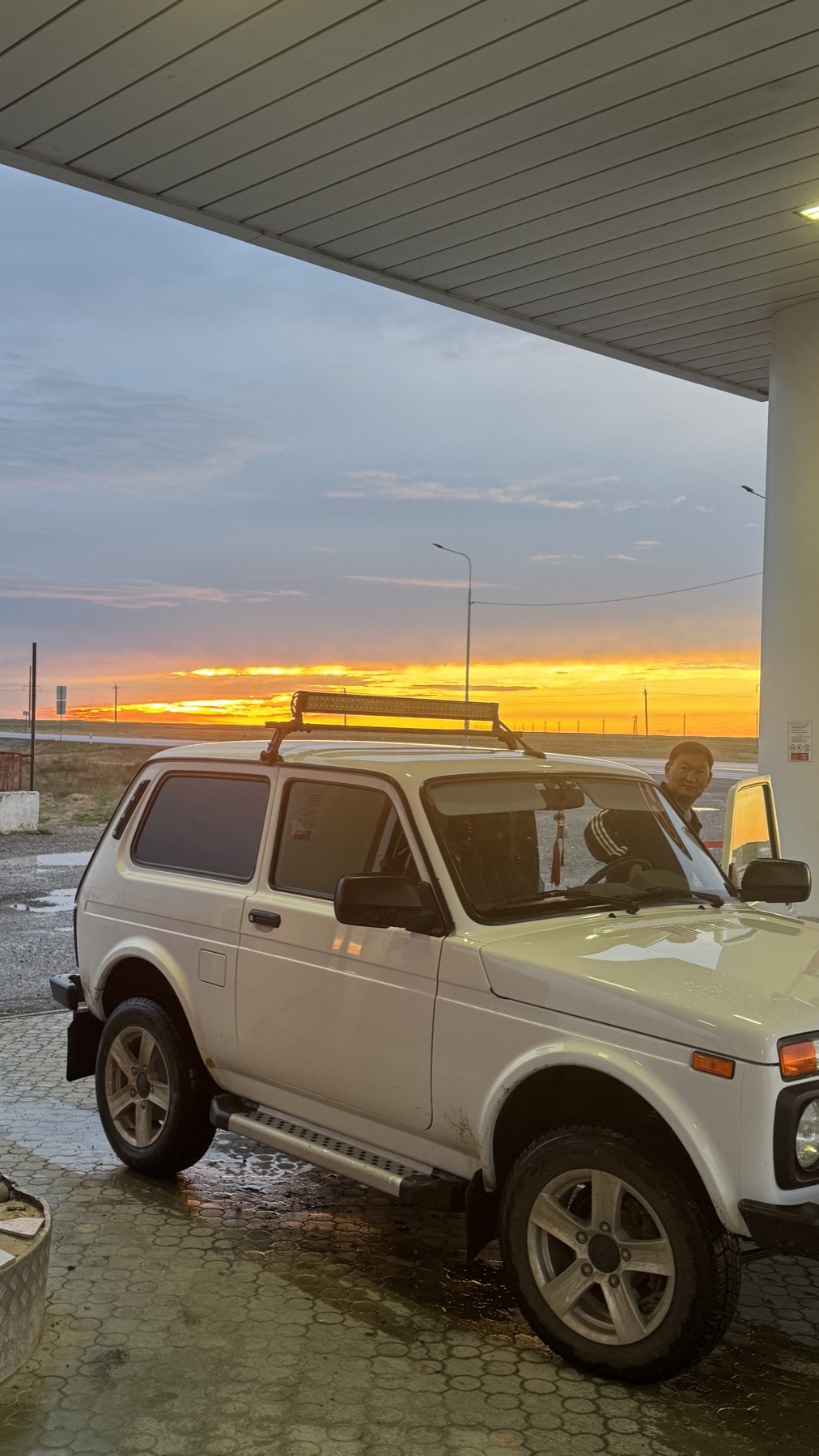
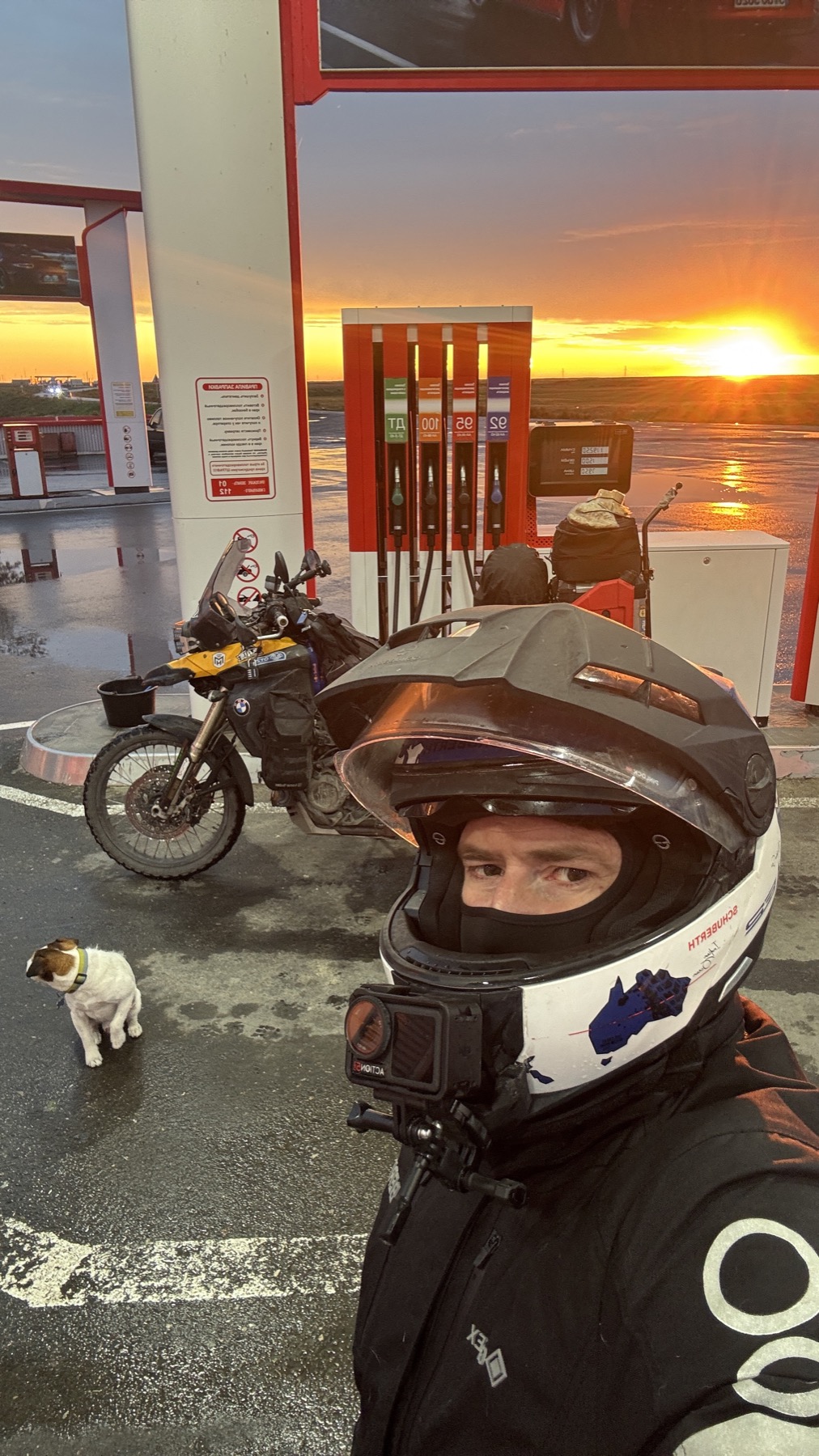
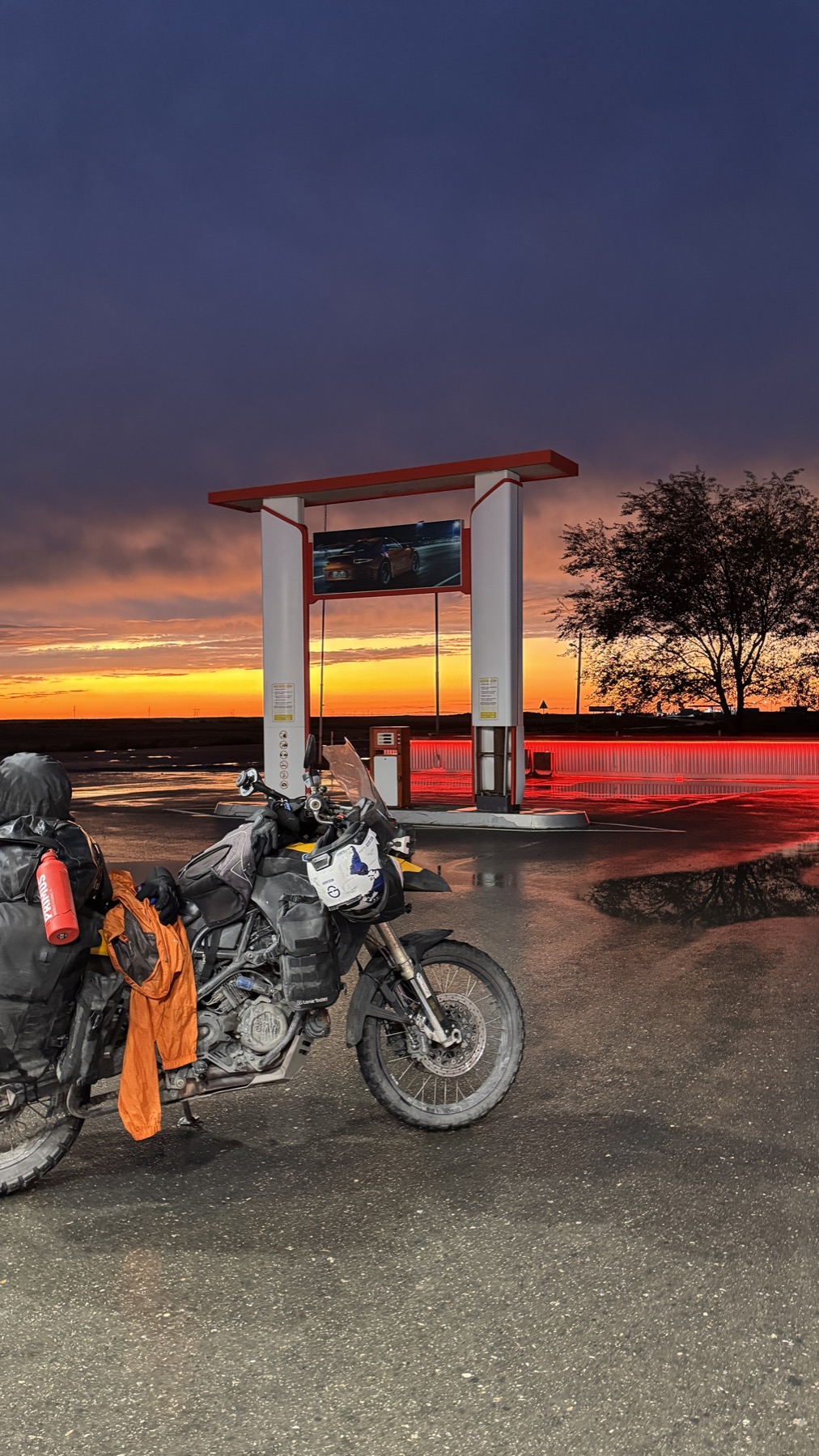
About eighty kilometres of pure steppe later the sun came out to set, and it was the best one of the crossing. I pulled into a petrol station to watch it with a coffee in my hand. The forecourt was soaked and every centimetre of it had gone orange.
The camp was another iOverlander pin, a hundred and twenty kilometres further on, near one of the arms of the Volga before it dies into the Caspian. I got there at eight, an hour of it in the dark, out of cash and with fuel for about ten more kilometres.
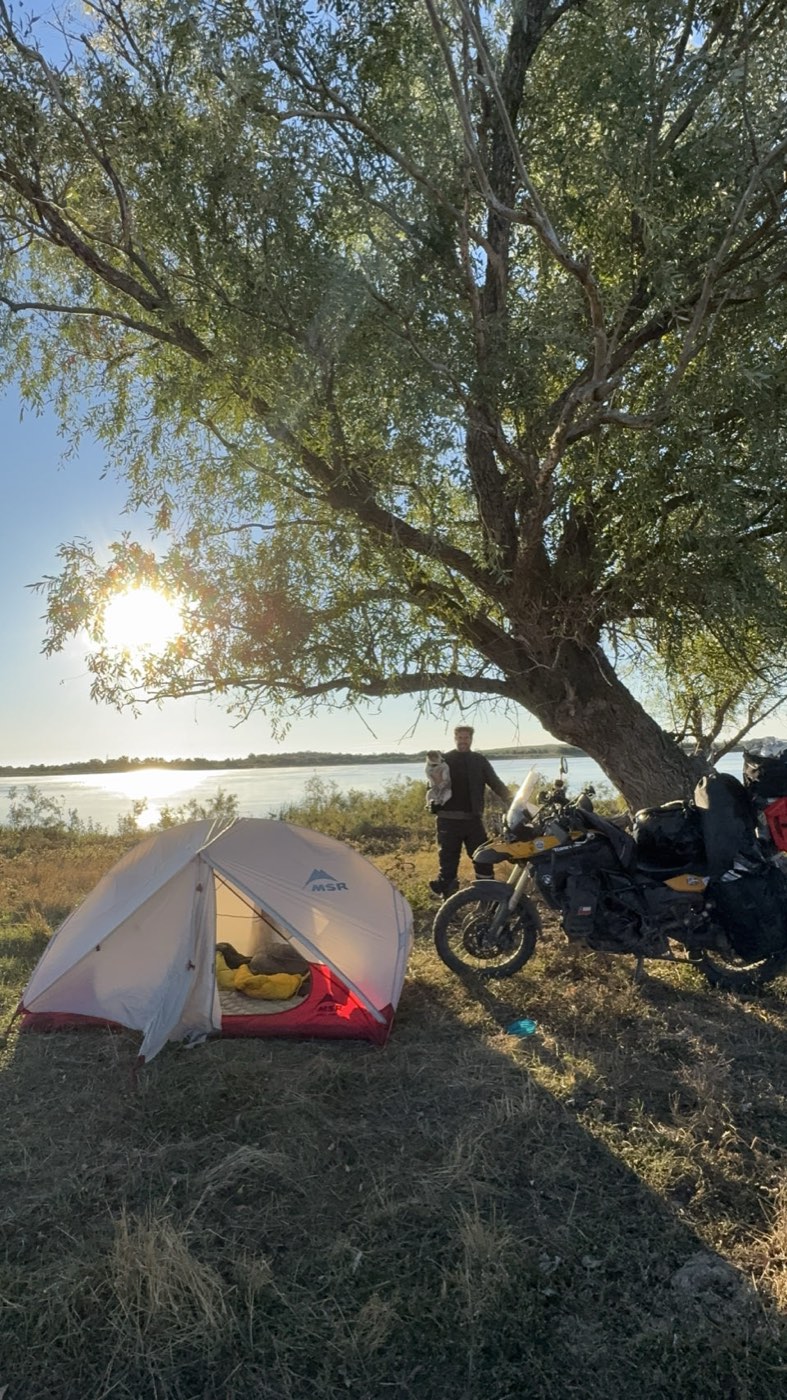
The barges came past fifteen metres away with their engines nearly off.
I pitched under an old tree right at the water, working by feel again. The barges came past all night, fifteen metres away, flat and covered and with their engines nearly off, carrying oil up from the Caspian into Russia. They went by like ghosts.
The Volga is the longest river in Europe. Three and a half thousand kilometres from the hills north west of Moscow down to where I was lying, and it never leaves Russia. Eleven of the country's twenty largest cities stand on it, and Russians call it Mother Volga. For a thousand years it was the road south: the Khazars, the Volga Bulgars and the Vikings all traded down it to the Caspian and on to Persia. The barges going past my tent were running the same route, with oil instead of furs.
By that night the cash was gone. Five roubles, about fifty Chilean pesos, and a five lari note from Georgia that was no use to anyone, which went into the banknote collection I had started that year.
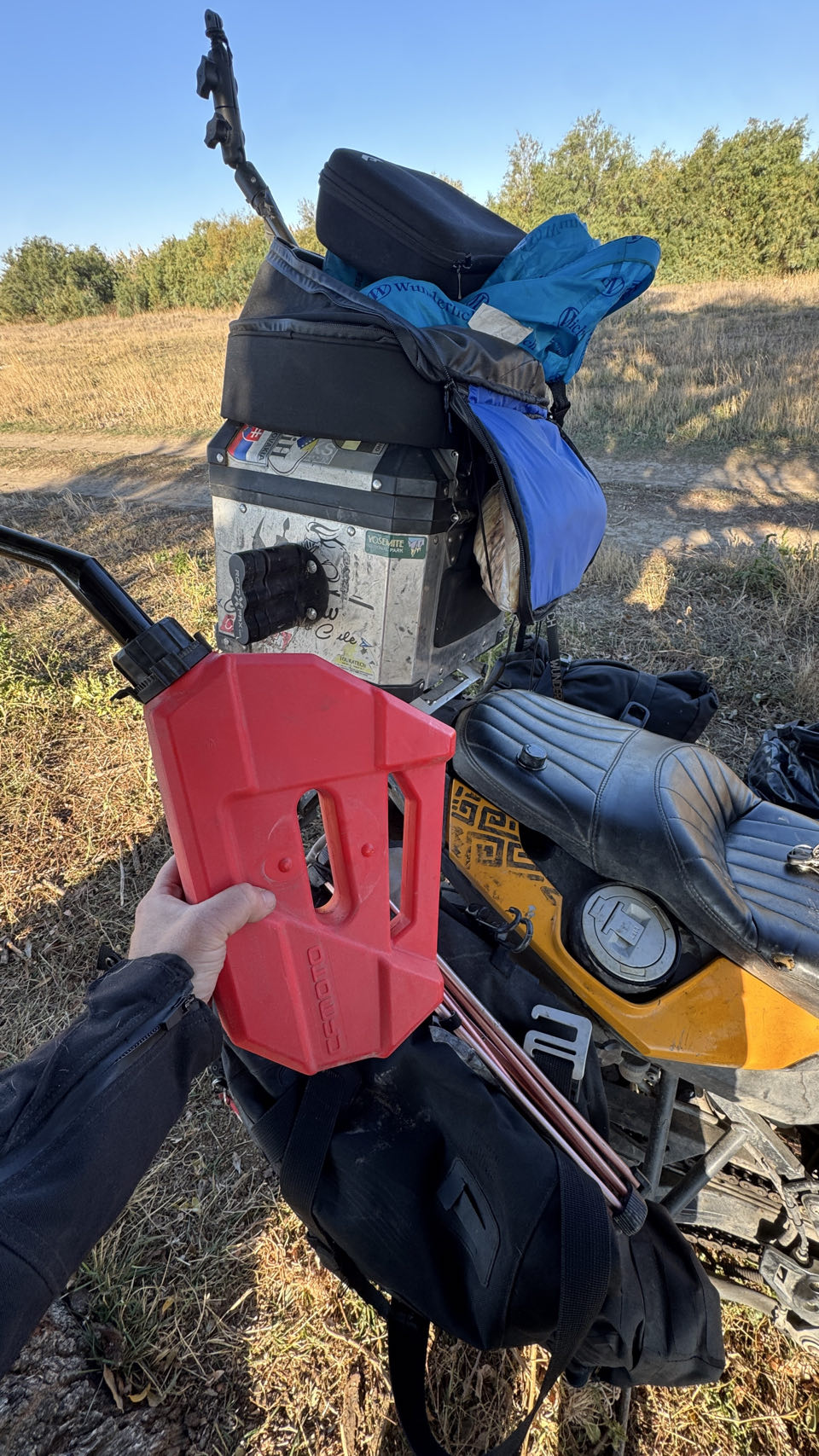
In the morning I emptied both reserve cans into the tank, about five litres, which was exactly enough to reach Astrakhan and change my last fifty euros.
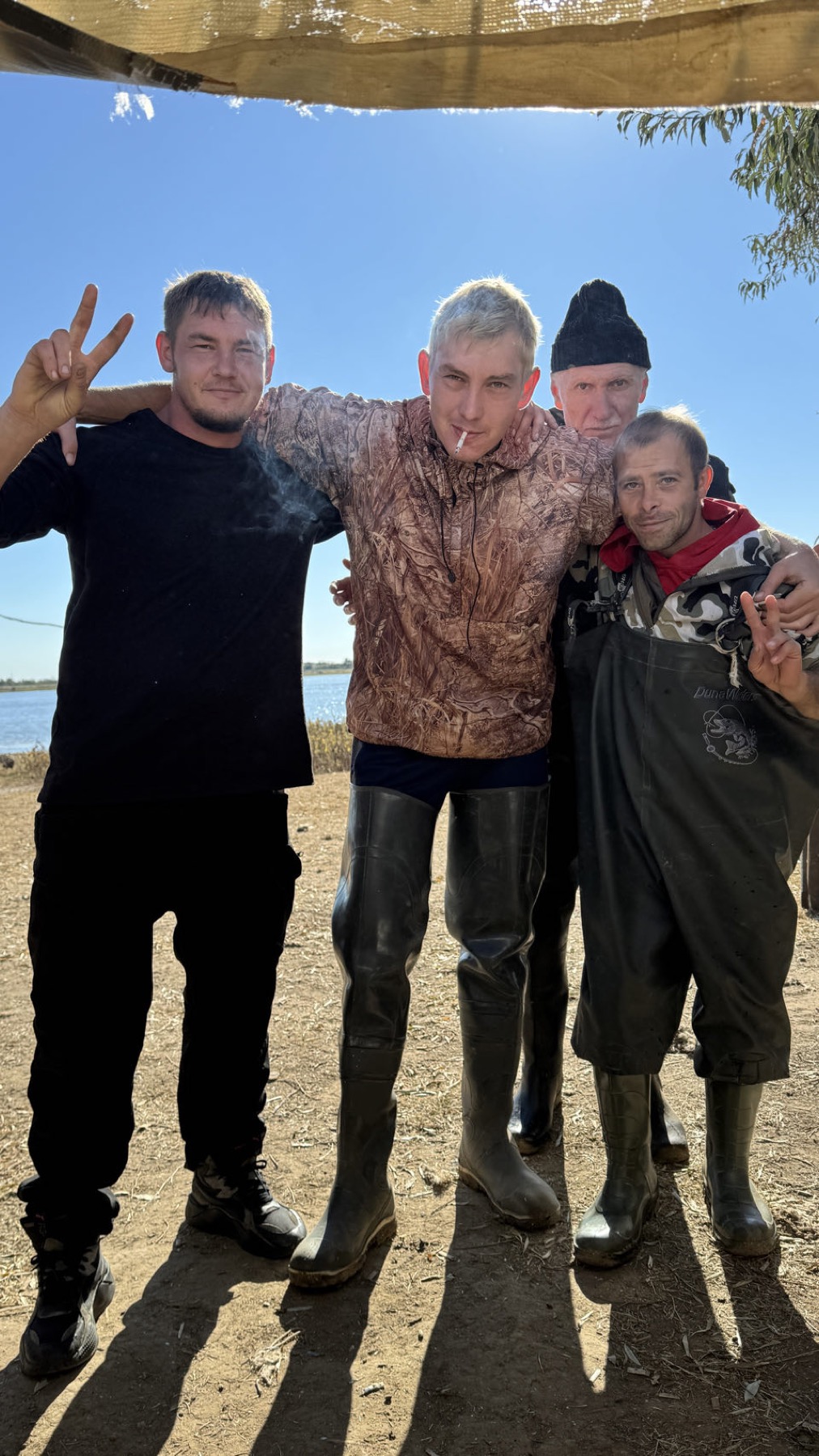
On my way out four fishermen in waders called me over from the bank, and would not let me leave in any hurry.
They went by like ghosts, fifteen metres away, and I lay there listening to them.
Astrakhan, the only properly Russian city of the whole crossing.
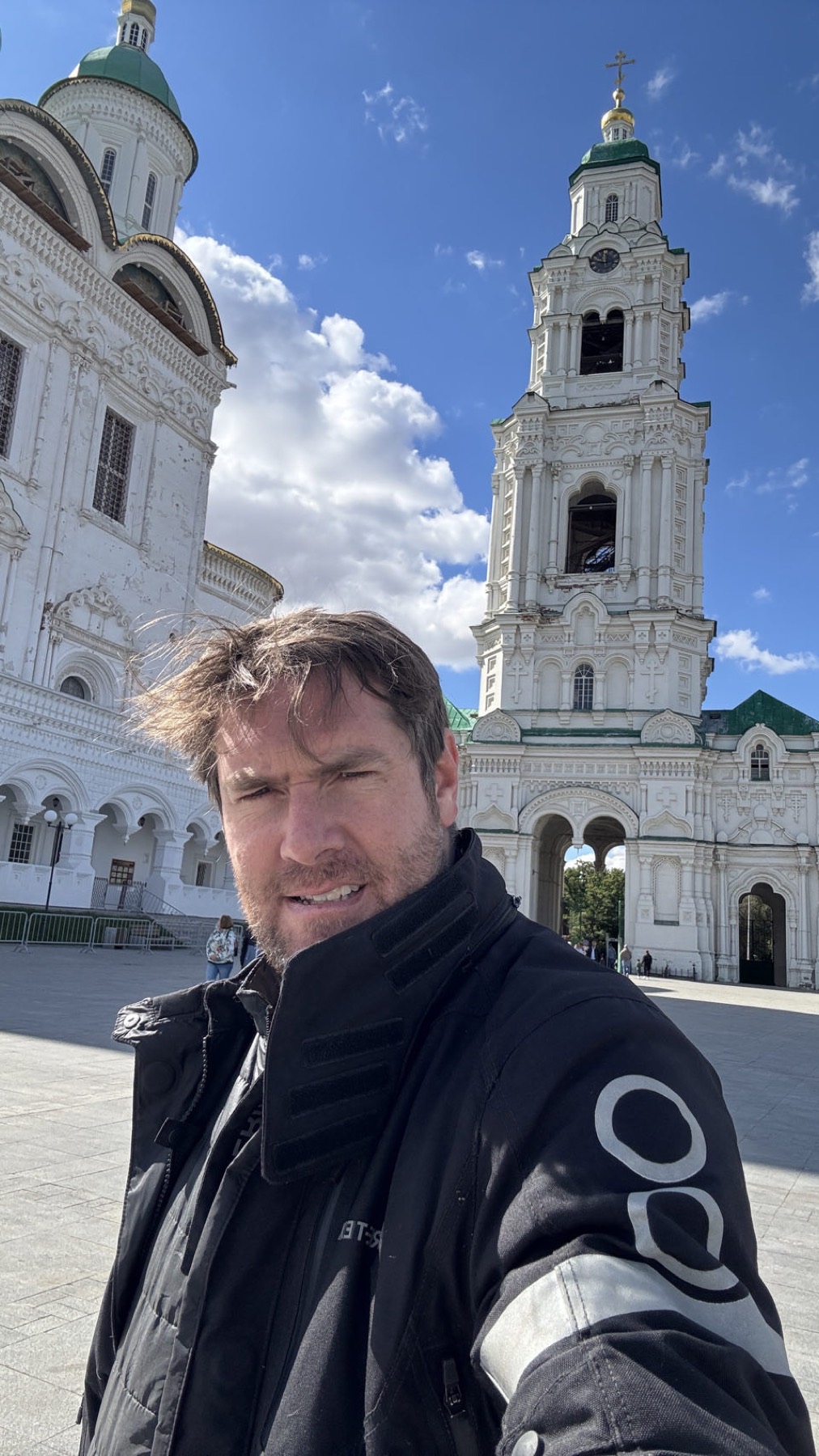
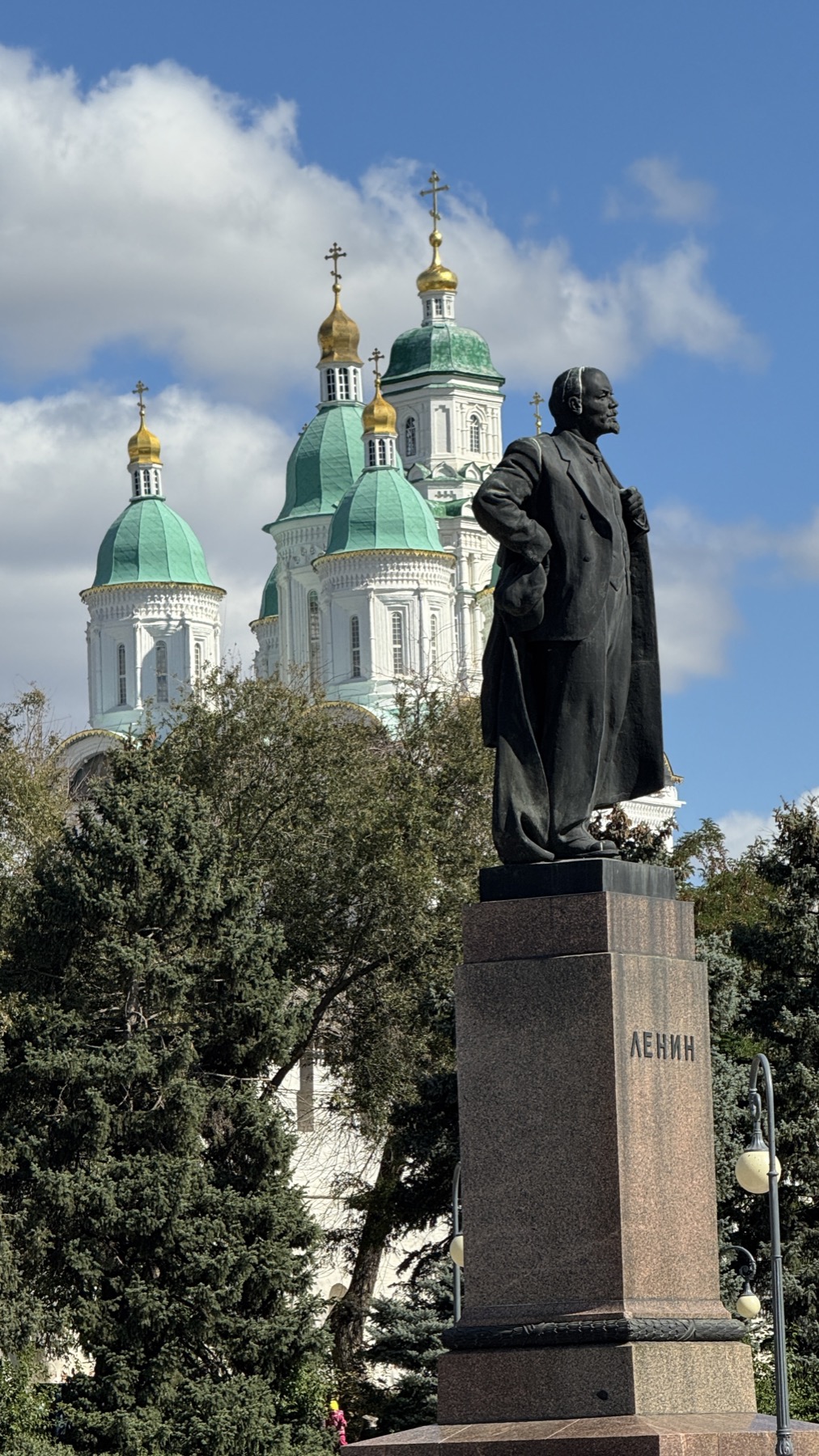
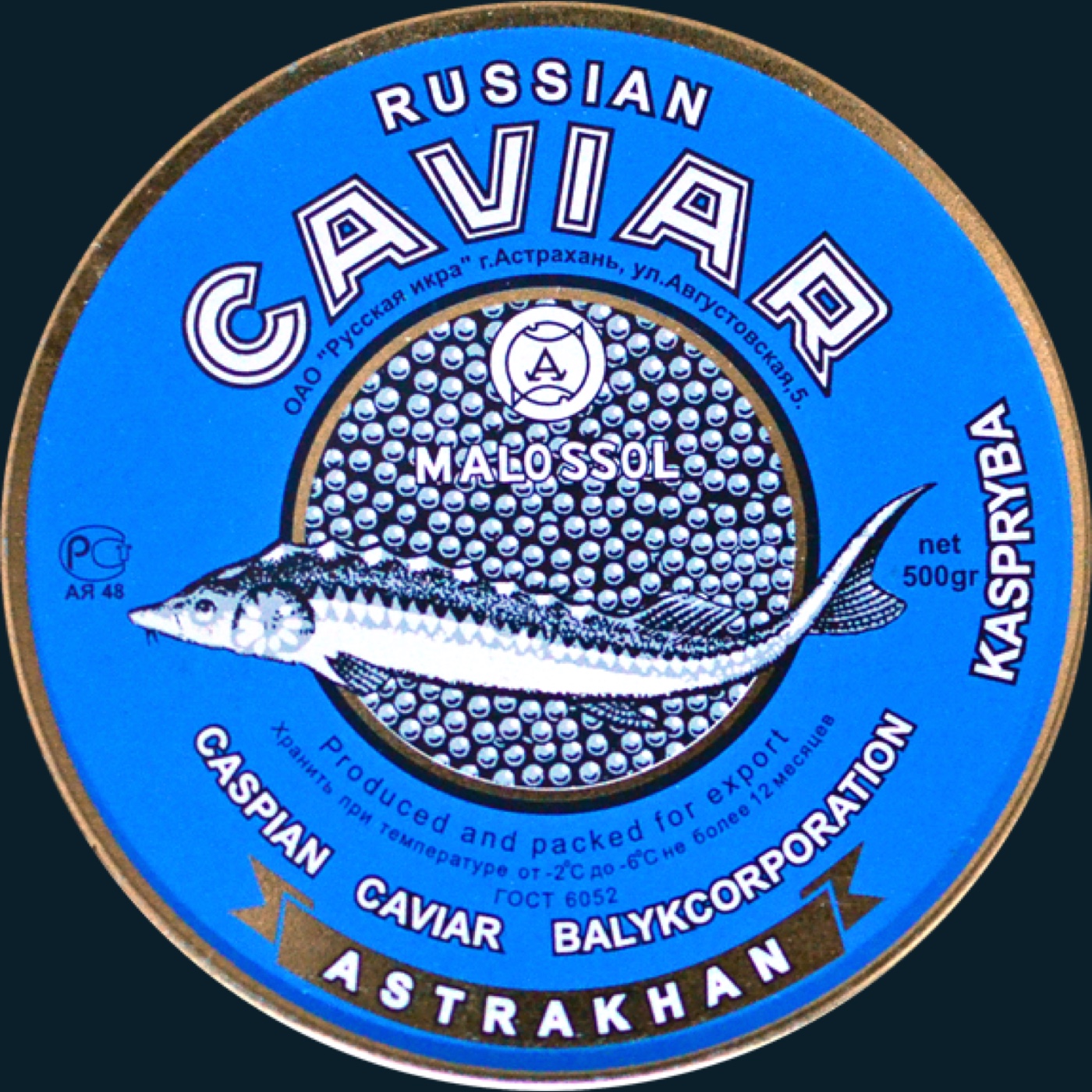
Astrakhan was founded in 1558 on the order of Ivan the Terrible, on the delta where the Volga breaks into hundreds of channels after three and a half thousand kilometres and dies into the Caspian. Persian caravans, Armenian traders and Tatar merchants all came through it, and it is still the caviar capital of Russia.
Long before Ivan, this was Mongol ground. Batu Khan, a grandson of Genghis, put the capital of the Golden Horde at Sarai, a short way up the delta from the modern city. When the Horde came apart in the fifteenth century, the piece around the river mouth became the Khanate of Astrakhan, and it lasted about ninety years before Ivan took it in 1556.
Six centuries of that leave a mark on the faces. Astrakhan is one of the most mixed cities in Russia: Russians, Kazakhs, Tatars, Nogais, Kalmyks, Azeris, Armenians, and people from all over the Caucasus, in a place that has been a frontier for as long as anyone has been keeping count.
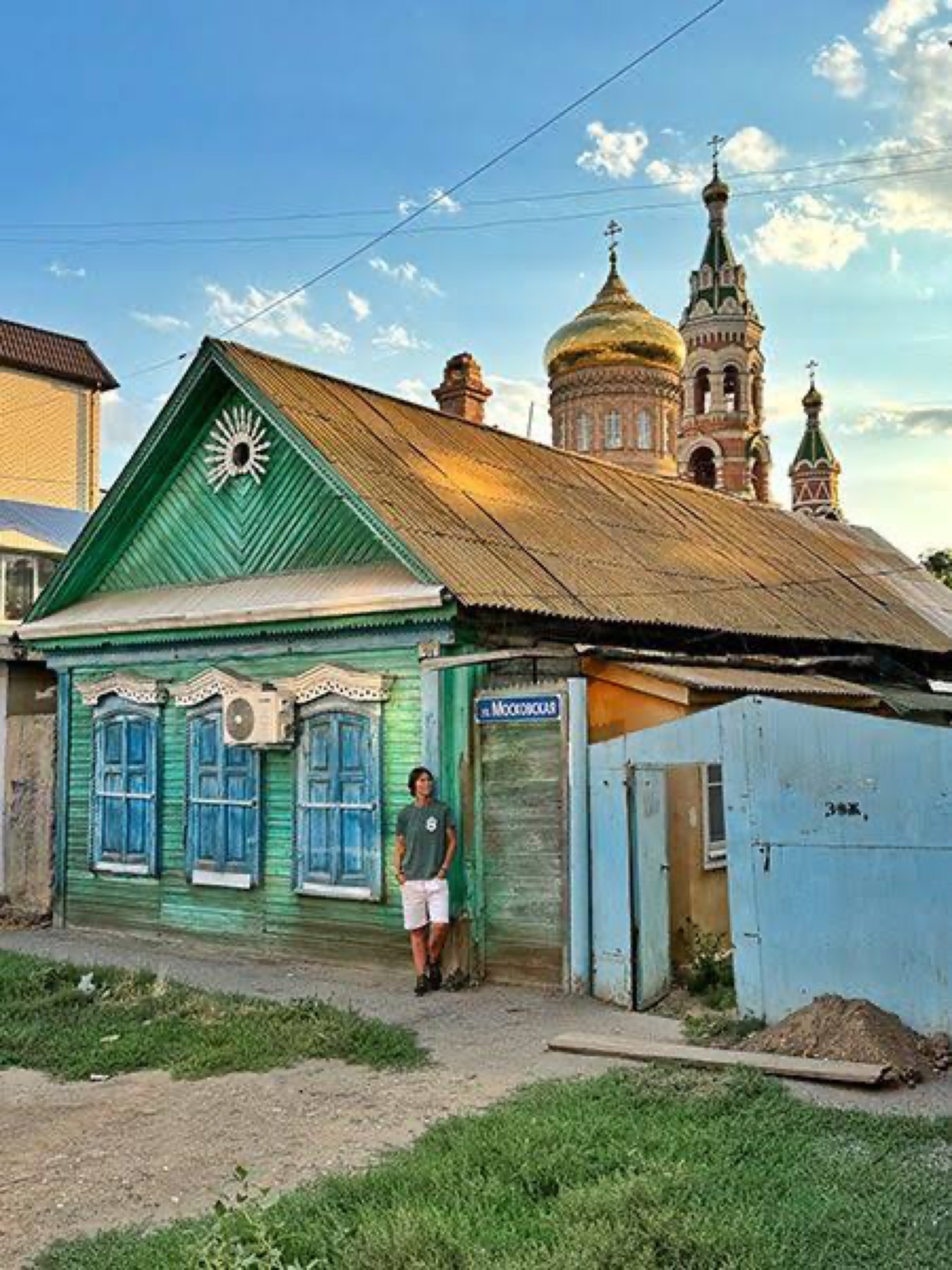
It was also the only properly Russian city I saw on the whole crossing. Chechnya and Dagestan are something else entirely. Old wooden houses, Soviet blocks, mosques and loud fish markets, and the longest river in Europe finishing its run right there.
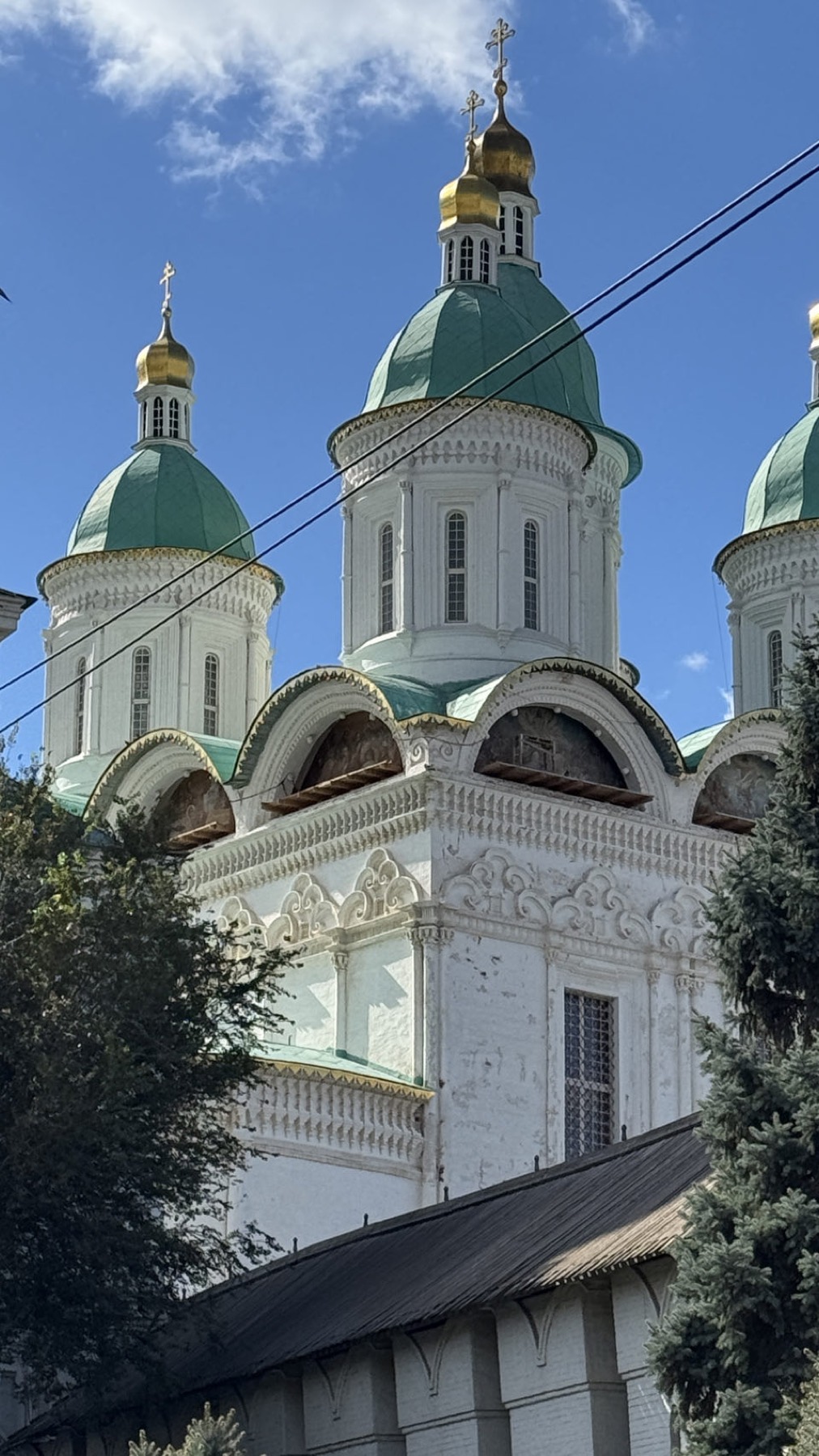
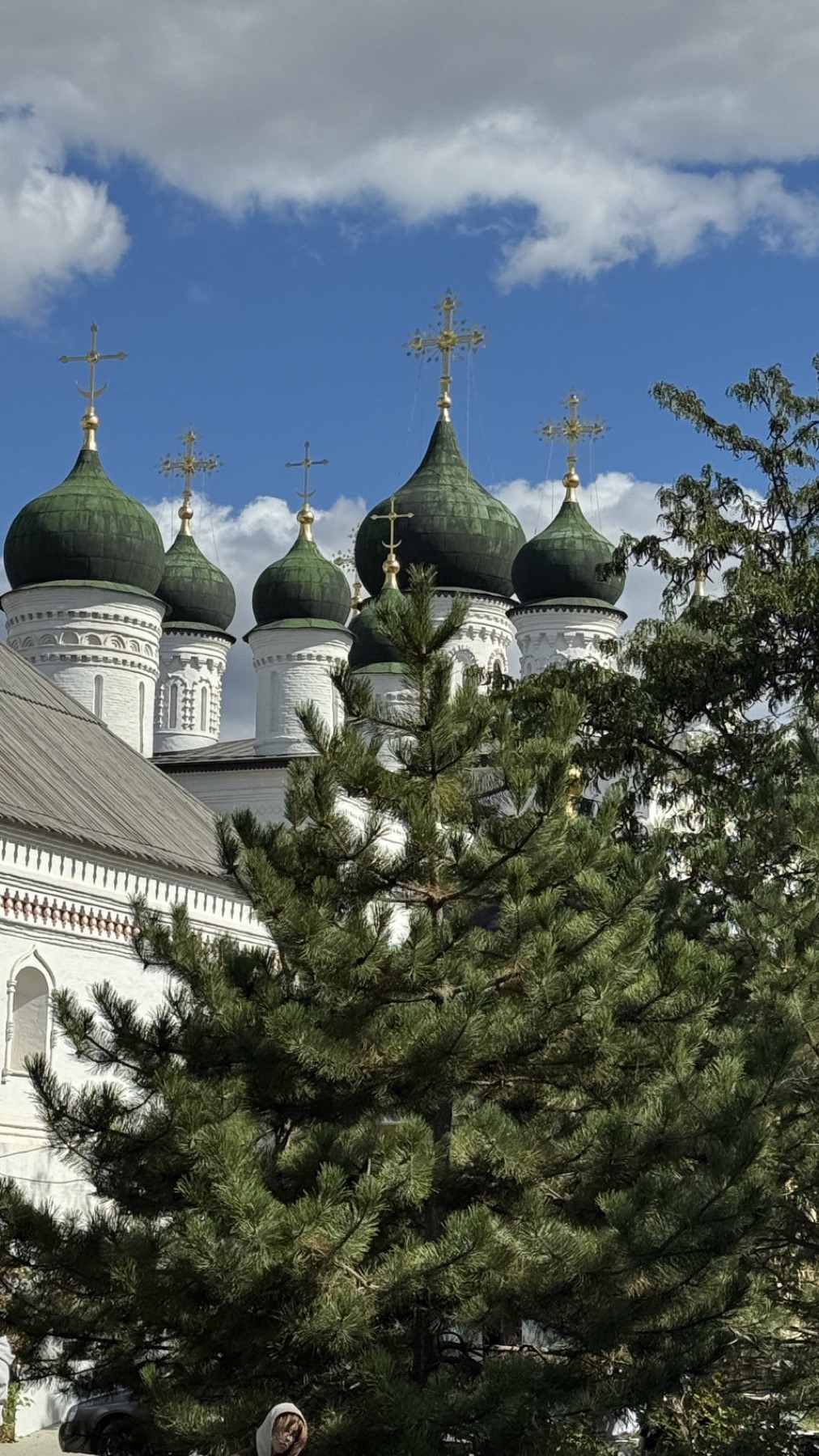
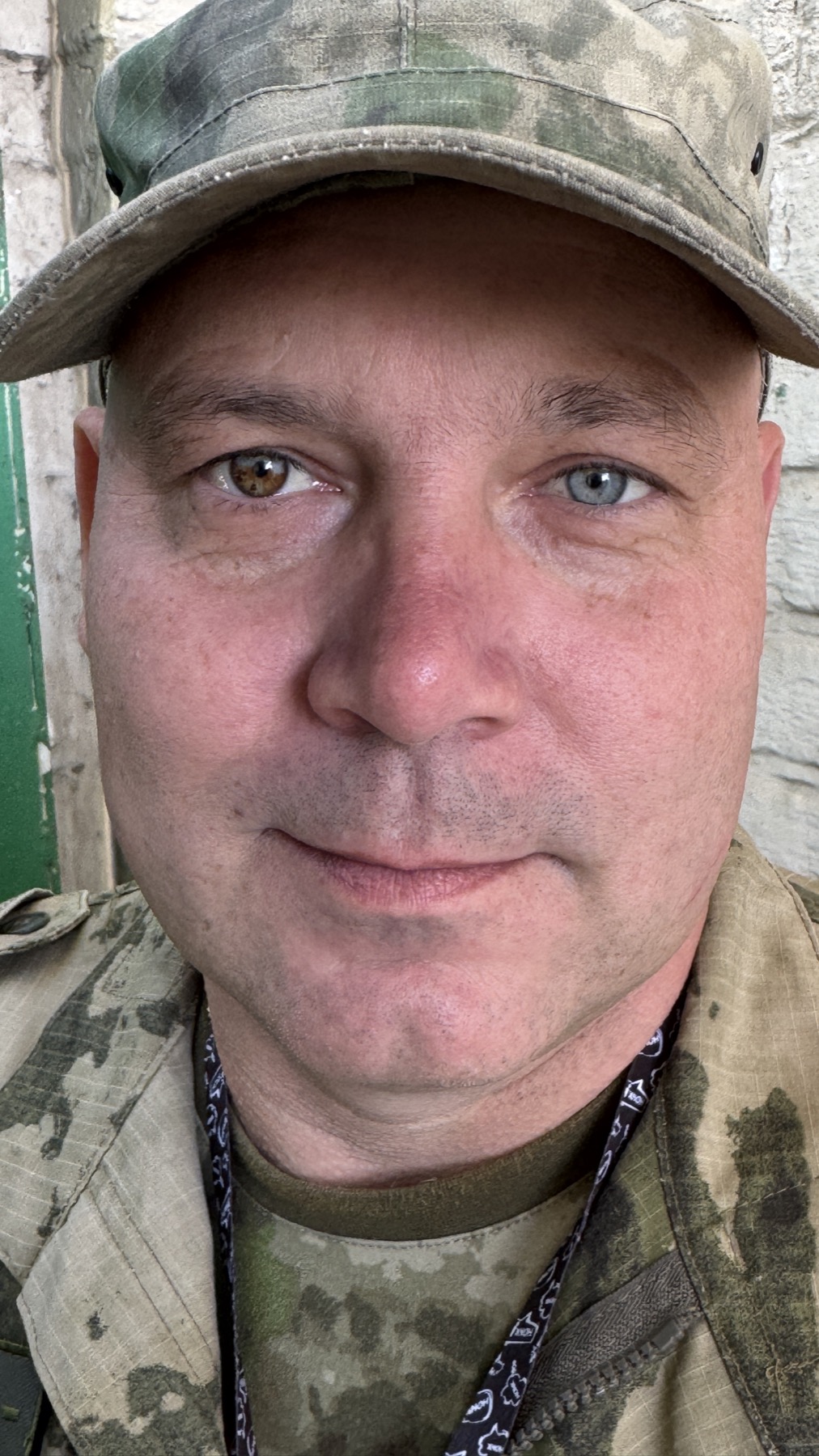
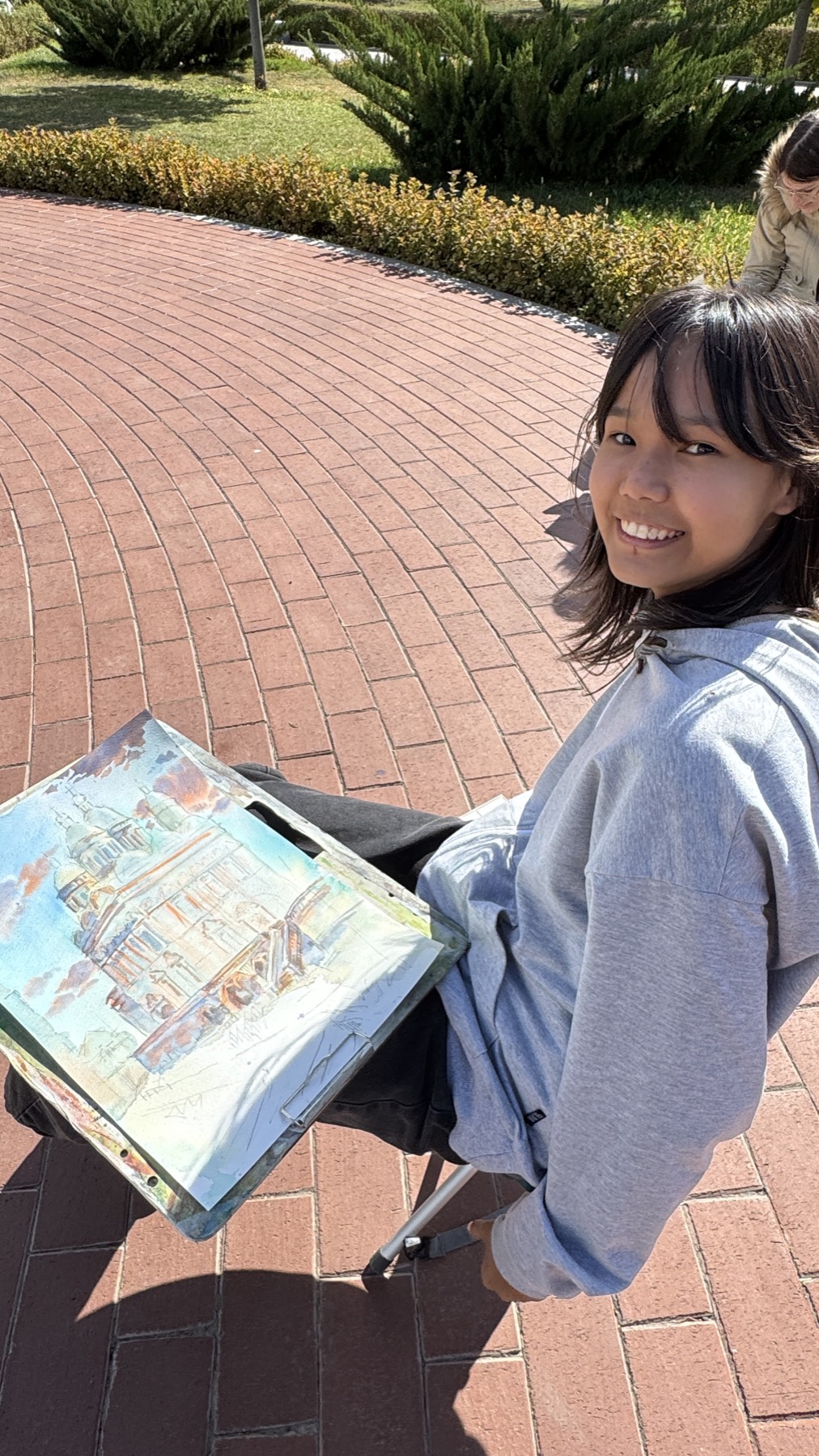
I went into the kremlin, a white fortress from the sixteenth century. Two soldiers were standing at the gate and I asked one of them for a photograph, because he had one brown eye and one blue one. He agreed without any fuss. Inside, students were sitting out on the grass painting watercolours in the warm autumn.
Afterwards I sat on a cafe terrace facing the walls, expensive by Russian standards. A woman at the next table got up and came over to talk: she had travelled in Switzerland and loved it. Then she said she had noticed I had ordered nothing to eat, recommended a salad and a local soup, and told me they wanted to buy me lunch because I was a stranger in their city. She smiled and walked to the till. From here the road turns east onto the steppe, and the next chapter is Kazakhstan.
The field archive
44 more frames from the road
Everything else from the folder, in the order it was taken.
080910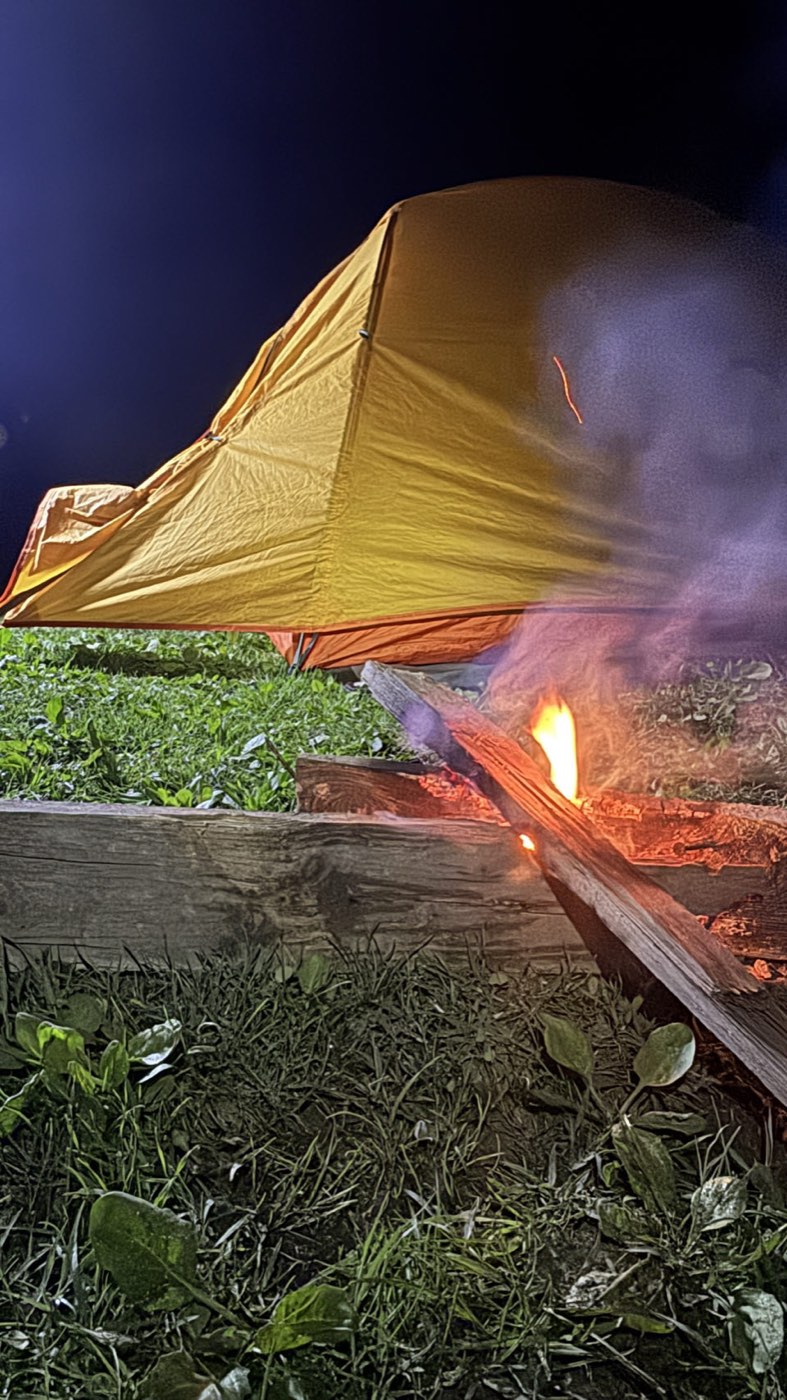 11
11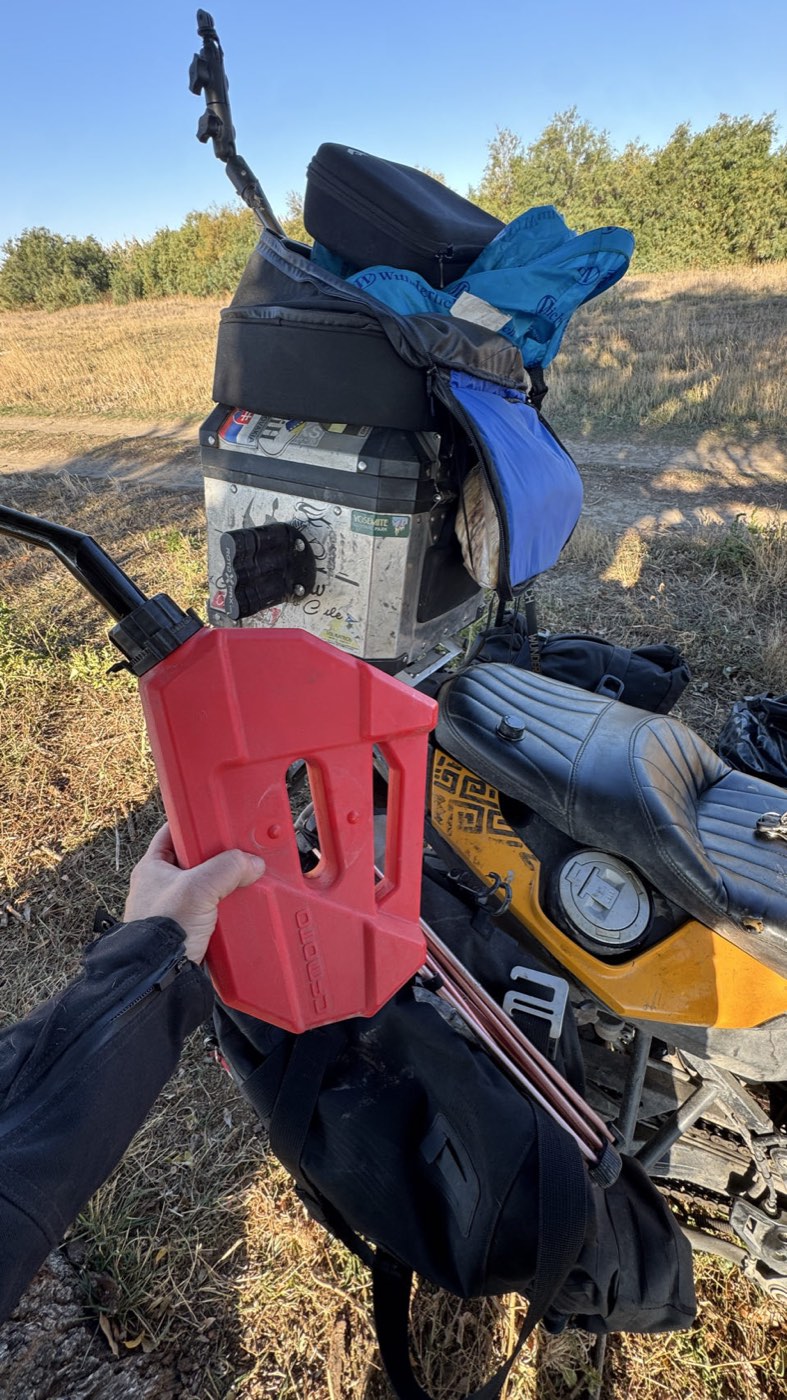 12
12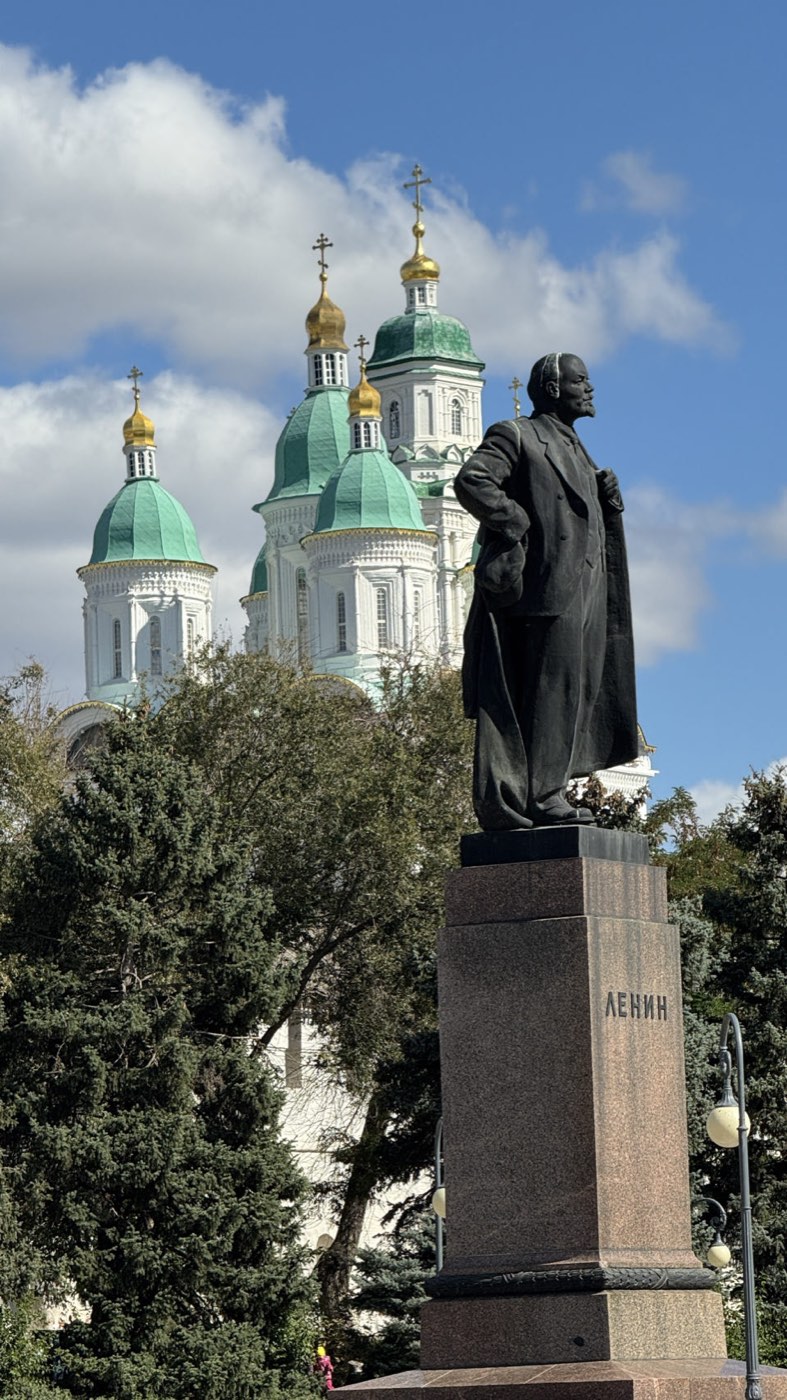 13
13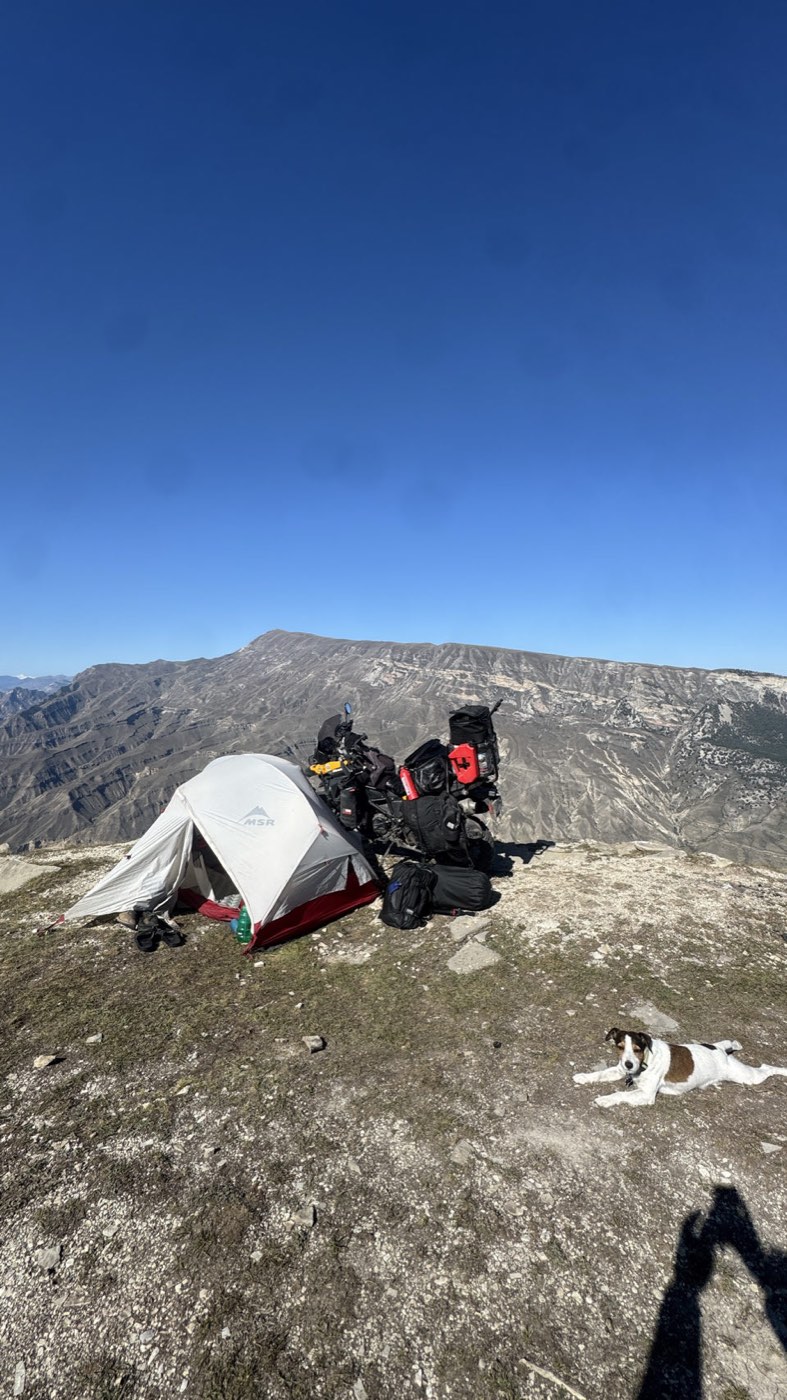 14
14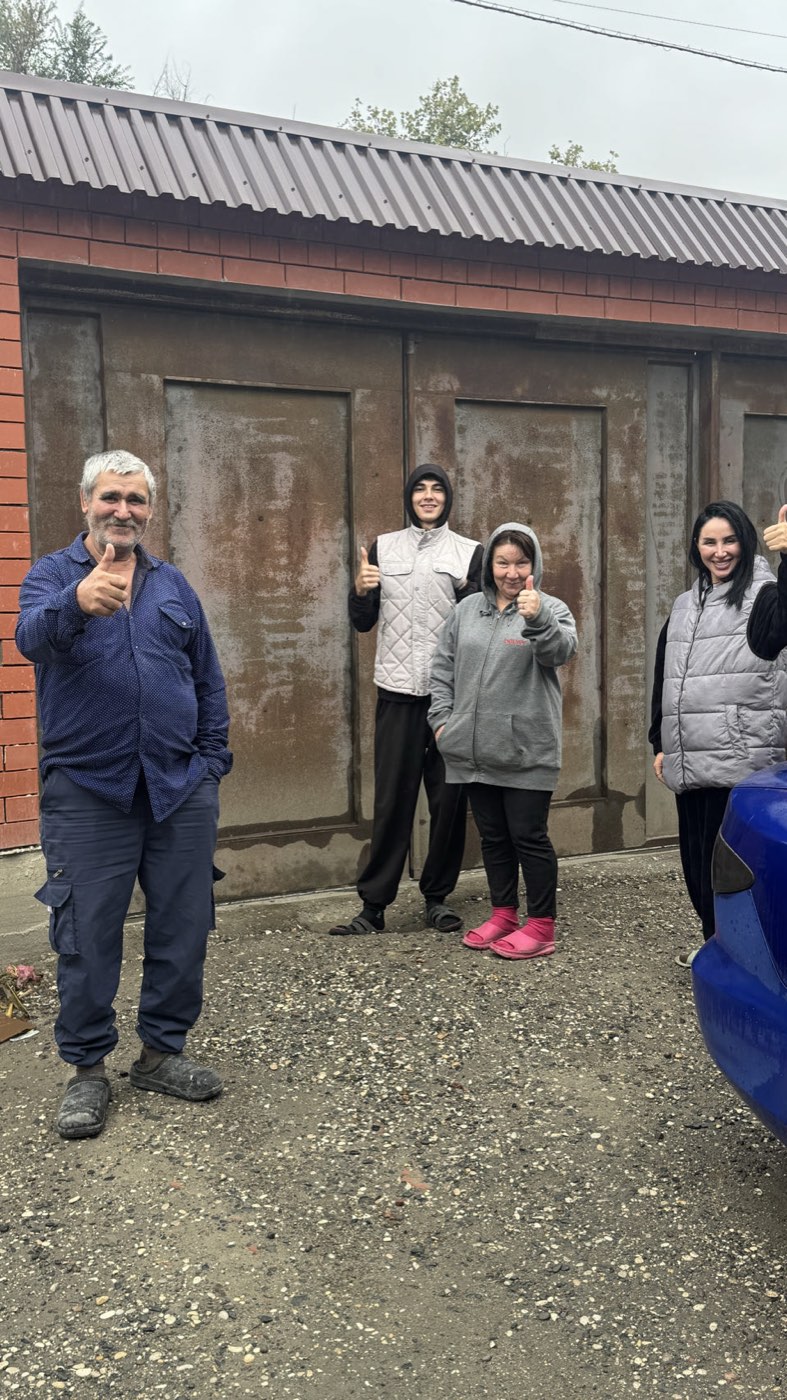 15
15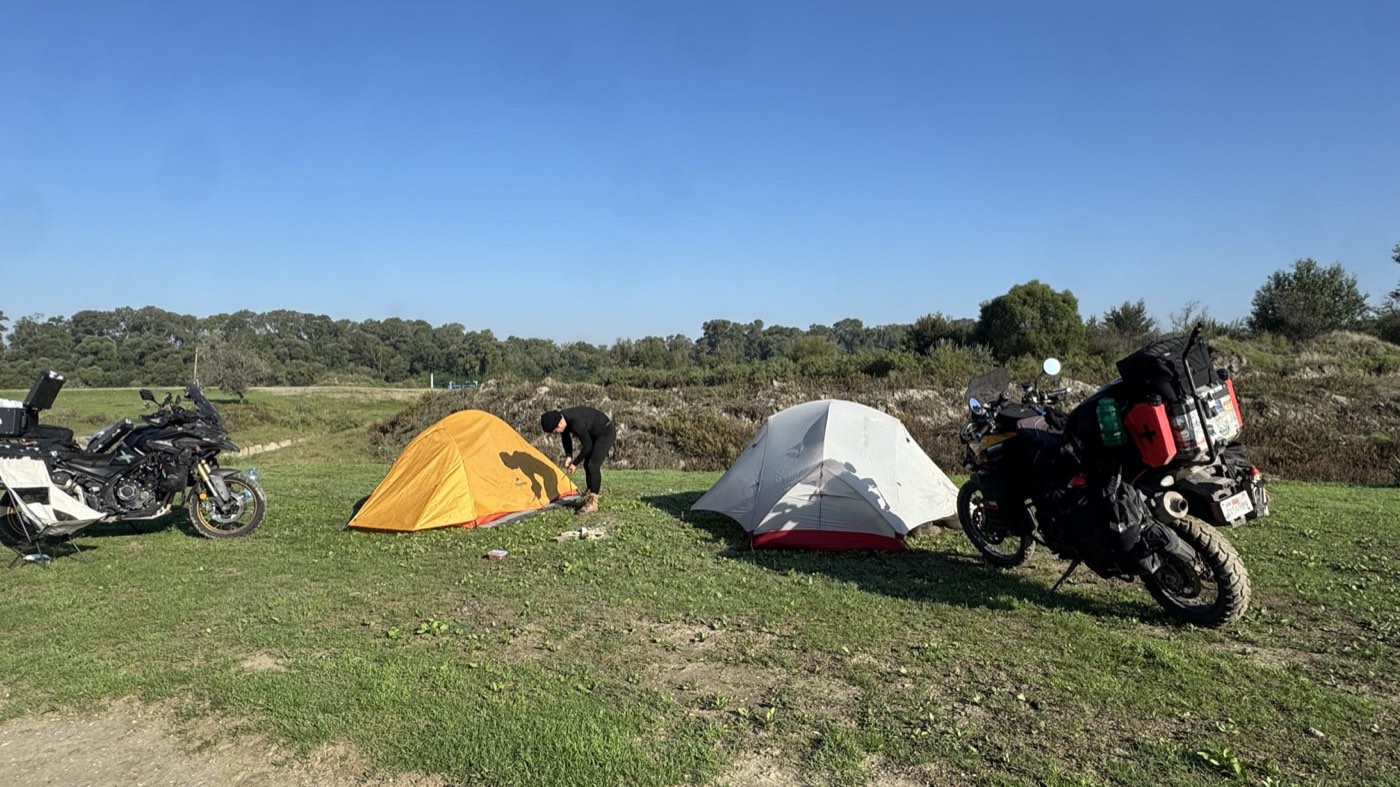 16
16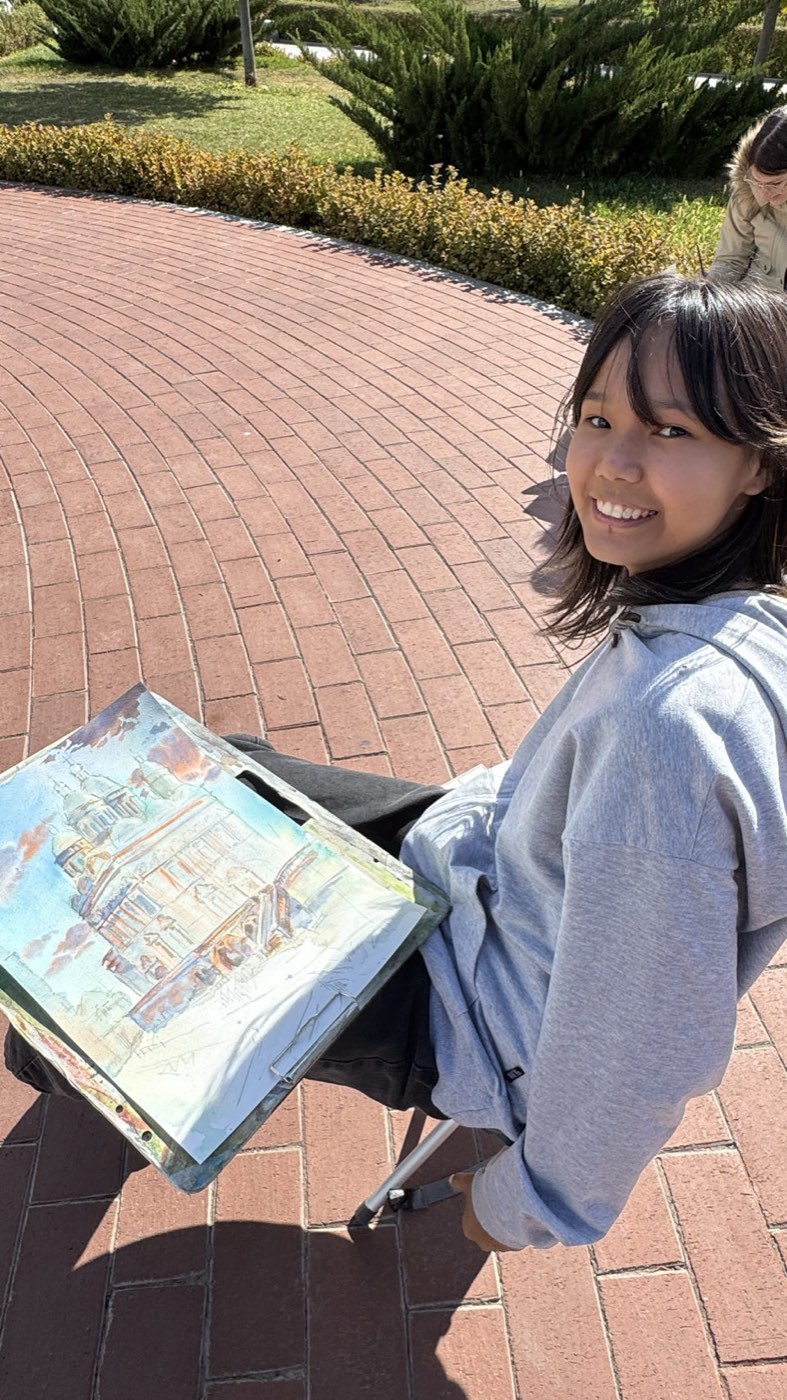 17
17 18
18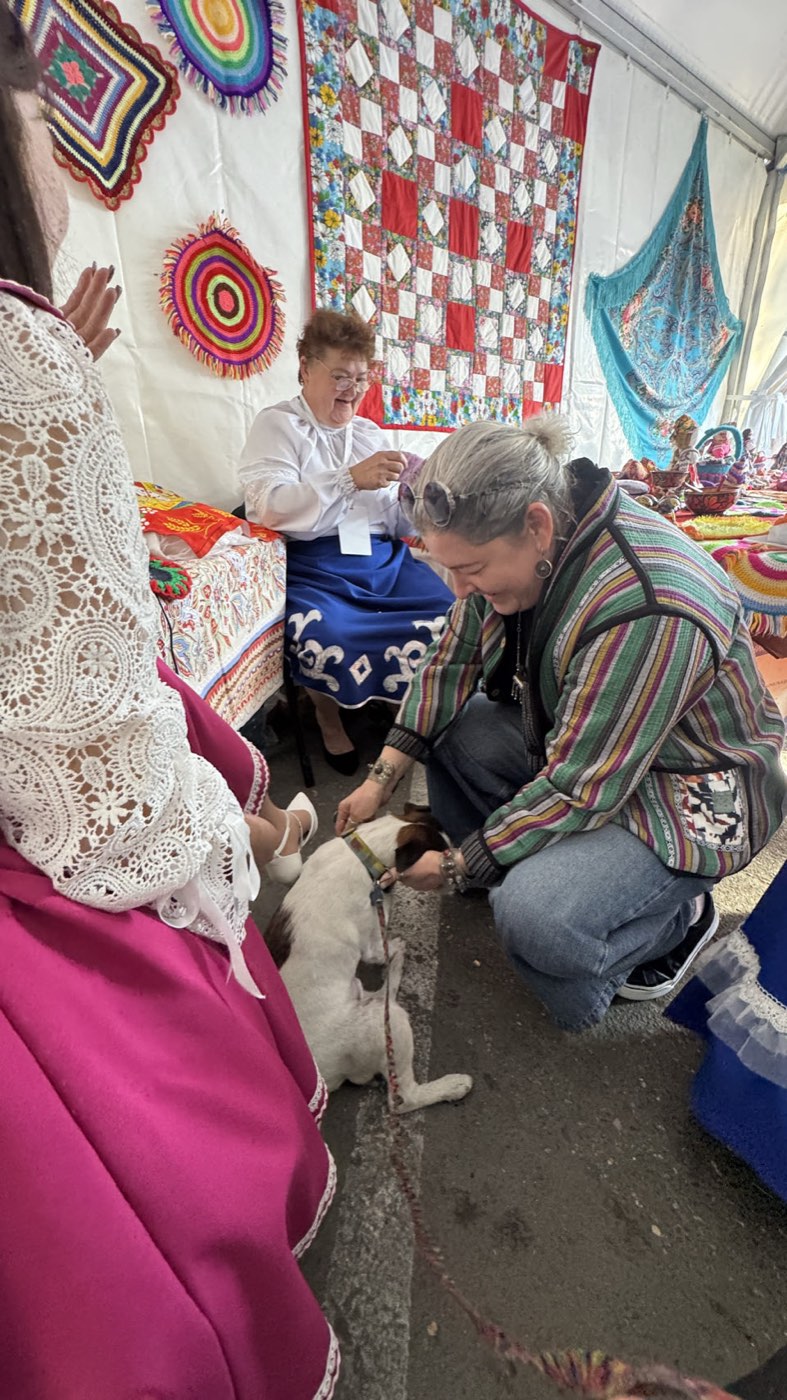 19
19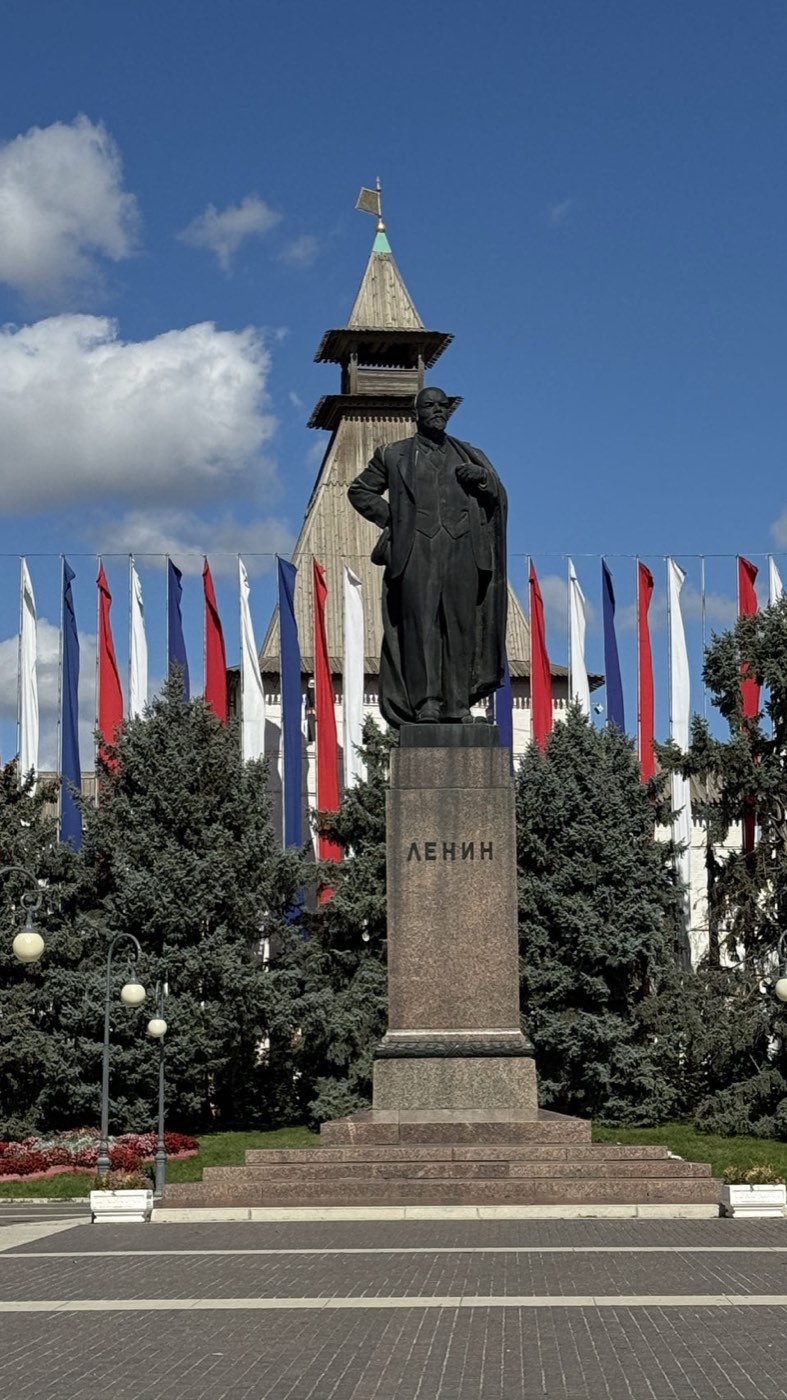 20
20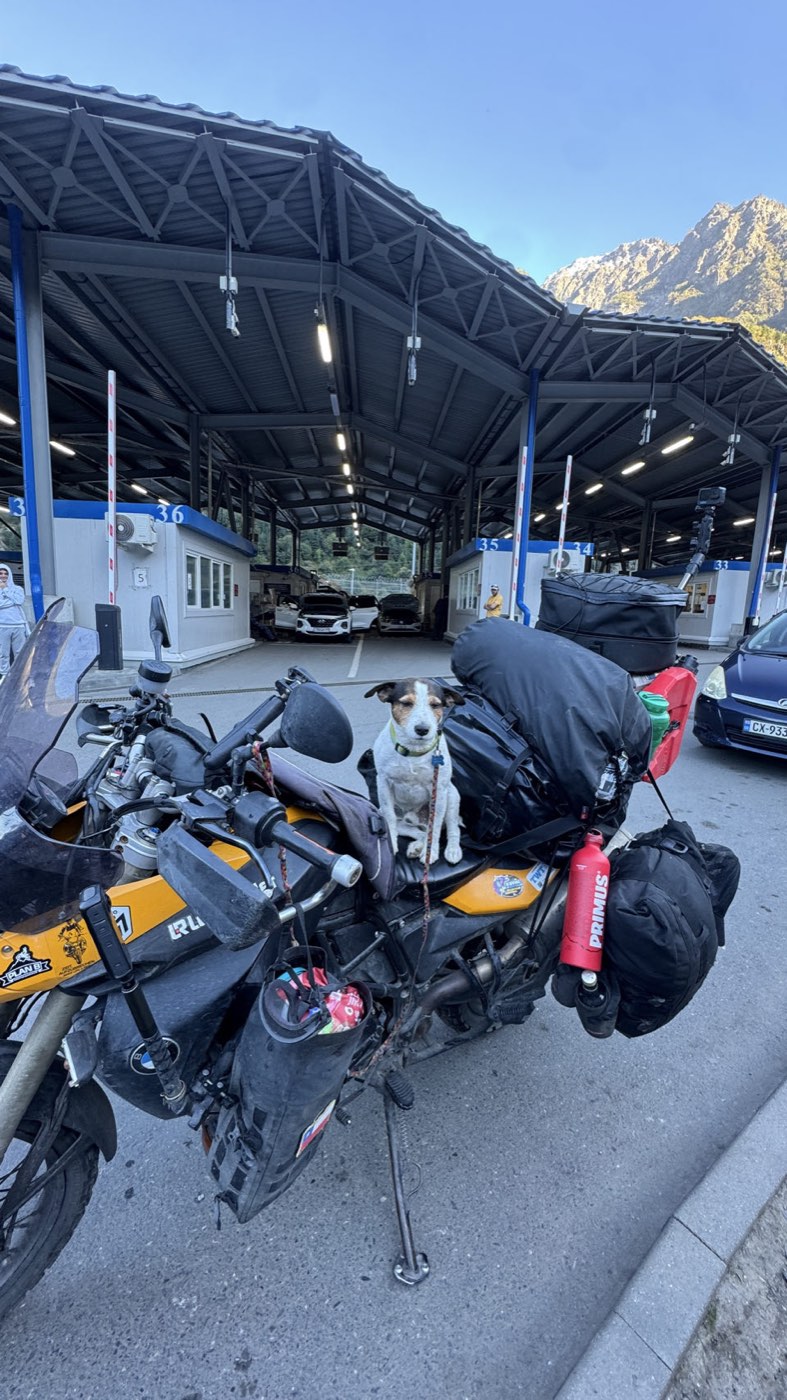 21
21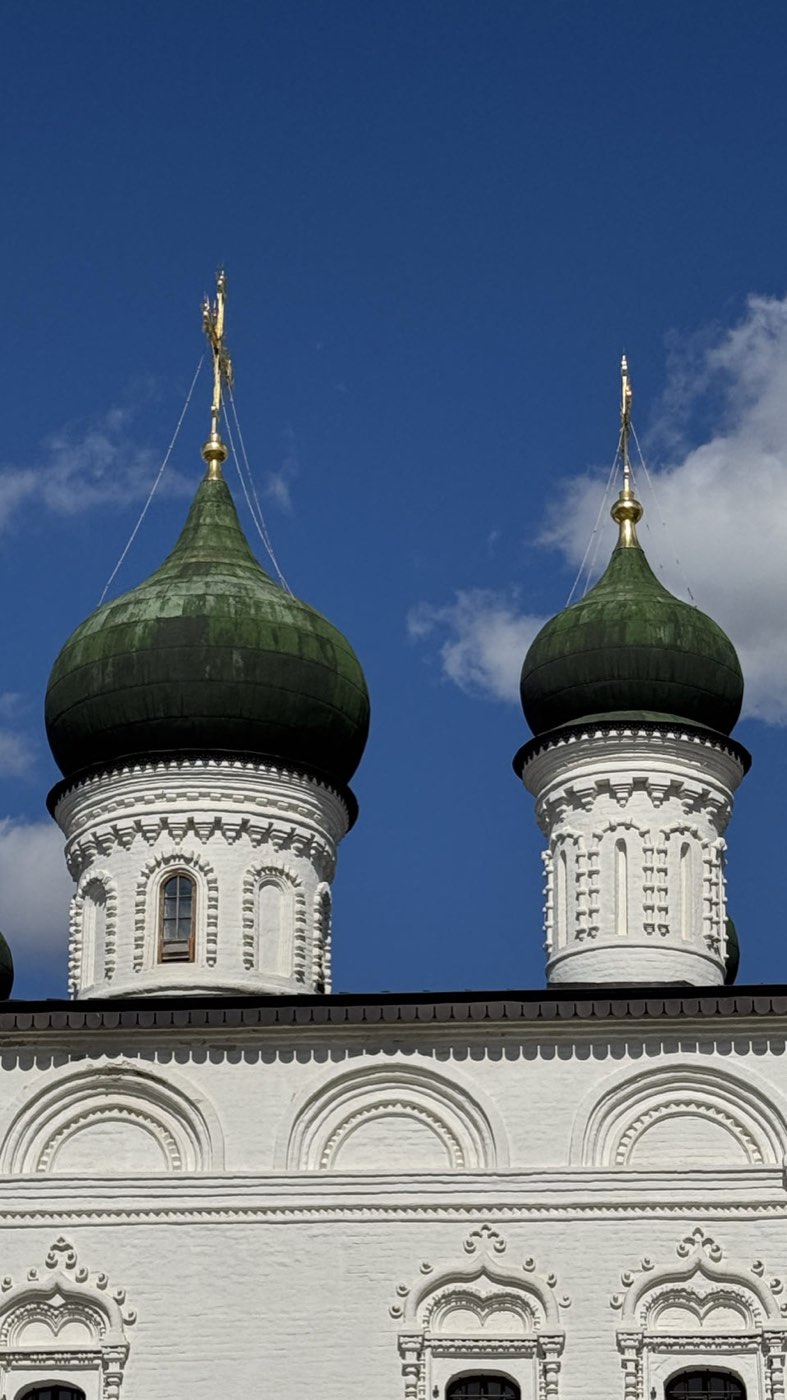 22
22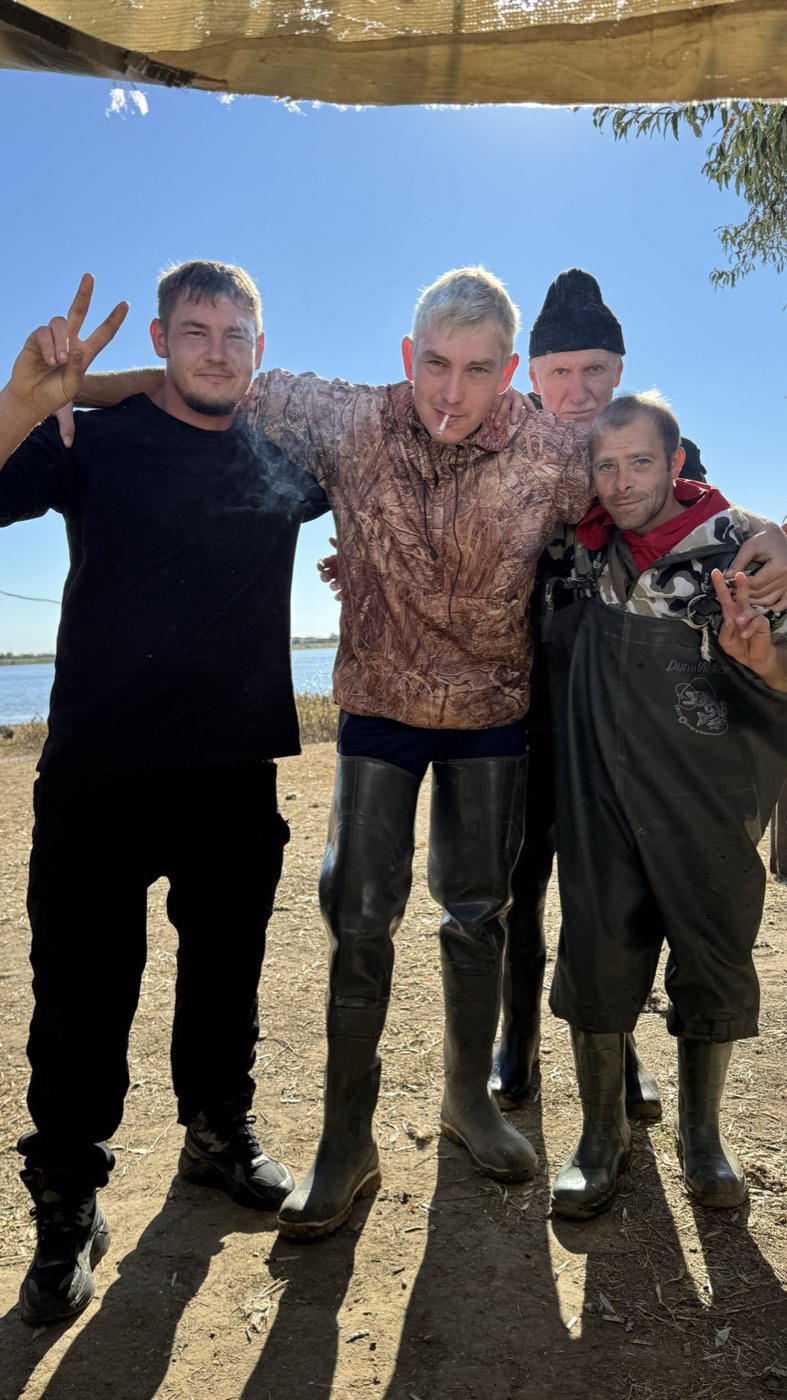 23
23 24
24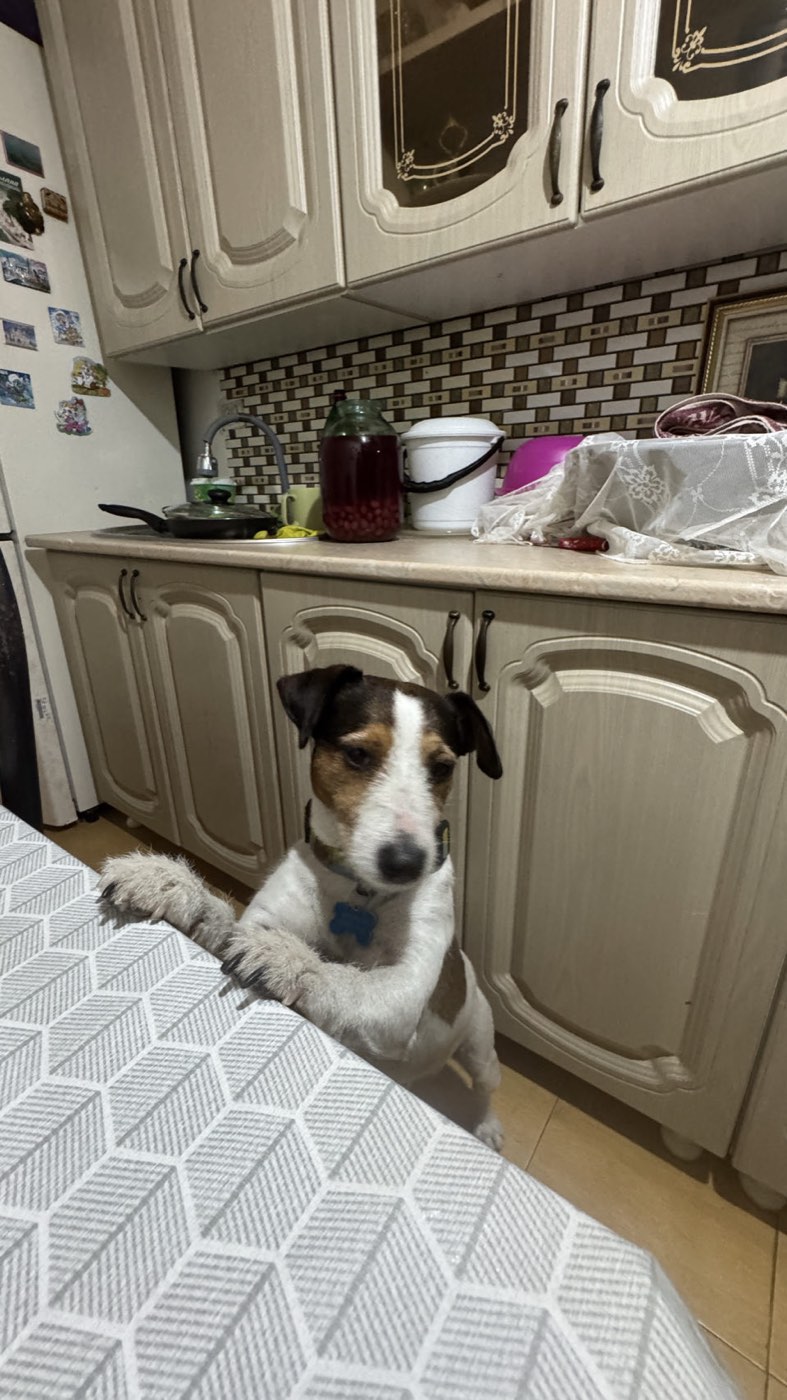 25
25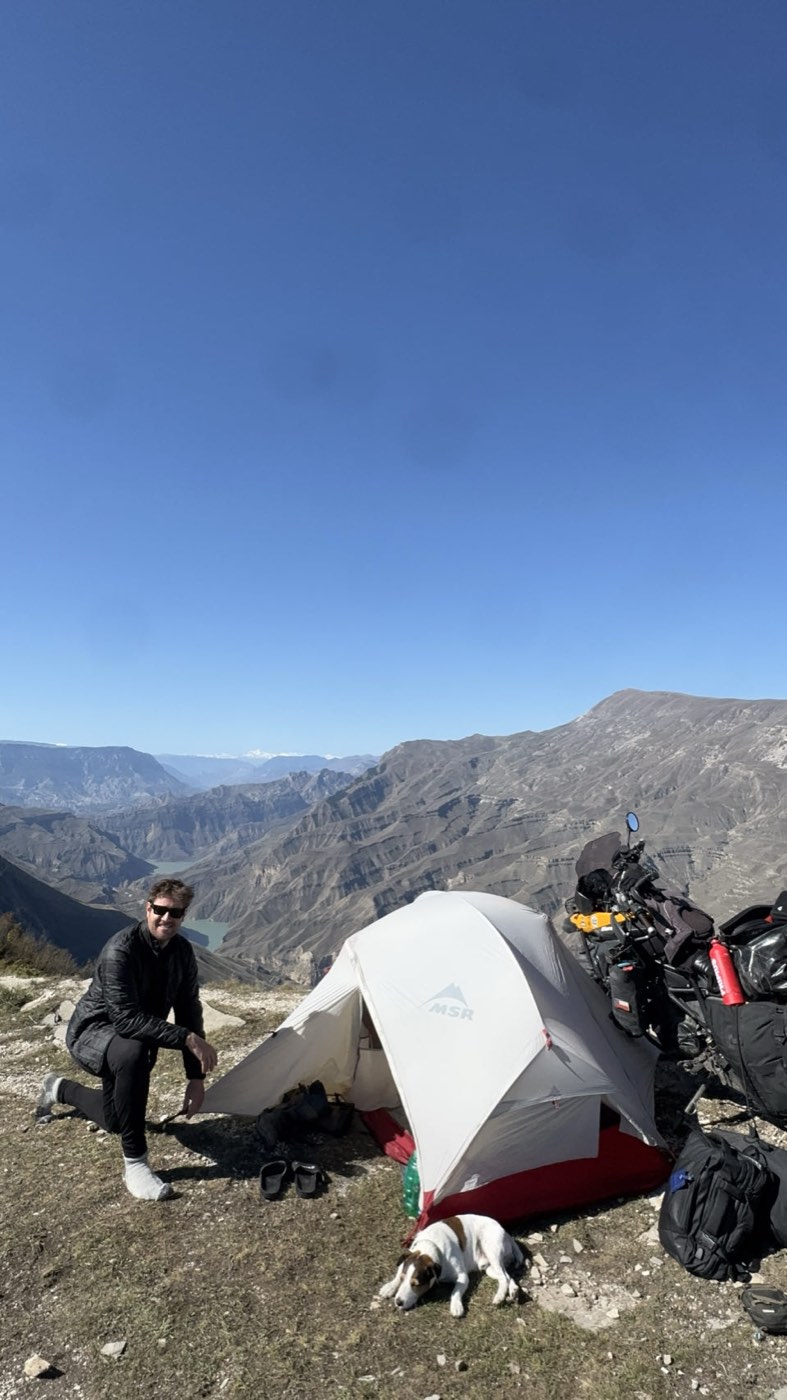 26
26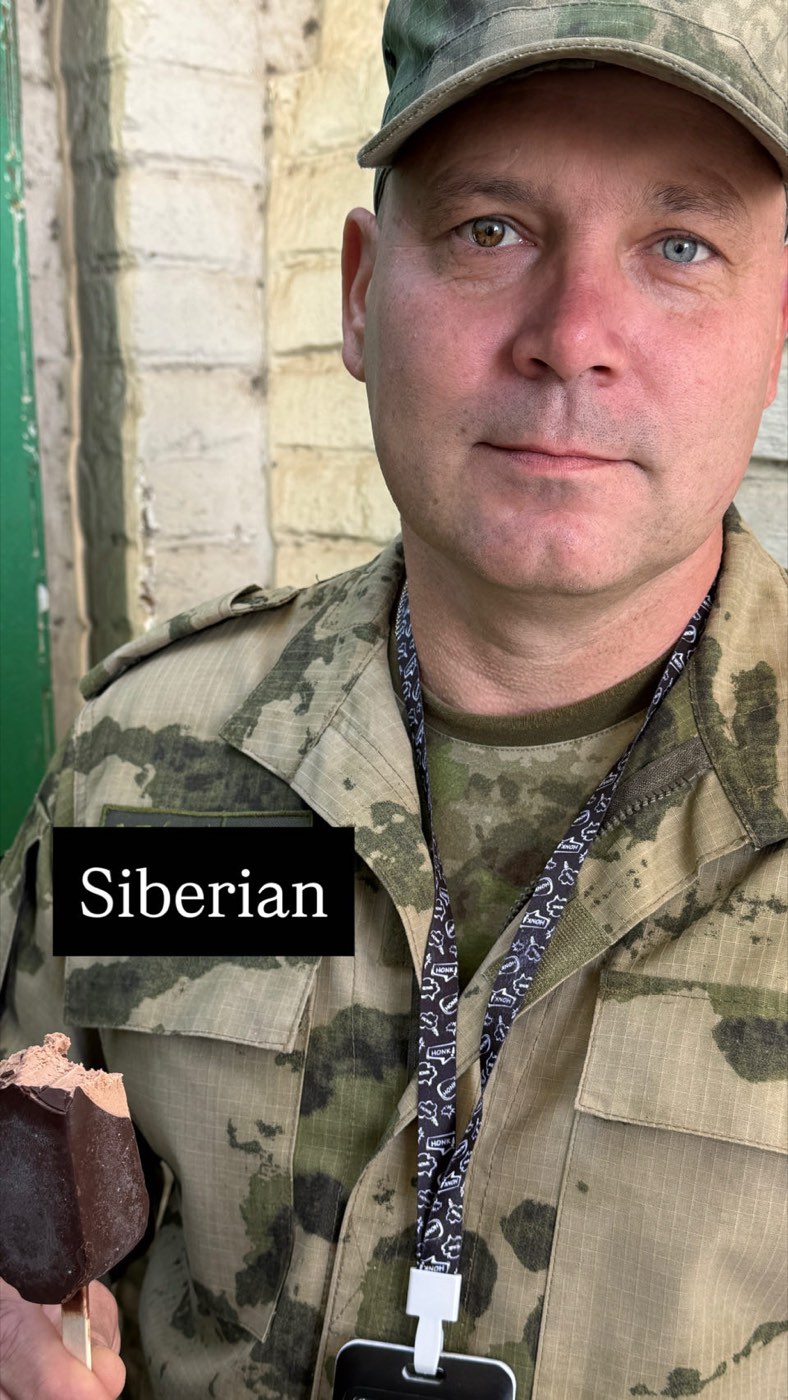 27
27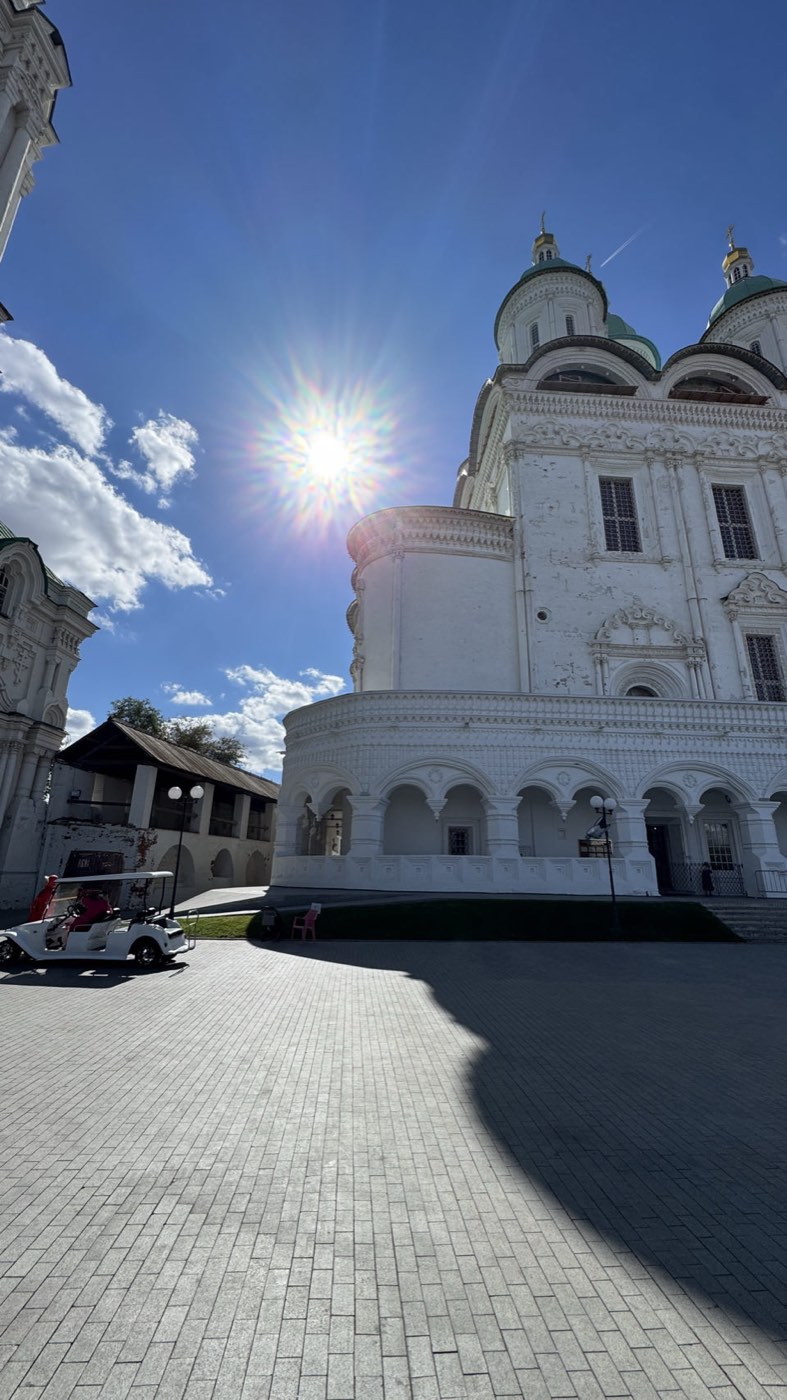 28
28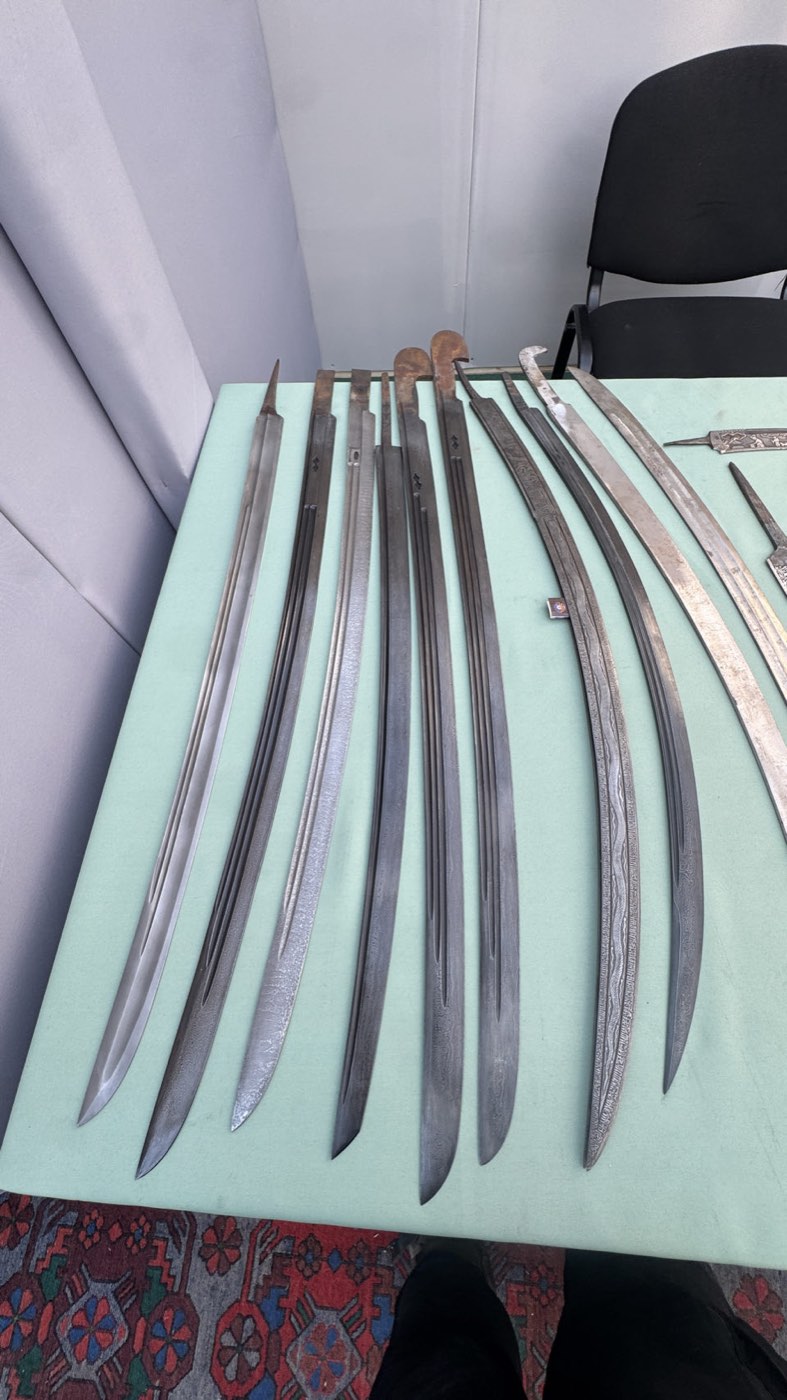 29
29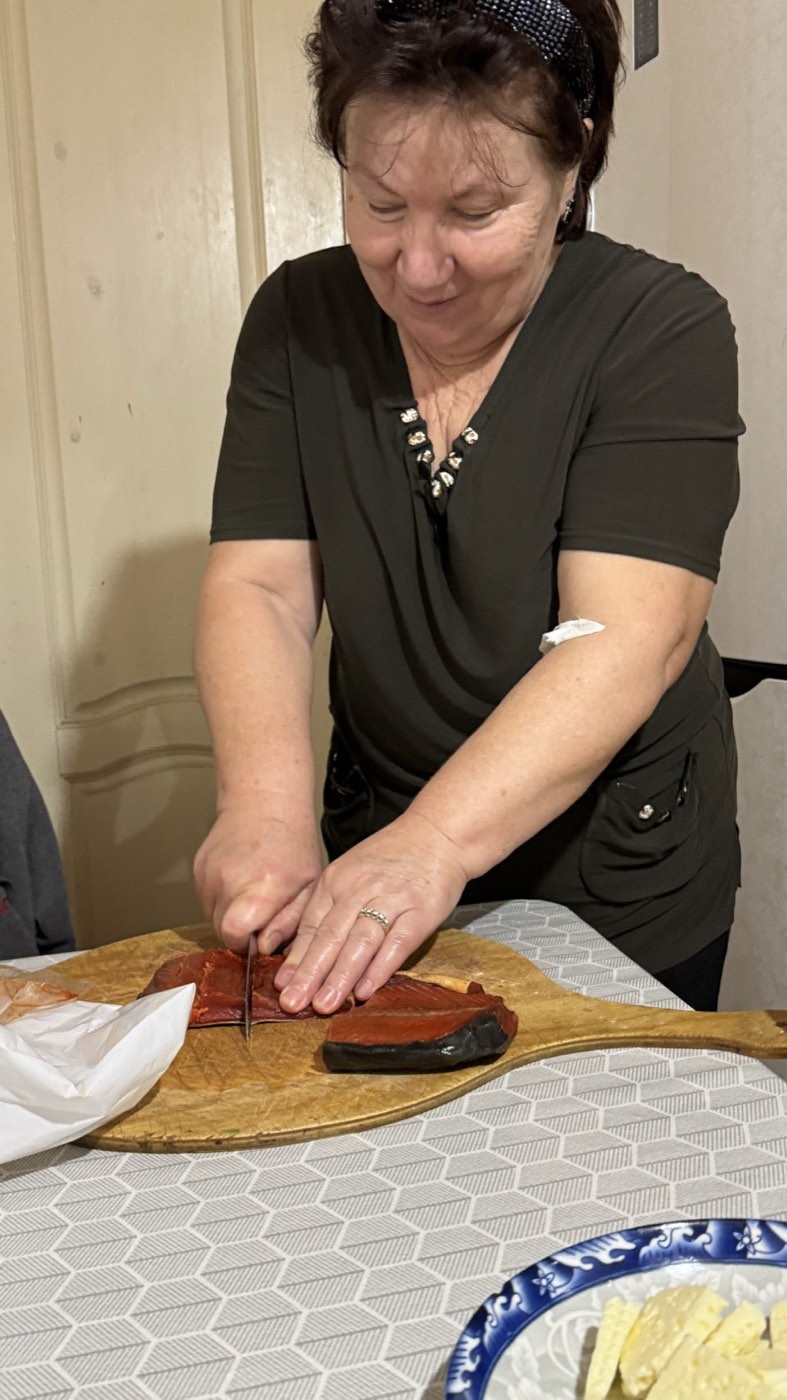 30
30 31
31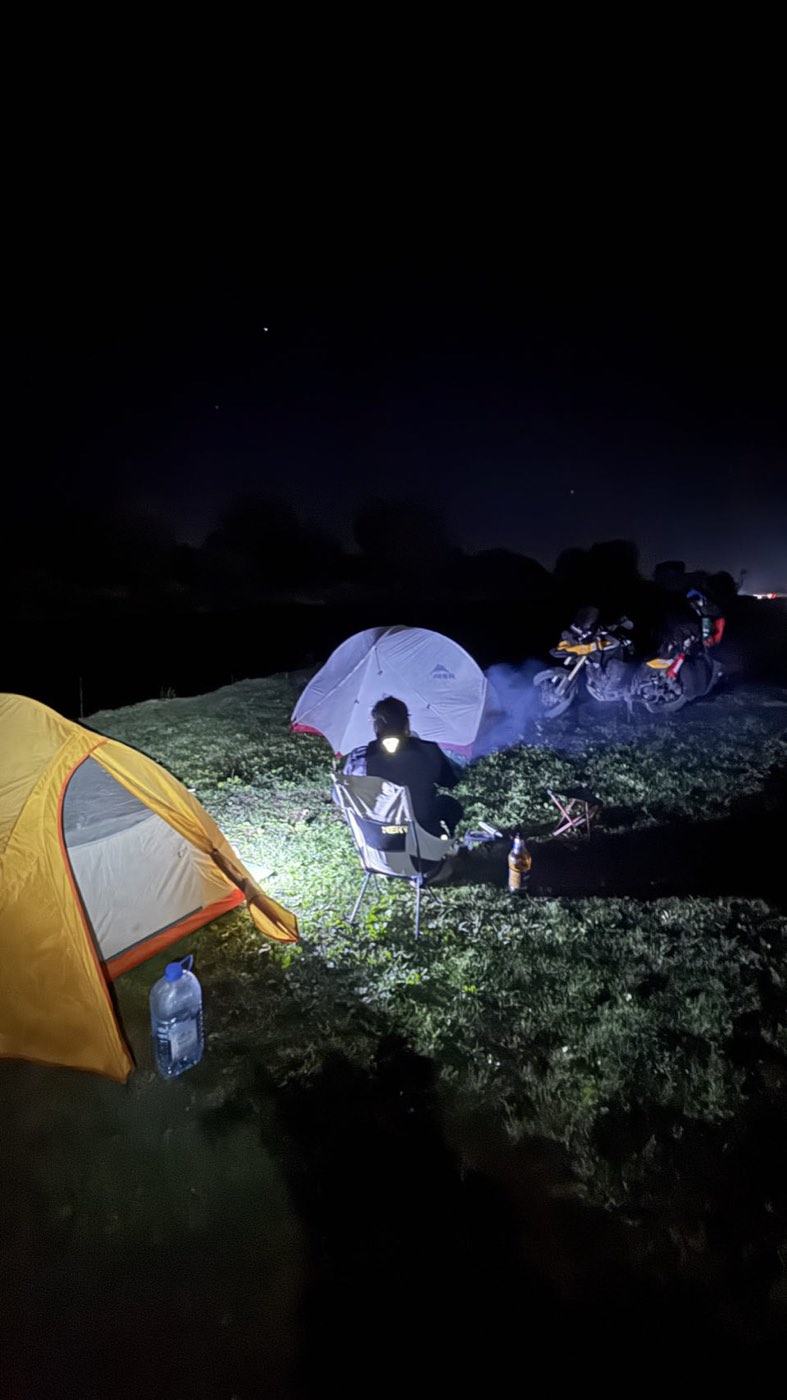 32
32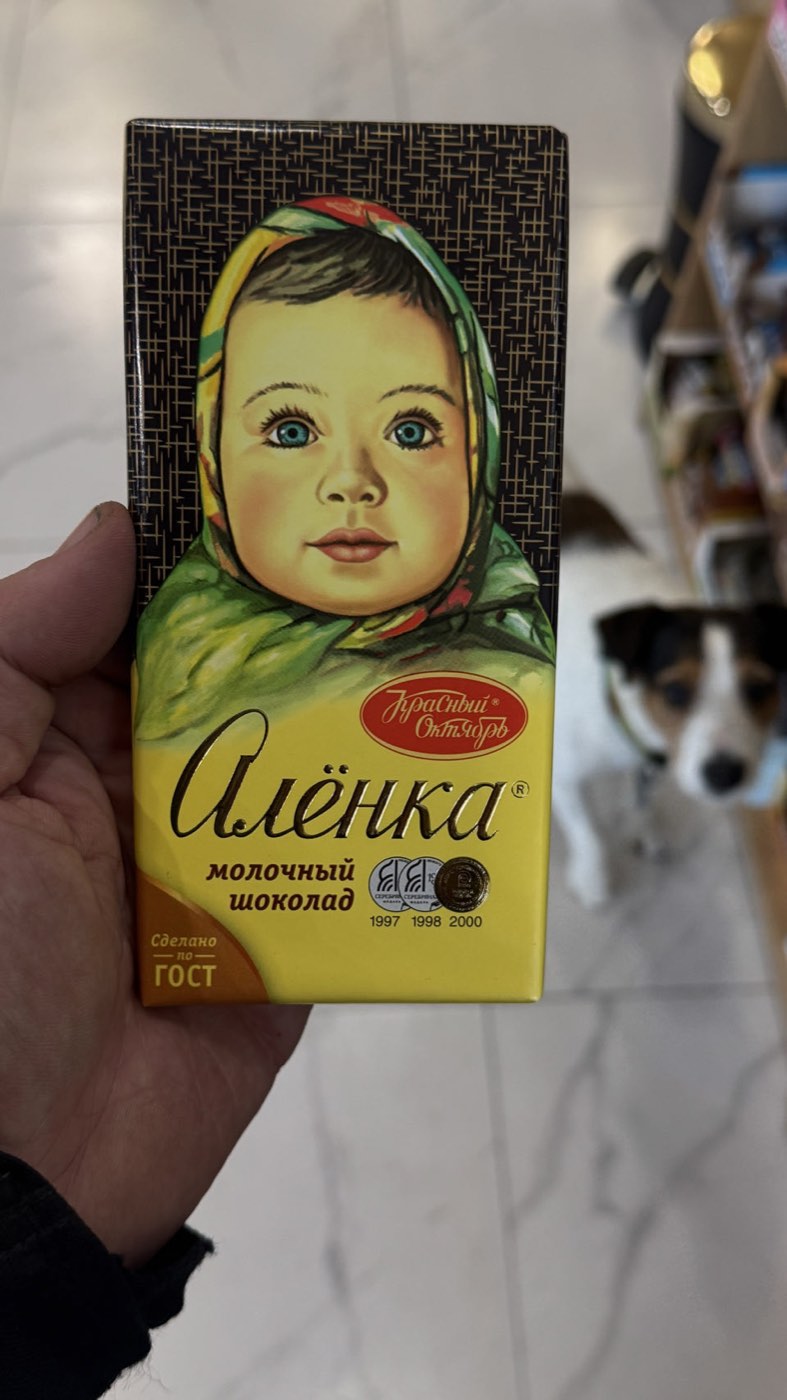 33
33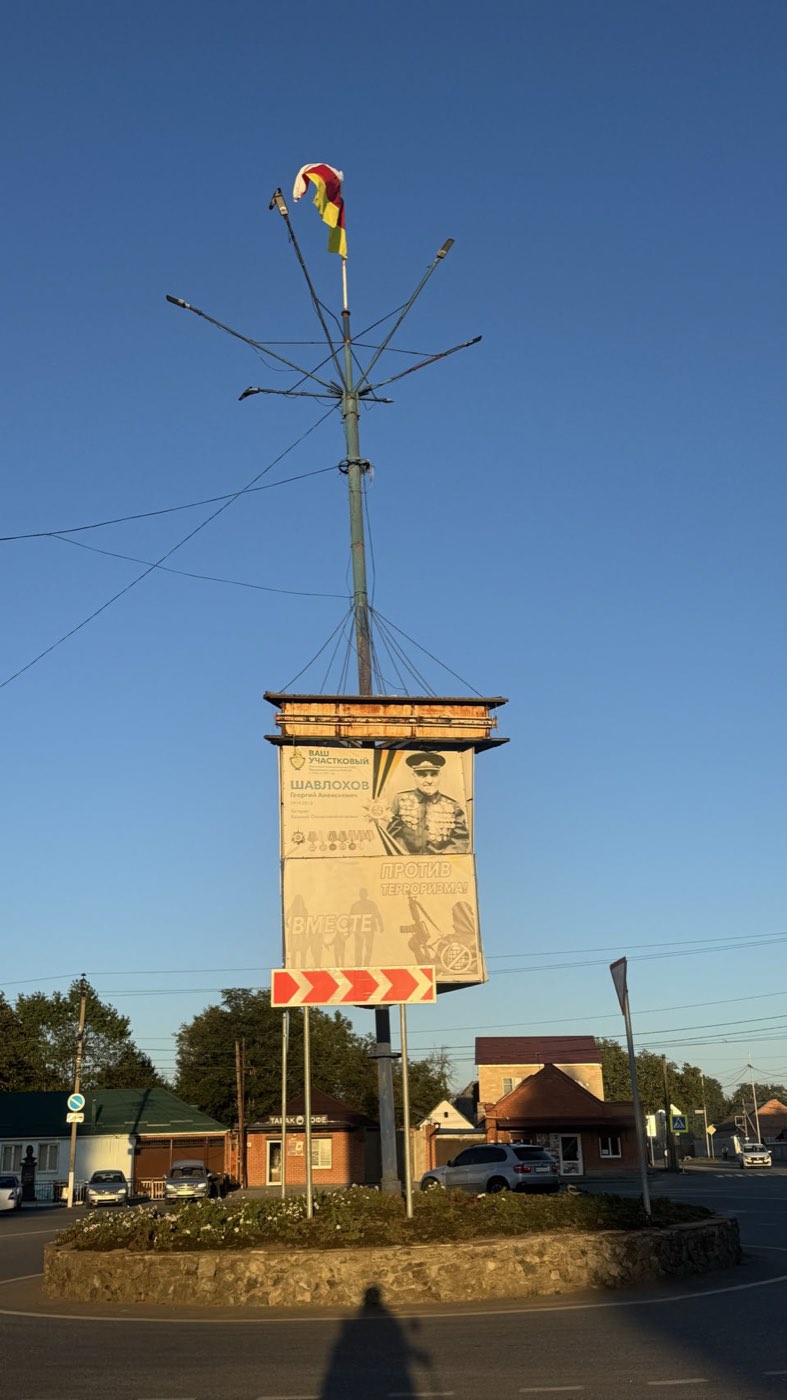 34
34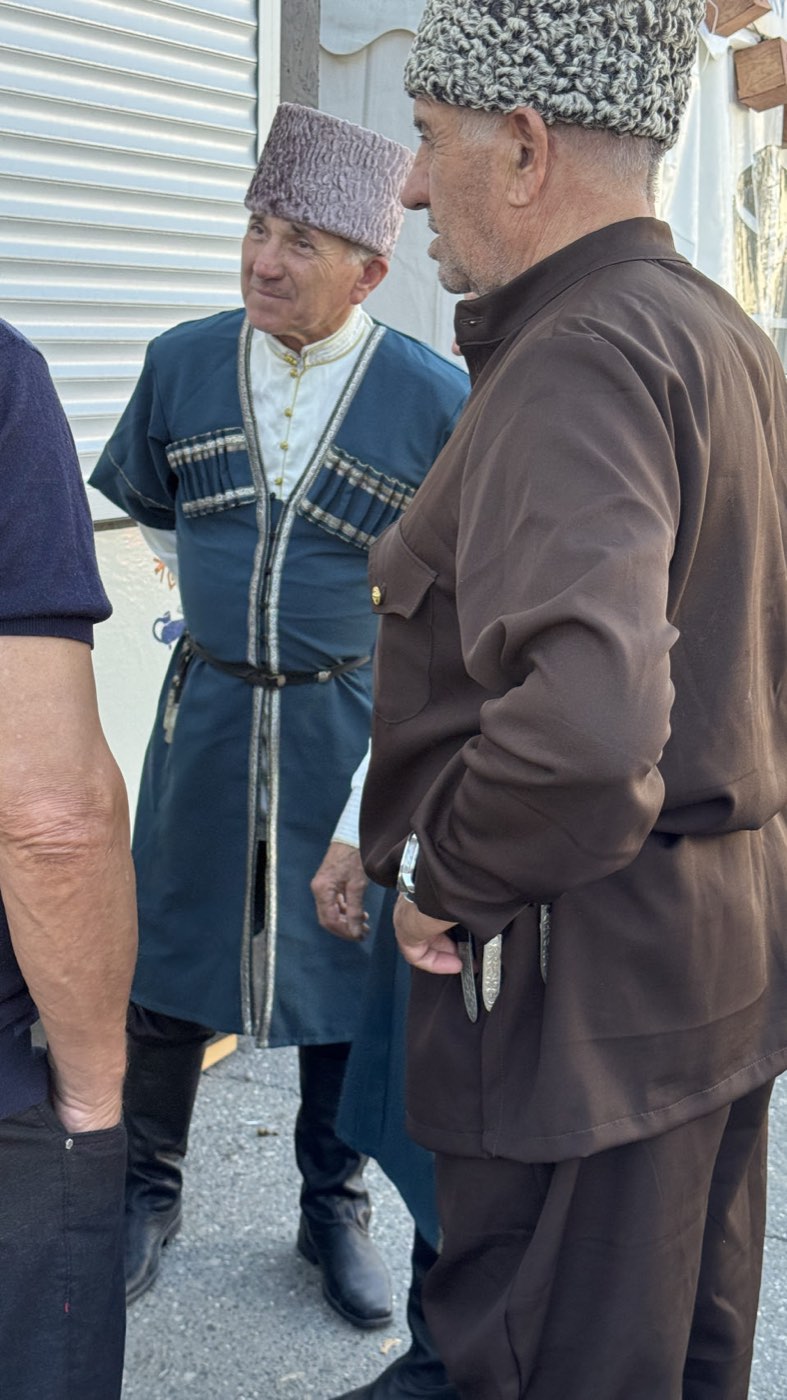 35
35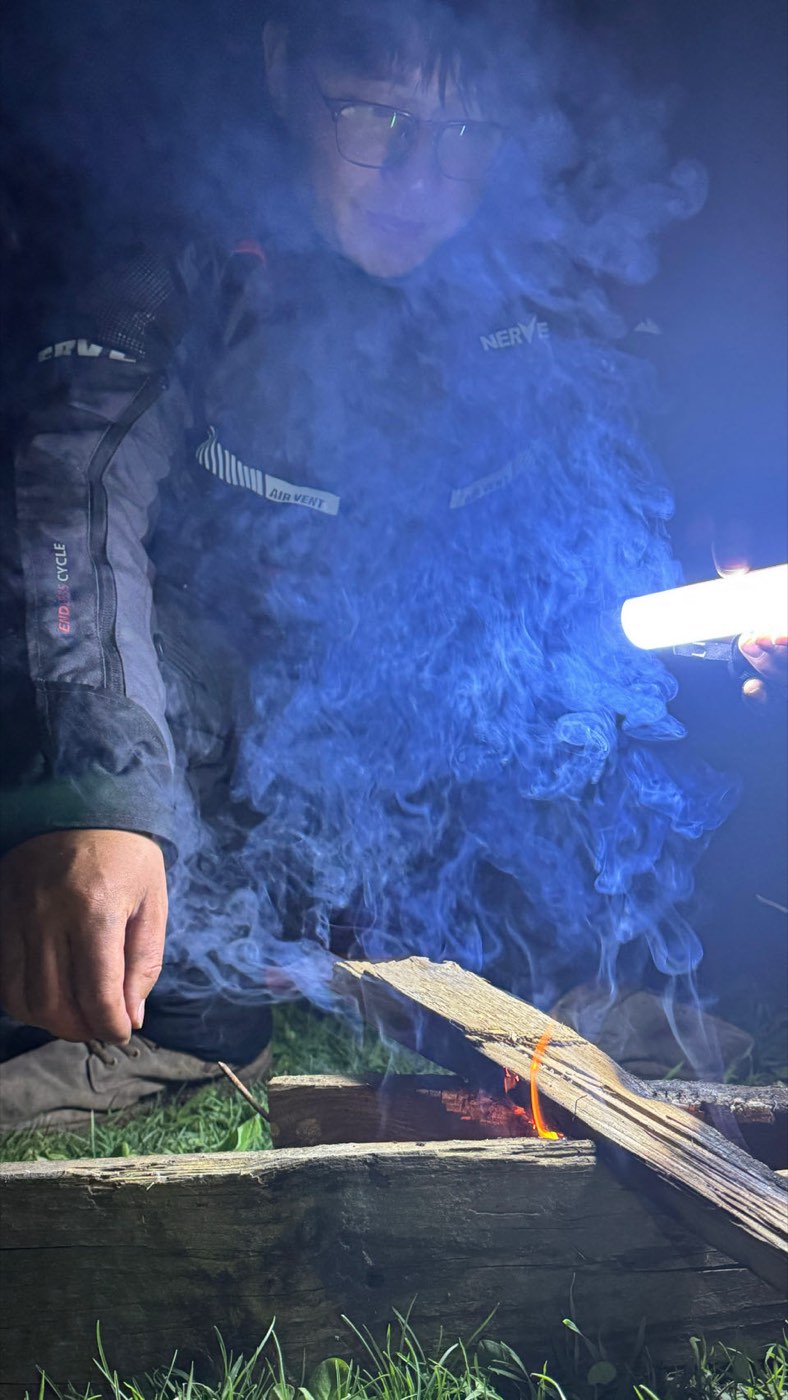 36
36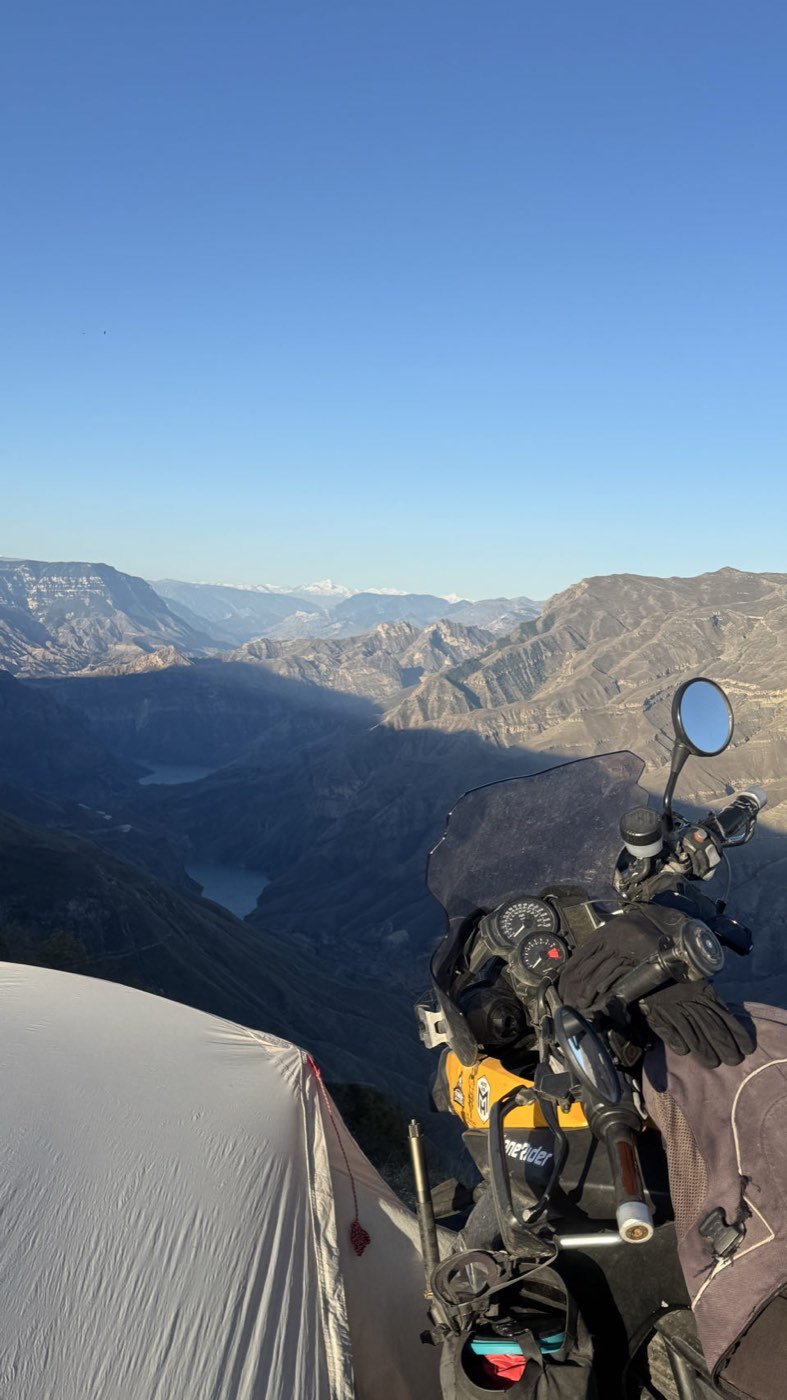 37
37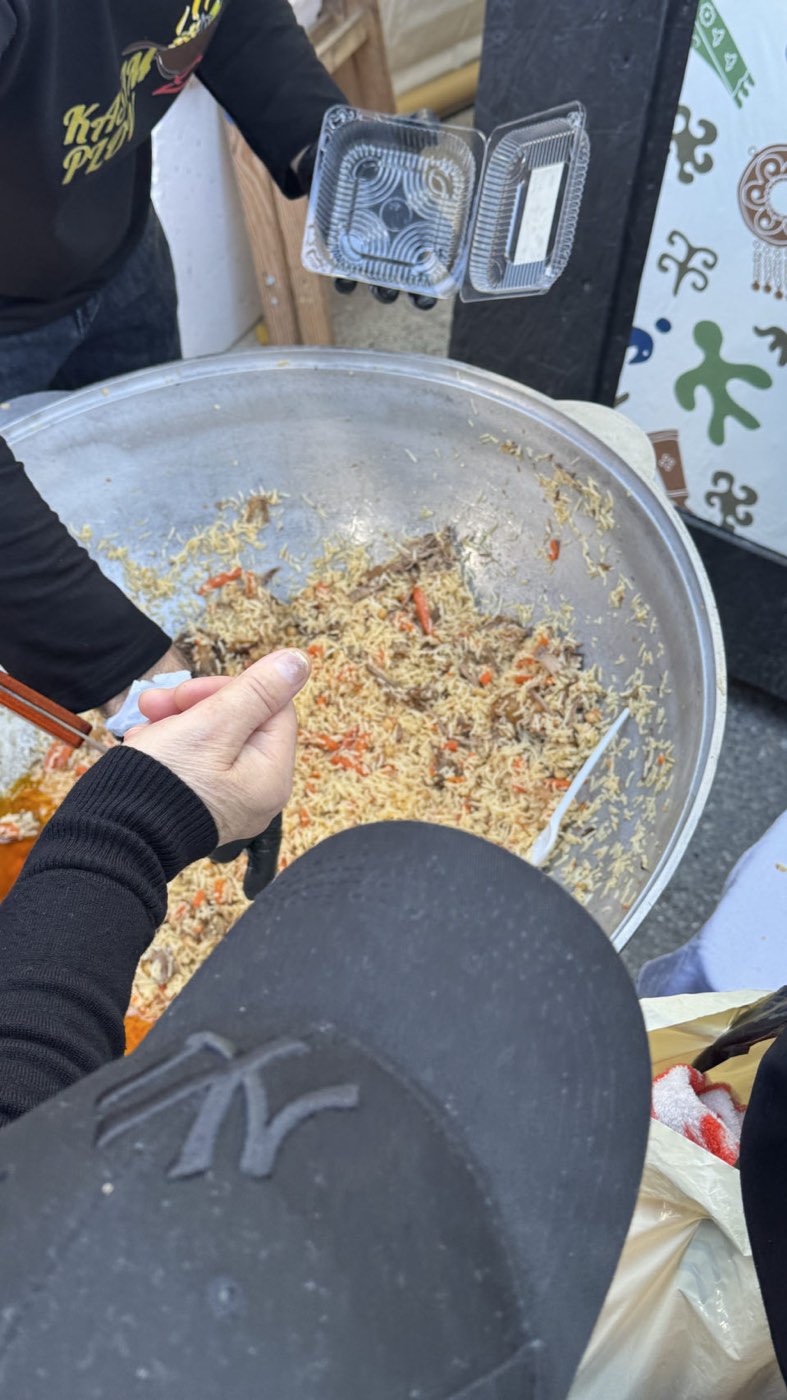 38
38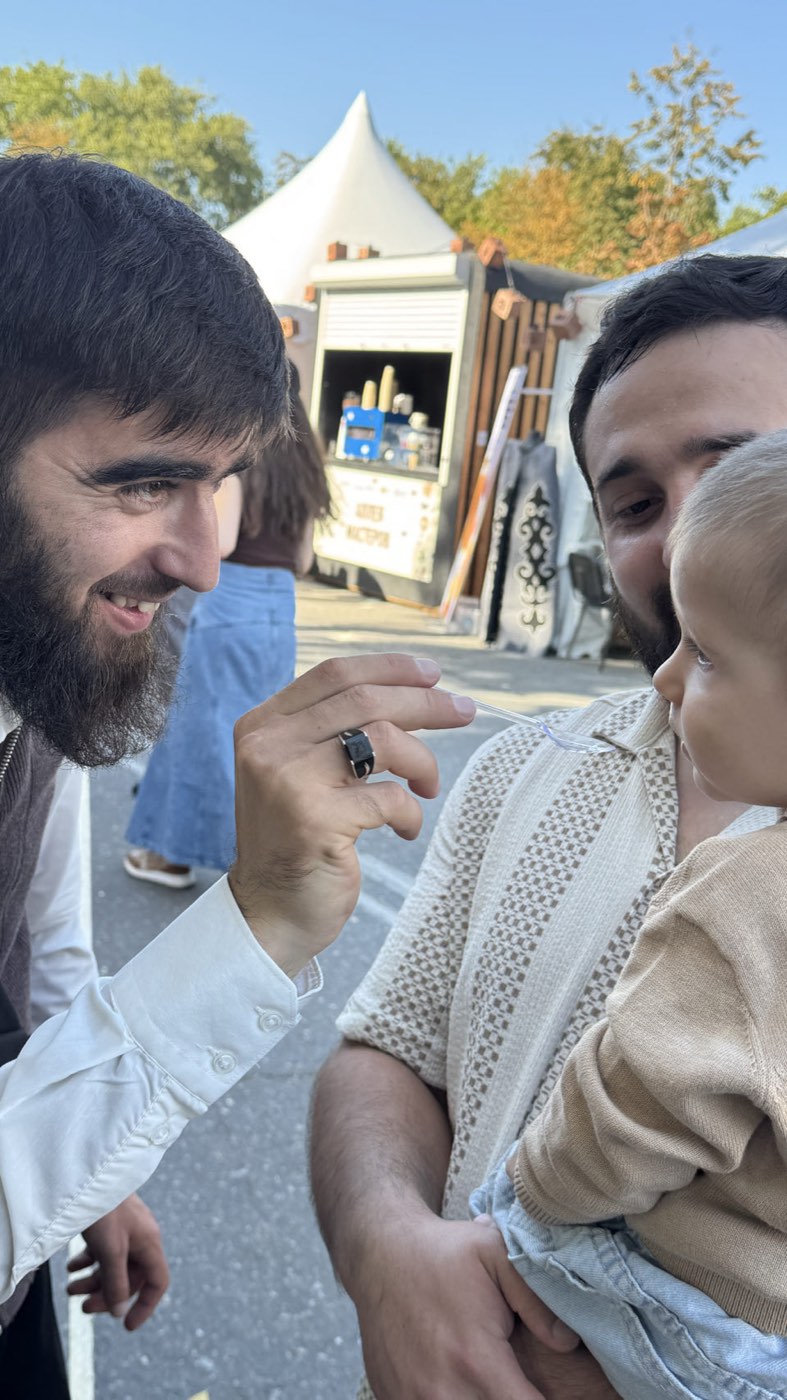 39
39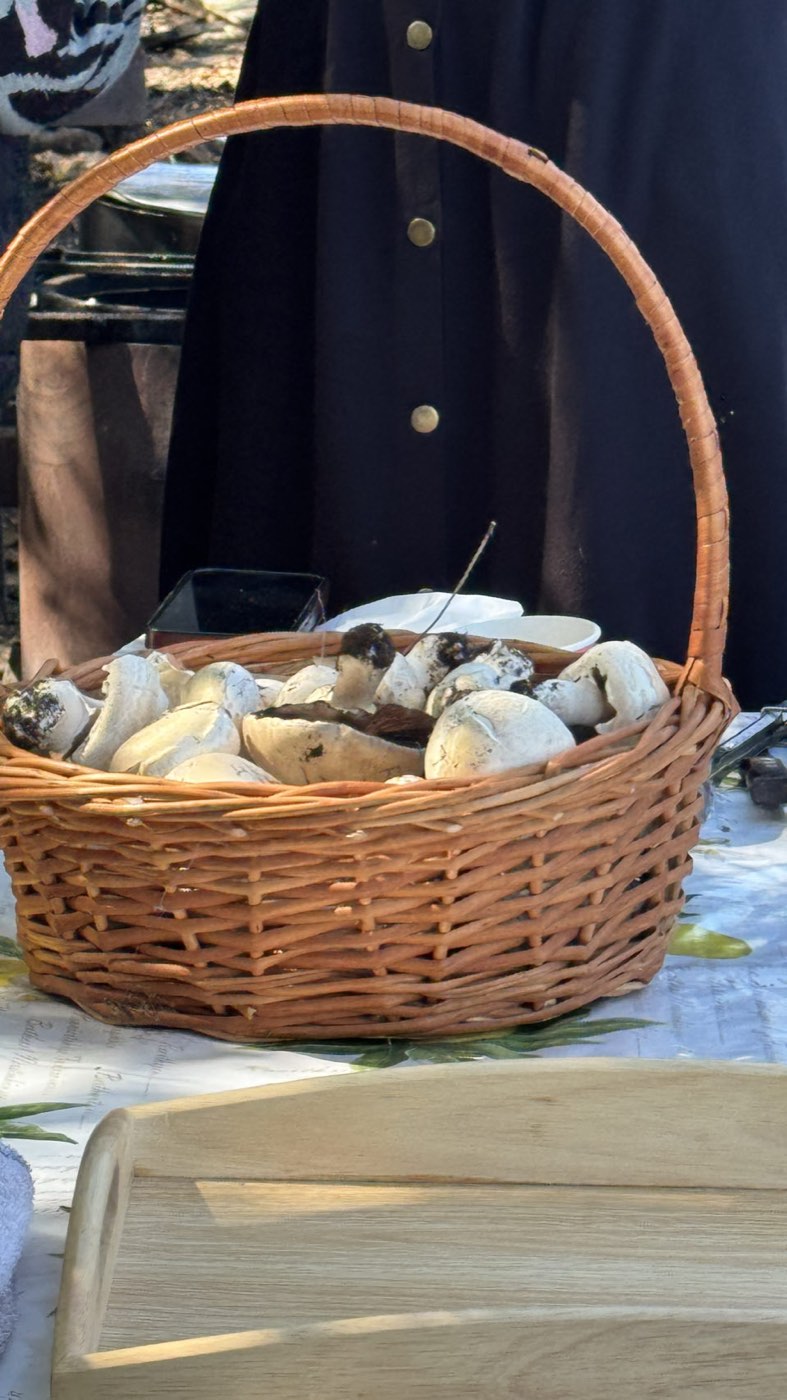 40
40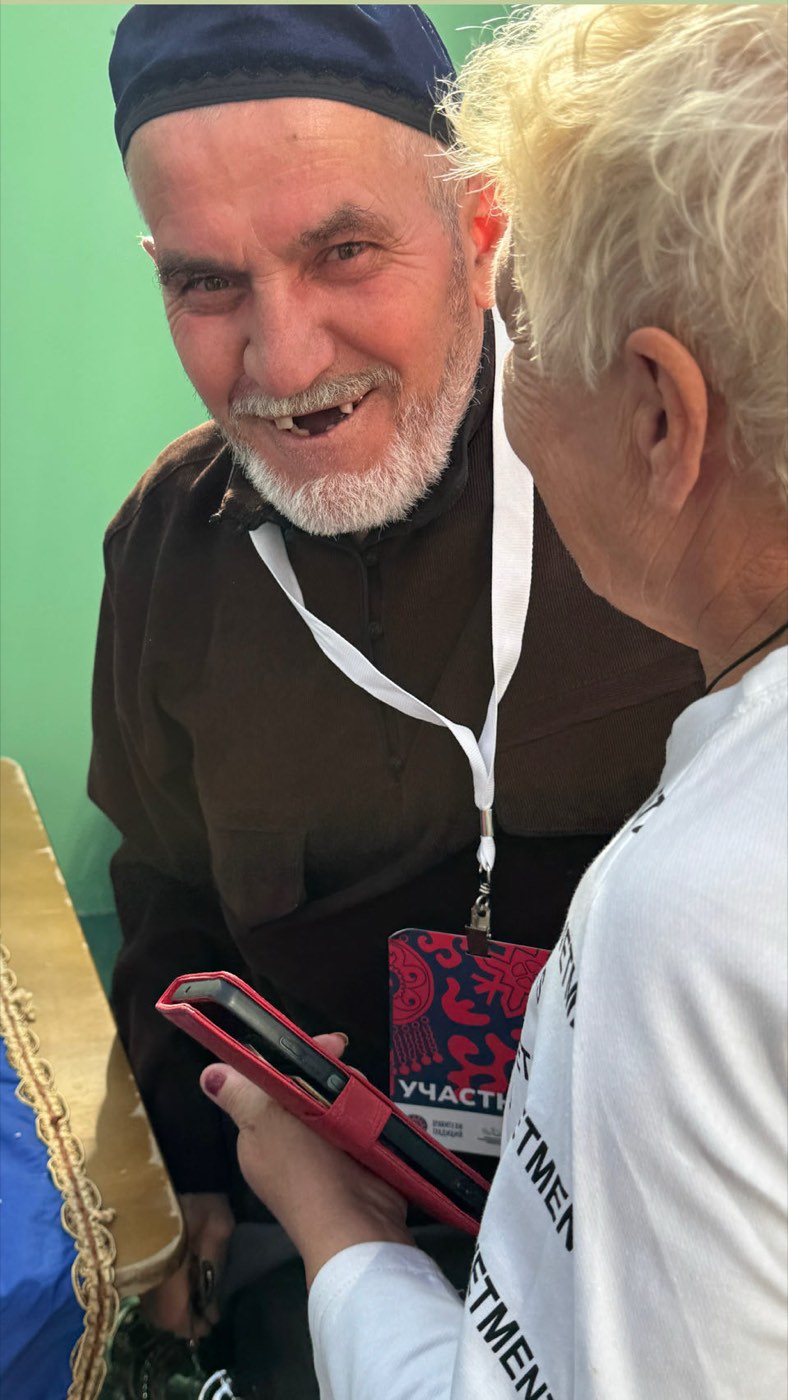 41
41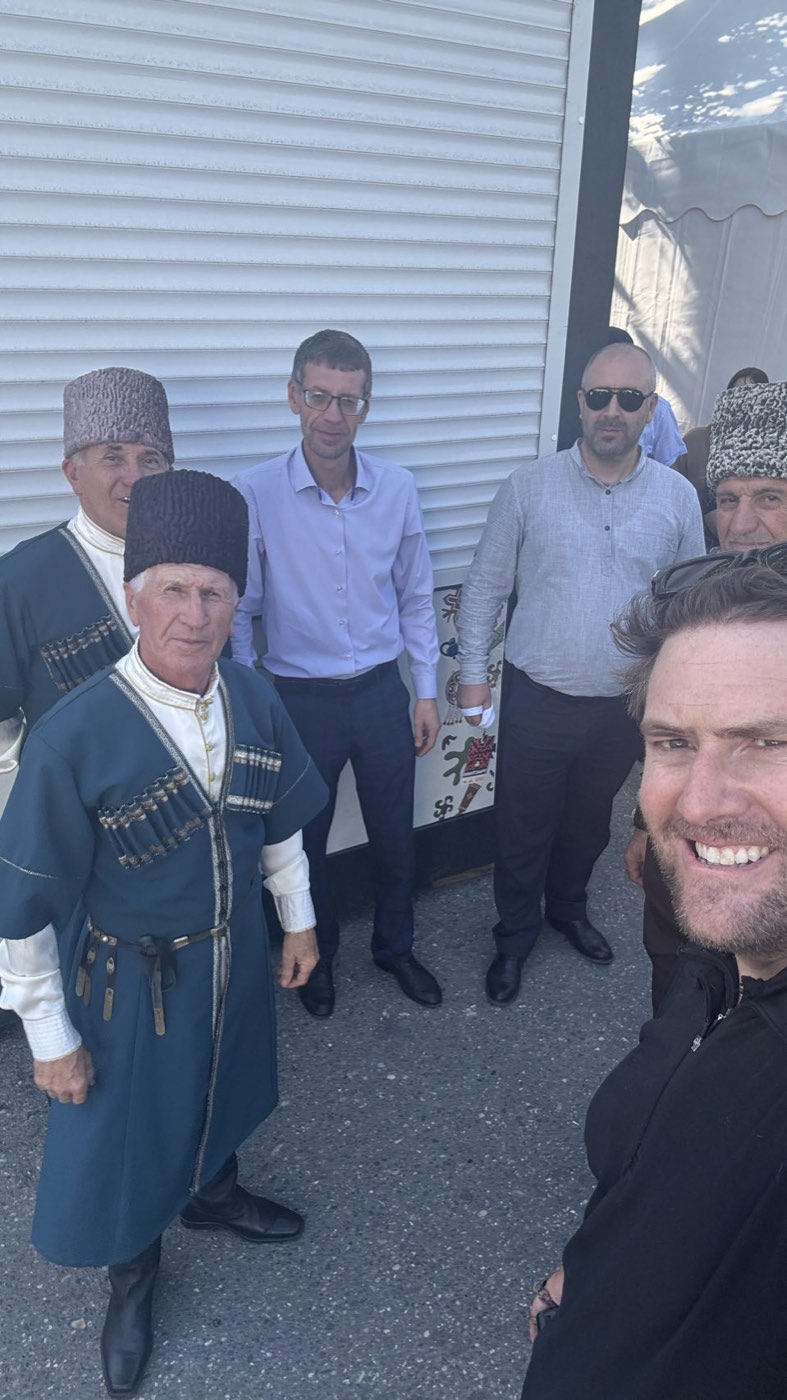 42
42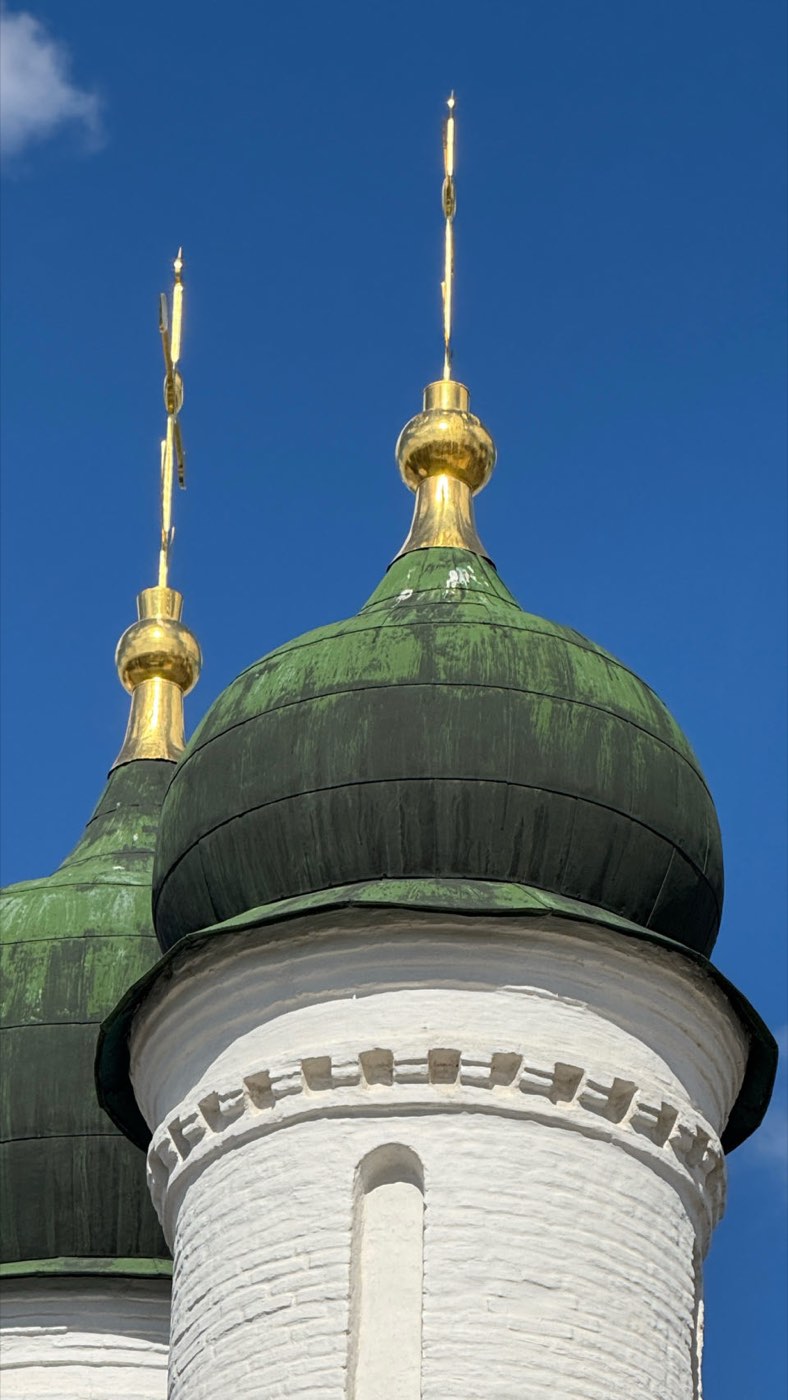 43
43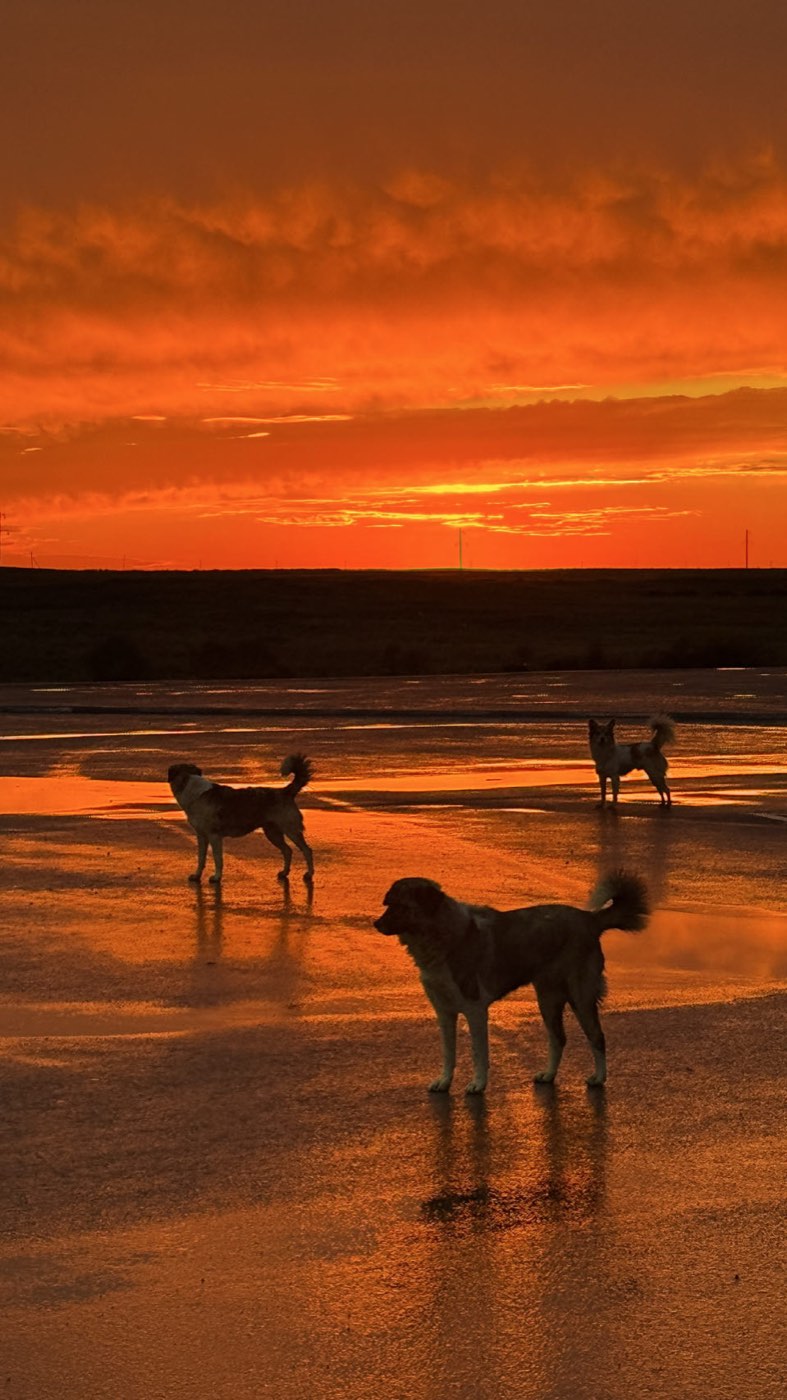 44
44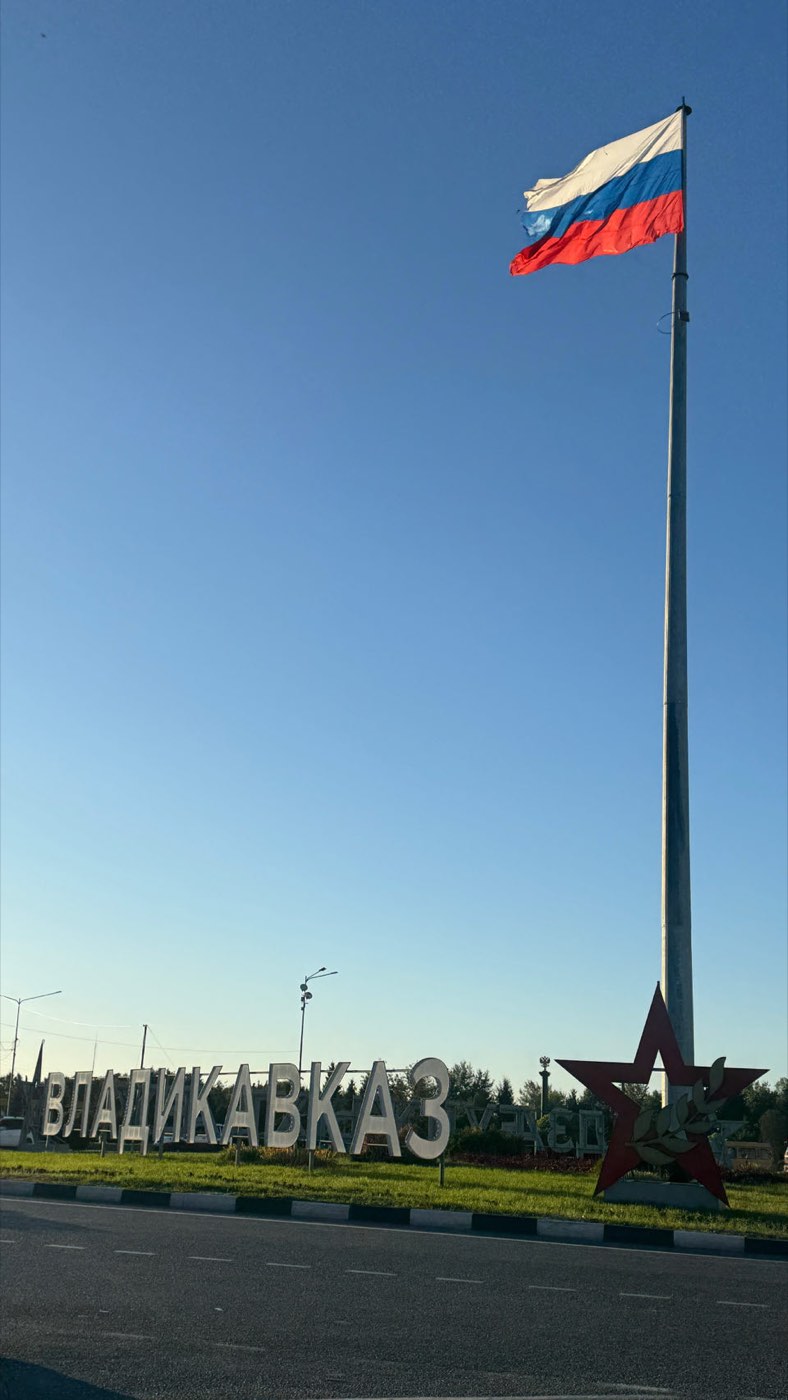 45
45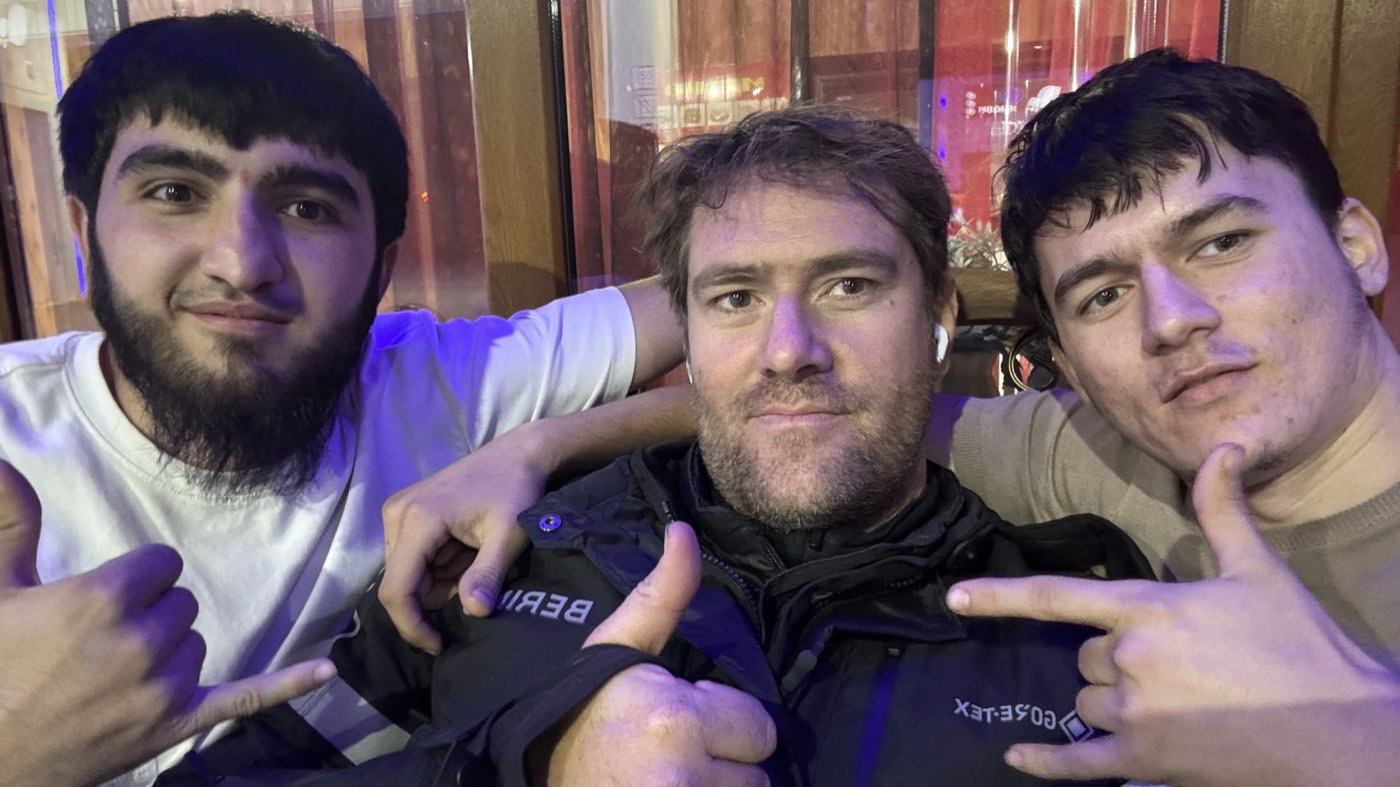 46
46 47
47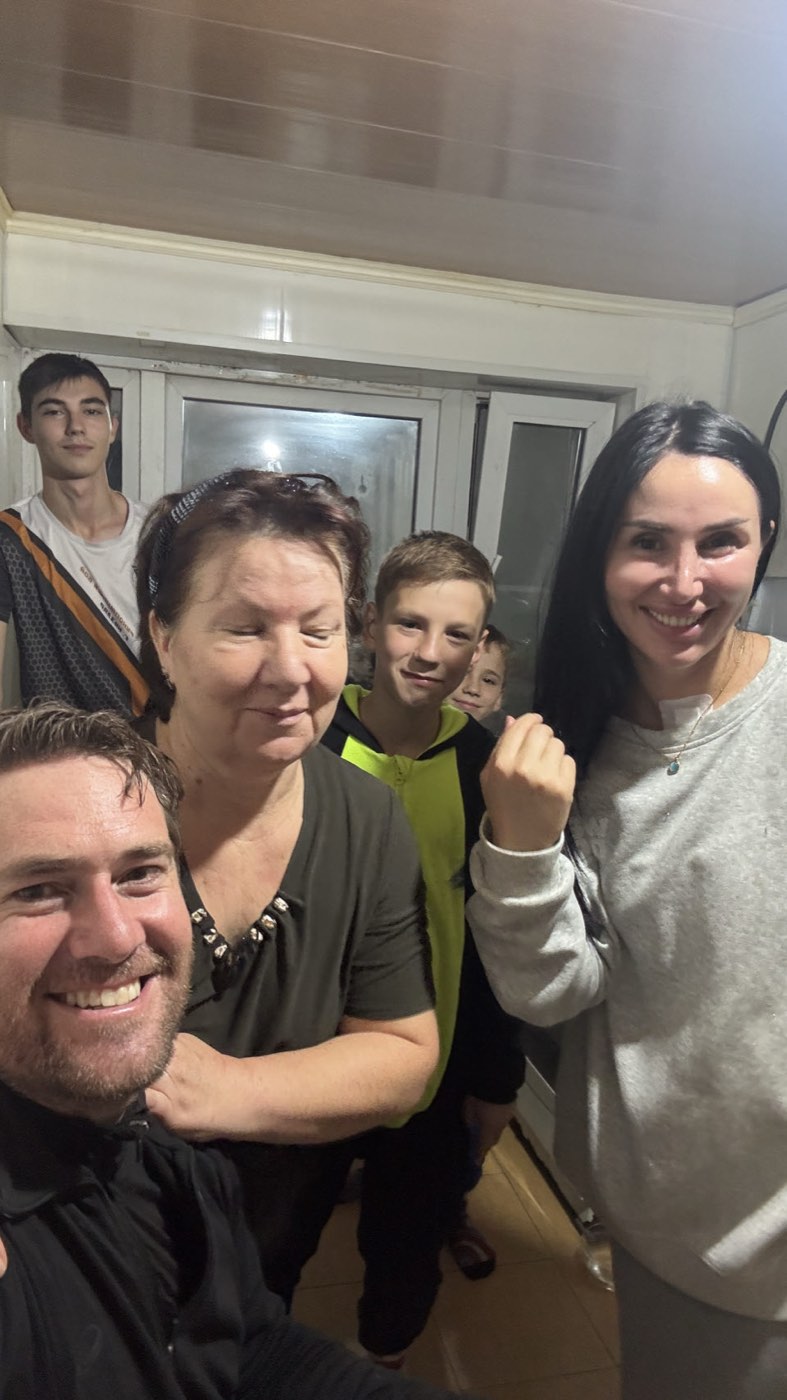 48
48 49
49 50
50 51
51