

Field note 02 Origins
The first ride was not the perfect ride. It was the test ride.
A new motorcycle bought with the money from an Arctic winter, no riding experience at all, and a summer spent finding out what I had got myself into: the Pacific coast, the gold country, Death Valley and the Grand Canyon.From Rodrigo's road archive
Origins
The first ride was not the perfect ride. It was the test ride.
A new motorcycle bought with the money from an Arctic winter, no riding experience at all, and a summer spent finding out what I had got myself into: the Pacific coast, the gold country, Death Valley and the Grand Canyon.
- 01First motorcycle
- 00Previous riding experience
- 04States in the first ride
- 2015The summer it started
A new motorcycle bought with the money from an Arctic winter, no riding experience at all, and a summer spent finding out what I had got myself into: the Pacific coast, the gold country, Death Valley and the Grand Canyon.
I found it on a Sunday morning with a hangover.
I had been at it for weeks. Every night, every site, every listing: cycletrader, craigslist, the forums, anything with a picture of an adventure bike on it. I knew exactly what I was looking for and I could not find it.
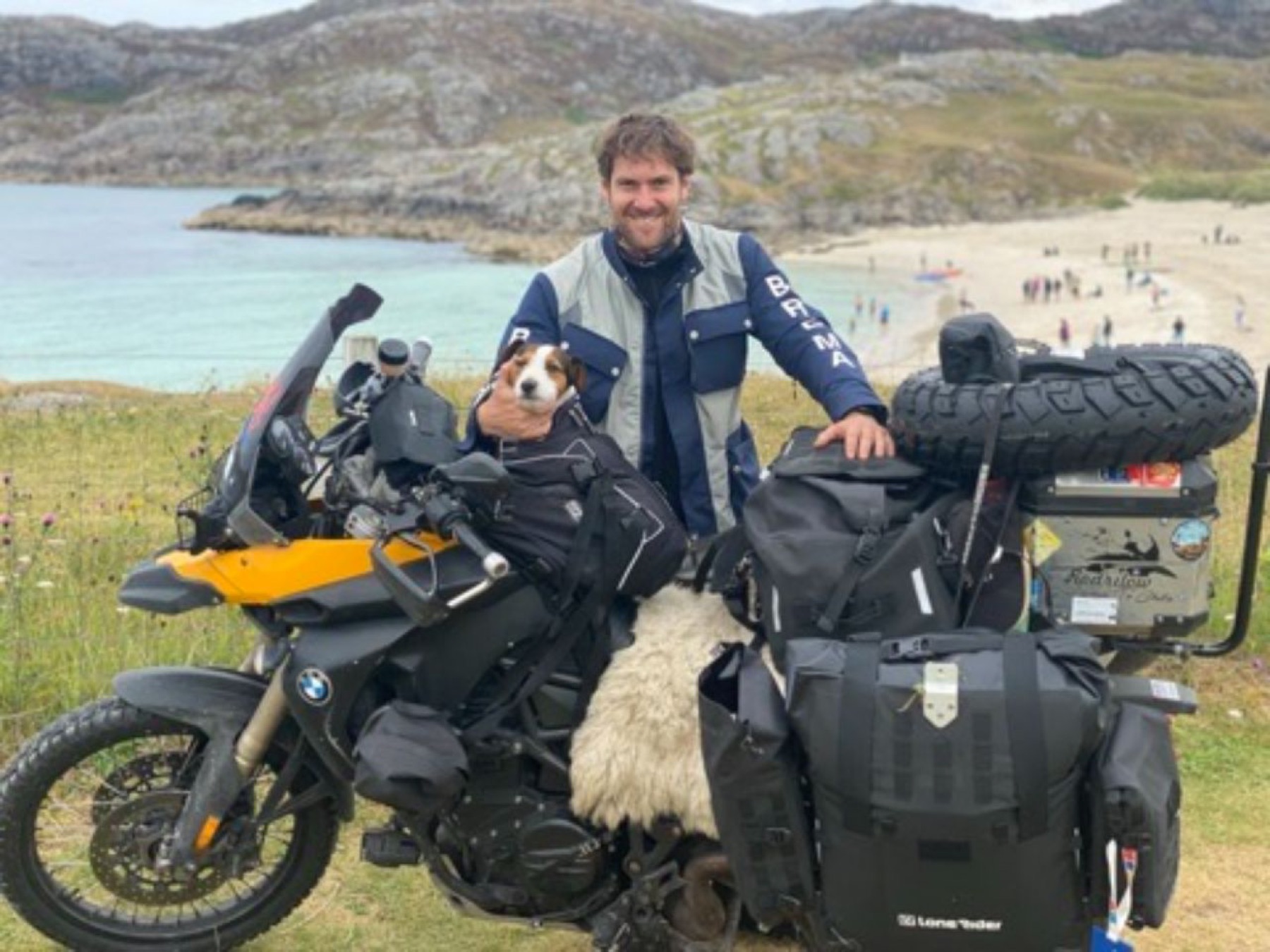
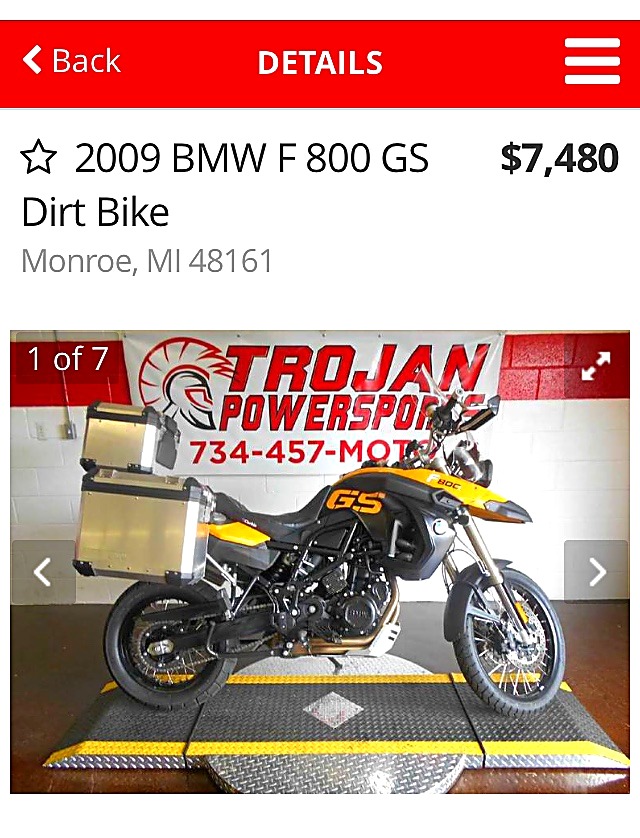
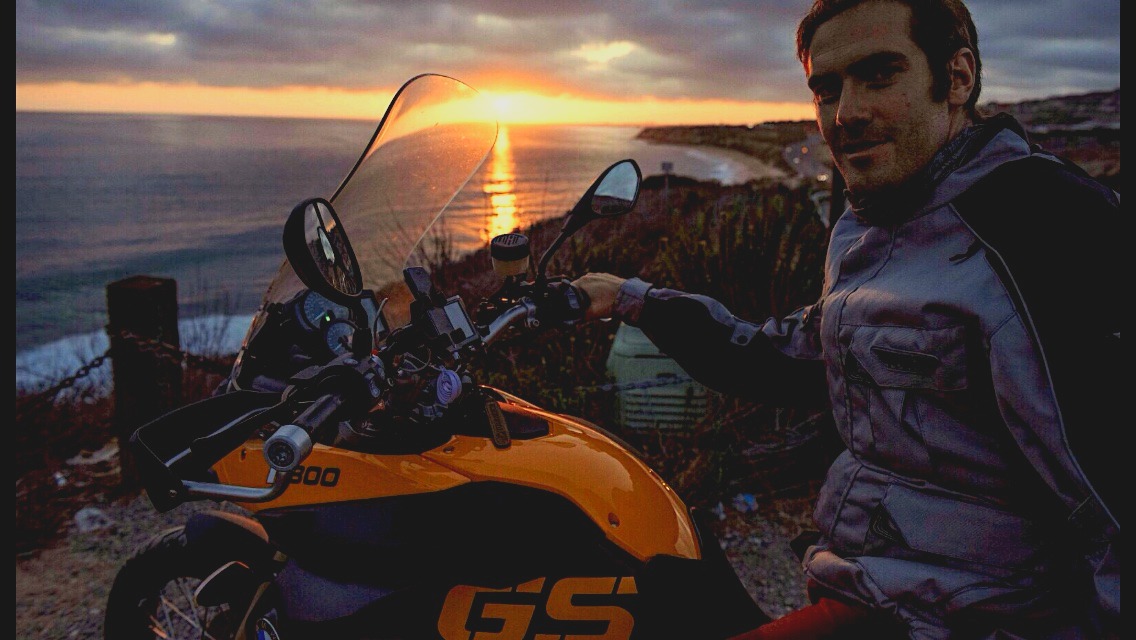
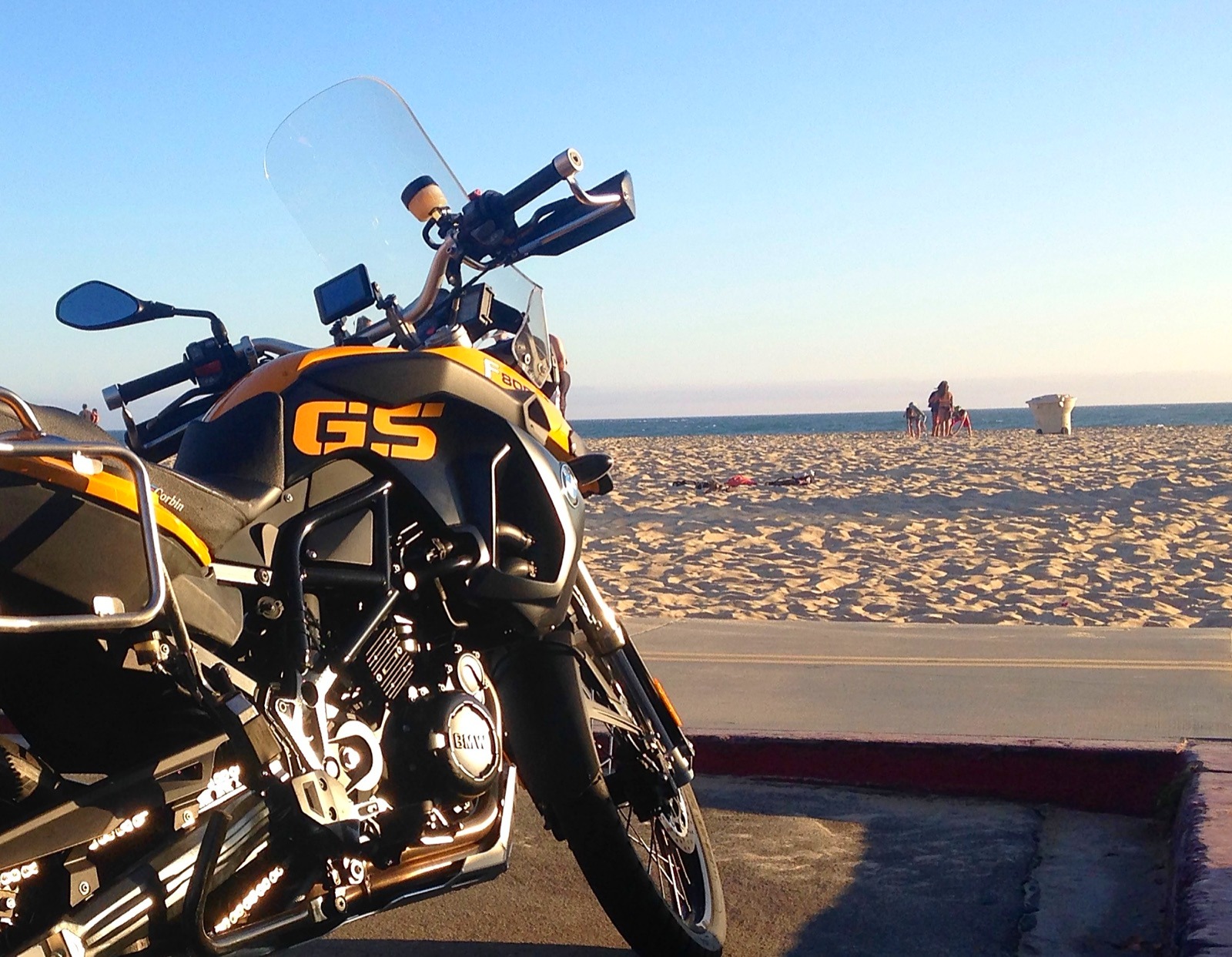
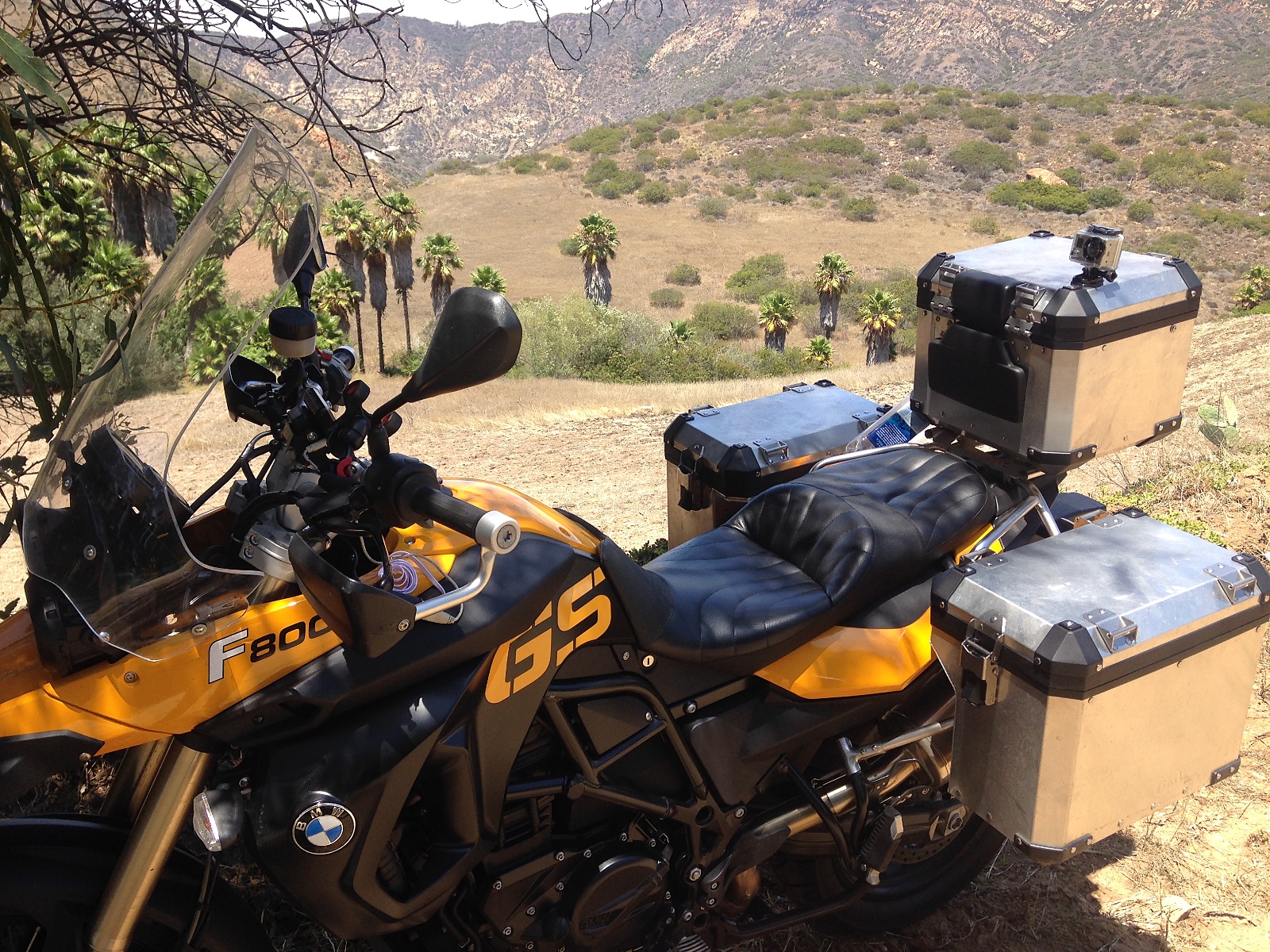
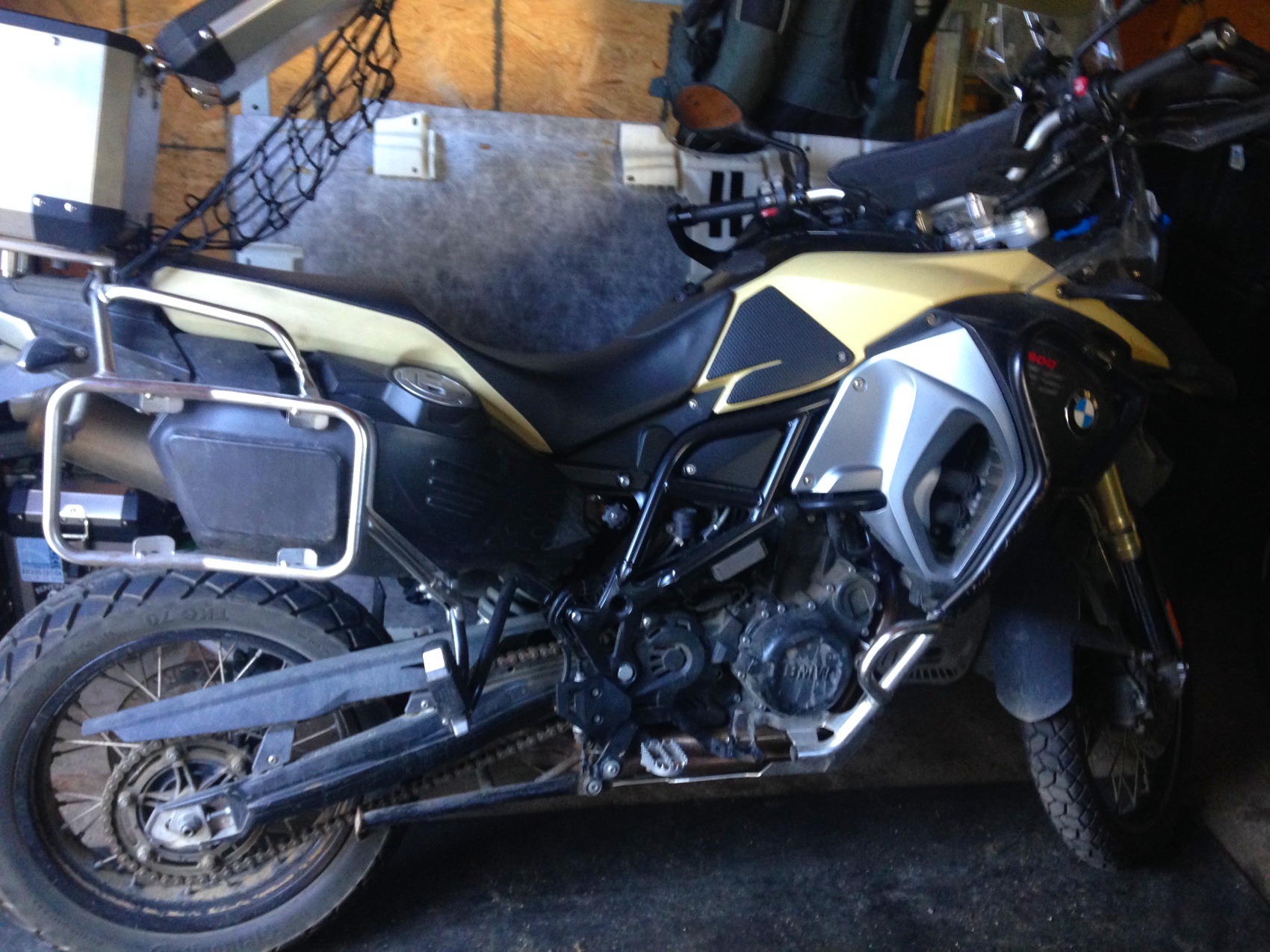
And then one morning I woke up with a hangover of the kind you earn properly, after a night out with a friend, reached for the phone before I had even sat up, and there it was. A 2009 BMW F 800 GS. Panniers on it, screen, crash bars, ready to go. The right yellow. Seven thousand four hundred and eighty dollars.
That was the motorcycle. Not one like it: that one. I reserved it before I had had a glass of water.
It was used, but it was as good as new. Eight thousand kilometres on it and not a single scratch on the bodywork.
And it came equipped, which is the part you do not appreciate until you see it. A Corbin seat, extremely comfortable. A tall touring screen, which changes the whole day on a highway. The Touratech bash plate. The rack and the original BMW panniers, and the original top case. Buying all that separately costs a third of what the whole bike cost.
The only problem was where it was. Monroe, Michigan. Three thousand four hundred kilometres from my front door in Irvine, on the other side of the entire country.
So I did the transfer, signed the papers from California for a machine I had never stood next to, and then had to work out how to physically move it. That part took longer than the buying. It cost me about eight hundred dollars to have it trucked across, money I no longer had, and the whole thing took a month. I was studying in Irvine and could not just go and fetch it. So I waited. A month of refreshing a tracking page and being no use to anybody.
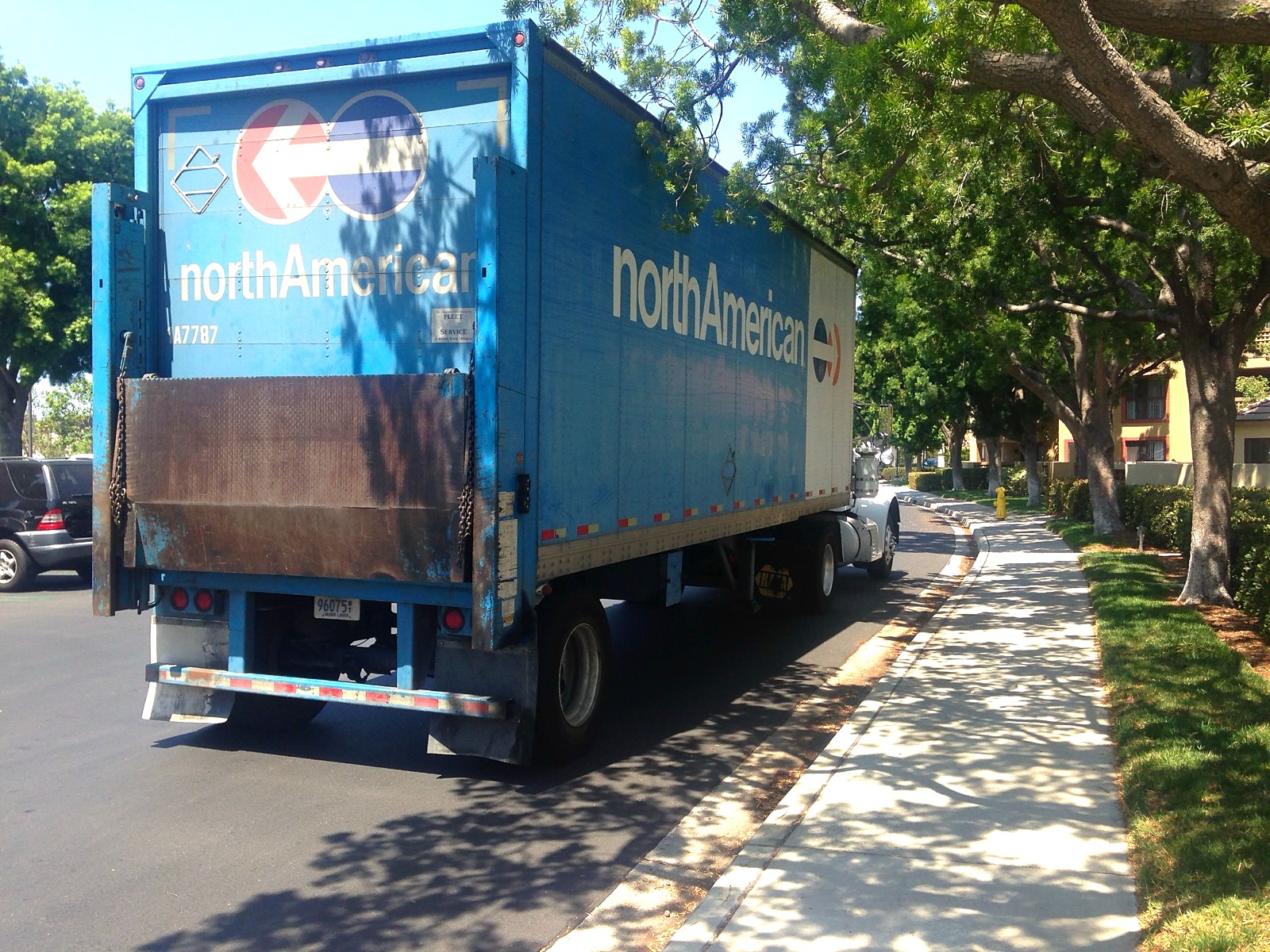
It arrived on a Sunday, while I was eating breakfast. Where I lived was houses, quiet streets, nothing bigger than a delivery van ever came through. And then a full articulated North American removals truck came down the road and stopped, and I knew before anybody knocked.
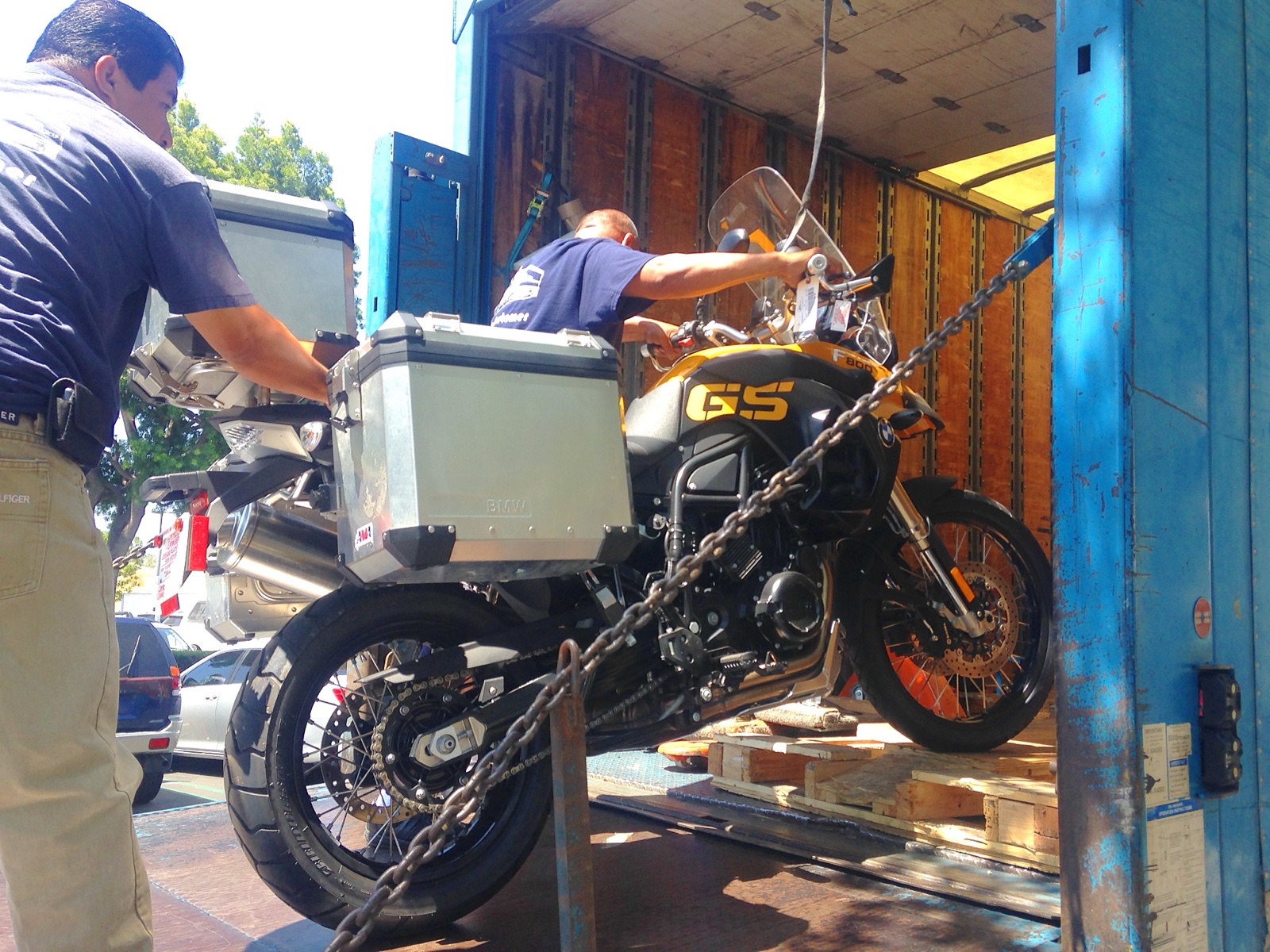
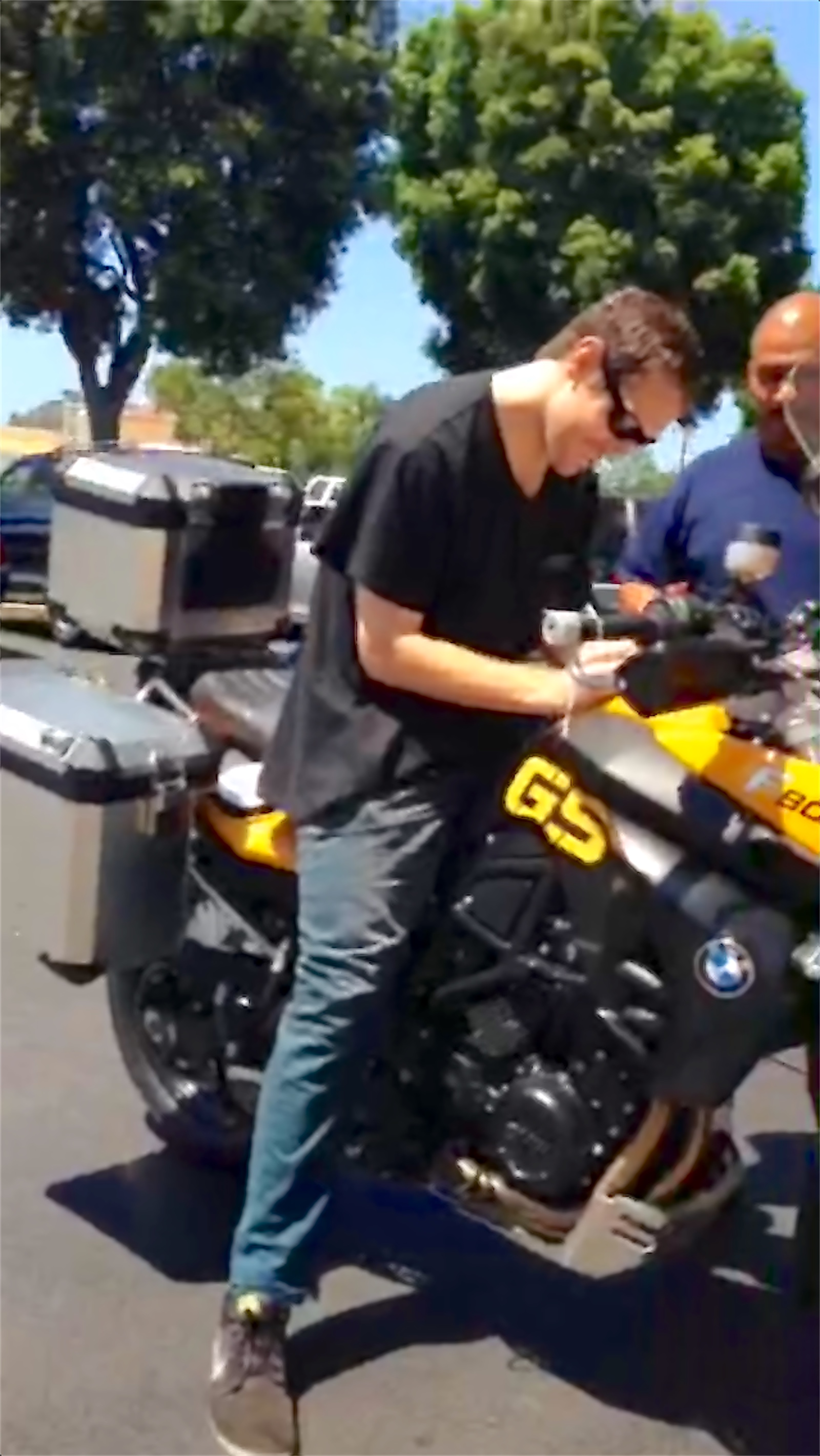
They rolled the door up. There it was, strapped down on a pallet, chained at four points, wedged in among somebody's furniture. Two men walked it down the ramp, handed me a clipboard, and I signed for it standing on the pavement in whatever I had slept in.
One of the happiest days of my life.
That was the motorcycle. Not one like it: that one.
What the road kept
You do not begin ready.
Four states, a motorcycle I could barely handle, gear that was wrong, and fifty one degrees in Death Valley with a nosebleed. Everything I do now on an expedition, I do because of something that went wrong on this ride.I had never been on a motorcycle that size.
All I had ever ridden were dirt bikes, two hundred and fifty cc at the most. A loaded F 800 GS is a different animal: twice the weight, taller, and at walking pace it does exactly what it likes.
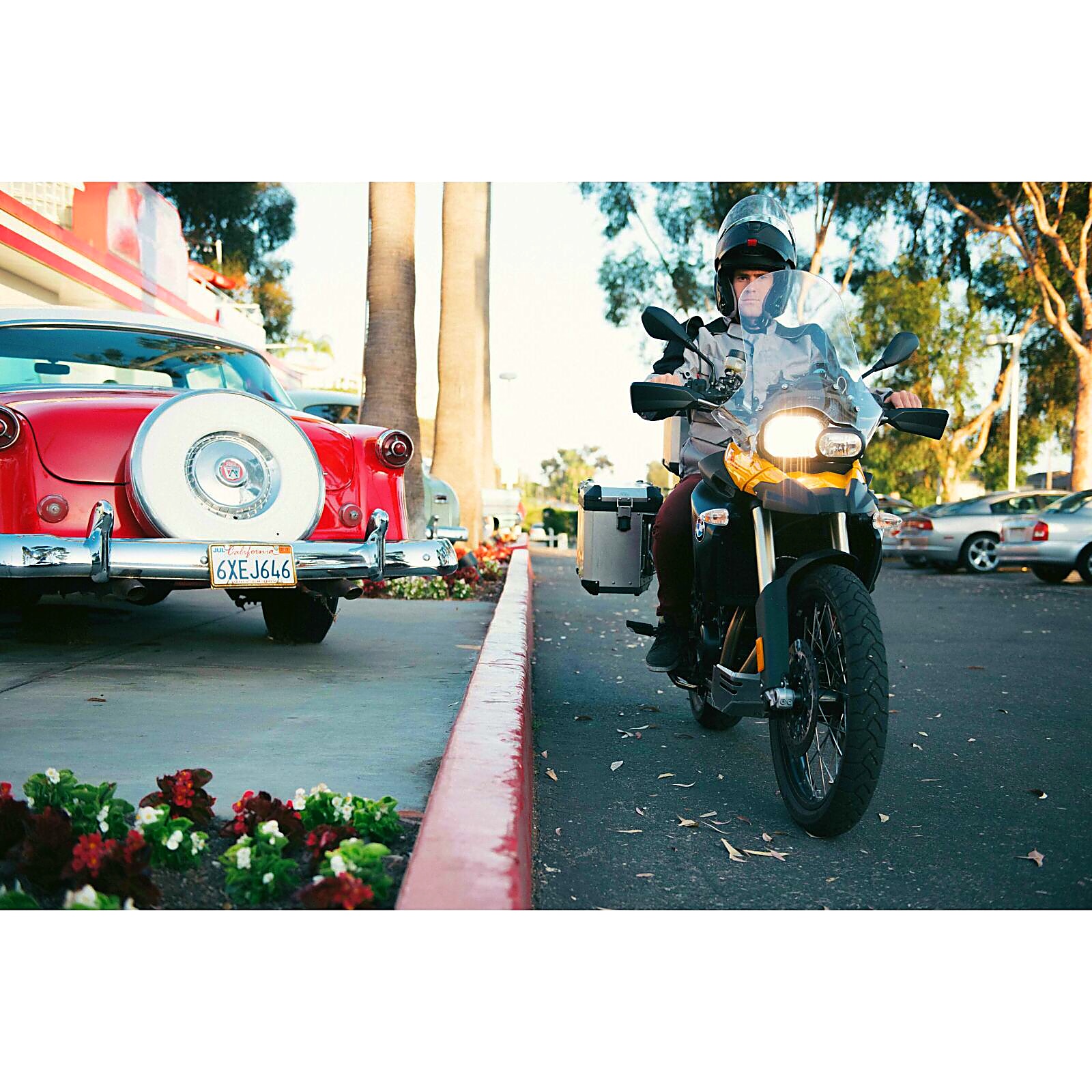
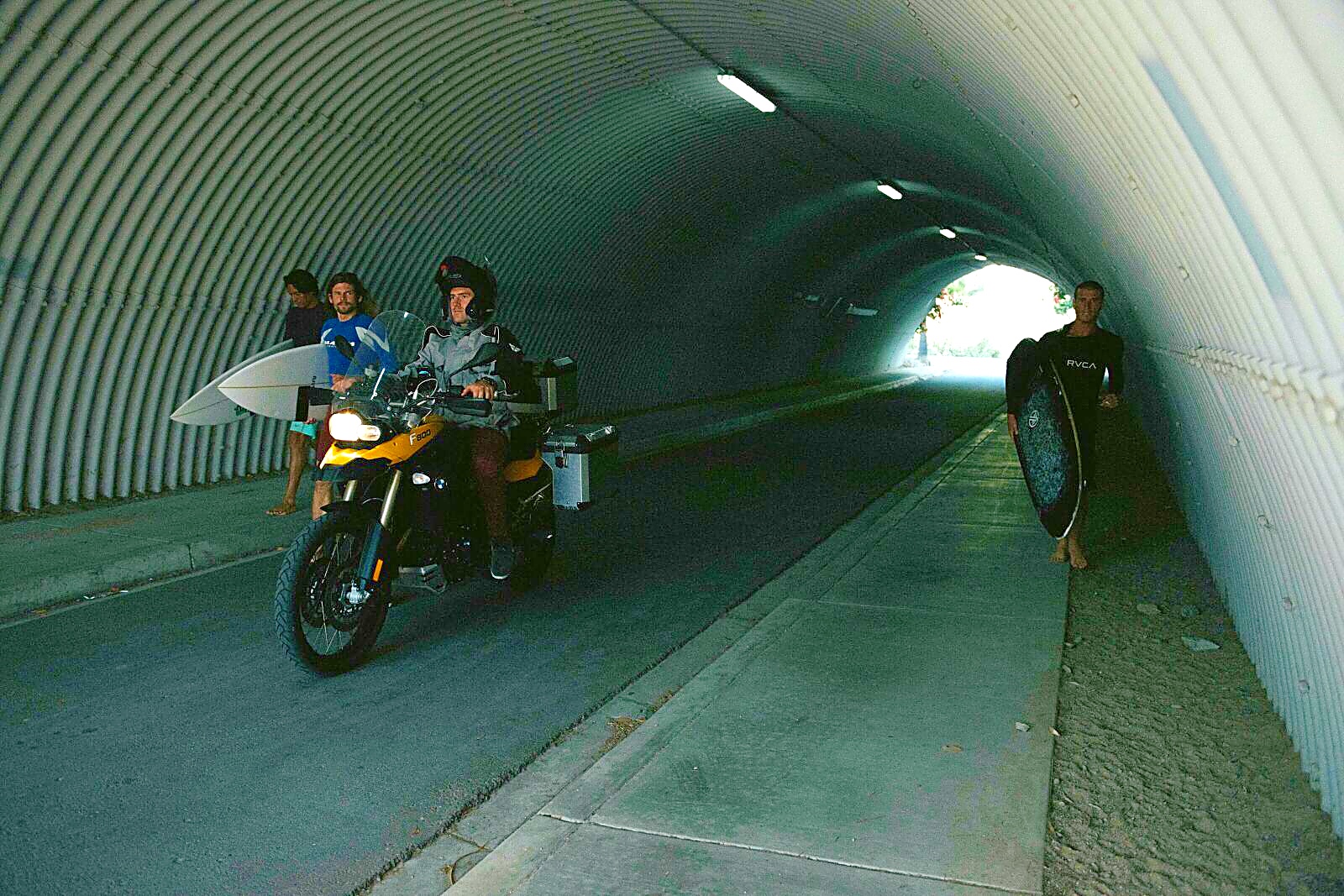
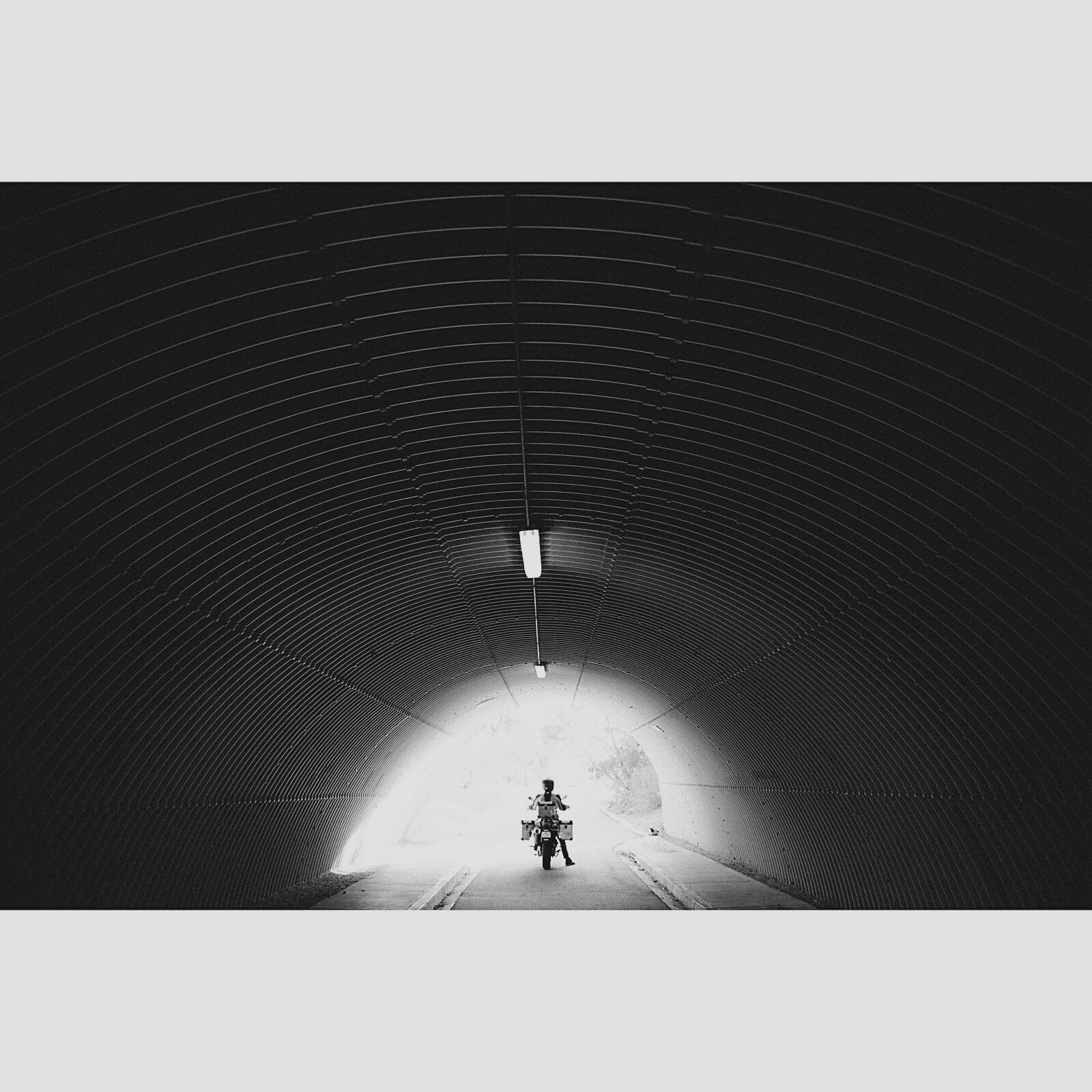
So I gave myself a two week crash course, on my own, riding around California. No instructor and nobody watching: I took the bike out every day and went to the coast. Down through the pedestrian tunnels full of people carrying surfboards, past the vintage cars parked in the shade of the palms. Back and forth, back and forth, until it stopped being frightening.
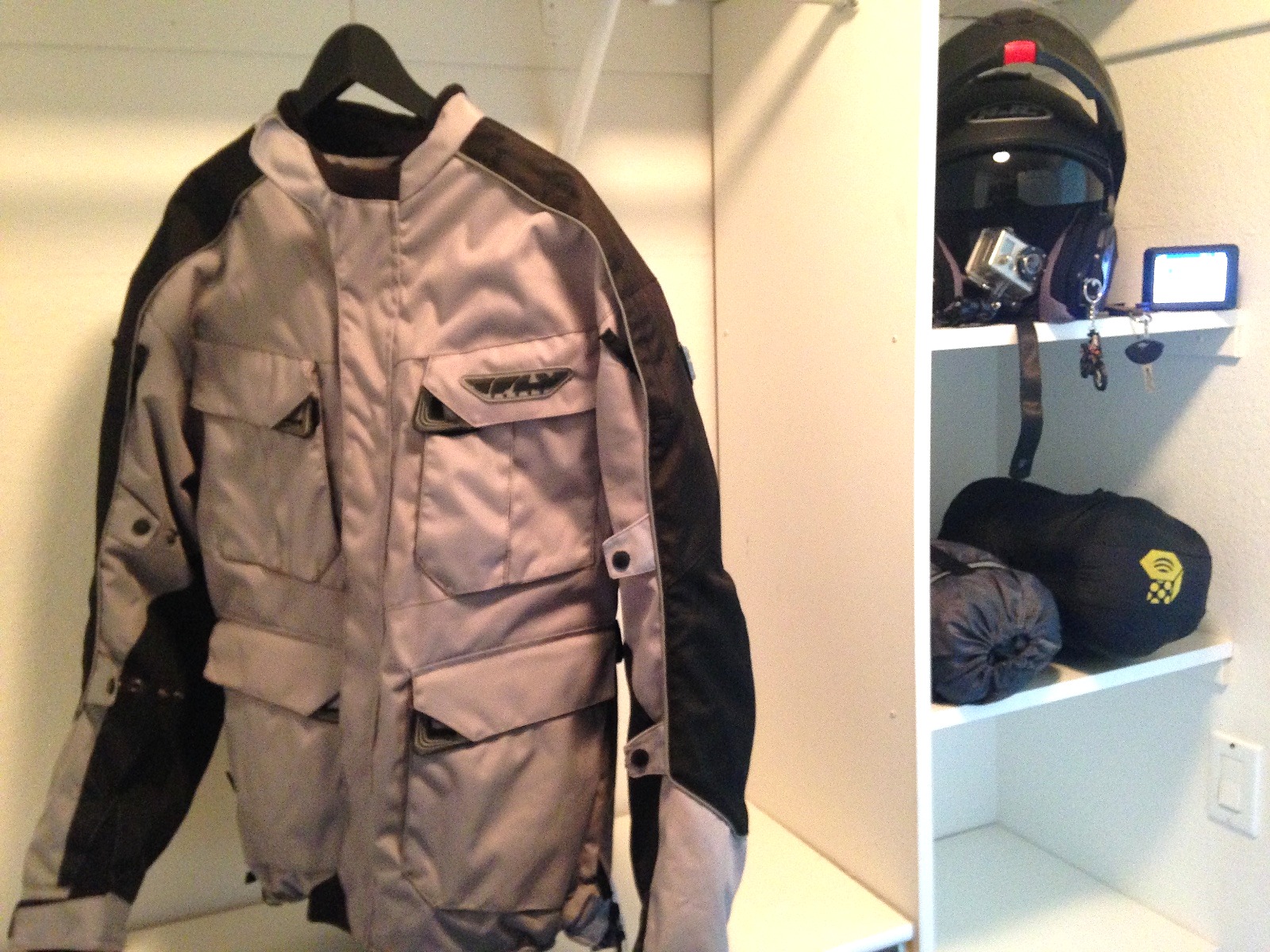
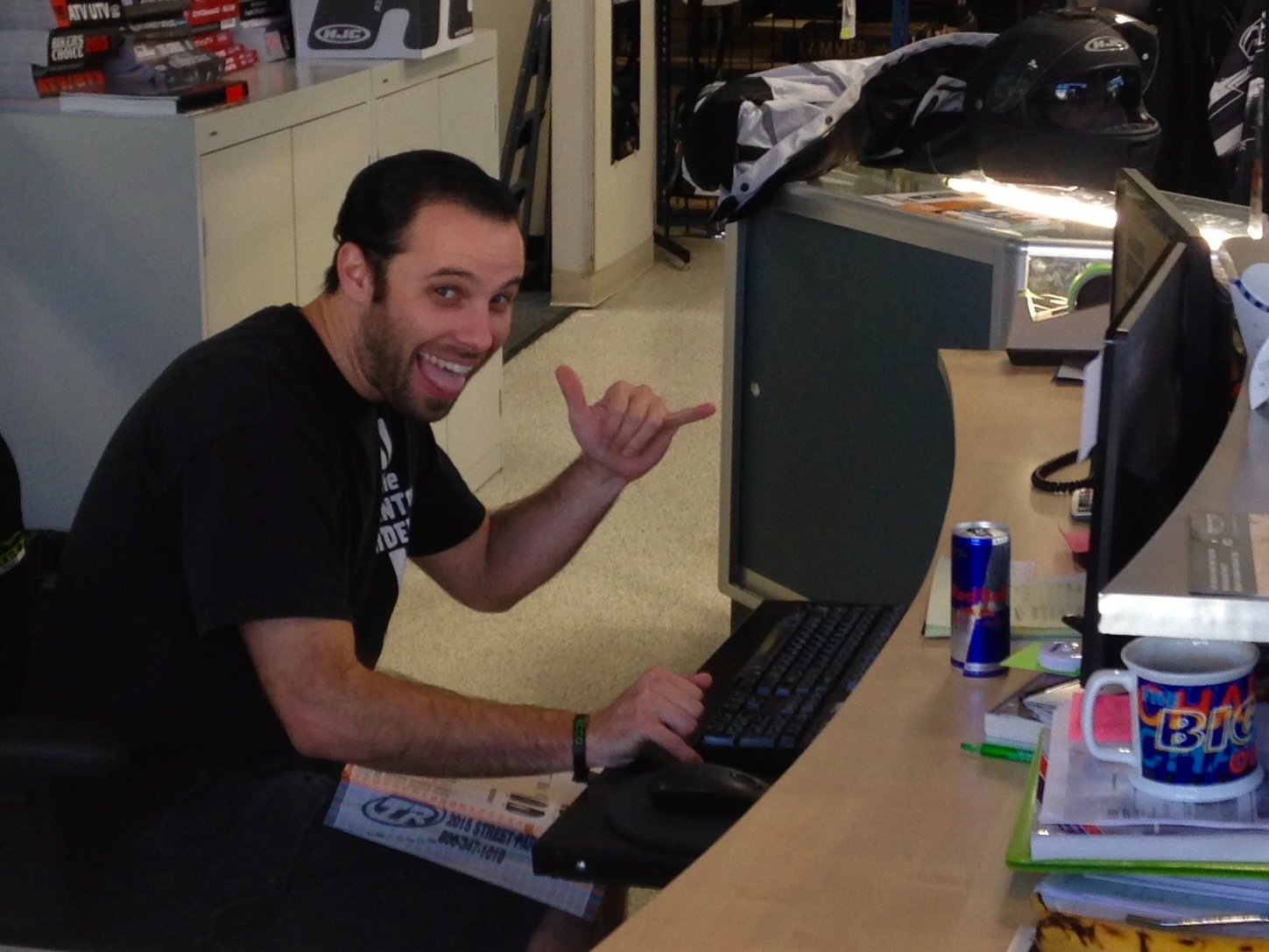
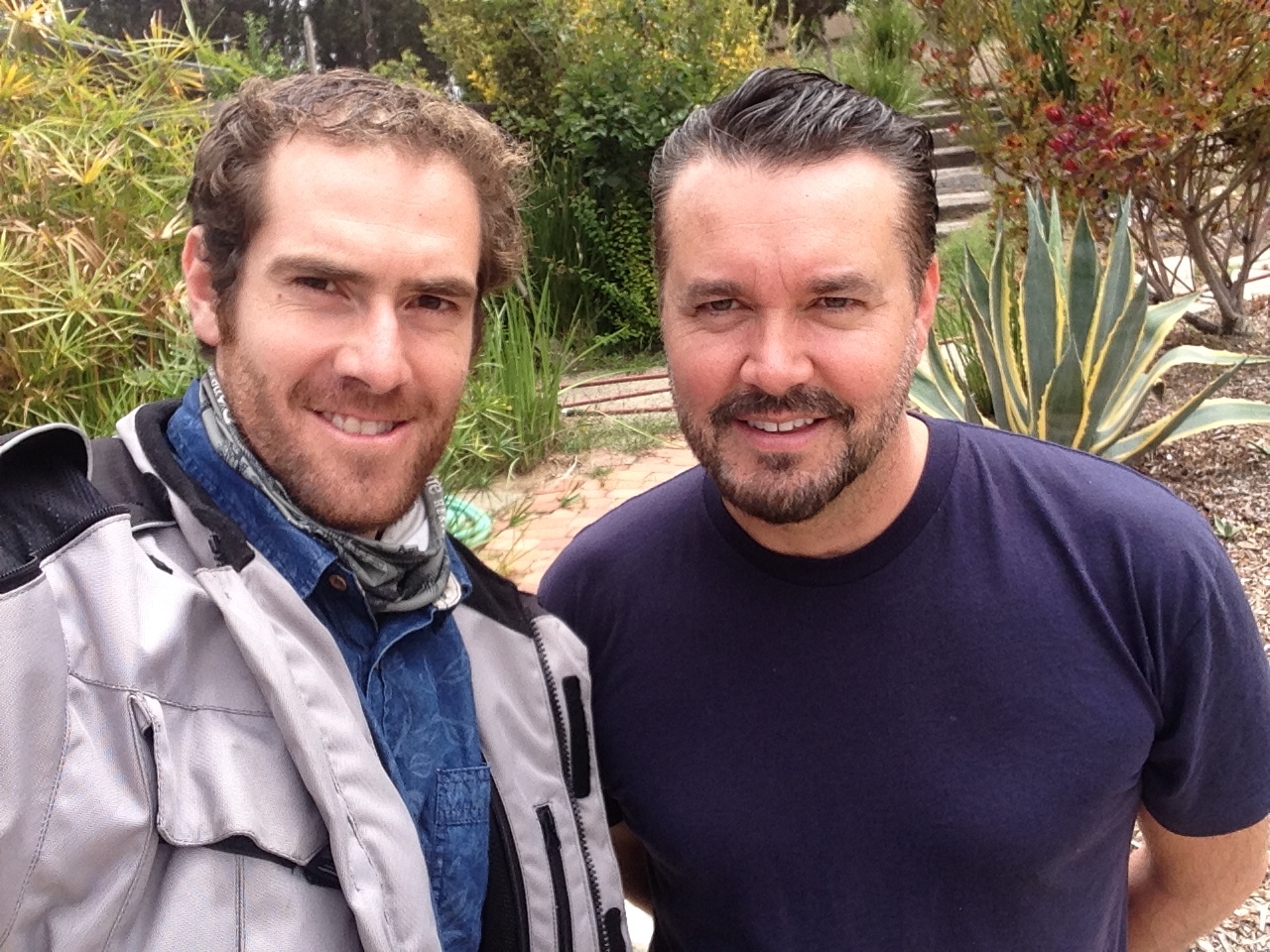
In those weeks I also went to buy my first gear. I found a motorcycle shop in California, run by Jason, a very friendly guy who worked there, and I walked out with two things: my first helmet, a hundred and thirty dollars, and my first motorcycle jacket, a Fly, a hundred and sixty.
And that was my whole kit. Adding the rest: a GoPro 2 lent to me by a friend, a twenty dollar tank bag, a twenty dollar Garmin GPS, both of them second hand, and a small bicycle tent I bought off a friend. Nothing more, because there was nothing left to buy it with: almost all the money had gone on the bike.
The tank bag never made it onto the tank. I put it inside one of the aluminium panniers so that all my things were held in something instead of rolling around loose. And in the other pannier went all my clothes, nothing folded, stuffed into one of those bags meant for covering pillows, with the sleeping bag on top. That was the whole of my equipment, and it was an incredible mess: loose clothing taking up every centimetre there was.
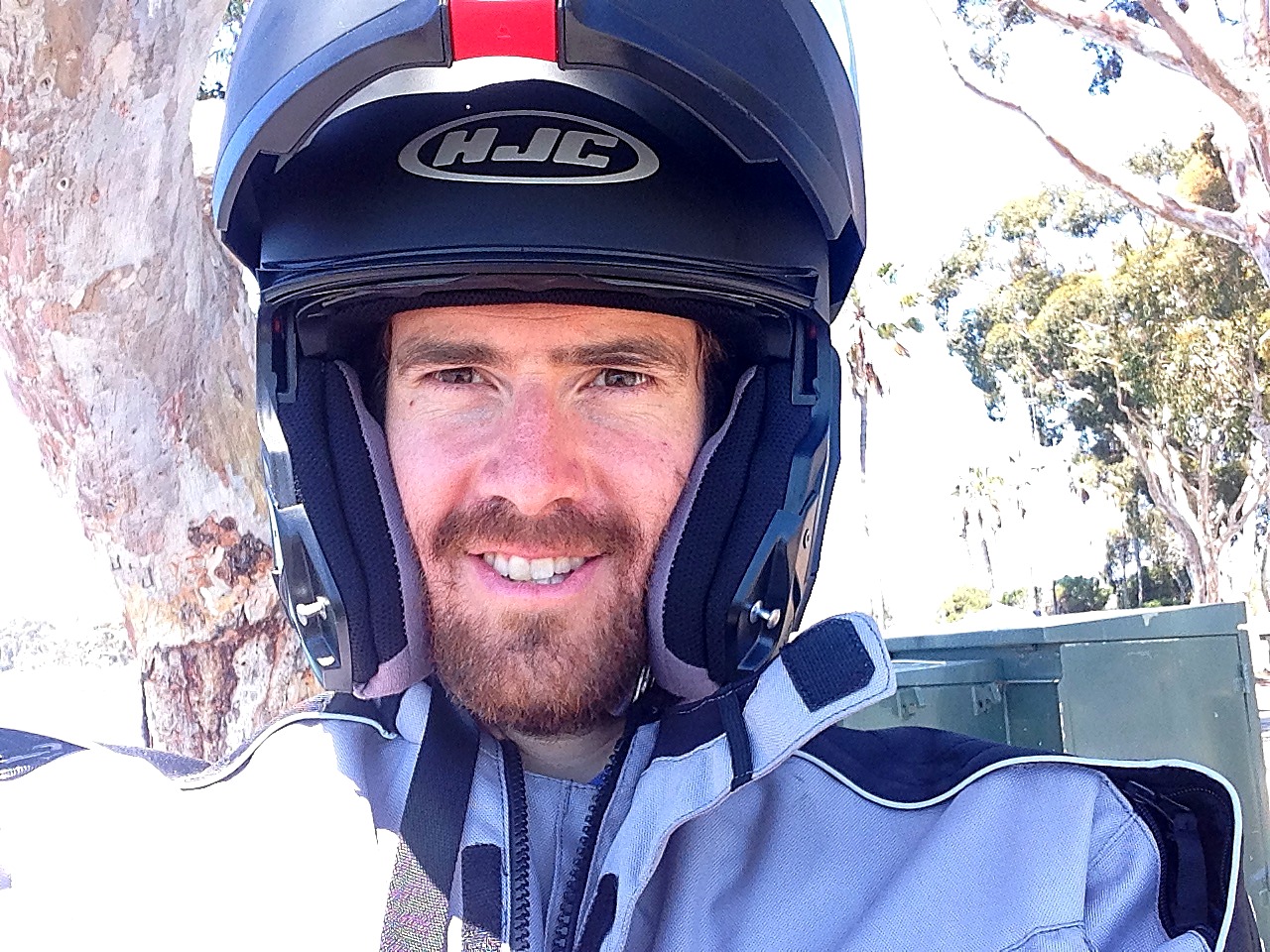
That is how I set off across California. No boots, no riding trousers, no gloves. Nike trainers, ordinary trousers, the jacket and the helmet.
And once I knew the machine, the university holidays started. I had a month in front of me and a new motorcycle.
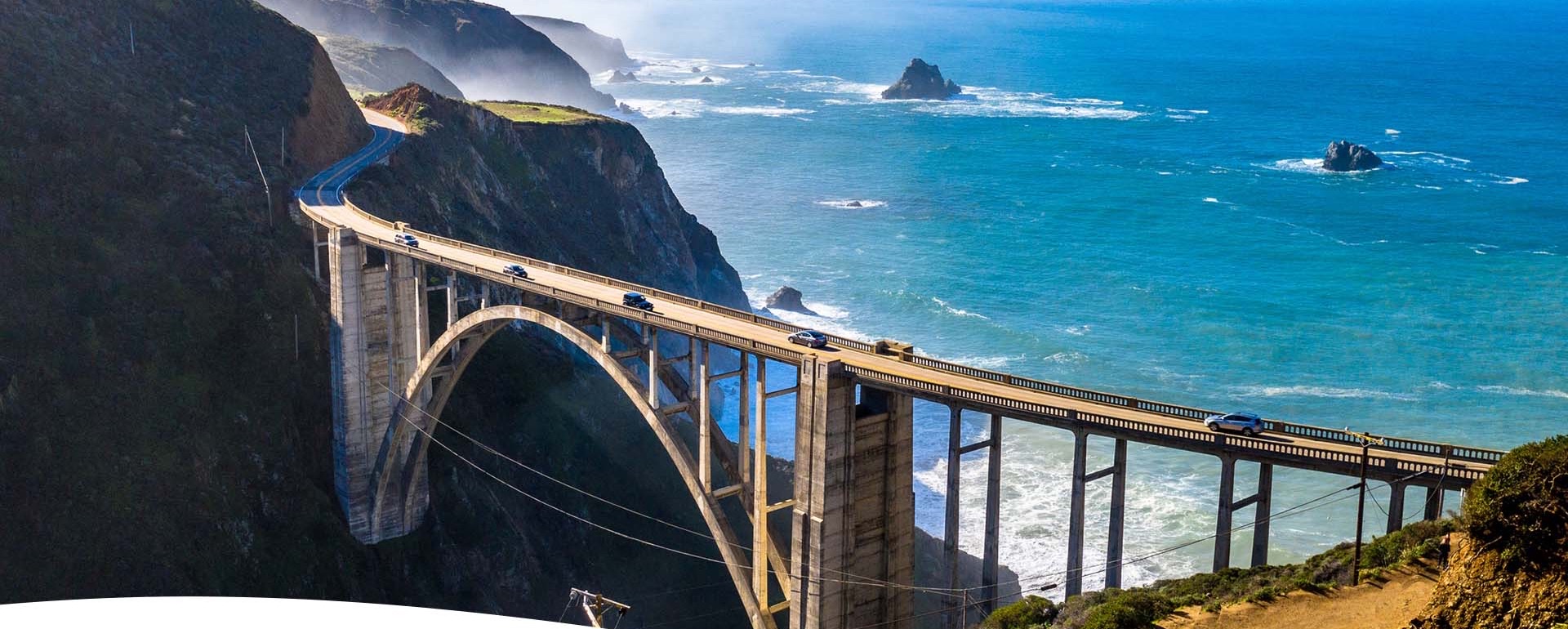
The first proper road was the obvious one: Highway 1, the Pacific Coast Highway, north out of Irvine with the ocean on the left the whole way. Santa Monica. The long empty stretch through Big Sur, where the road is cut into the cliff and there is nothing below it but water. Monterey. San Francisco at the end of it.
No instructor and nobody watching: I took the bike out every day and went to the coast.
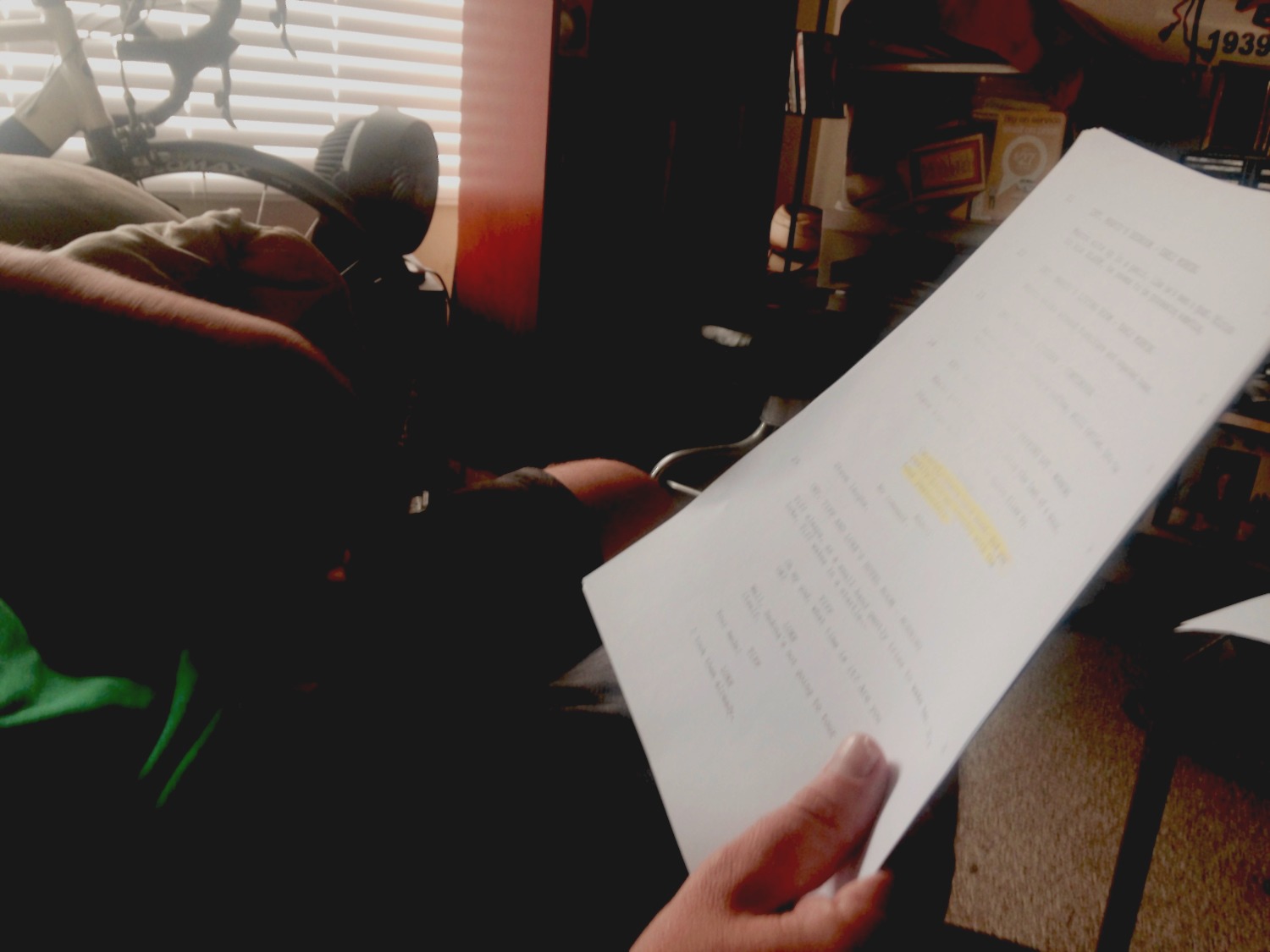
The actor who had me rehearse the script with him, in the middle of Hollywood.
The first place I stayed on the trip was through Couchsurfing, on 21 July 2015, in west Los Angeles, up by Santa Monica Boulevard. His name was Mark.
I still have the message he sent me that day. He would not be home until half past seven, he lived alone in a studio flat, and he warned me in advance about the only thing that worried him. "I have no AC, but the fan will be right next to you. It has been very humid here which is so not Southern California." And he signed off, in Spanish: Gracias y hasta esta noche, amigo.
A man who did not know me from anybody, worried about whether the fan would be close enough.
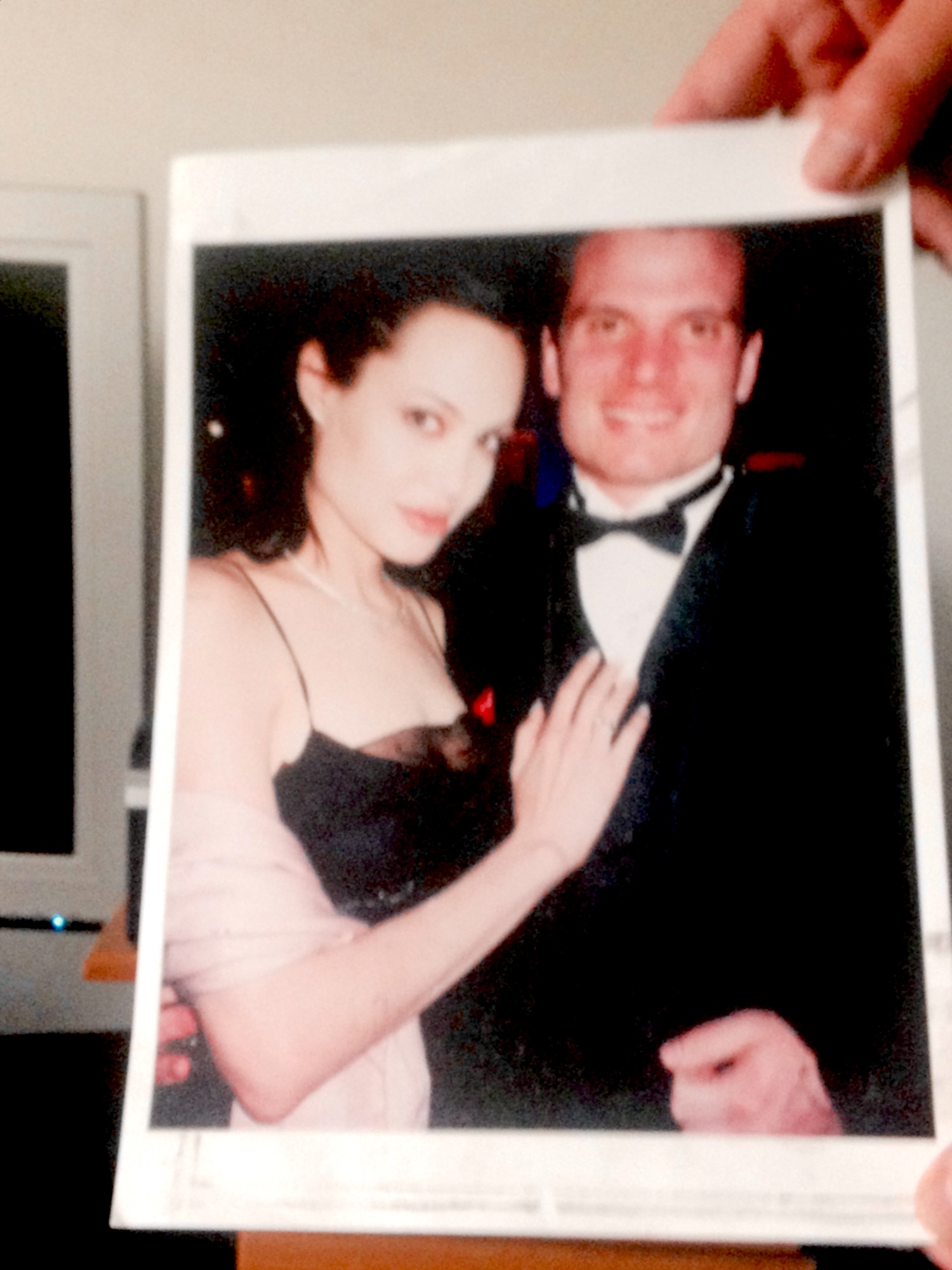
And it turned out he could not have been more of that place: he was an actor, he had been in the industry a long time, and the house was full of photographs of him with well known people. One of them with Angelina Jolie.
He was not a star. He was one of those supporting actors you have seen in twenty series without ever learning the name, and who have spent half a lifetime doing the actual work.
That night, as it happened, he was rehearsing a script for a film that was coming up. So I ended up helping him: I read the other character's lines, the questions, and he answered in character, over and over, until it came out the way he wanted it.
There I was, freshly arrived, a new motorcycle parked outside, playing opposite an actor in Hollywood, which is precisely where all the magic of the cinema comes from.
One of the strangest things that has ever happened to me on a first day of a trip.
I read the other character's lines and he answered in character, over and over.
The first wild camp of my motorcycling life.
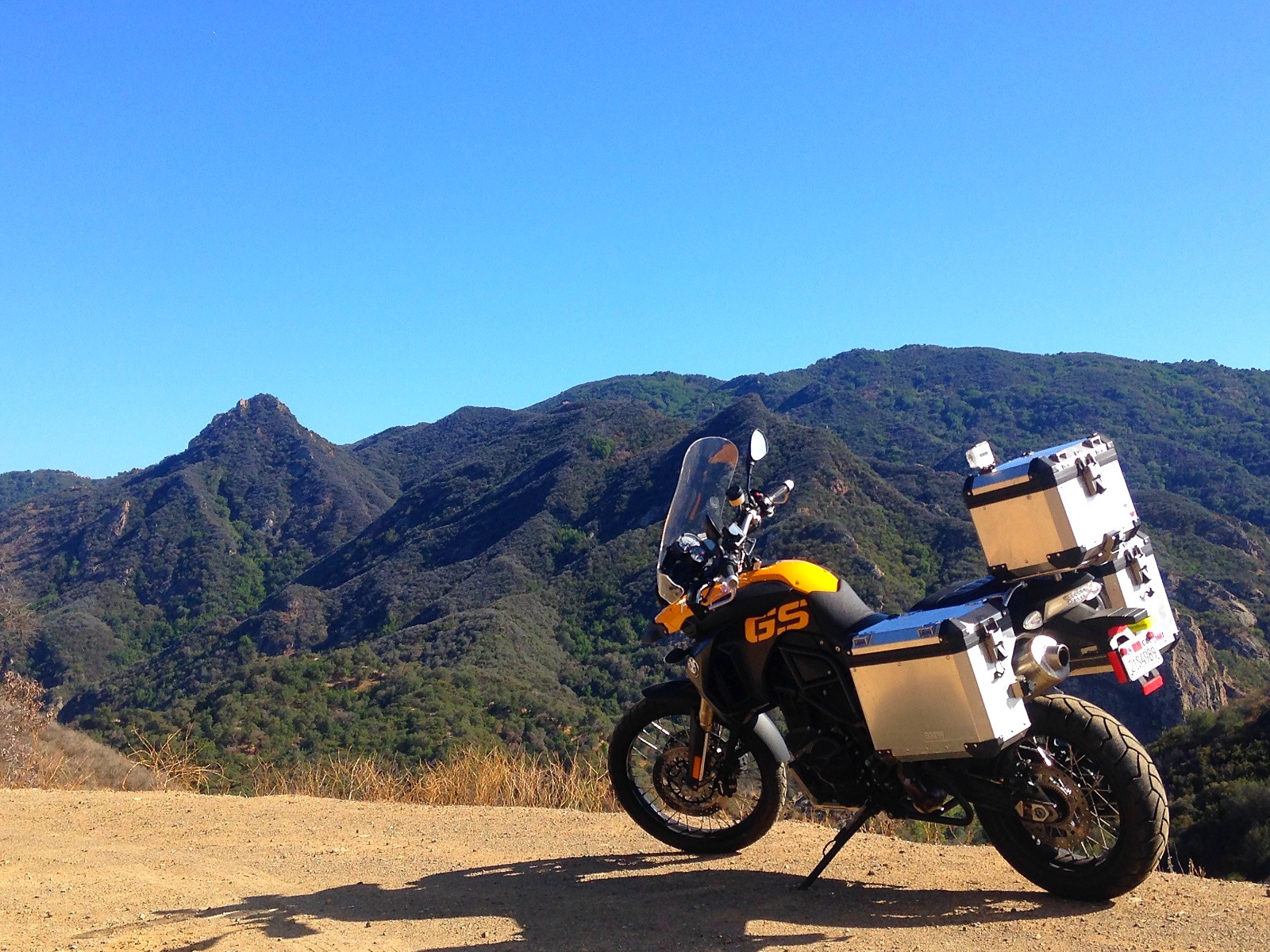
Leaving Los Angeles I climbed into the Santa Monica Mountains, the dry ridge that separates Malibu from the valley. A narrow road, curve after curve, sun-burnt scrub and the odd palm tree, and then the sea appearing a thousand metres below.
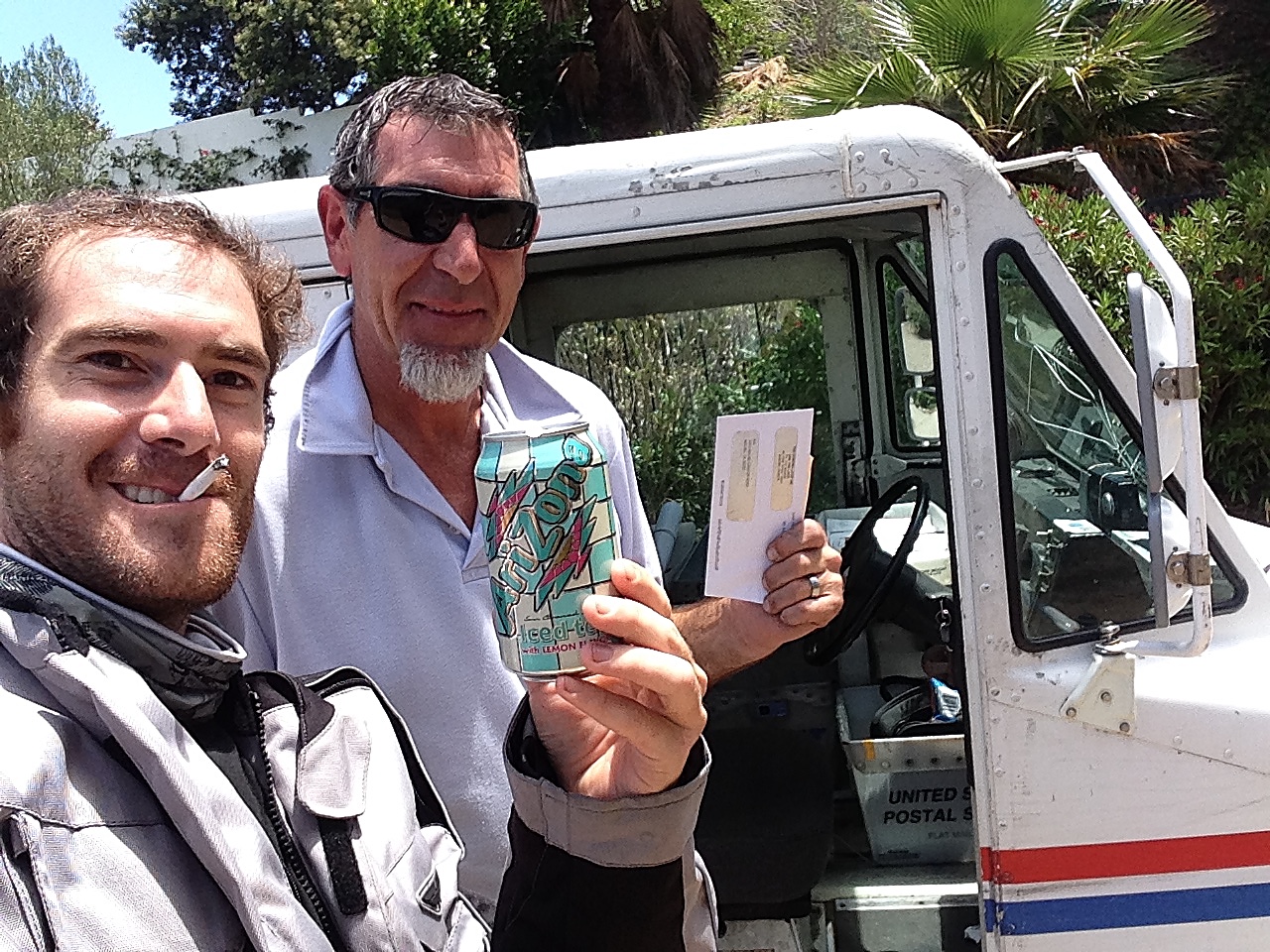
Three things happened that day that I still remember. The first was the postman.
He was delivering the mail around the Malibu hills in his white United States Postal Service truck, and we met up on the mountain. He stopped to say hello. It was brutally hot and he gave me a cold Arizona, one of those giant cans of iced tea with lemon.
We got talking and at some point I told him I was going to Chile on the bike. He could not believe it. He stood there asking me question after question, with the mail truck halfway across the road and the round waiting.
And before he left he did something I did not expect: he took out an envelope, wrote his address on it and handed it to me. Would I please send him a letter when I got back to Chile.
I have the photograph: the Arizona in one hand and the envelope in the other.
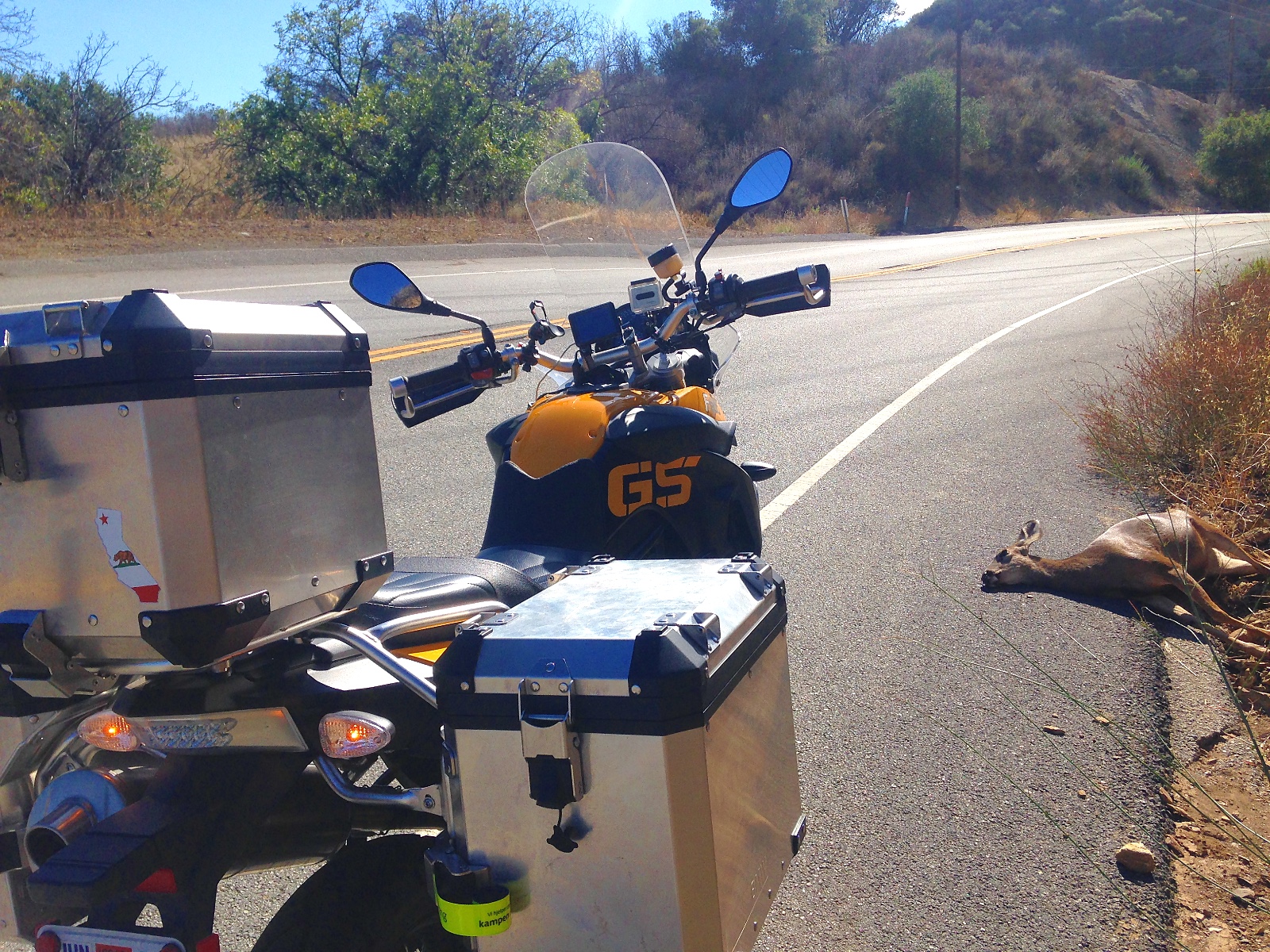
The second was less cheerful: a deer dead on the verge, freshly hit. That is when you understand that those hills are full of animals and that one can appear round any corner.
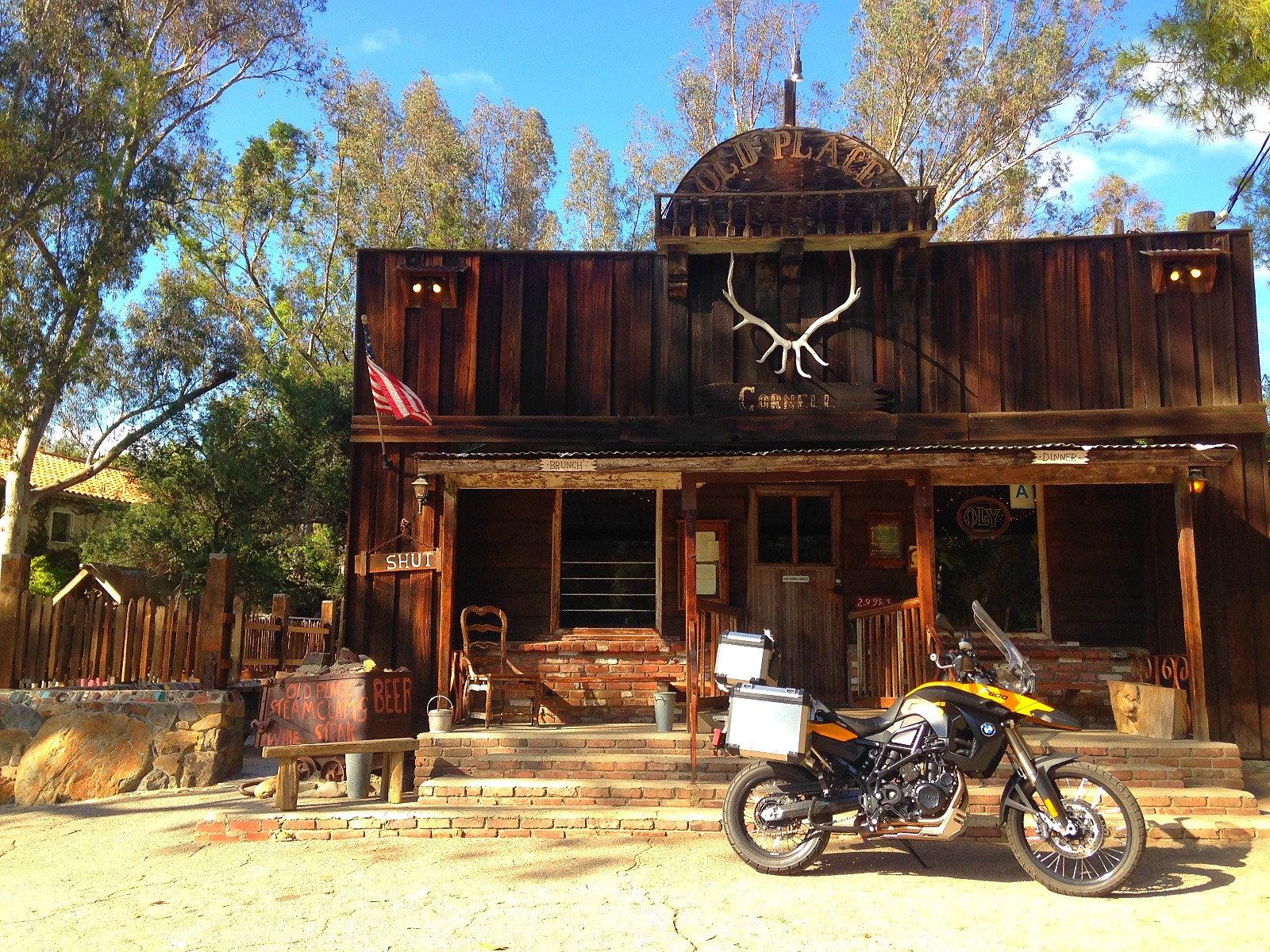
And the third was The Old Place, a western timber shack with antlers over the door, standing in Cornell in the middle of nowhere, and shut. I parked the bike in the dirt out front and stood looking at it for a while.
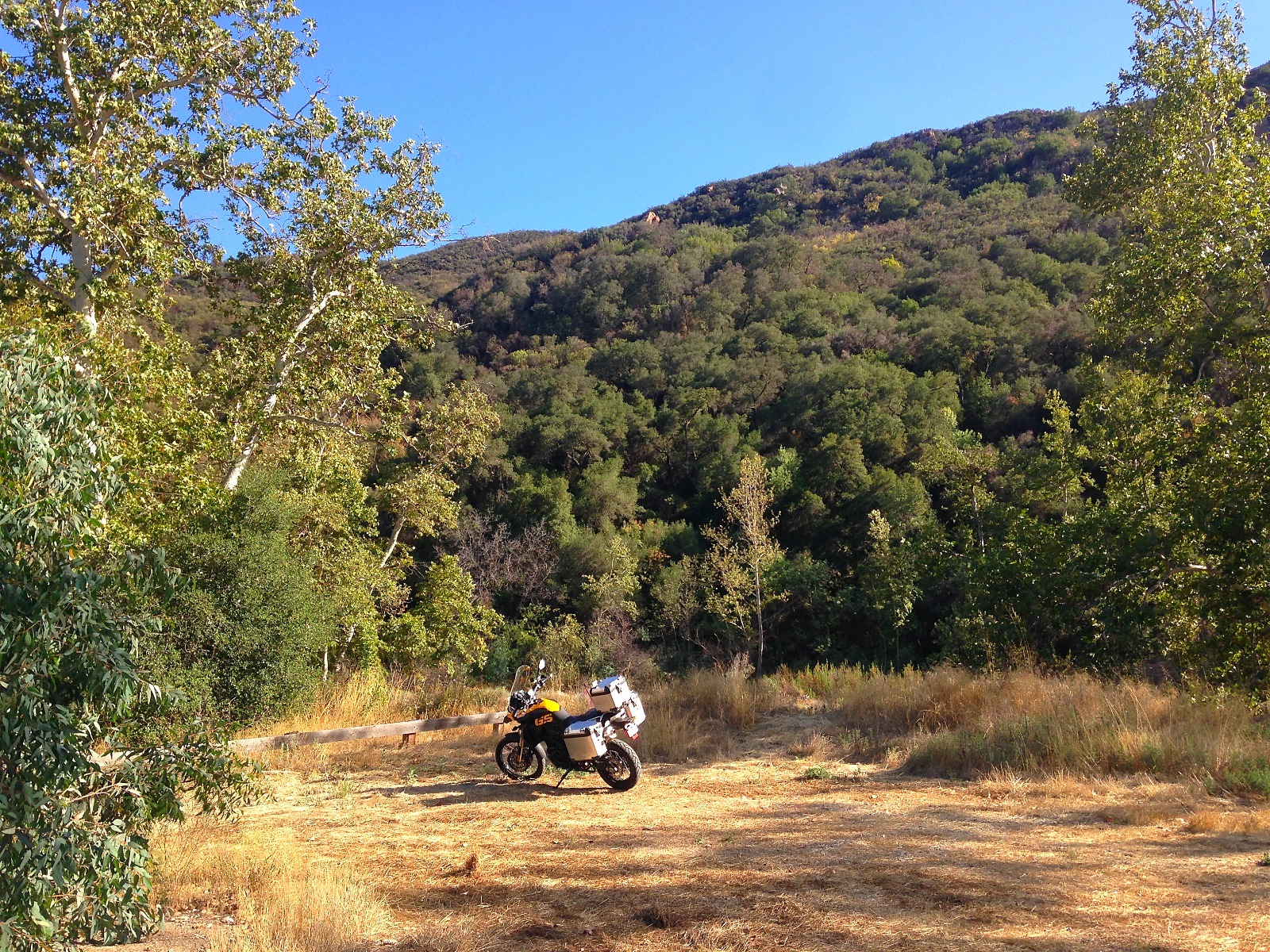
But what mattered about that day was the night, because it was the first time in my life that I slept out on a motorcycle trip. No campsite, no booking, nobody.
I arrived late and with nowhere to go. And there is the problem nobody warns you about: in the United States you cannot camp wherever you like. The land has an owner, there are signs, and pitching a tent where you feel like it gets you into trouble.
So I went and asked at the first place I found open, which was a winery: the Cornell, in Agoura Hills, seventy metres from The Old Place. The two of them sit side by side in the same bend of the road.
And the man in the shop said yes, put the tent up in the back yard.
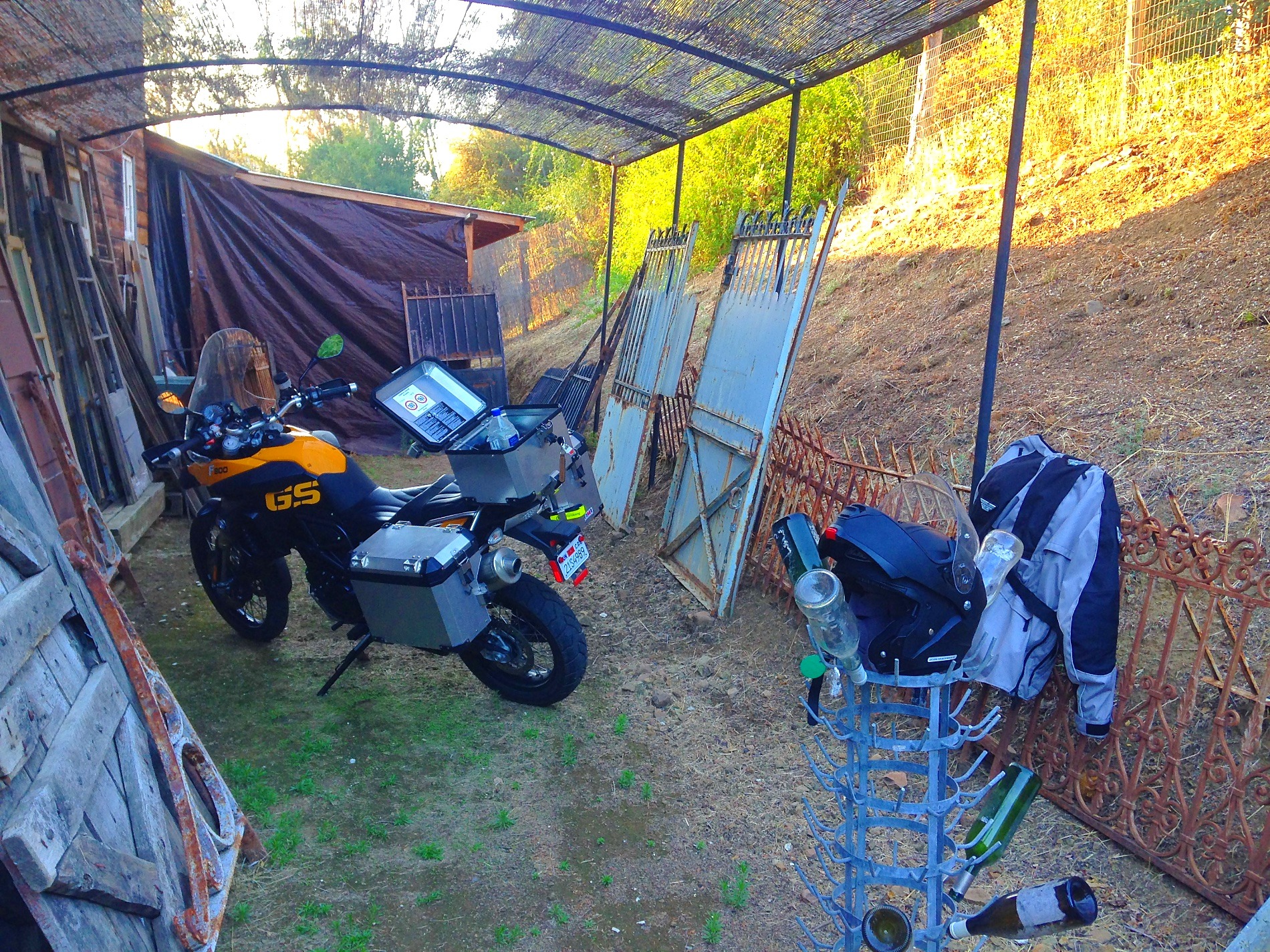
I put the bike in the back yard, on the side of the hill, under a black mesh roof on a steel frame. A timber shed with a brown tarpaulin down one side, and propped against the dry bank dozens of rusted doors and wrought iron gates, stored there waiting for somebody to buy them.
I hung the helmet and the jacket off an antique bottle drying rack, one of those iron hedgehogs covered in spikes, standing there with two green bottles still on it. From a winery, of course. I left the top case open with the water bottle in it. The sun was going down behind the bare hill.
And that was the first night.
It was not pretty. It was the beginning of everything that came after: ten years of sleeping wherever it works out.
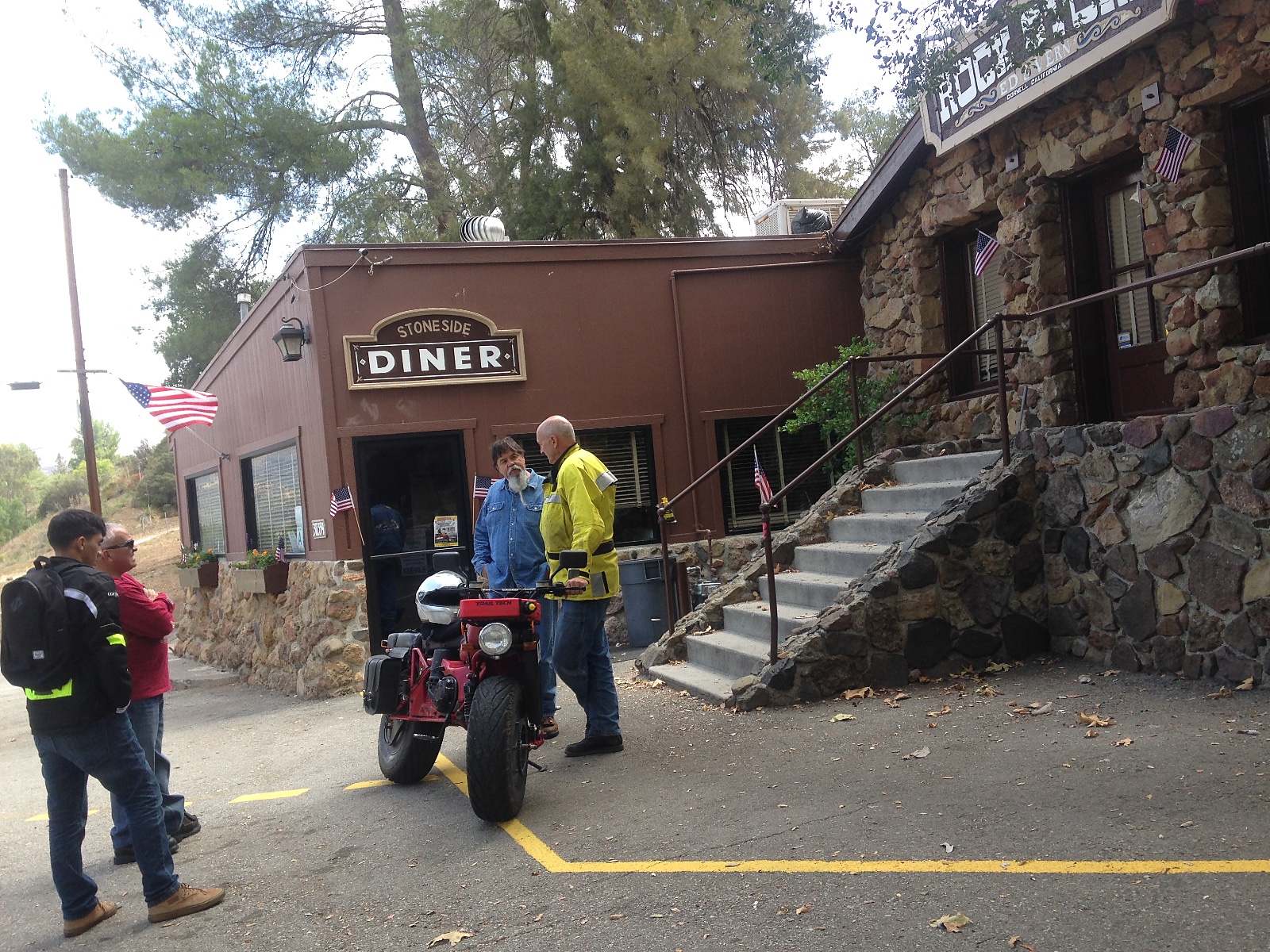
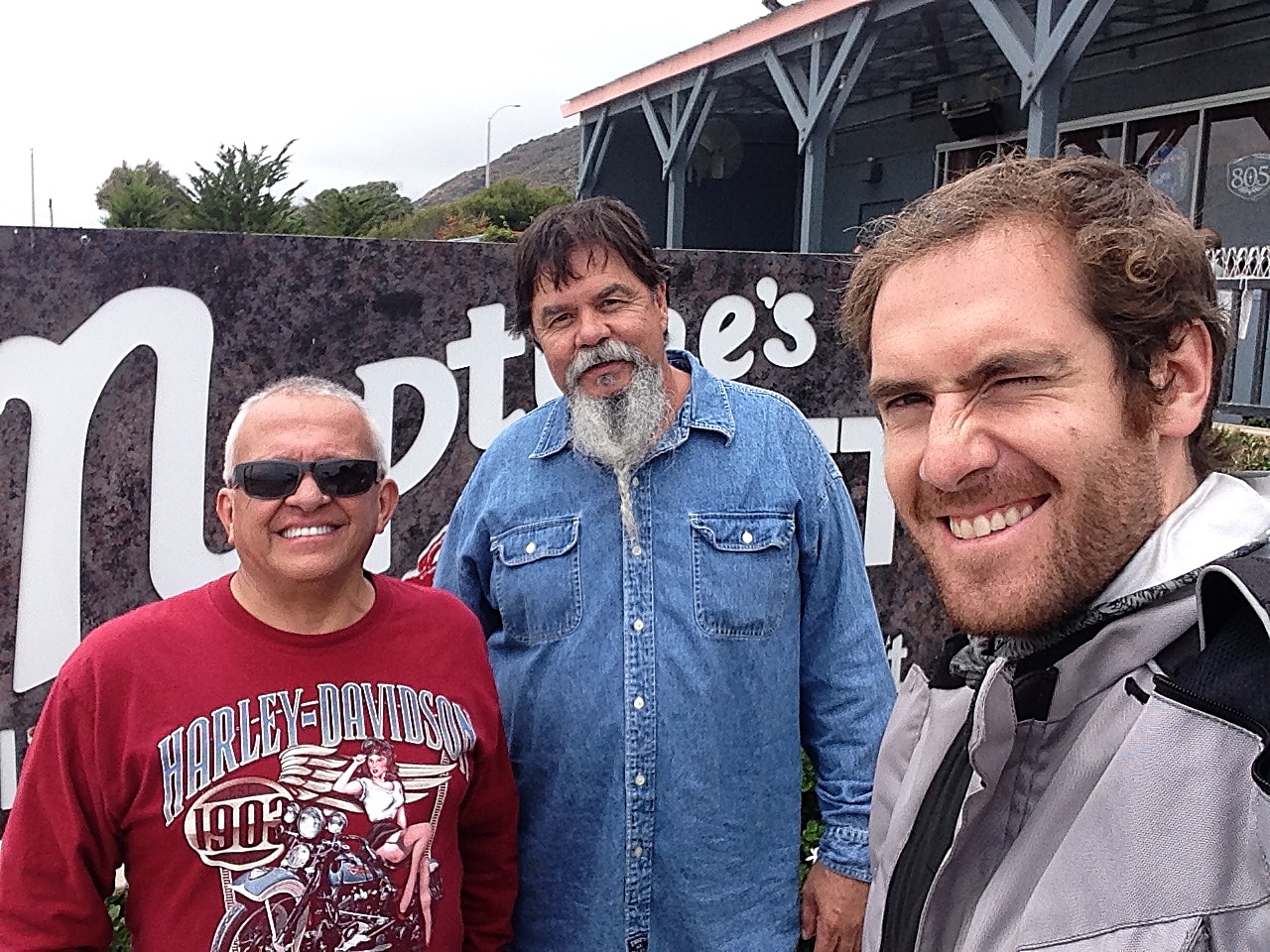
The next morning I came down Mulholland and stopped at the Rock Store, which is where everybody who rides those hills stops. Outside there were a couple of men, proper motorcycle fanatics, and we got talking.
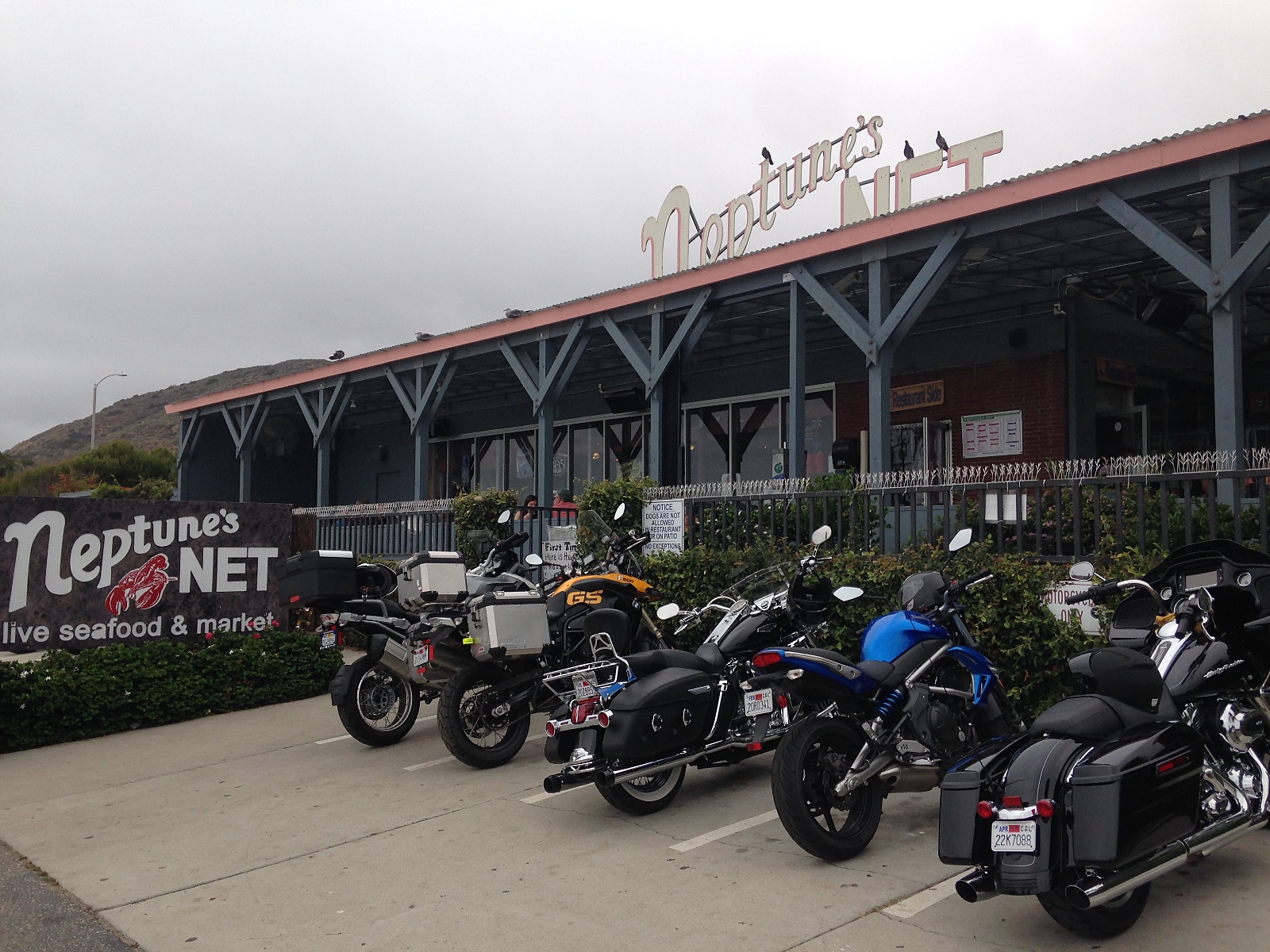
When I told them where I was going they told me to come with them, and they led me down to Neptune's Net, the seafood shack on the Pacific Coast Highway with twenty motorcycles parked outside. That place is a legend: it is where the riders meet in the first Fast and the Furious film.
That is where the photograph was taken. Two men who had ridden that road their whole lives, guiding a Chilean who had owned a motorcycle for three days.
It was the first time in my life that I slept out on a motorcycle trip.
Randy, his orange Indian, and a whole weekend.
That place was extraordinary, and it did not start well.
I arrived at night, very late, at a campsite with several RVs in it. My tent was small and bad: it was a tent meant for cyclists, one of those that has to be guyed out on both sides to stand up at all. It is awkward in daylight. At night, tired and in the dark, it is a fight.
I finished putting it up in the middle of the night, on a patch of ground that felt unsafe and uncomfortable, the kind of place where you lie down with one eye open.
And right then, at that exact moment, a Couchsurfing reply came through on the phone from a man telling me to come to his house.
So I took the whole thing down again and rode out in the middle of the night.
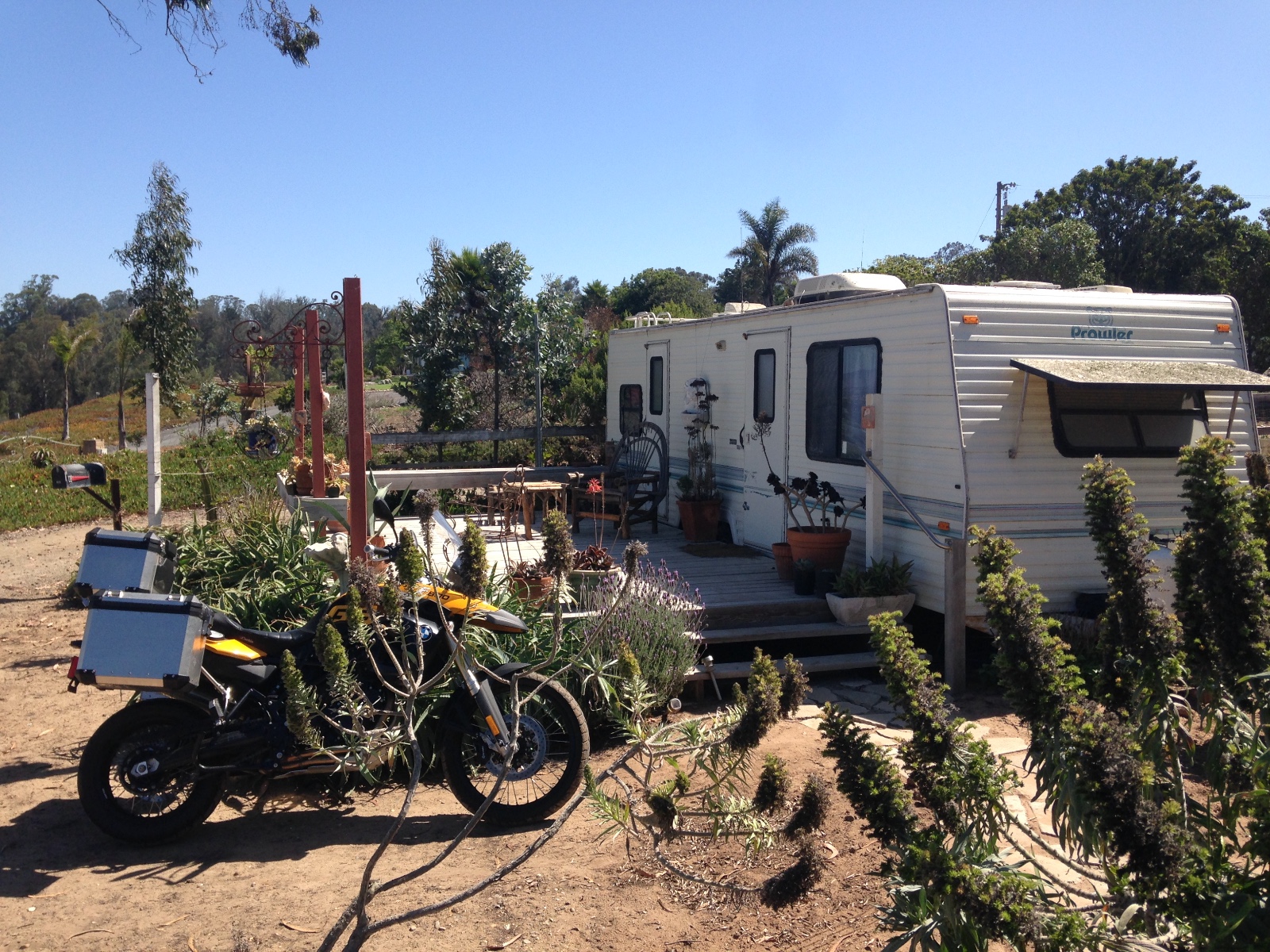
Randy lived in a house. And further down the same plot he had a small trailer, set apart, that he kept for guests. That one was mine.
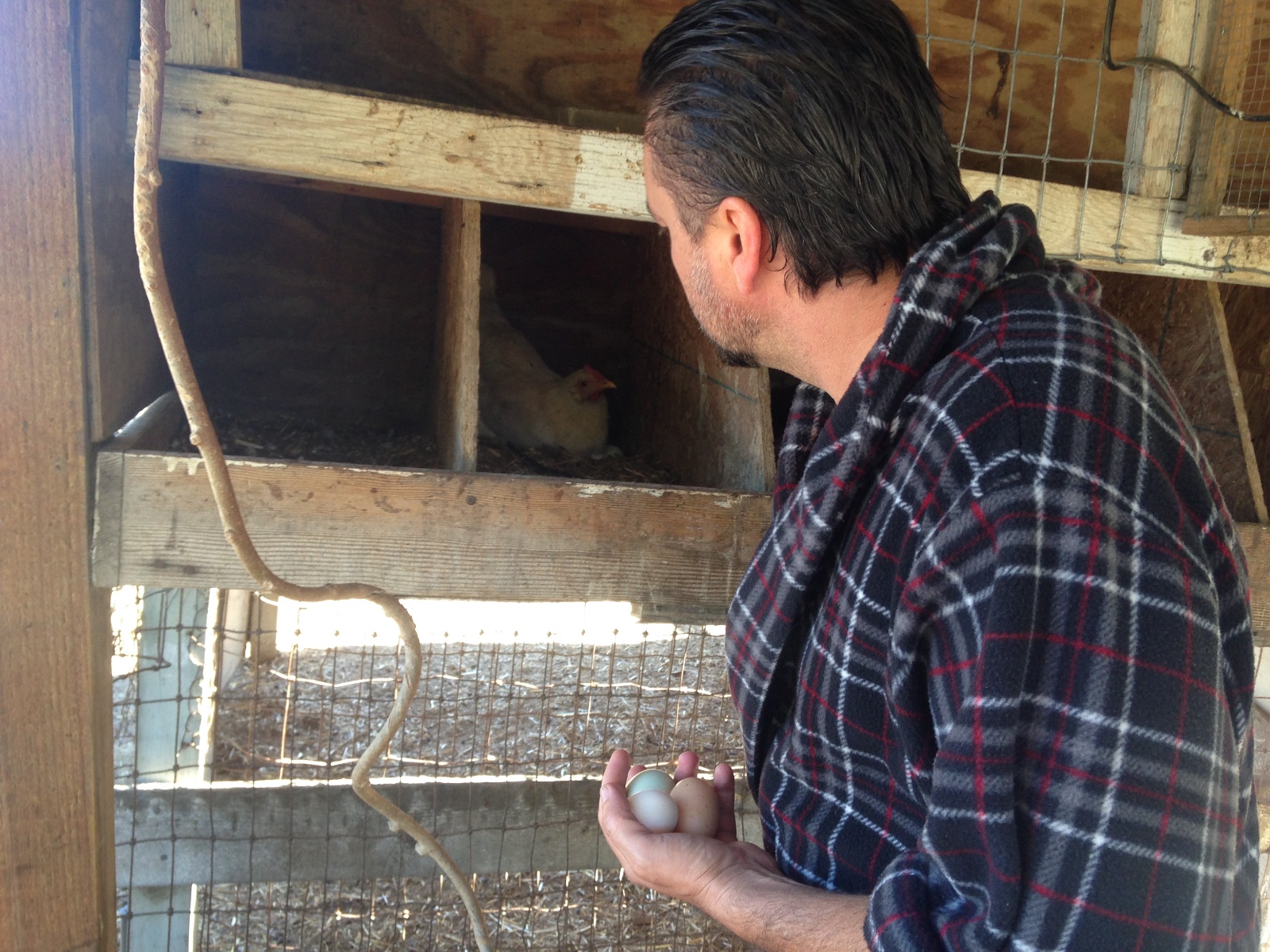
It sat right beside the chicken run, and it was perfect: you have your own door, your own space and your own hours, without feeling you are inside somebody else's home. The plot was full of succulents and lavender.
The next morning we went together to collect the eggs for breakfast, and he showed them to me in his hand, pale blue, still warm.
Talking, it turned out he was an architect. Some projects had gone well for him and he was at peace with his life, single, no children, with his plot, his chickens and his motorcycle.
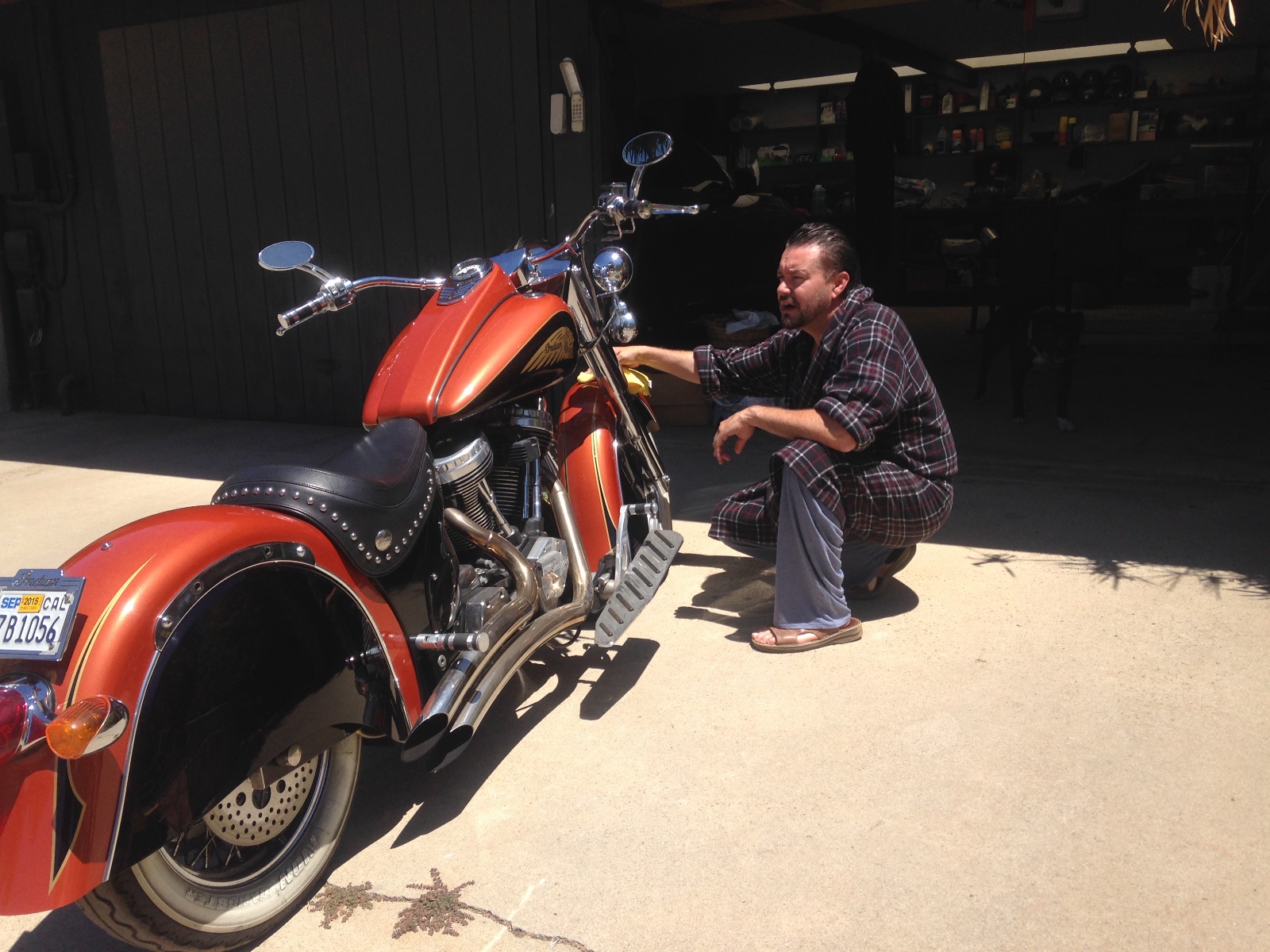
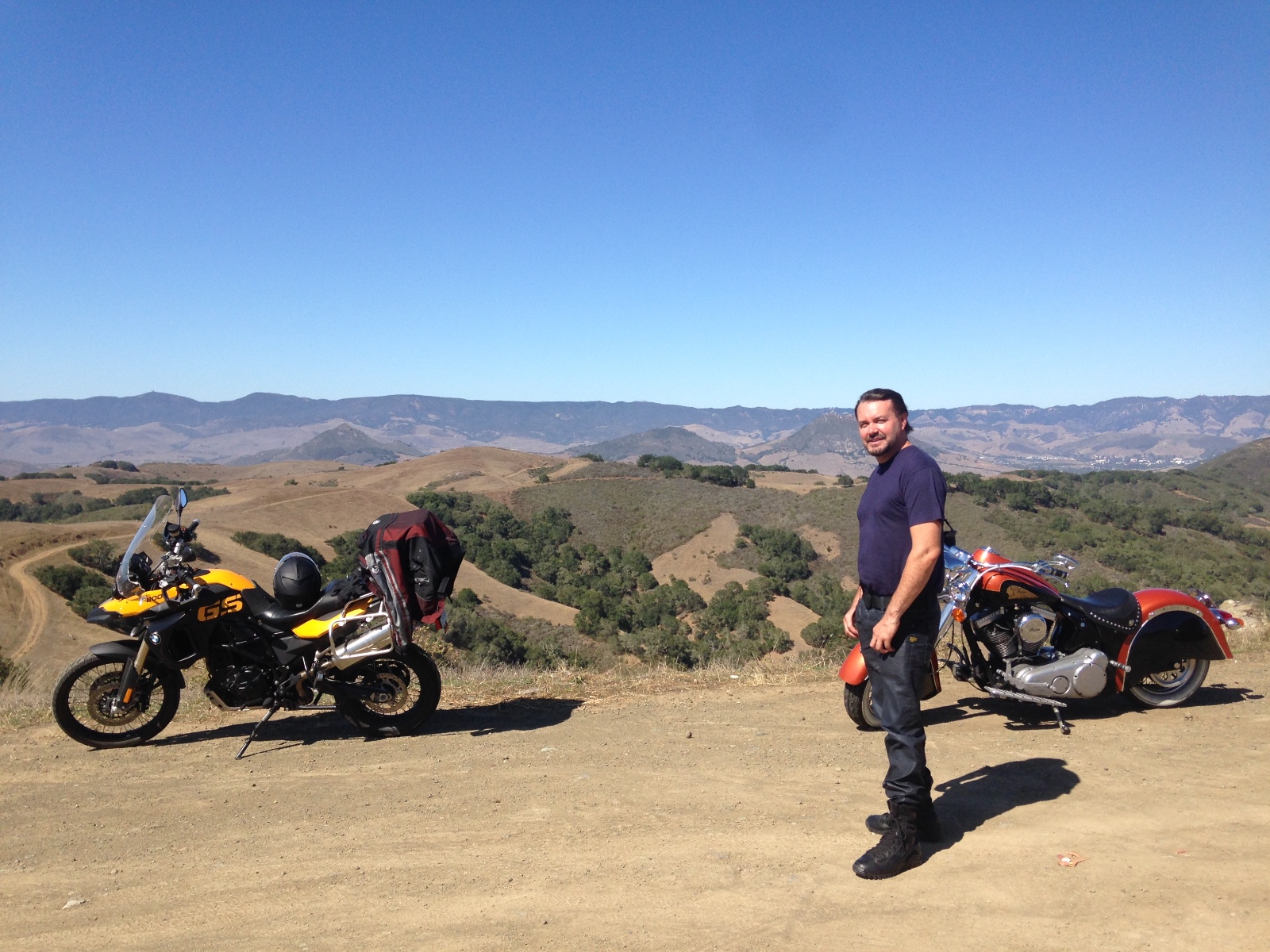
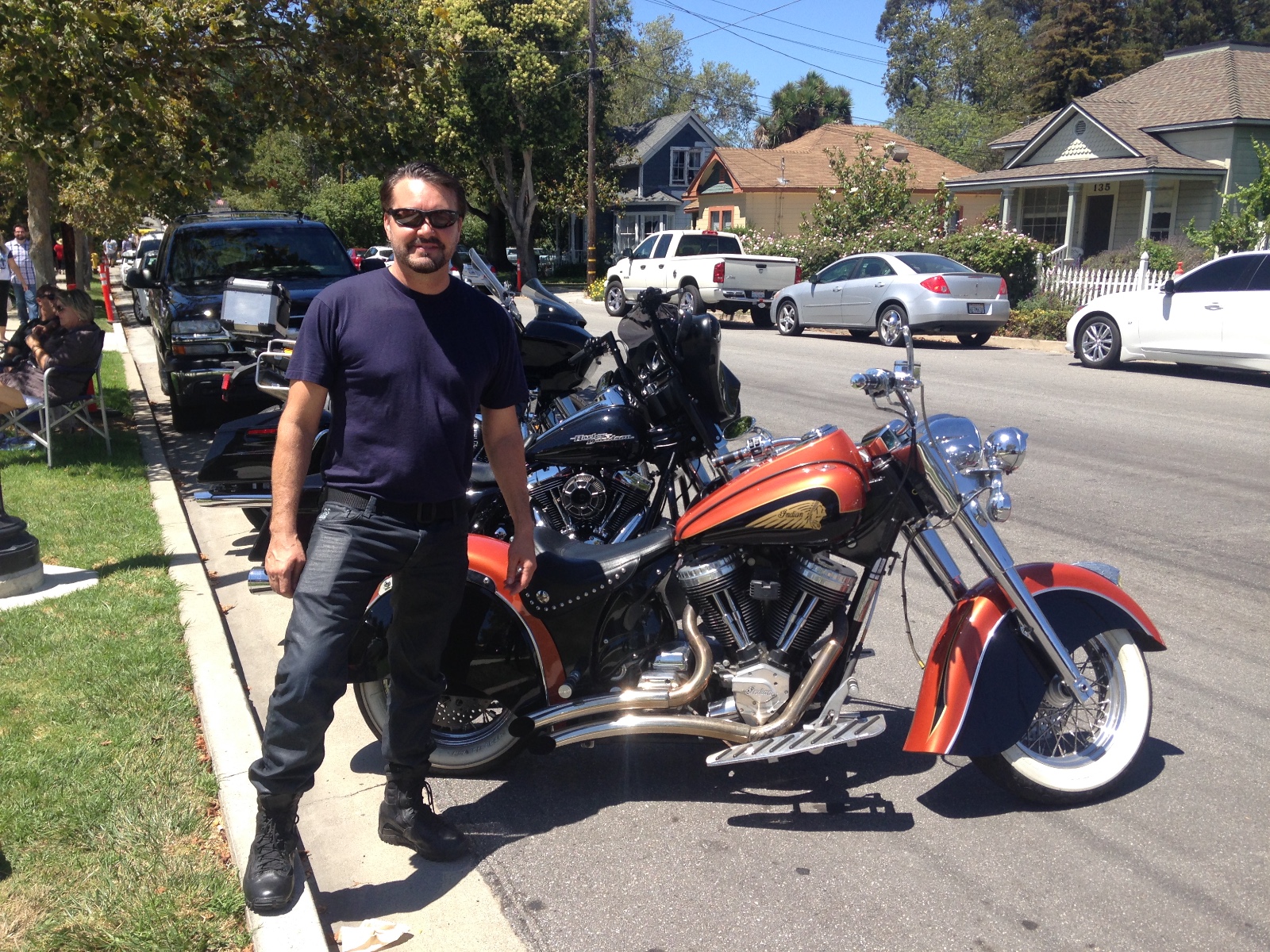
Randy rode an Indian. New, bright orange, with the deep valanced fenders of the old ones and fringes on the seat, one of those motorcycles you look at and immediately understand. Next to it my yellow F 800 looked like a tool.
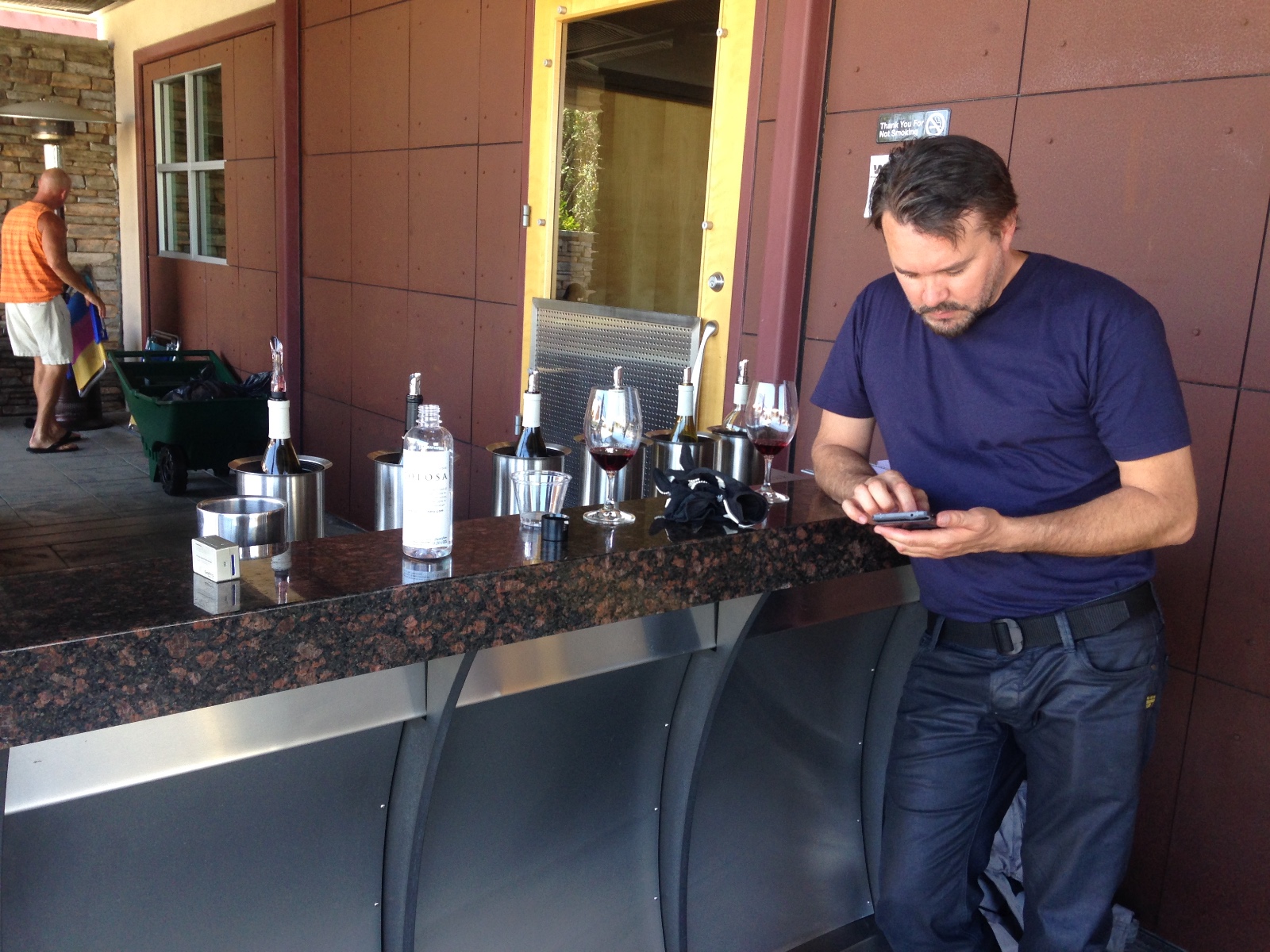
He did not leave me alone all weekend. First we went to a winery, to a tasting bar with the glasses lined up and the steel spittoons, which is a world I knew nothing about. And the Californian wine turned out to be very good.
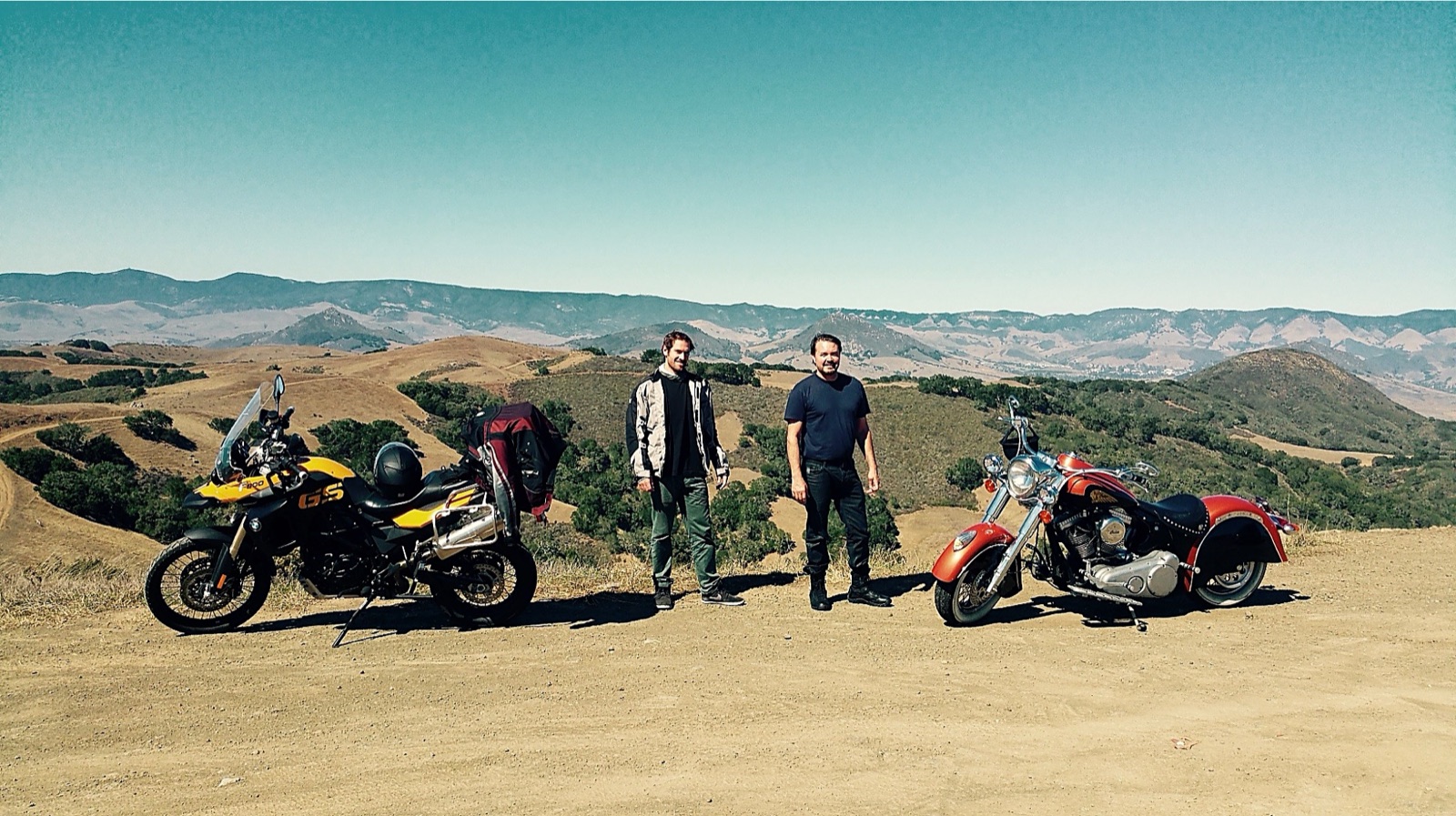
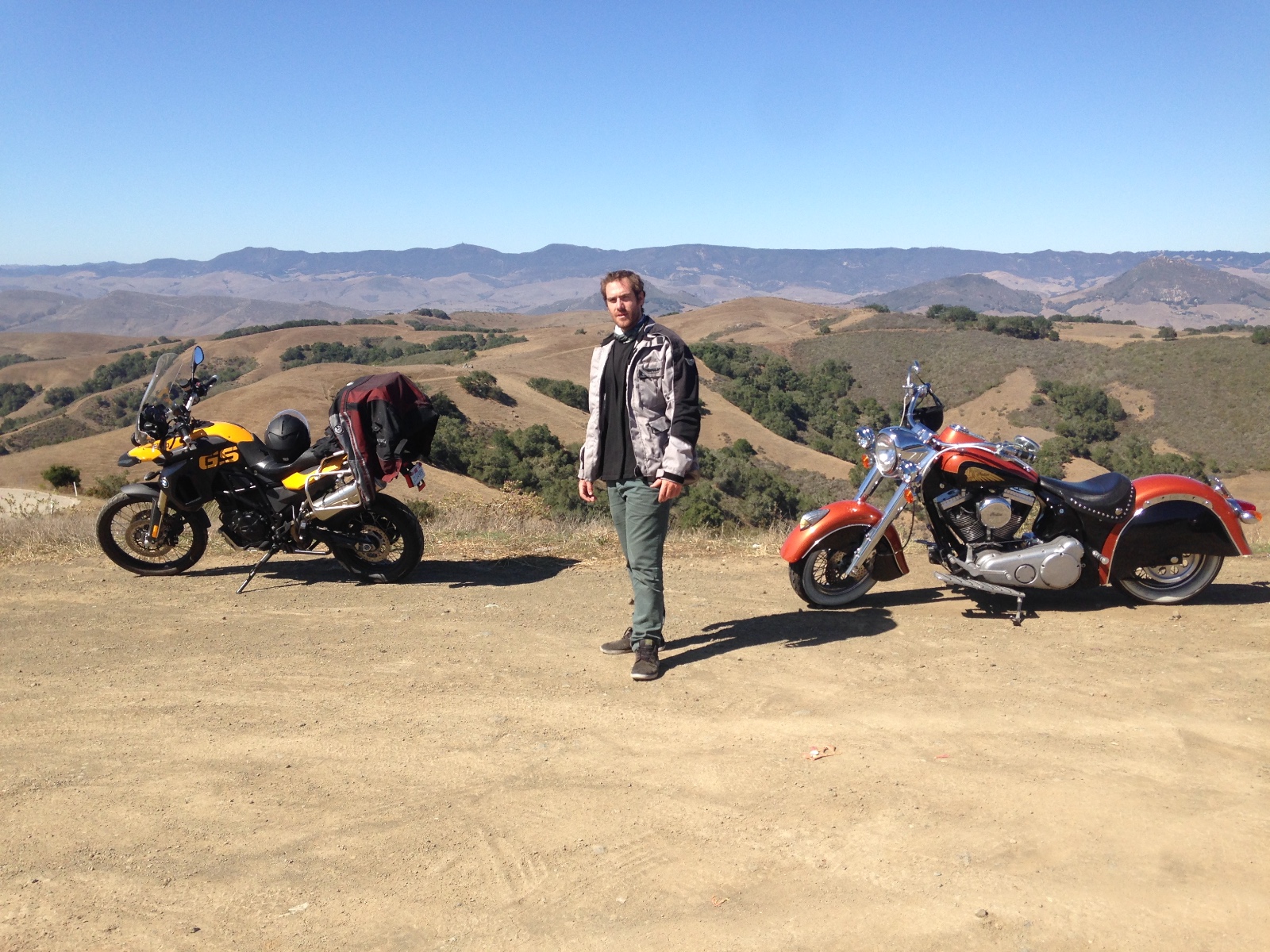
We had lunch, and then we went riding properly. Up into the mountains towards Los Osos, and that is where it got good: dirt sections through forest, golden ridges with clumps of oak placed as if by hand, and places you do not find unless you are riding with somebody local. We stopped at the top on a dirt lookout with both bikes on their stands and the whole valley below. That is my favourite photograph of the stretch: me in the middle, the yellow one on one side and the orange Indian on the other.
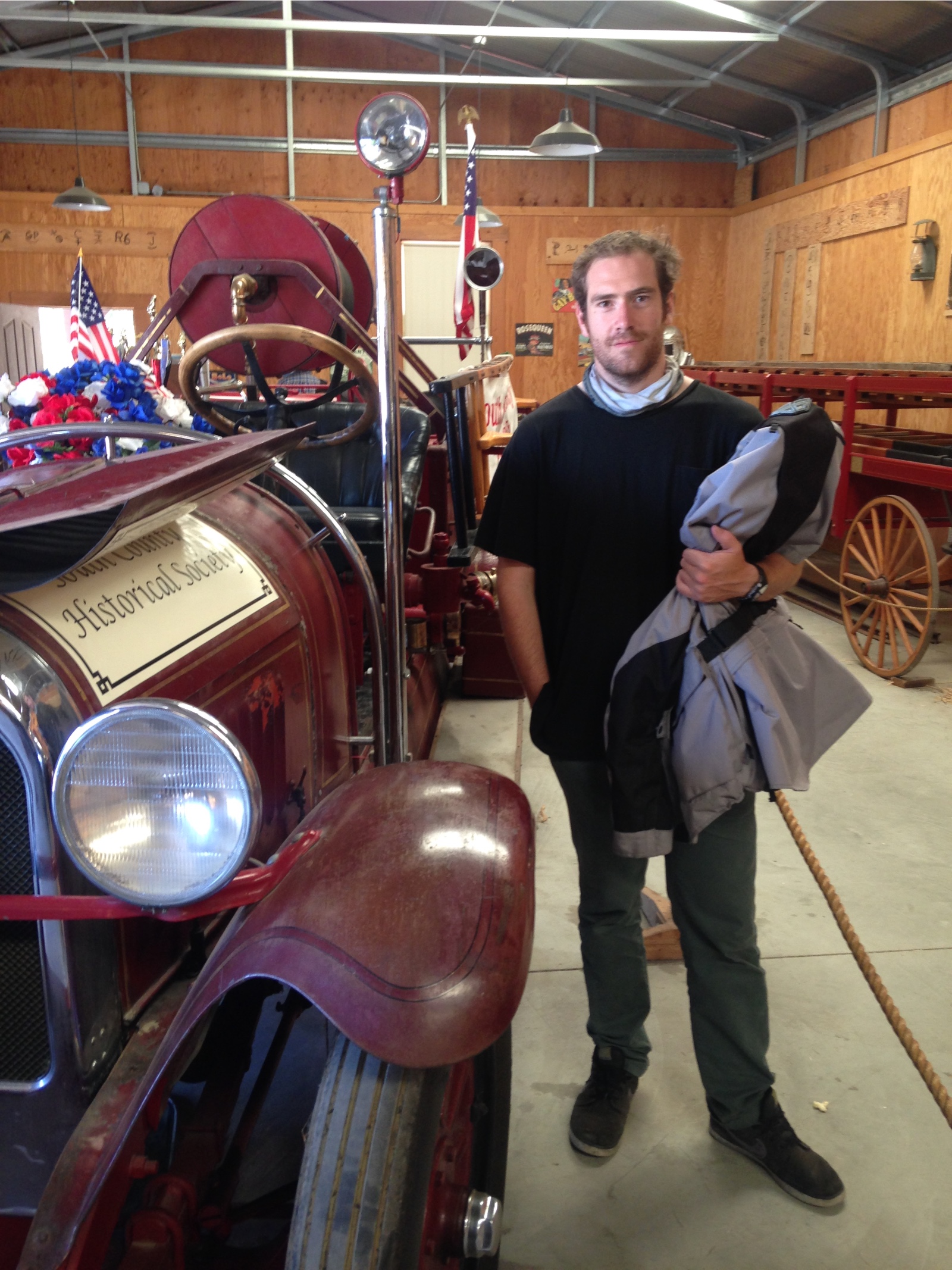
We came back with the night, and the next morning there was a classic car event in town. A fire engine from the turn of the century, wagons, flags, and the street lined with Harleys parked in a row with Randy's Indian among them.
That place is very Californian. I was three days into my first trip and I felt like I was inside the old west.
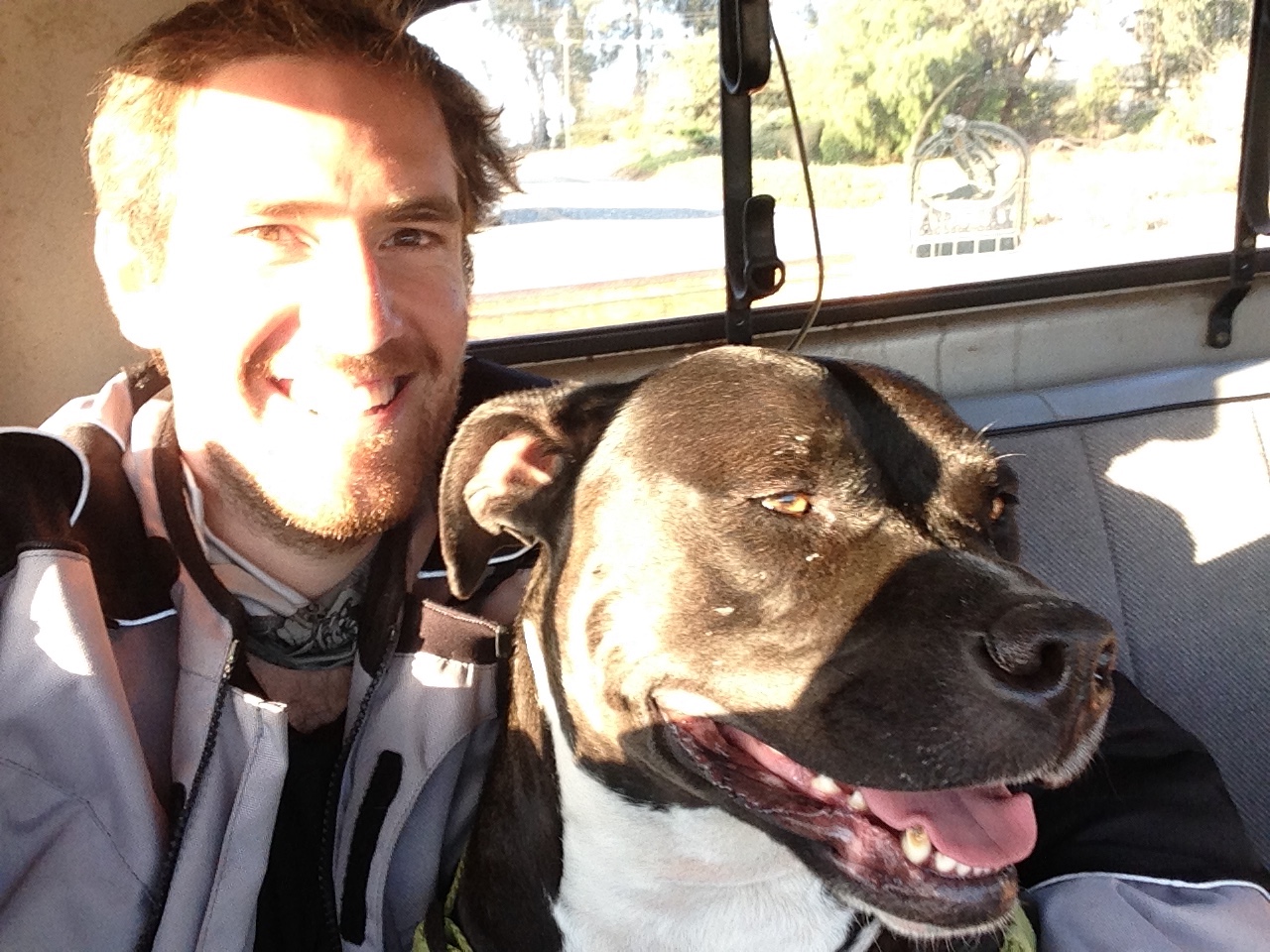
Randy also had one of those old Ford pickups, and we went out for a drive in it with his dog: an enormous Staffordshire who climbed up front with me and sat for a photograph with his tongue out.
Two nights, and he treated me as if we had known each other all our lives.
Next to the Indian my yellow F 800 looked like a tool.
Big Sur, the paper map and the mountain lion.
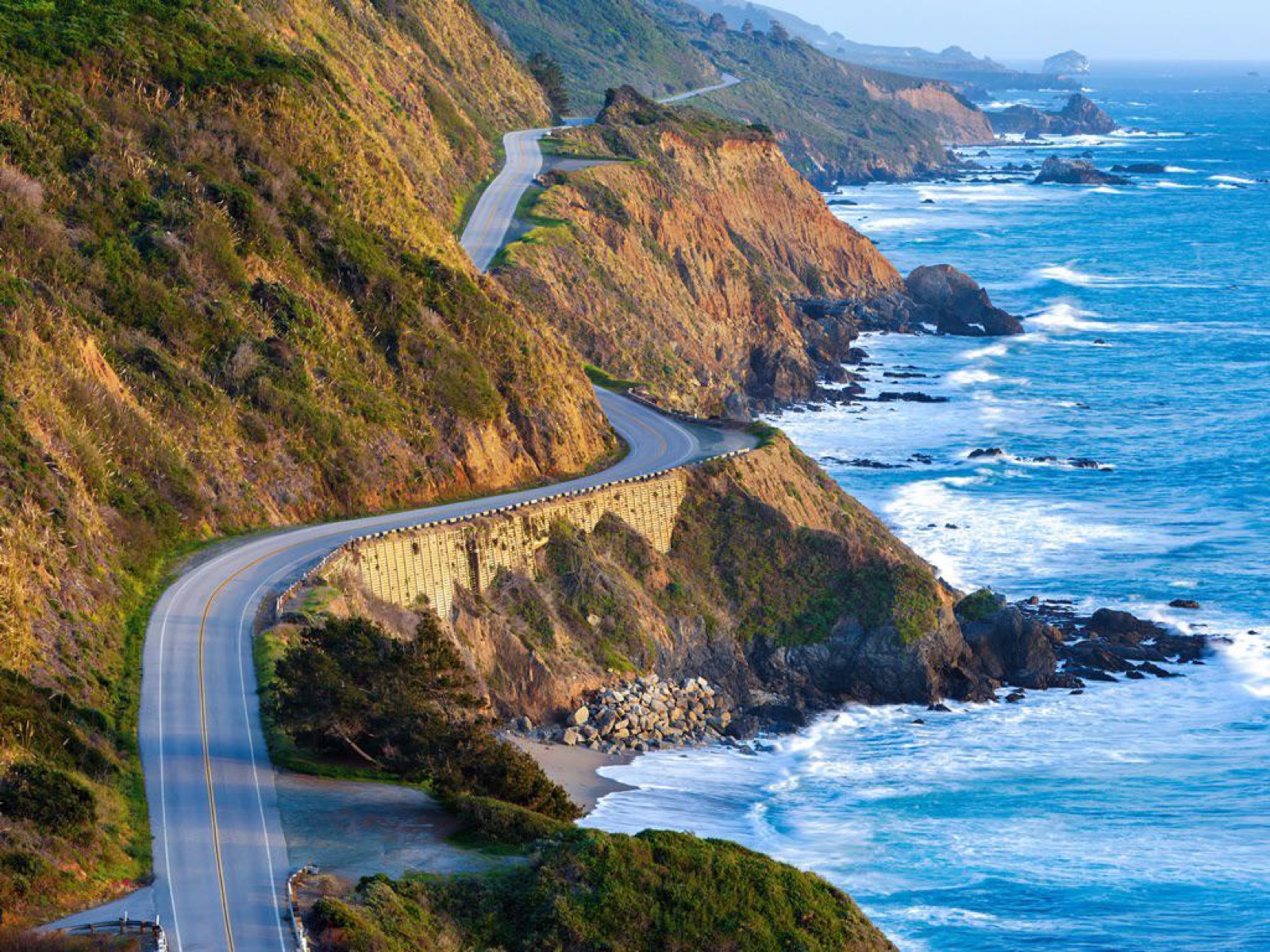
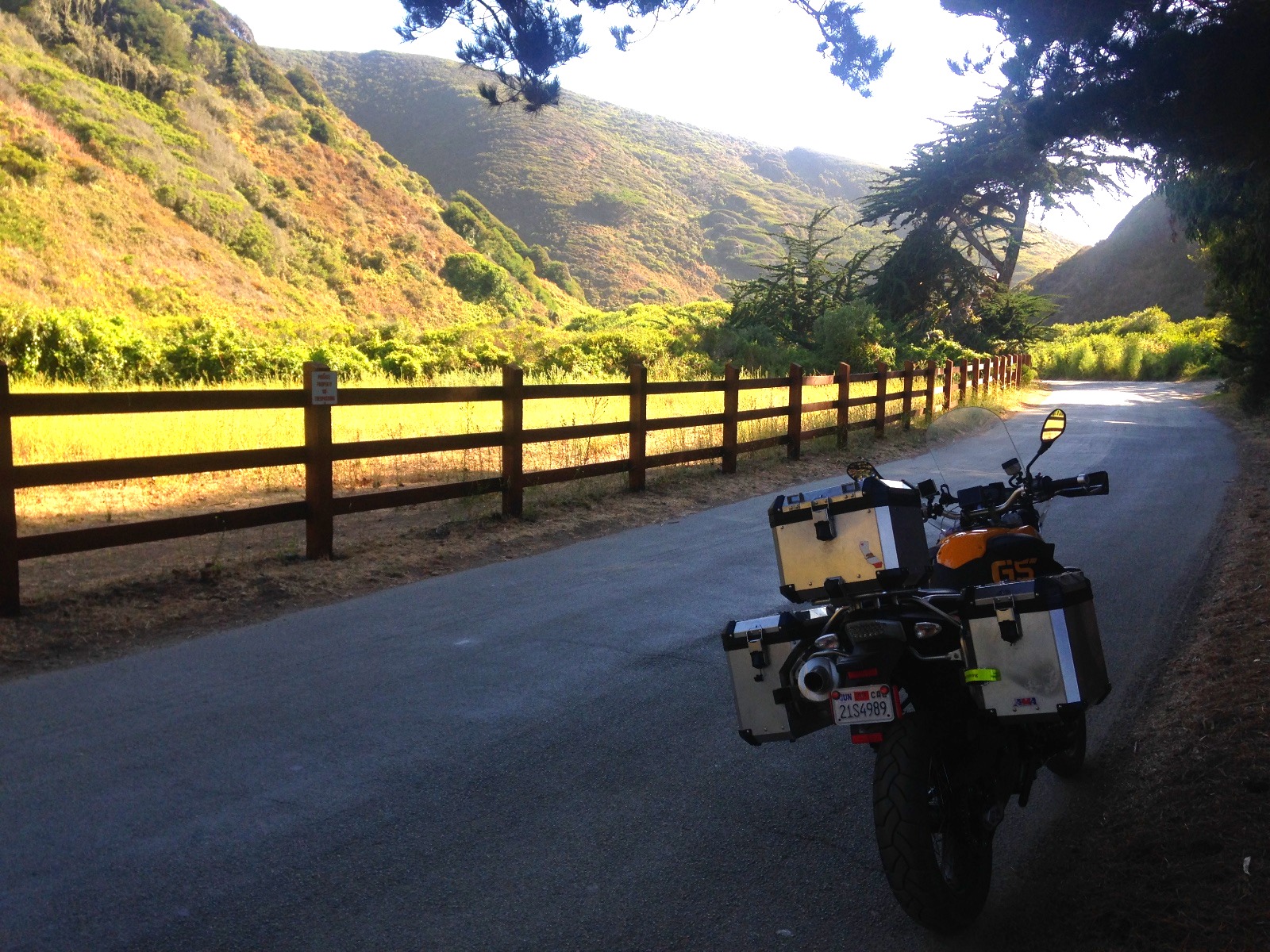
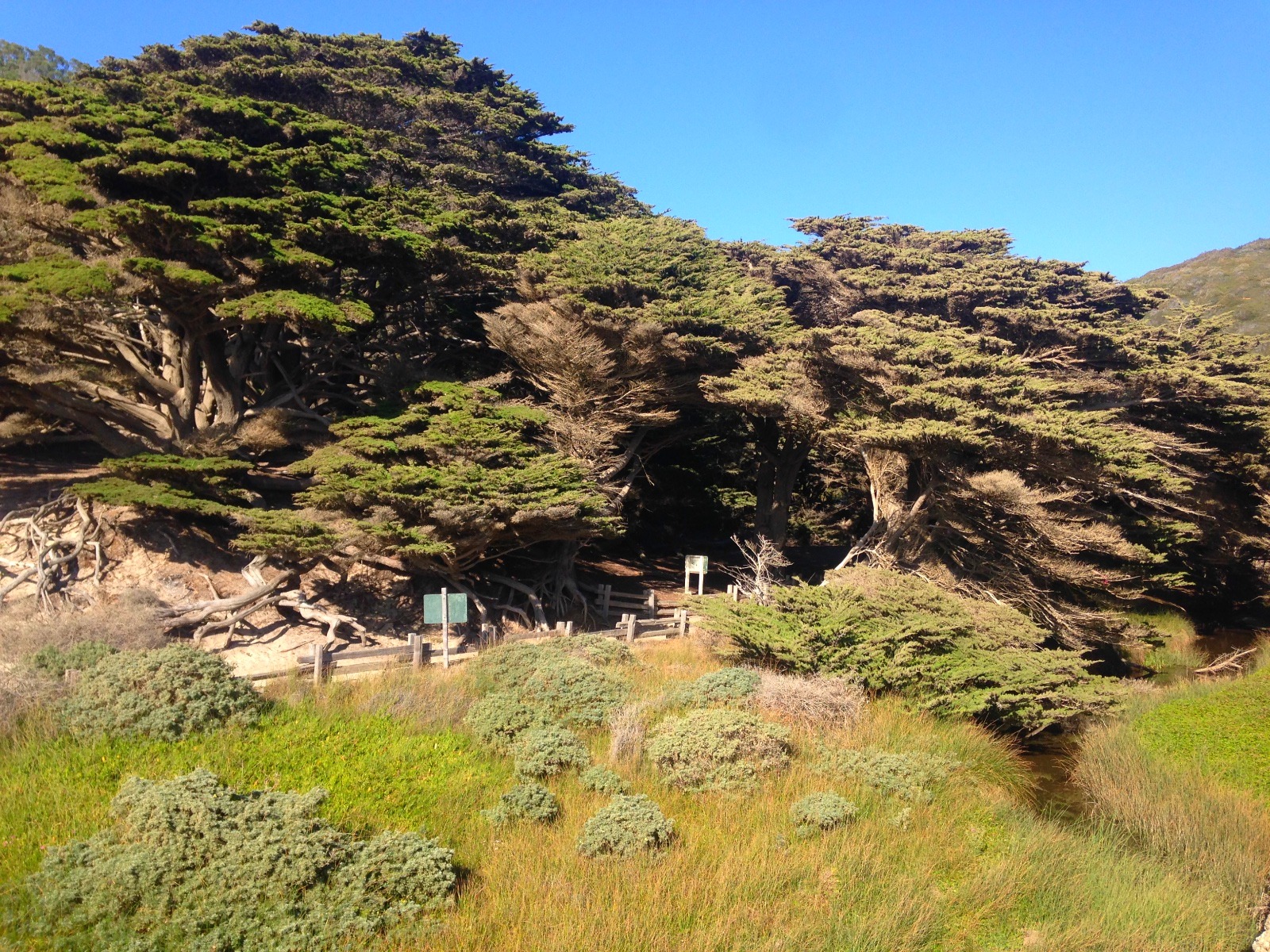
From there I carried on up Highway 1, the road that runs along the edge of the coast and is one of the most beautiful in the United States. It is cut into the cliff, with the whole Pacific on your left and the fog coming in below you.
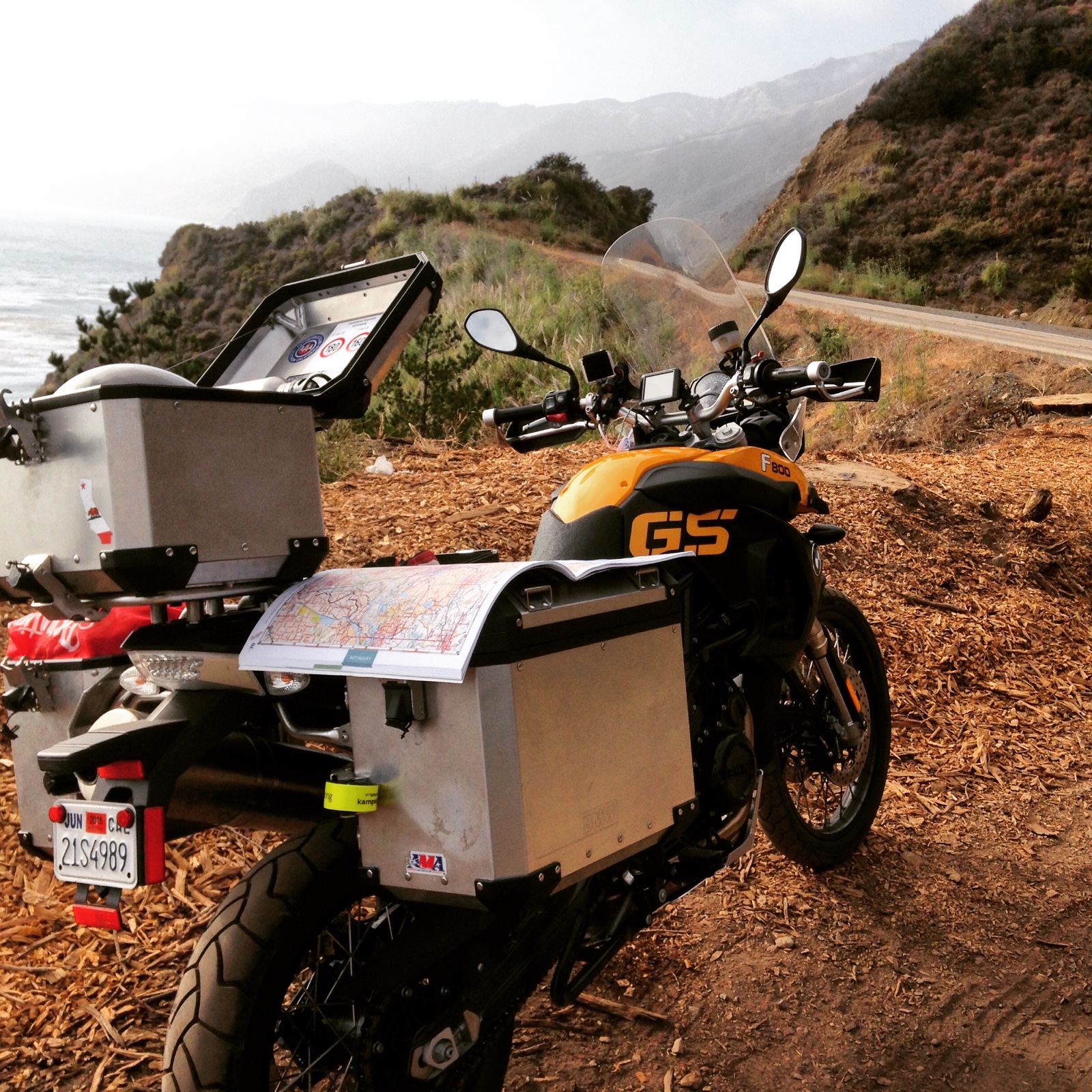
Every so often I stopped and took out my paper map of California, opened it on top of the pannier and worked out where I was. In 2015 Google Maps existed but it was not what it is now, and besides, I have always liked paper maps. There is a photograph of exactly that: the bike on the verge, the map spread over the top case and the sea behind.
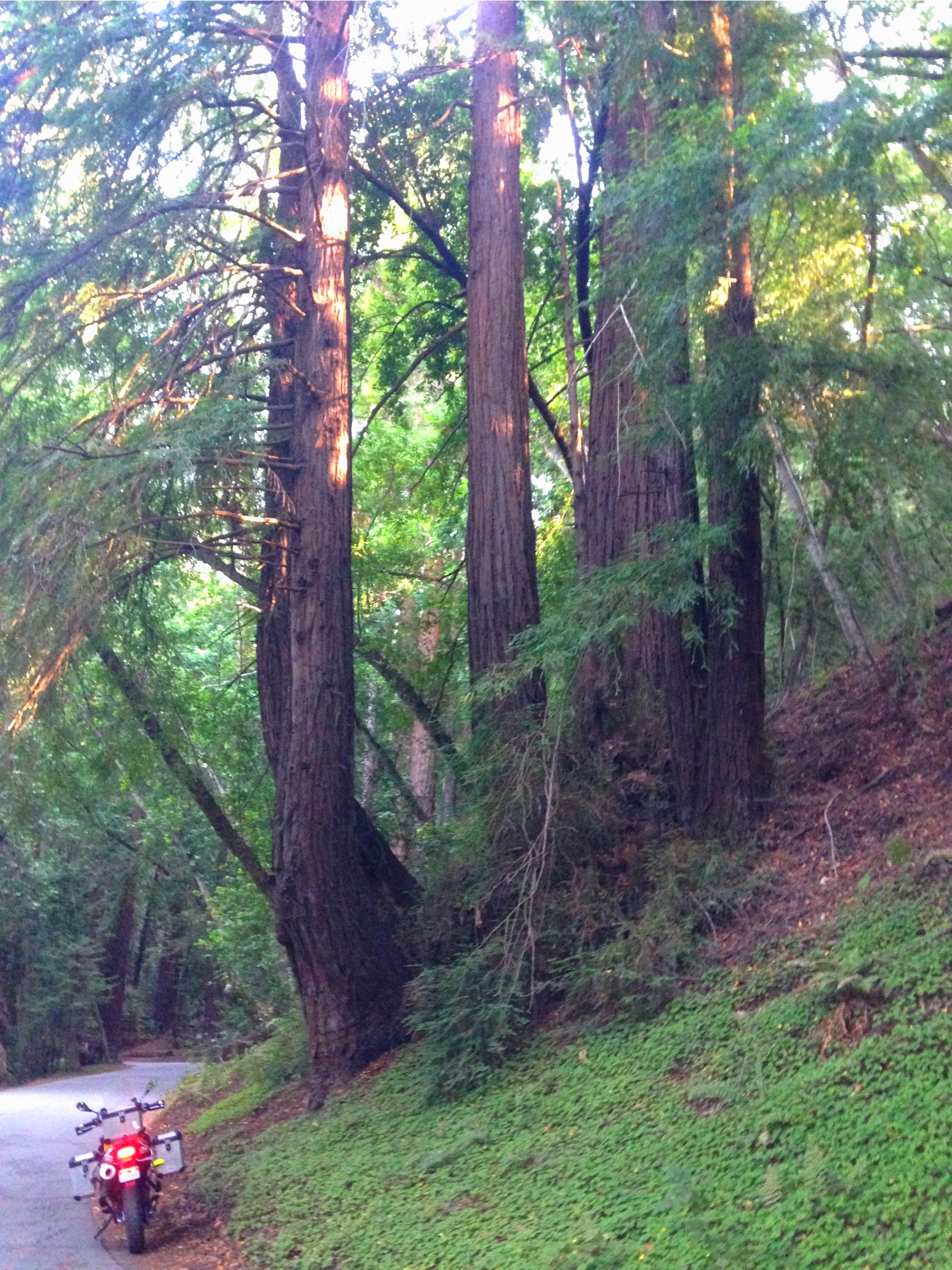
I got to Big Sur very late, at night. The plan was clear: put the tent up in the forest, among the redwoods, and sleep there. After Agoura Hills I felt up to it.
I went into a bar to ask where to head, and the first thing they told me was something else: be careful, there was a mountain lion moving around the area at night.
And that was the end of my appetite for it. Sleeping out is one thing. Doing it knowing that, on your own, in thick forest, at night, is another.
So I stayed in the bar. And that is why what happened next happened: I met some lads who had a room in some cabins nearby, we had a few beers, and they ended up telling me to stay with them. I slept on the floor of that room, still slightly on edge, thinking about the lion.
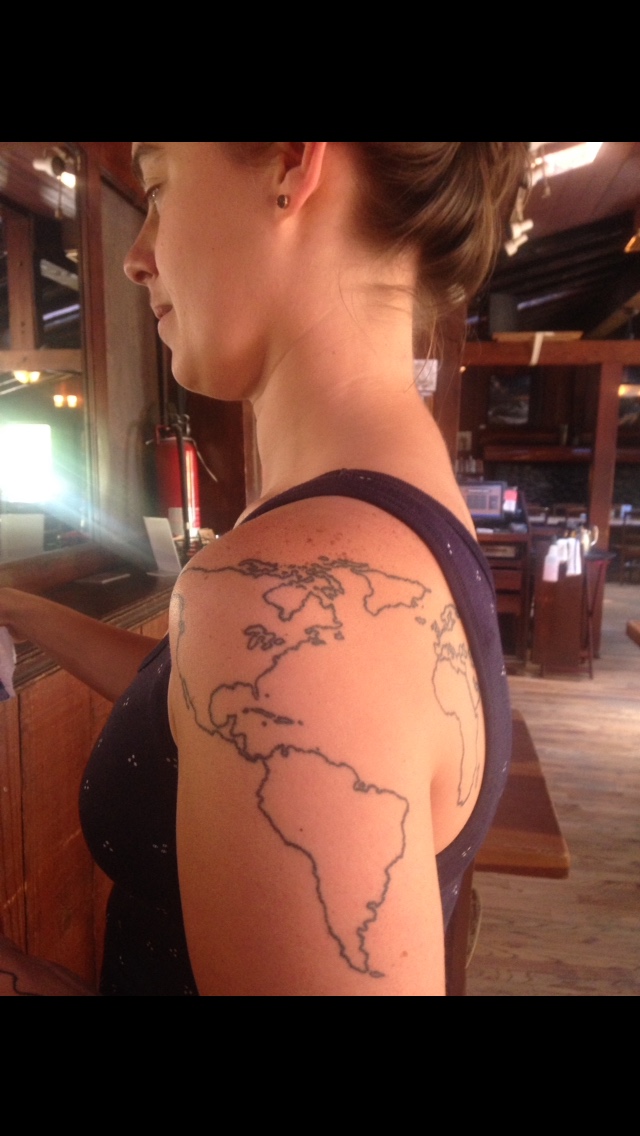
The next day I went out riding. In a bar I met a waitress with the entire map of the world tattooed across her shoulder and arm, the continents drawn in line, no colour. I asked her for the photograph.
Then I went to the famous Big Sur beach, and from there carried on to Monterey.
The first thing they told me in the bar was to be careful, that there was a mountain lion moving around at night.
Monterey: the toy motorcycle and the orange can.
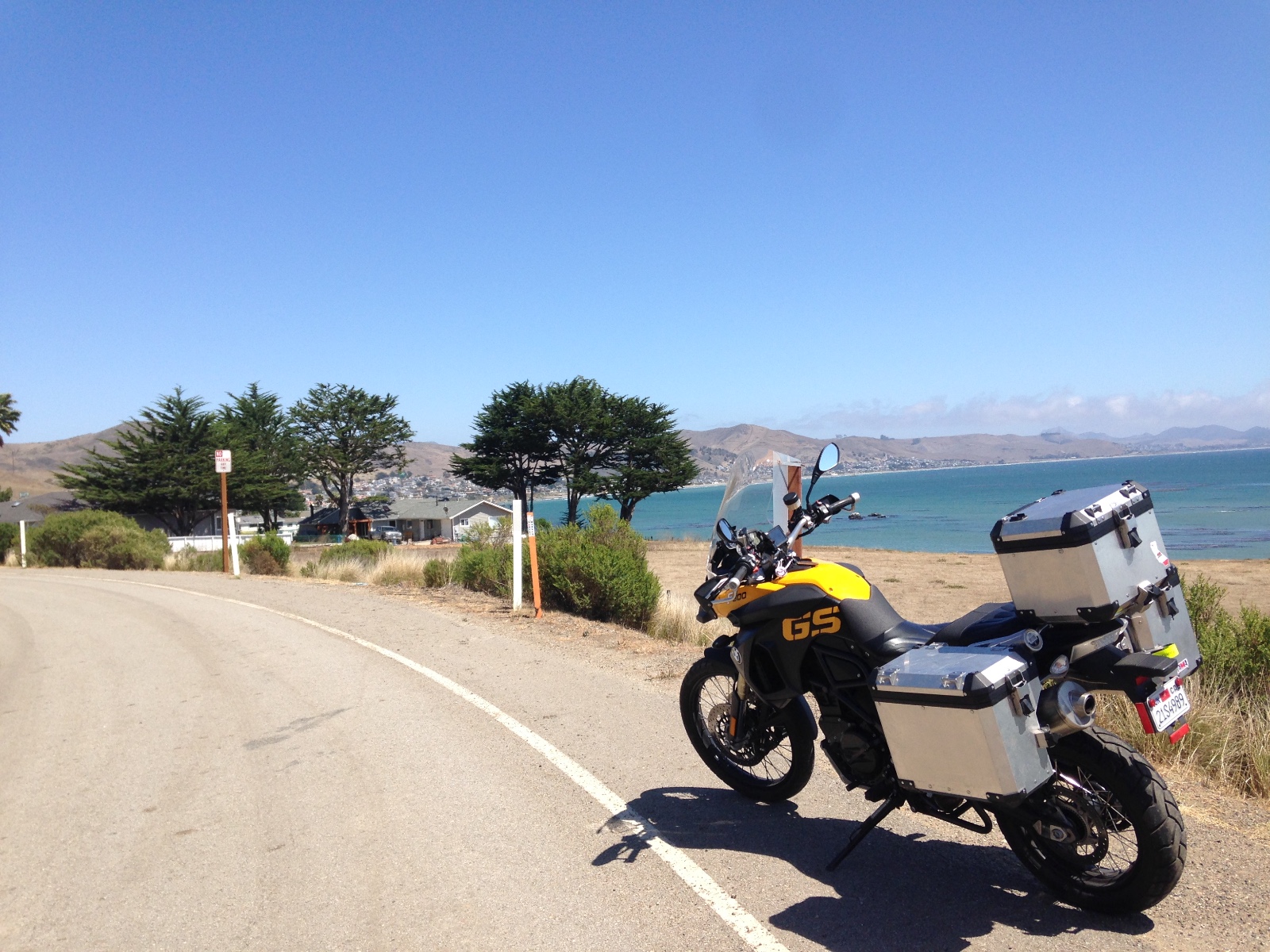
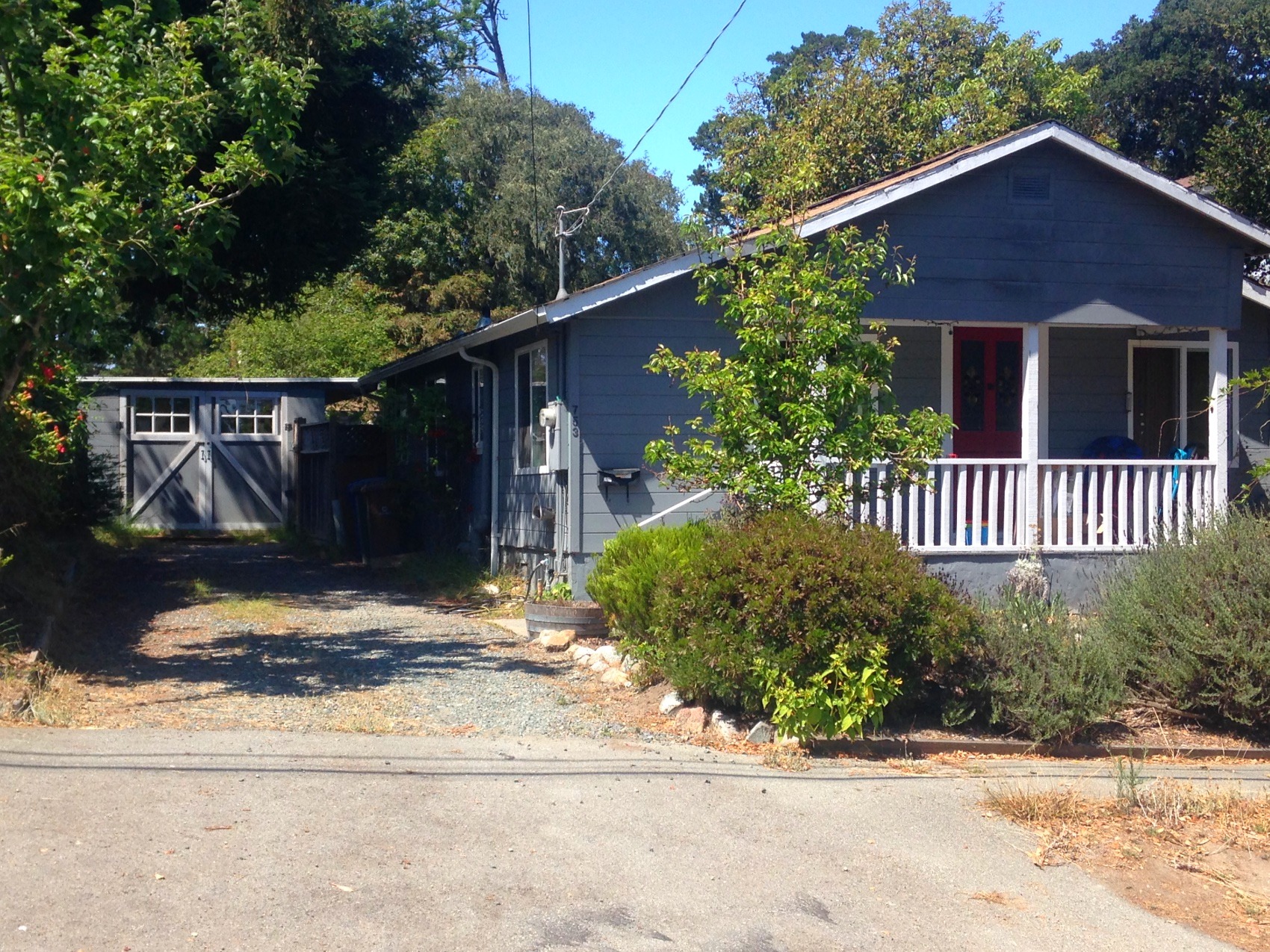
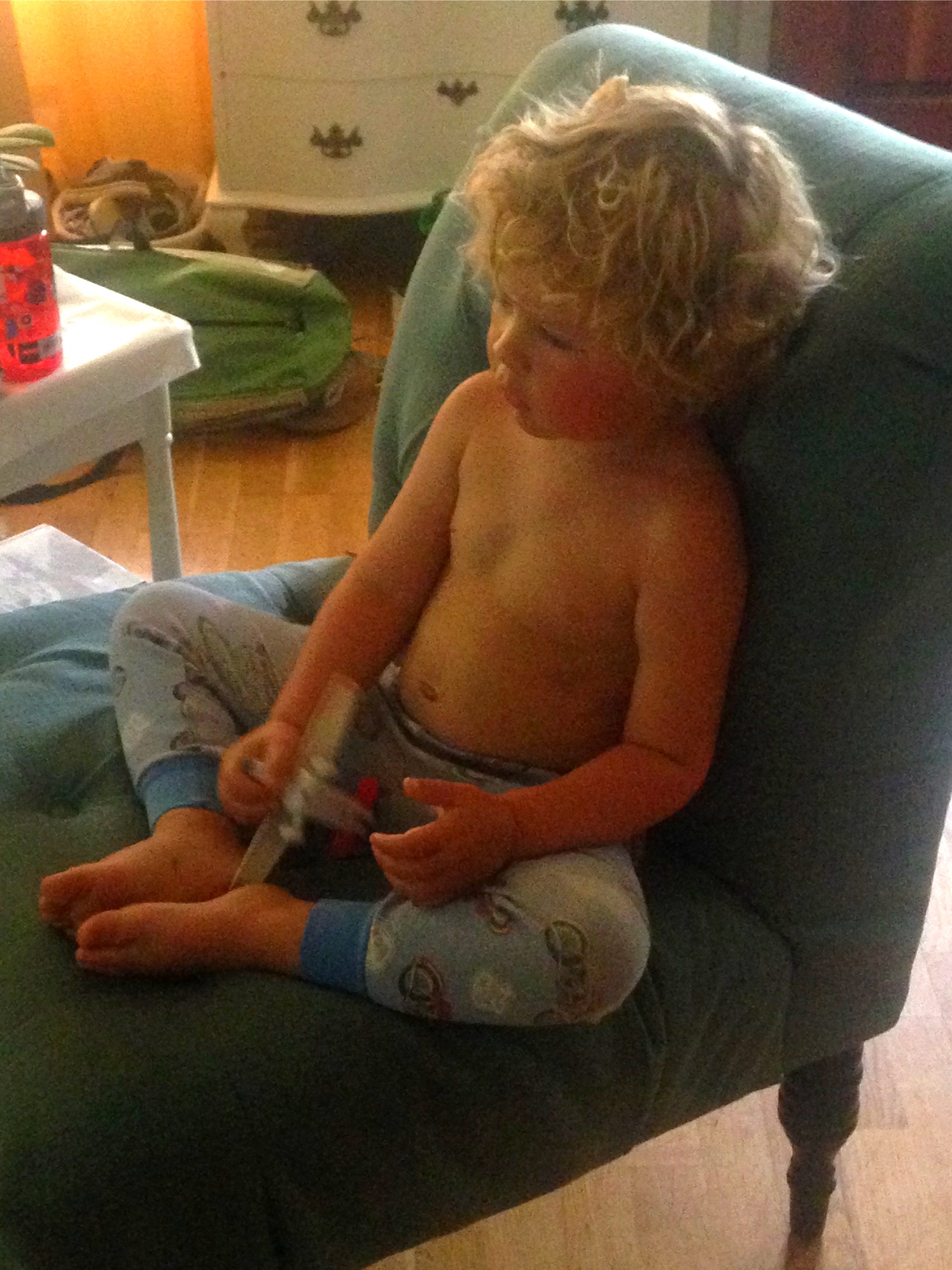
In Monterey I was put up by Molly and her husband, again through Couchsurfing. She had replied late: "We just had guests and I only just now saw your request. If you're still in town, you're more than welcome to stay with us". They lived in a blue-grey timber house with a red door, a white porch and a plank gate at the end of the dirt drive. He was a US serviceman, tall and wiry. They had a boy of two or three, blond and curly.
They were both BMW GS fanatics, and between them they had an 800 Adventure, kept in the shed with the racks on and the cargo net still fitted.
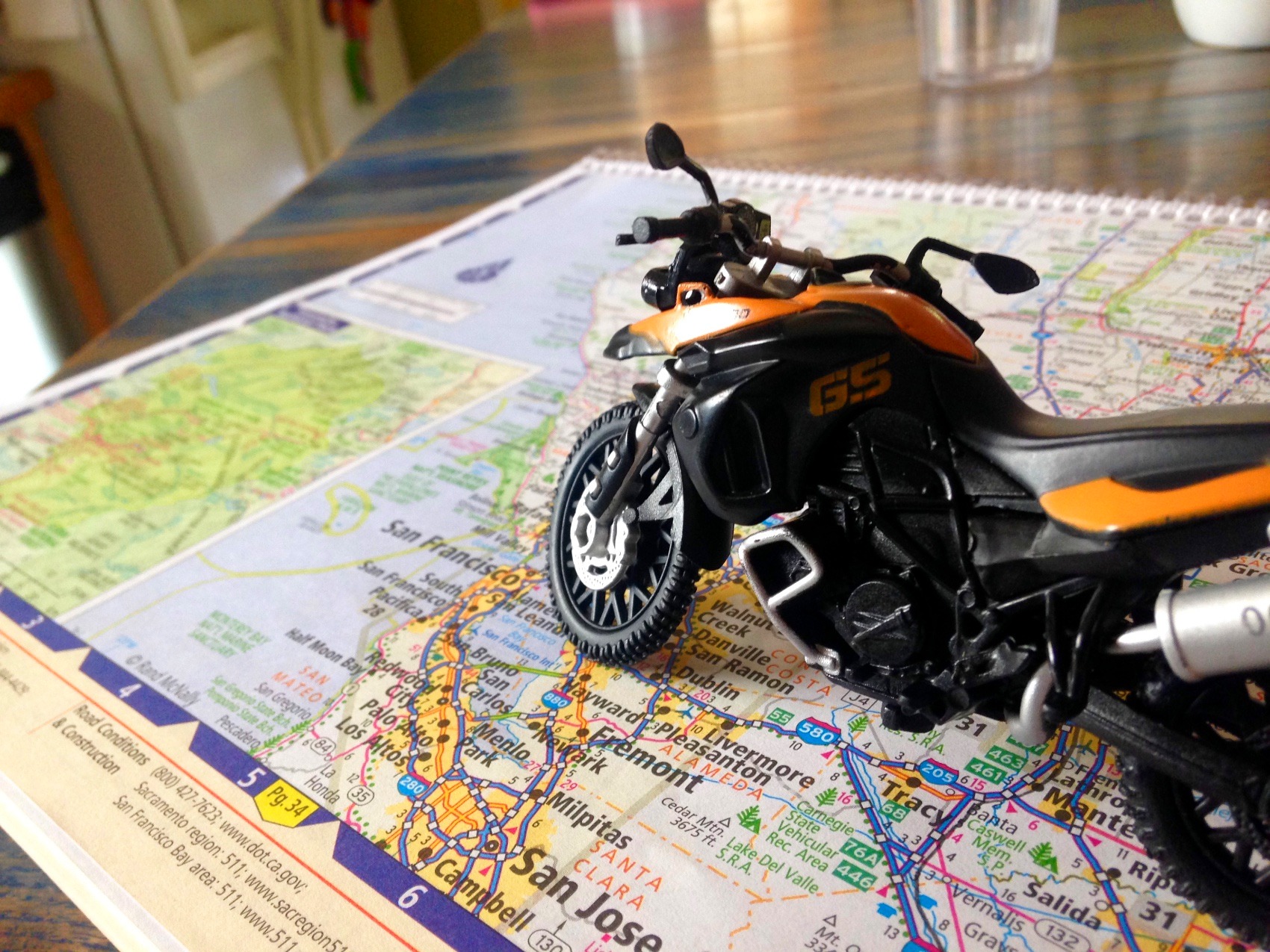
But the best of it happened the moment I arrived, and it was down to the boy. He owned a toy: a tiny F 800, the same as mine, exactly the same colour. And then that very motorcycle rolled into the yard, full size, luggage and all. The kid nearly lost his mind. Later he lent me his toy so I could photograph it, and that is why there is an image of my motorcycle in miniature standing on the map of California I was carrying, open at the San Francisco Bay.
I stayed two nights, and in those two nights I saw something I had not expected. Molly was deeply frustrated because her husband was due to deploy soon to Iraq, or to one of those countries at war. And I saw her cry. You arrive at these houses on trust, passing through, and suddenly you are inside something very private, with nothing to offer but being there.
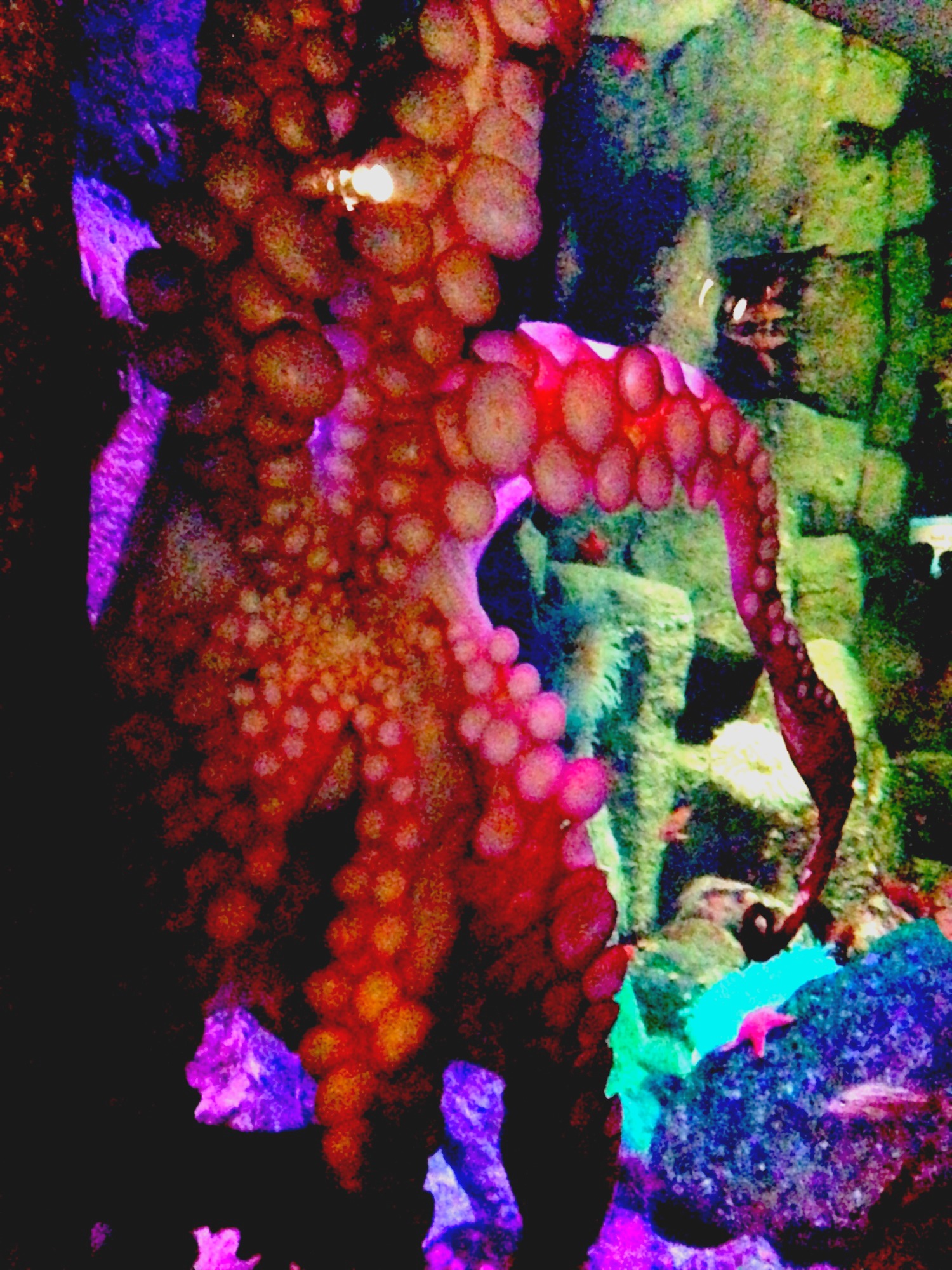
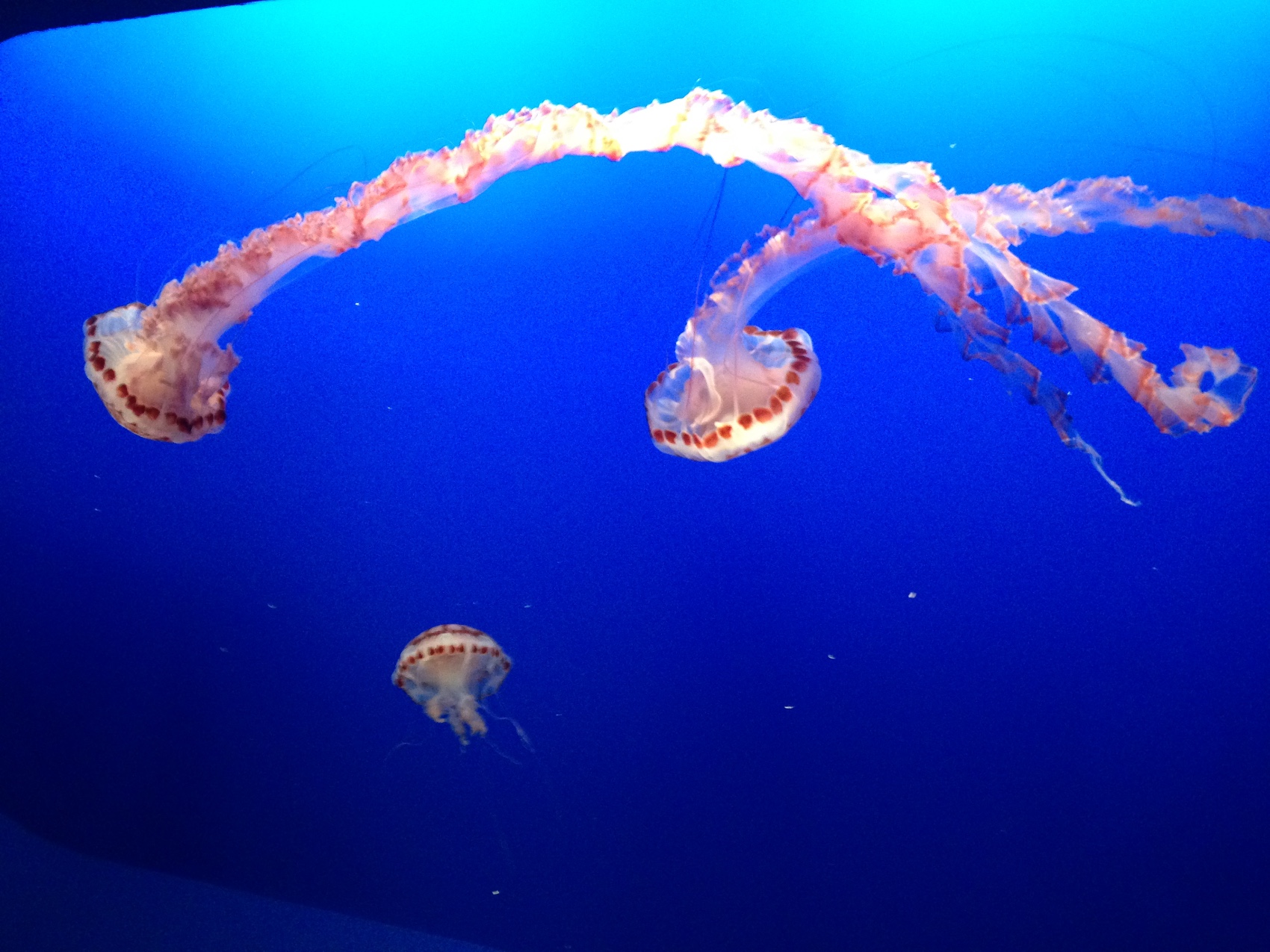
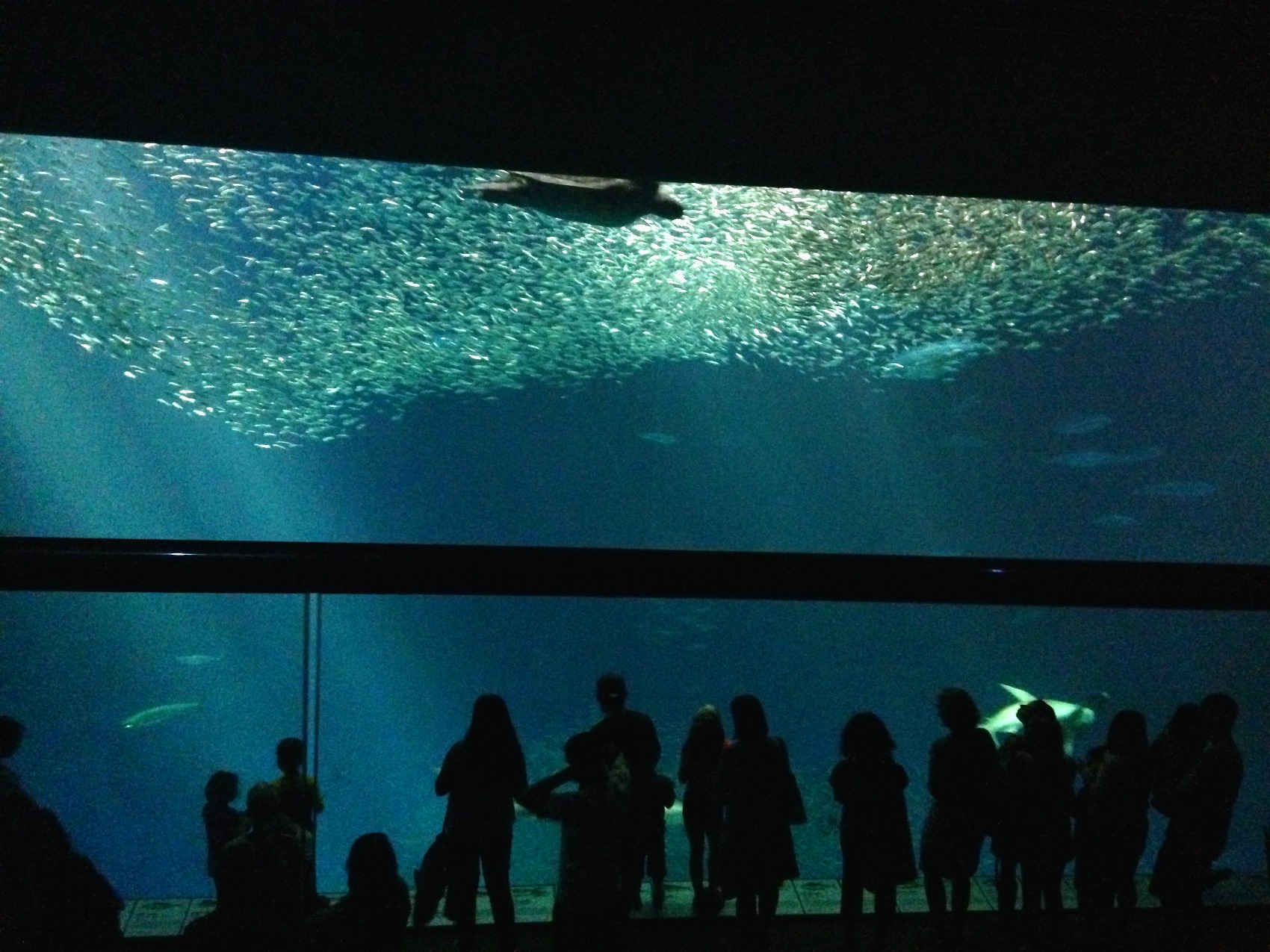
They gave me free tickets to the Monterey aquarium, the biggest in the world. Extraordinary. A giant Pacific octopus pressed against the glass, suckers flattened on the pane. A deep blue tank full of jellyfish rising and falling, opening and closing like parachutes. And the big tank, with a shoal of sardines turning in a spiral and the visitors in silhouette against the glass, watching.
I also rode out to a beautiful beach nearby, in a town where Clint Eastwood had once been mayor.
And that is also where I made my first real mechanical stop. They helped me wash the bike, which was the first time I had washed it, and grease the chain, something I had never done in my life. Then they showed me how to adjust it, which I did not know how to do either. I left that house with the motorcycle ready to carry on.
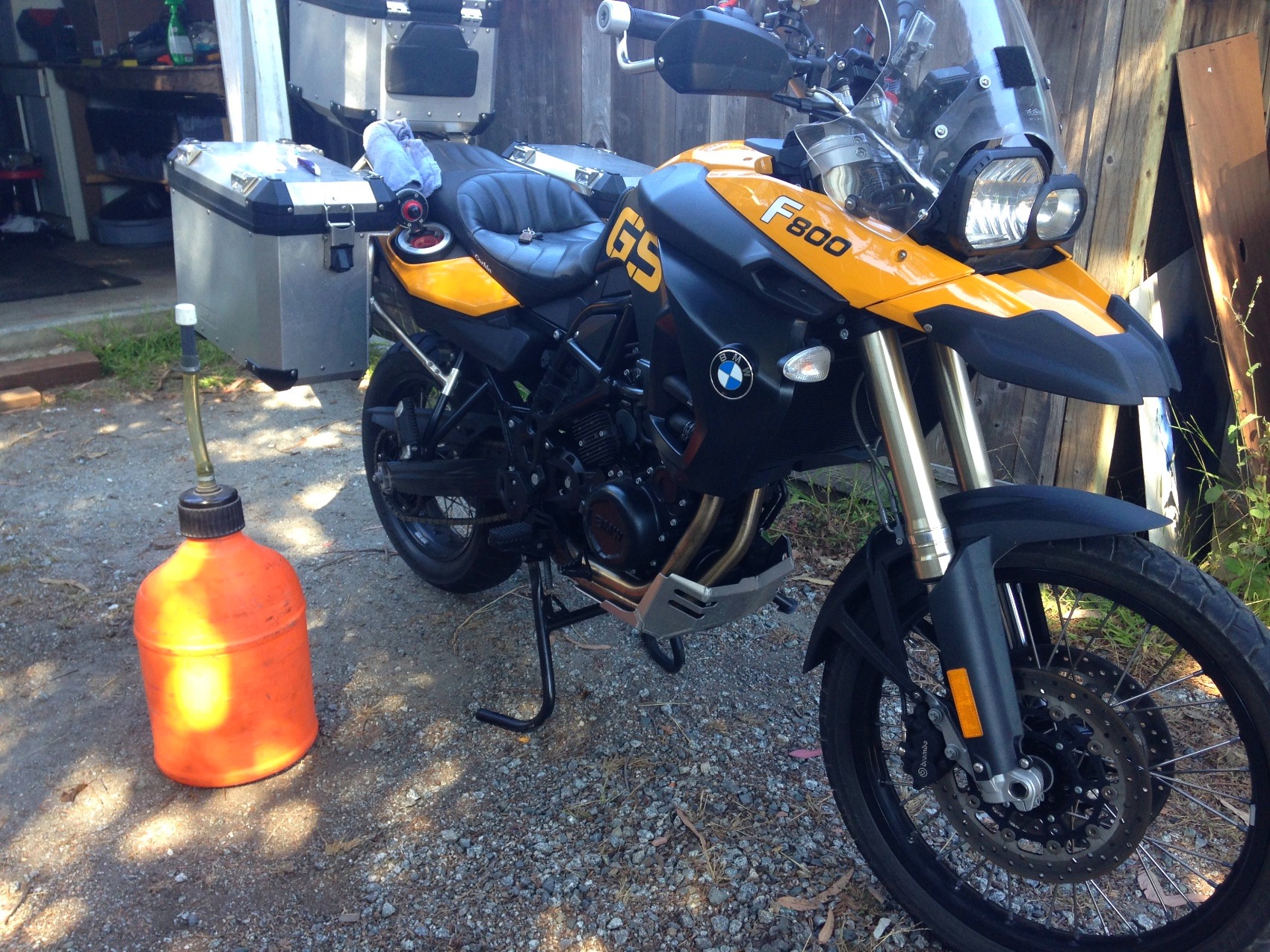
And just before I left, Molly appeared with an orange can holding fifteen or twenty litres of petrol and gave it to me to fill the bike and carry on. That is the photograph: the motorcycle in the gravel yard and the orange can standing on the ground in front of it.
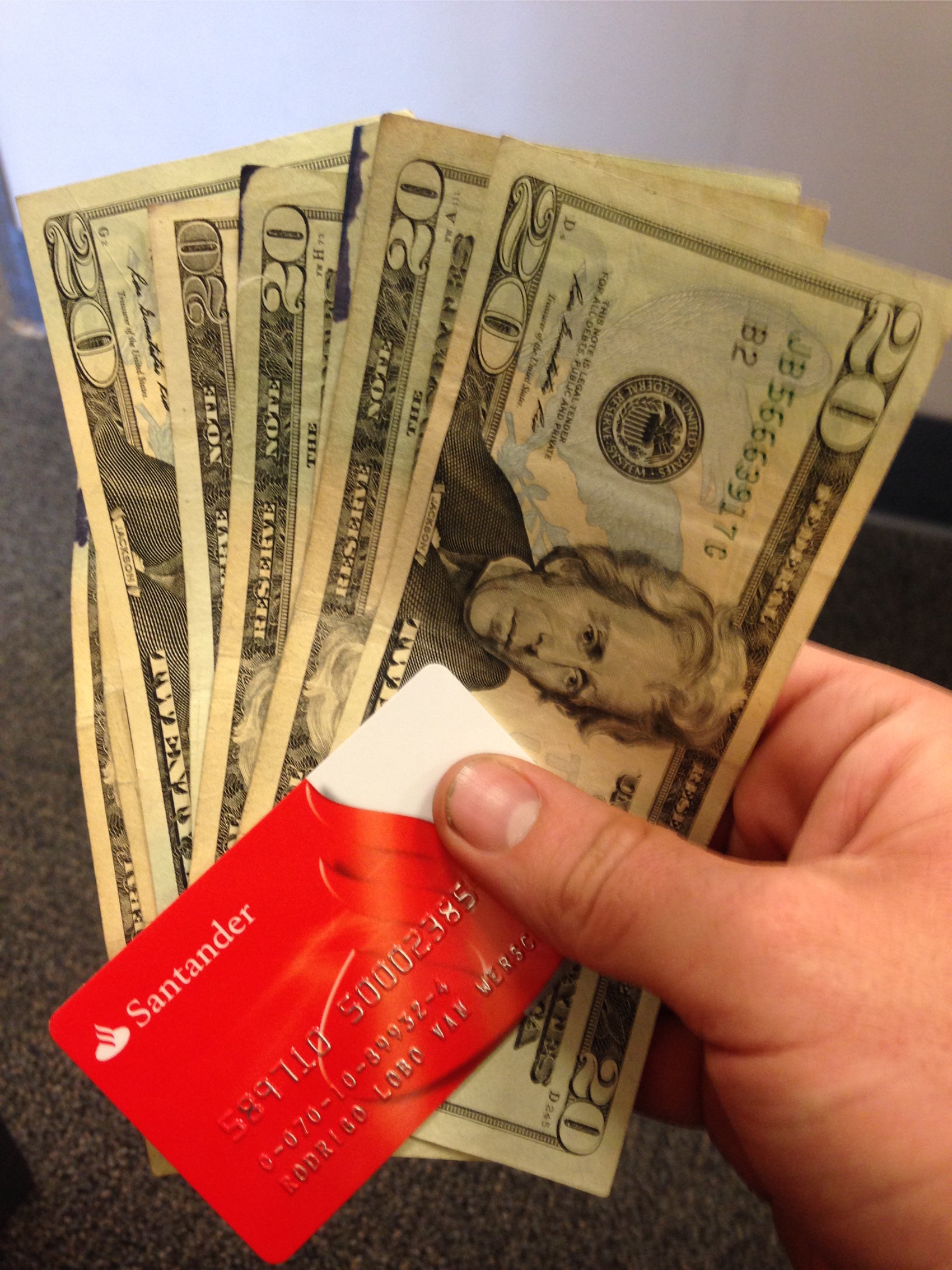
A little after leaving Monterey I stopped for the first time at an REI, the camping and outdoor chain that exists all over the United States and is extraordinary inside. I bought my first stove there, and a pot. The stove was tiny: the whole thing packed into a little white box about the size of a cigarette packet, and it cost me around thirty dollars. What I did not know at the time was that I would still be using that same stove ten years later. I took out cash, two hundred dollars, which was the most my card would let me have, and picked up a chain oiler, which was exactly what I was missing. That is how the kit came together: slowly, buying each thing only once the road had taught me I needed it.
The boy had a toy F 800 exactly like mine, and then the real one rolled into his yard.
San Francisco: the Naked House and the tent on the roof.
From Monterey I carried on up the coast and rode through Santa Cruz, which I knew was a name among cyclists: the bicycle brand that shares the town's name came out of there. It was getting late, so for the first time on the whole trip I turned off Highway 1 and cut inland towards San Jose, to take in Silicon Valley before reaching San Francisco.
I reached San Francisco on the night of 29 July, and the first house I stayed in is written down on my map of hosts under one name: the Naked House. I have a photograph from that night, taken from the kitchen: the living room with its walls painted deep red, a lamp on, two paintings, and the man of the house sitting on the sofa looking at his phone, naked, in flip-flops. That was how the place worked, and nobody found it strange except me.
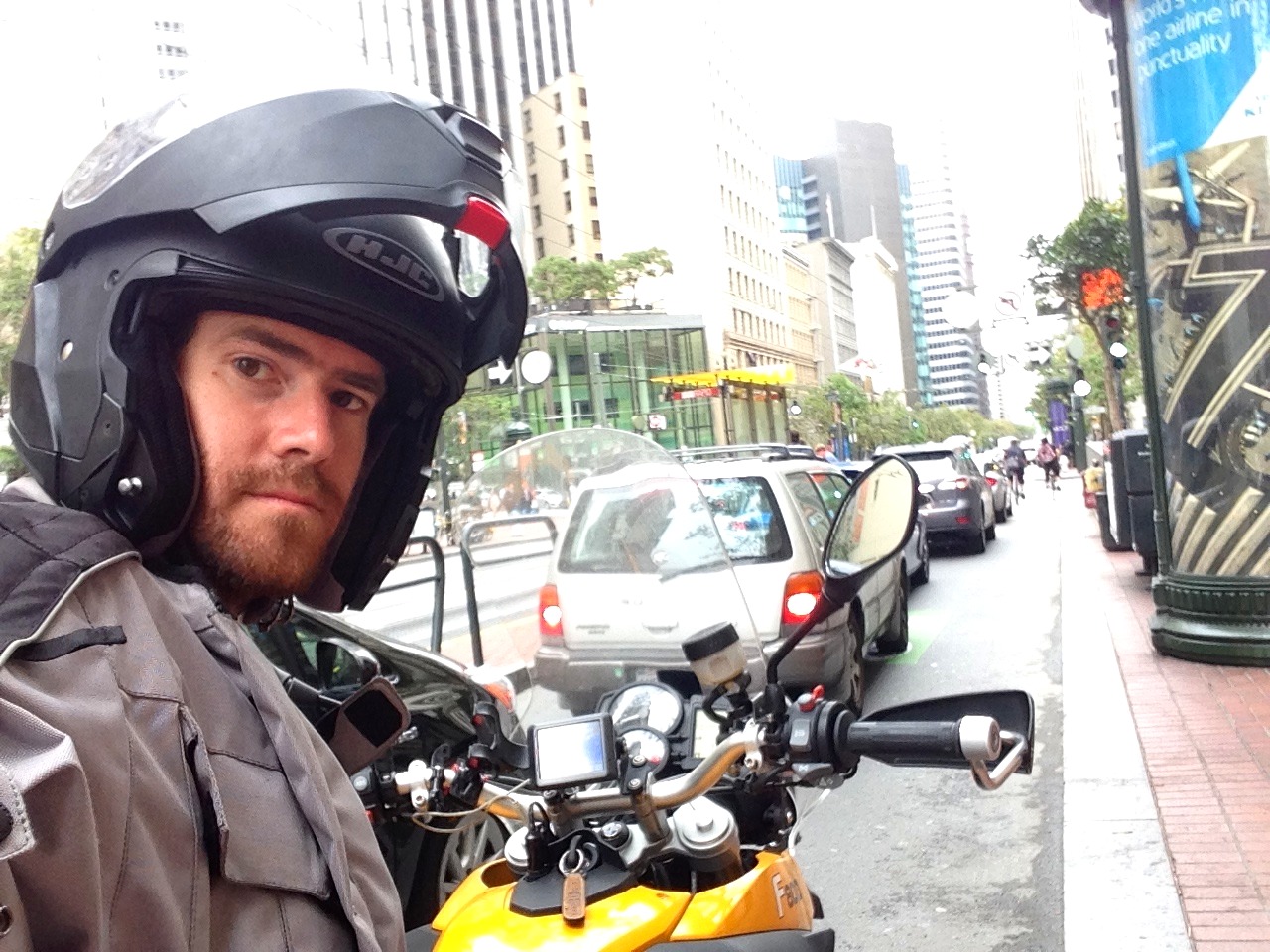
The next day I went out to ride the city and understood that San Francisco on a motorcycle is a different animal. There is a selfie of me with the helmet on, wedged in among the cars downtown, glass buildings going up on both sides and the queue stopped in front. After a thousand kilometres of empty coast, I was suddenly in traffic.
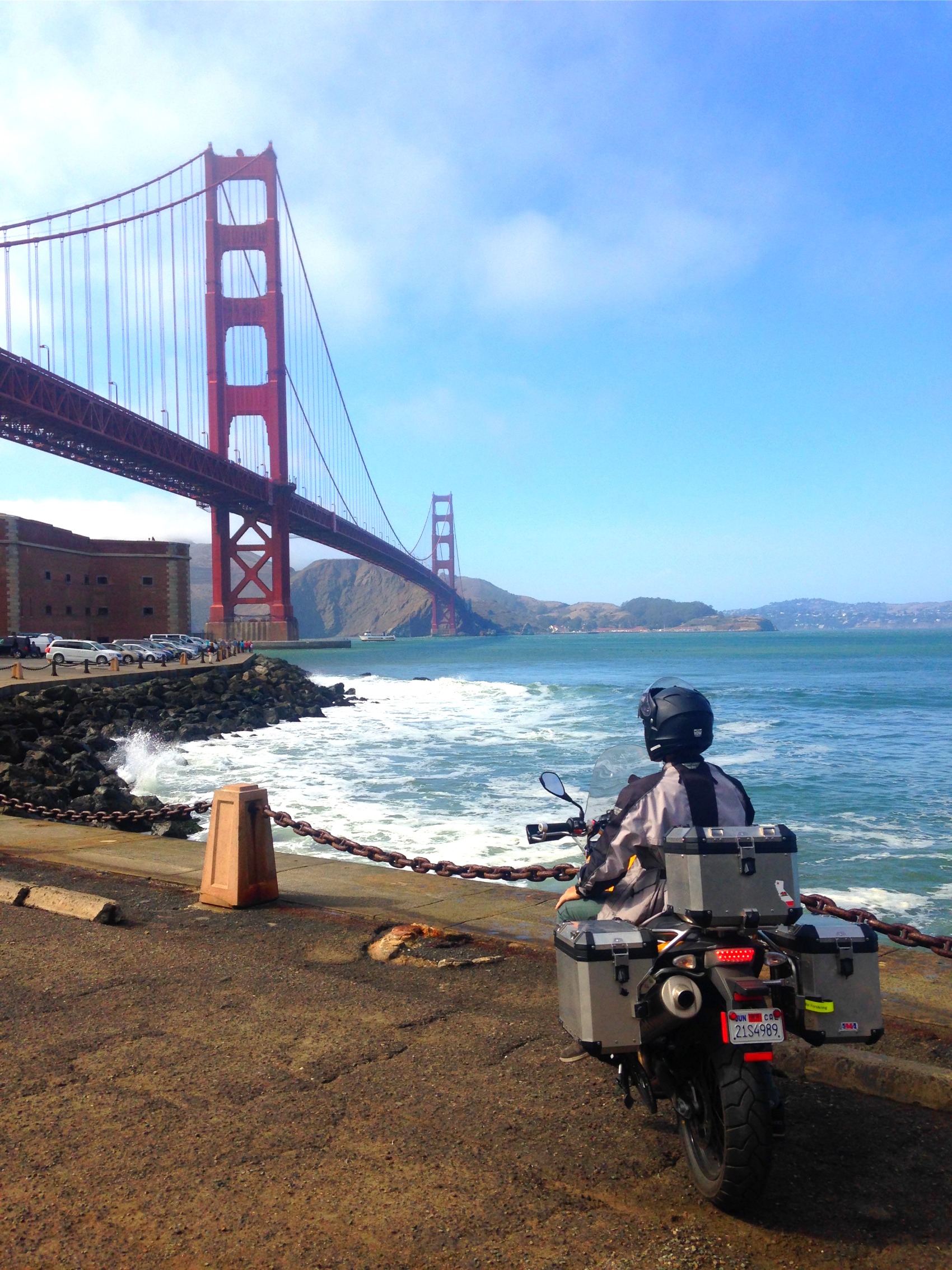
That afternoon I went to see the bridge. I rode all the way down to the shore, right underneath, where the Golden Gate lifts off the water, and left the motorcycle on the edge of the sea wall with the waves breaking beside it. From down there the bridge does not look the way it does on postcards: it looks enormous and orange from below, with the fog coming in behind it.
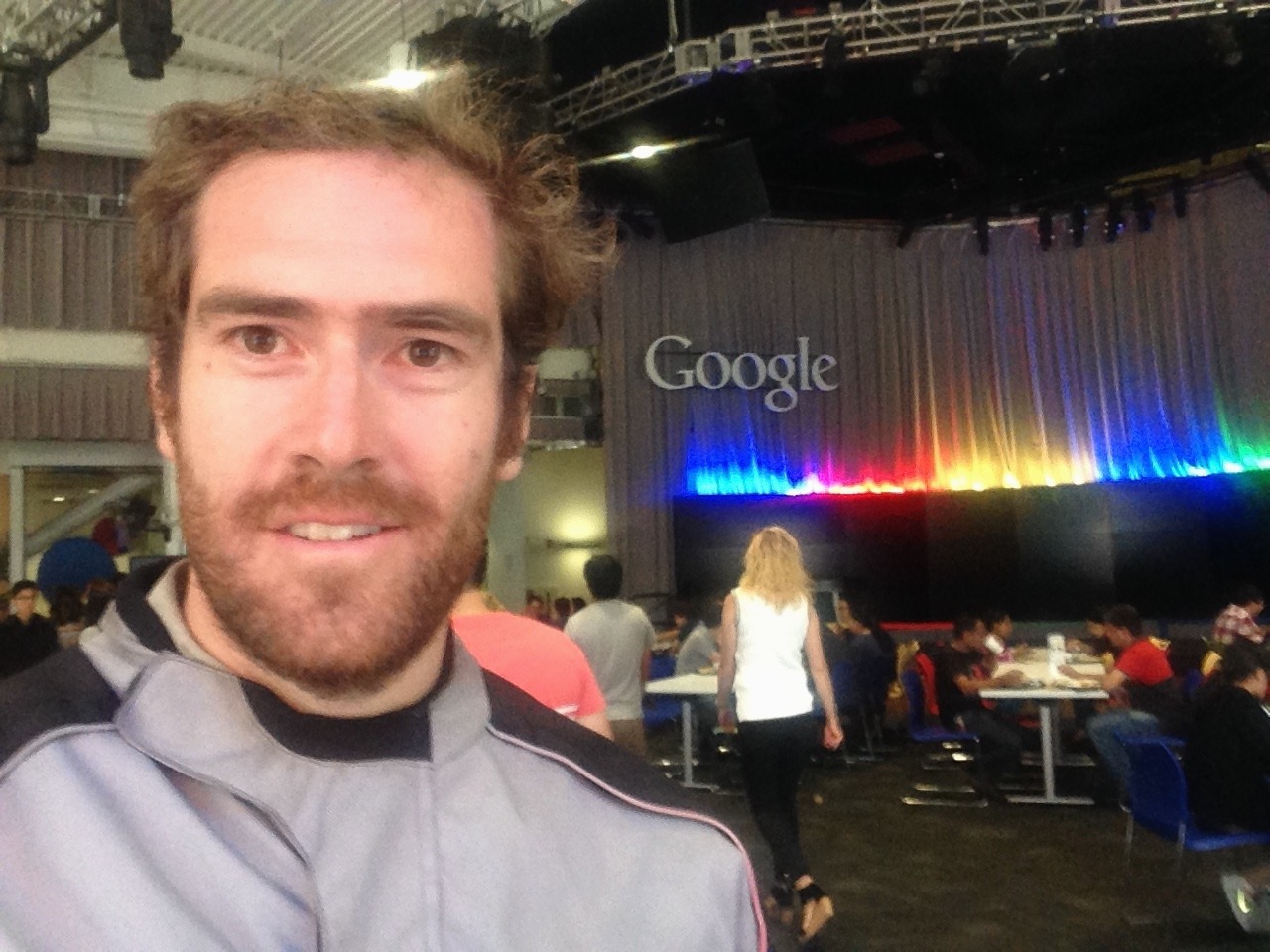
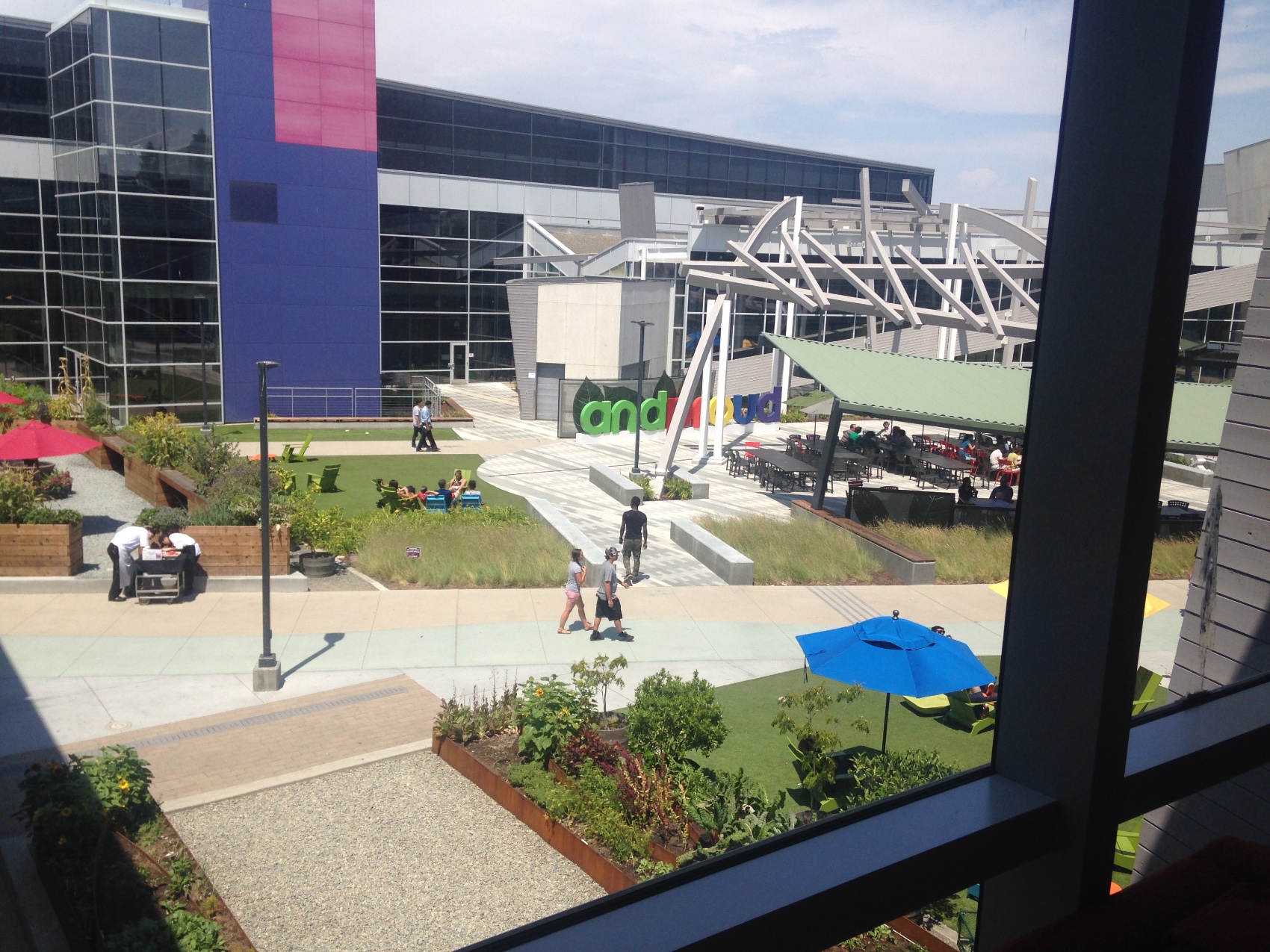
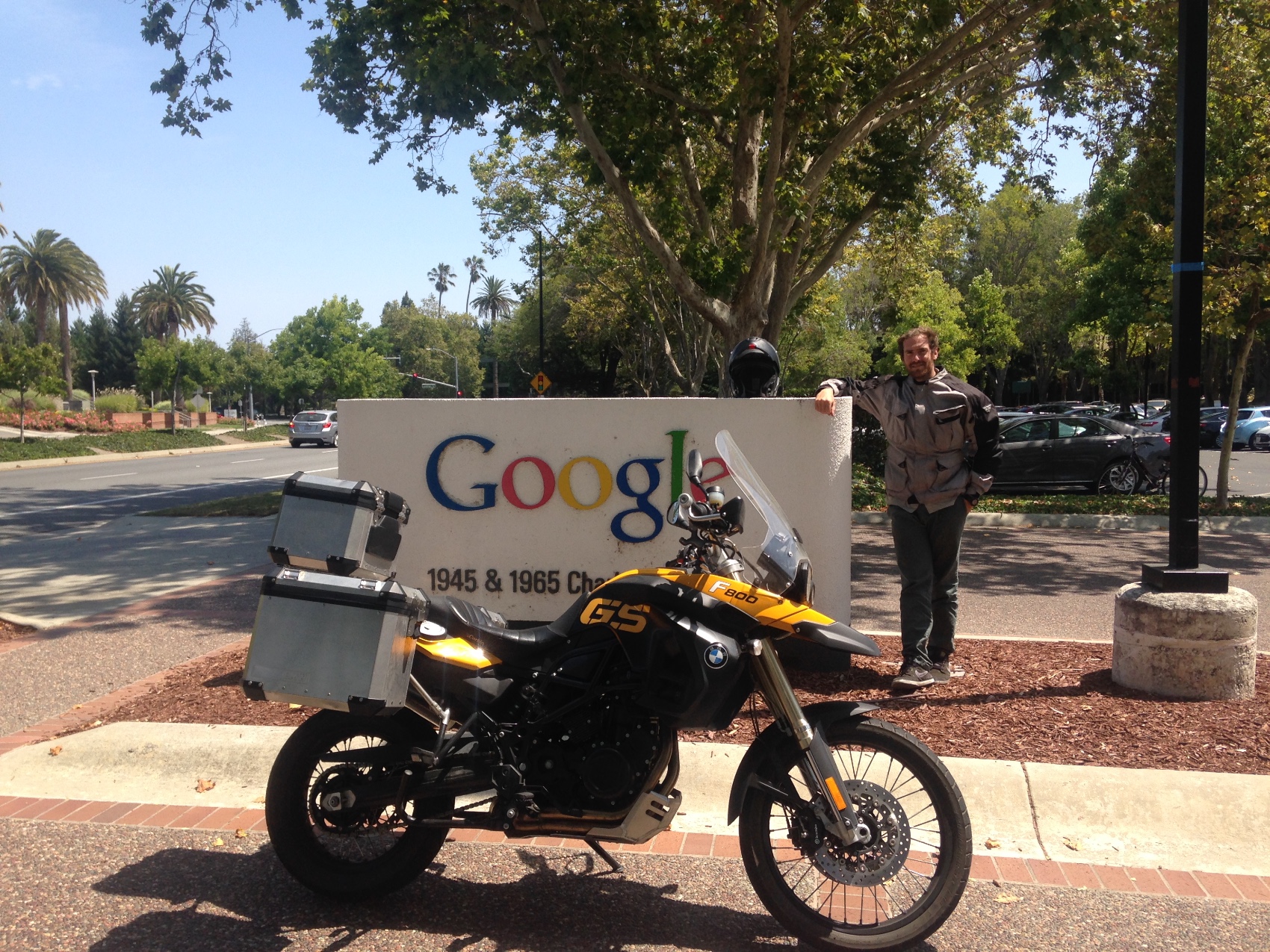
On 31 July I rode south to Mountain View to get inside the Google campus. I walked around between the glass buildings, ate in one of their canteens under a Google logo lit in colours above a stage, and looked out of a window at the lawn where the green Android letters stand. Then, before leaving, I did what I had come to do: parked the motorcycle in front of the Google sign and took the photograph.
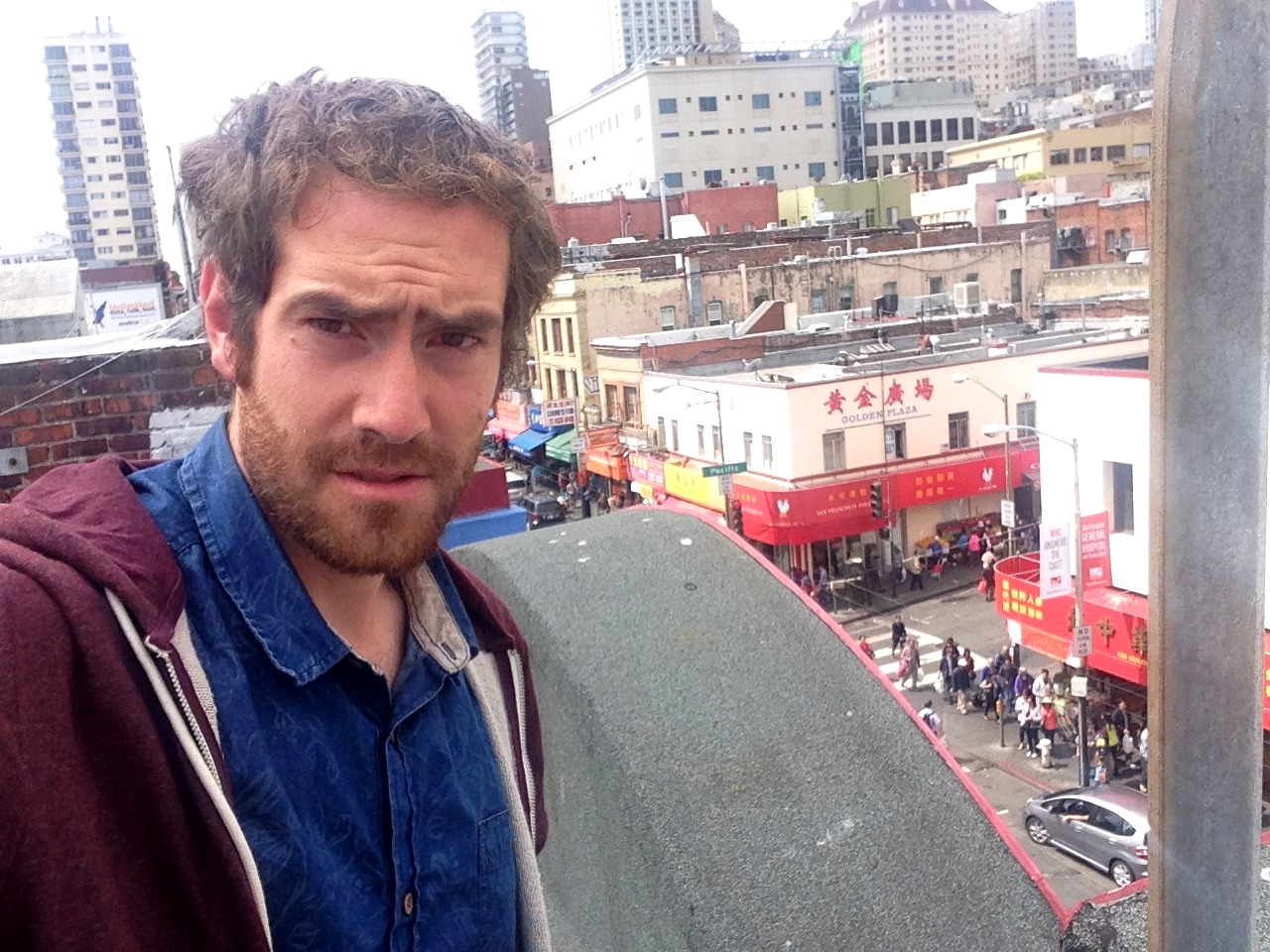
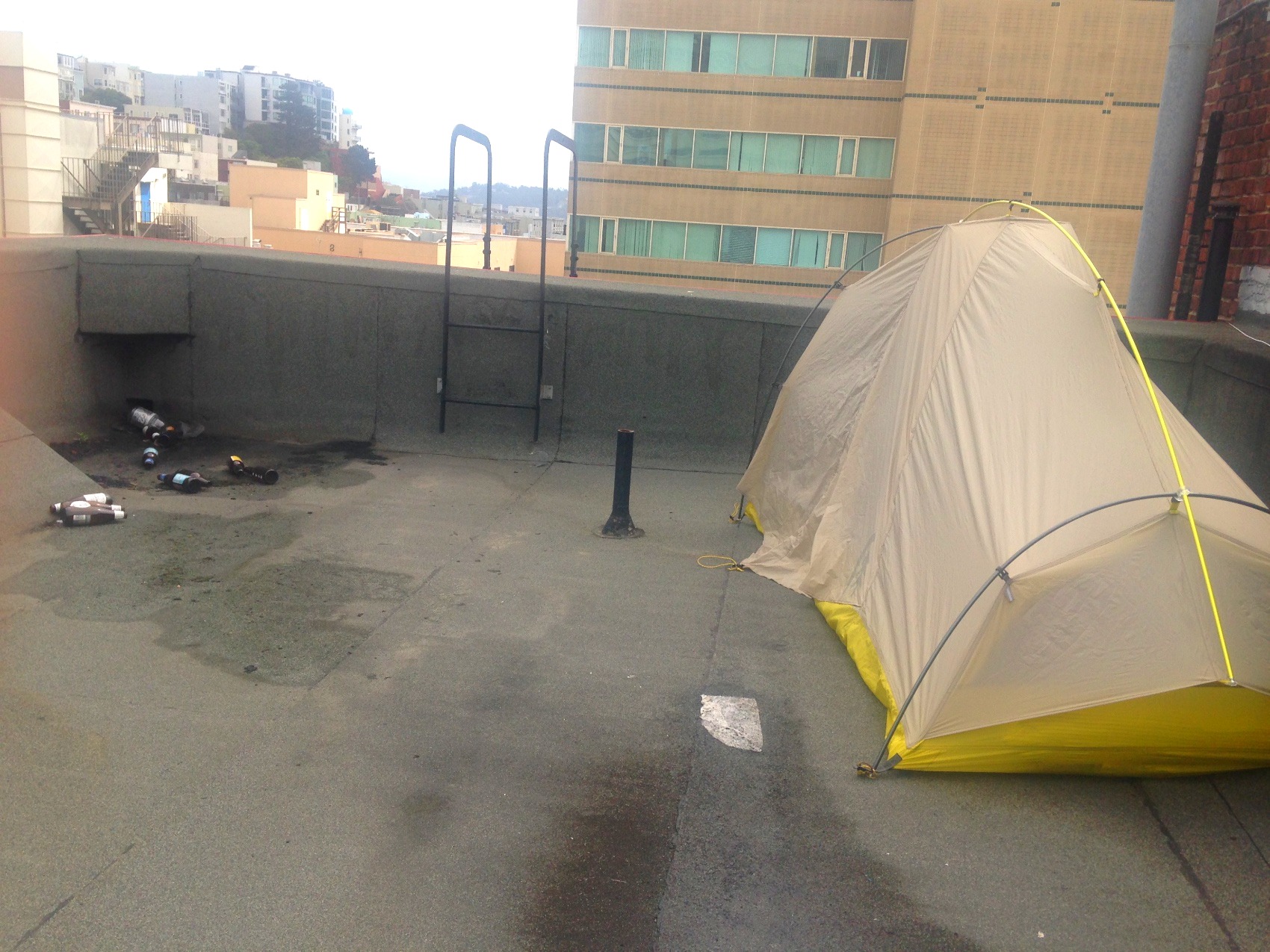
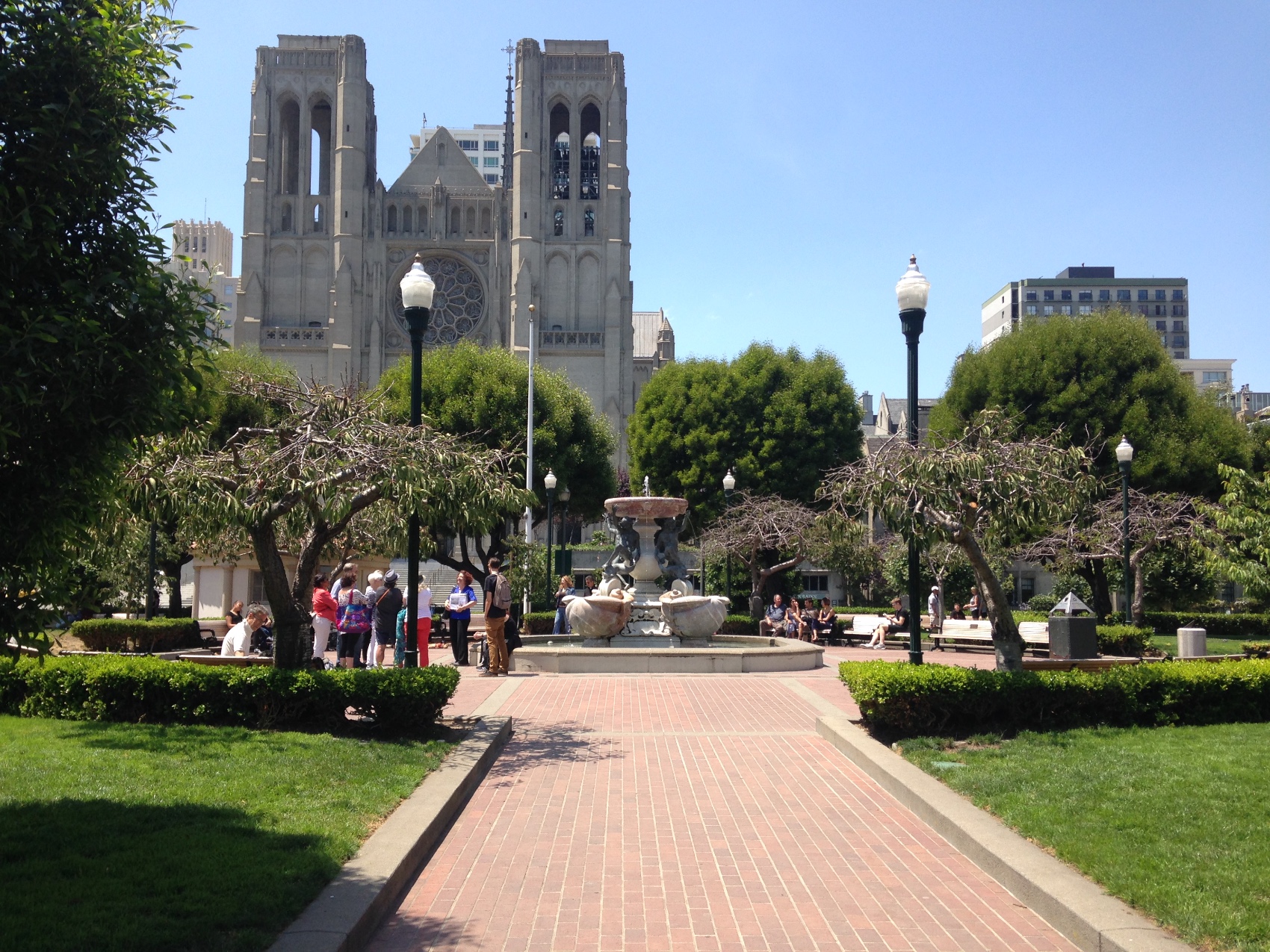
On 1 August I woke up on a concrete terrace in the middle of downtown, tent pitched against a bare wall with buildings all around. From up there, ten metres away, Chinatown was waking up: the red and gold signs in Chinese, the awnings, people already in the street. That midday I climbed Nob Hill to Grace Cathedral, grey stone with two towers and a park in front of it with a fountain.
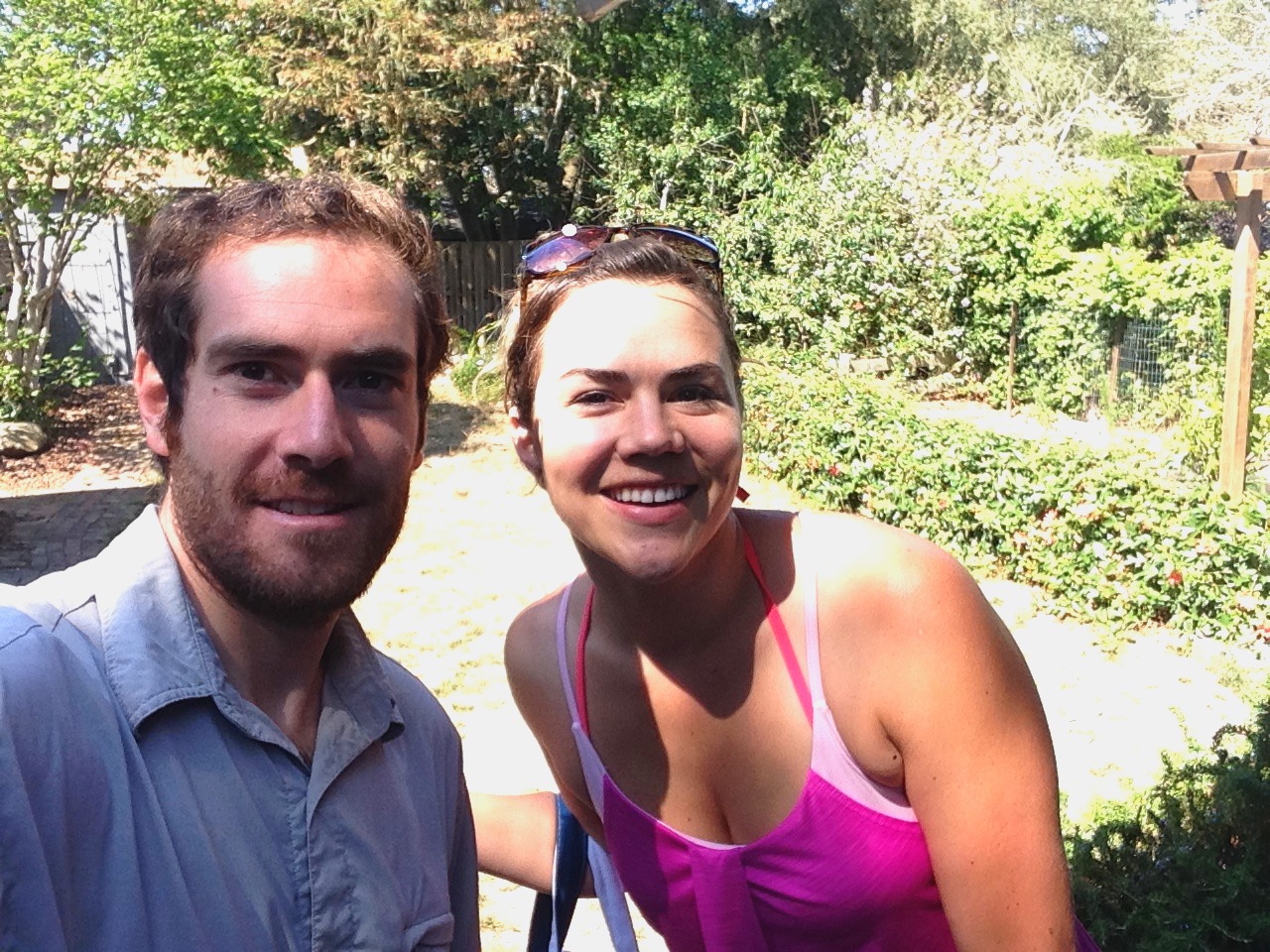
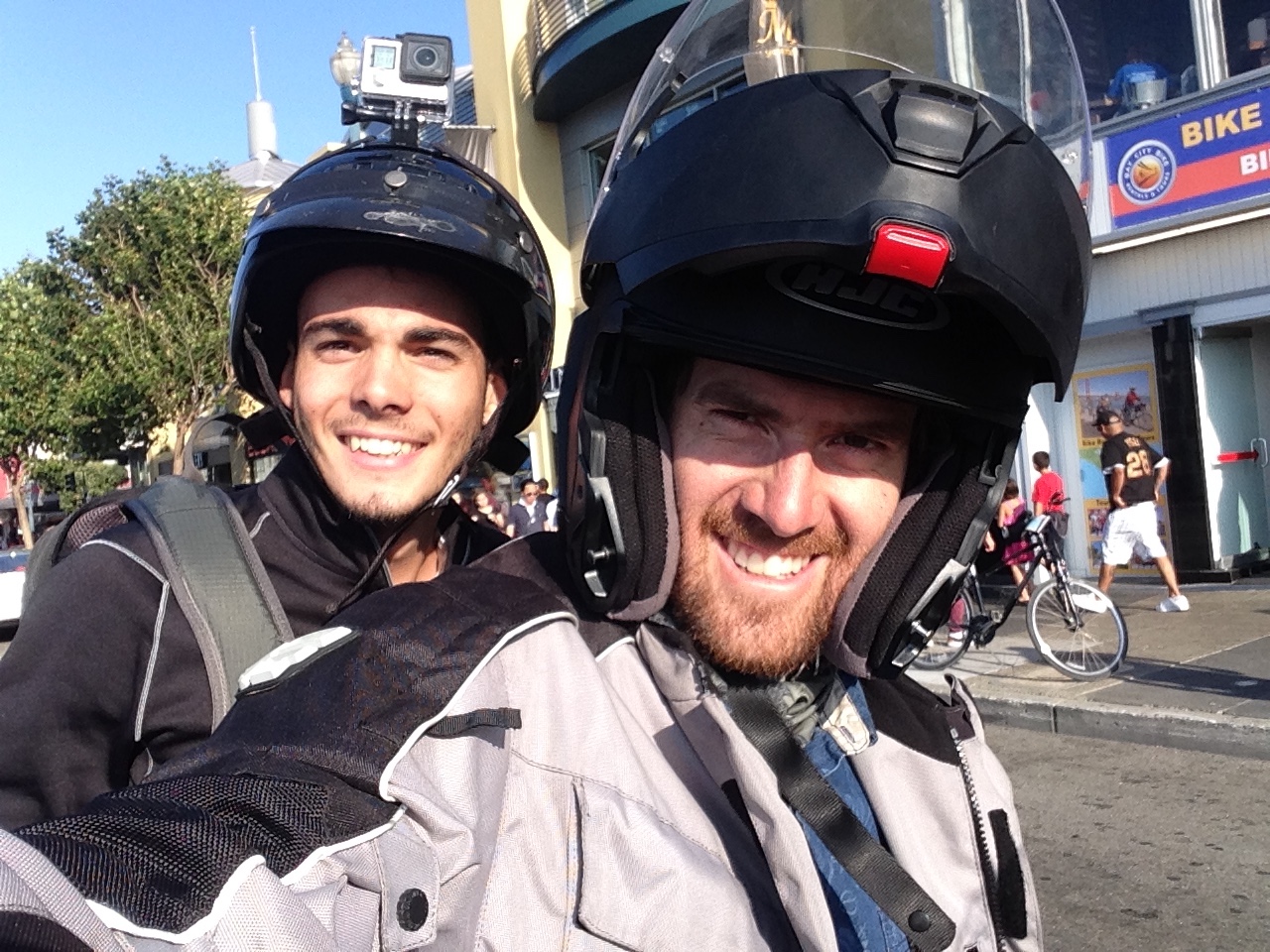
And in the middle of the afternoon another rider turned up. We took a selfie with our helmets on, his camera and mine mounted on top, and rode off together.
The man of the house was on the sofa, naked, in flip-flops. Nobody found it strange except me.
Cross the bridge, and stay on the other side.
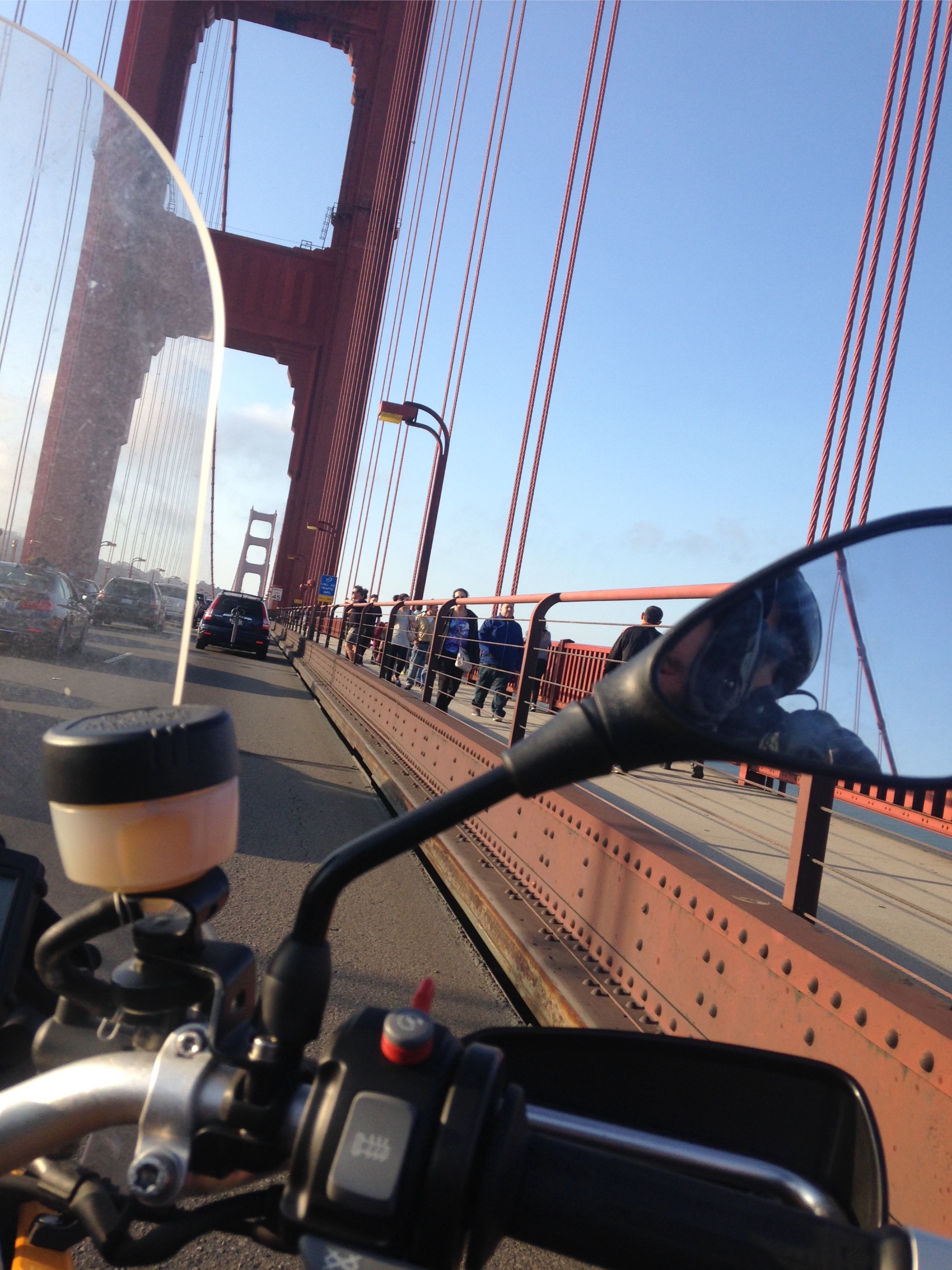
Crossing the Golden Gate on a motorcycle is shorter than you expect and stranger than you imagine. You ride the left lane with the orange tower passing over your head, the cables falling away in a curve on both sides, and people walking the footway a metre from your handlebar.
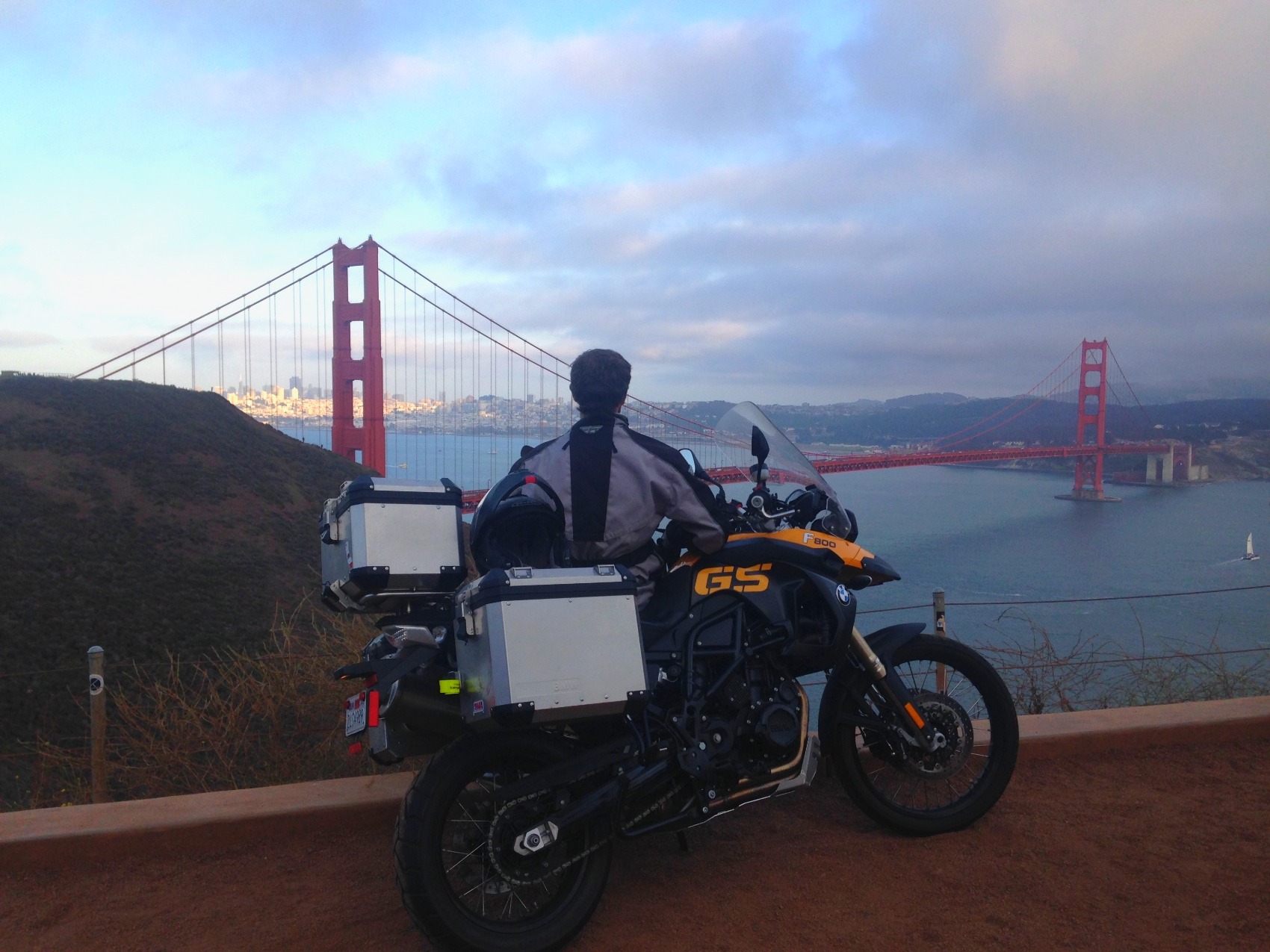
On the far side the road climbs straight into the Marin hills, and there is the viewpoint from every photograph: the motorcycle in profile against the whole bridge, the bay, and San Francisco tiny at the back. I stayed up there a long while.
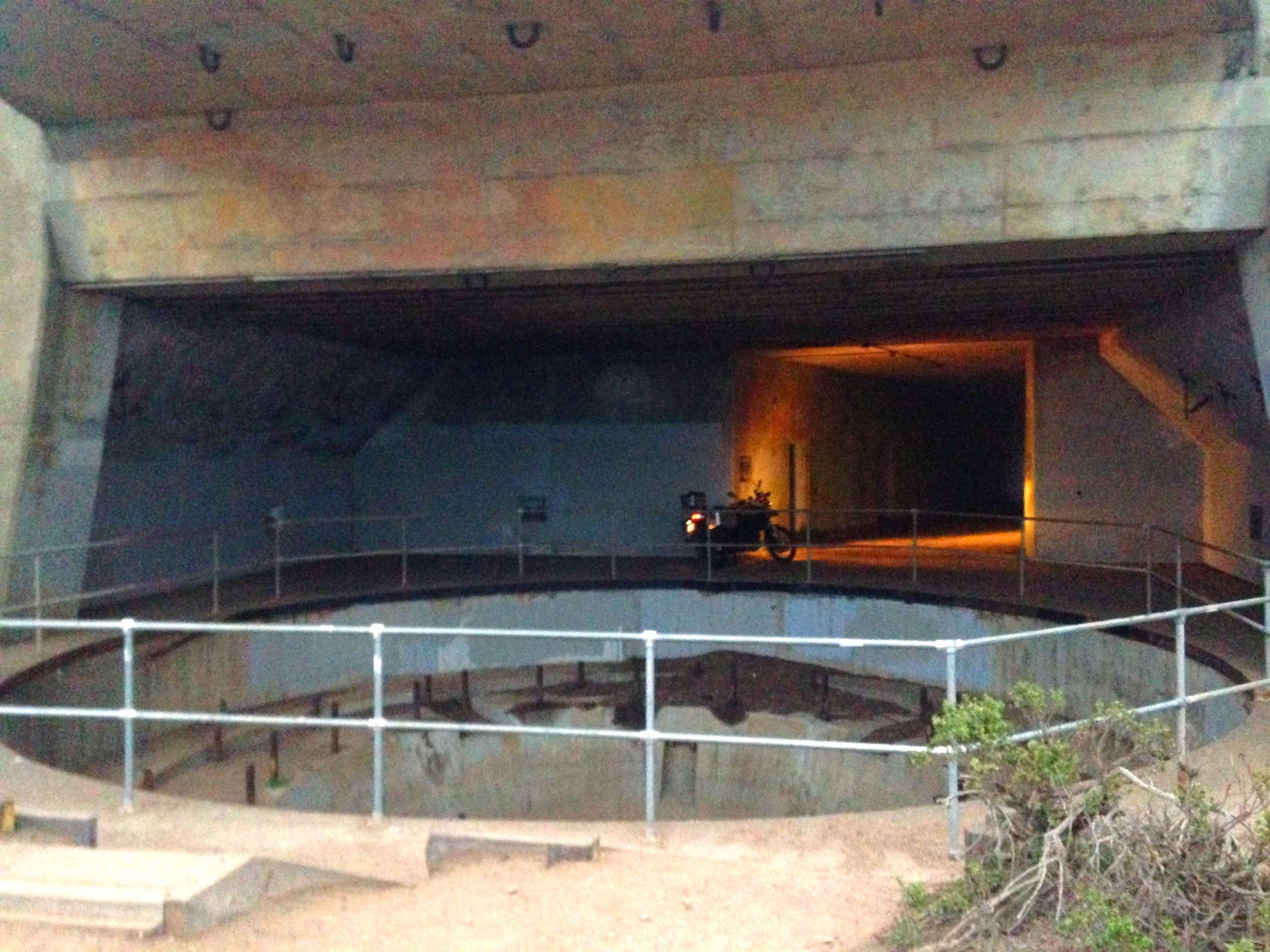
Higher into those same hills there are bunkers. That whole coast was a military base for decades, and the gun emplacements are still buried in the grass: circular concrete platforms with handrails, empty tunnels, stairs that lead nowhere. You walk through them alone, with nothing explaining anything.
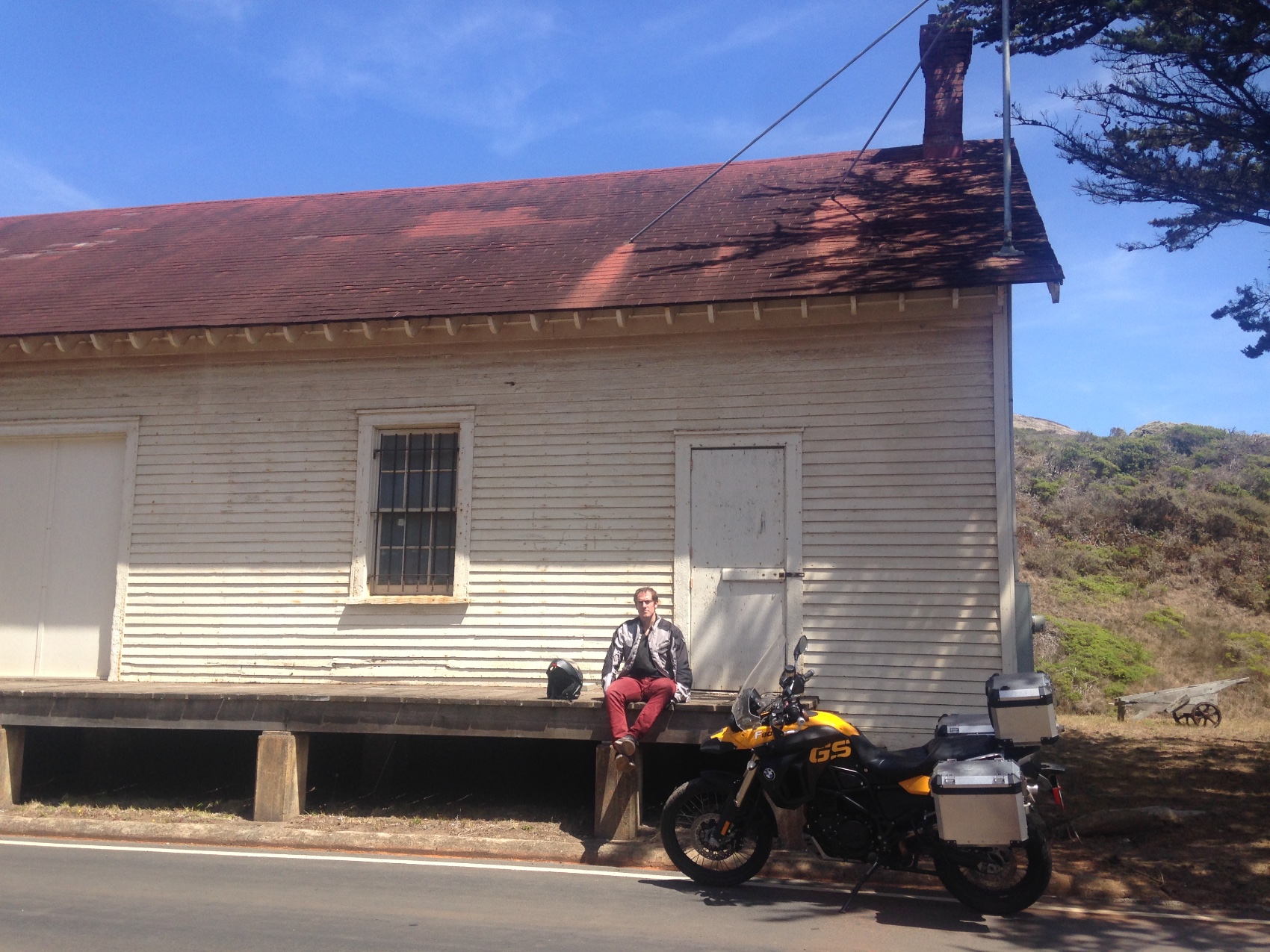
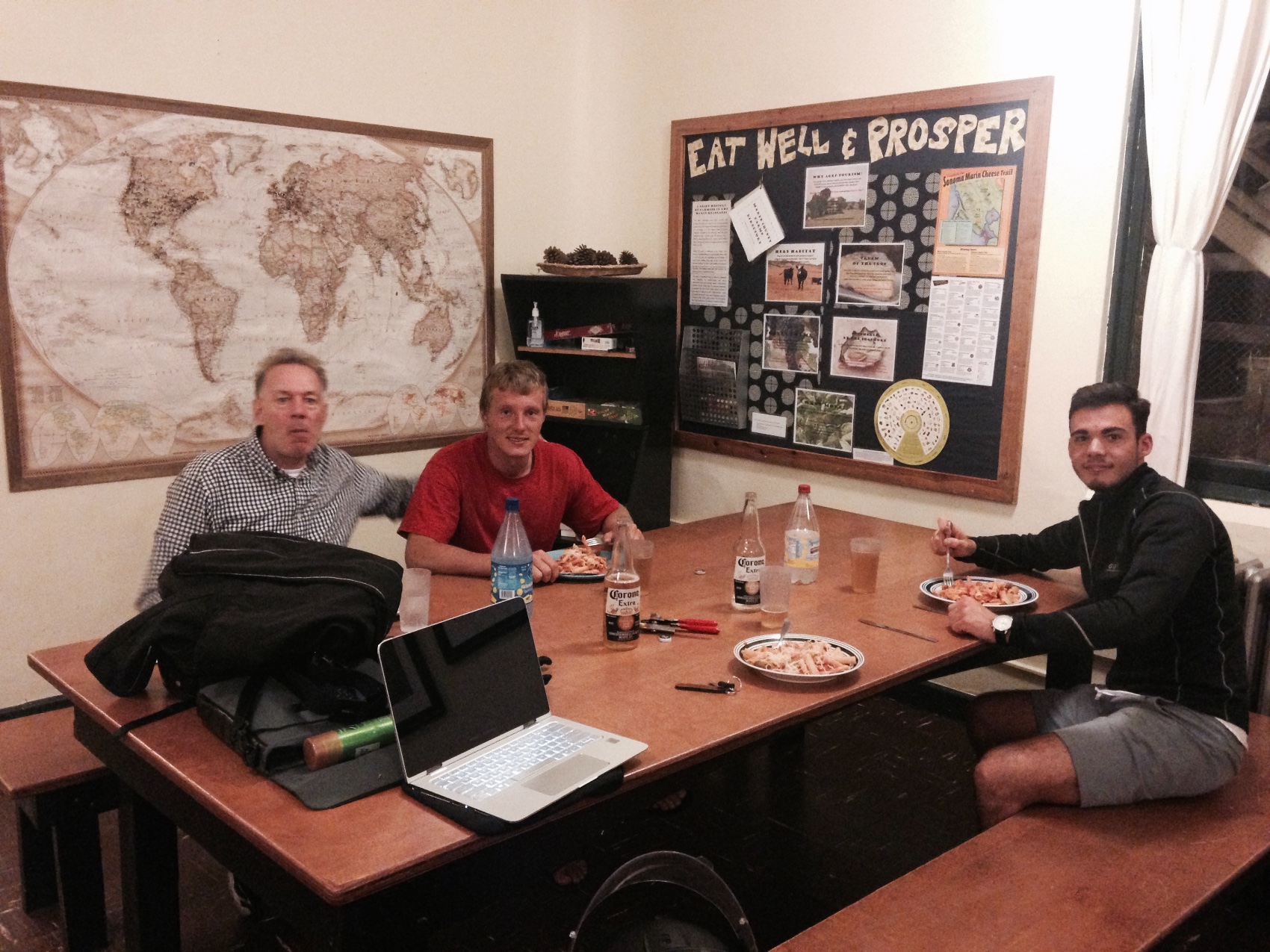
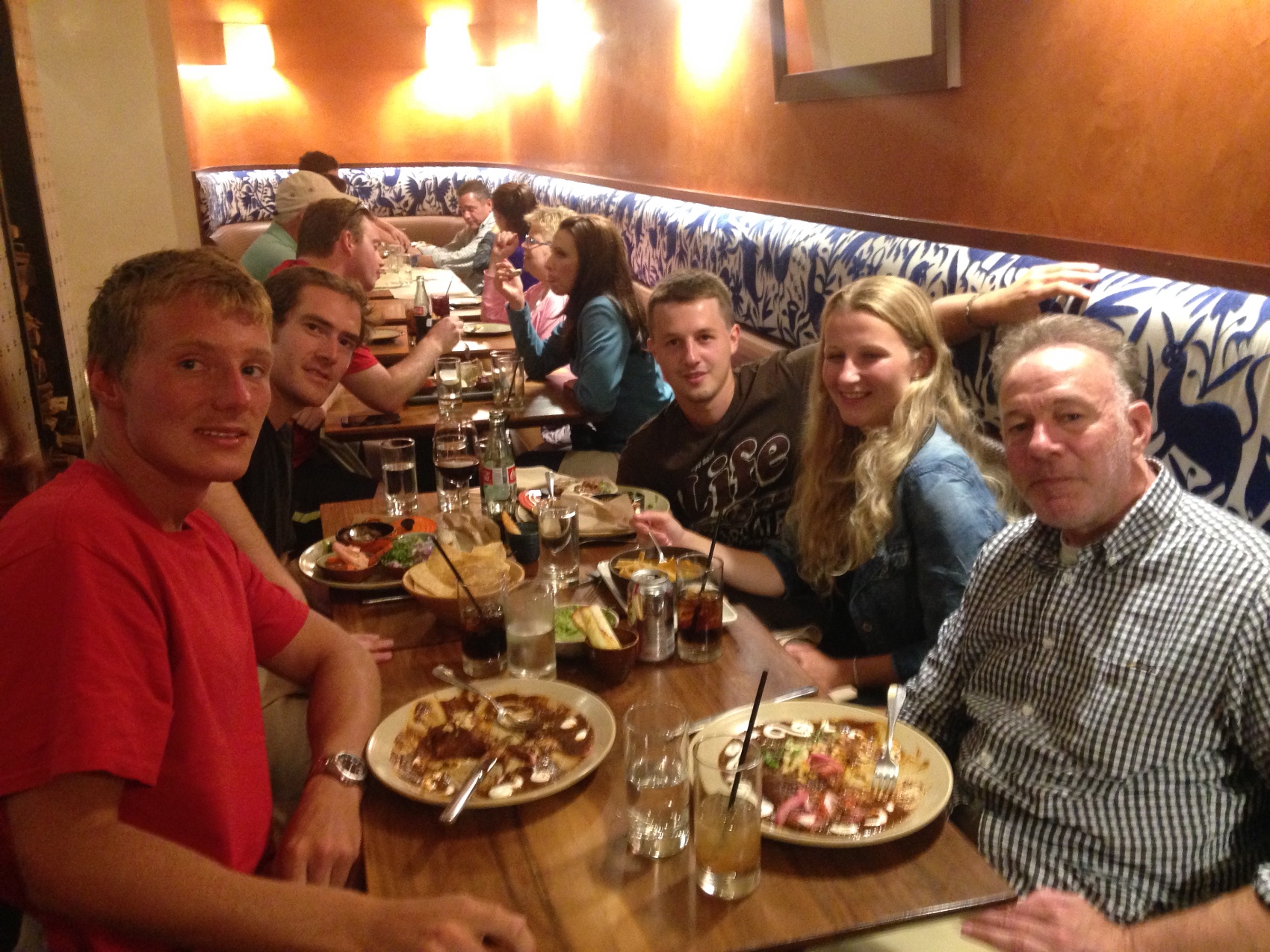
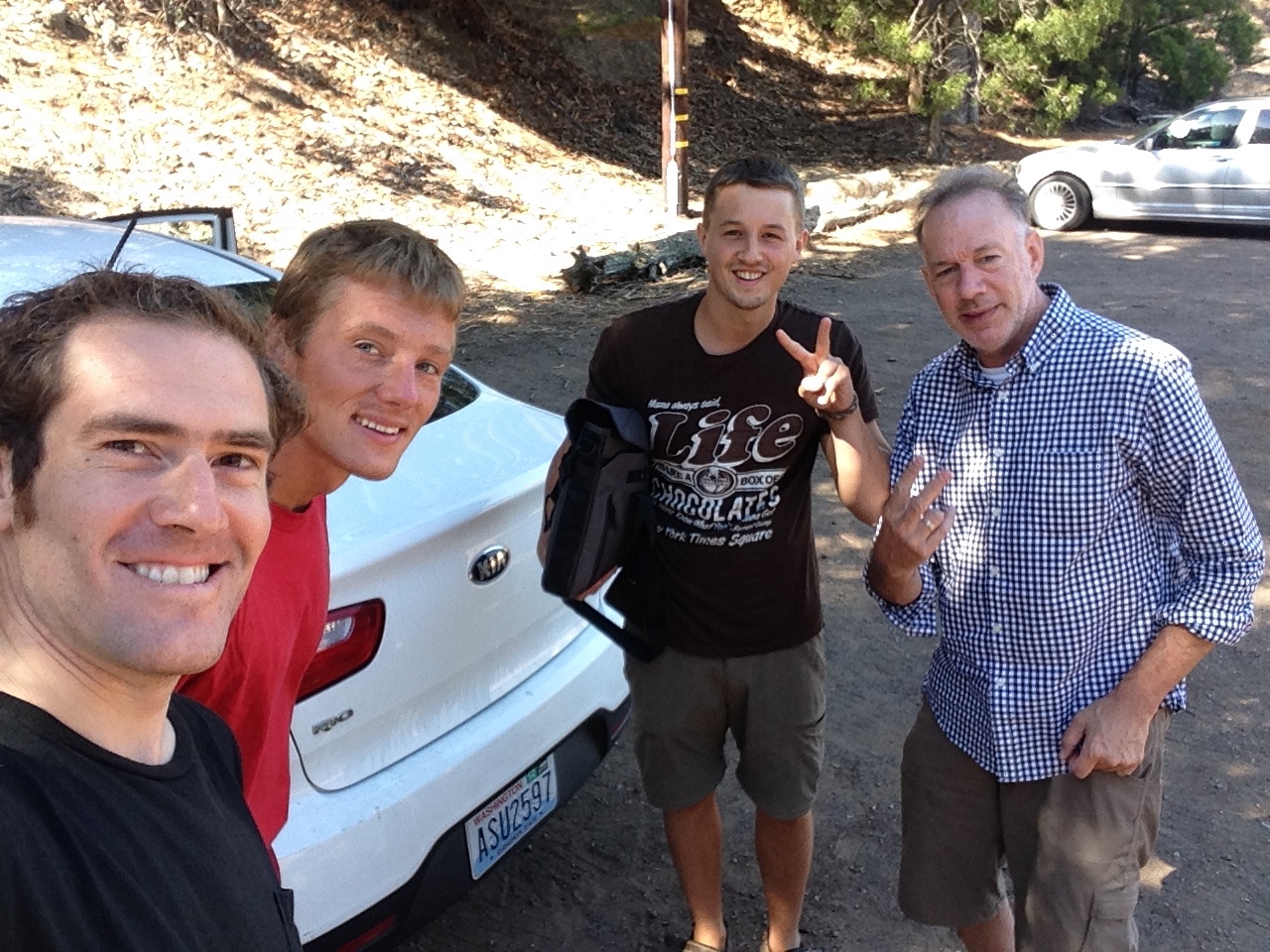
I ended up staying two nights on the Marin side, in a long low white timber house left over from the old fort, red tin roof and a door in the middle. I parked the motorcycle in front and sat on the edge of the porch. Inside there was a shared kitchen with an enormous world map on the wall and a board that read EAT WELL AND PROSPER. That is where I met people: a tall very fair man, another younger one, an older man in a checked shirt, all round the same table with pizza, bottles and open laptops.
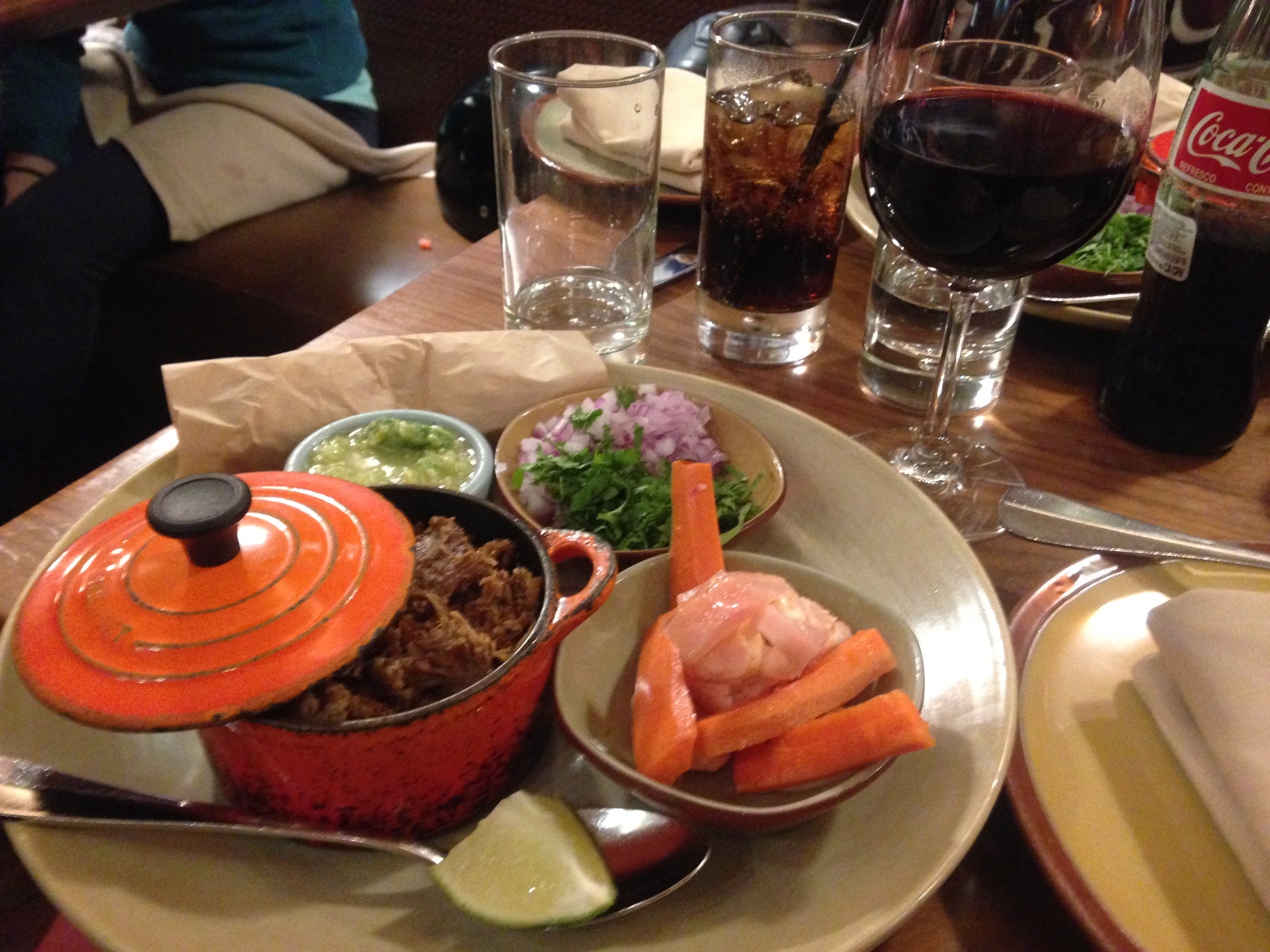
On the night of 2 August we all went down to eat in Sausalito. I remember the plate: a red enamelled iron pot with a stew in it, carrots, guacamole, and a glass of red wine beside it. There were about ten of us at a long table.
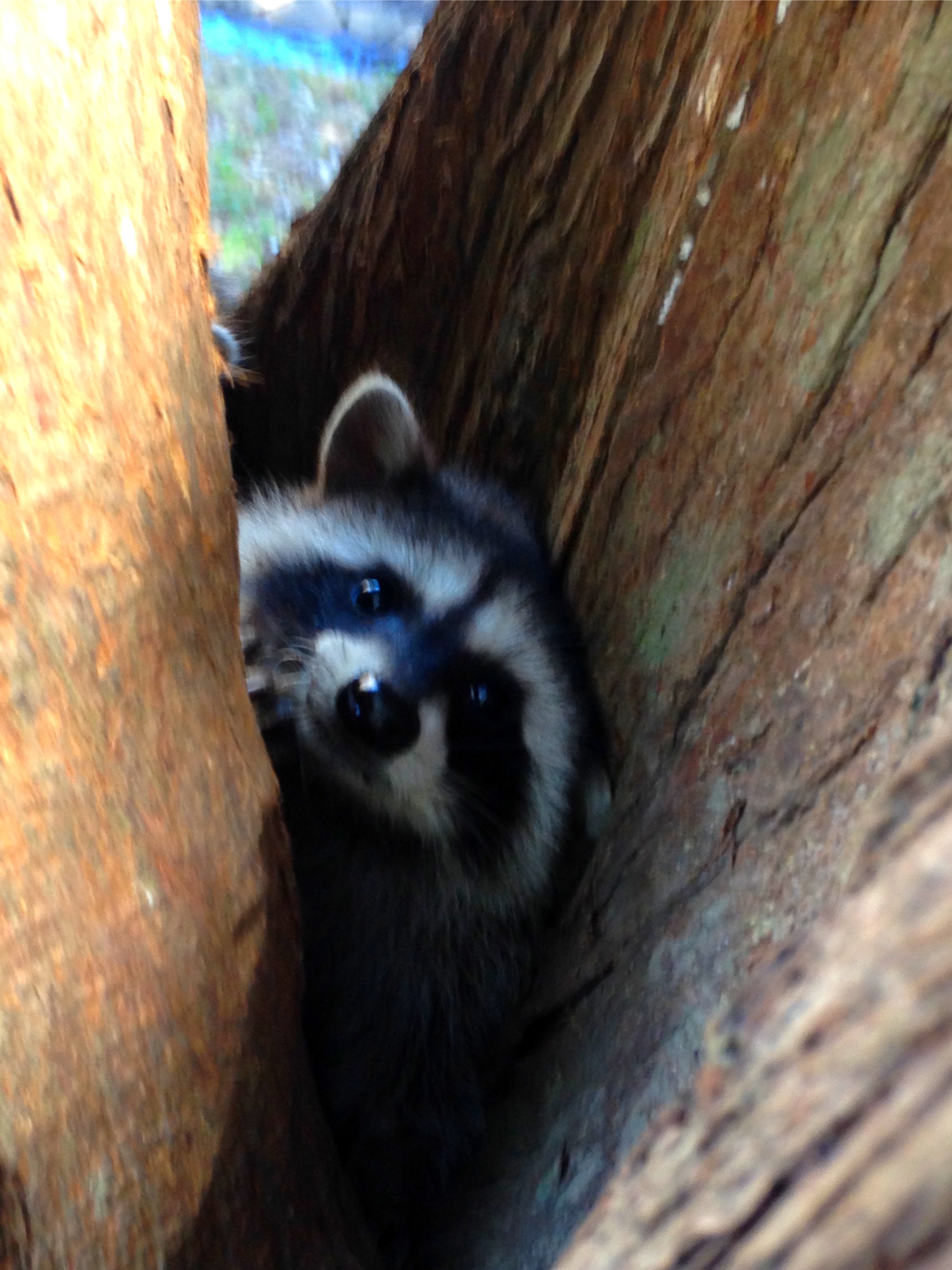
And the next morning, when we were already saying goodbye beside the car, the most Californian thing of the trip happened: a raccoon put its head out between two tree trunks and stood there looking at me, in no hurry at all, as though I were the one just passing through.
That whole coast was a military base. The bunkers are still buried in the grass and you walk them alone.
Night caught me on the road to Yosemite.
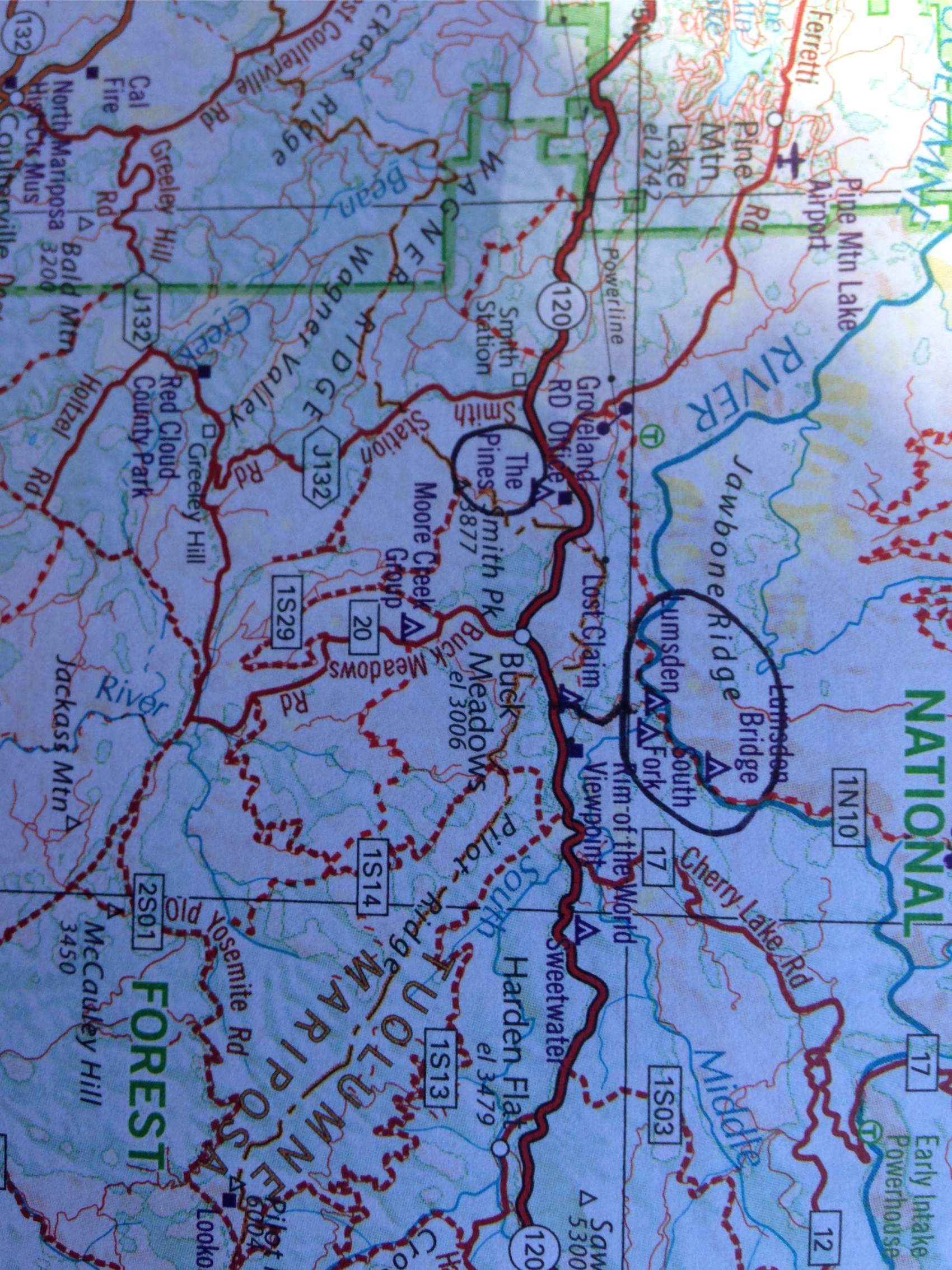
On 3 August, still in Sausalito, somebody recommended a couple of places to camp and I pencilled them onto the paper forest map: the campgrounds at Lumsden Bridge, down at the bottom of the Tuolumne River canyon, and The Pines, beside the Groveland ranger station. From there I crossed the central valley towards the Sierra Nevada and took Highway 120, the road that climbs to Yosemite from the west: Chinese Camp, Groveland, with Don Pedro Lake opening out below among the hills.
By six in the evening, past Moccasin, I was already on a dirt track along the hillside, the sun straight in my face and the dry slope falling in over the road.
Night caught me there, so I decided to camp and leave Yosemite for the next day.
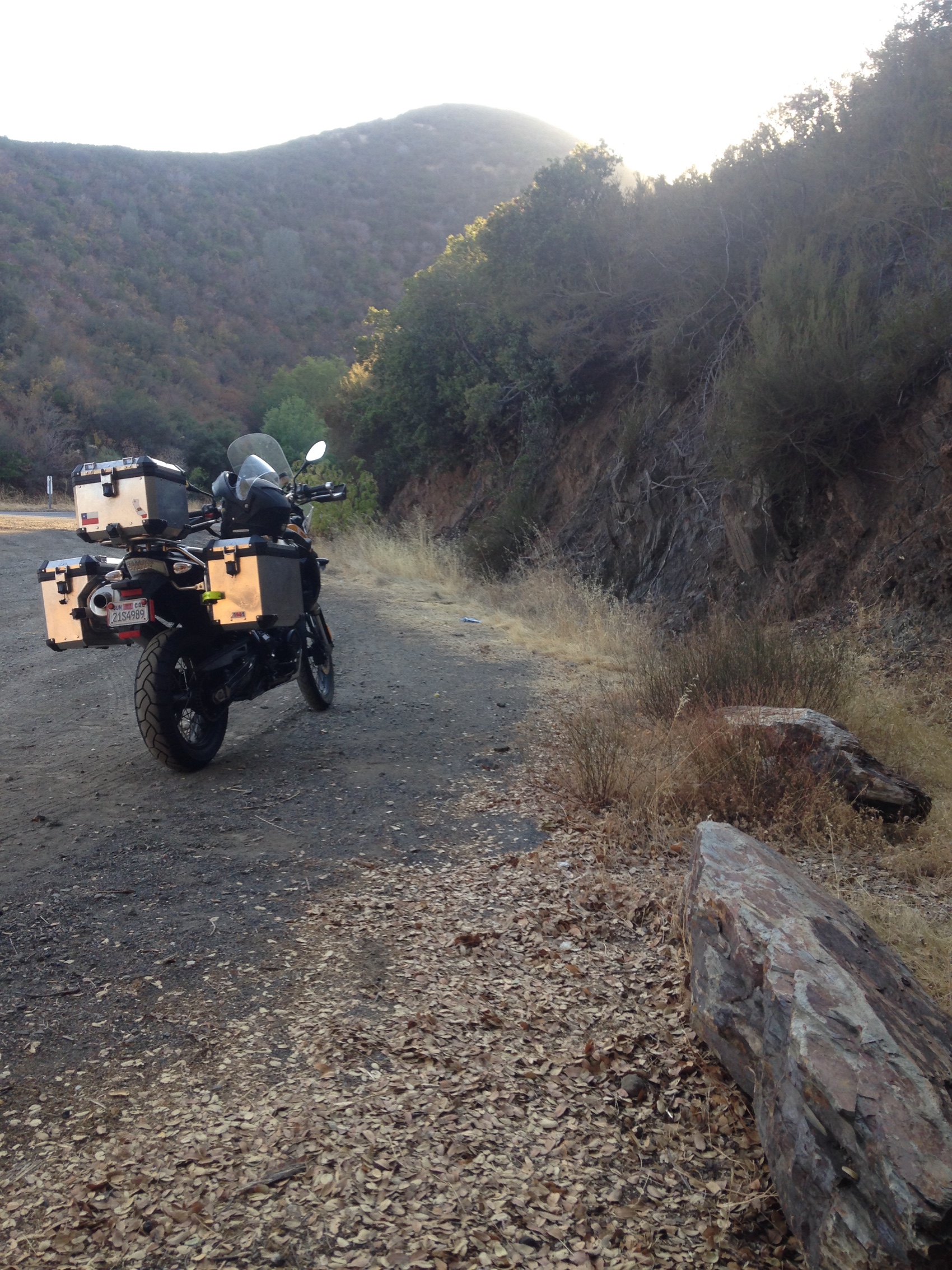
And that is where I had the first fall I can remember on that motorcycle, my own fault and down to having no experience at all on dirt. The place I found to pitch the tent had a gravel slope down to it. I took it in neutral, with no engine braking, which was the worst thing I could have done, because I picked up even more speed. And when the bike started to get away from me I grabbed the front brake and never touched the rear: the bars folded and I went down hard, into the gravel.
But it was not just the brake. The bike still had the road tyres it came with, and those grip nothing on loose gravel. Mix that with the surface and the gradient, and the disaster was already set up.
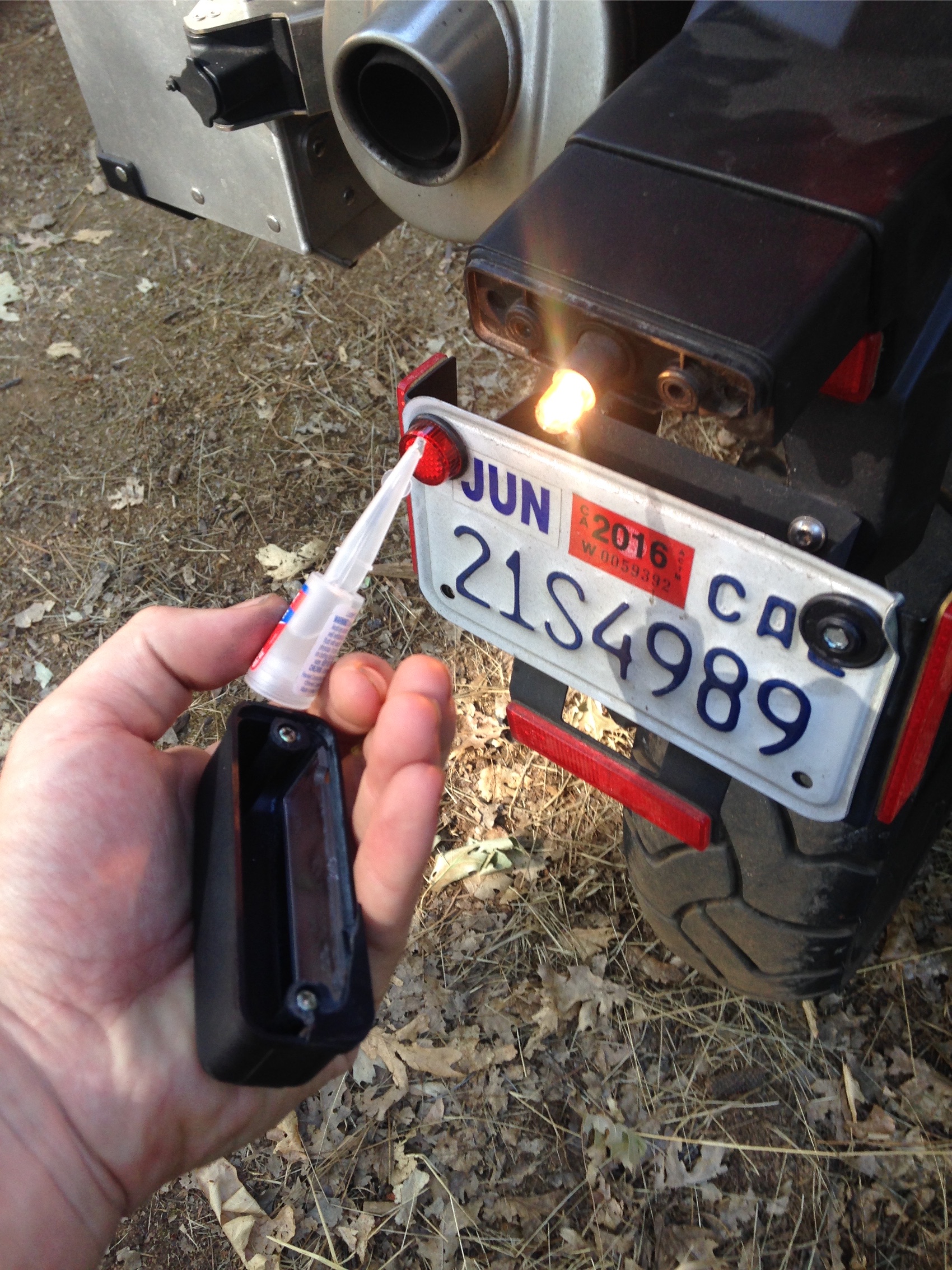
Those were the motorcycle's first war wounds. A long scrape on the engine, and the rear number plate light broken. The next day I tried to glue it back together.
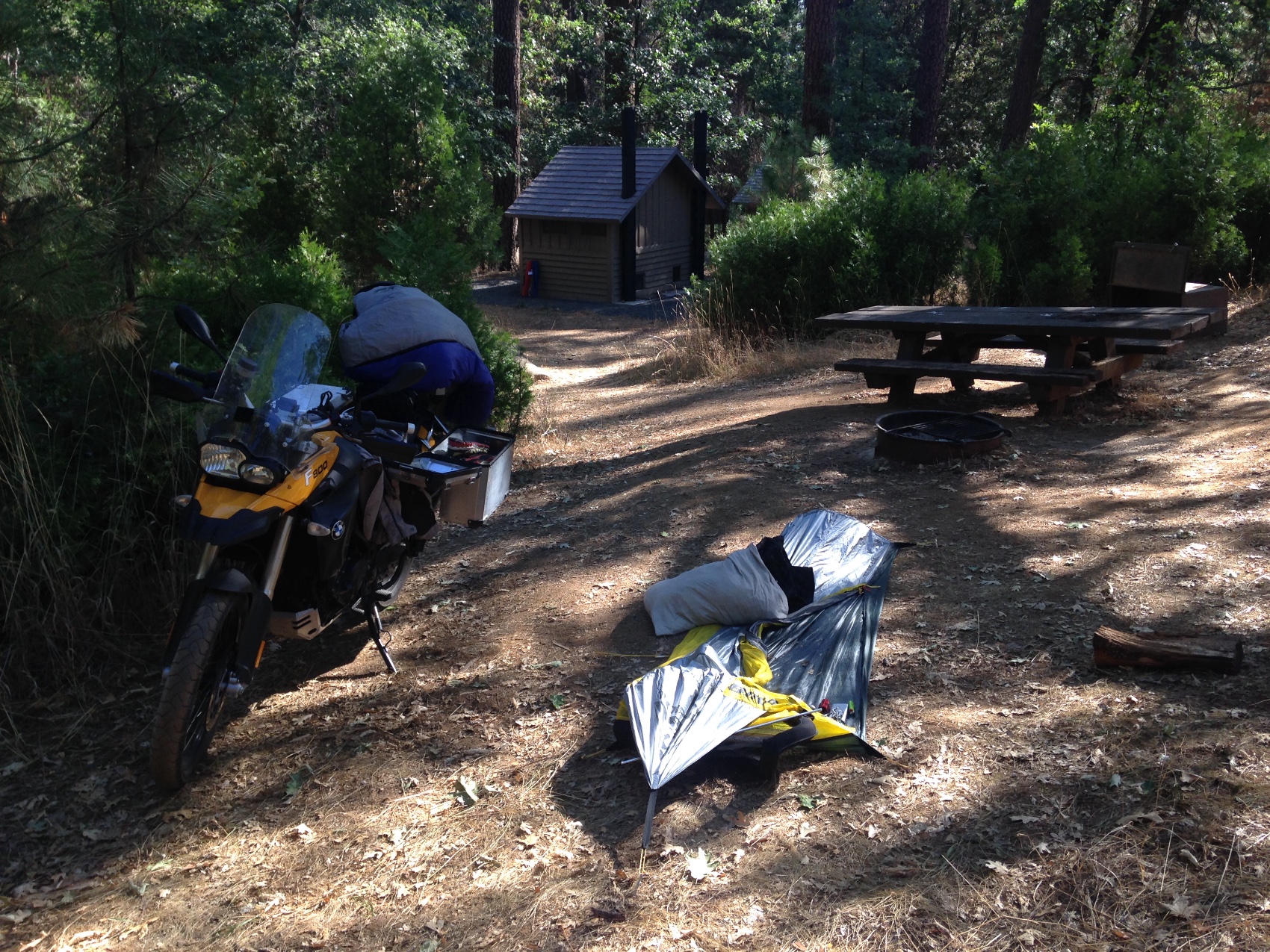
I pitched the tent beside the road, in the forest, on a site with a timber table, a fire ring and a steel box for keeping food in because of the bears.
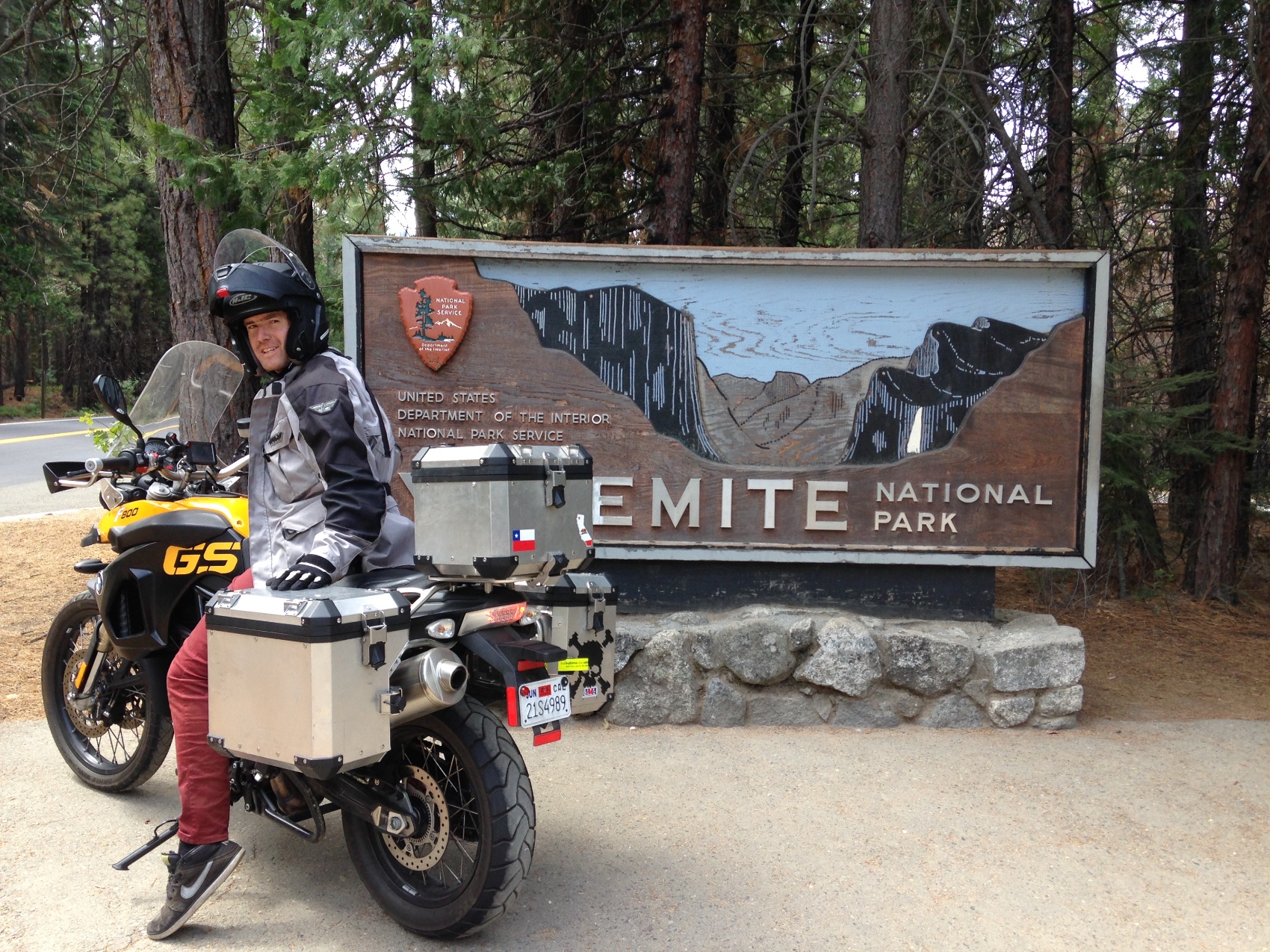
I reached the Yosemite entrance at half past ten on the morning of 4 August, just before midday. I had never been to a national park in the United States and I was struck by how professional the whole thing was: the entrance, the signage, even the toilets. All of it right, all of it properly done.
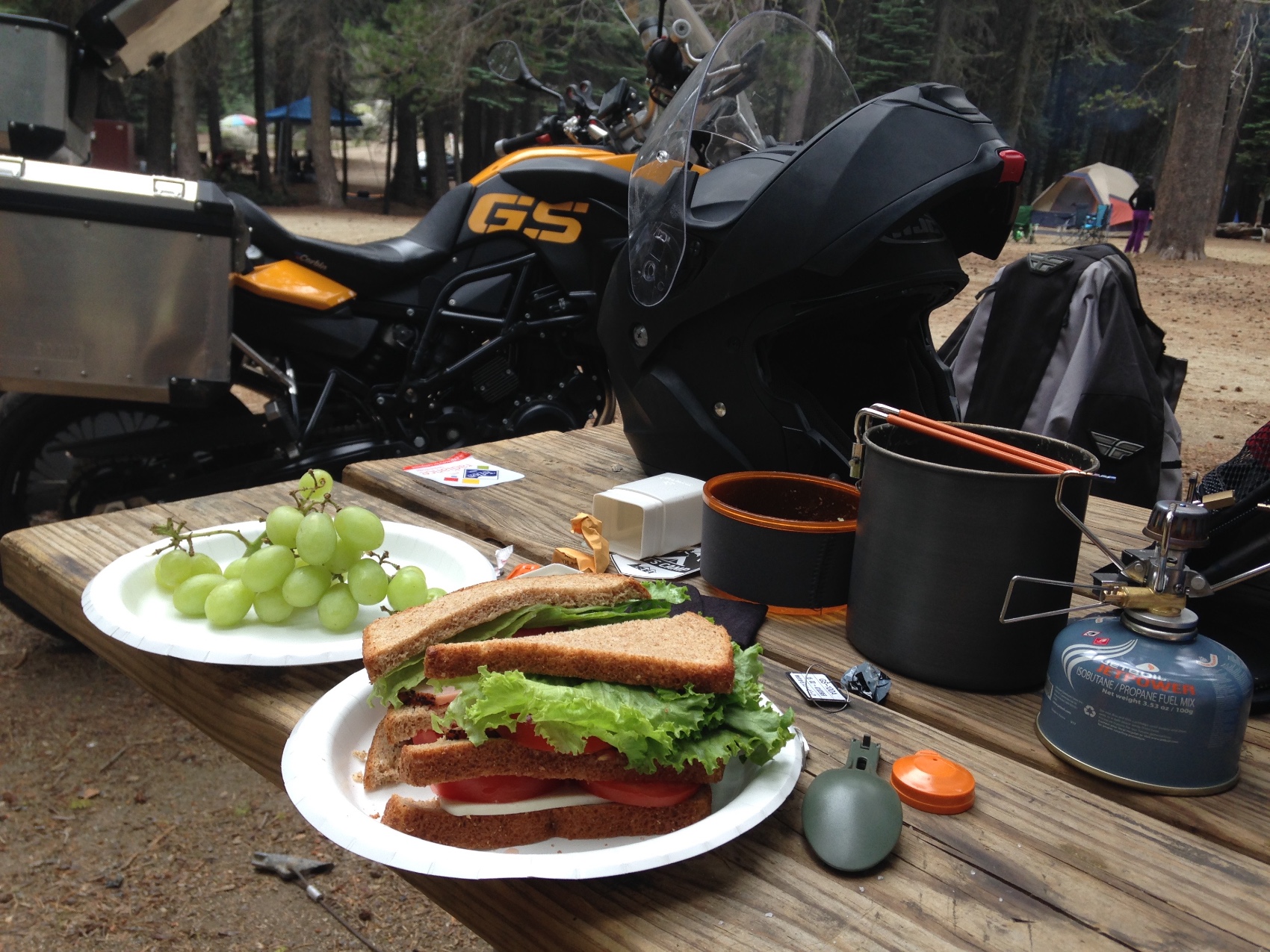
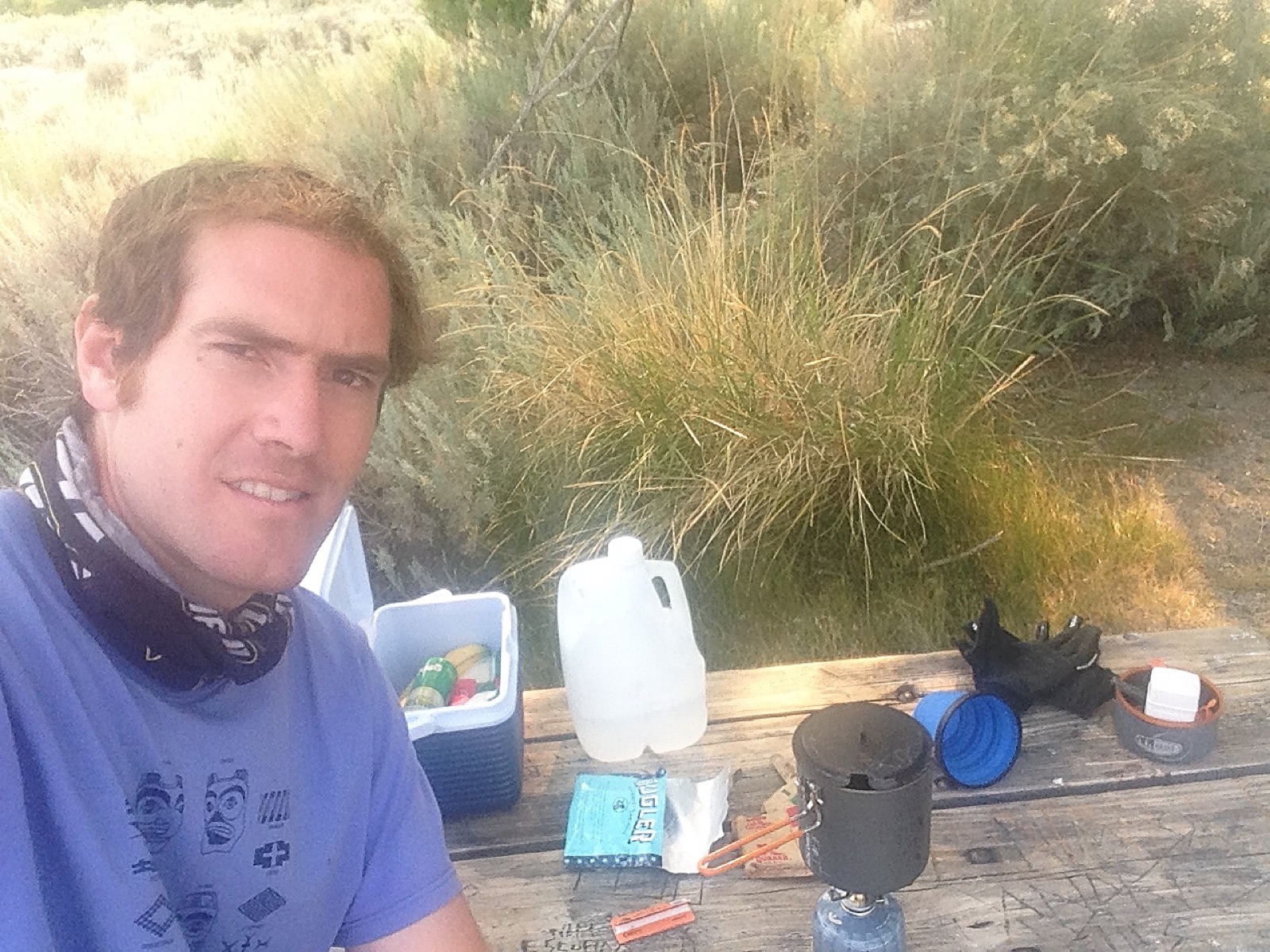
That first day I had lunch at the campground, breaking in the new stove on the table: a wholemeal sandwich with tomato, lettuce and cheese on a paper plate, a bunch of green grapes, the black pot with the gas canister beside it, and the helmet and jacket propped on the same table. The motorcycle right there among the pines, and other people's tents further off.
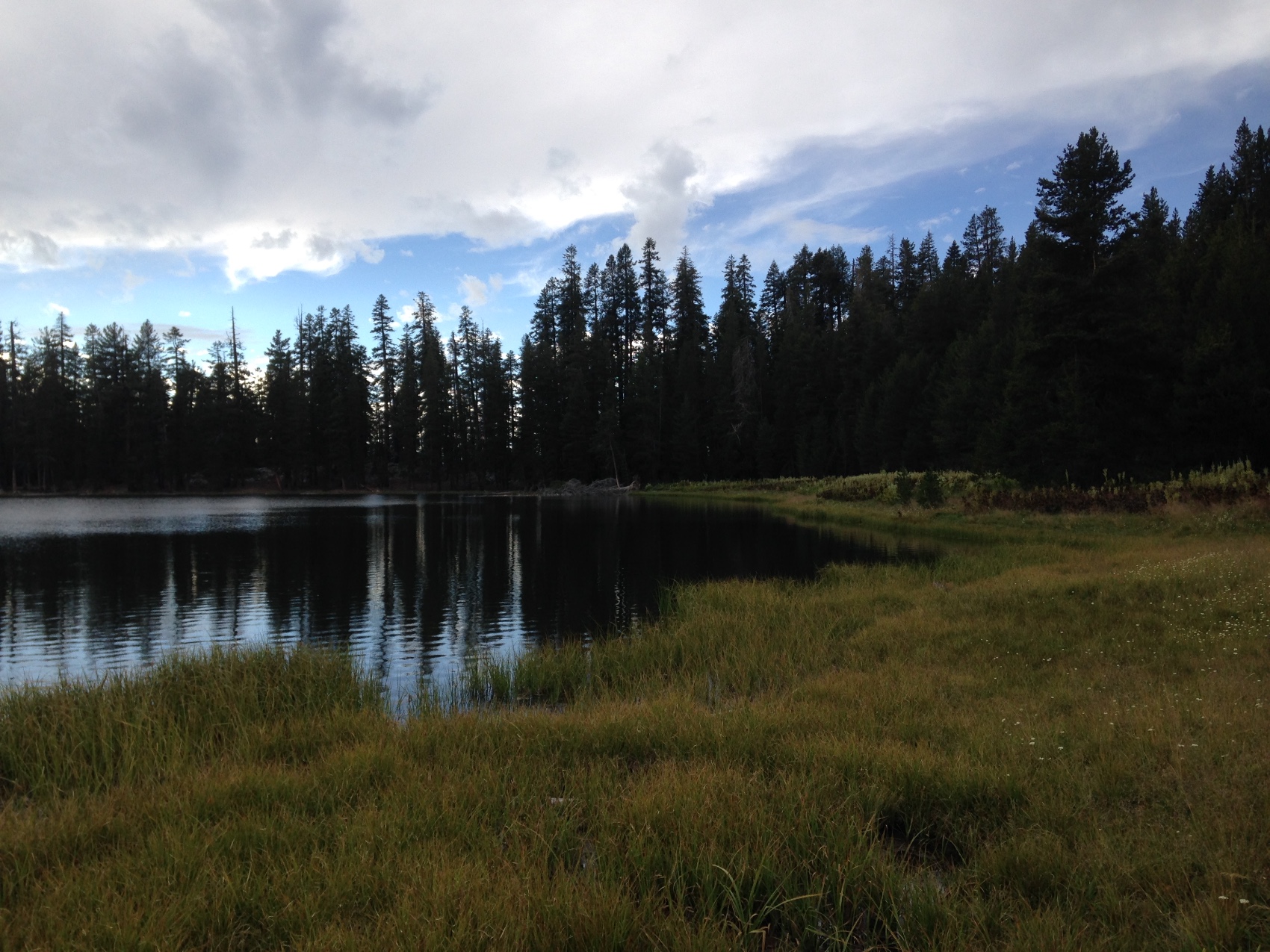
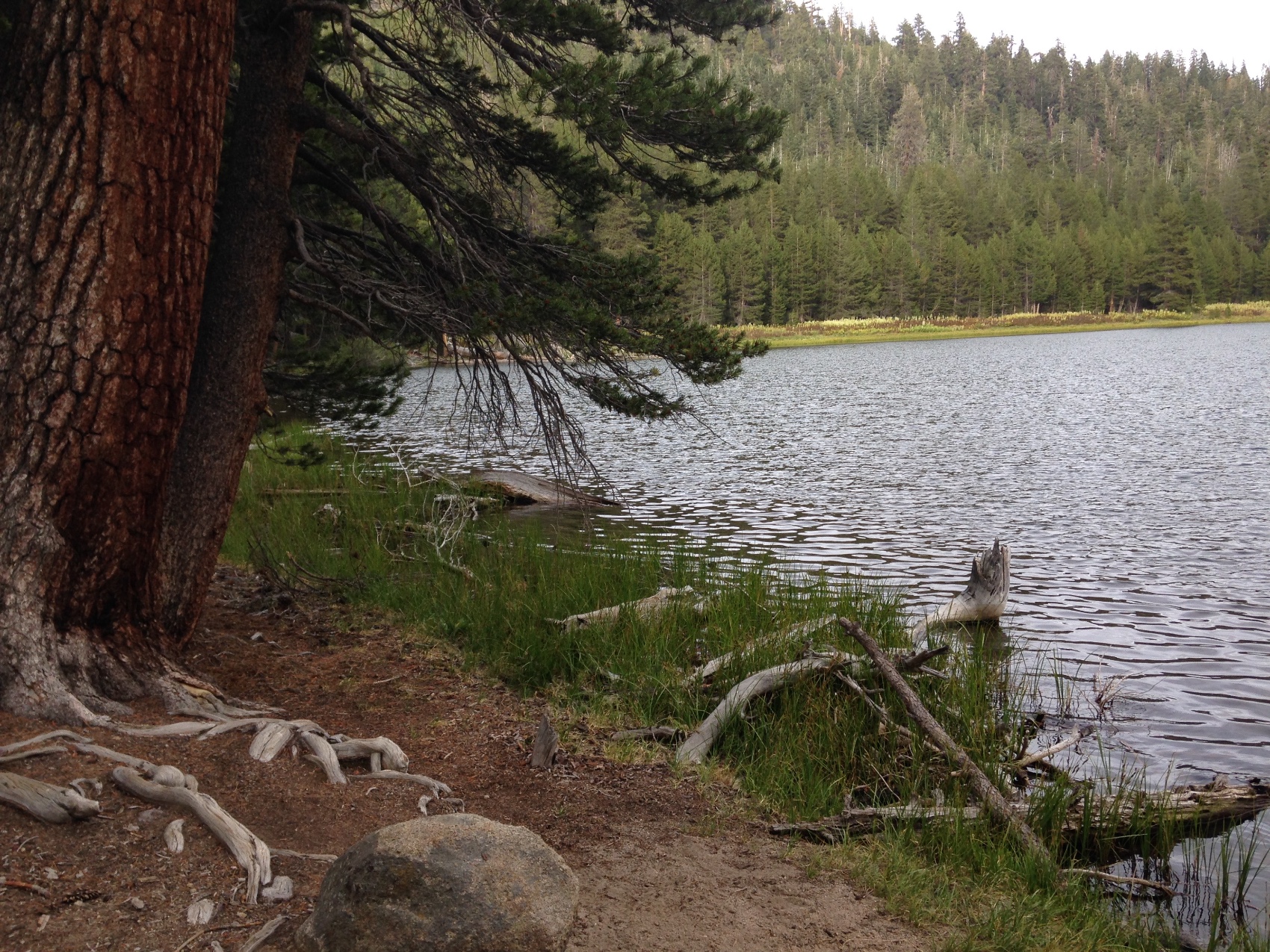
In the afternoon I rode up to find the forest lakes. They are small and still, the grass running right down to the water and the pines standing round them, and at that hour there was nobody there.
I took it in neutral, with no engine braking, which was the worst thing I could have done.
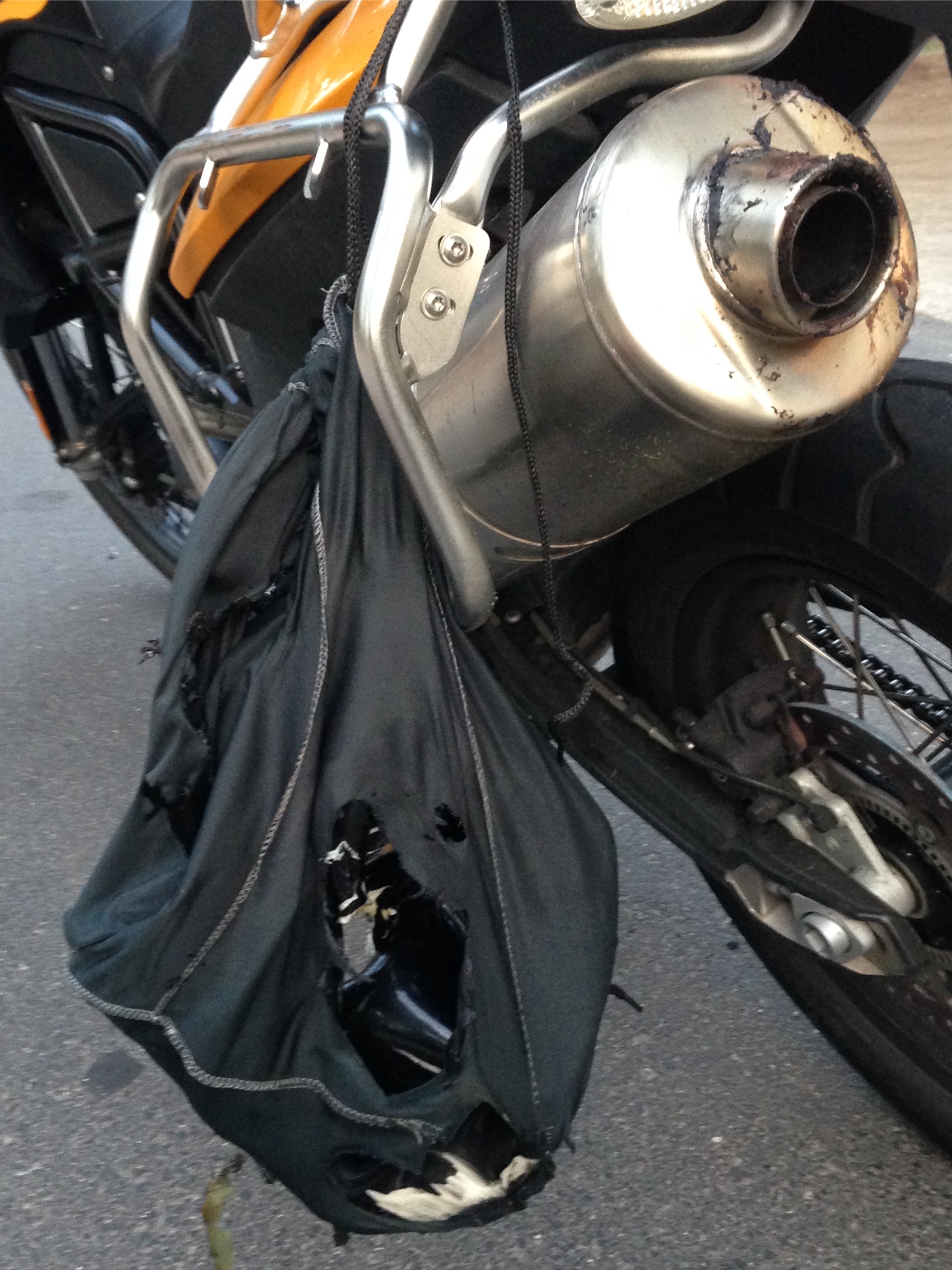
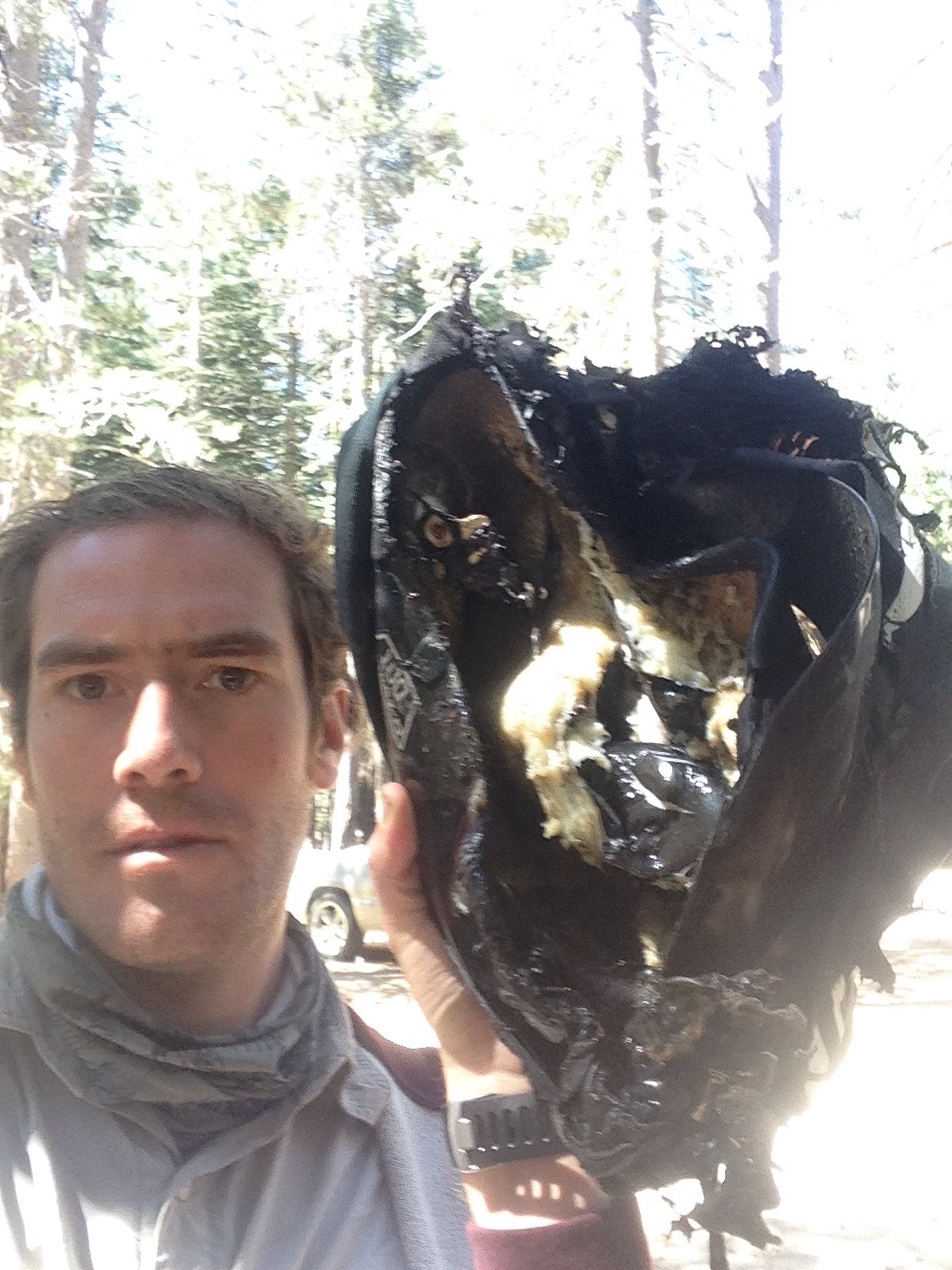
The spare helmet melted onto the exhaust.
The next morning I made my porridge with cinnamon in the pot. I had bought several sachets of it and I liked it a lot. Then I set off early to see more of the park, which turned out to be enormous, far bigger than I had pictured, and perfectly paved throughout: you can get anywhere.
Coming back from that first ride an appalling smell of burning plastic started coming off the bike. I looked in the mirror and saw a great cloud of smoke pouring out of it. It frightened me badly, I stopped at once and jumped off to see what was burning.
It was the spare helmet. I had been carrying it hanging beside the exhaust, in case I met someone I could take as a passenger. The heat off the pipe melted it completely. Absolute madness.
That was another of the things that showed how green I was about motorcycle travel. And the business of hanging things near the exhaust would happen to me many more times before I finally learned that you never put anything near that pipe.
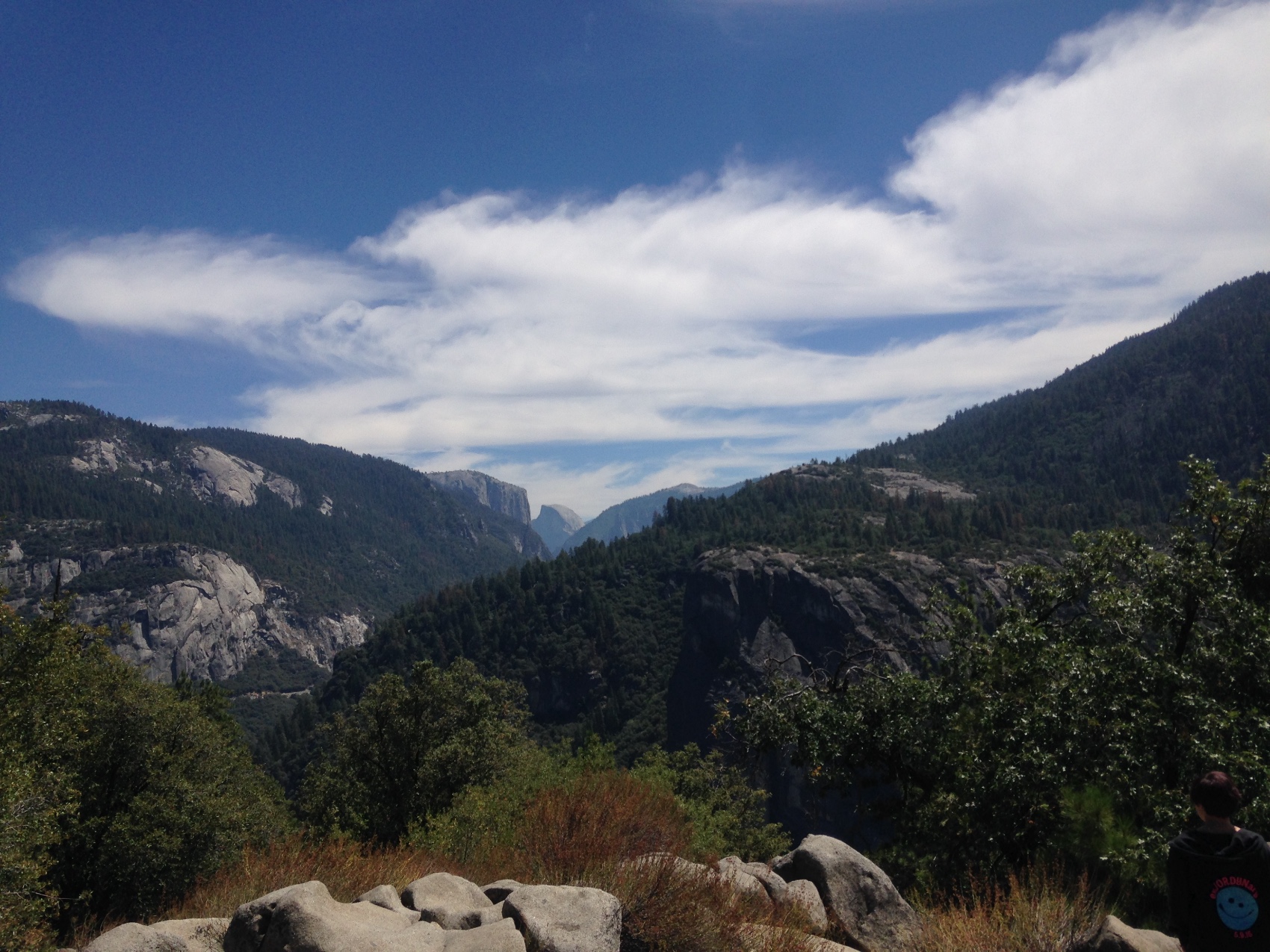
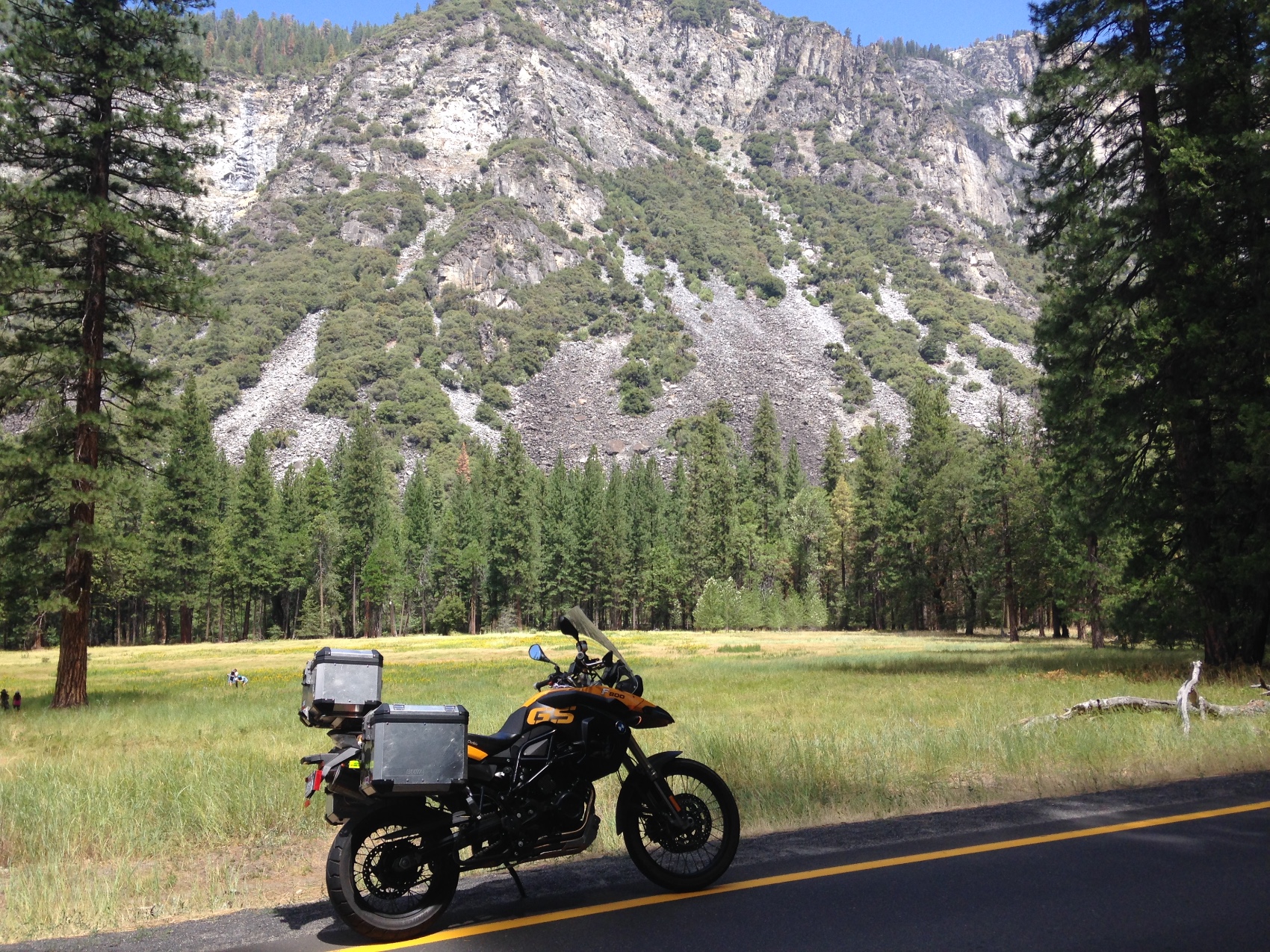
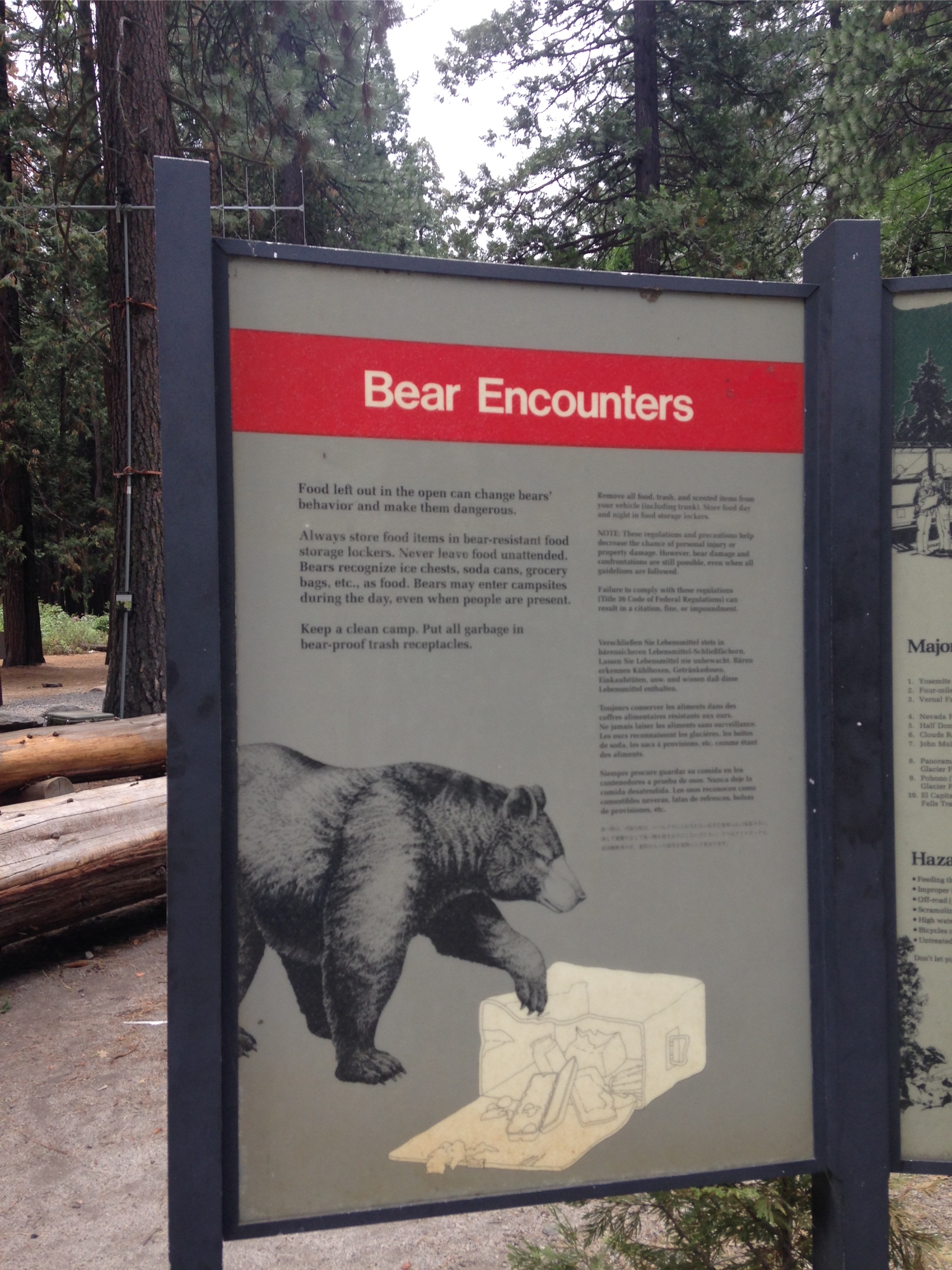
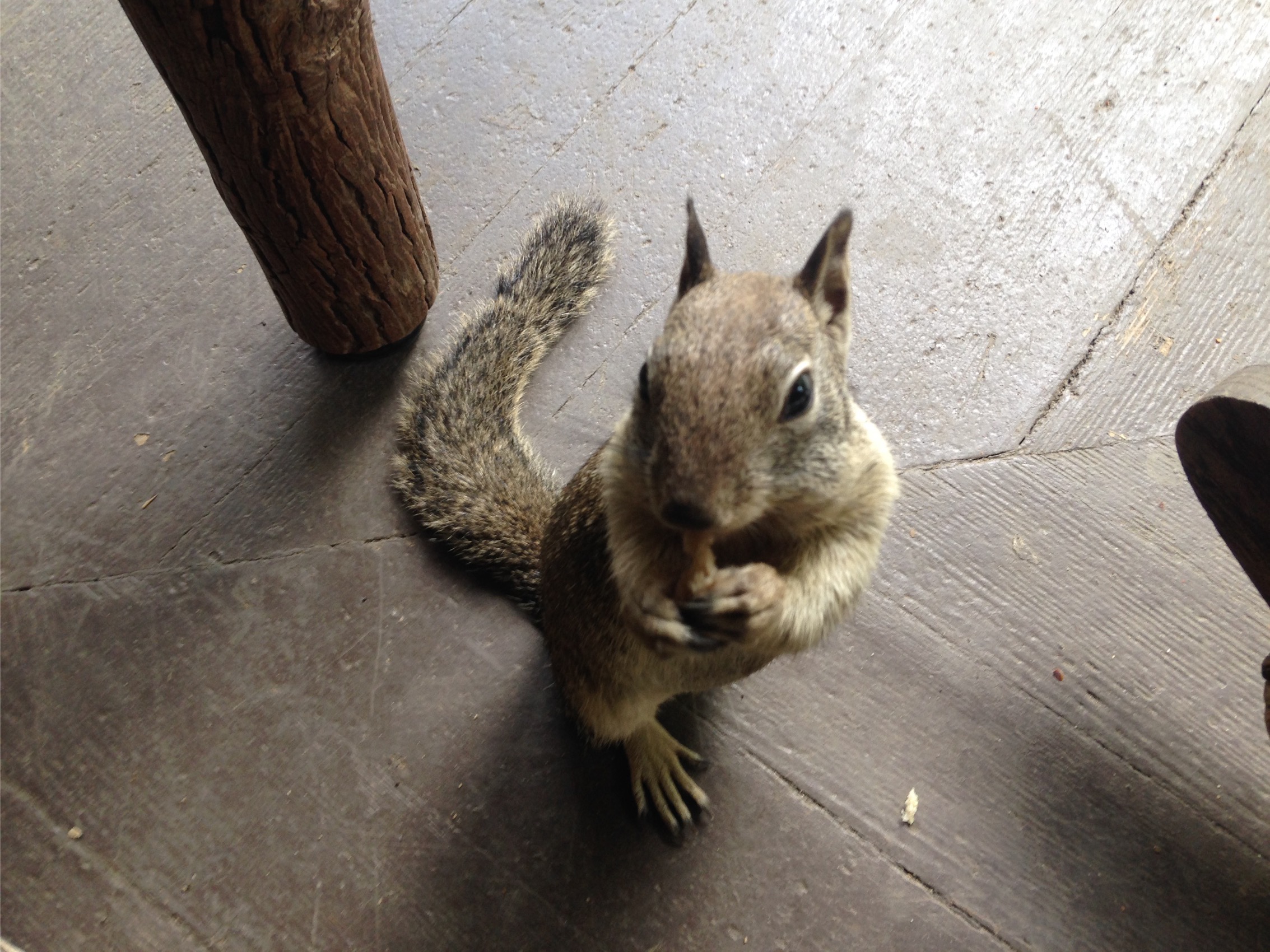
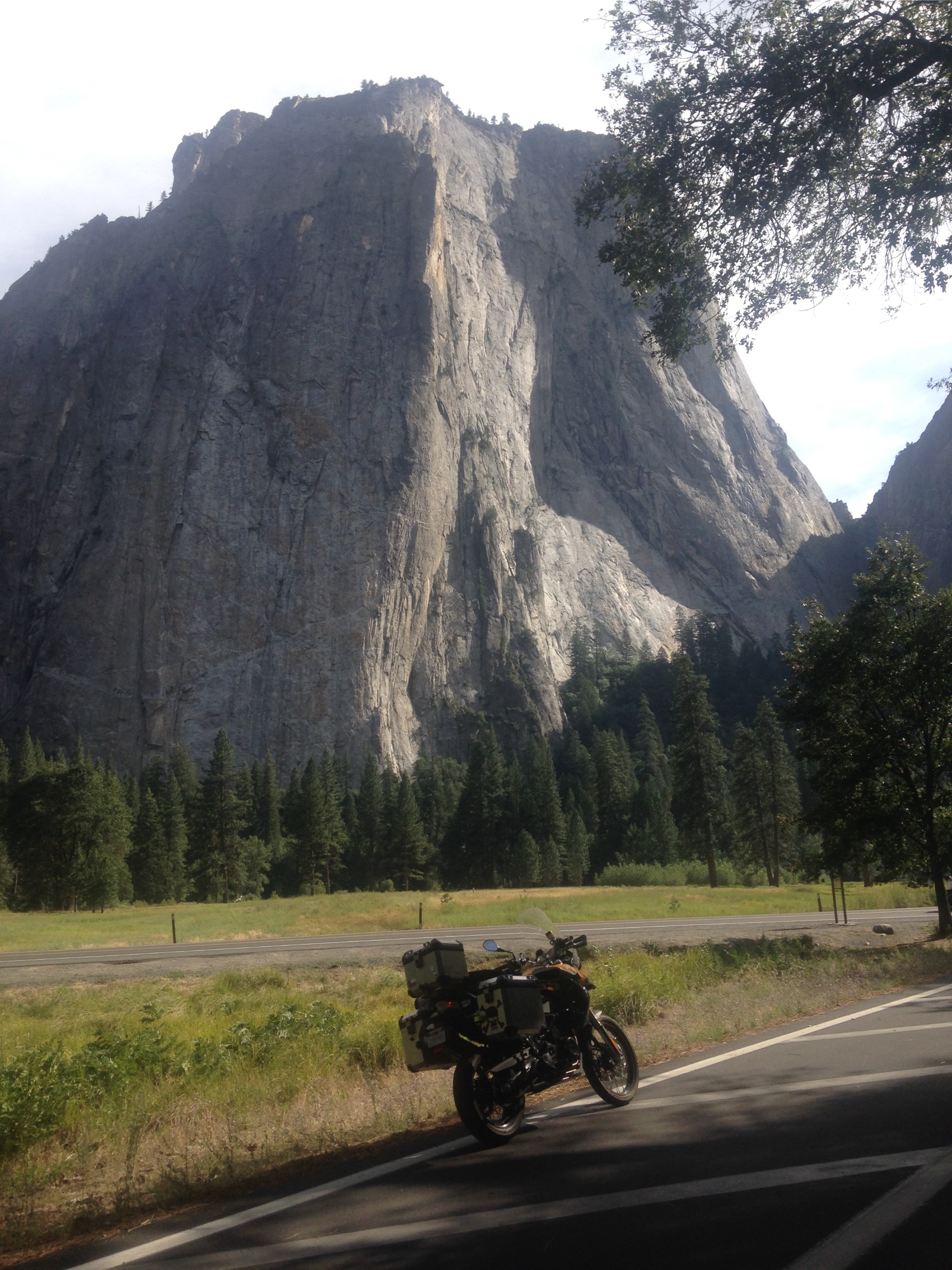
That day I rode down into the valley. Half Dome showing at the far end between the walls, El Capitan standing up whole beside the road, and the motorcycle parked on the verge with a yellow meadow and the granite wall behind it. In the park village a squirrel walked right up to me across the timber floor and sat up on its back legs, entirely unafraid. And everywhere, the bear signs: lock your food away, leave nothing out, keep a clean camp.
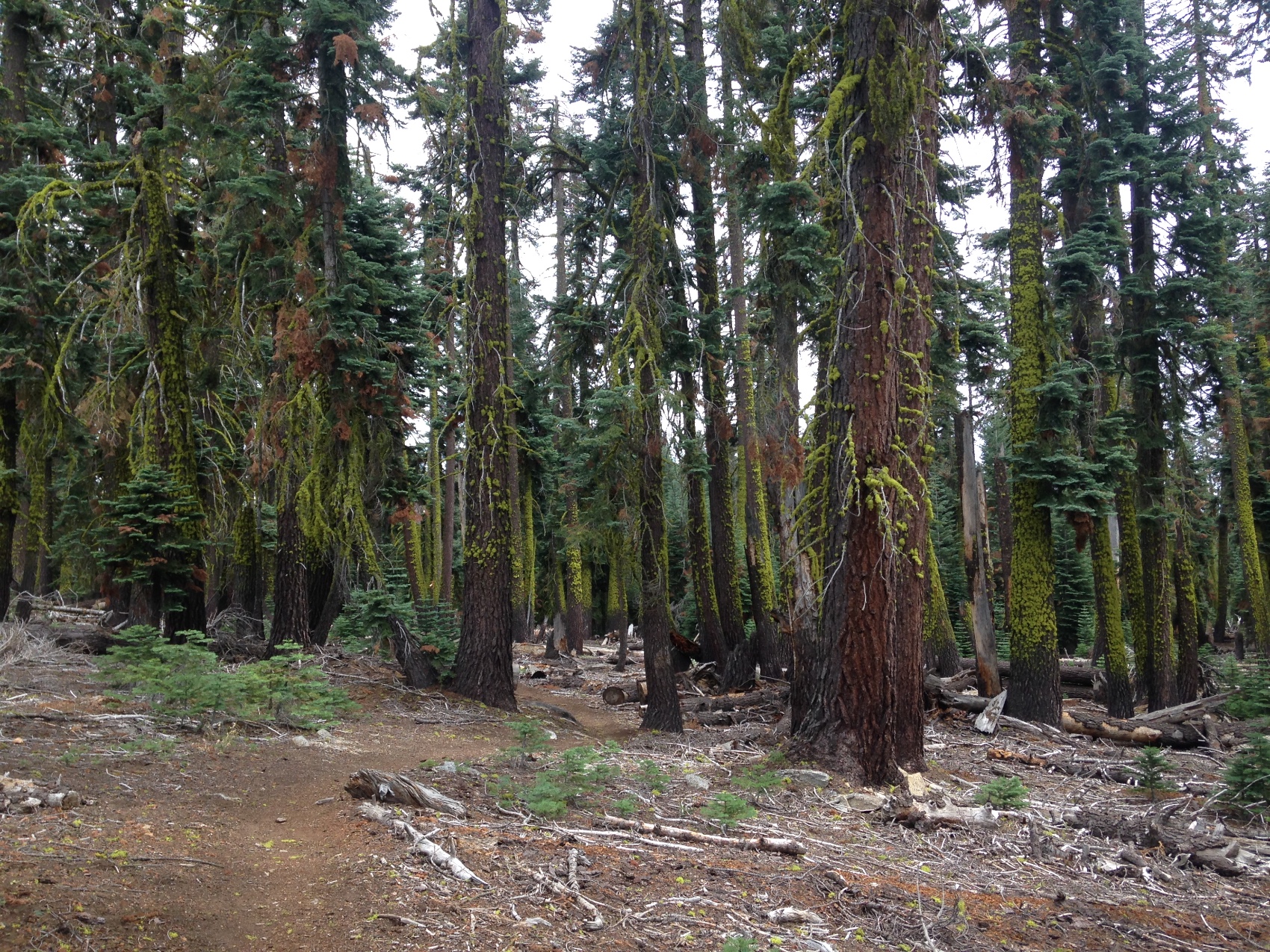
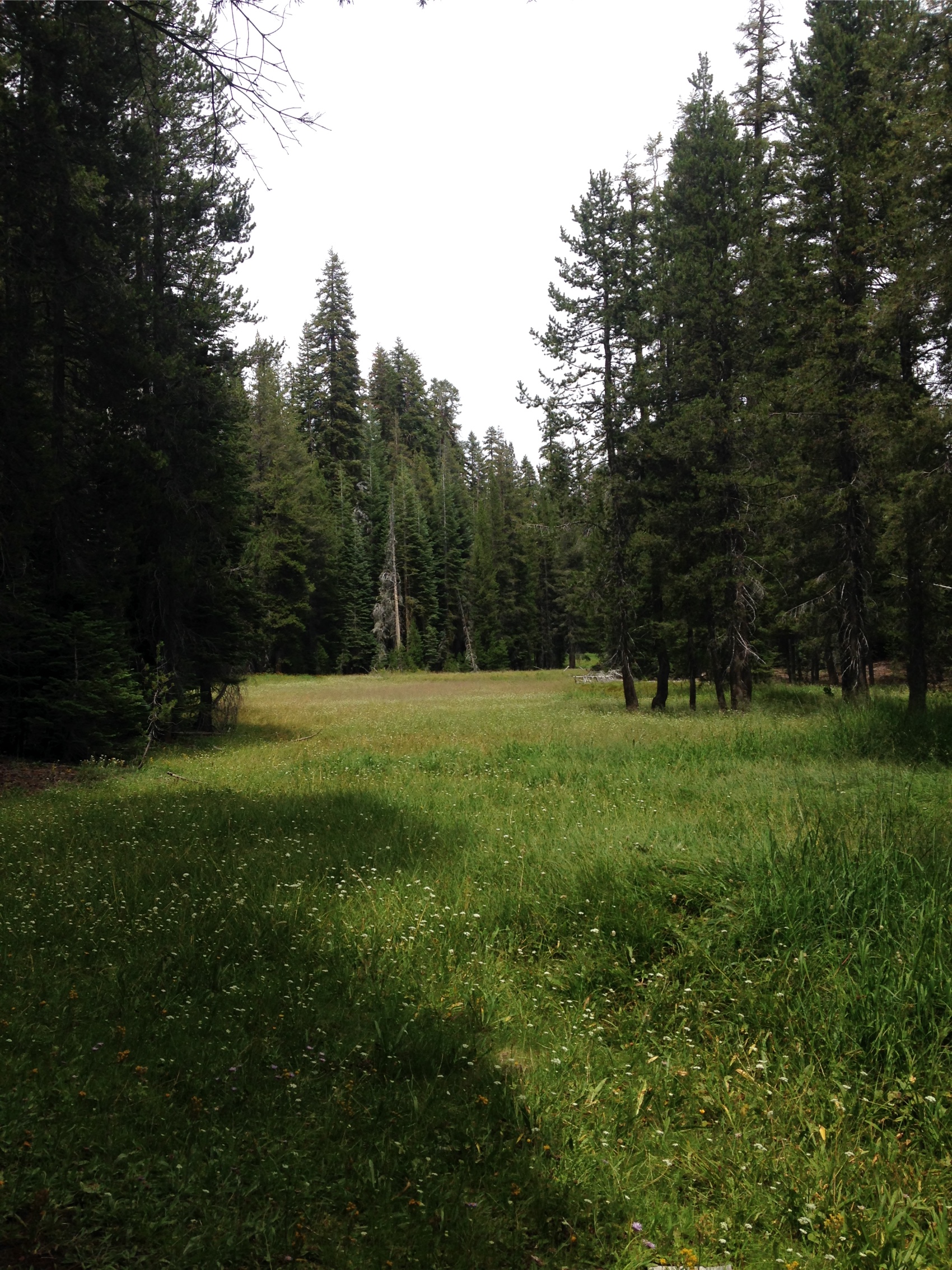
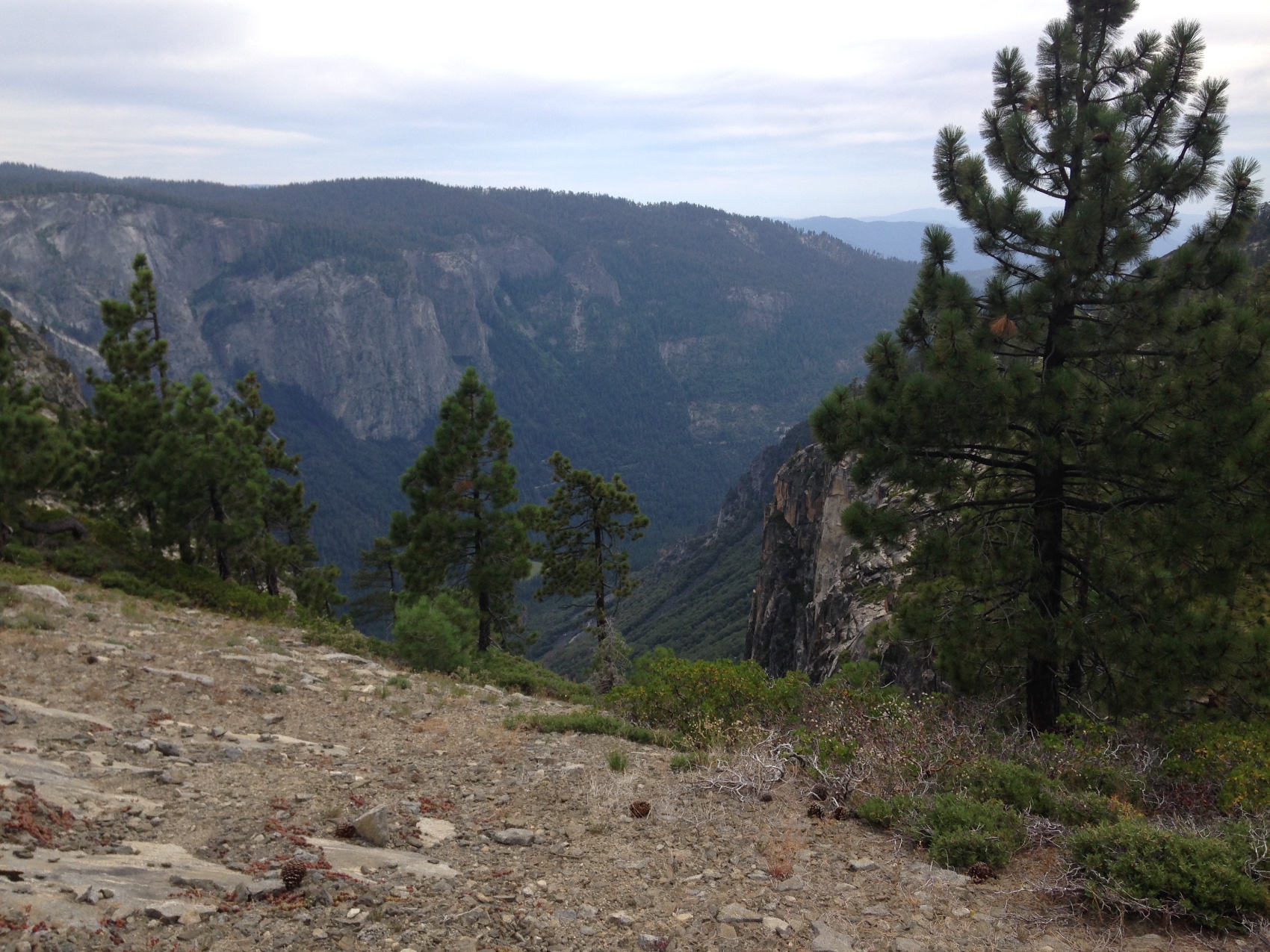
The following day I walked the forest trails. Tall pines with green lichen hanging off the branches and the ground covered in fallen trunks, a long meadow set in among the trees, and the canyon opening below where the forest breaks off all at once.
I looked in the mirror and saw a great cloud of smoke pouring out of the bike.
The largest living things on the planet.
From Yosemite I dropped south, to the Sequoia park.
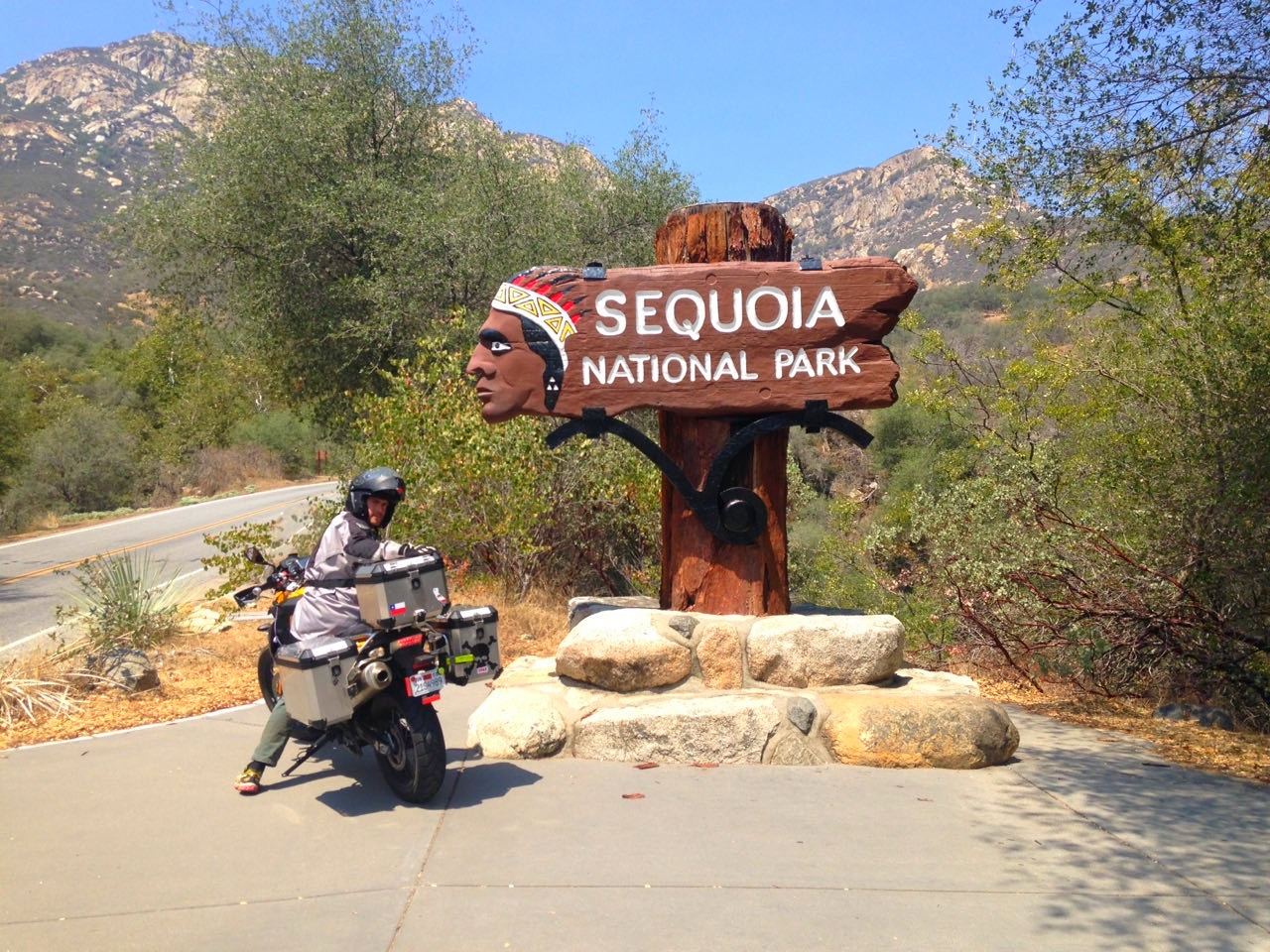
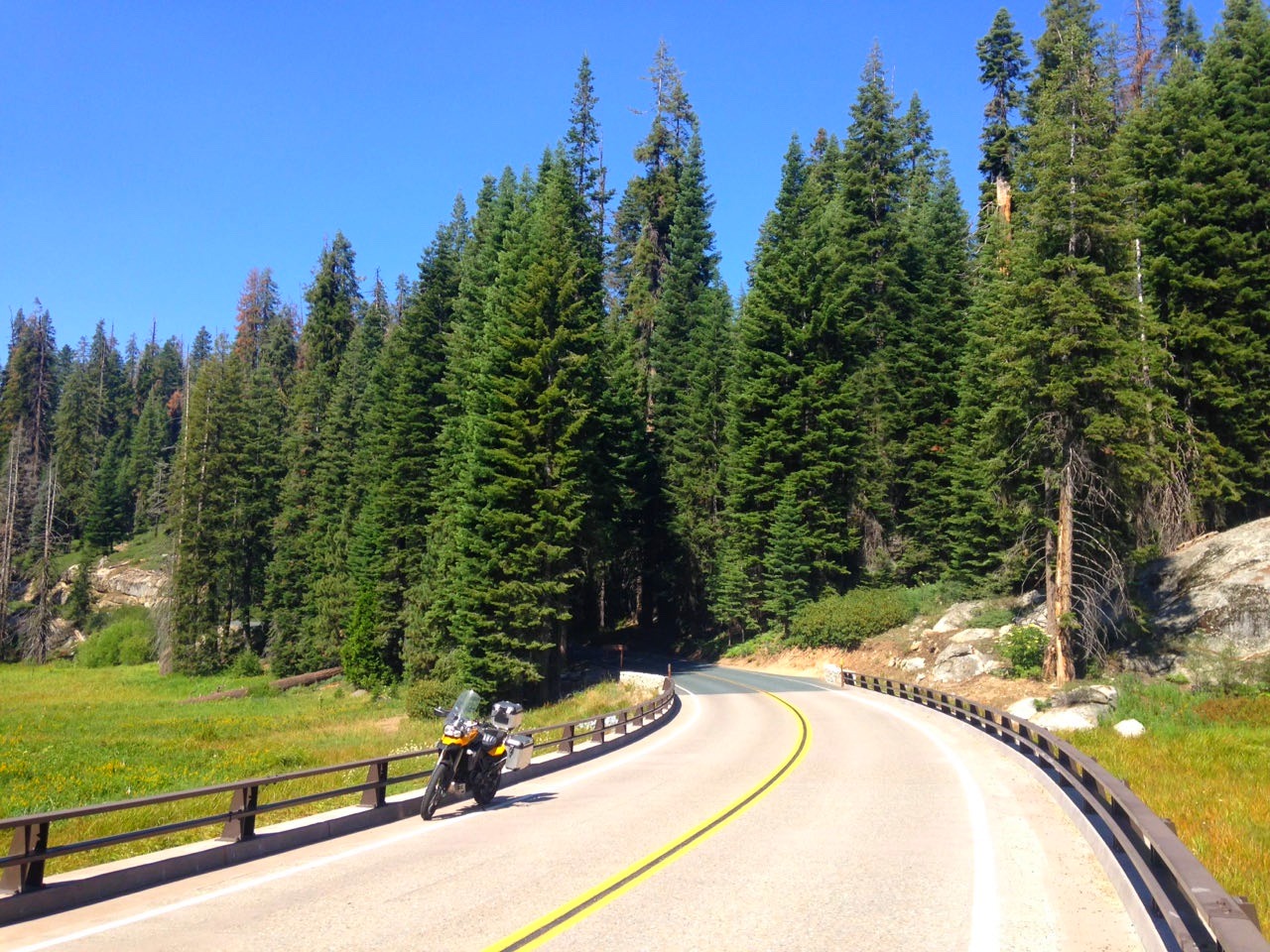
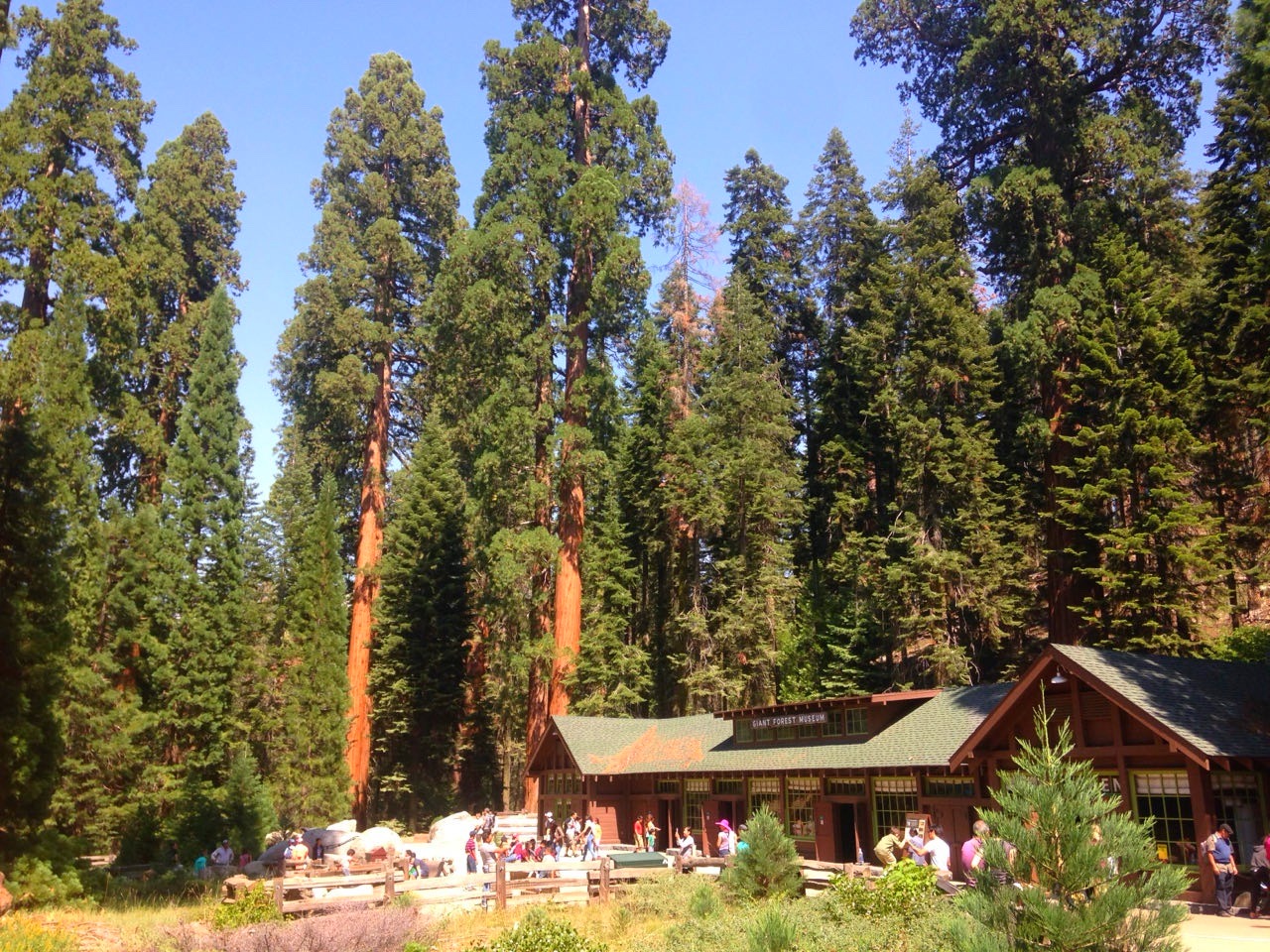
The entrance sign is dark timber with the letters carved into it, planted on rocks at the edge of the road with the dry hillside behind. I rode past it and kept climbing. The road is one wide bend after another through the pines, the yellow line splitting the asphalt down the middle and forest going up on both sides.
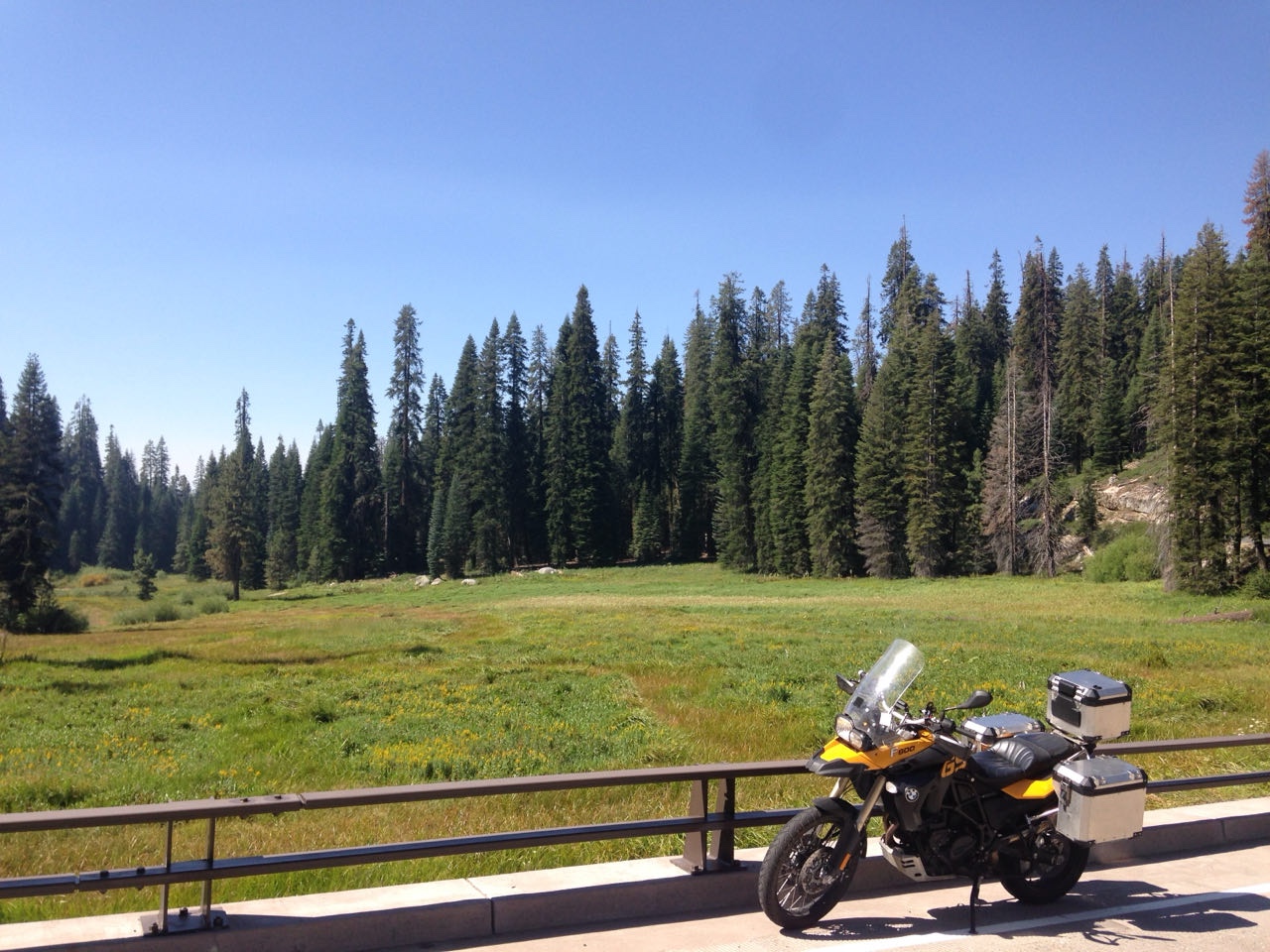
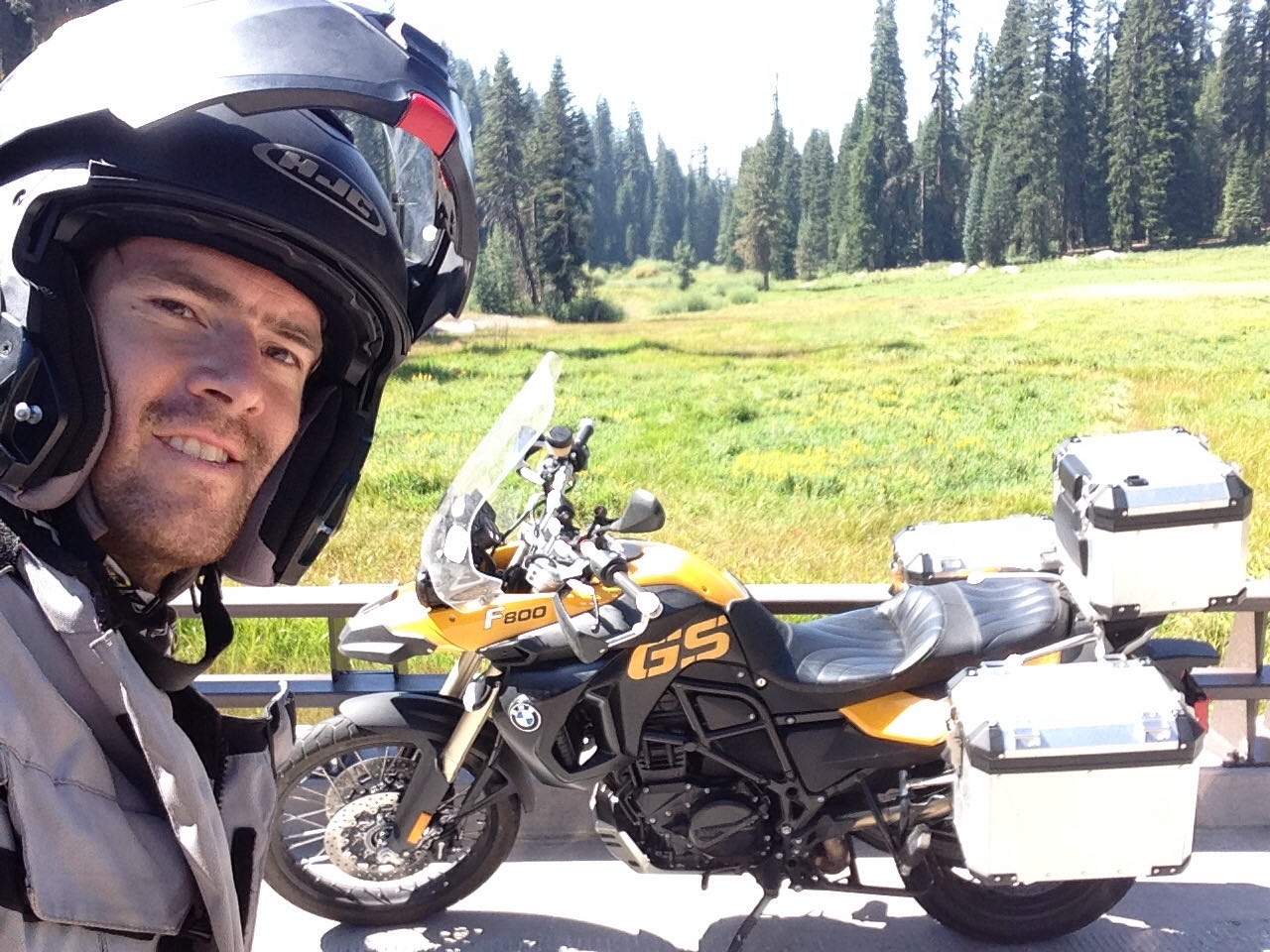
Higher up the road opens without warning into flat green meadows ringed with conifers, the grass long and damp. I leaned the motorcycle against the guardrail at the viewpoint and stood there a while.
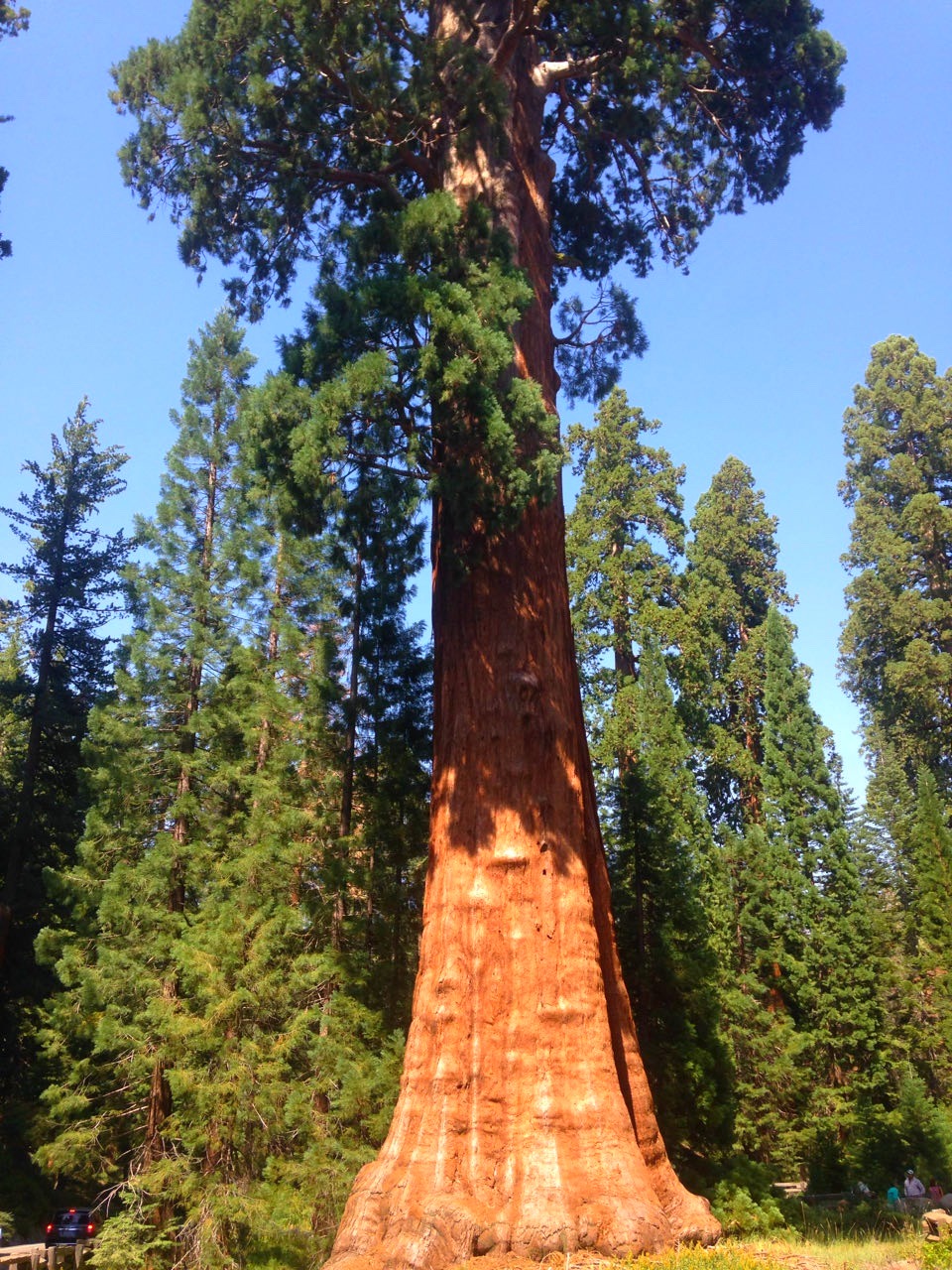
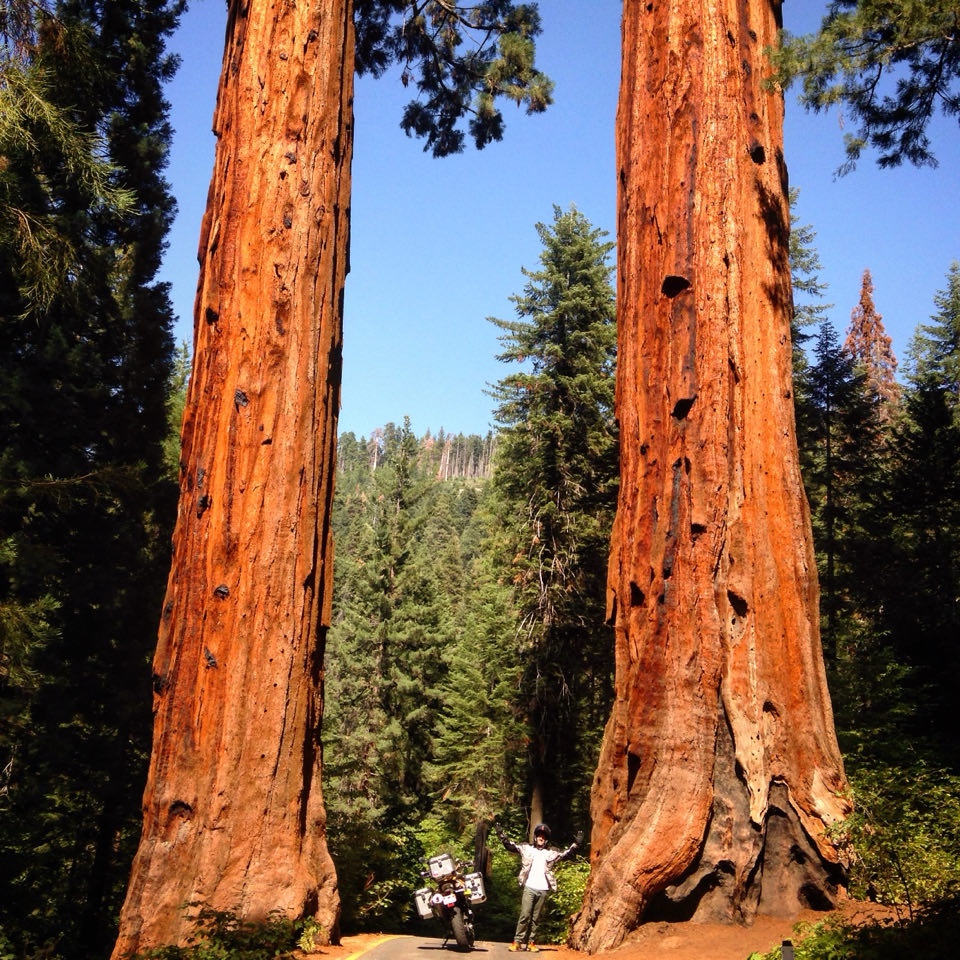
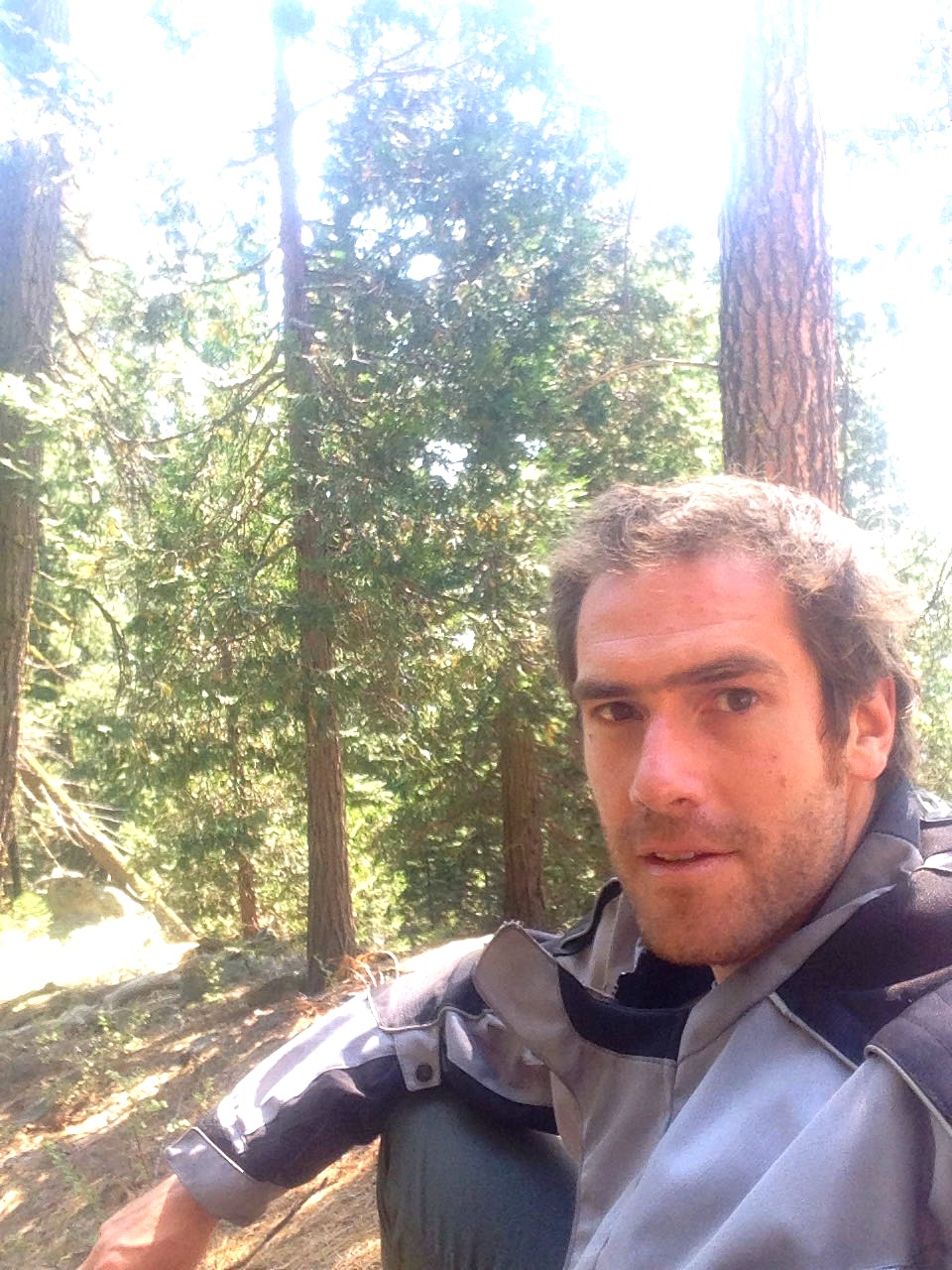
And then there are the trees. You see them coming from a distance, and it does you no good: until you are standing underneath one you do not understand the scale. The trunk is a reddish orange, the bark fluted from top to bottom, and it goes up and up without narrowing. They are the largest living things on the planet by volume, and some of them are older than most countries. There is a photograph of me standing between two of them with my arms out, and in the photograph I am a dot.
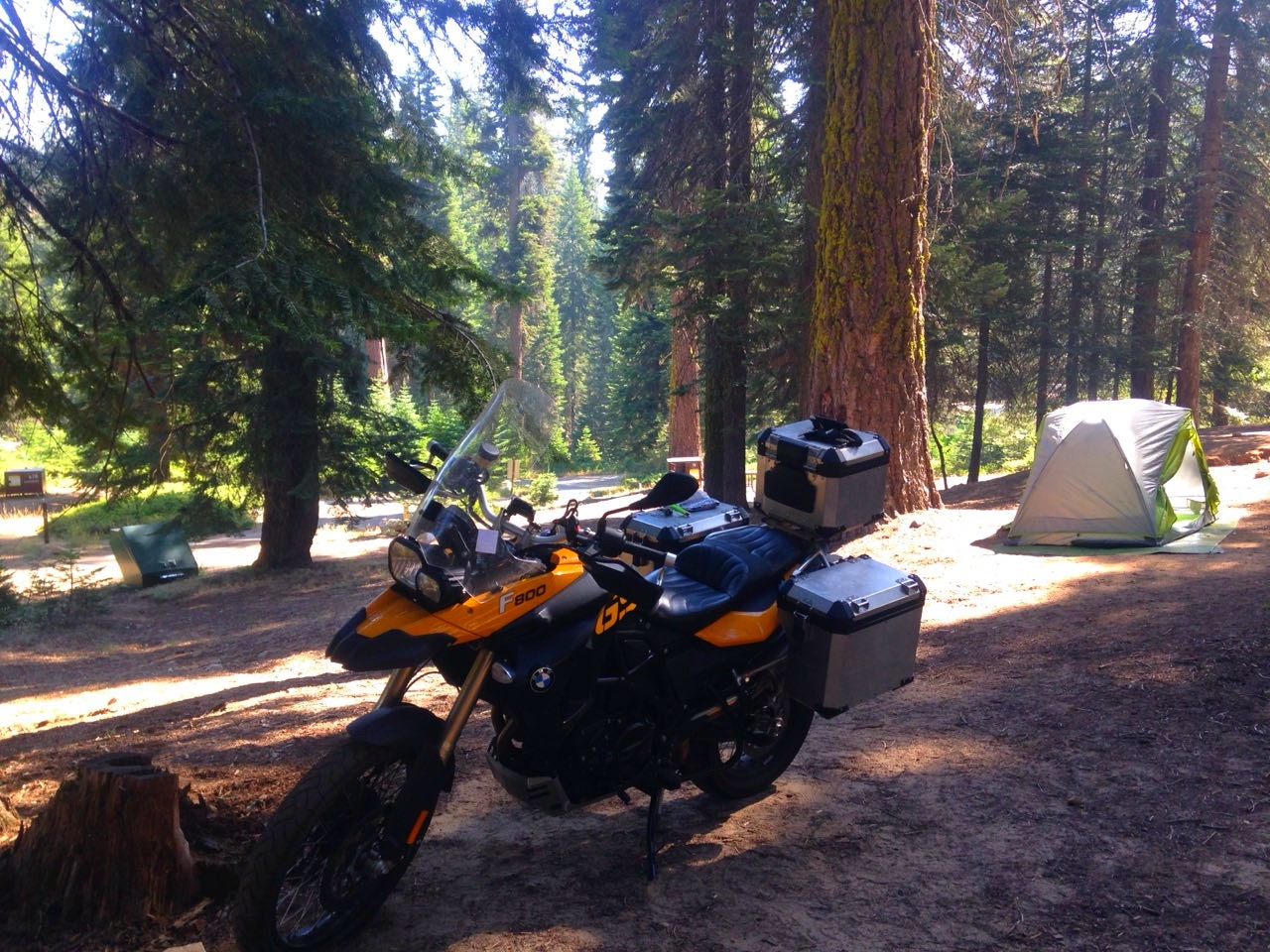
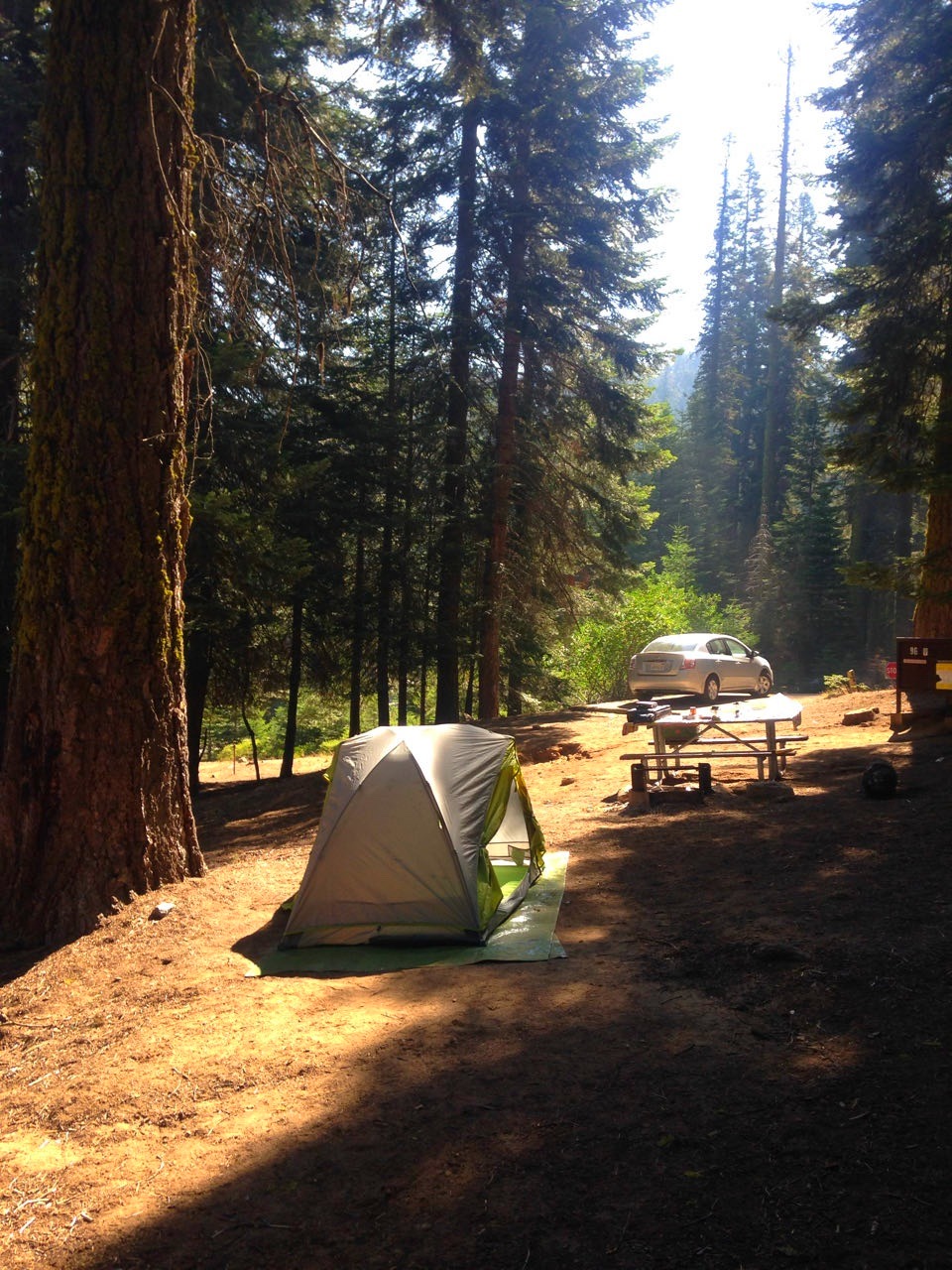
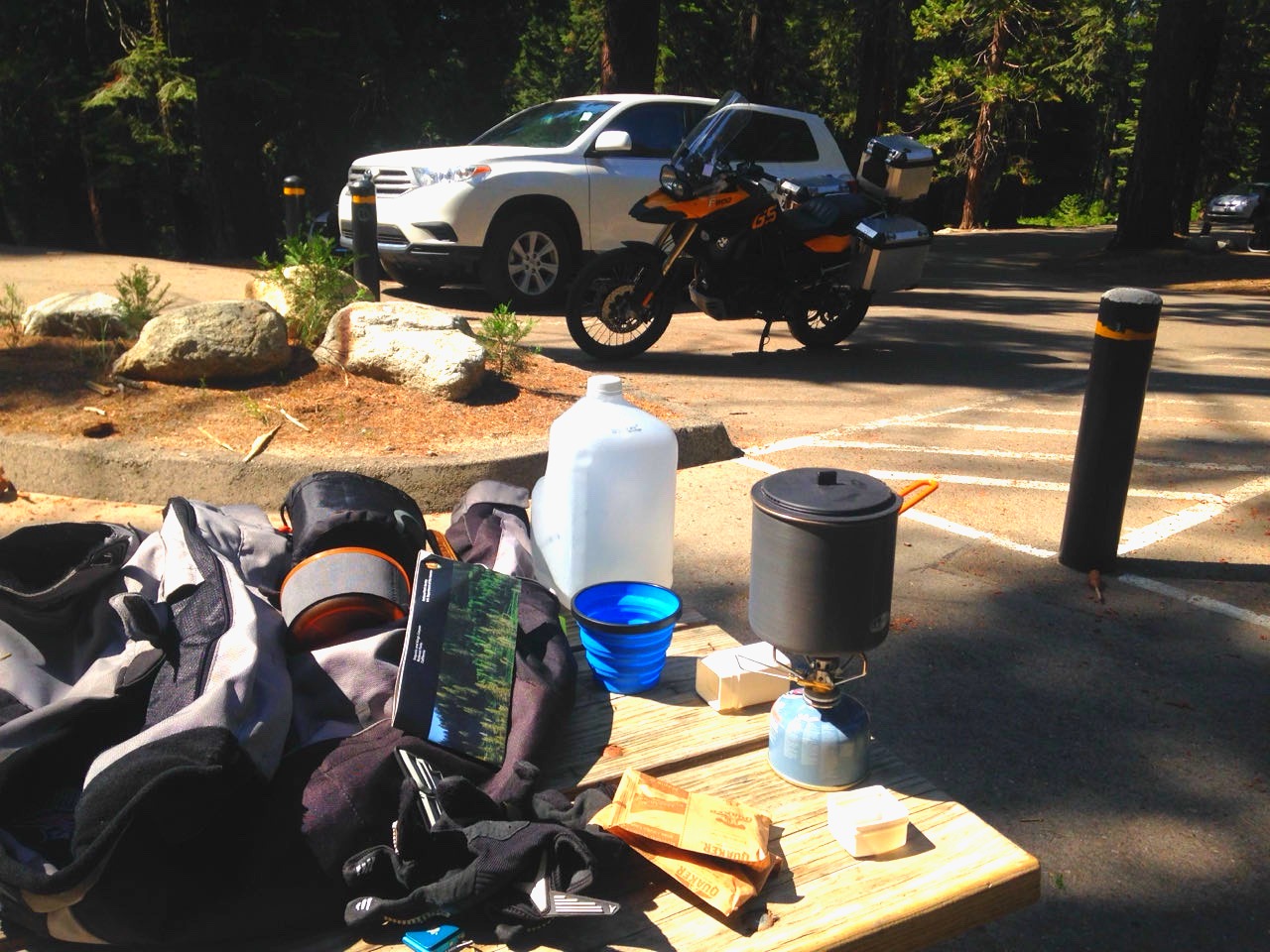
I camped inside the park, tent and motorcycle side by side among the trunks. I remember the smell that morning: wet bark, earth and cold smoke. I laid everything out on the camp table, set up the stove and made breakfast with the whole forest overhead.
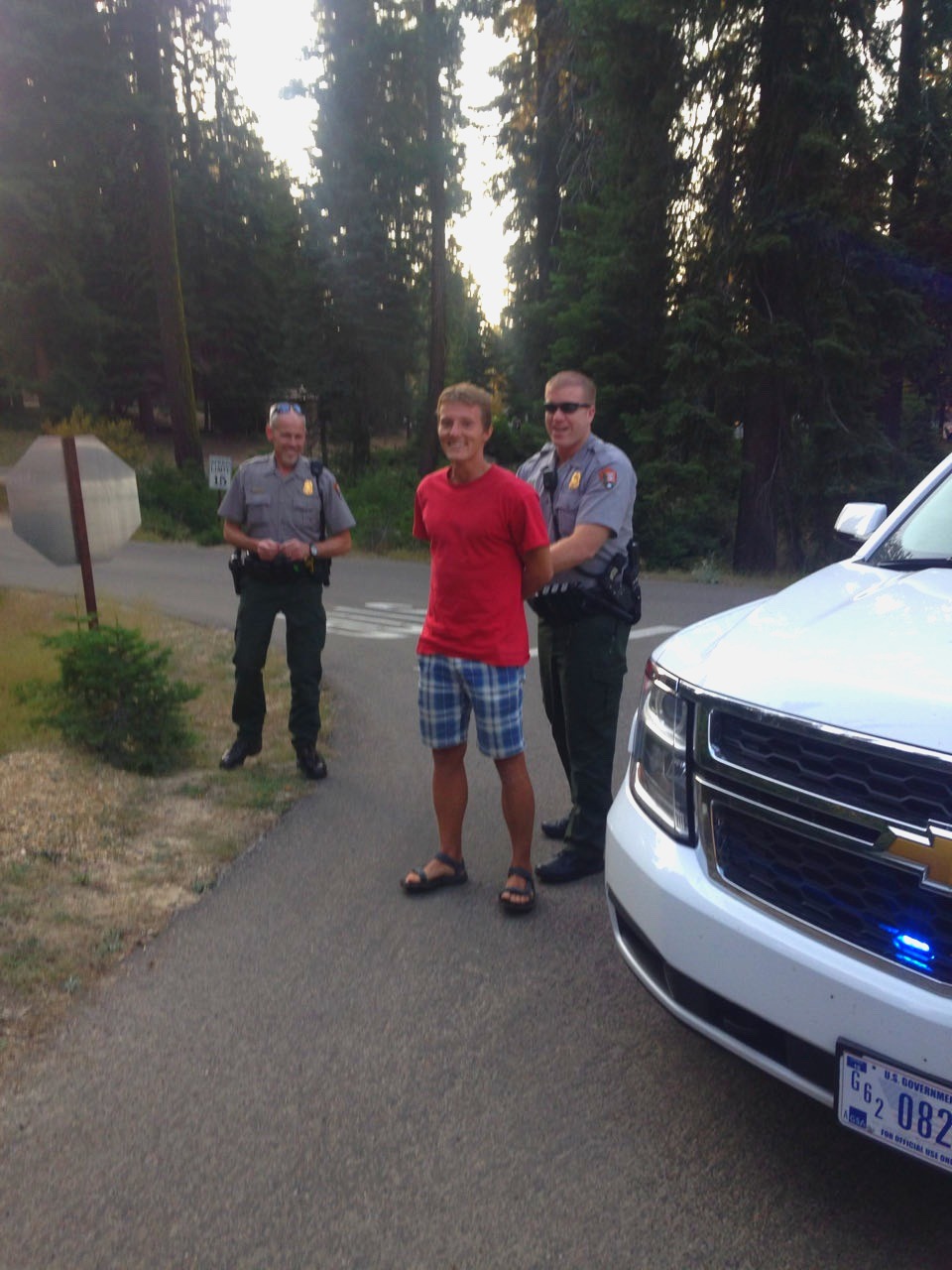
And that is where the rangers stopped me. I ended up beside the white truck with the blue and red lights running, talking to two of them.
There is a photograph of me standing between two of them with my arms out. In it I am a dot.
Every town on that road came out of 1849.
North into the Sierra foothills, up the road they call Route 49, through the towns that came out of the gold rush.
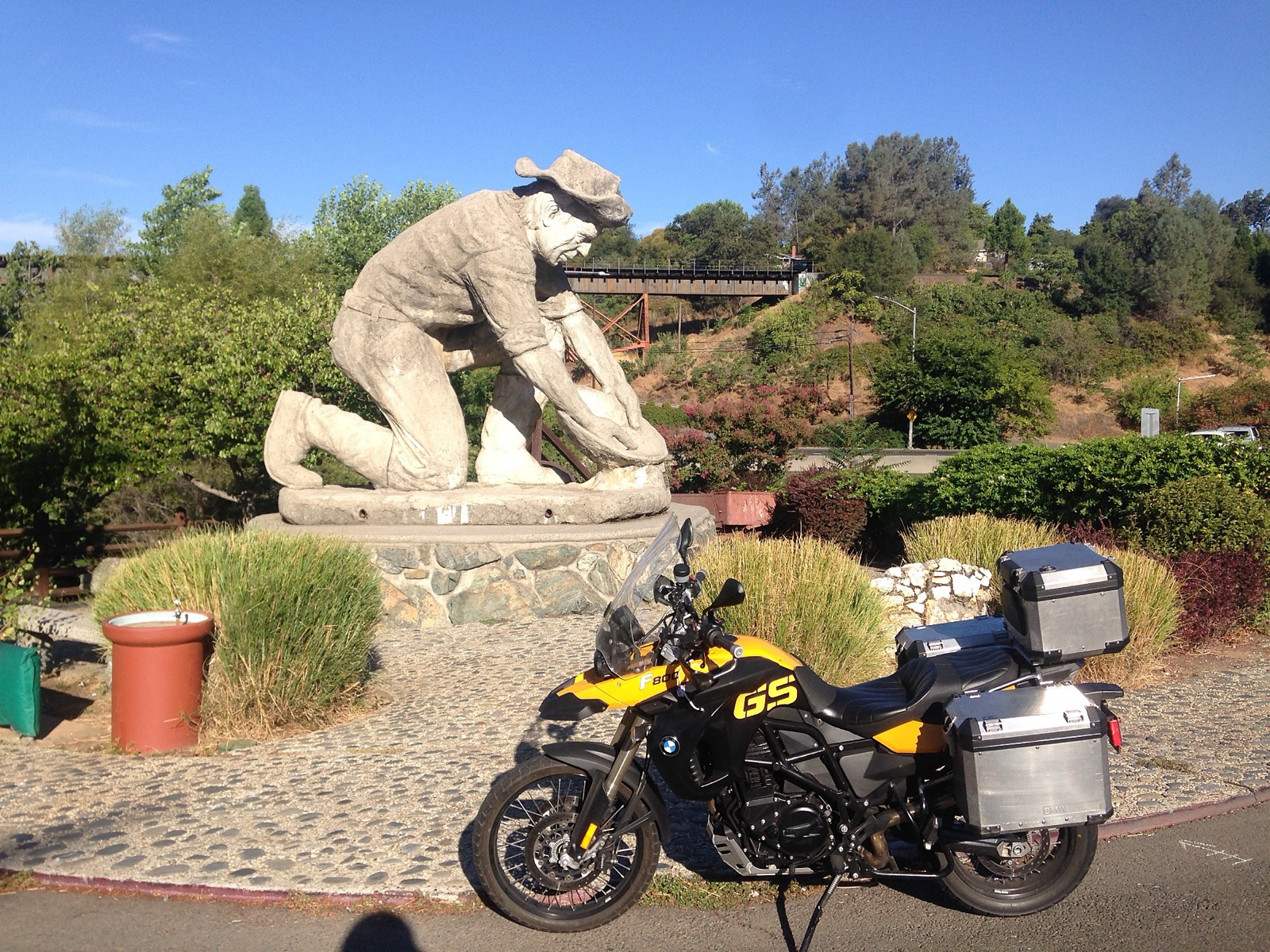
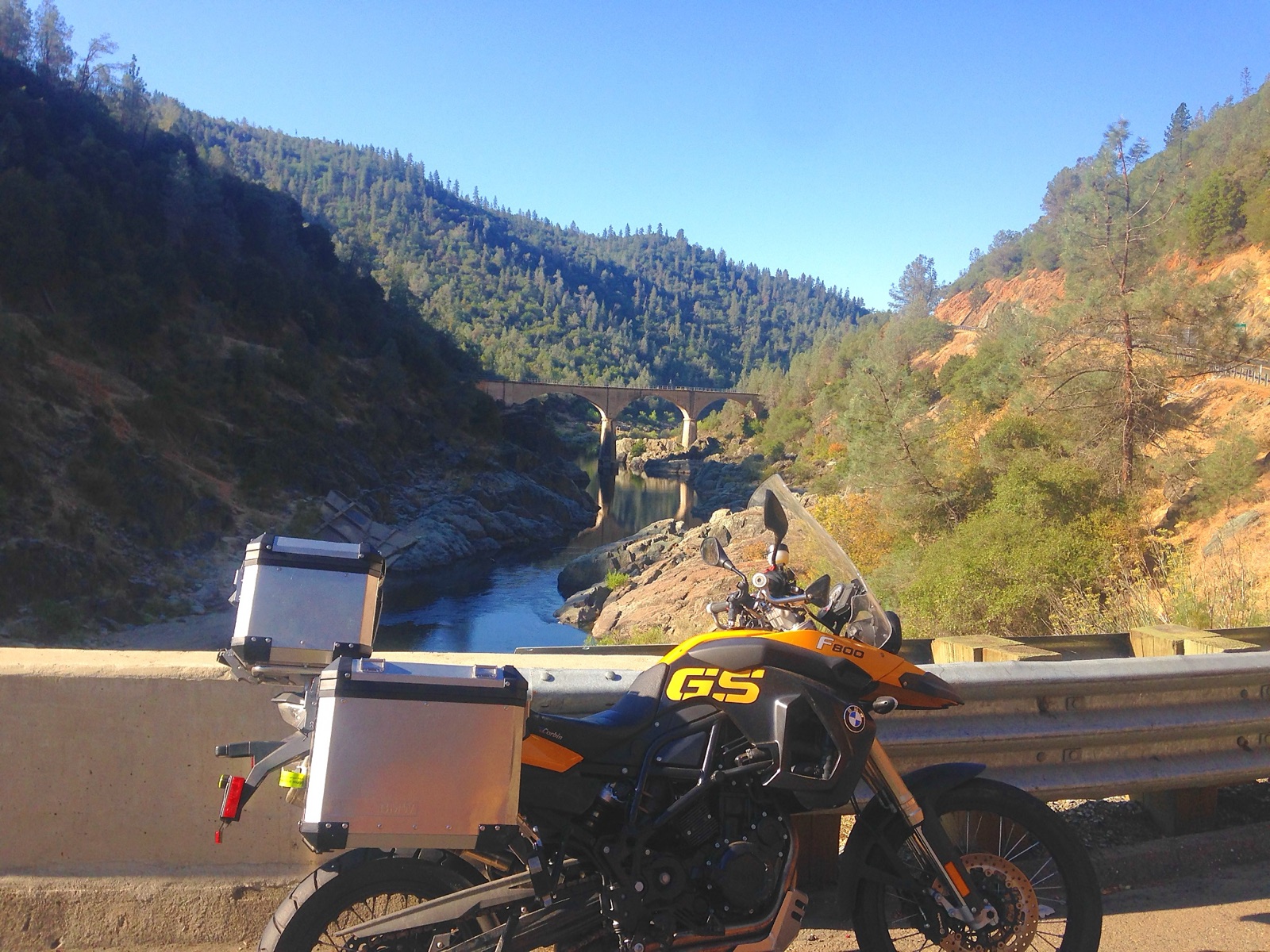
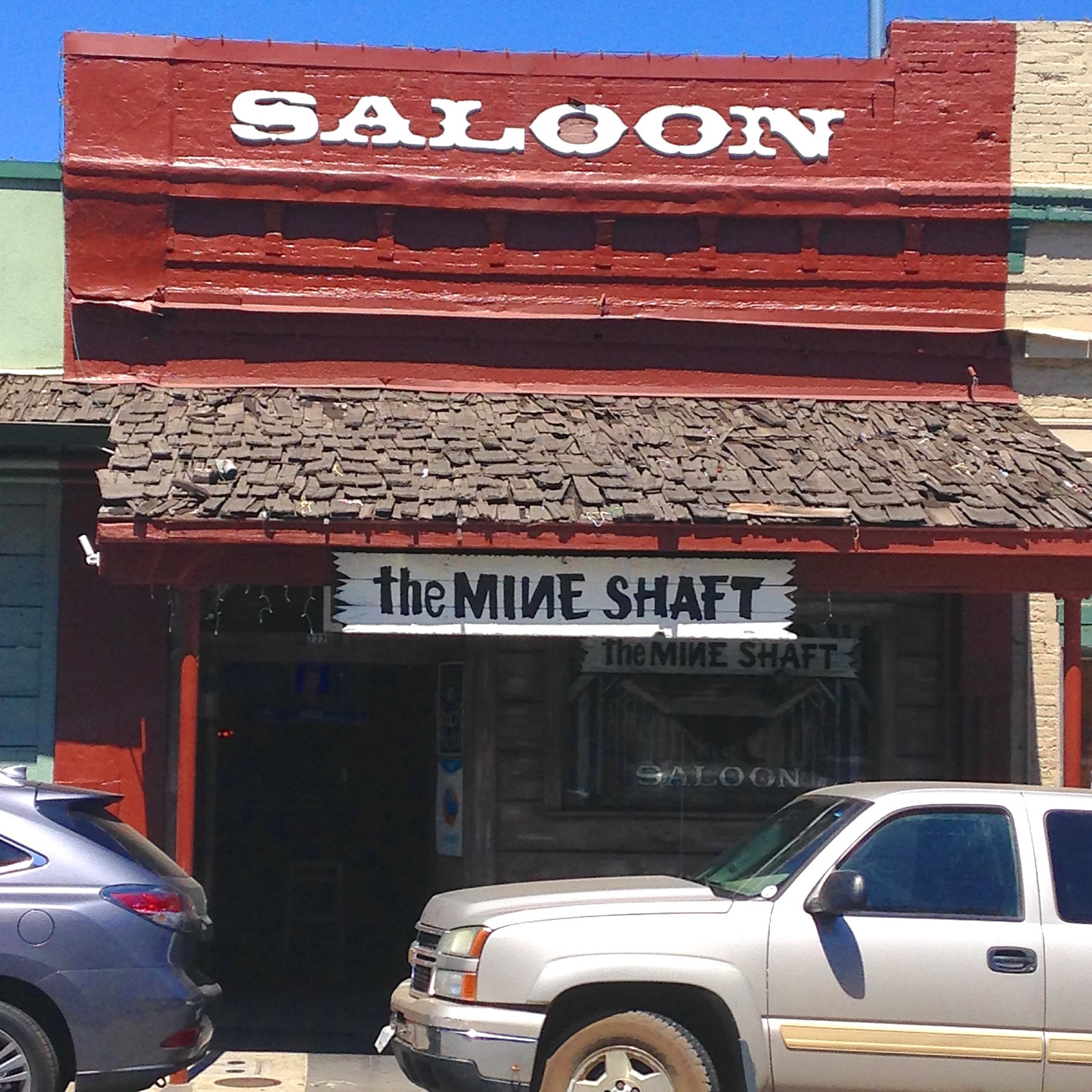
Mariposa and its mining museum. Auburn, with a stone miner kneeling at the roadside. The American River far below in its canyon, with a bridge across it. Nevada City, Downieville, Graeagle, Sierraville. Curve after curve, pine and dust.
Bodie, Mammoth, Death Valley, Las Vegas.
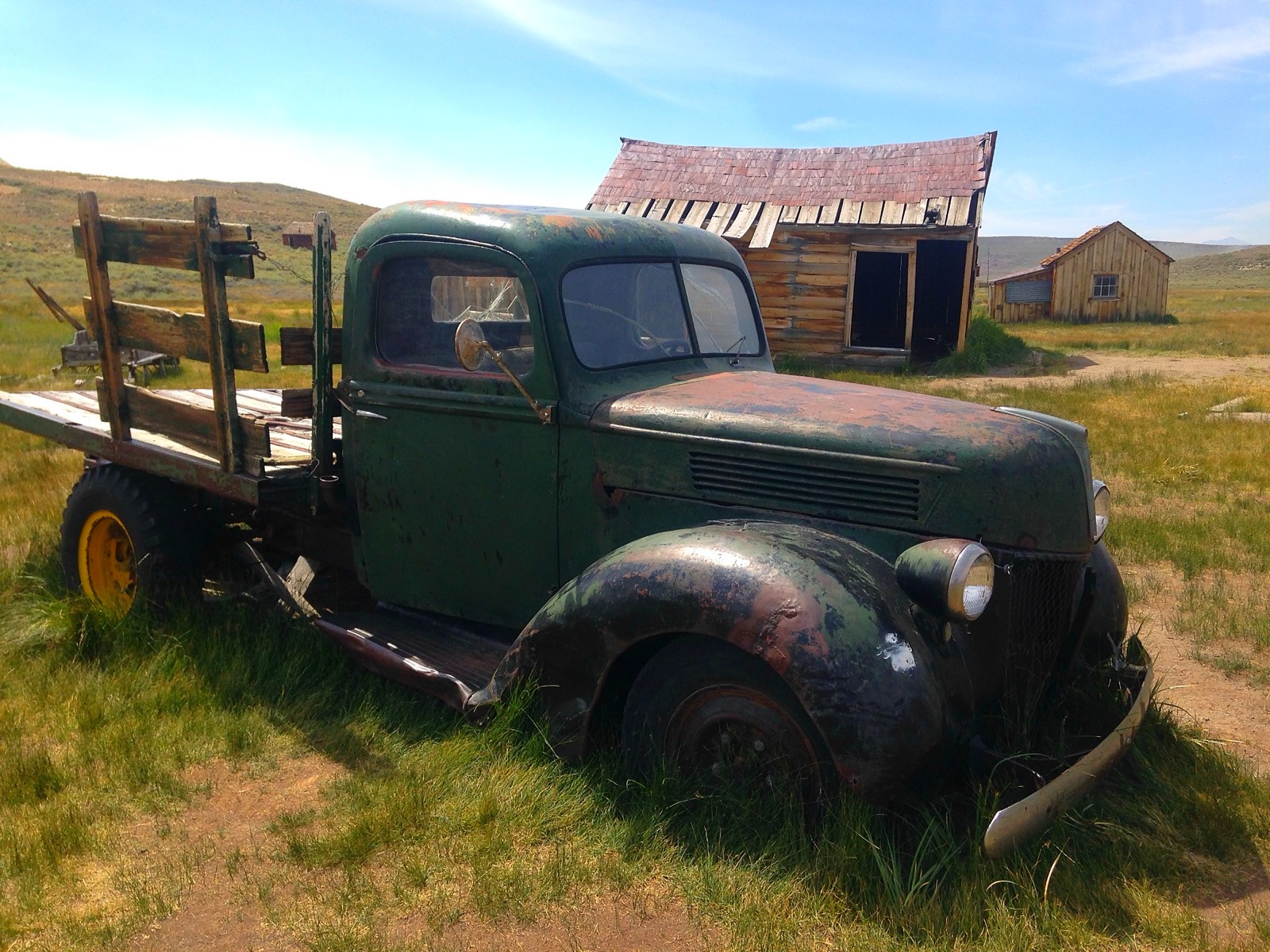
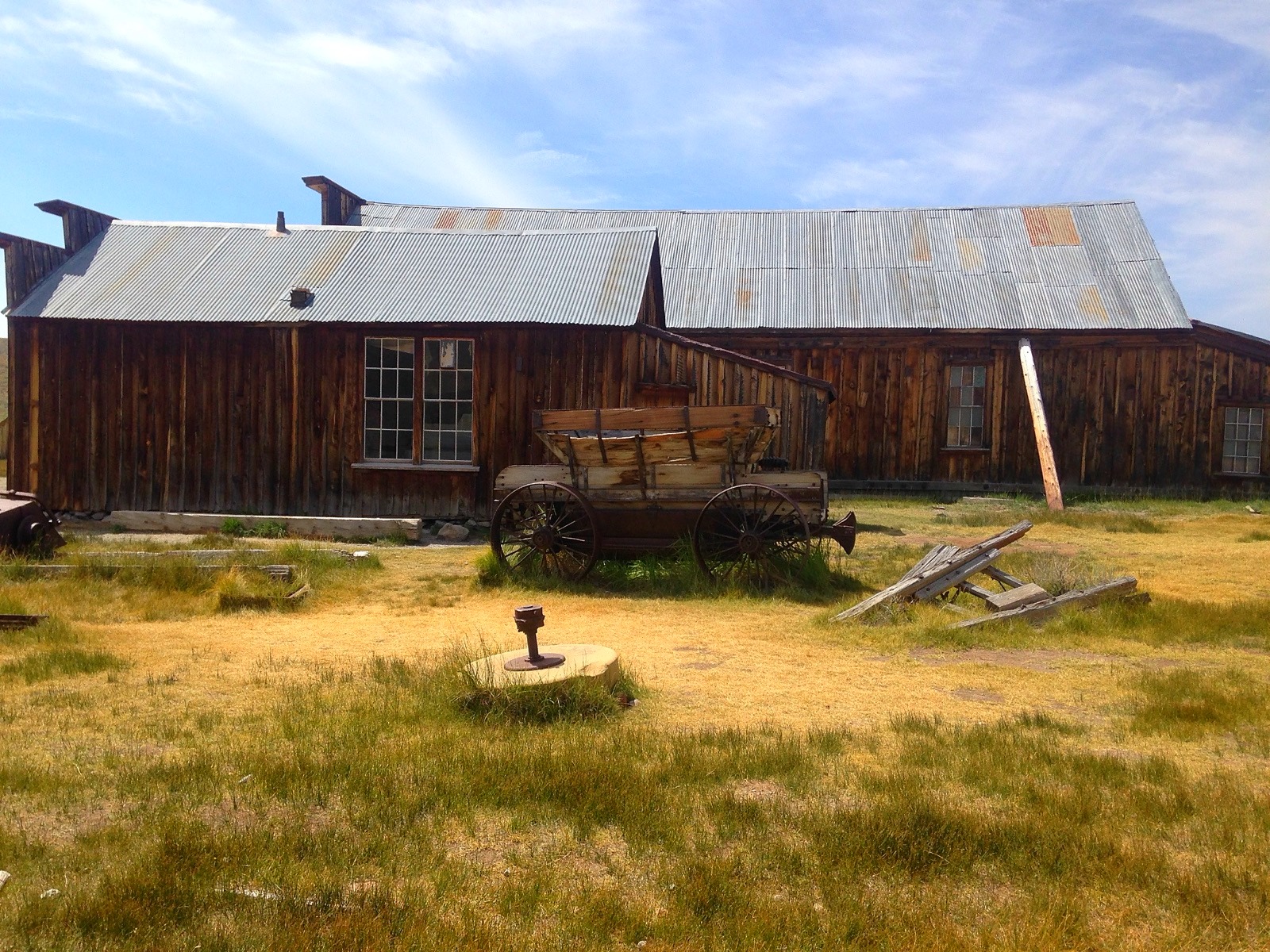
Over the mountains into Nevada: Carson City, then Virginia City, a silver town that never quite stopped pretending it is 1875. Back to Lake Tahoe, south to Bridgeport, and up a dirt road to Bodie, a gold town abandoned where it stood and kept exactly as it was found. A 1930s truck rusting in the grass. Nobody has lived there since the war.
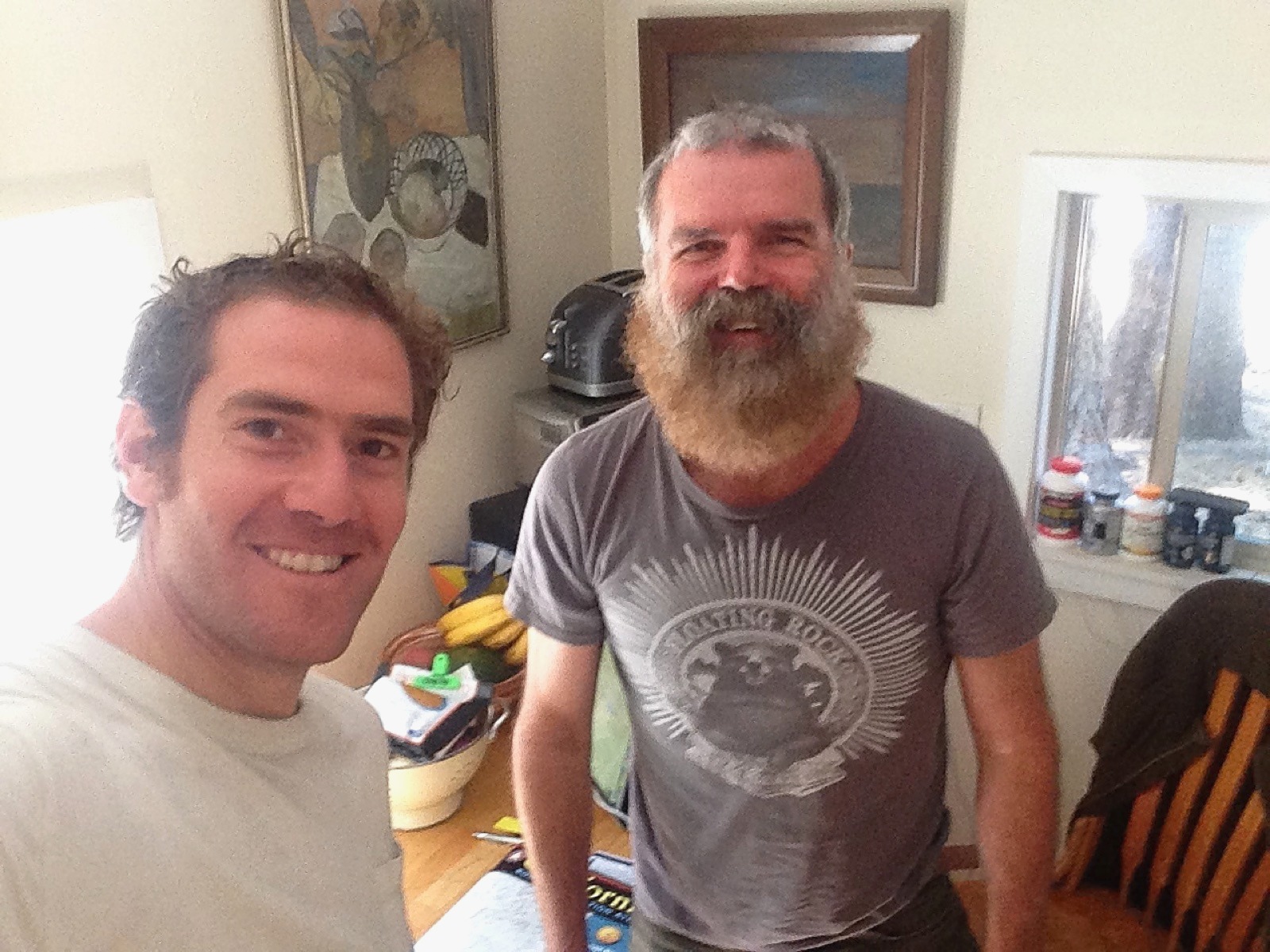
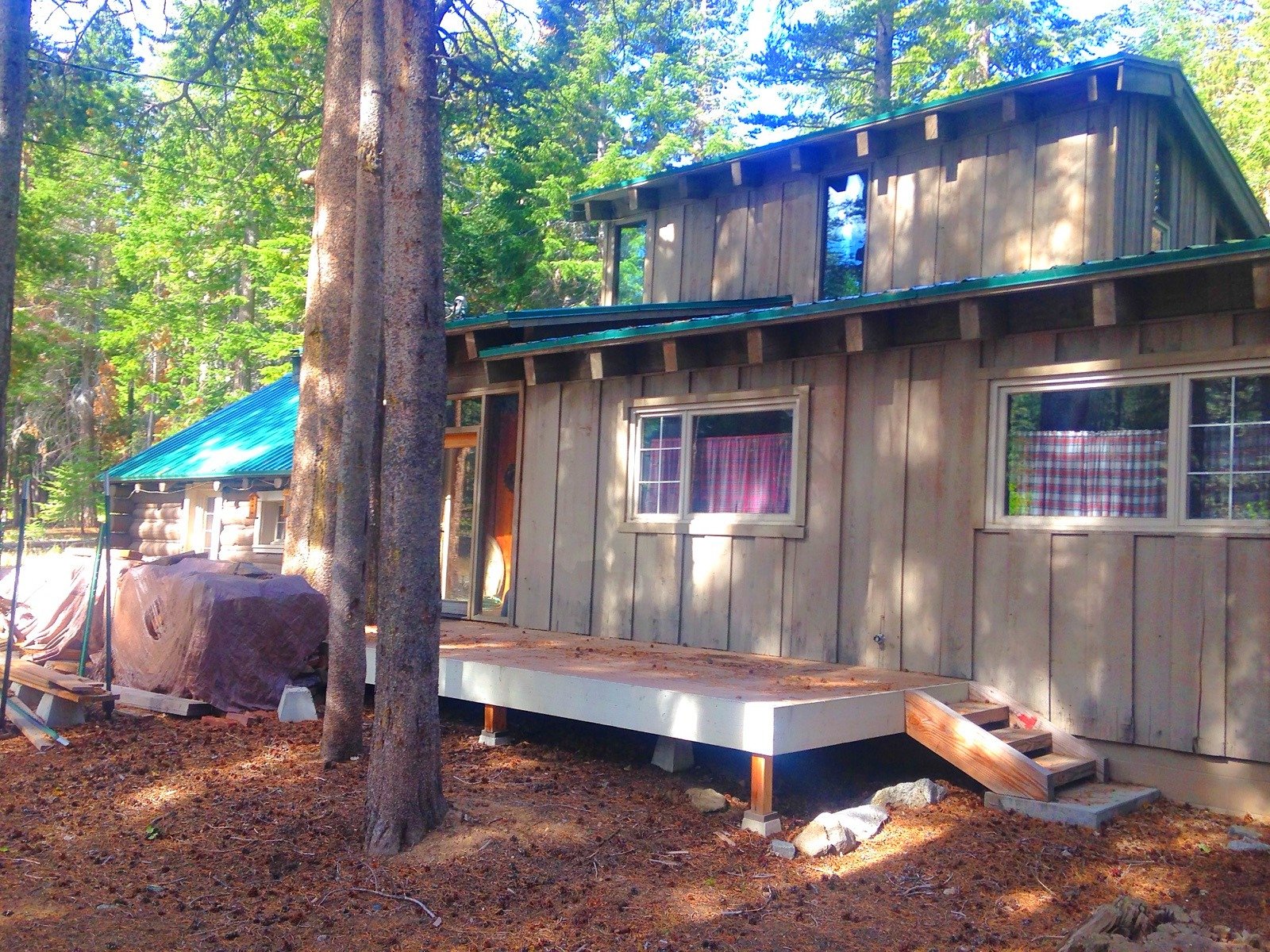
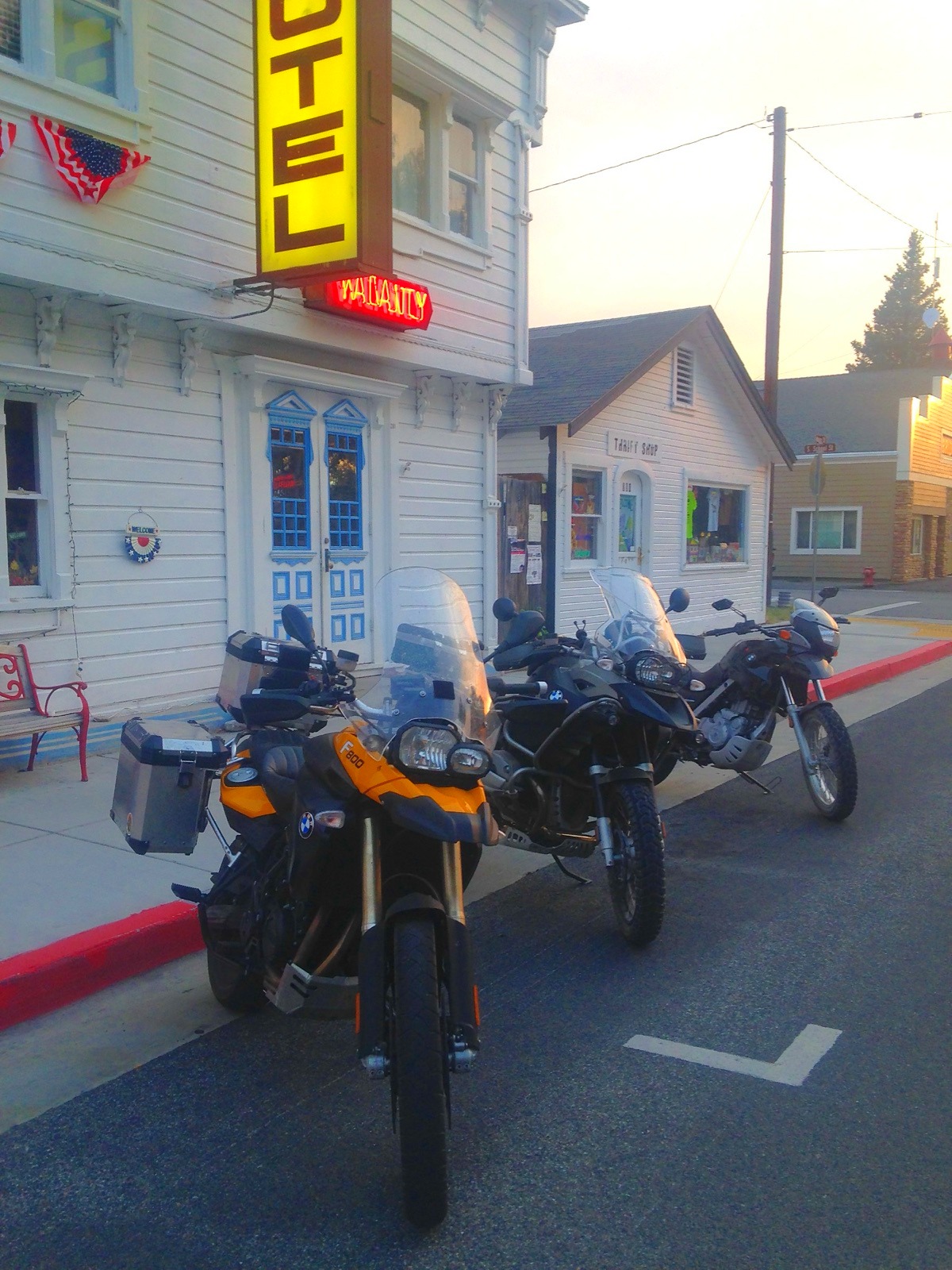
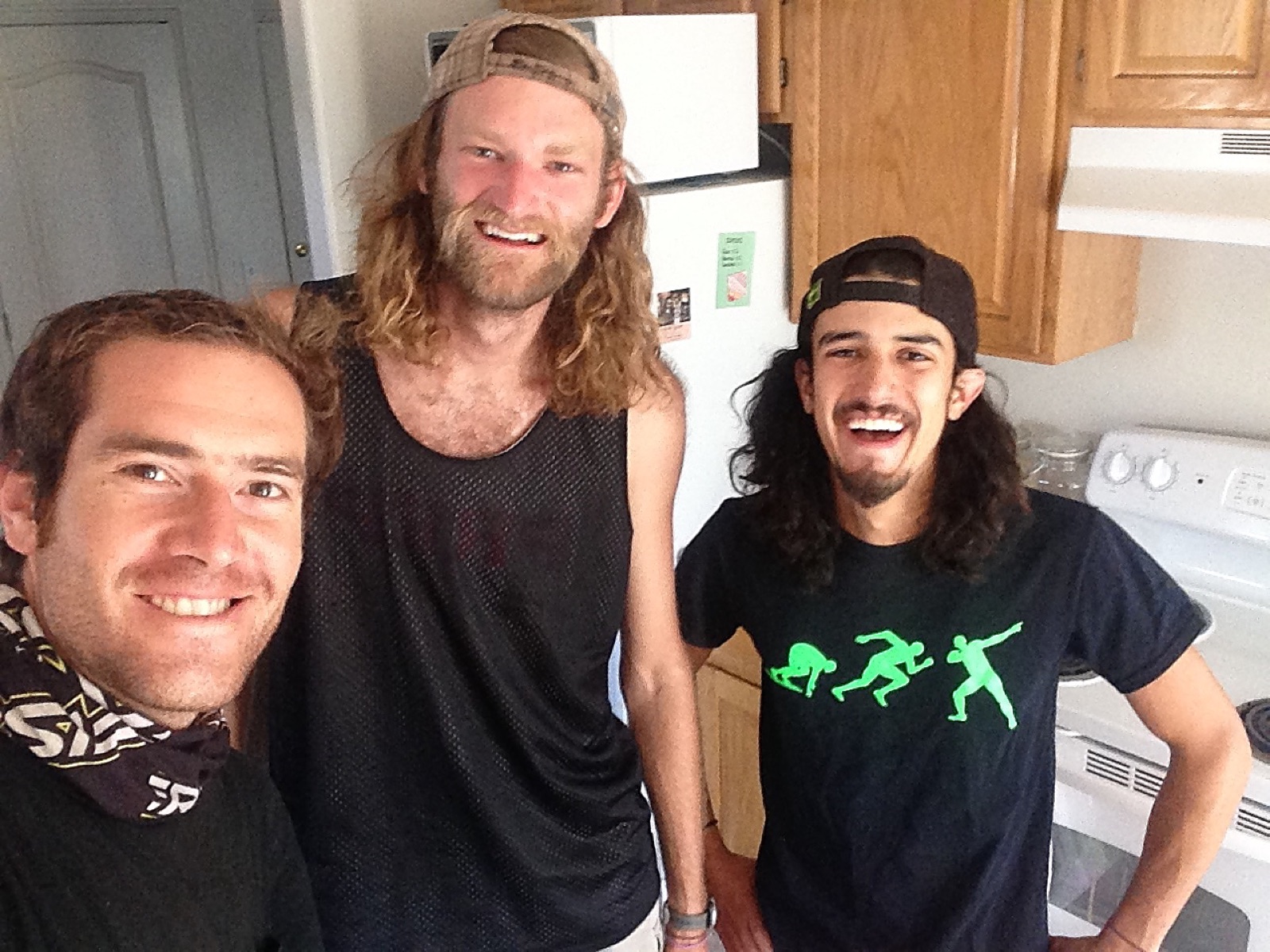
In Mammoth Lakes I stayed two nights, the sixteenth and seventeenth of August. Jonathan put me up: a very big, very friendly man with a beard down his chest. In my accommodation map I still have him written down under a nickname: the bear. We found each other on Couchsurfing because he rode motorcycles too, and that was enough of a reason for him.
Mammoth is a ski resort in winter. In summer it is forest and quiet and very beautiful, and there are bears wandering around loose. Look at the wall under his window: those brown smears are the marks of the bears that got into the house looking for cereal. They took the boxes and went back out the same window, and left their prints on the way.
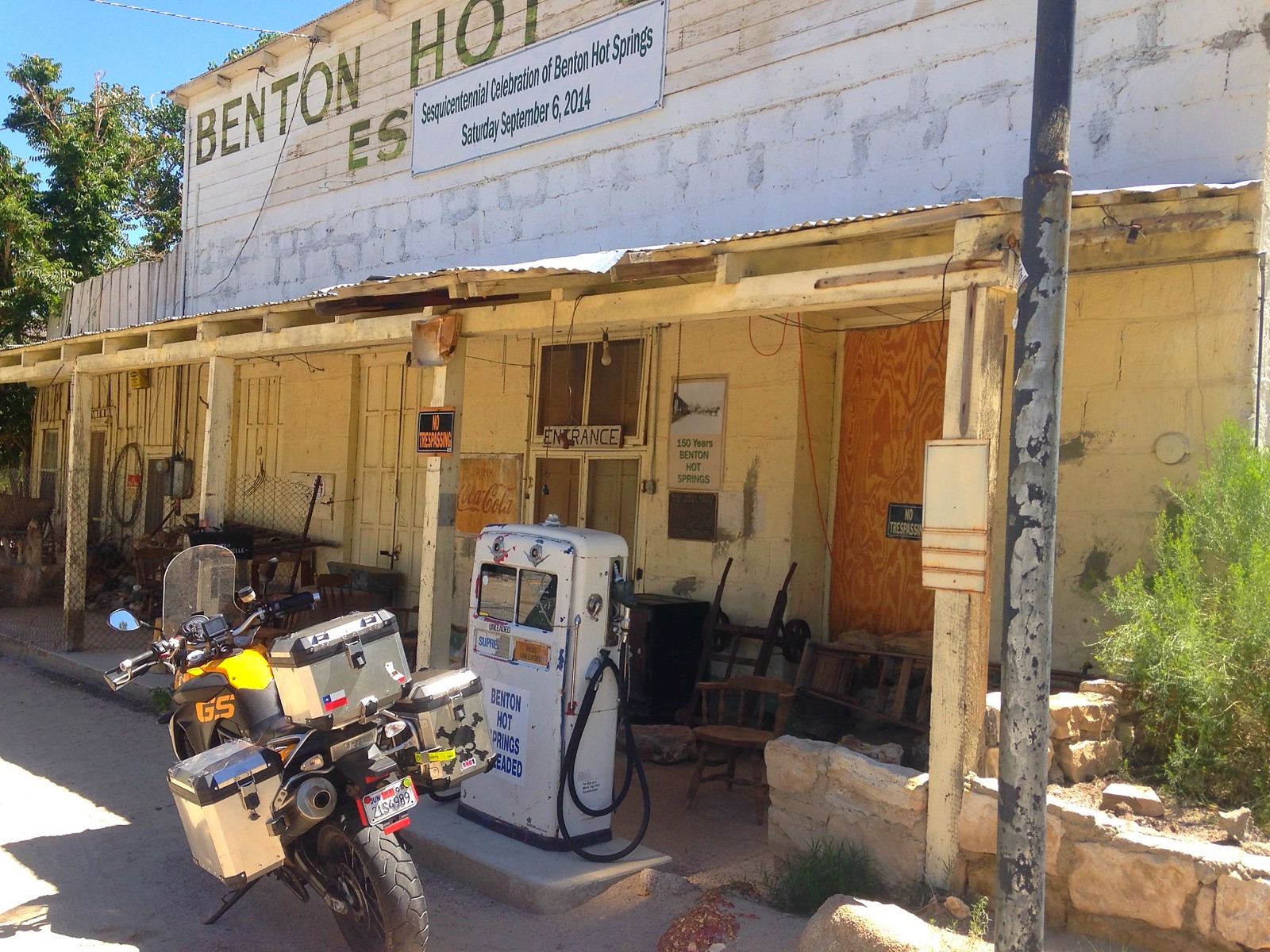
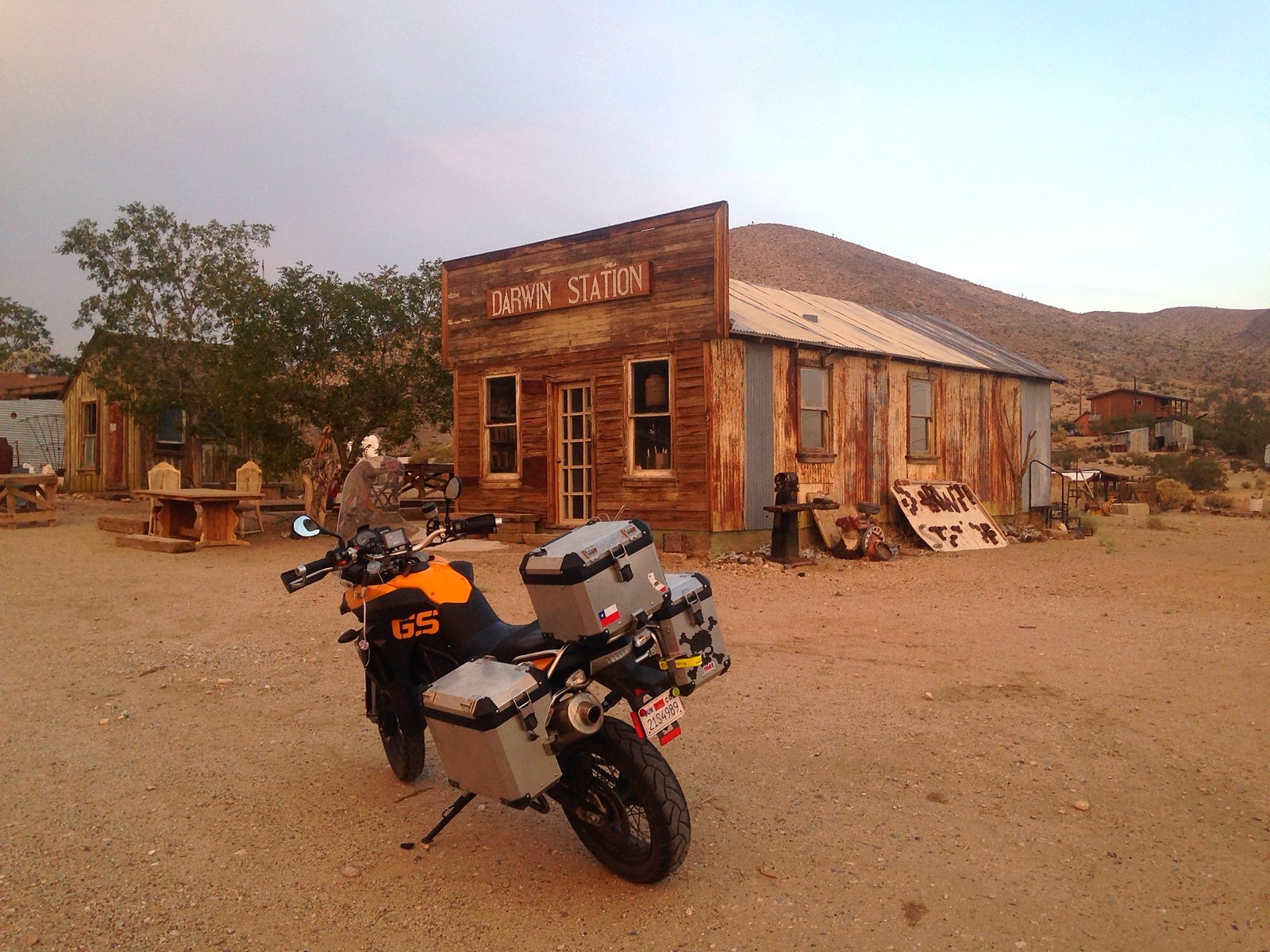
South of Mammoth Lakes the road runs straight down a valley with the Sierra on one side and the White Mountains on the other. Benton Hot Springs is a boarded-up store with a vintage petrol pump still outside. Bishop. Darwin, another ghost town with a wooden front and nobody behind it.
And then Death Valley.
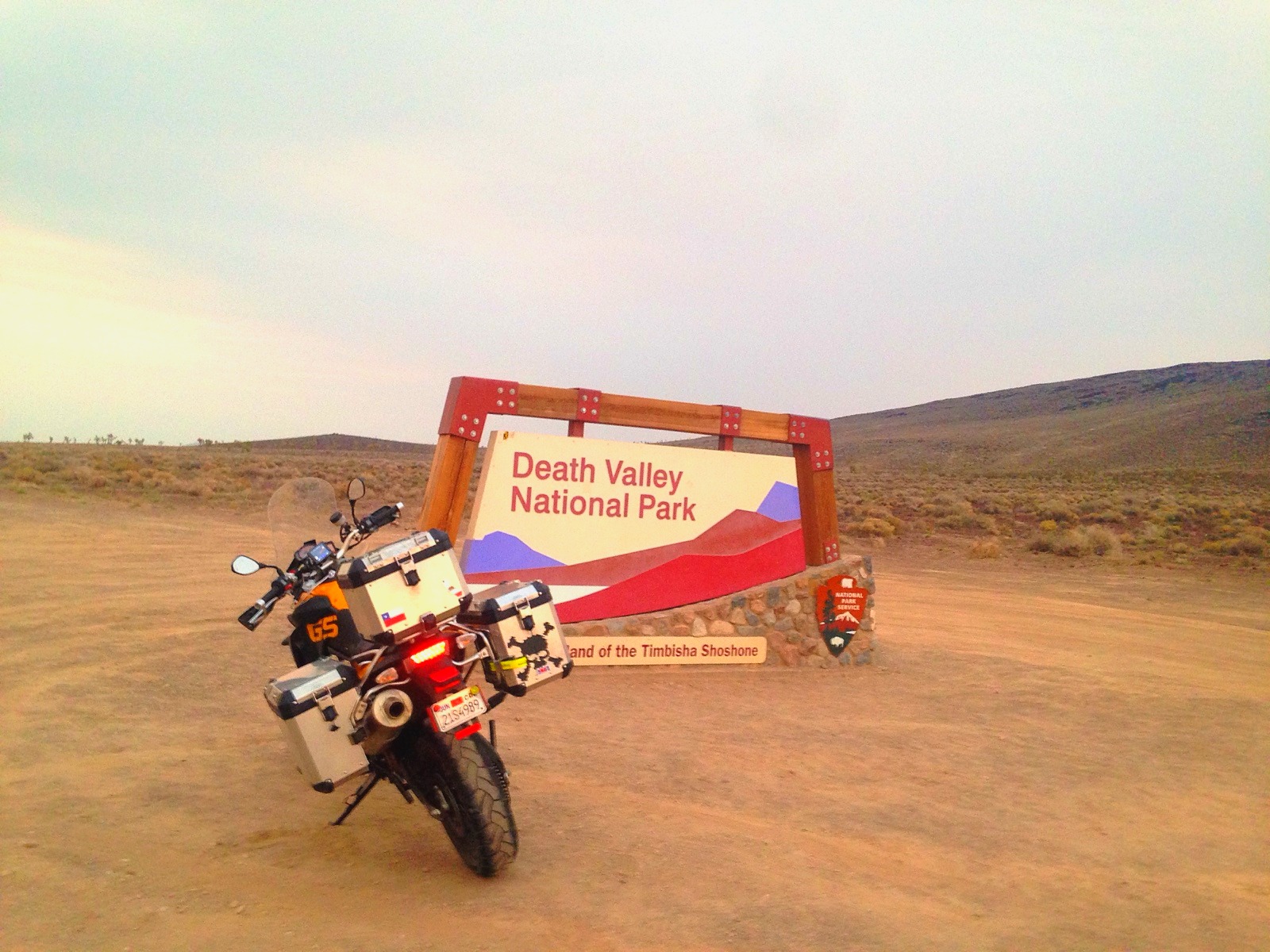
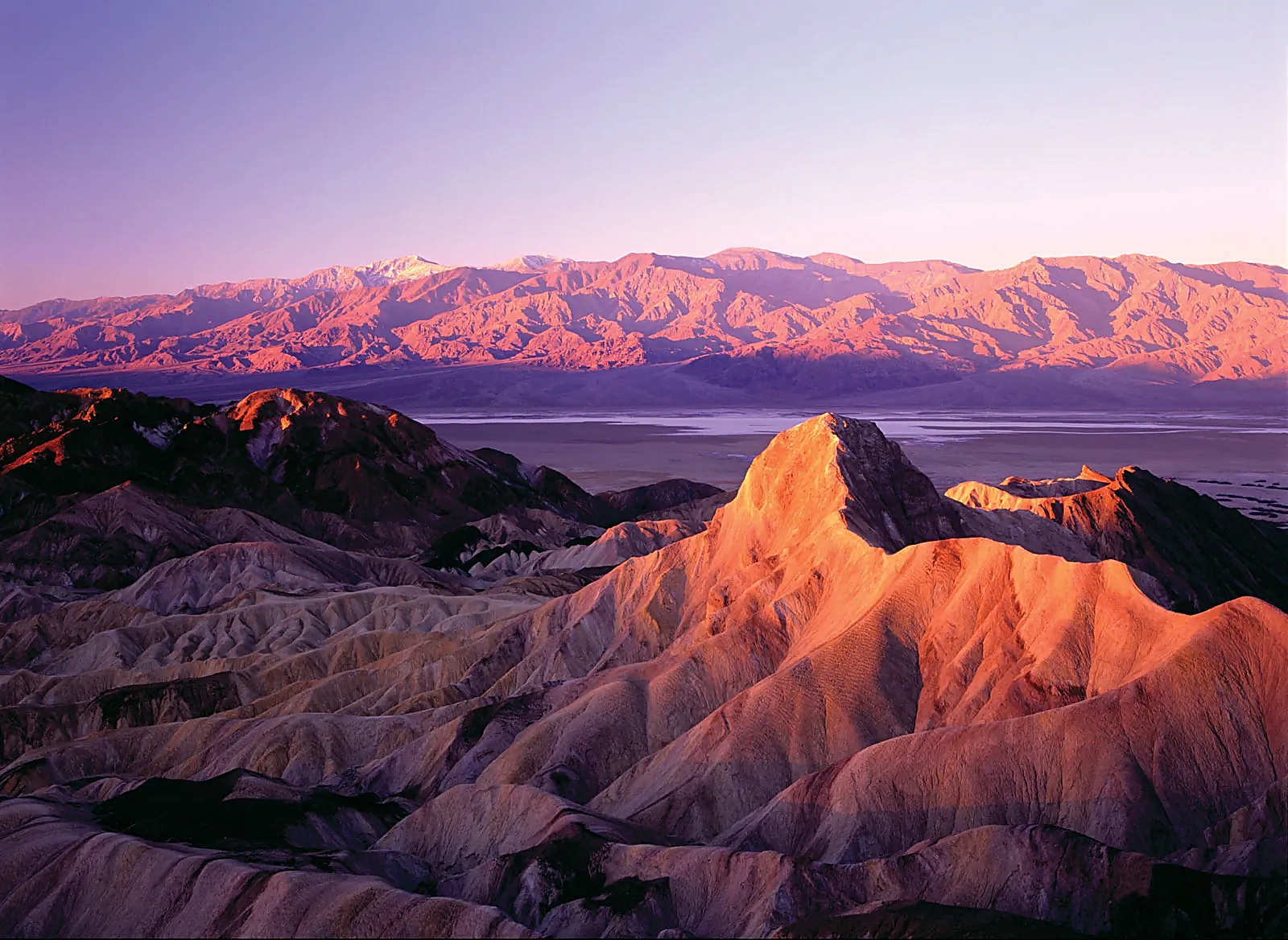
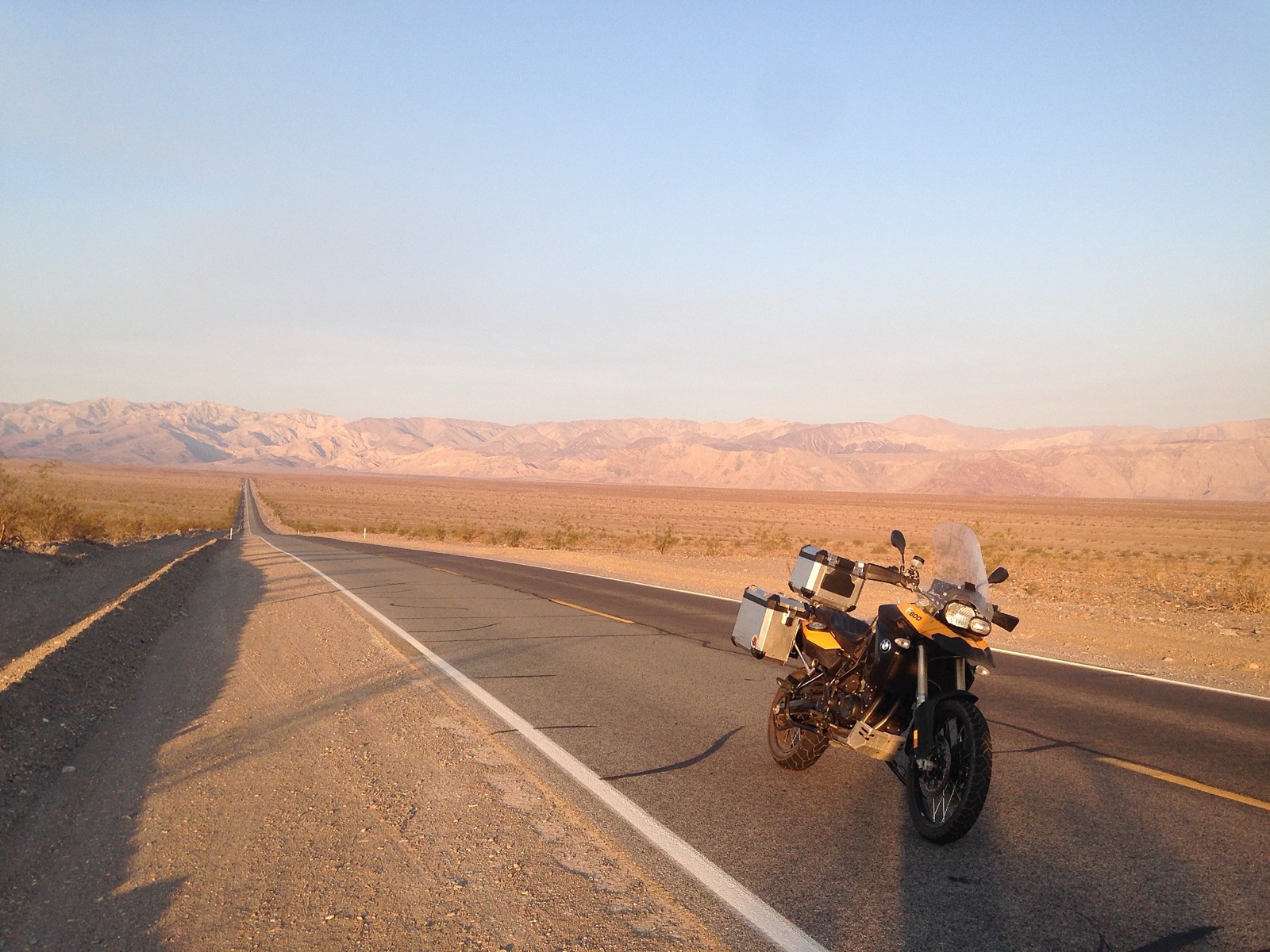
It is the hottest place ever measured on Earth: on 10 July 1913 a thermometer at Furnace Creek read 134 degrees Fahrenheit, 56.7 Celsius, and no reading anywhere has beaten it since. Badwater Basin, down at the bottom of it, is eighty six metres below sea level, the lowest ground in North America. Almost no rain falls. The name is not a metaphor: a party of emigrants got lost crossing it in the winter of 1849 on their way to the goldfields, and the name stuck.
That night I slept in a campsite without paying. I had no money left, so I turned up late and tried to keep out of sight, and I did not even put the tent up: I slept in the bag on top of a picnic table.
I got up at five in the morning to pack everything away before the owners noticed I was there. At that hour, before the first light had touched anything, it was already over forty degrees.
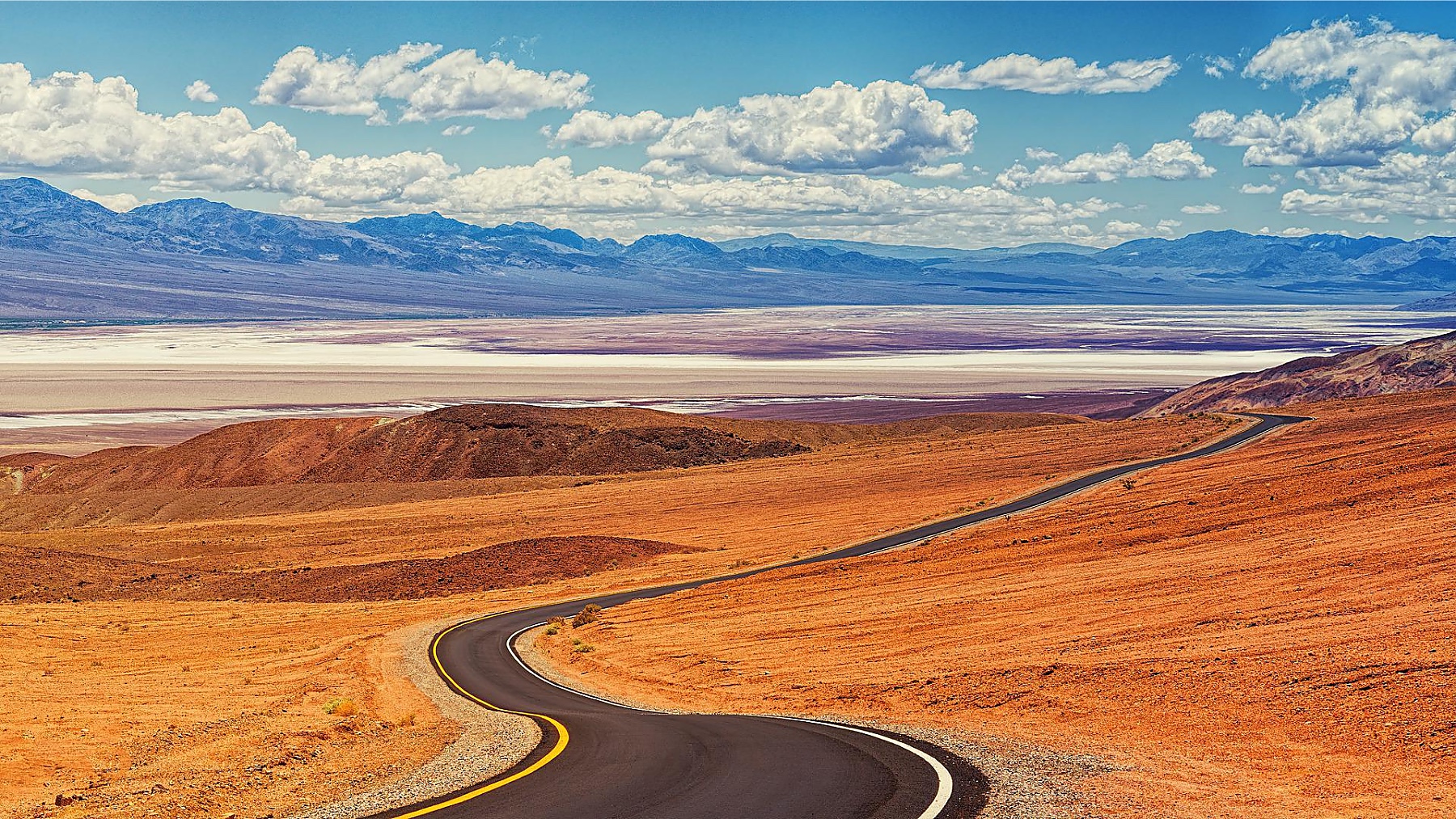
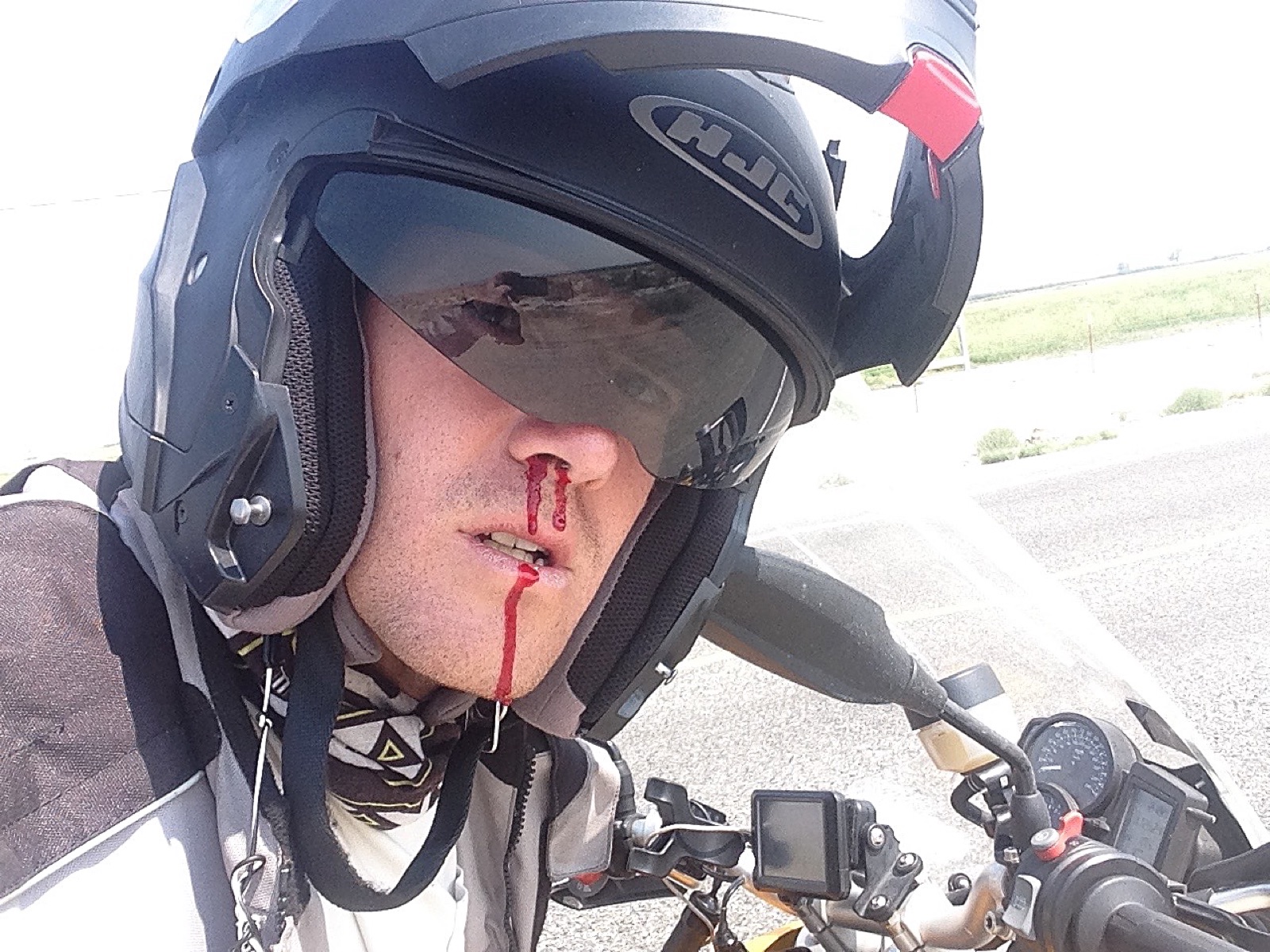
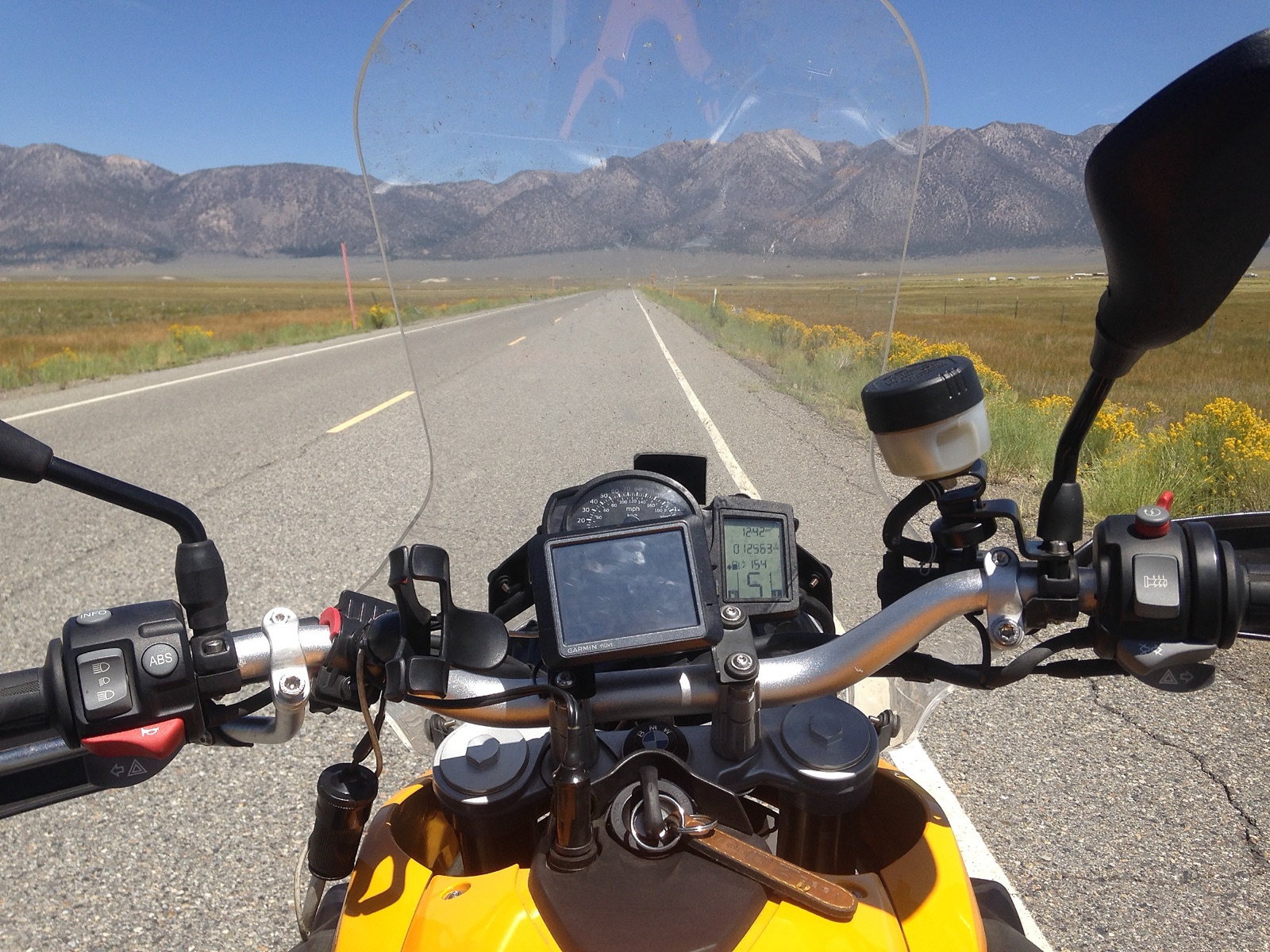
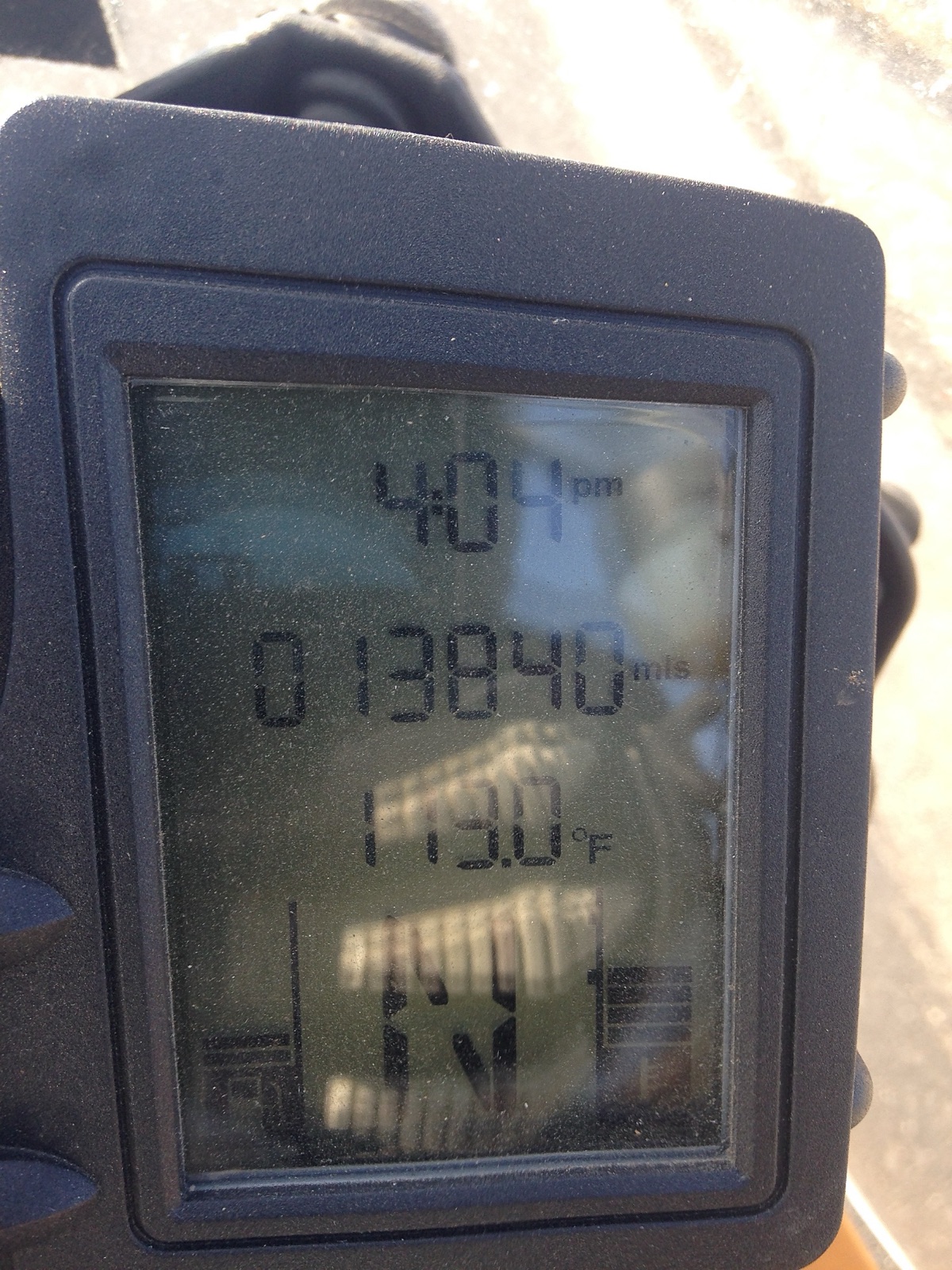
That was the loneliest day of the trip. The road crosses something closer to Mars than to Earth. At midday the gauge on the bike reached a hundred and twenty three degrees Fahrenheit: fifty one Celsius. I had never felt heat like that, so dry.
And the worst of it was not the heat: it was knowing that if I got a puncture or the bike broke down I was in serious trouble, because nobody came past.
There is a selfie from that day with the helmet still on and blood running out of my nose. It was not a crash: it was the heat.
Four days after leaving the ghost towns I rode into Las Vegas, which after all that empty desert is genuinely hard to process.
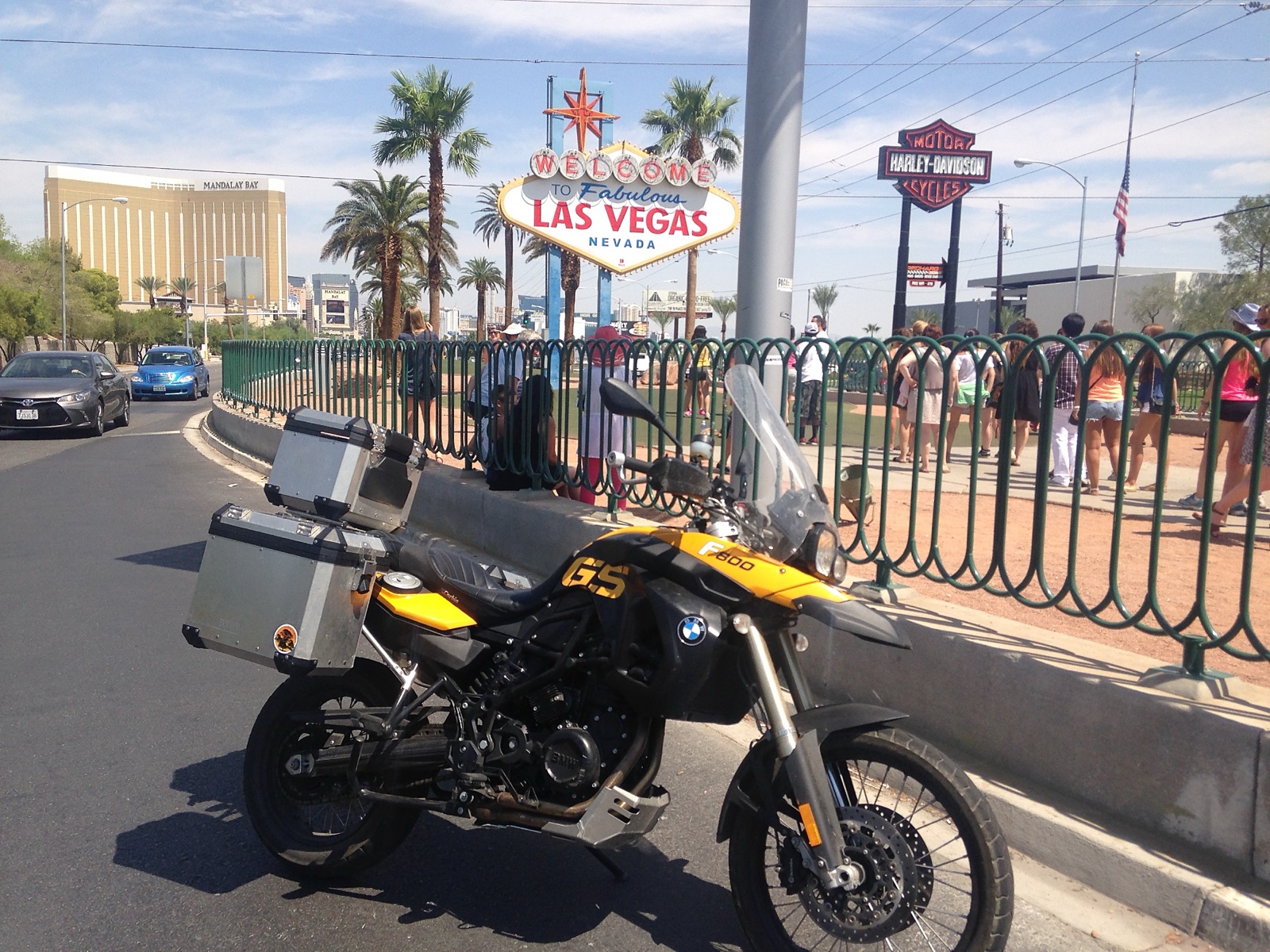
There is no sensible way to arrive at that on your first motorcycle.
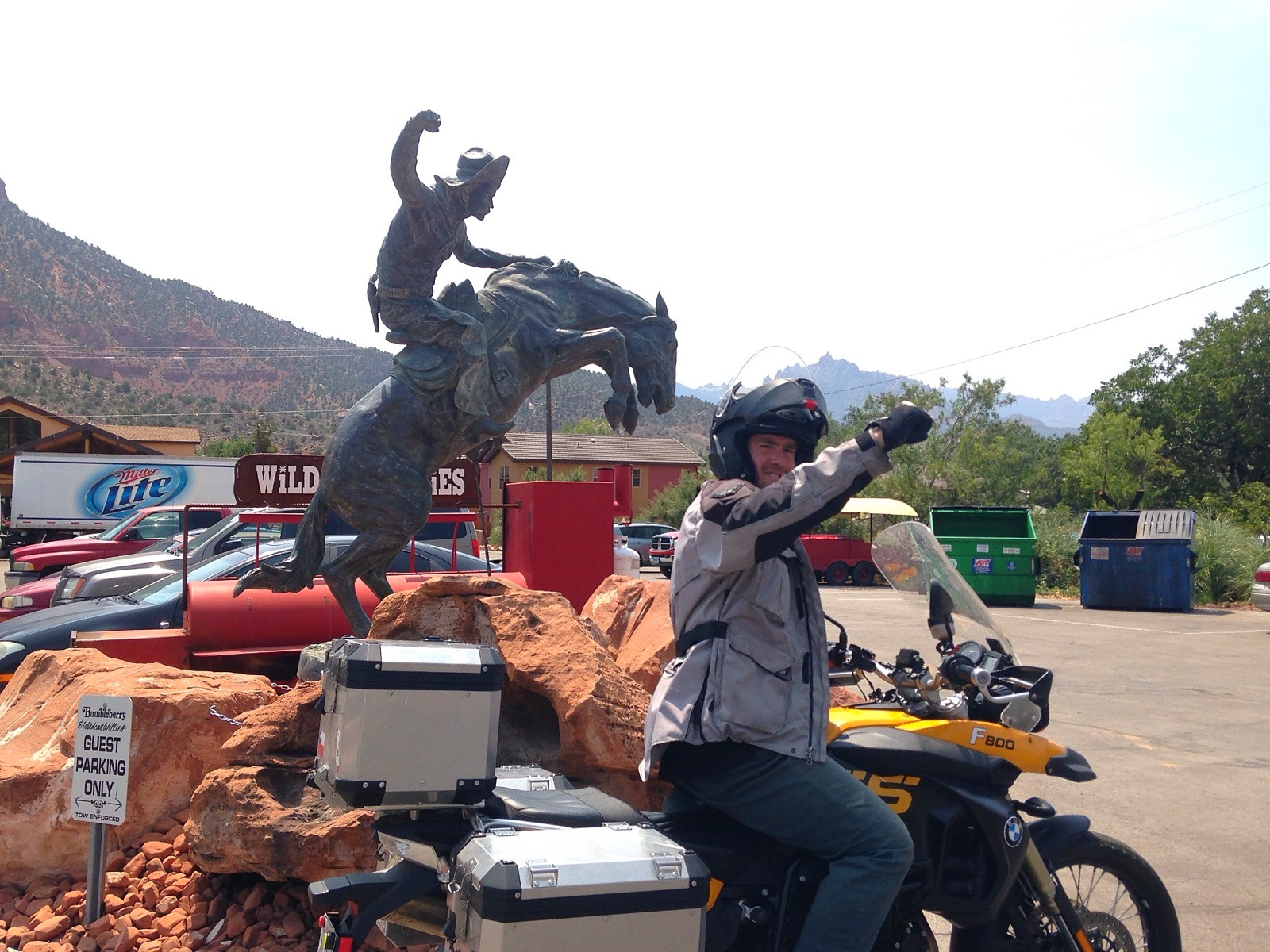
North-east into Utah and up through Zion, where the road climbs between red walls and goes through the rock in a tunnel.
And then came the strangest night of the whole trip. I was riding in complete darkness, in the middle of nowhere, climbing and climbing on a road that never ended, and a mountain lion crossed in front of me. I nearly hit it.
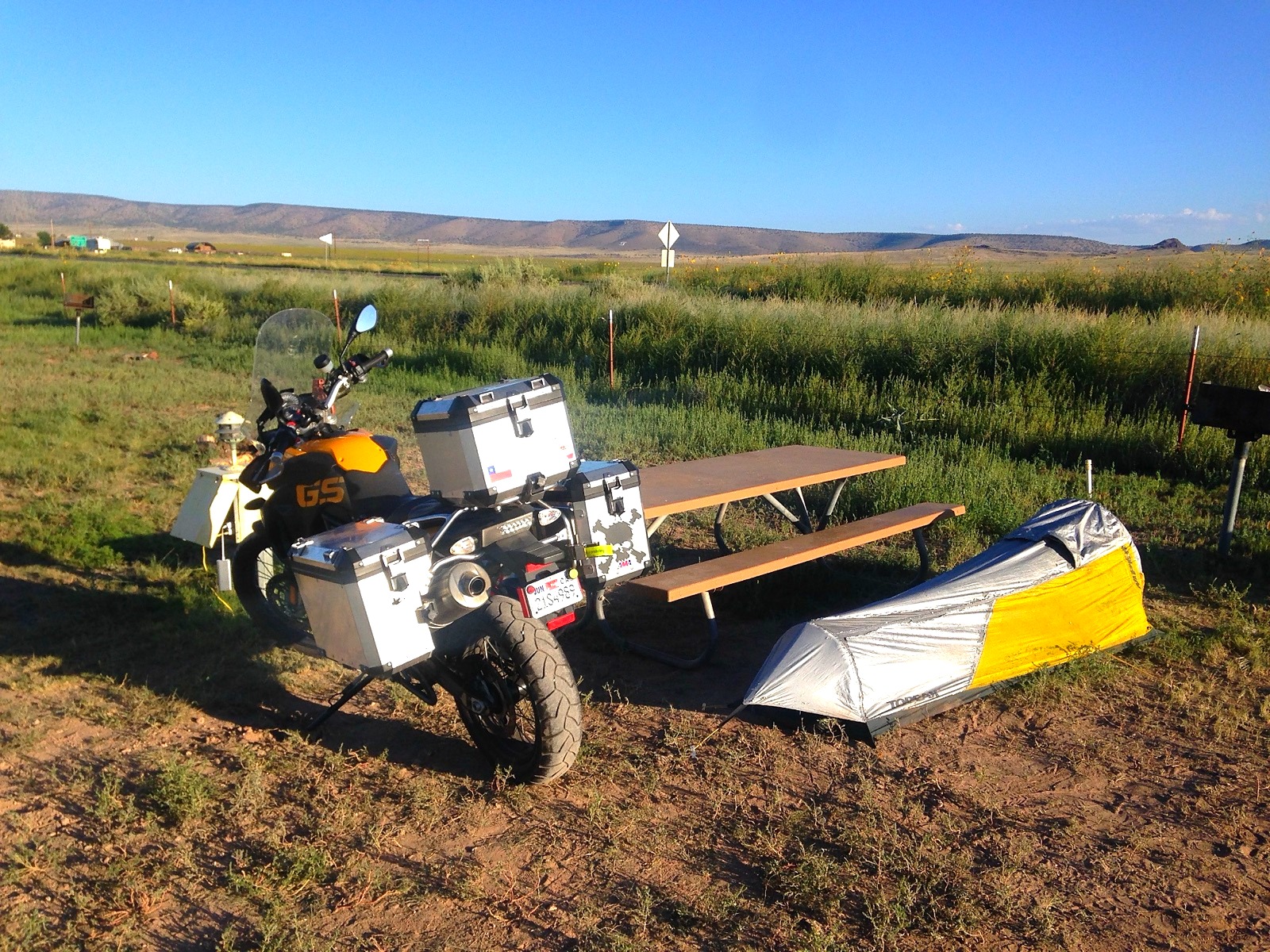
I kept climbing until I found a campsite and slipped in. I put the tent up blind and went to sleep with no idea where I was.
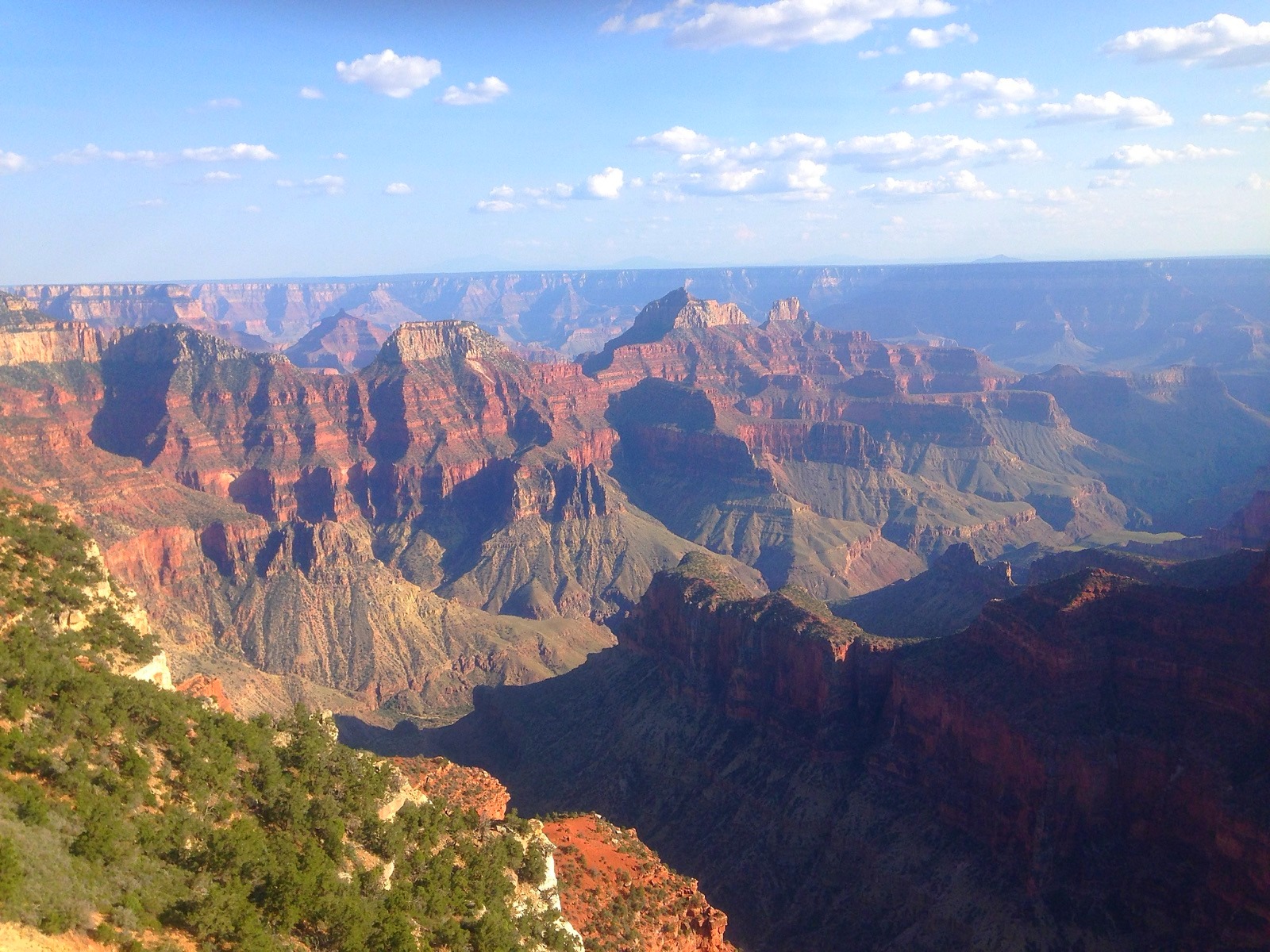
The next morning I opened the tent and the whole Grand Canyon was in front of me.
The second night was at another campsite on the way into the canyon, arriving almost in the dark down a gravel road. There was another rider there and we made a fire. In the morning I sat sorting out my papers, almost all of them soaked, and the map of California.
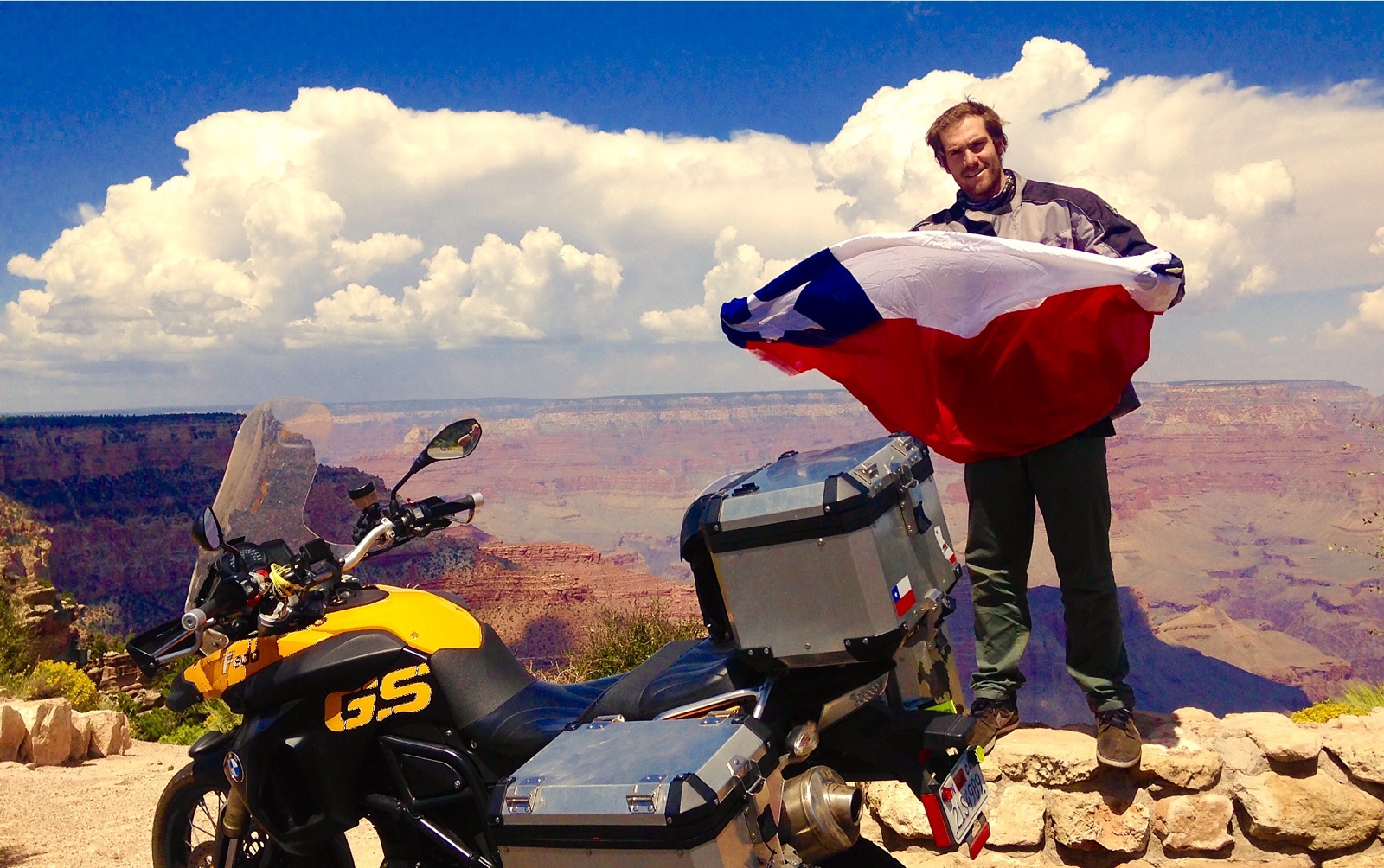
Four months earlier I had never ridden a motorcycle. I took the Chilean flag out of the pannier and had somebody take the photograph.
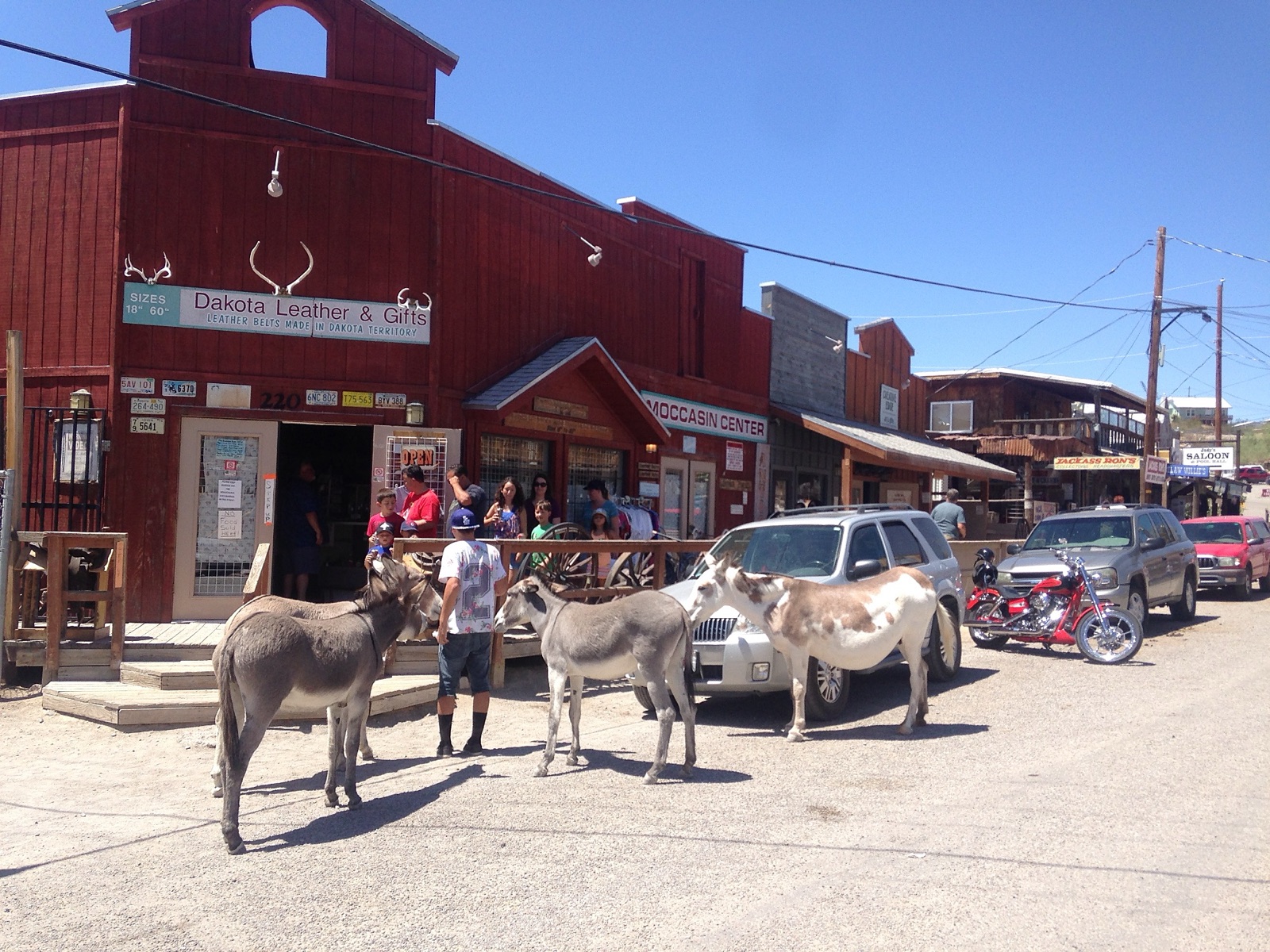
The burros of Oatman, and the tyres finished.
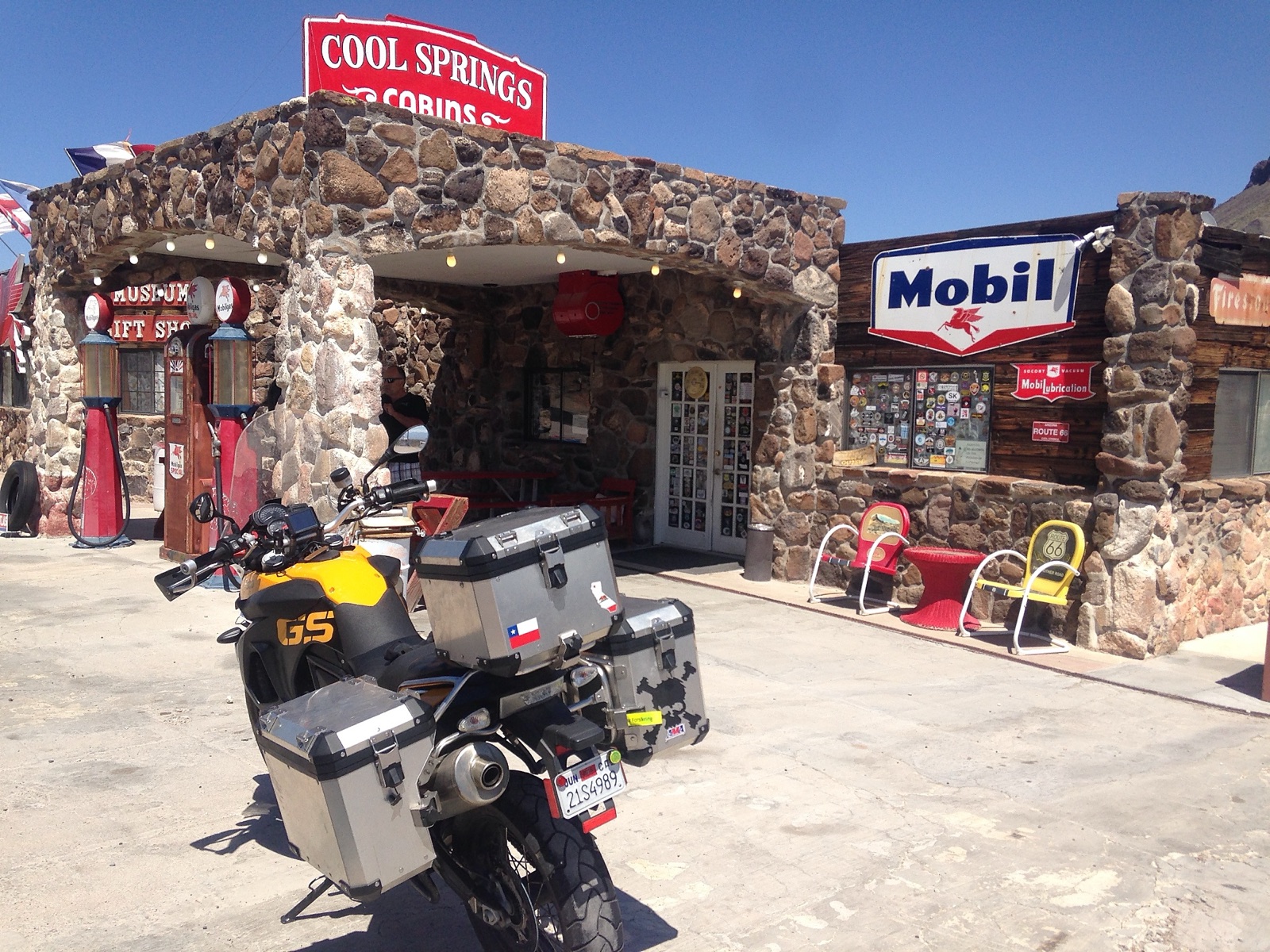
The way home went along the old Route 66 through the Arizona desert. Cool Springs is a stone garage rebuilt where the original burned down, with the pumps still outside and a Mobil sign on the wall.
And then Oatman, an old mining town where the descendants of the miners' pack burros walk down the middle of the street and stop the traffic, because that is simply what happens there.
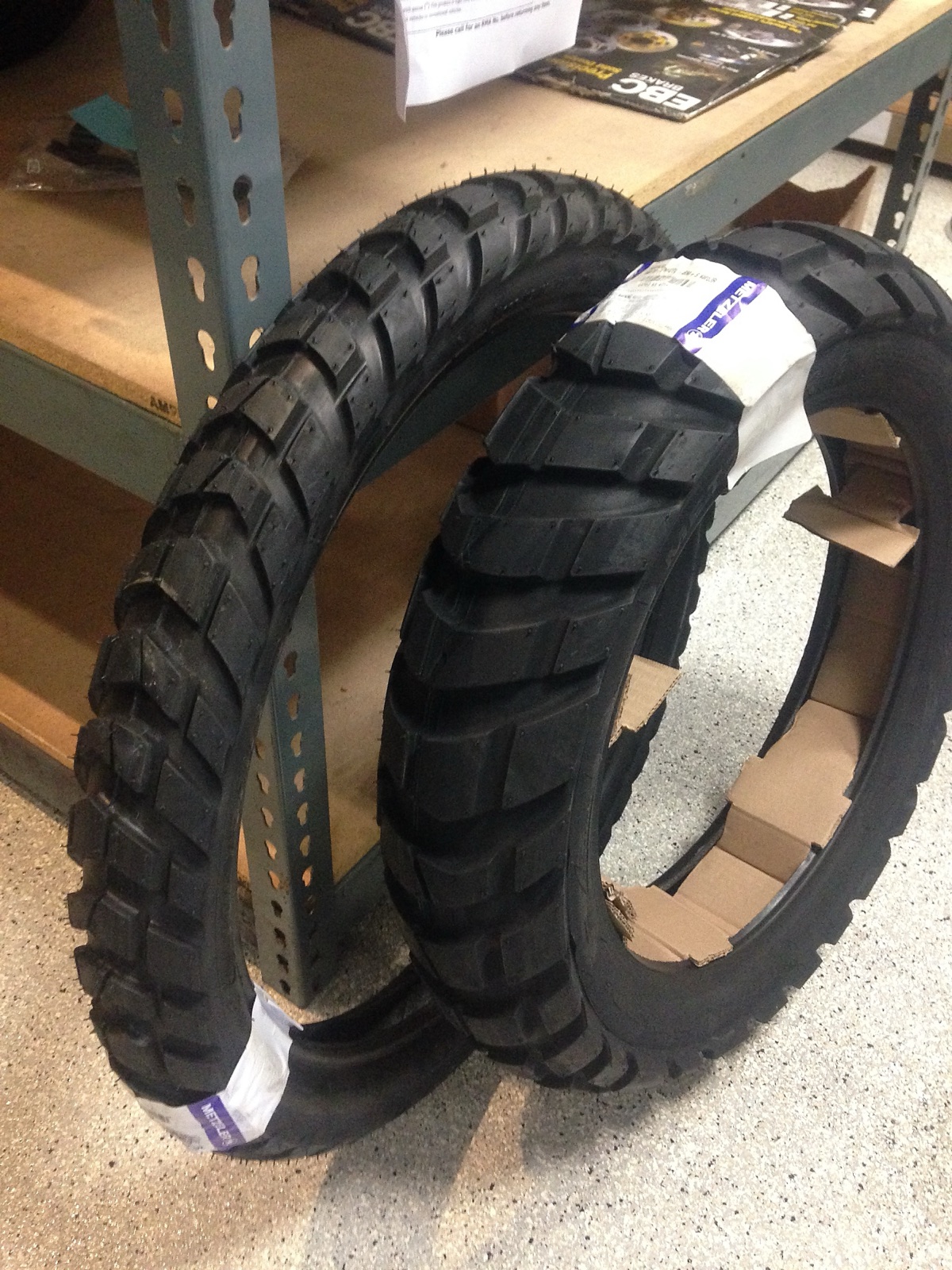
The loop closed back in Irvine at the end of August: four states, and just under four thousand five hundred kilometres of road. The tyres came off not long after. That is the real measure of a first ride: not the photographs, but what you have used up.
The field archive
63 more frames from the road
Everything else from the folder, in the order it was taken.
03040506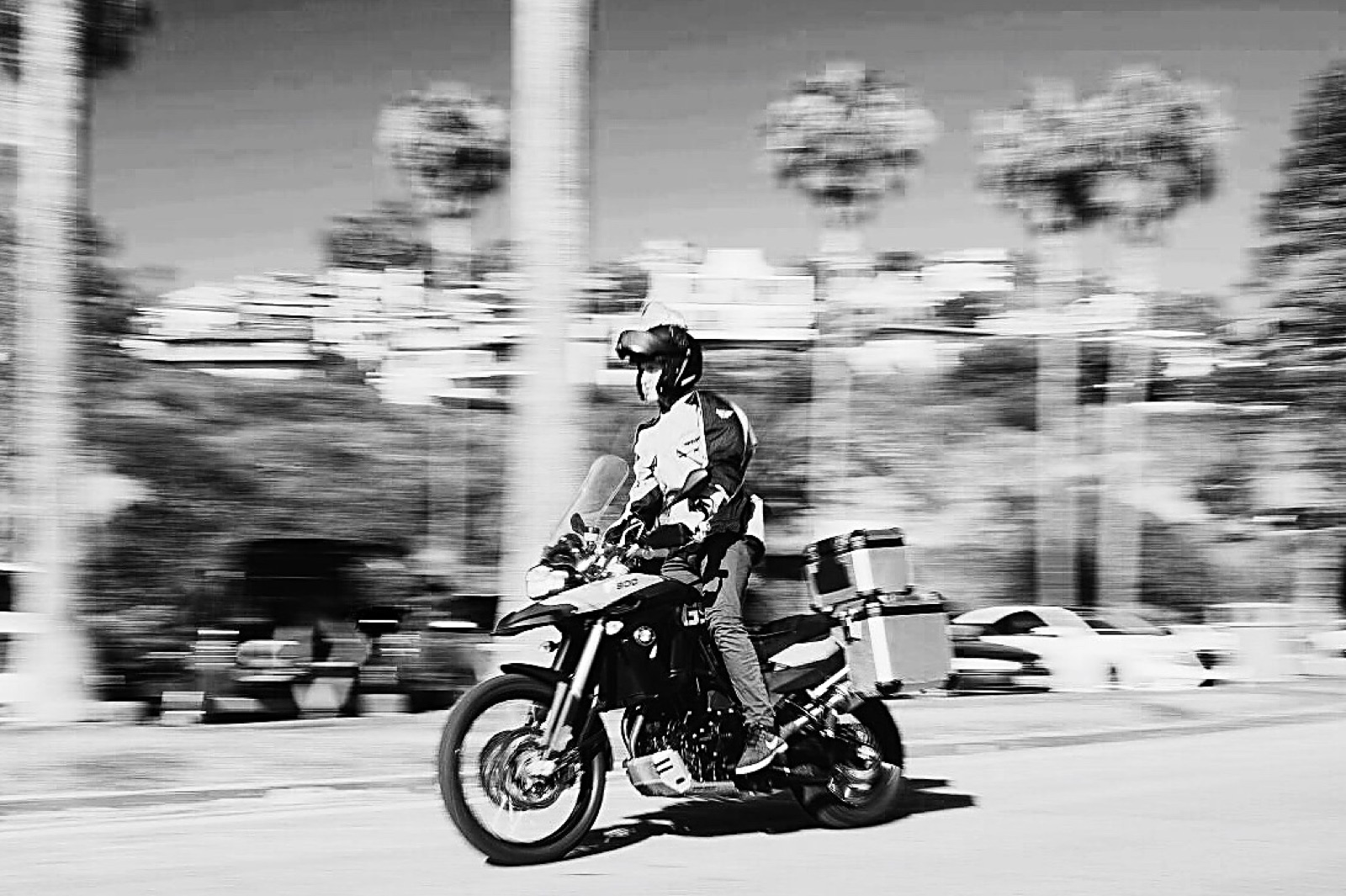 07
07 08
08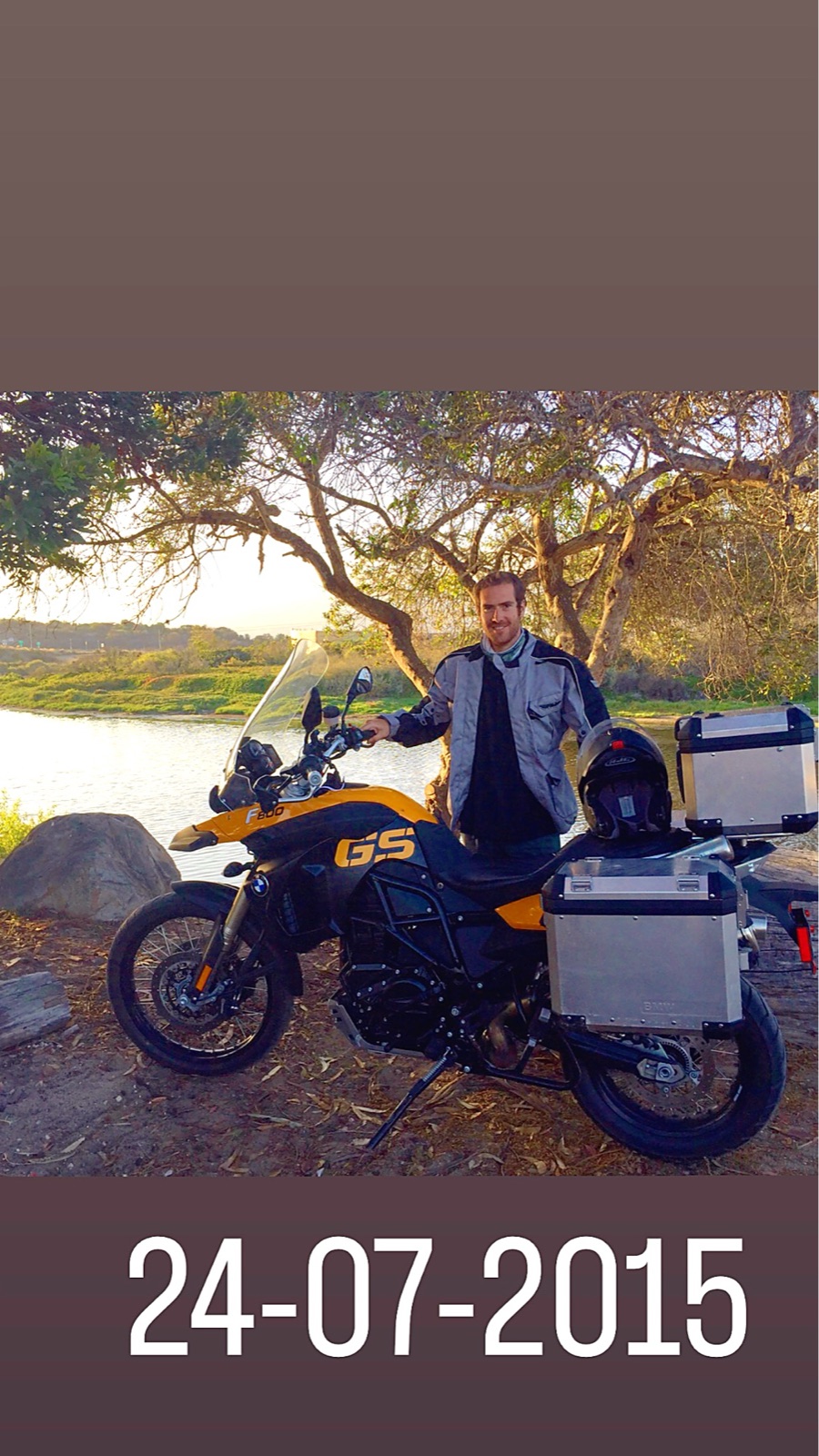 091011121314
 1516
1516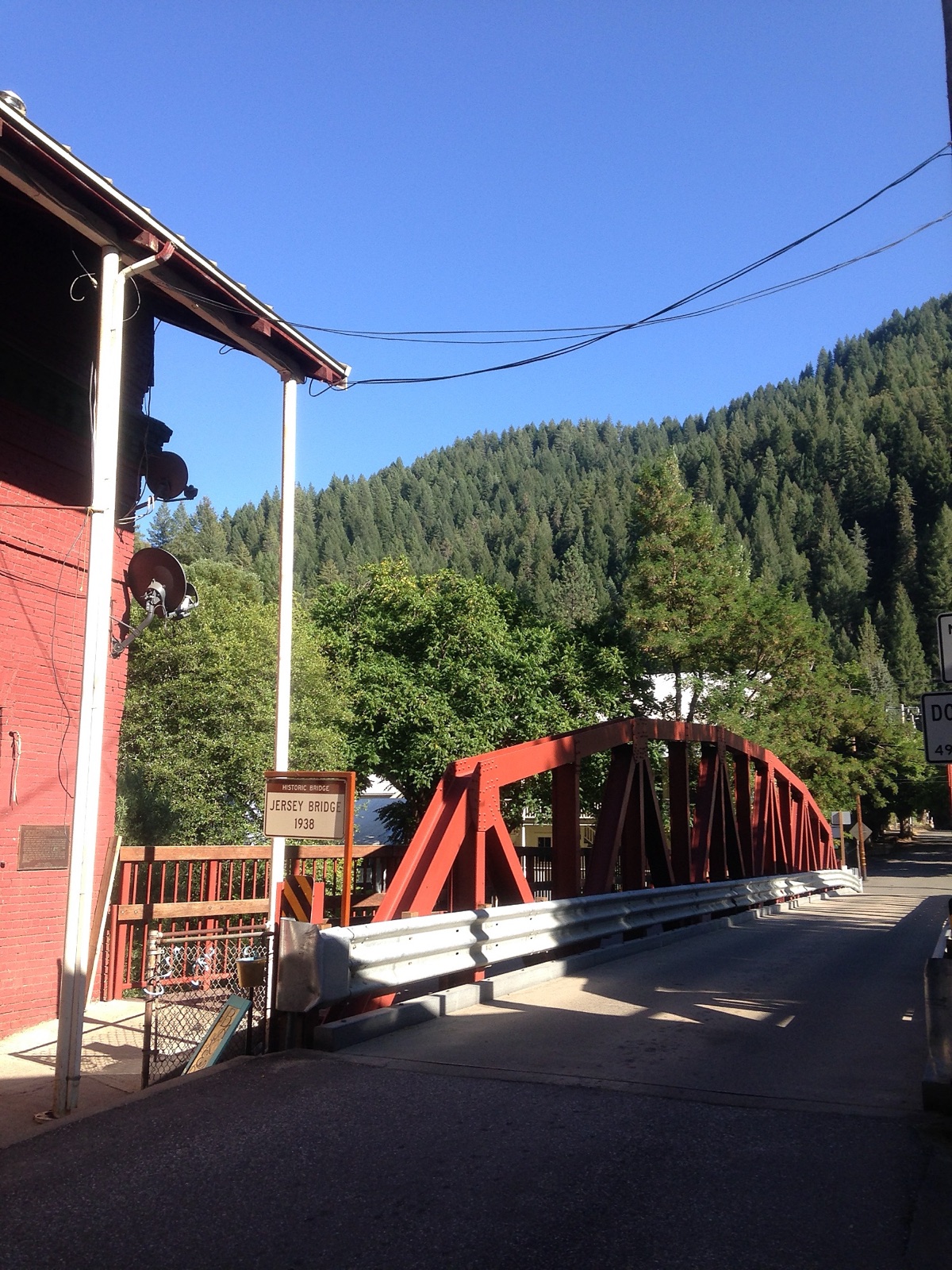 17
17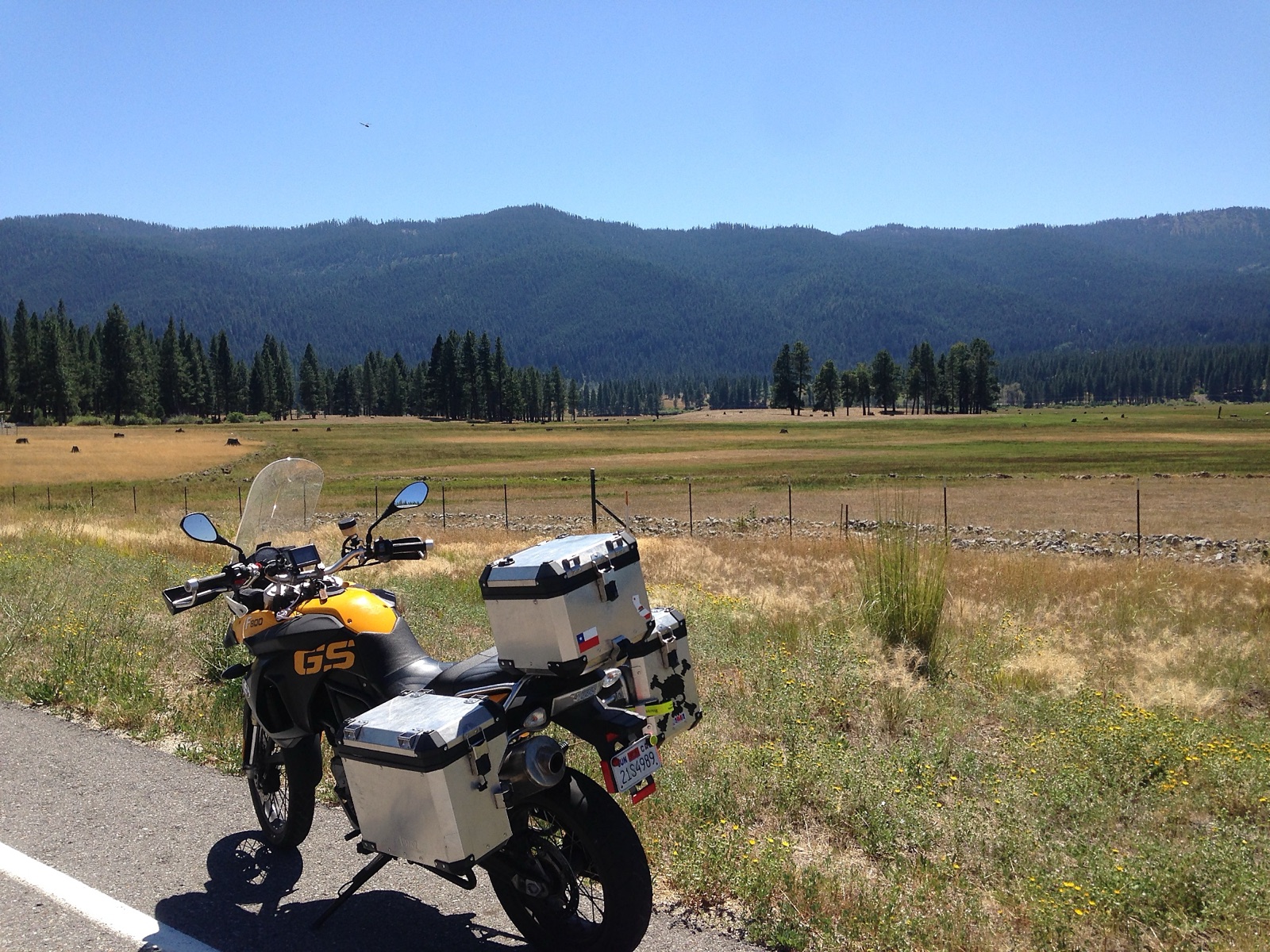 18
18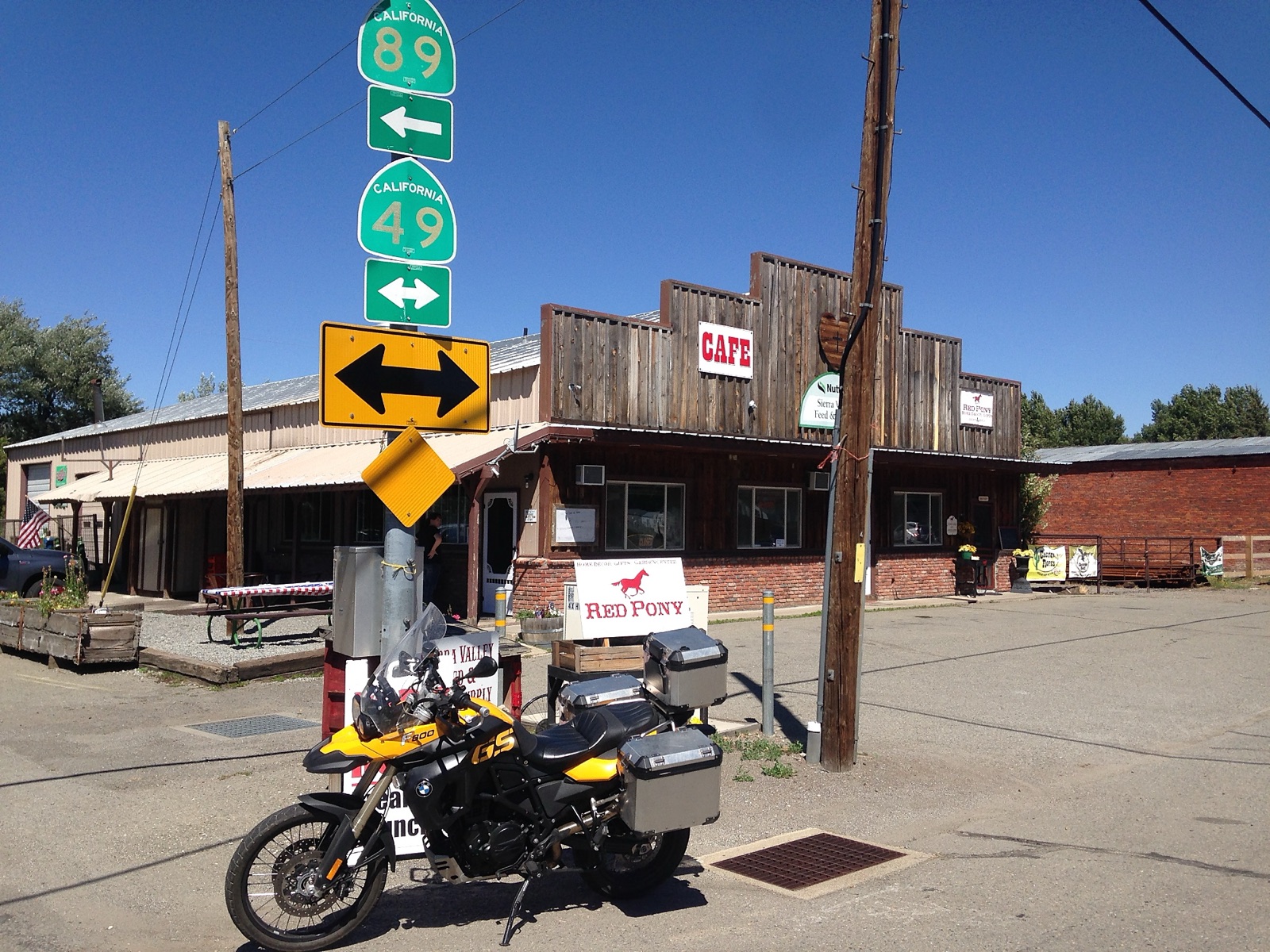 19
19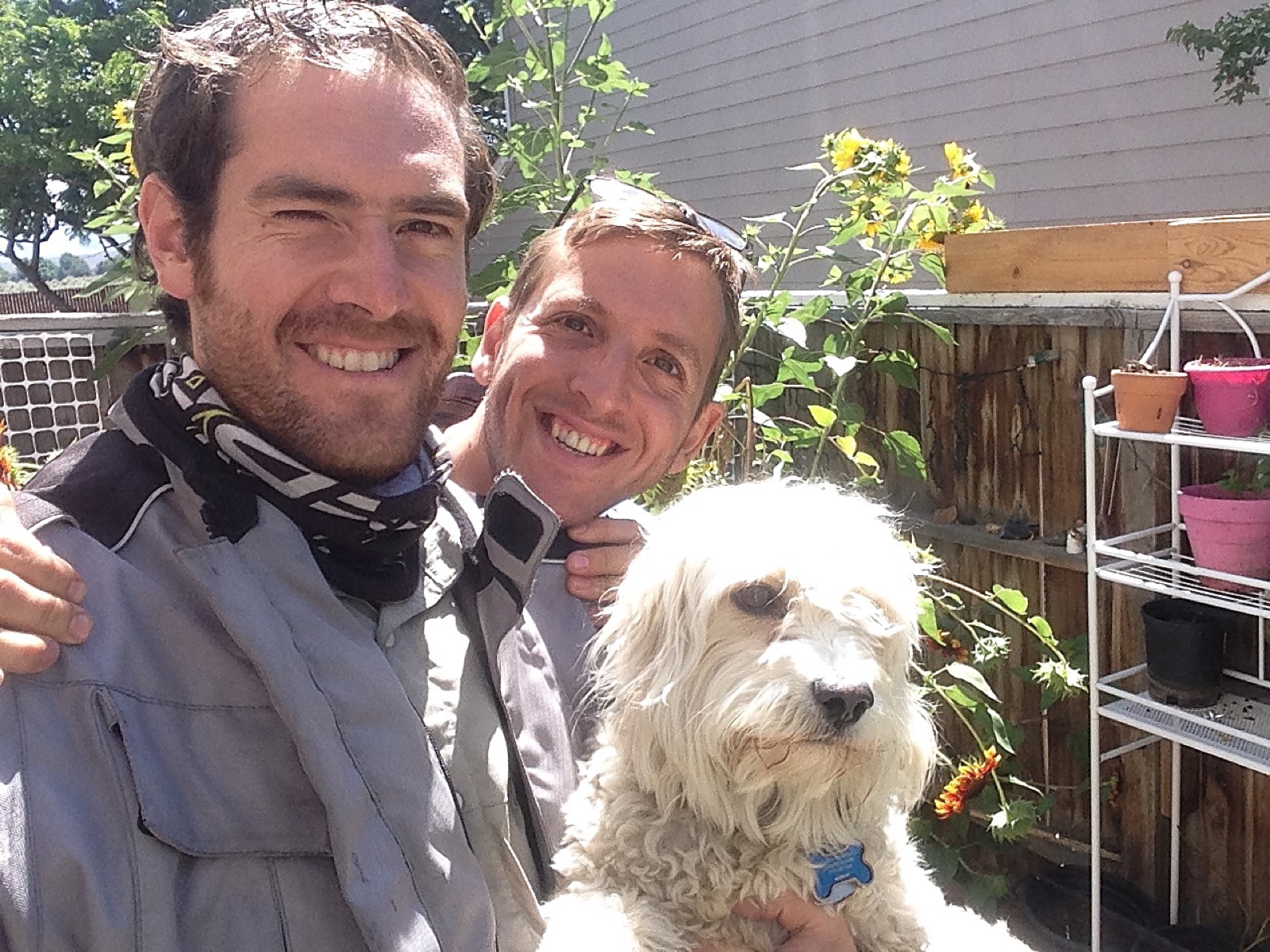 20
20 21
21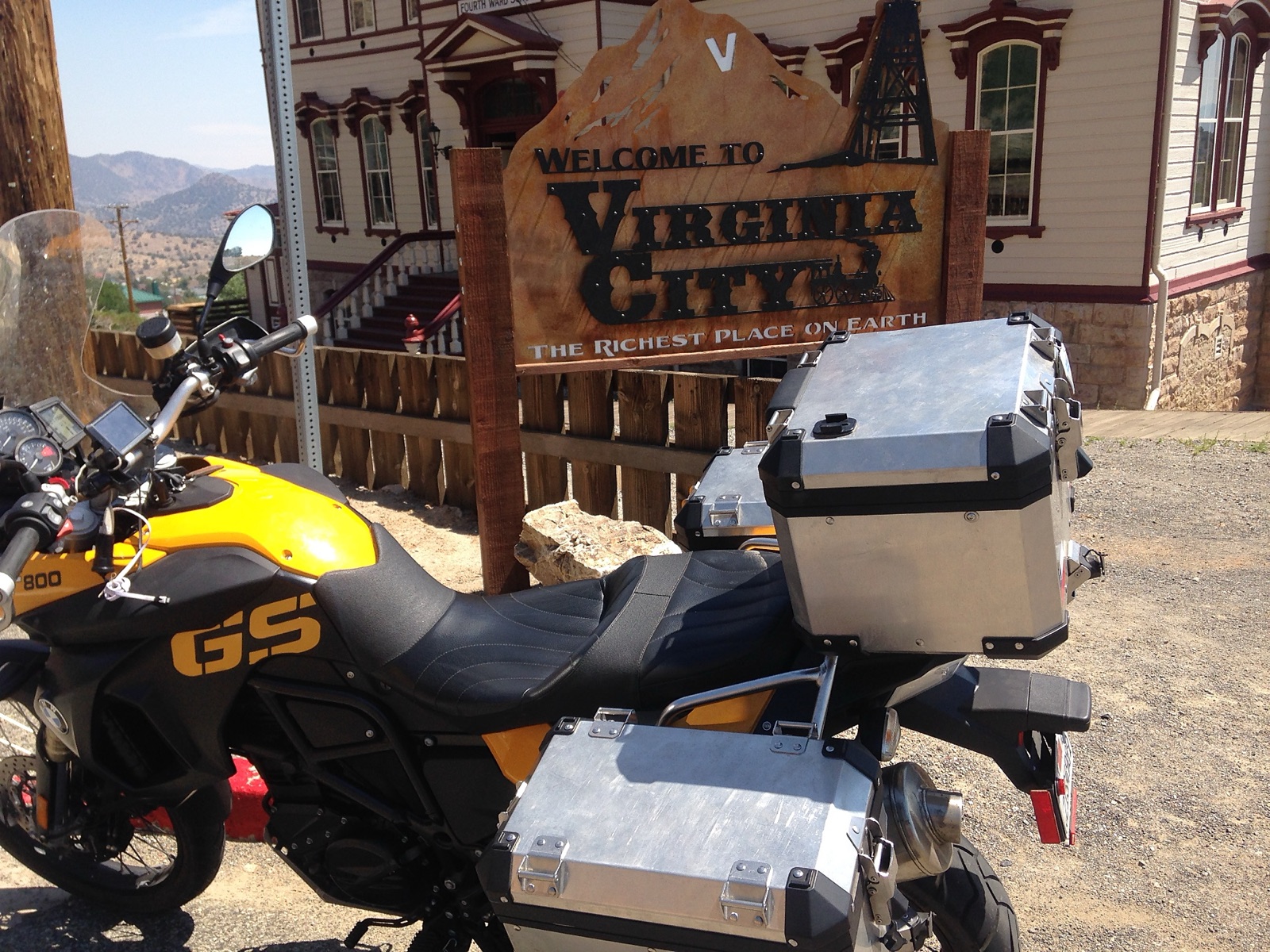 22
22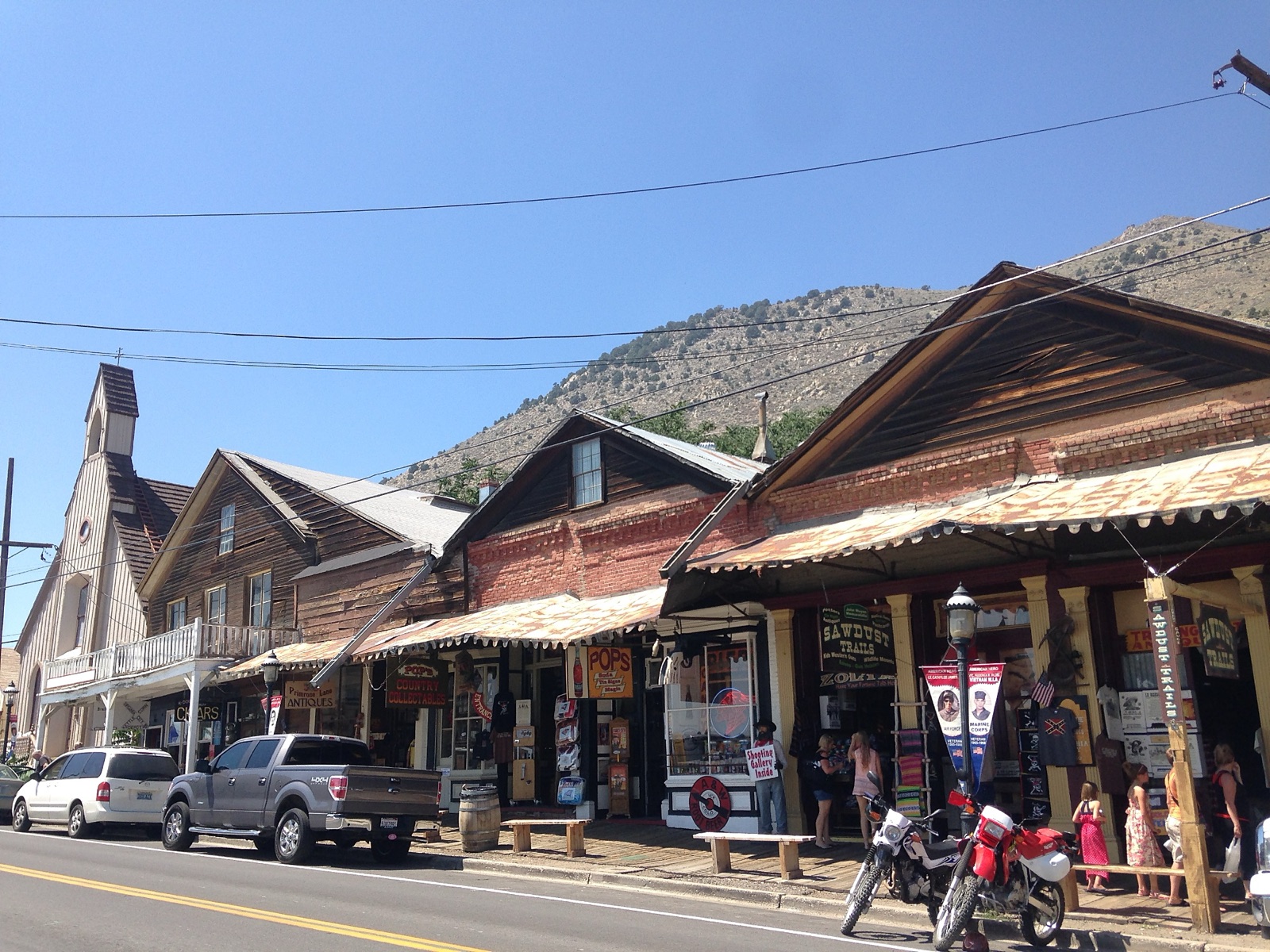 23
23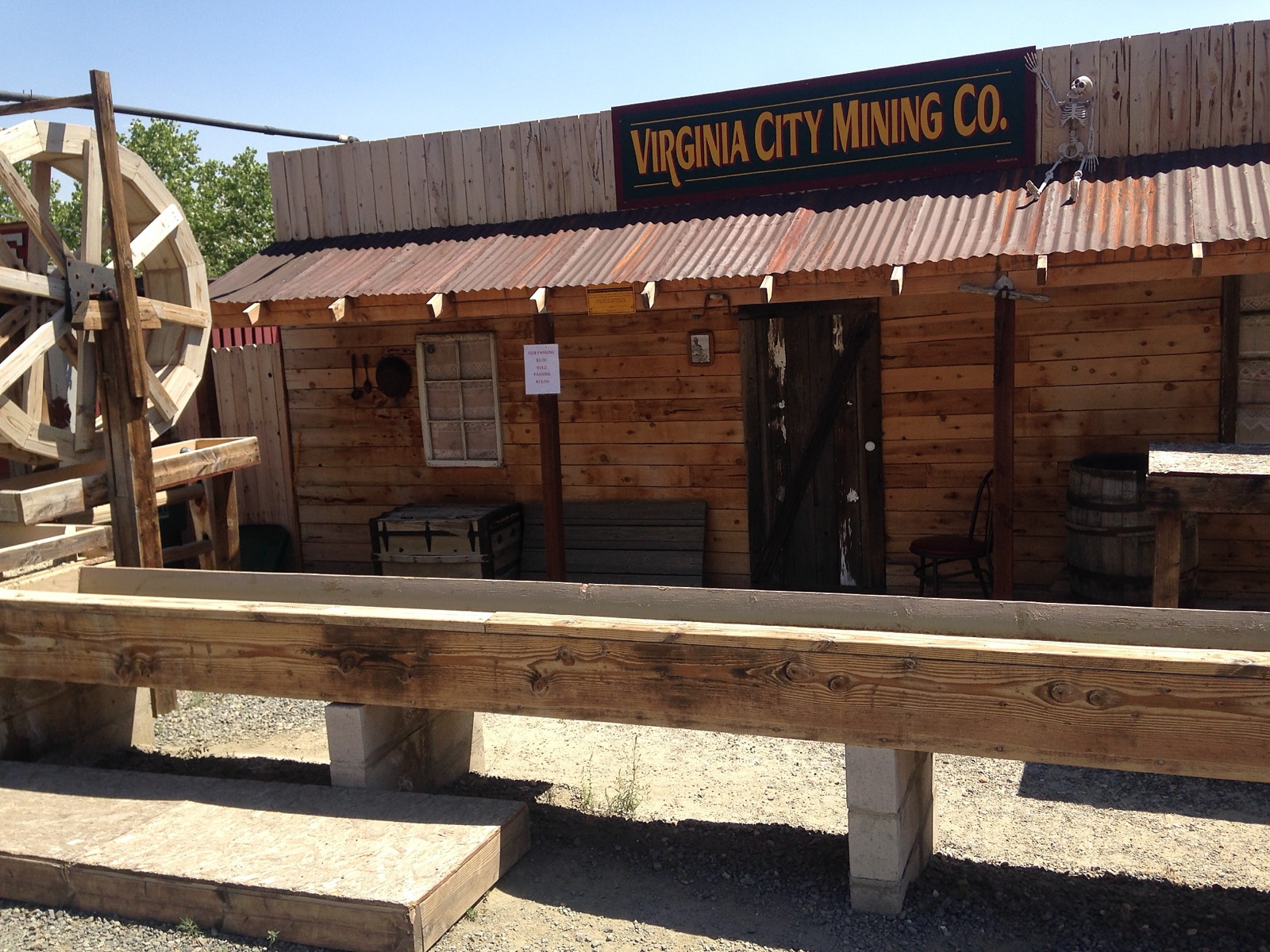 24
24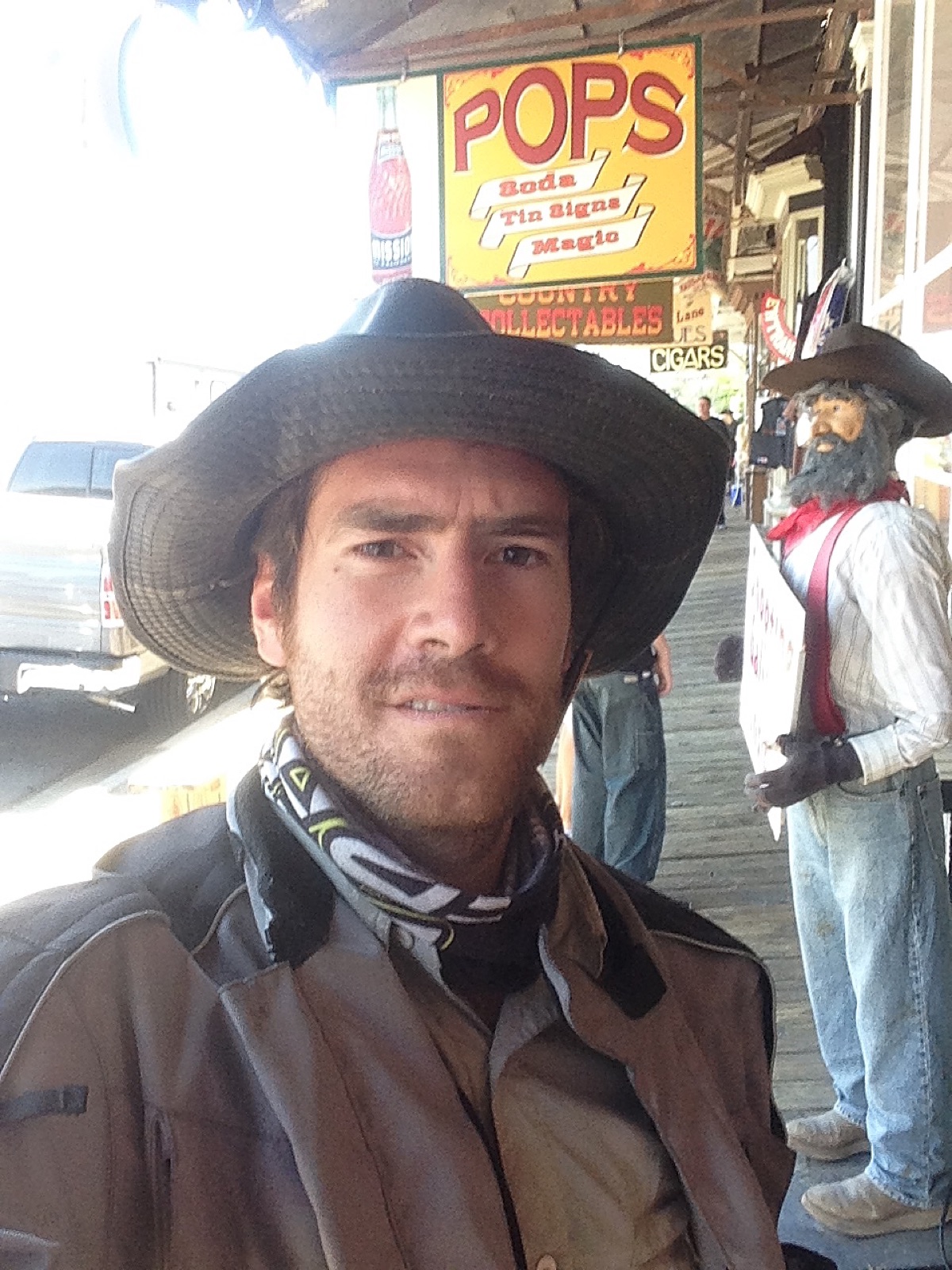 25
25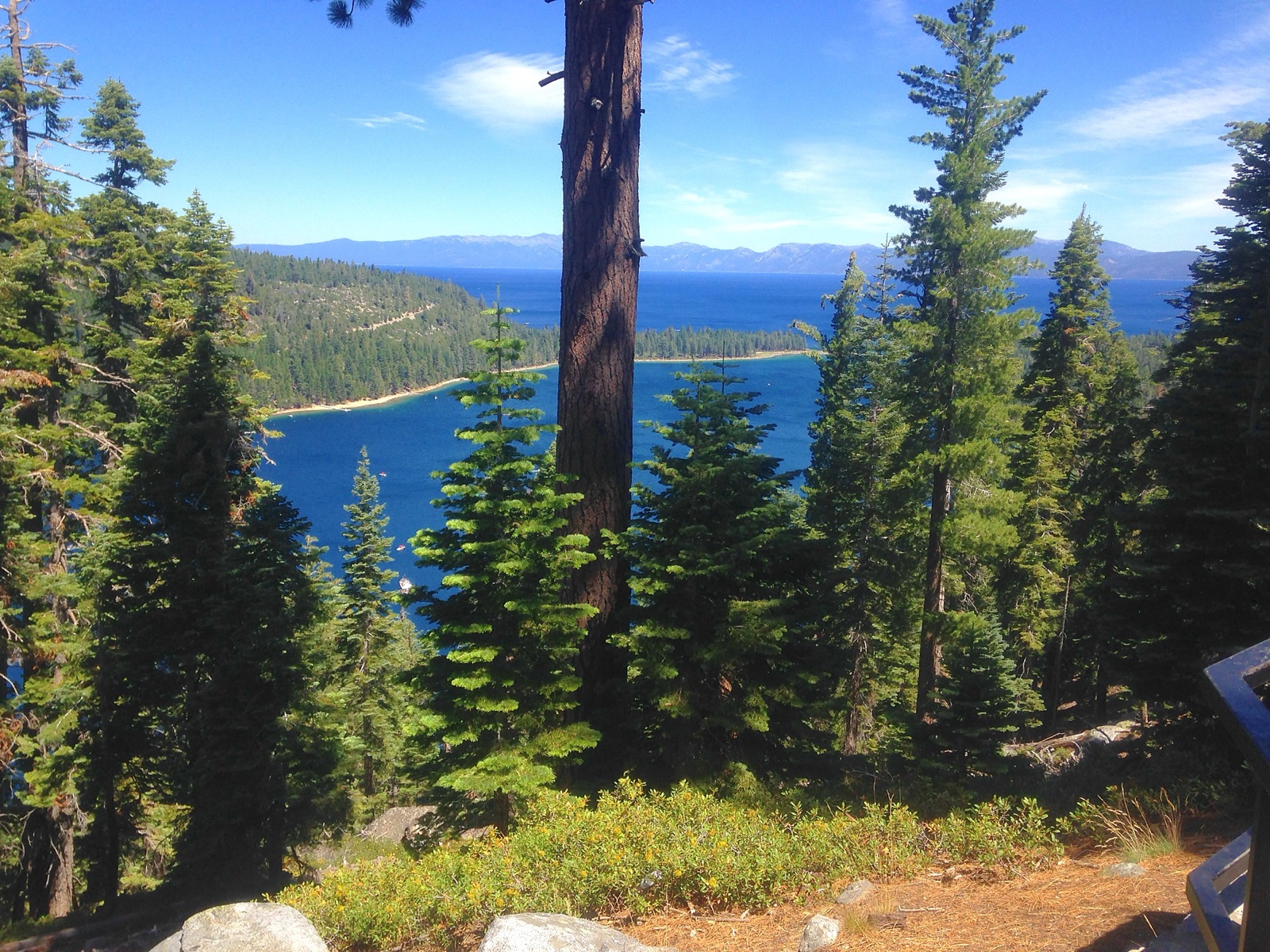 26272829
 30
30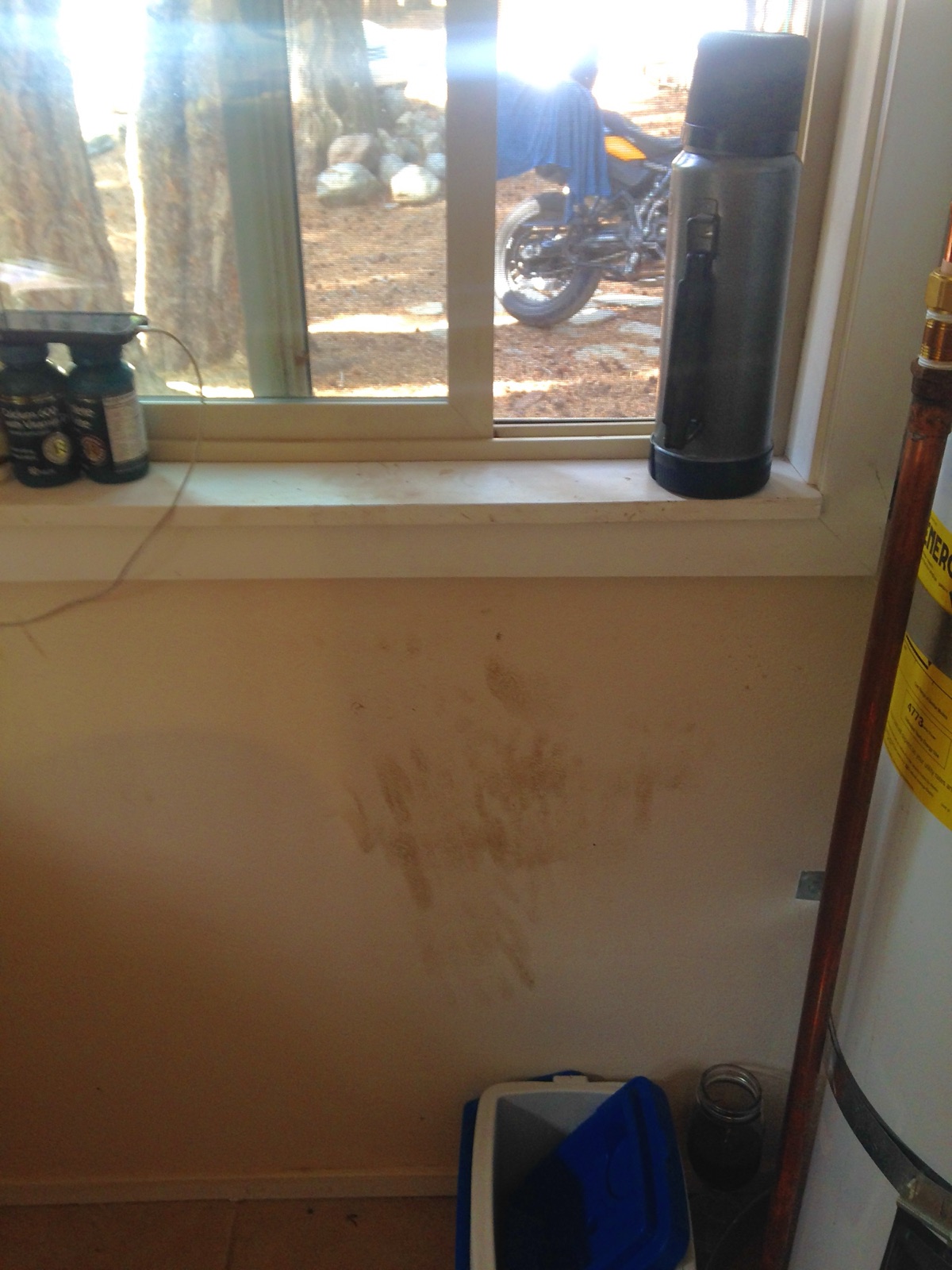 313233
 343536
 37
37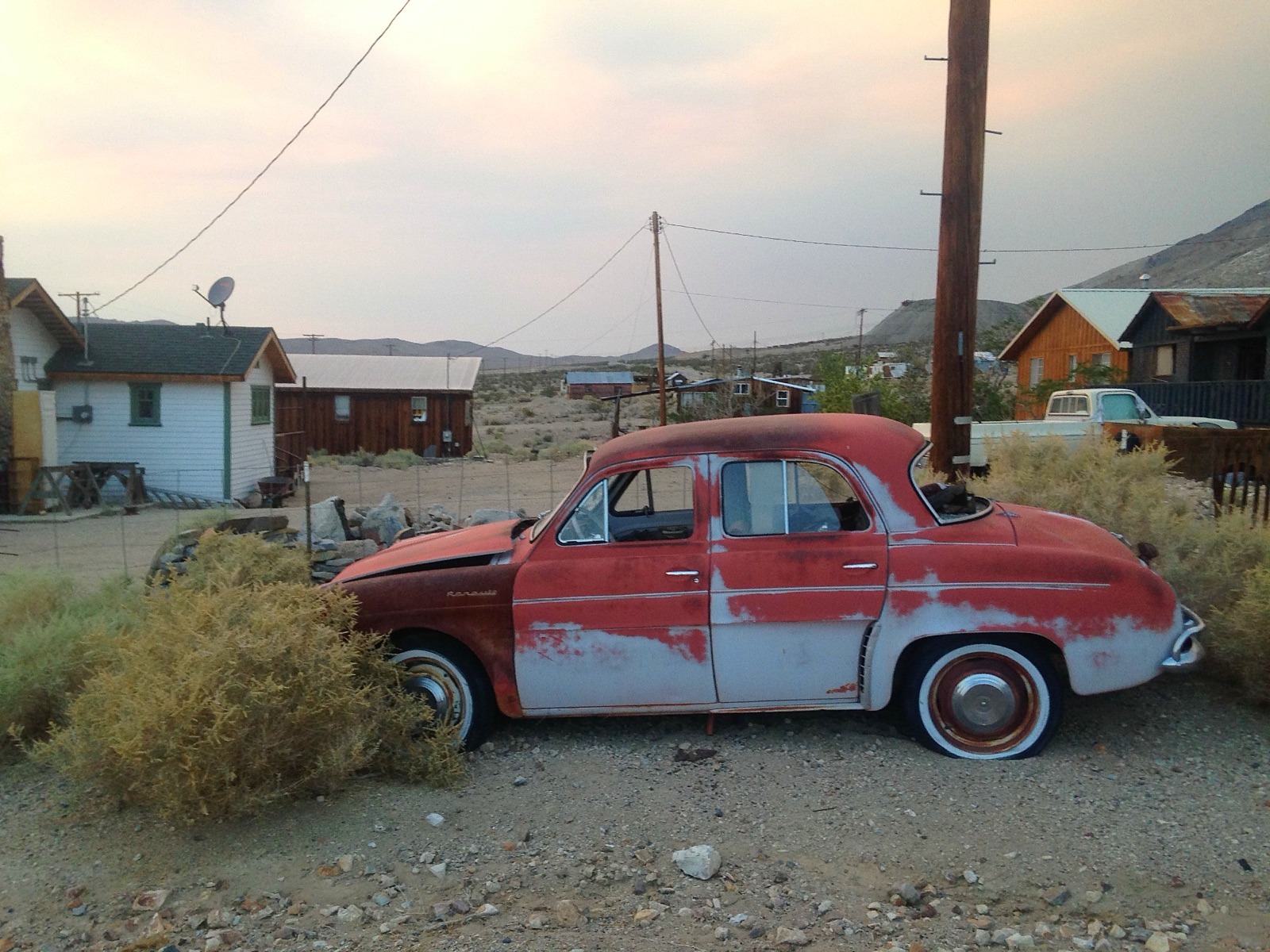 38
38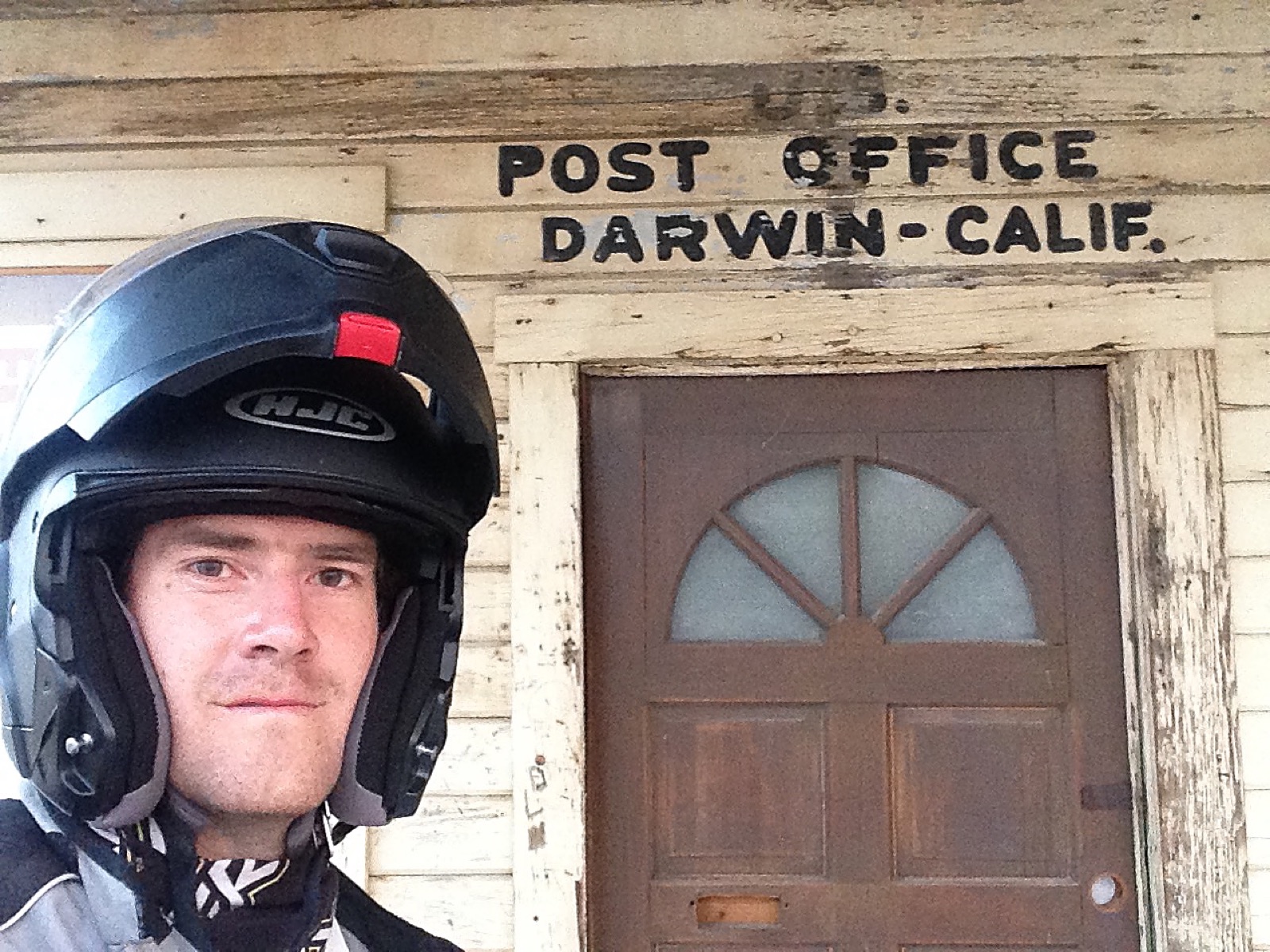 39404142
 43
43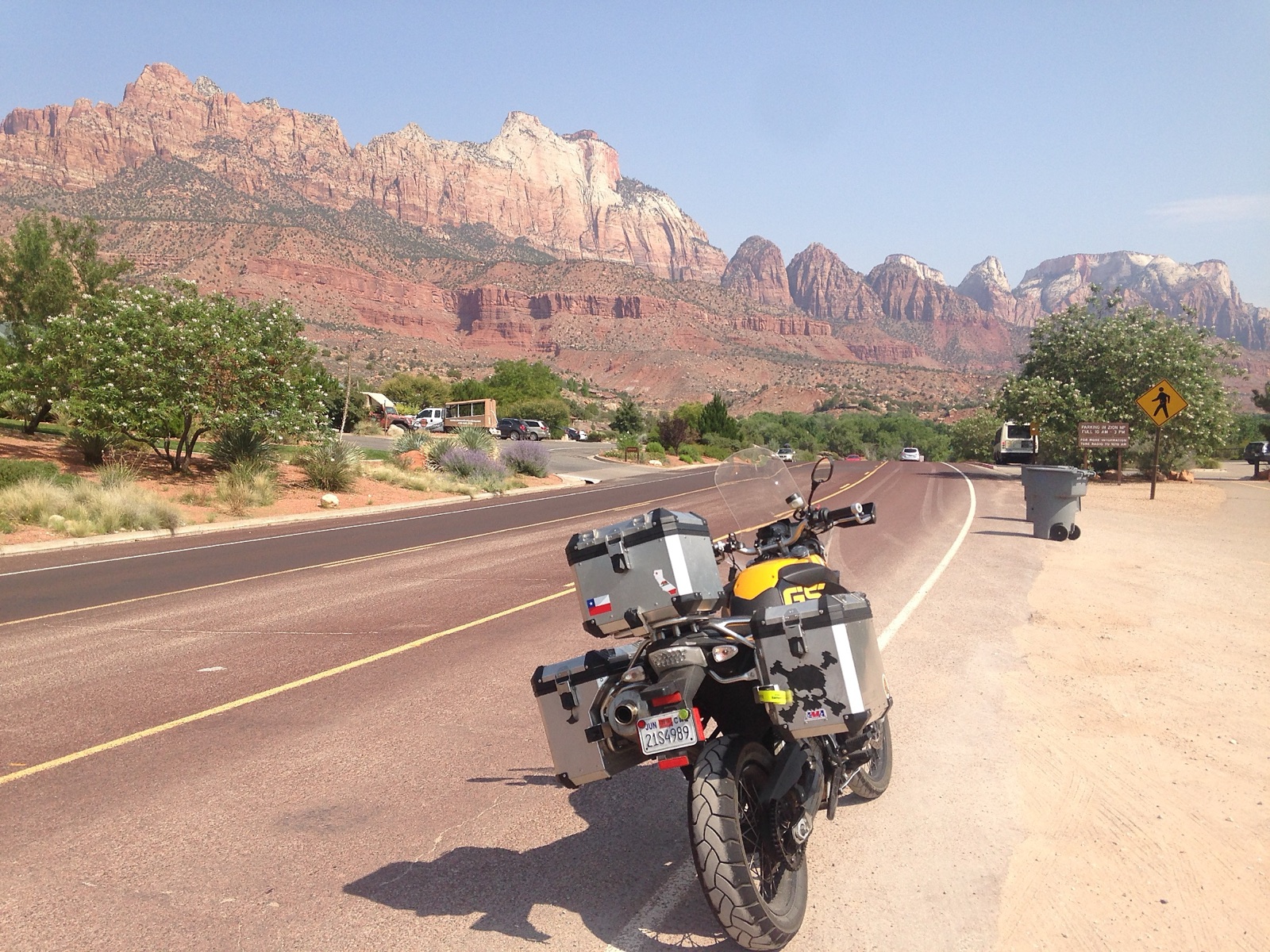 4445
4445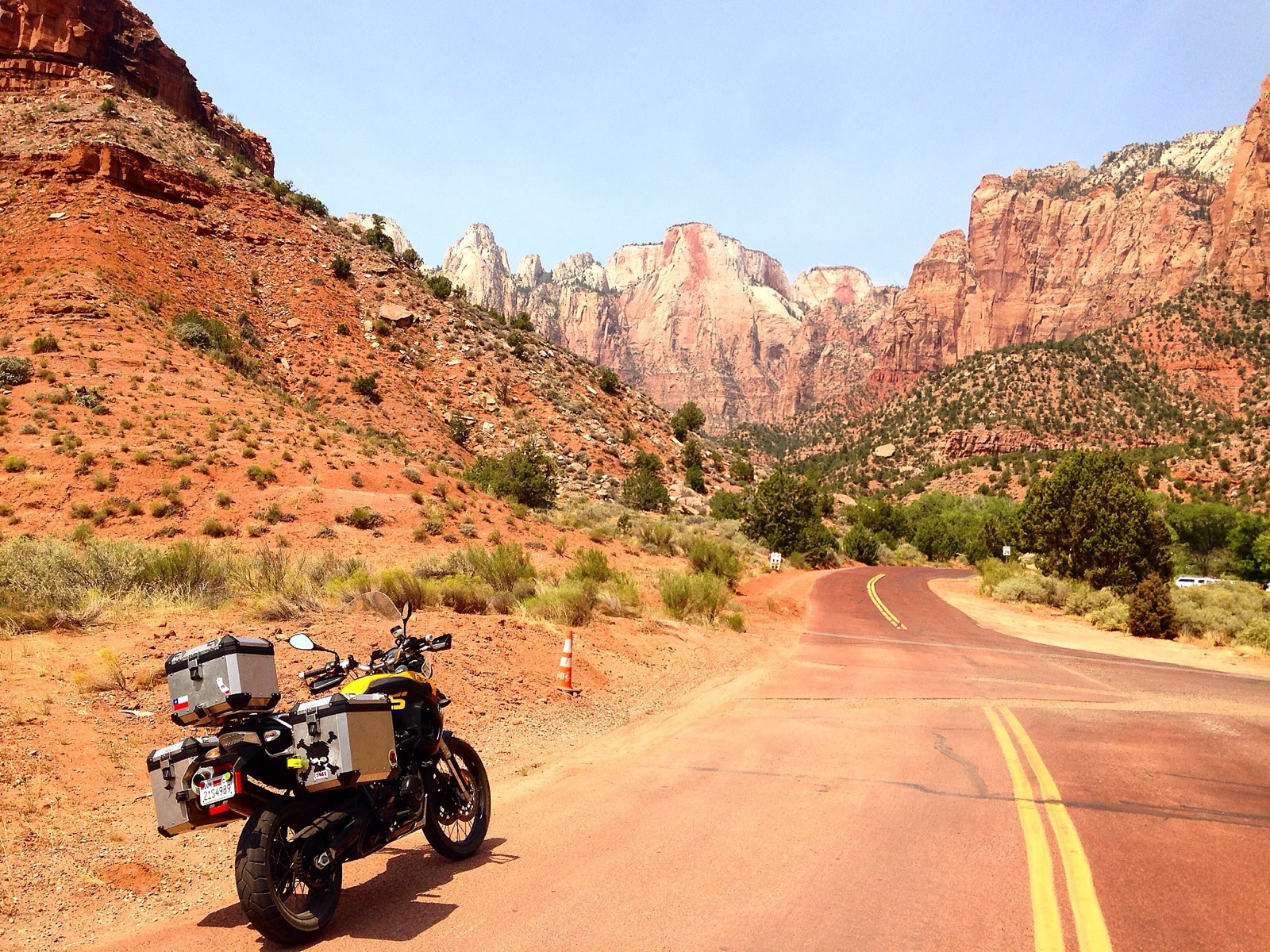 46
46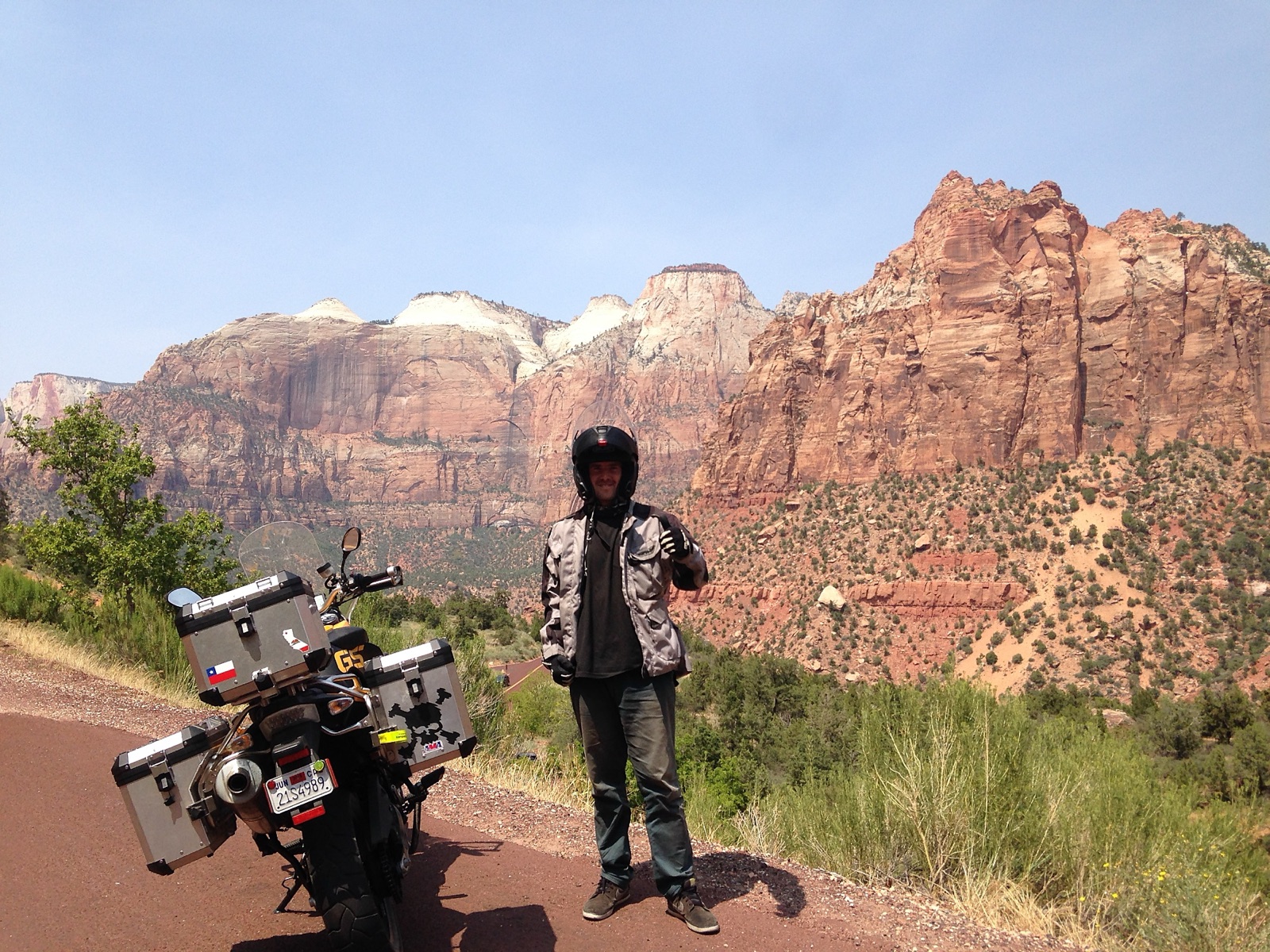 47
47 48
48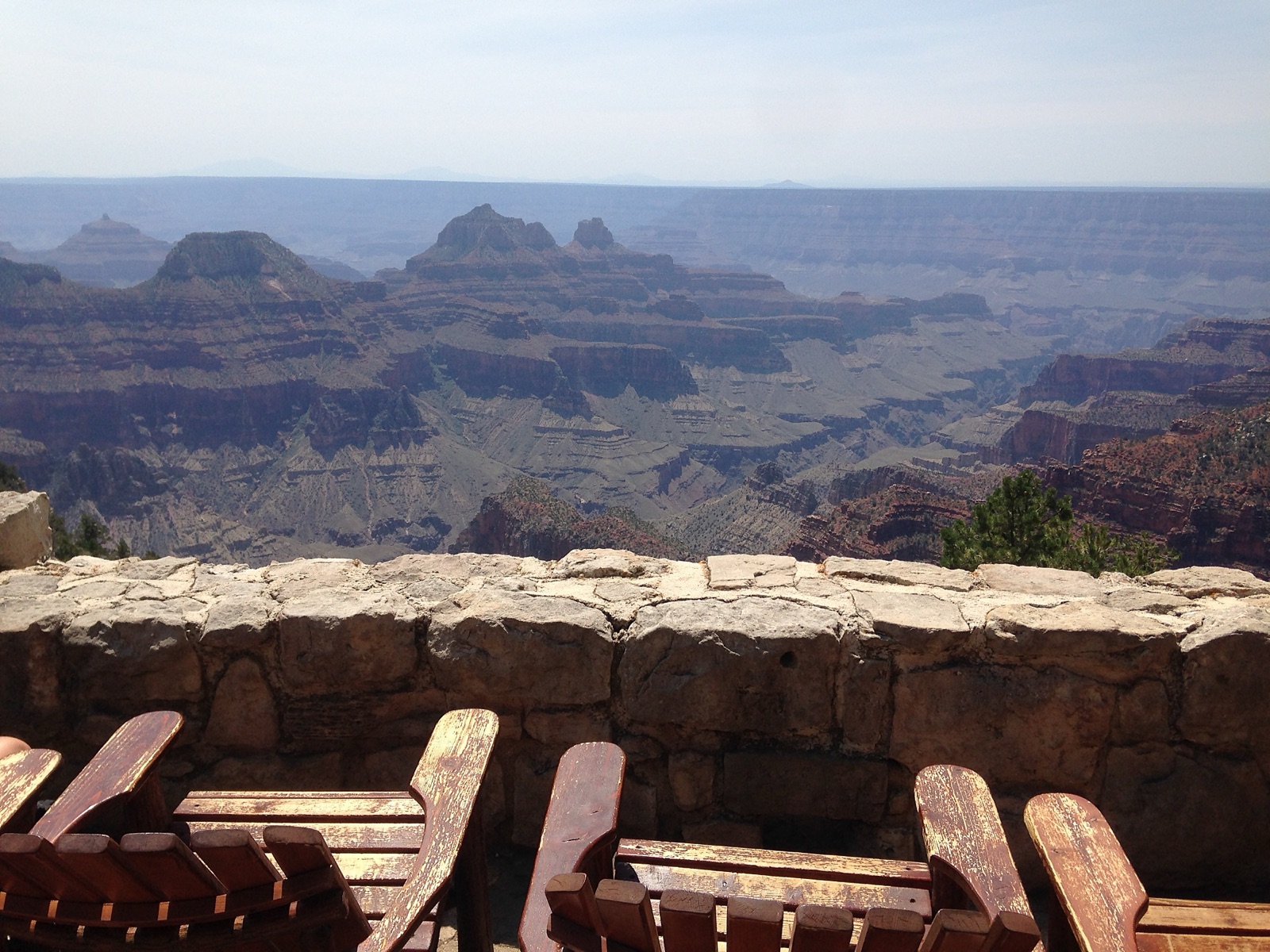 49
49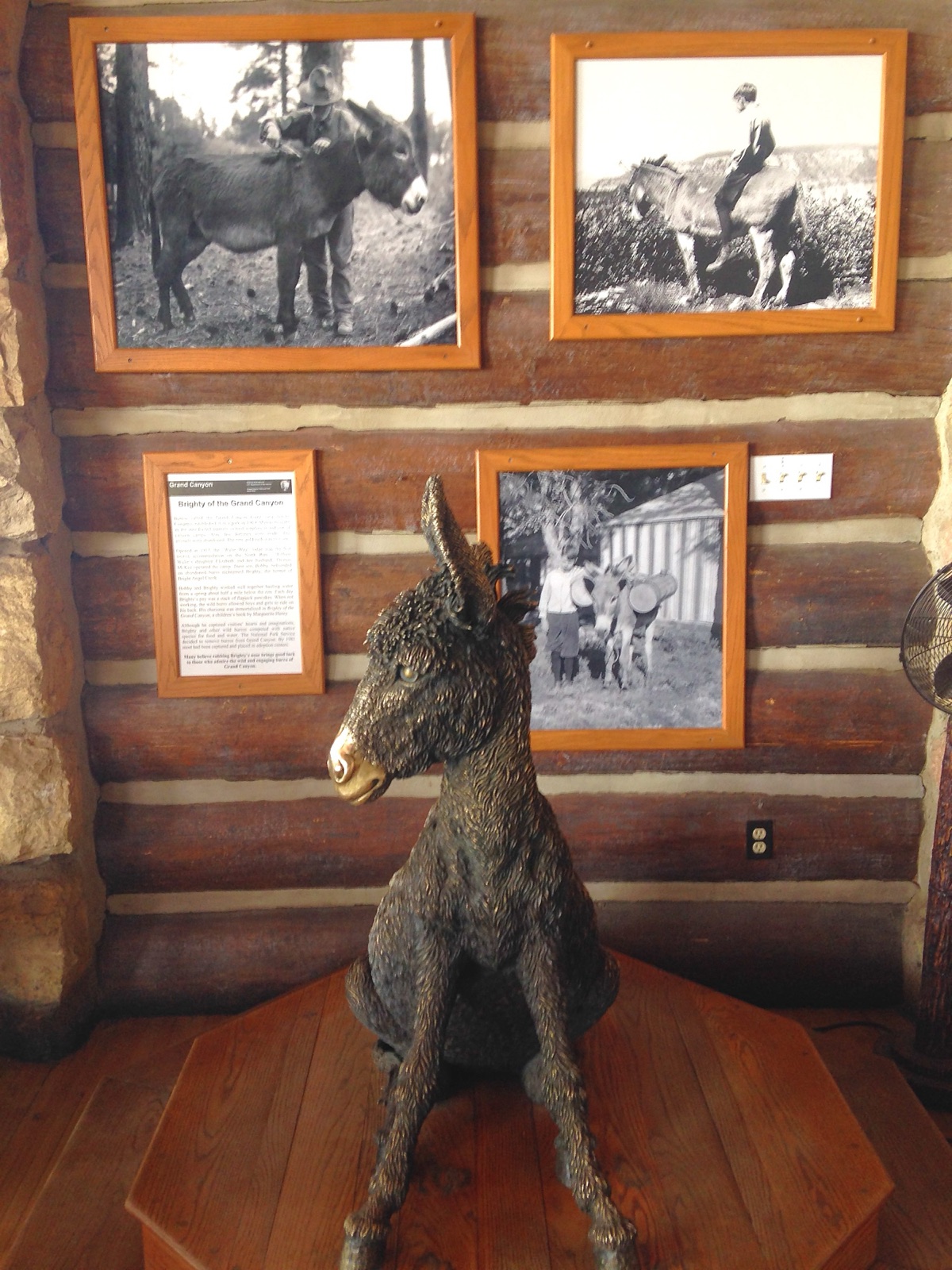 5051
5051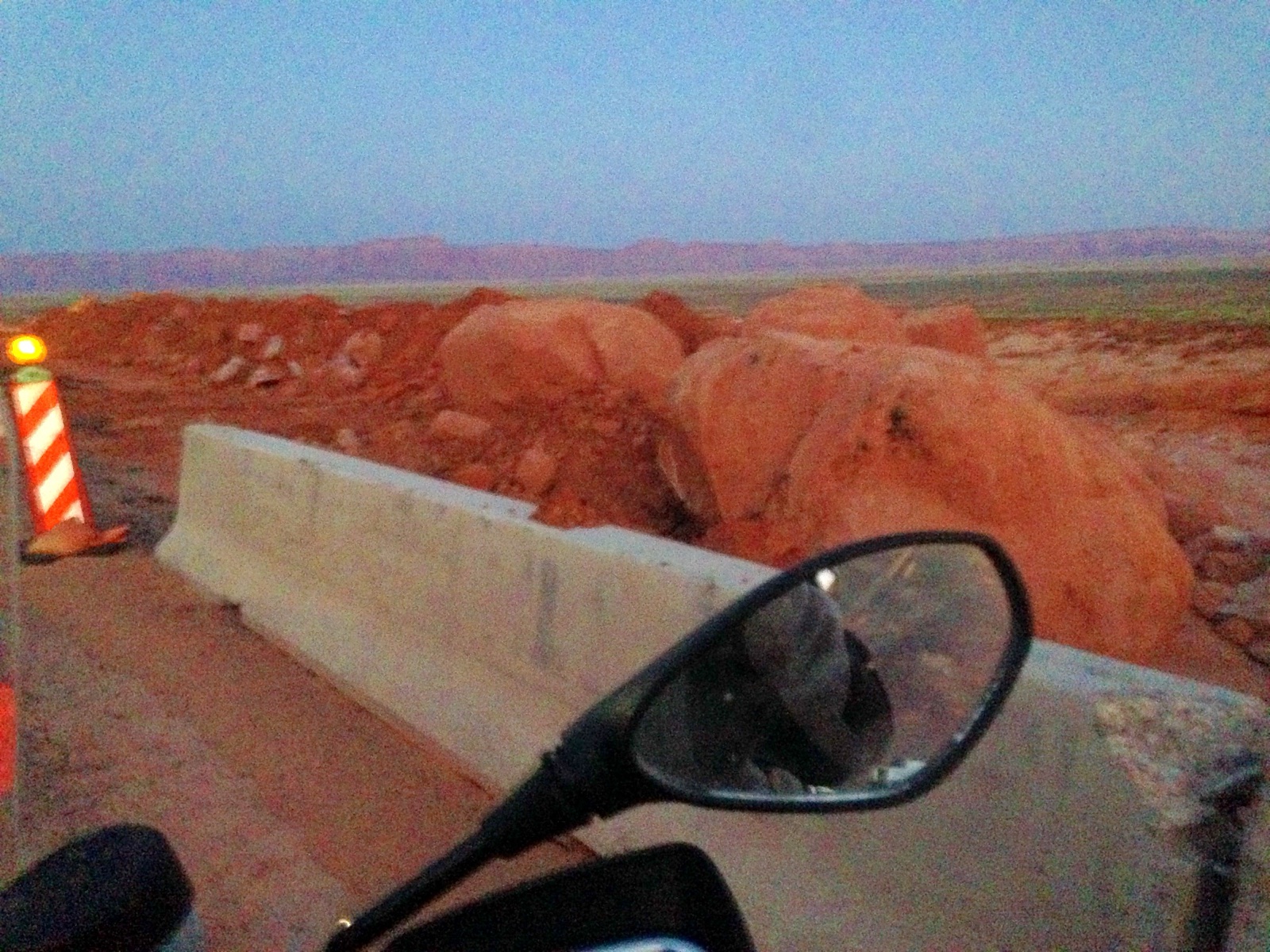 52
52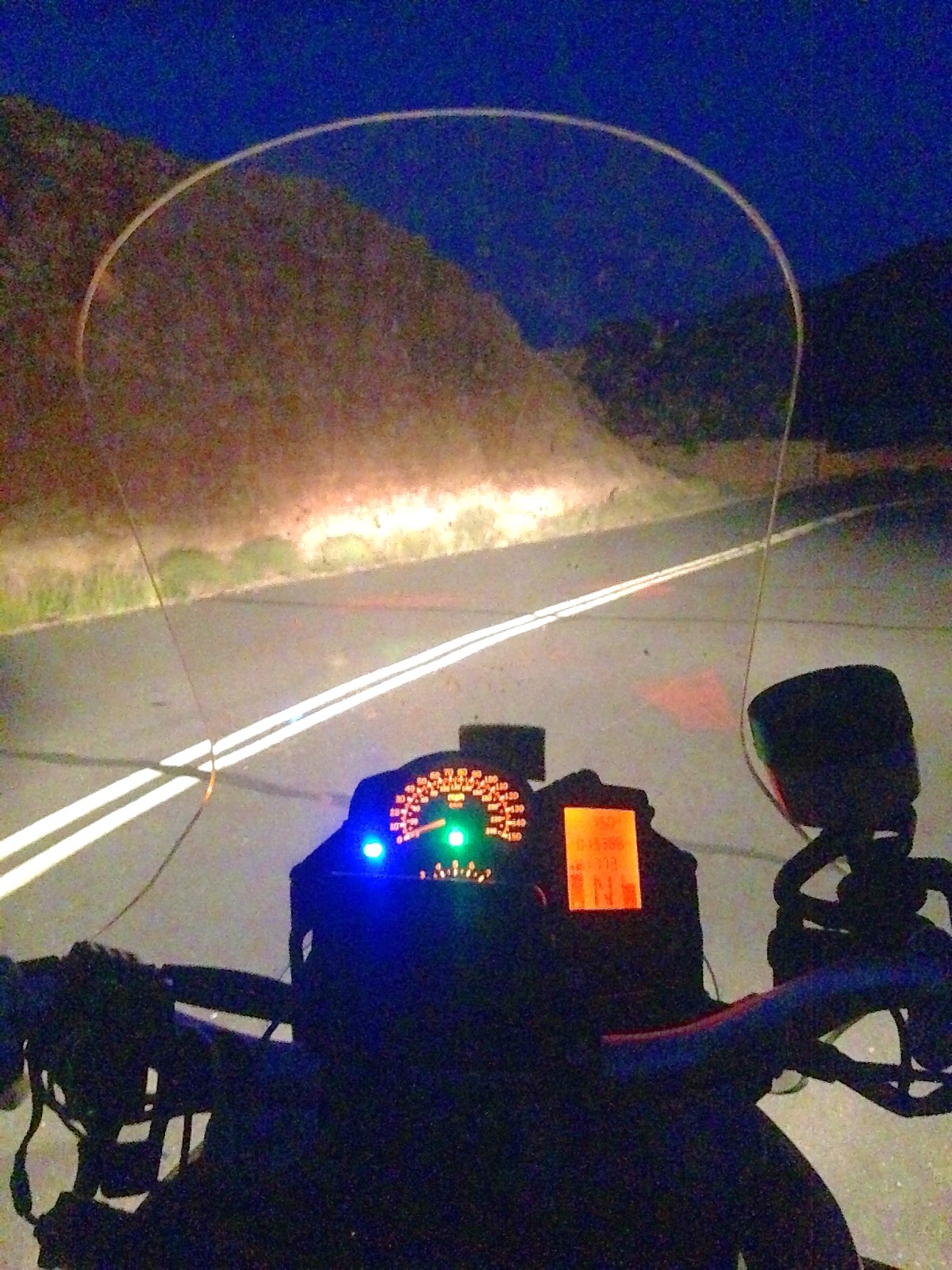 53
53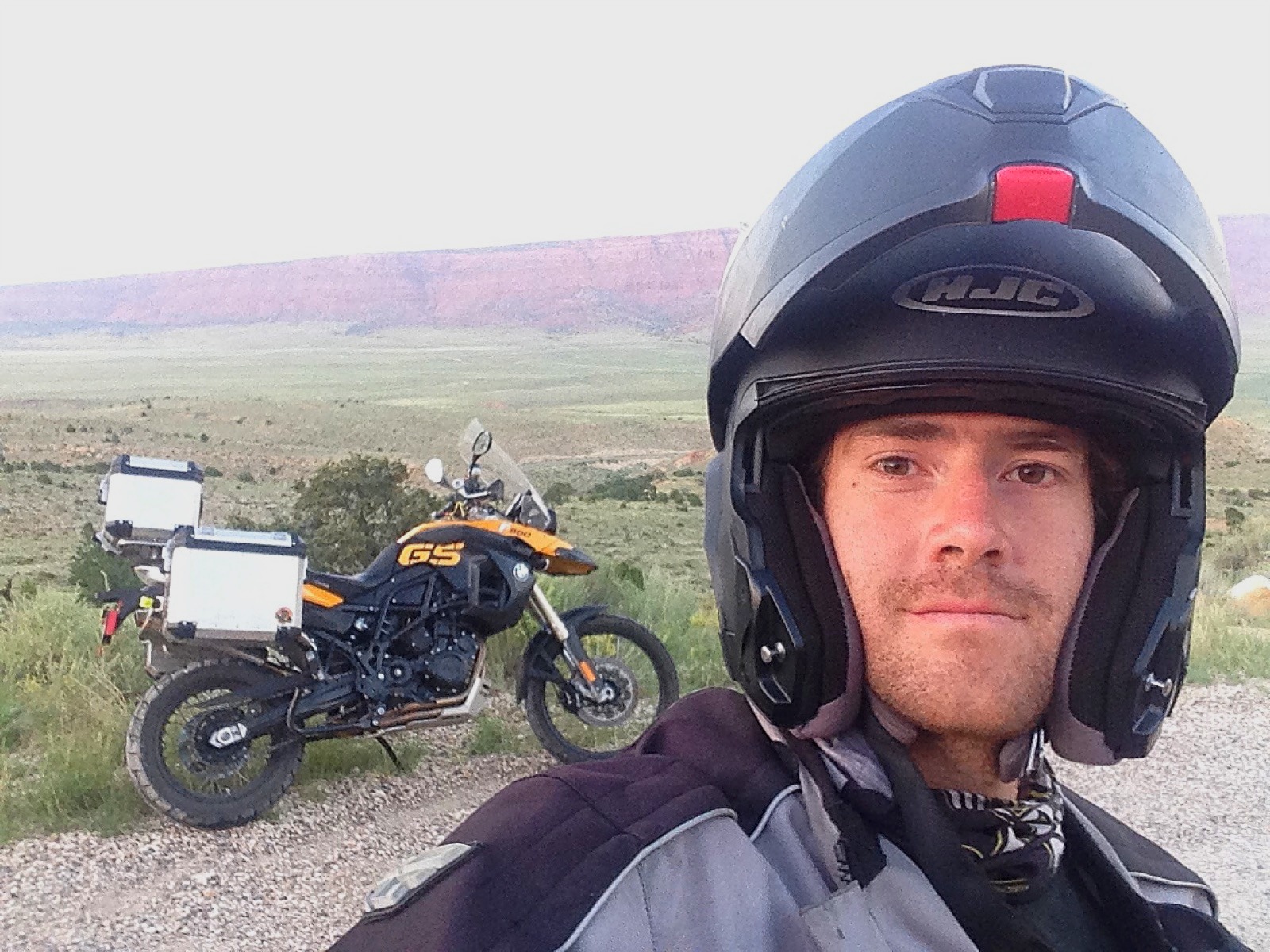 5455565758
 59
59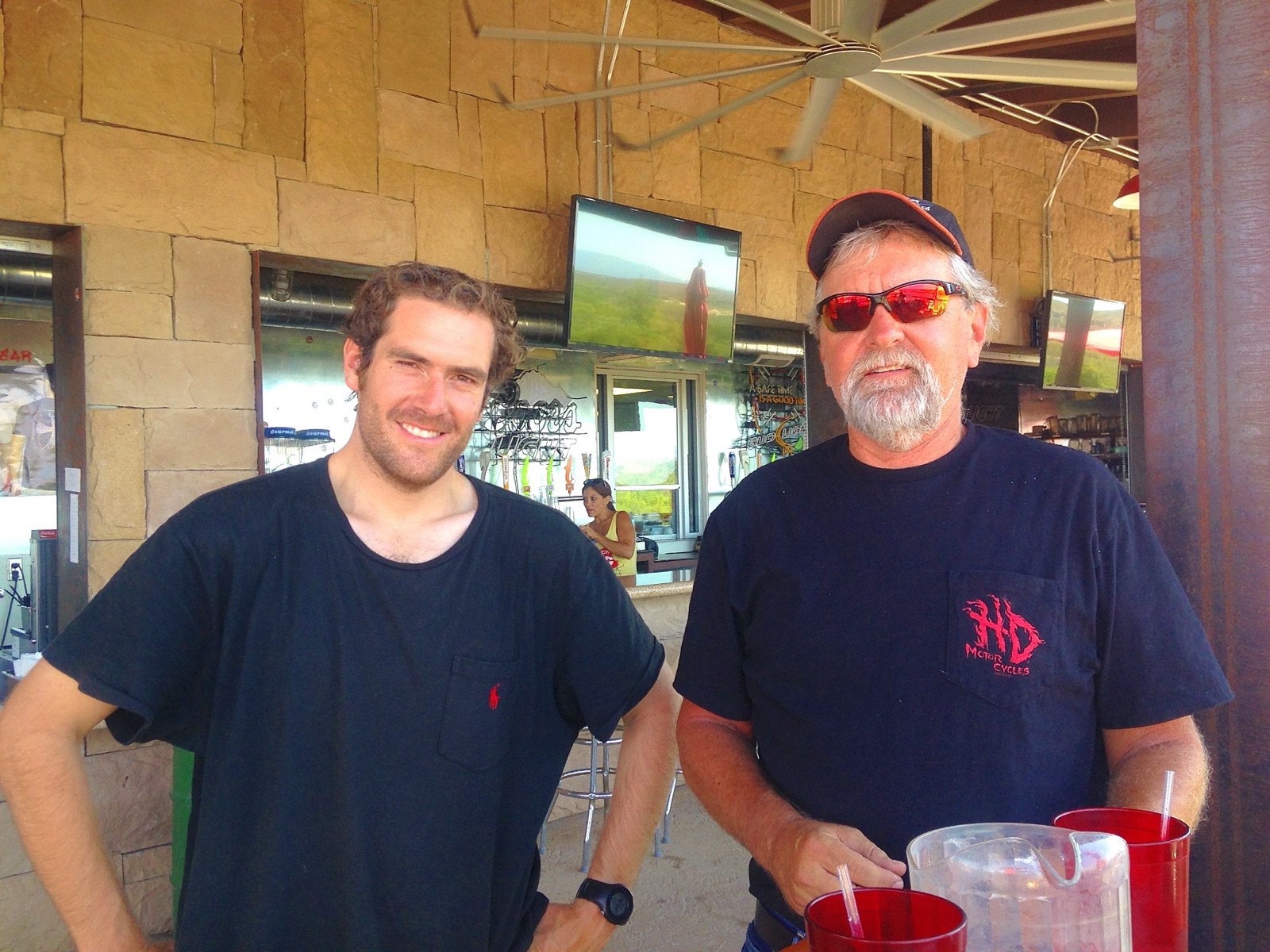 60
60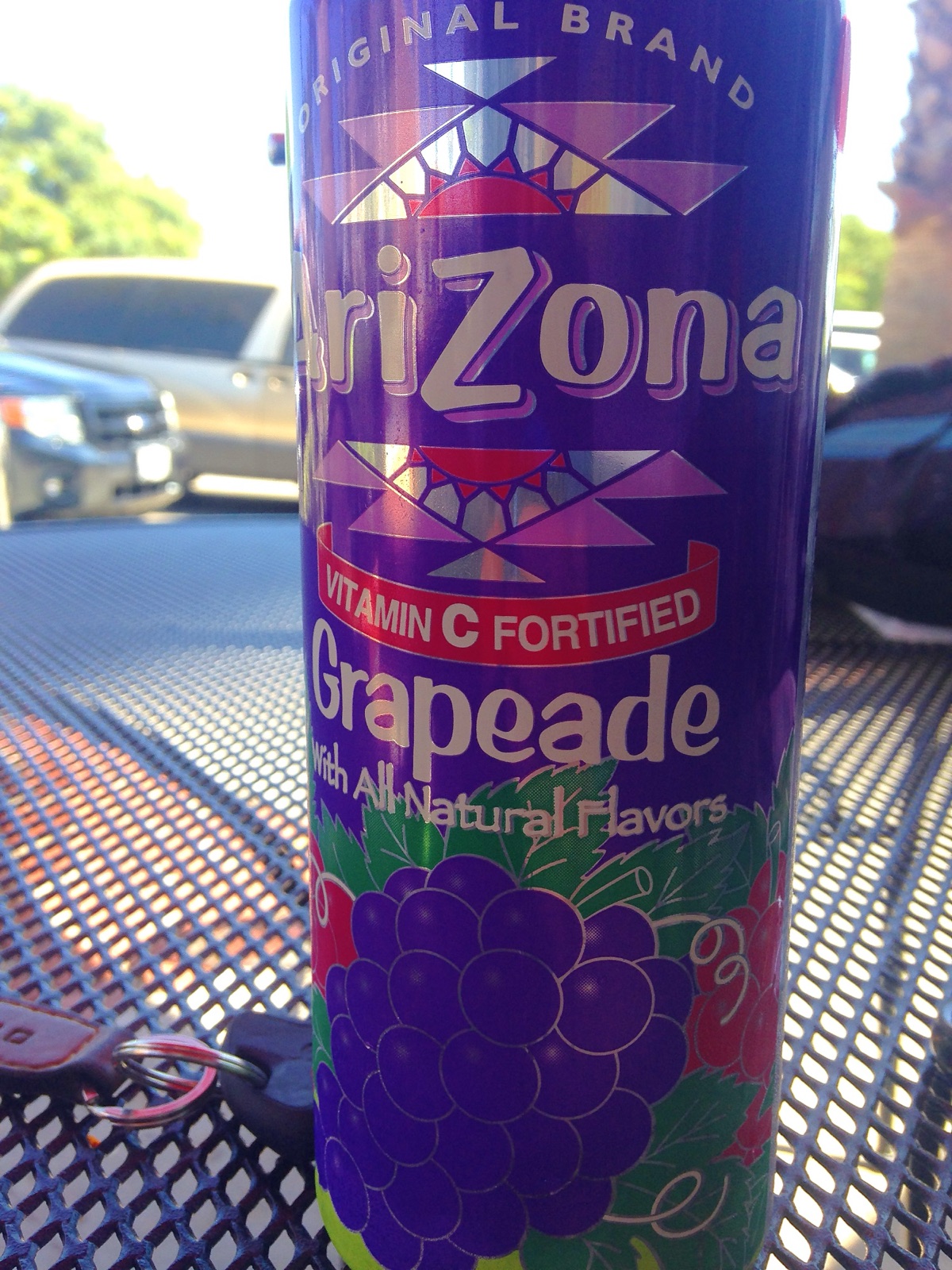 6162
6162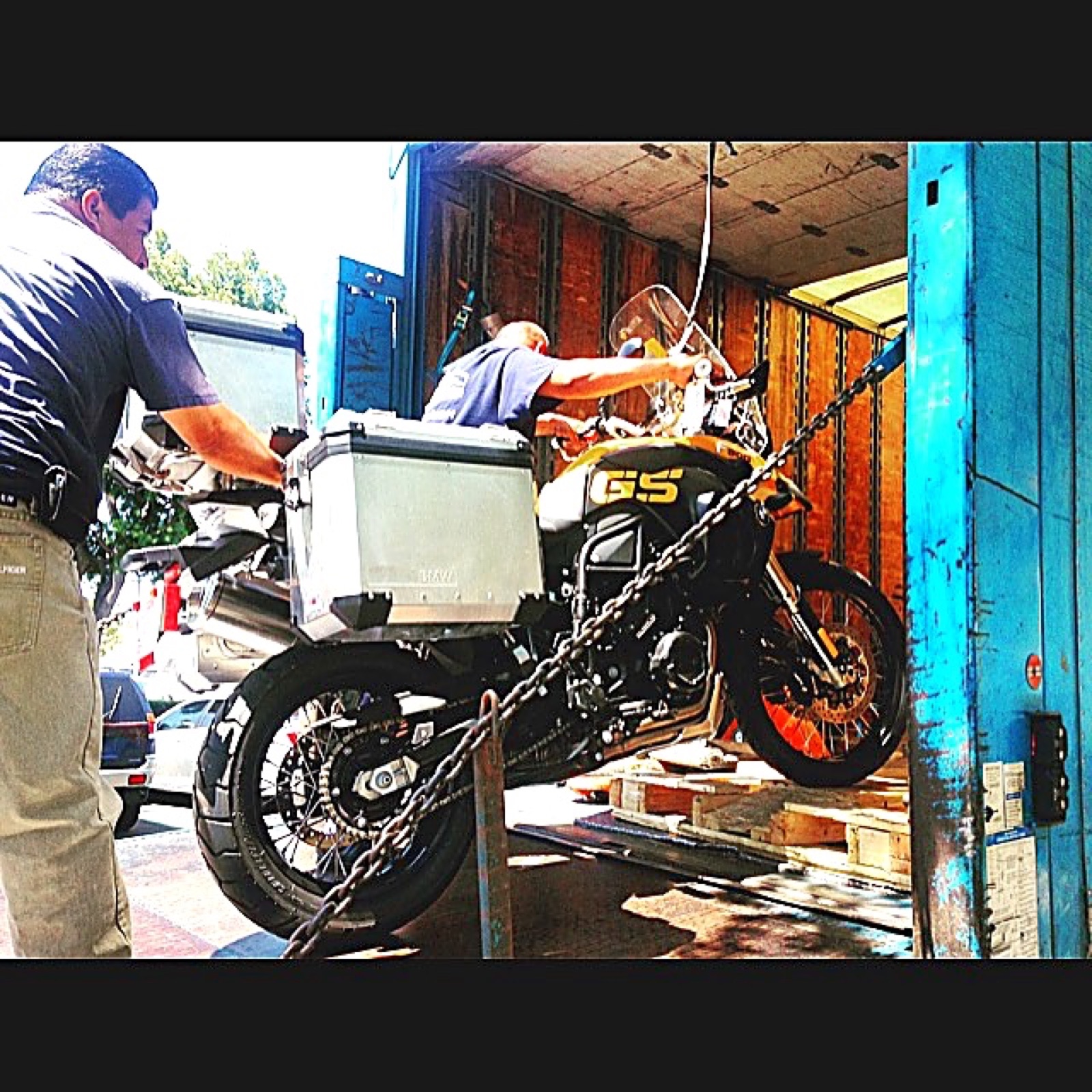 63
63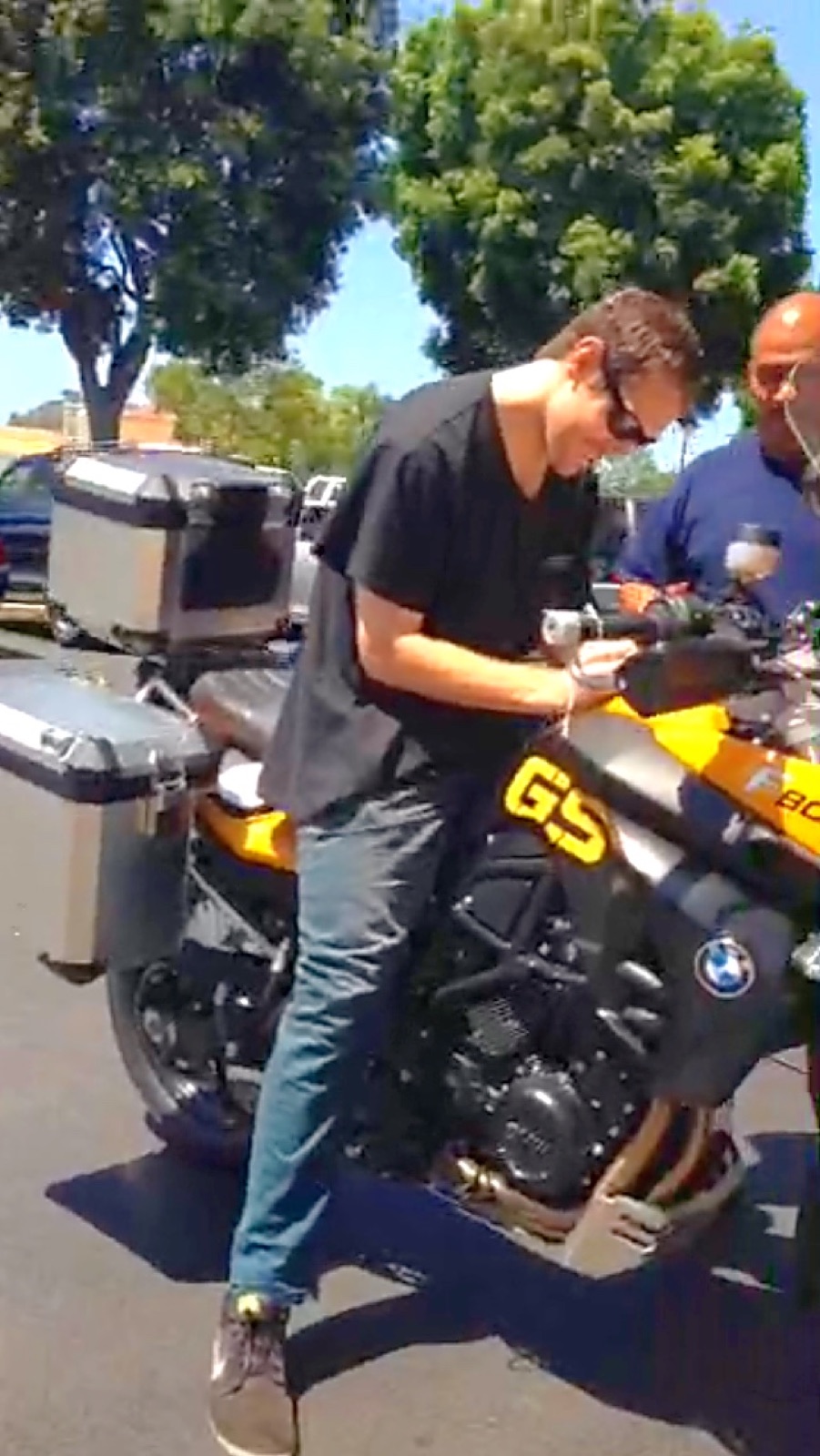 64
64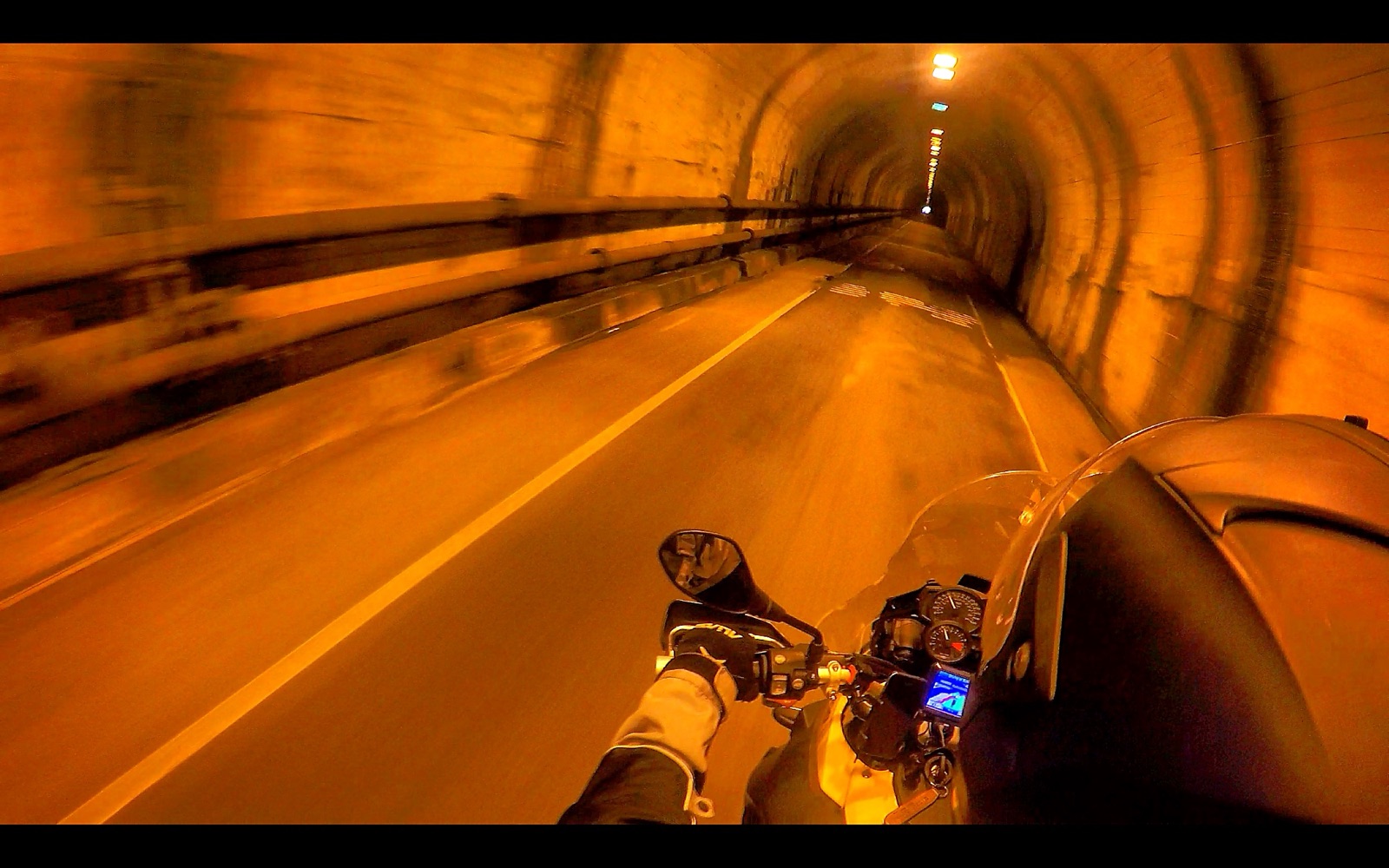 65
65