


Field note 05 The Silk Road
Six hours of dust, and then the bike died.
Two thousand kilometres of steppe between one town and the next, a family of judo champions who took me in, a Silk Road city I camped outside, and then, on an empty road in the desert, the motorcycle simply stopped. Kazakhstan, in the autumn of 2025.From Rodrigo's road archive
Touch or hover a marker on the route to see what is there.
The Silk Road
Six hours of dust, and then the bike died.
Two thousand kilometres of steppe between one town and the next, a family of judo champions who took me in, a Silk Road city I camped outside, and then, on an empty road in the desert, the motorcycle simply stopped. Kazakhstan, in the autumn of 2025.
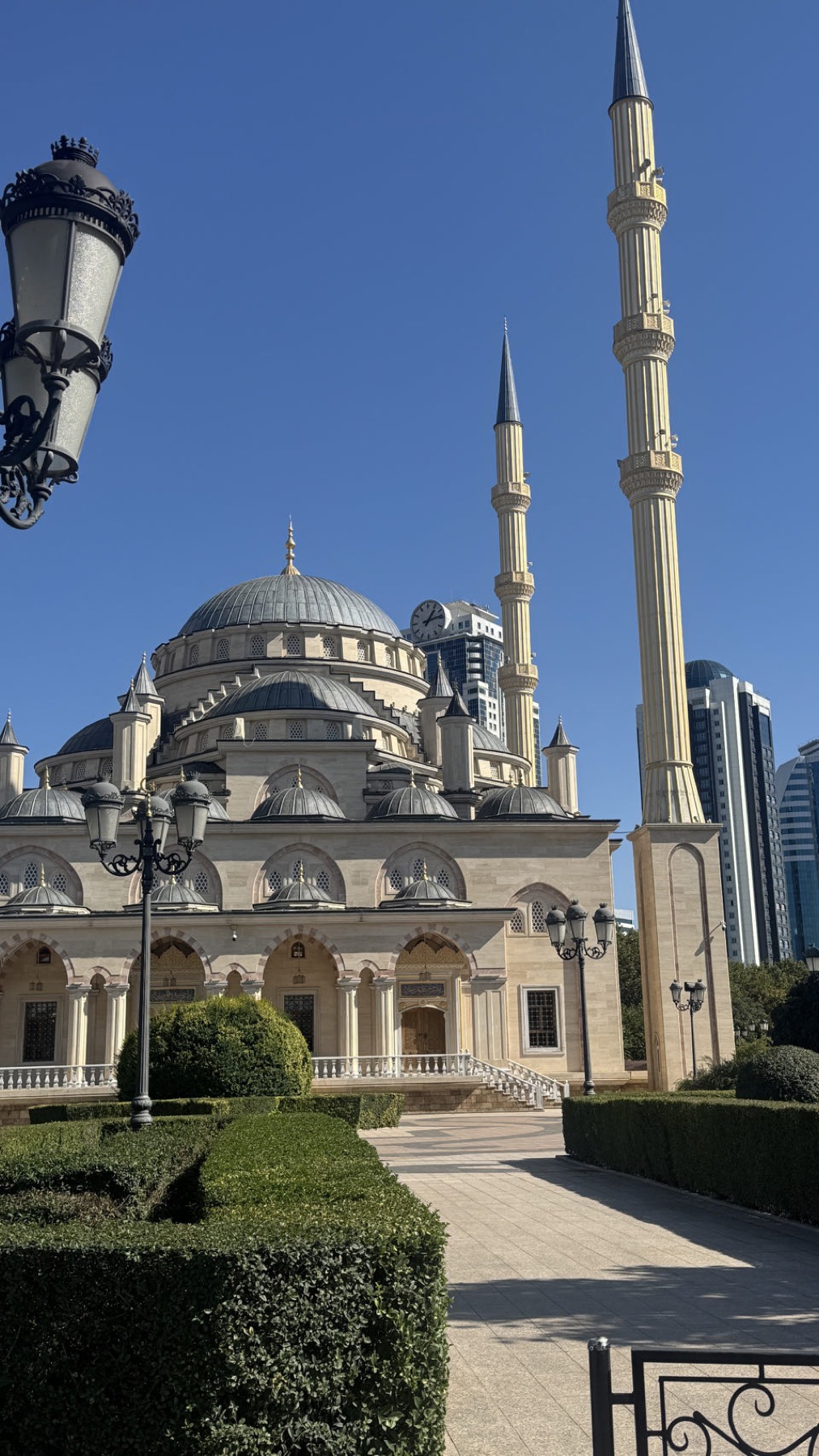
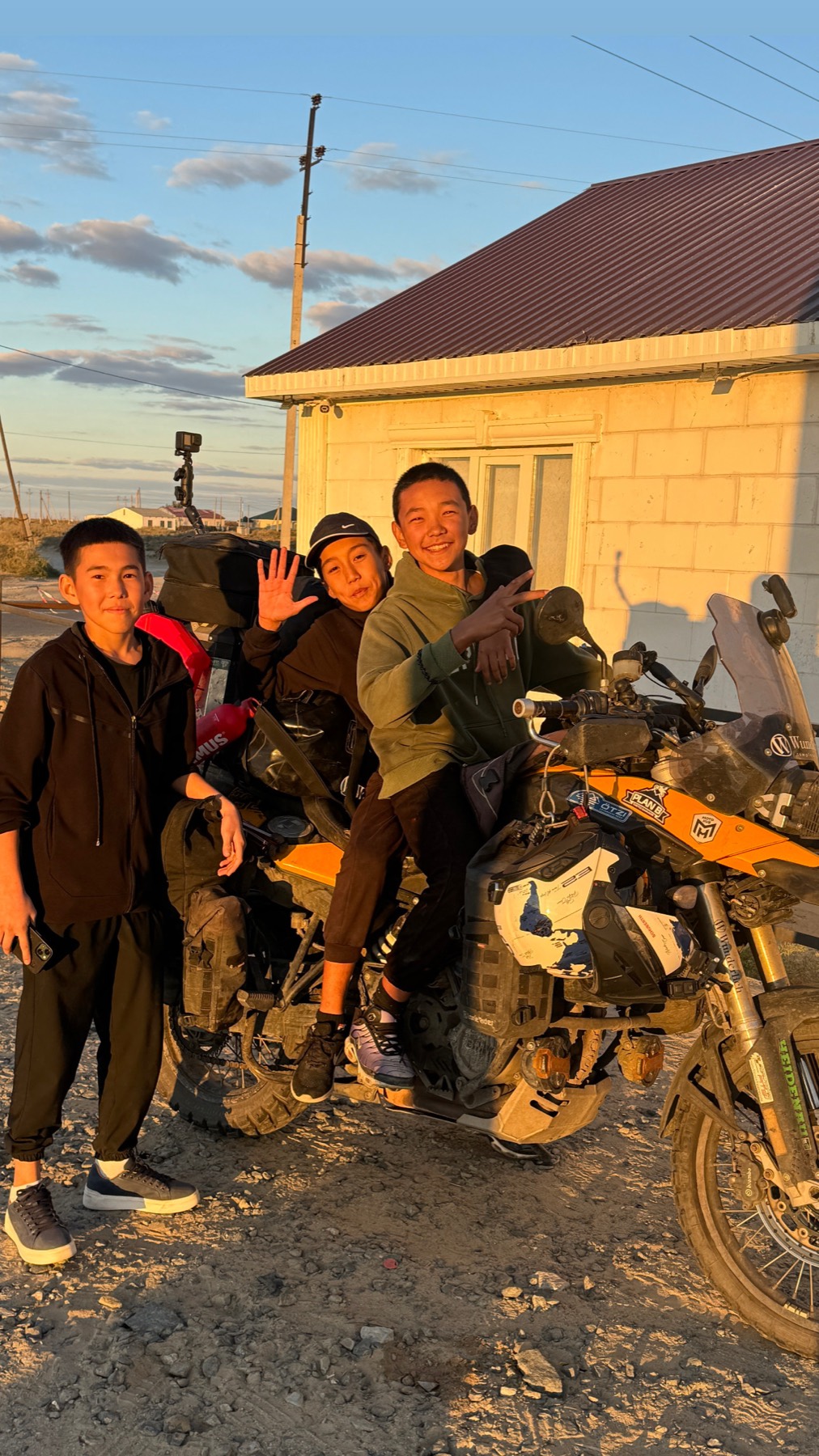
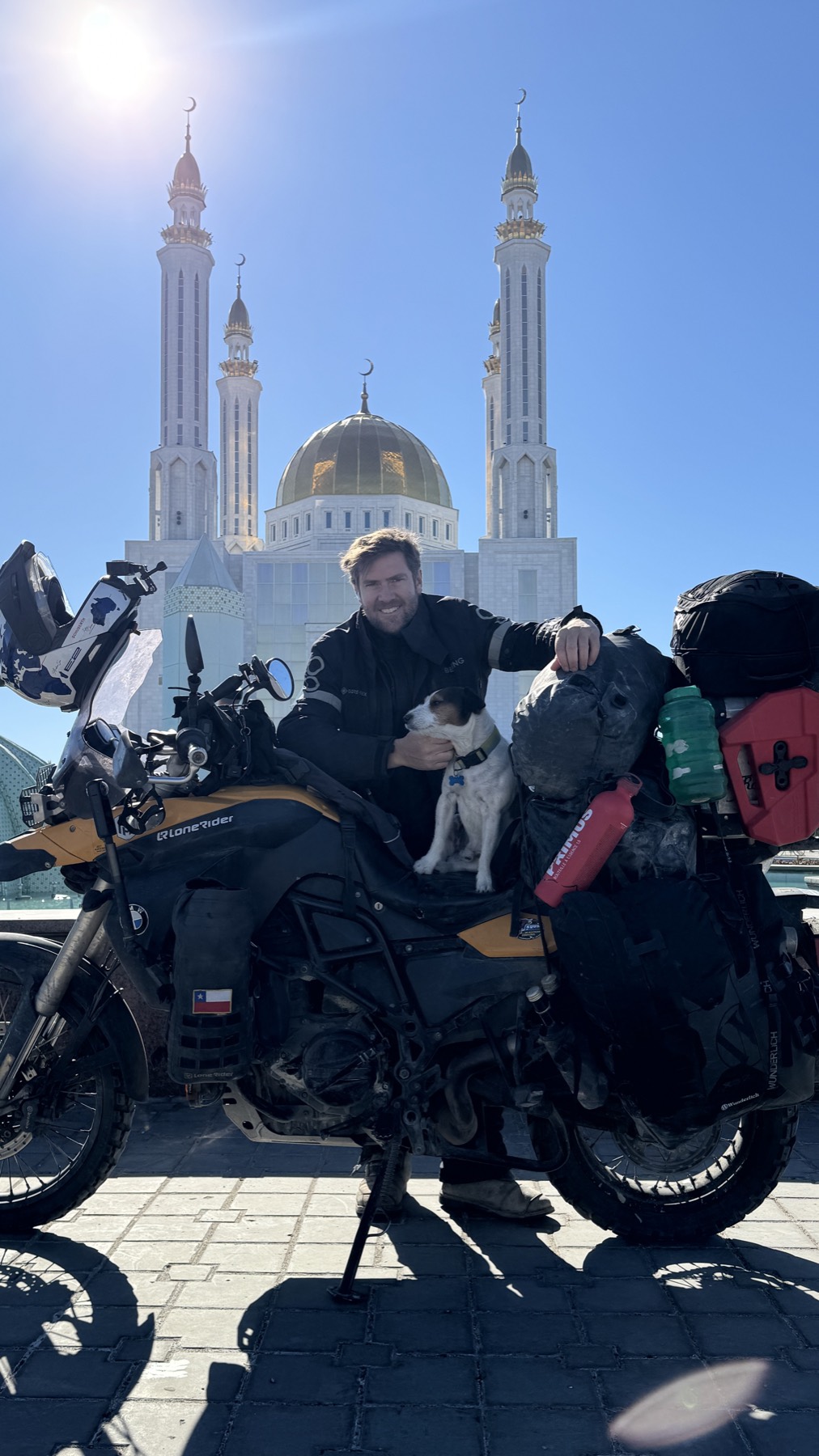 05.1Aktobe, in the west. Its mosque carries a golden dome and four minarets, and a Russian Orthodox church stands a few streets away: two centuries of the same crossroads, side by side.05.2Three boys and a loaded BMW F800 GS. In a country where towns can sit hundreds of kilometres apart, a foreign motorcycle at the fuel pump is an event, and the invitation that follows is not a formality.
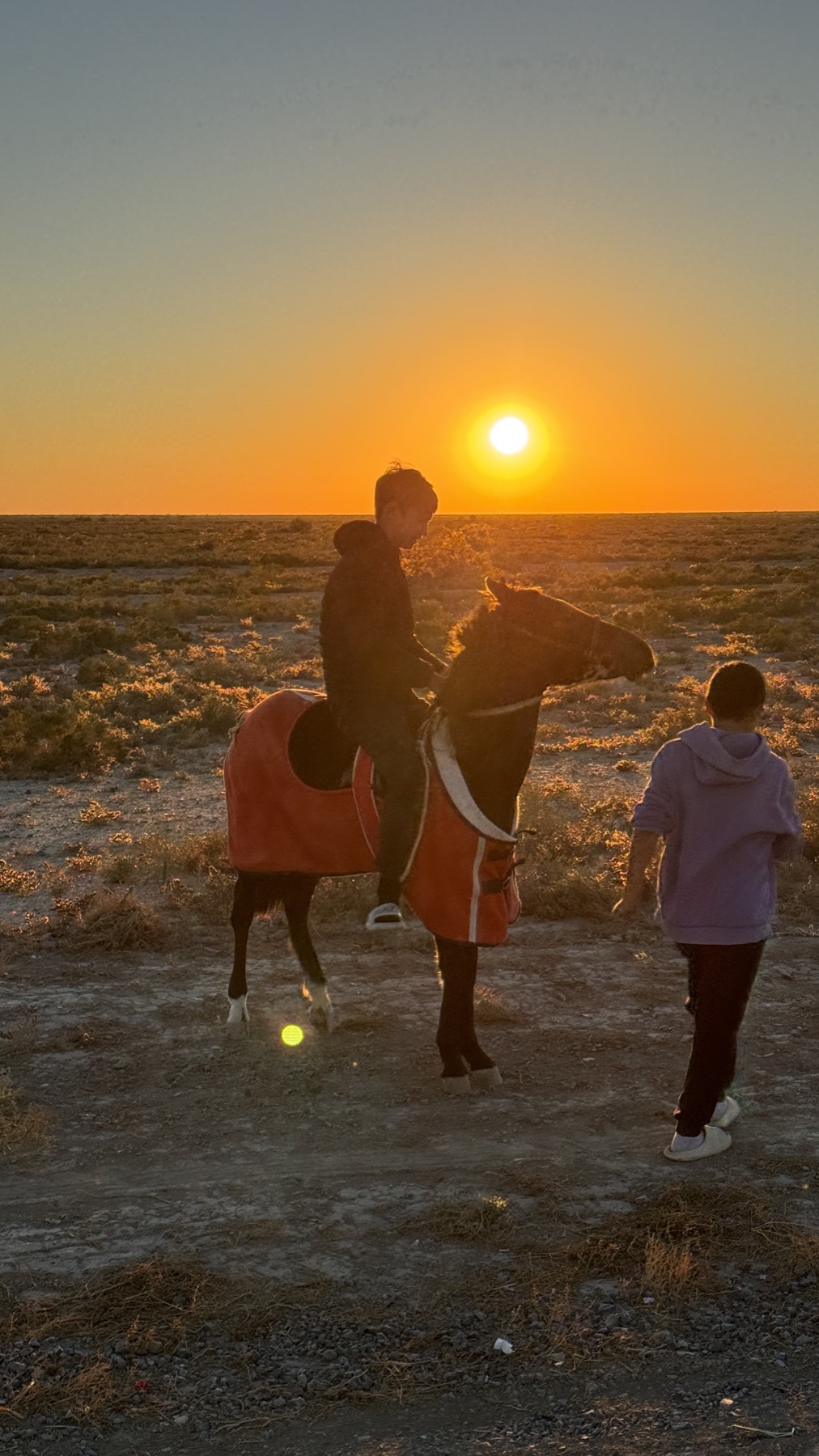 05.3Two boys and a horse at sunset. Kazakhstan was horse country long before it was anything else, and the world's earliest known evidence of horse domestication comes from these plains.
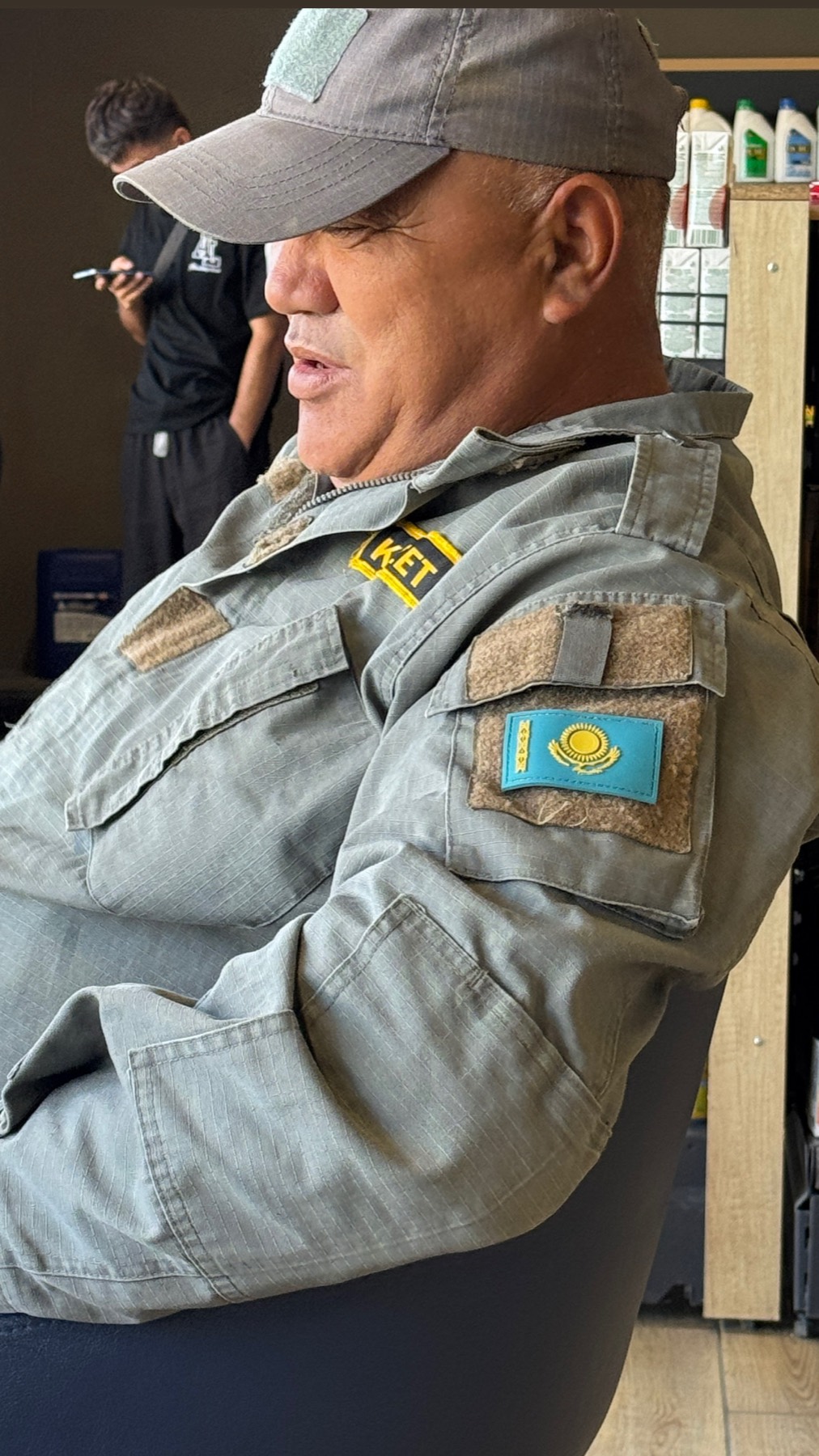 05.4The flag: a golden steppe eagle under a sun with thirty two rays, on sky blue. It has flown since independence from the Soviet Union in 1991.
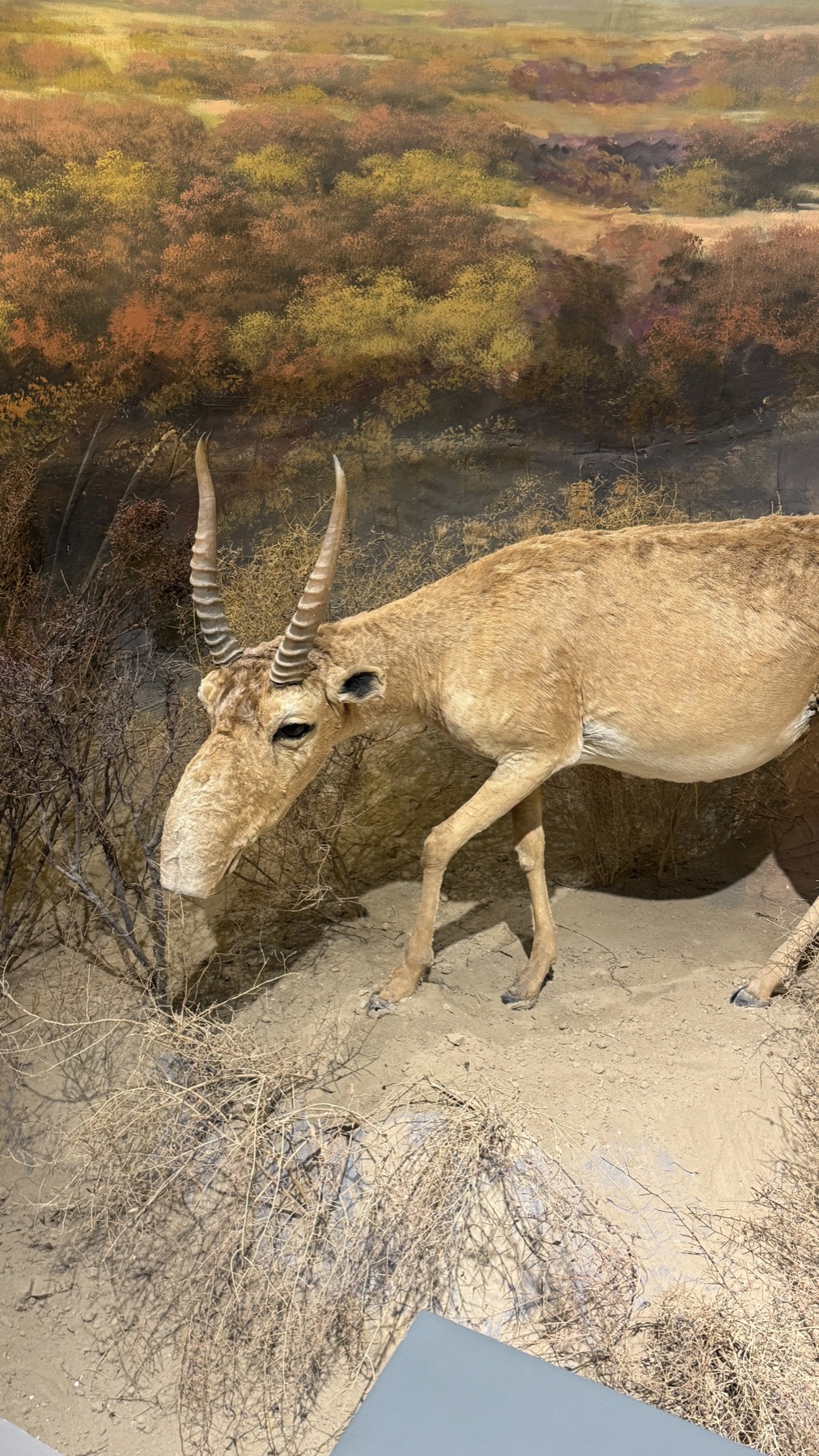
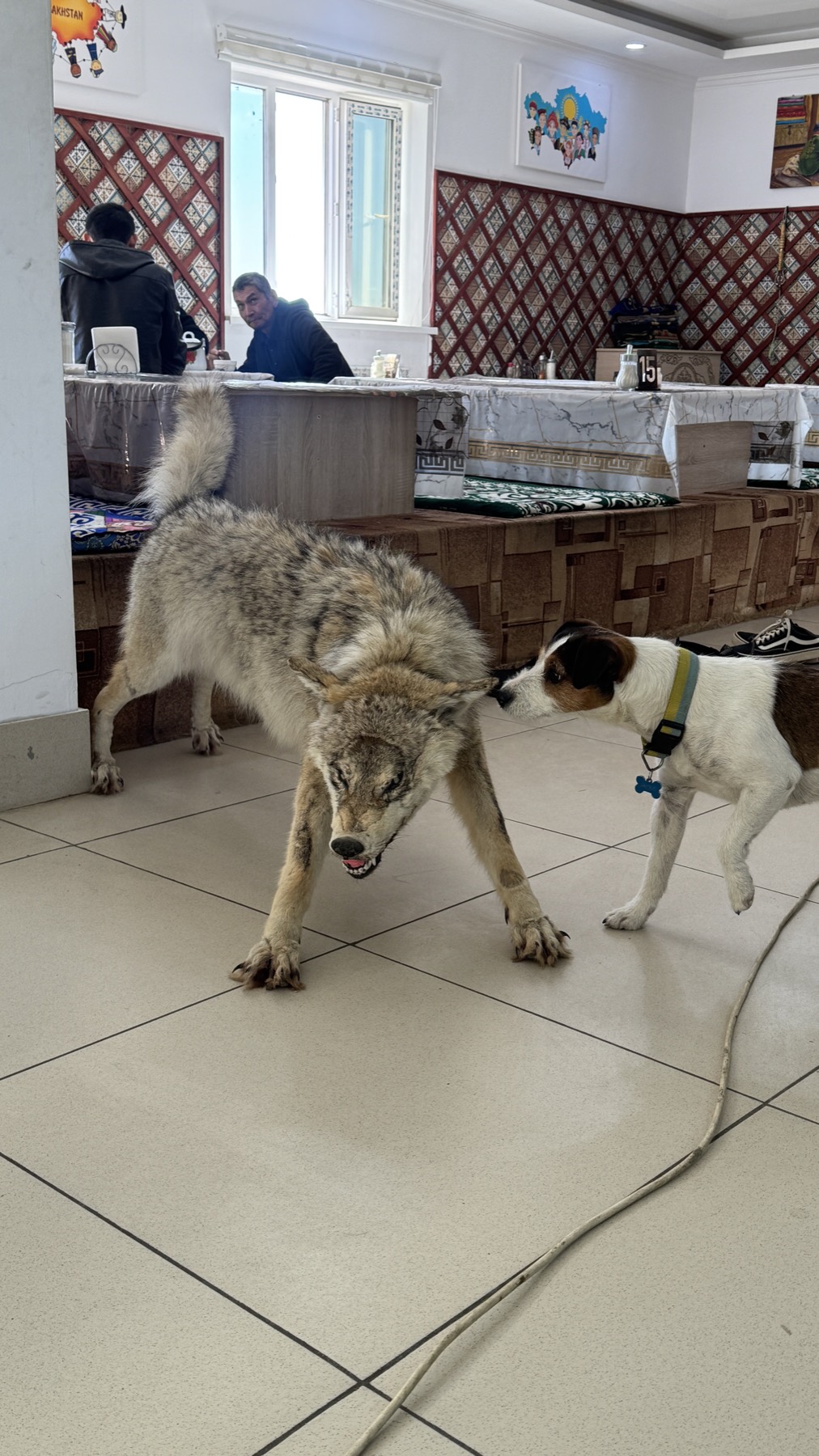 05.5A mounted wolf in a roadside restaurant. Wolves still range across the steppe and remain a working problem for herders, which is why one turns up stuffed beside the tables.05.6The saiga antelope, with its strange bulbous nose, filters dust and warms freezing air. It nearly vanished after the Soviet Union fell, and Kazakhstan now holds most of the world's population.
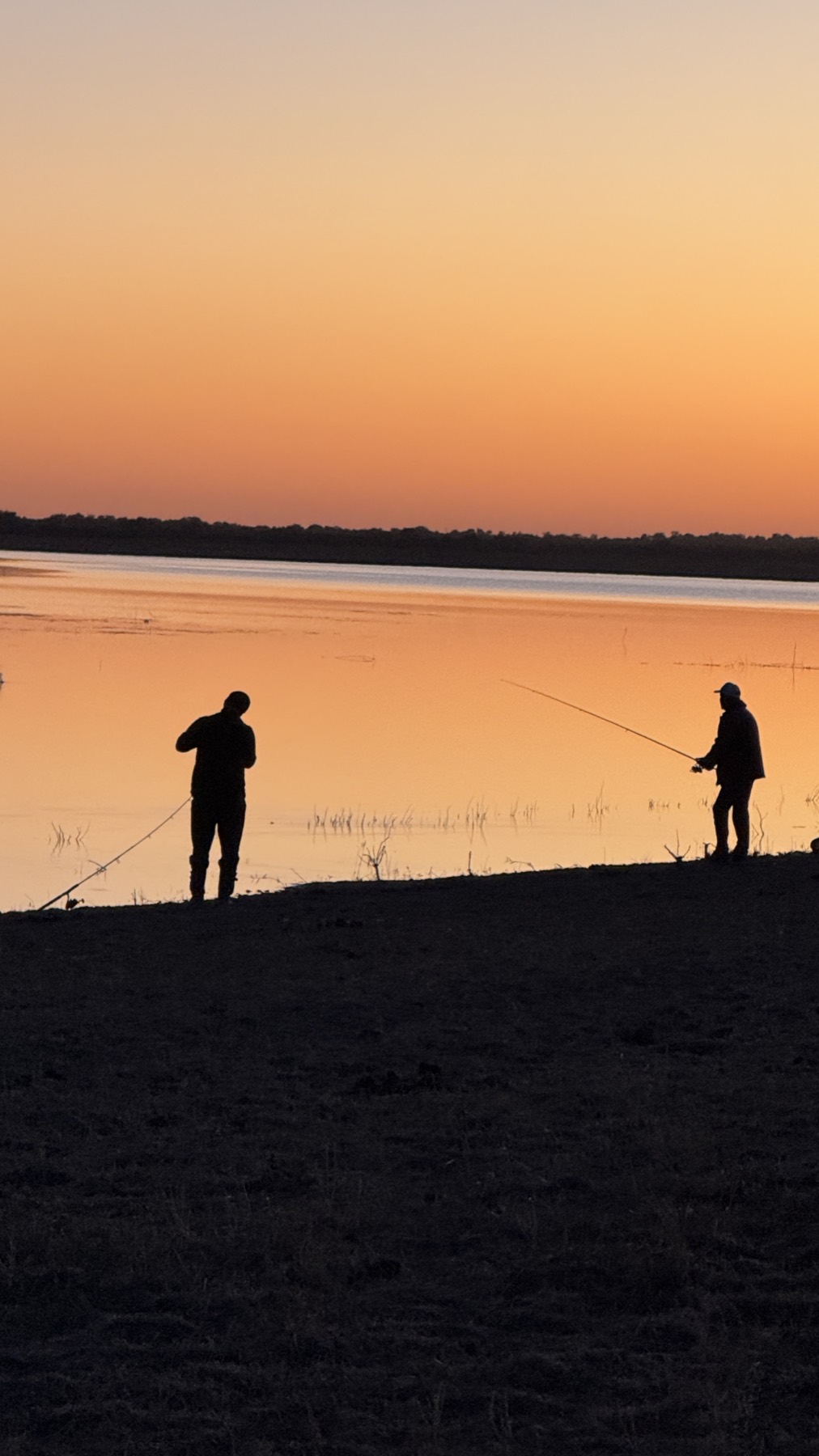 05.7Fishing at dusk. Water like this is a rarity: to the west, the Aral Sea lost most of its volume after the rivers feeding it were diverted for cotton in the 1960s.
 05.0
05.0Two thousand kilometres of steppe between one town and the next, a family of judo champions who took me in, a Silk Road city I camped outside, and then, on an empty road in the desert, the motorcycle simply stopped. Kazakhstan, in the autumn of 2025.
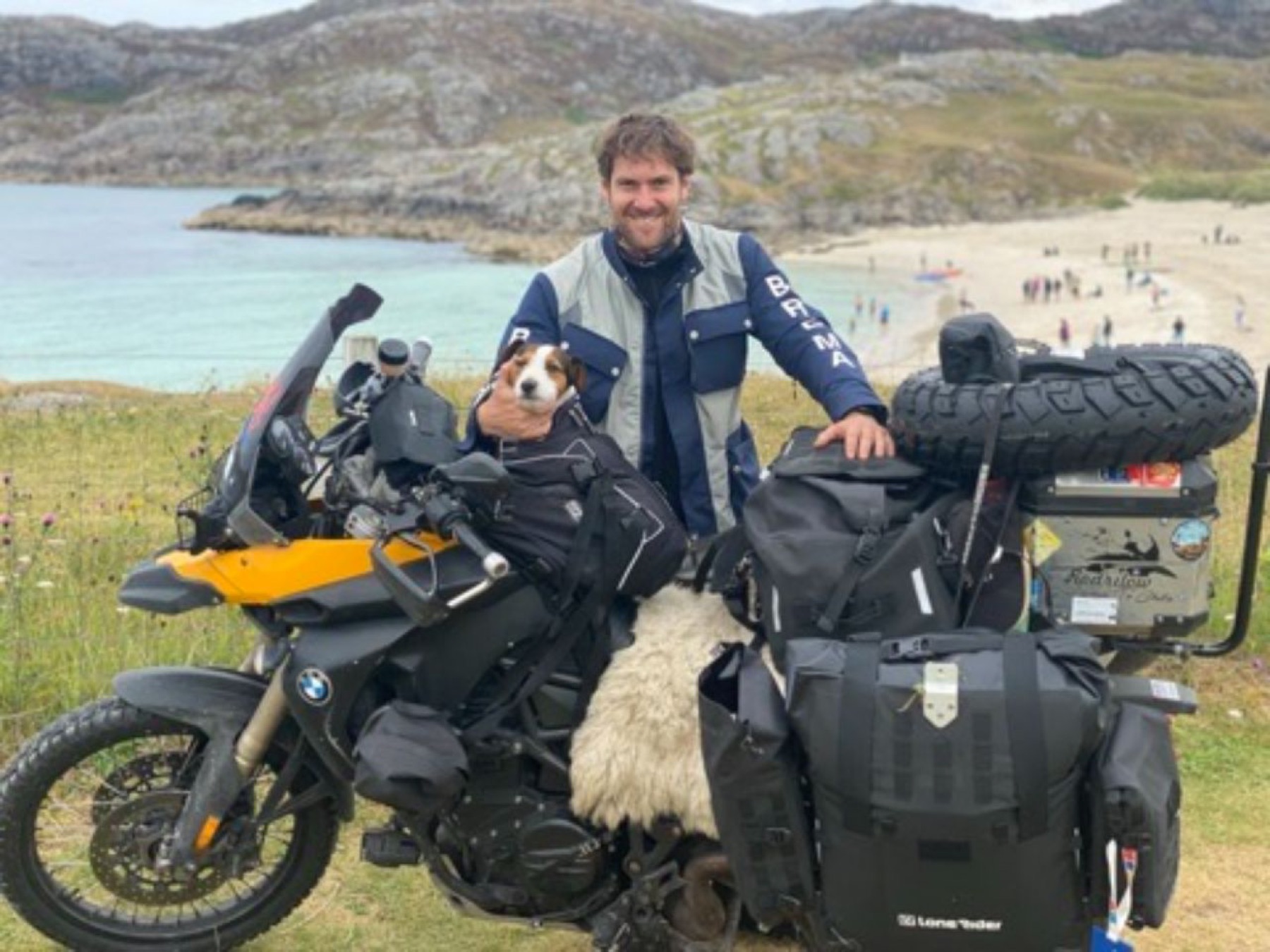
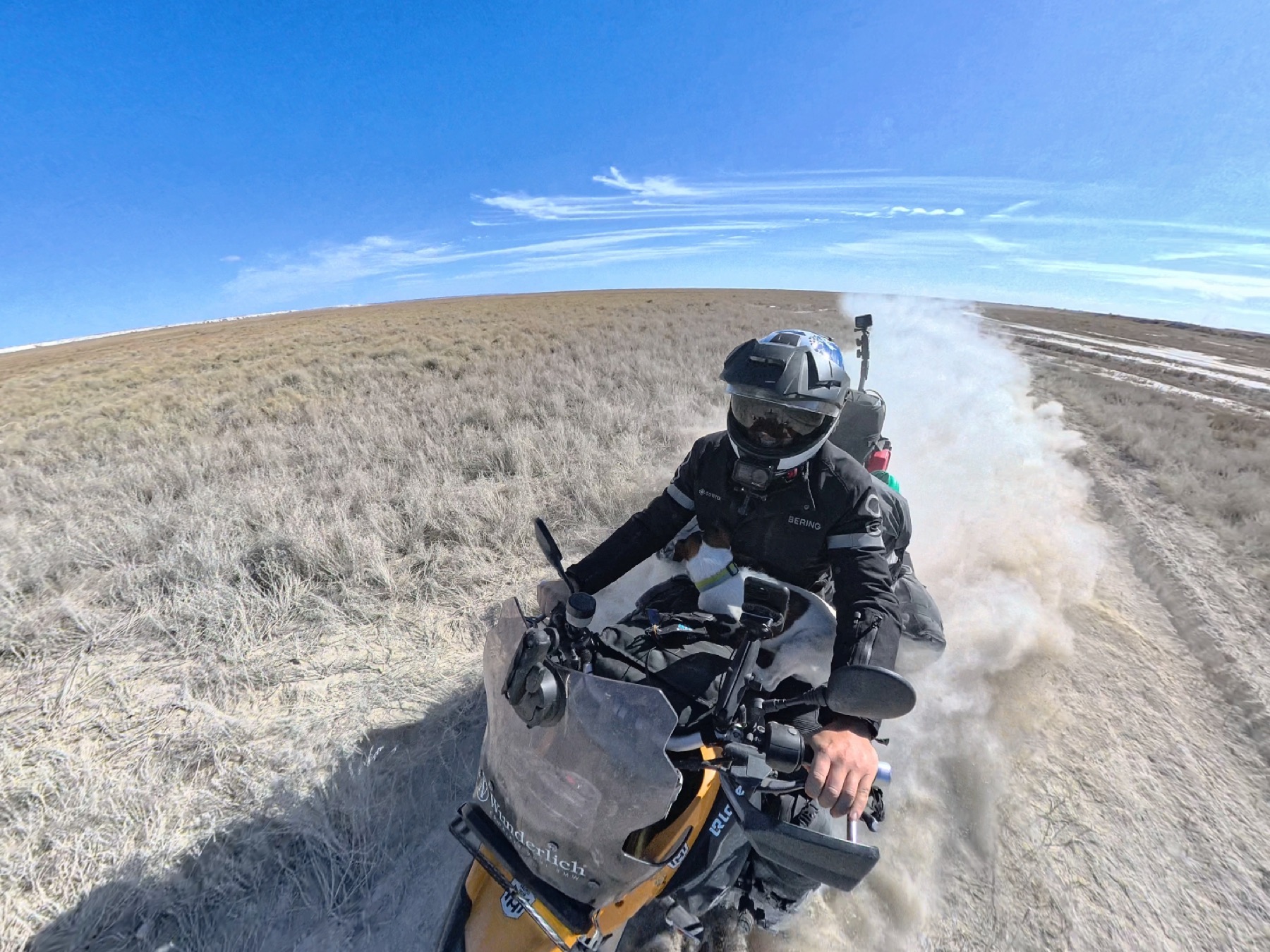
An astronaut, covered in dirt, with a dog on the back.
Six hours of dust, sand, falls and wind, and then Mukur appeared quietly out of the steppe just before the main road. The light had gone. Groups of students were walking home when this apparition rode slowly through the middle of them.
The only lit building was a market. I walked in trailing a cloud of dust and felt dozens of eyes settle on me. A man came over, greeted me warmly, asked where I was from, and the students began gathering for photographs as though the traveller and the dog had arrived from another world.
The man made a phone call and handed over the phone. It was the village English teacher. She asked what I needed and where I was planning to sleep, told me to wait, and came down to translate in person. There was a tea house I could use, she said, but it was not comfortable. A local family, the ones who owned the market, had offered to have me instead.
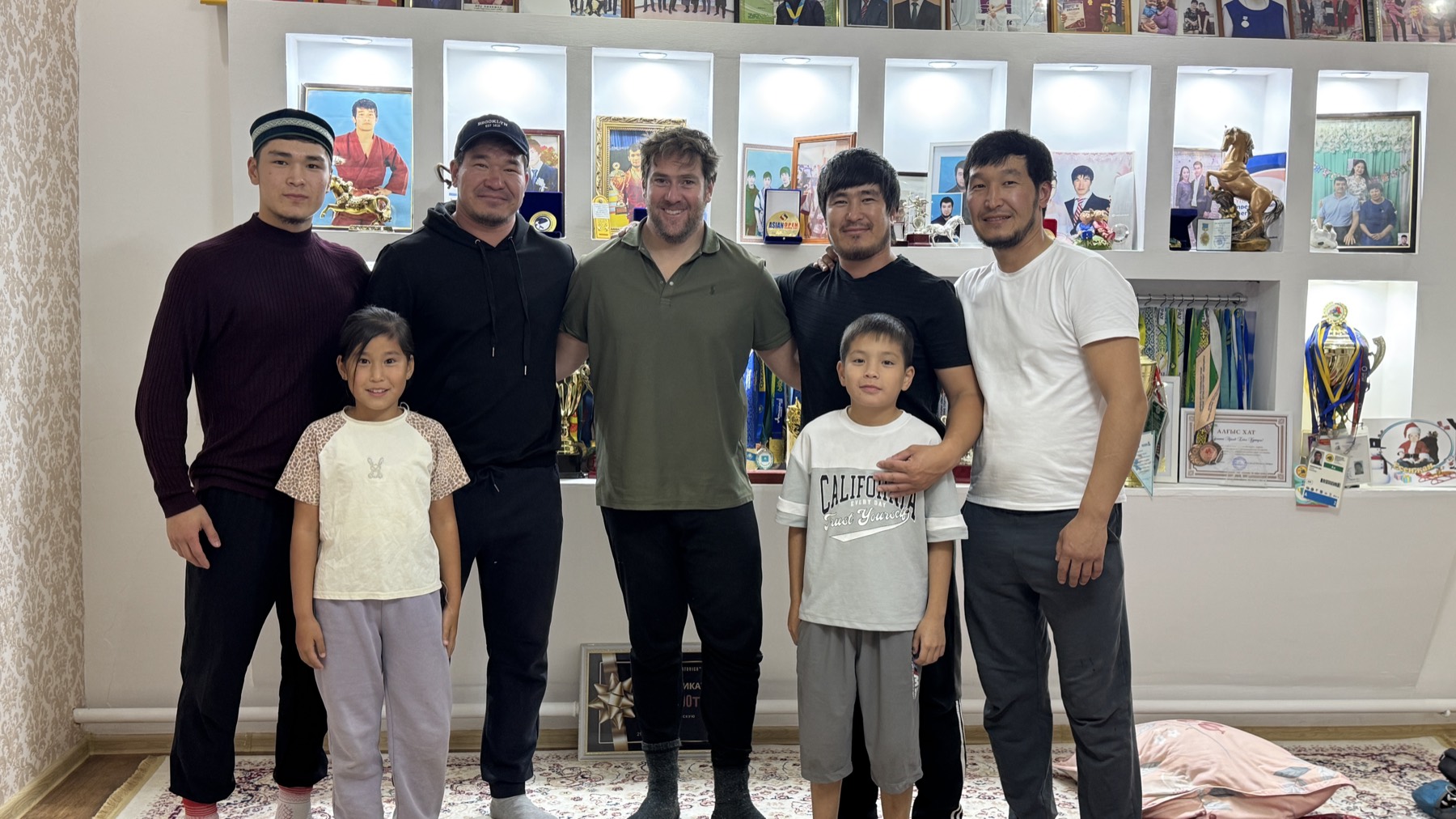
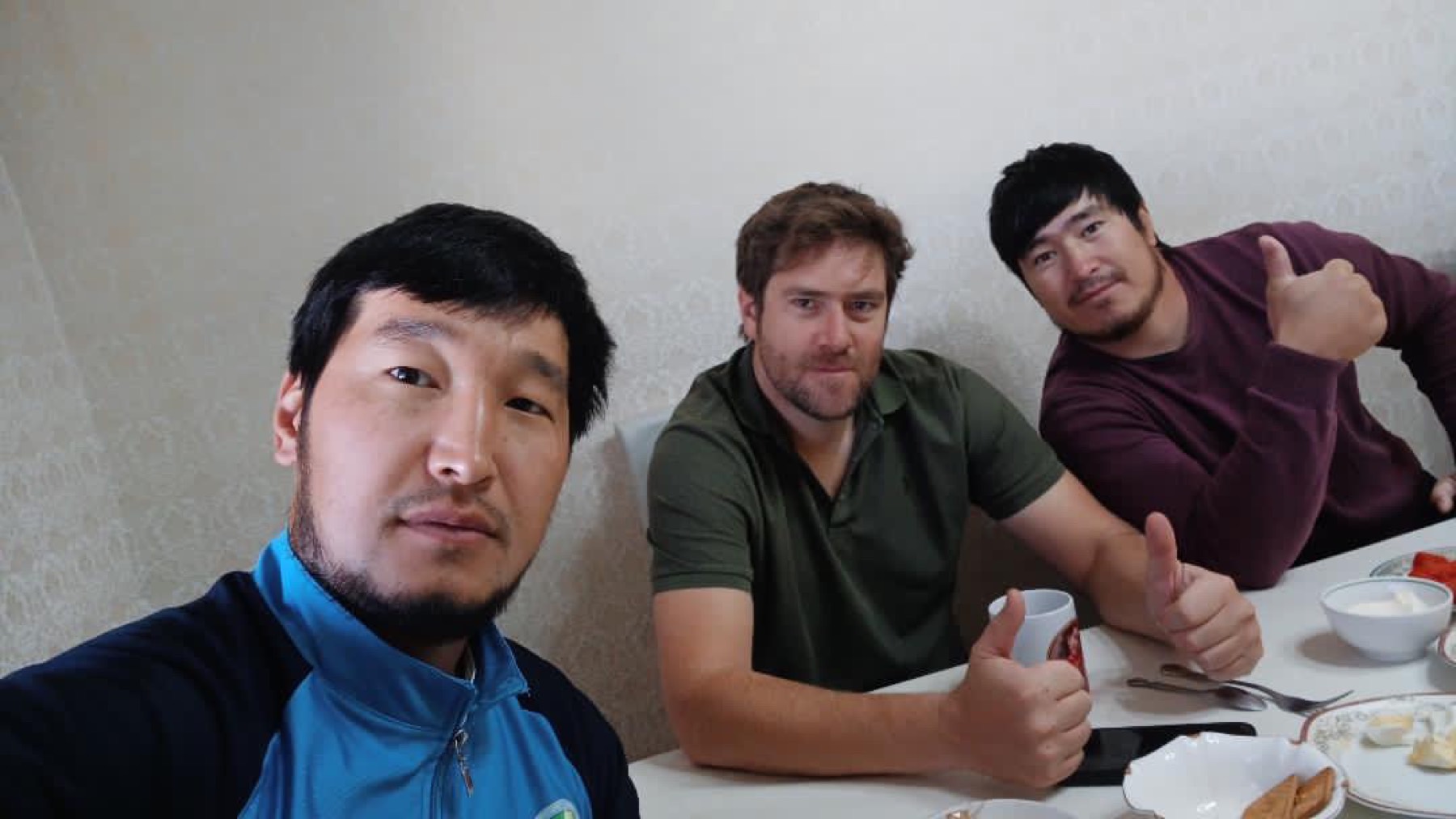
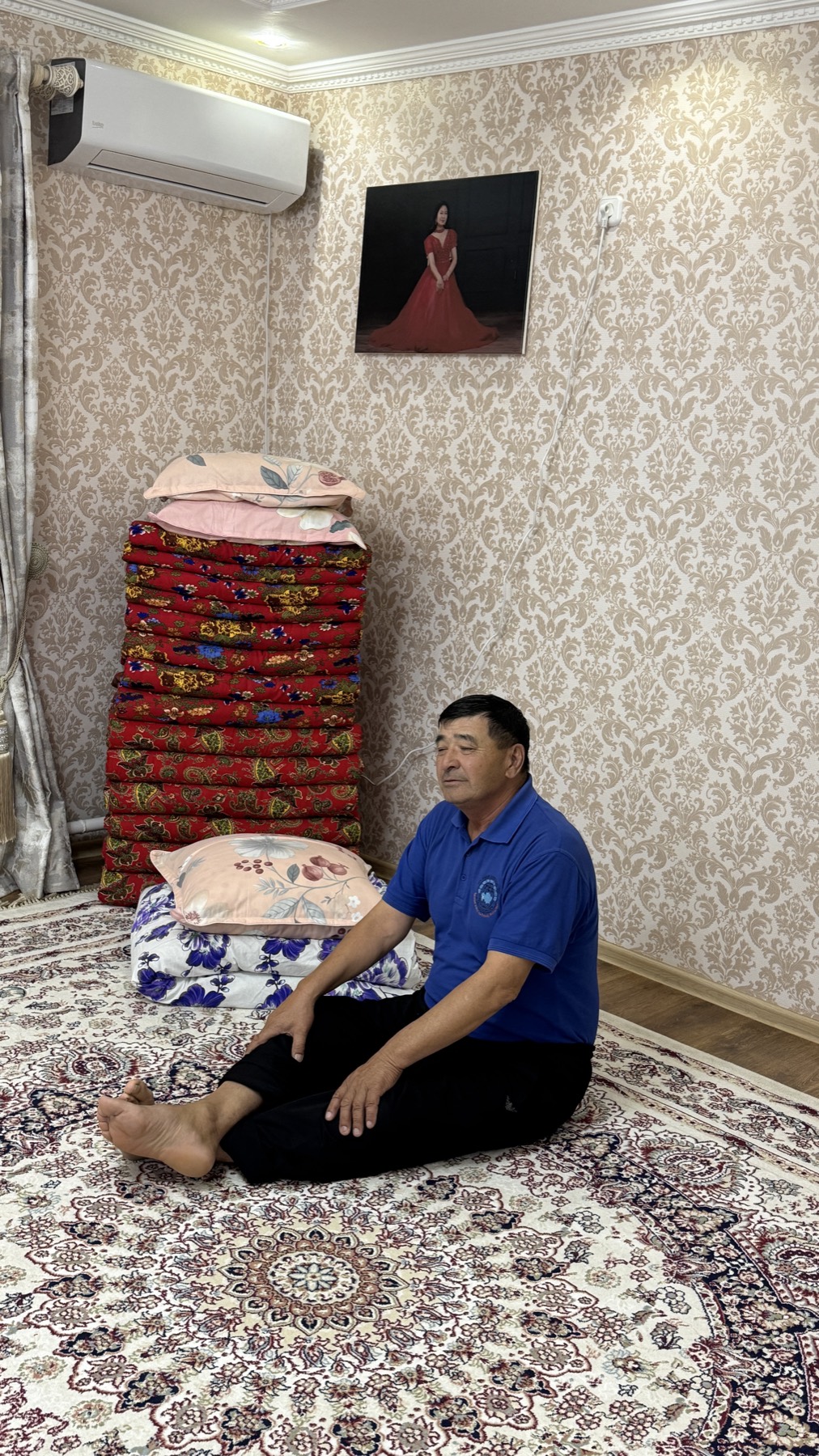
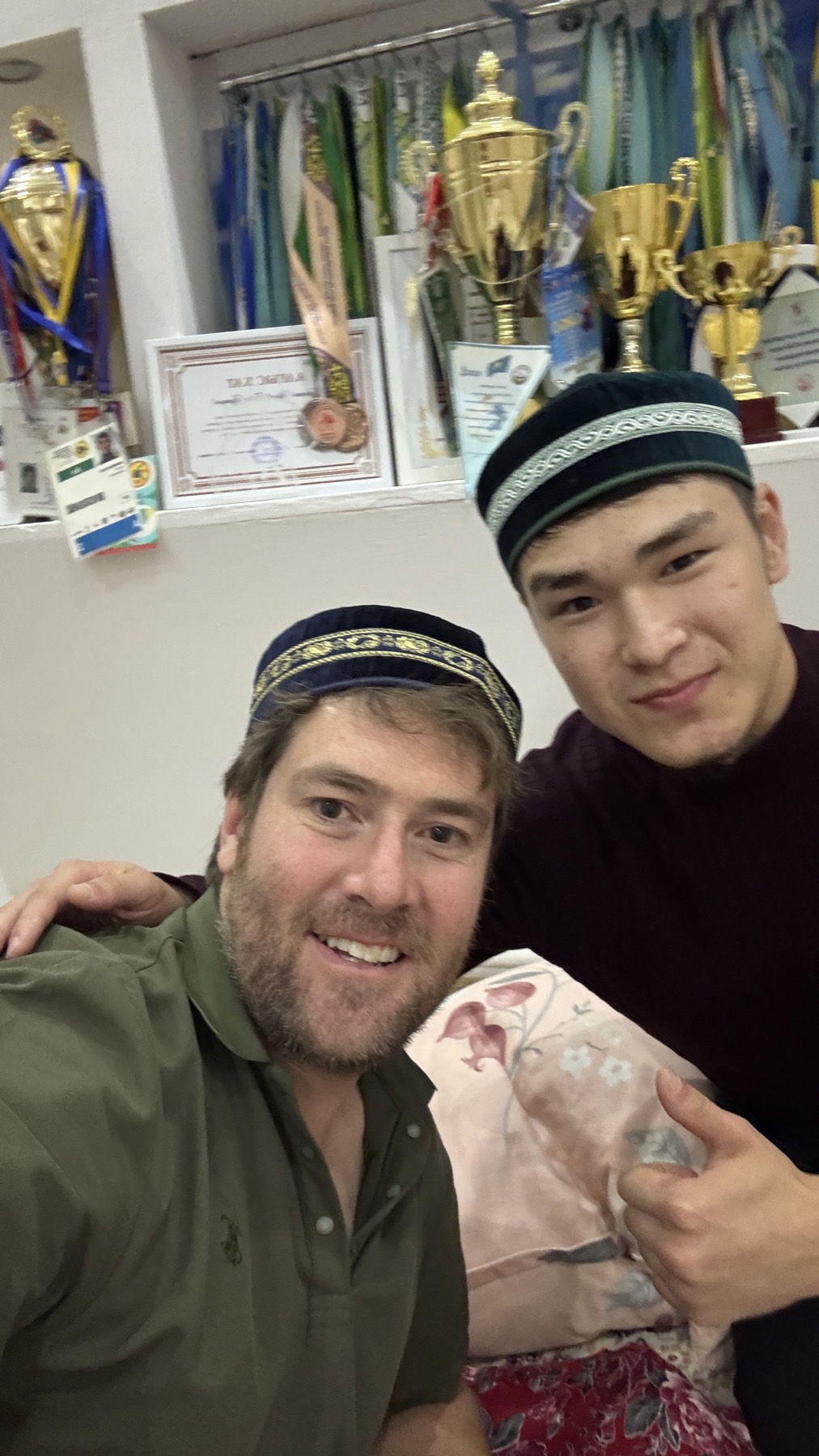
Seven siblings, all of them judo practitioners, carrying on their father's legacy. Their father had worked in oil exports and was retired now, and one room of the house was given over to framed photographs, medals and trophies. They put out a mattress and a blanket. Then they heated a bath with a sauna and several showers, which after days in the open was an unimaginable luxury.
It was the perfect ending to a day that had begun in hardship and ended as a testament to human generosity.
What the road kept
The country that broke the bike is the one that carried it.
Kazakhstan gave me the hardest day of the whole journey and then a family who heated a bath for a stranger. It killed the engine in the middle of the desert and then sent a lorry driver who drove me two hundred and fifty kilometres and would not take the money. The emptier the country got, the wider the doors opened.A road that runs out of things to point at.
The way in from Astrakhan is seventy kilometres of bad tarmac and then a queue of lorries parked nose to tail, hundreds of them, which a motorcycle simply rides past. Nobody minds. On the far side my phone died, so there is no photograph of the sign with the country's name on it, which still annoys me. At the identity camera I put my arm around the officer next to me as though we were posing on a beach, and they explained, without smiling, that I had to be in the picture alone.
Outside the gate the money changers argued over who would take my last three thousand roubles. I picked one at random and got twenty thousand tenge, about thirty euros, which was everything I had until I met Mario further east.
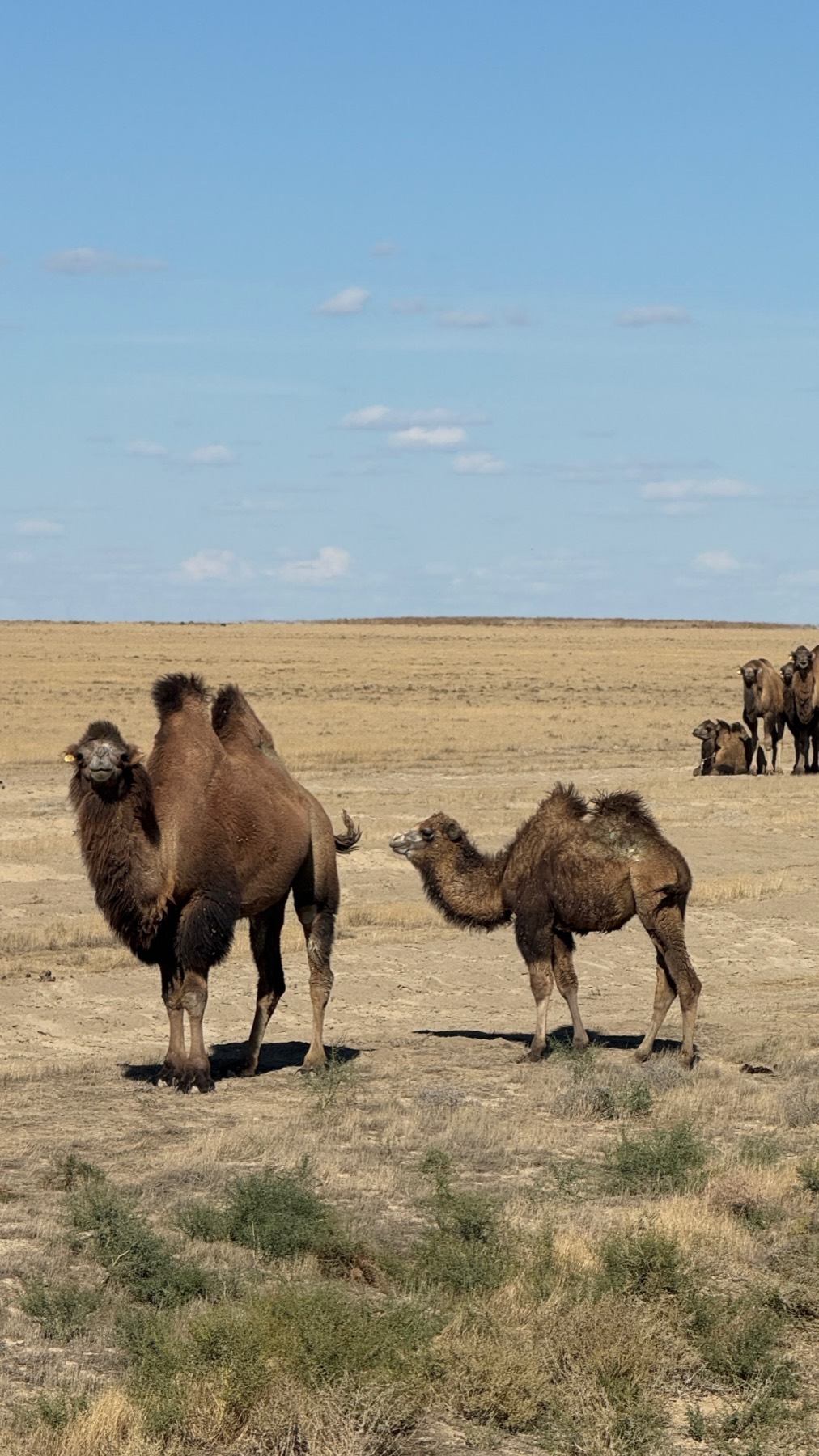
Kazakhstan is the ninth largest country on earth and most of it is steppe. Riding it means hours where the only vertical things are the motorcycle, the rider and the occasional nodding oil pump. Distance stops being measured in landmarks and starts being measured in fuel.
Aktobe arrived on a day without a single cloud: a grand mosque with gleaming domes, wide avenues, an ice cream in a shopping mall surrounded by curious high school students, and statues of Mongol heroes that made it feel as though Mongolia had already started.
That was also where the motorcycle began to lose power, and where the check engine light came on for the first time. I did not think much of it. There were 225 kilometres of dead straight road to cover before the turn south, and about four hours of light to do it in.
Aktobe means white hill. It was founded in 1869 as a Russian military fort on the steppe and grew into an industrial centre under the Soviet Union. It sits at the crossroads between Russia, the Caspian and Central Asia, which is why every overlander ends up passing through it.
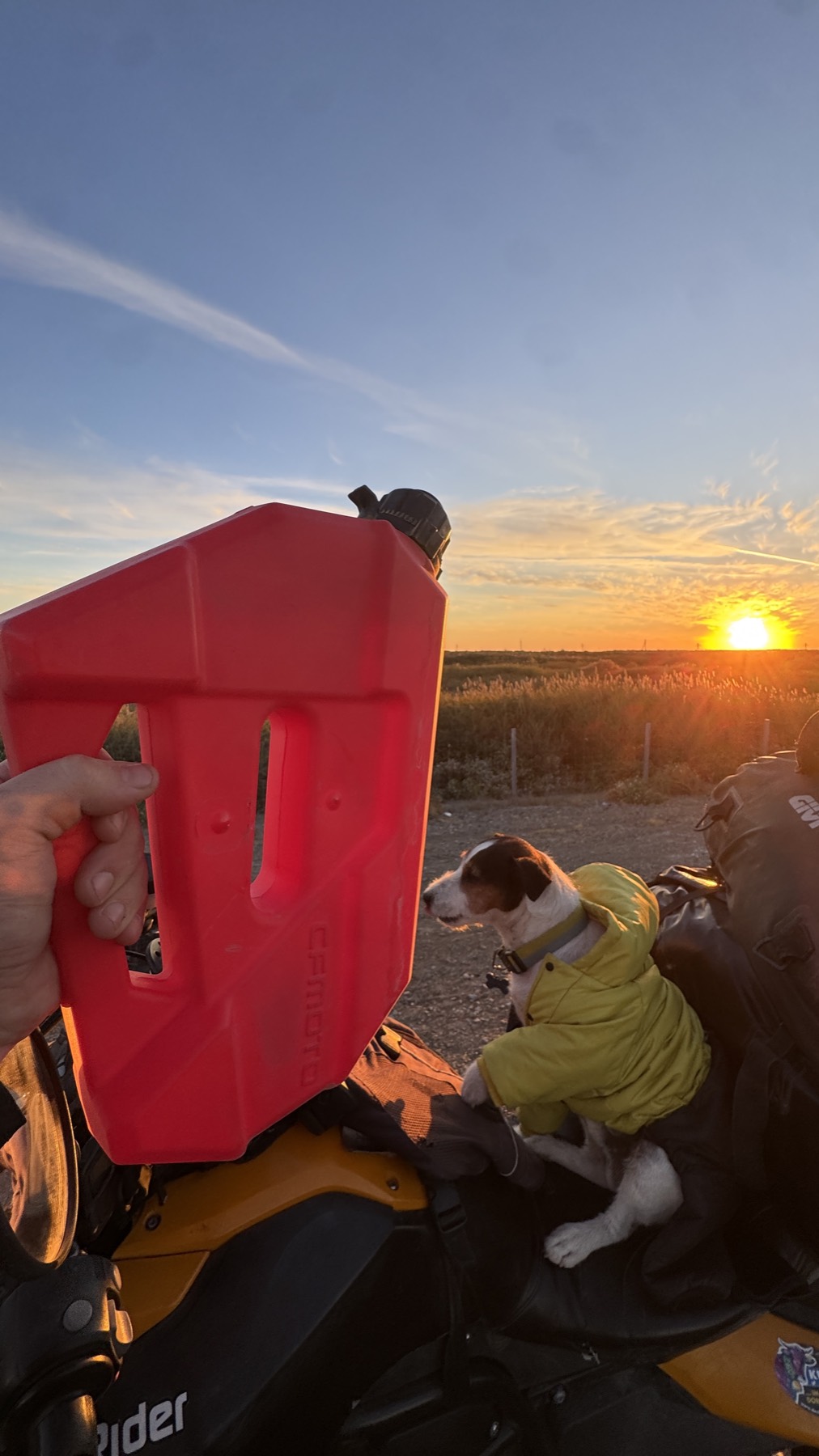
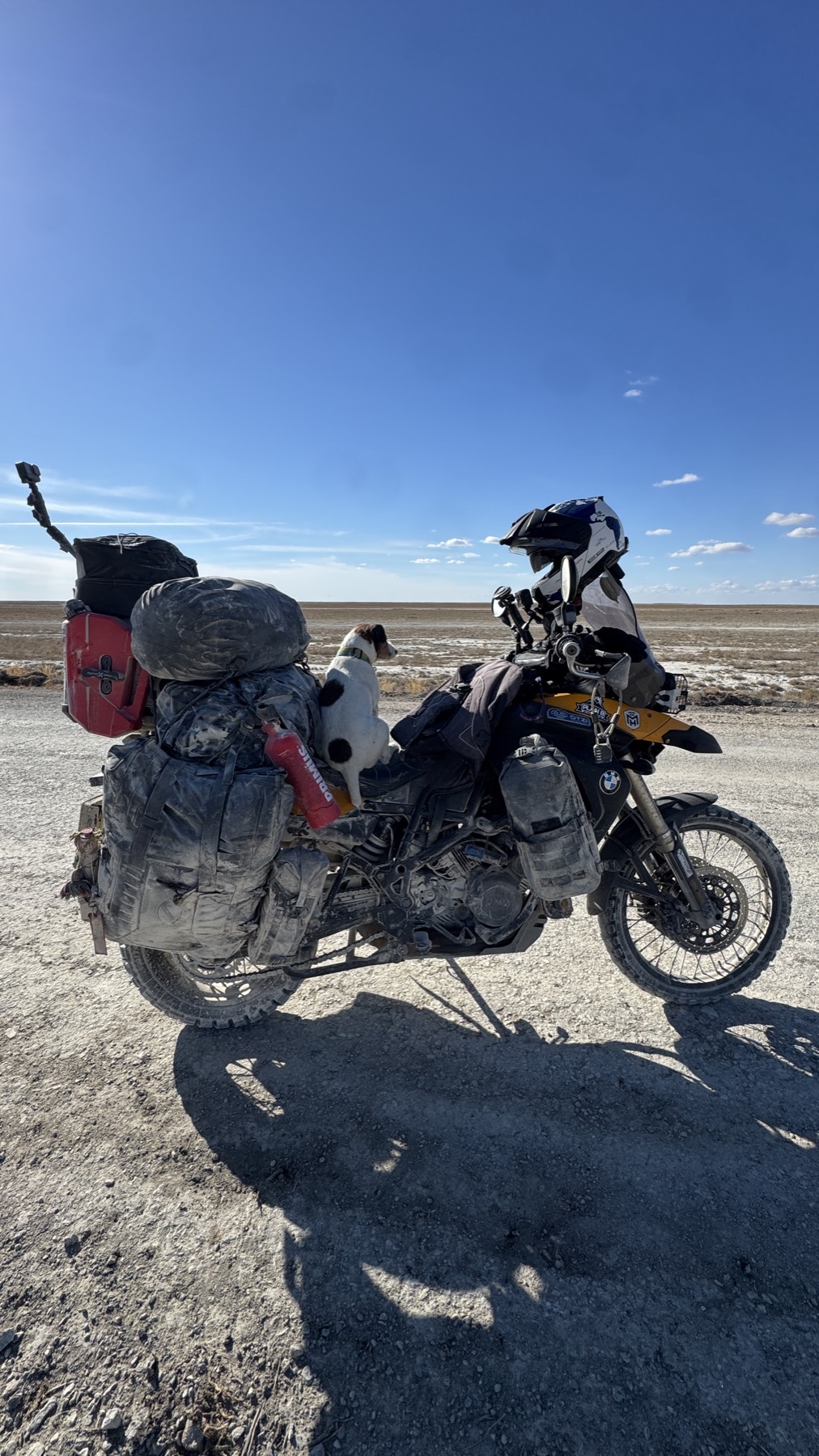
Nowhere to stay means anywhere to stay.
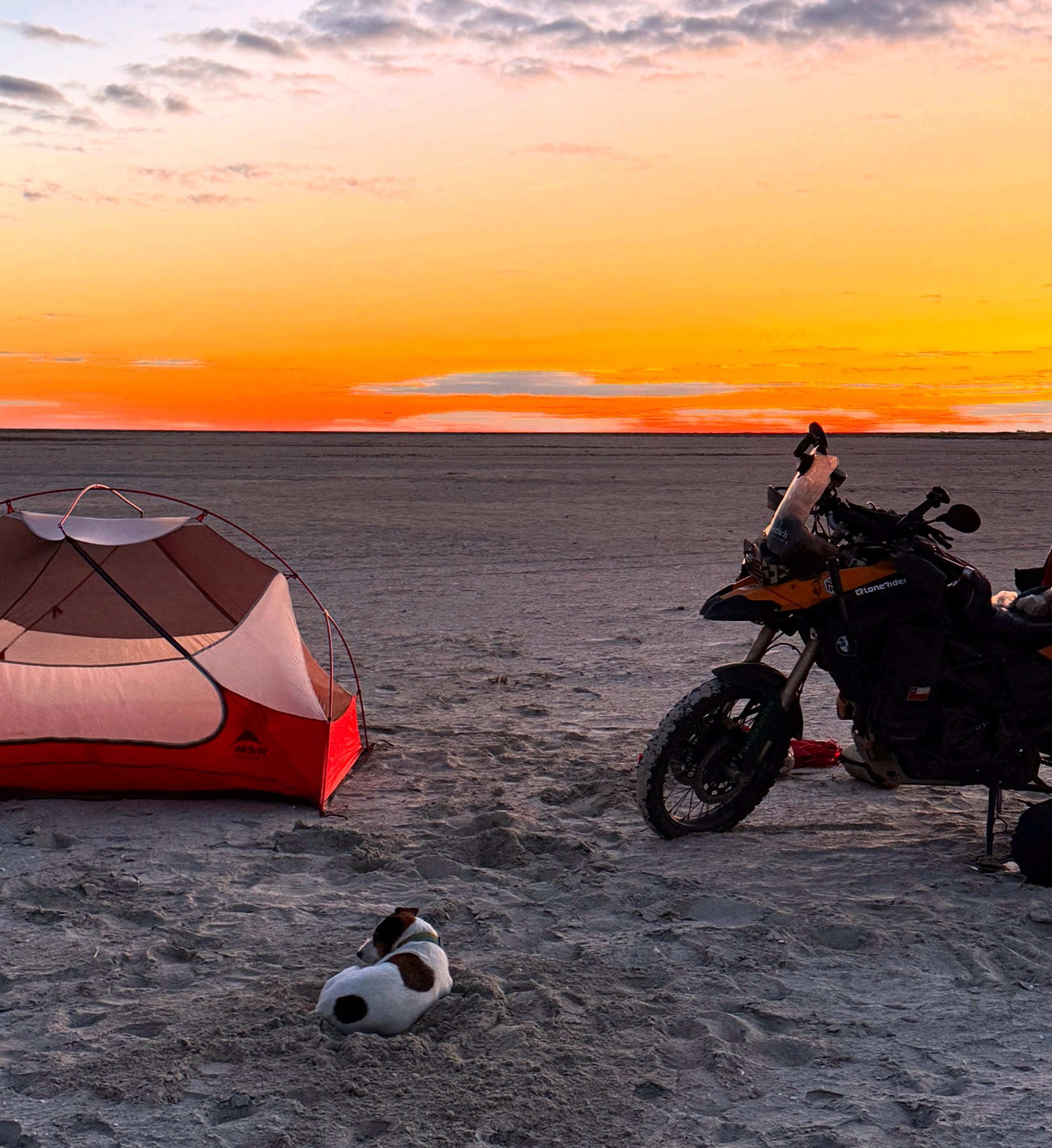
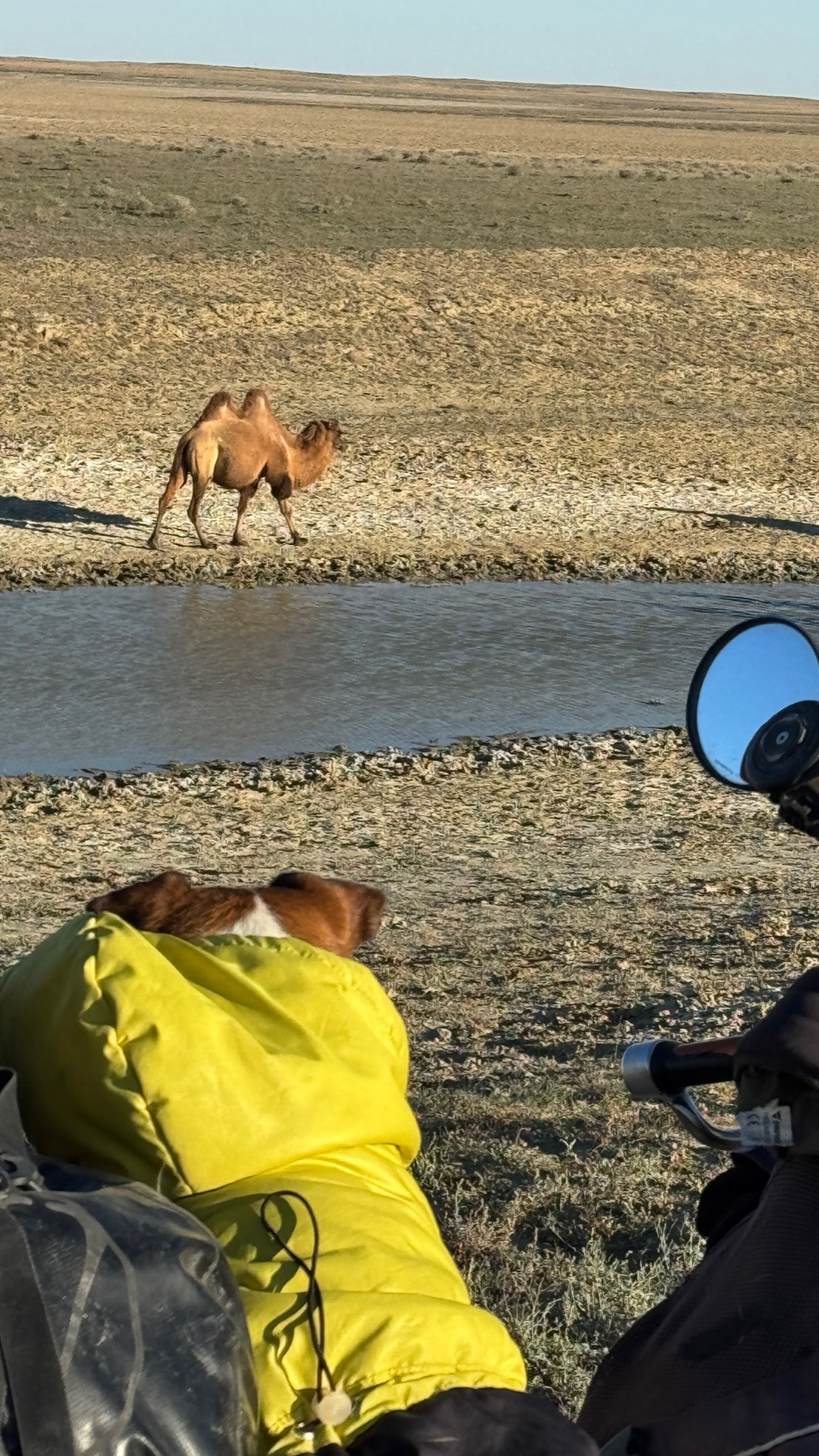
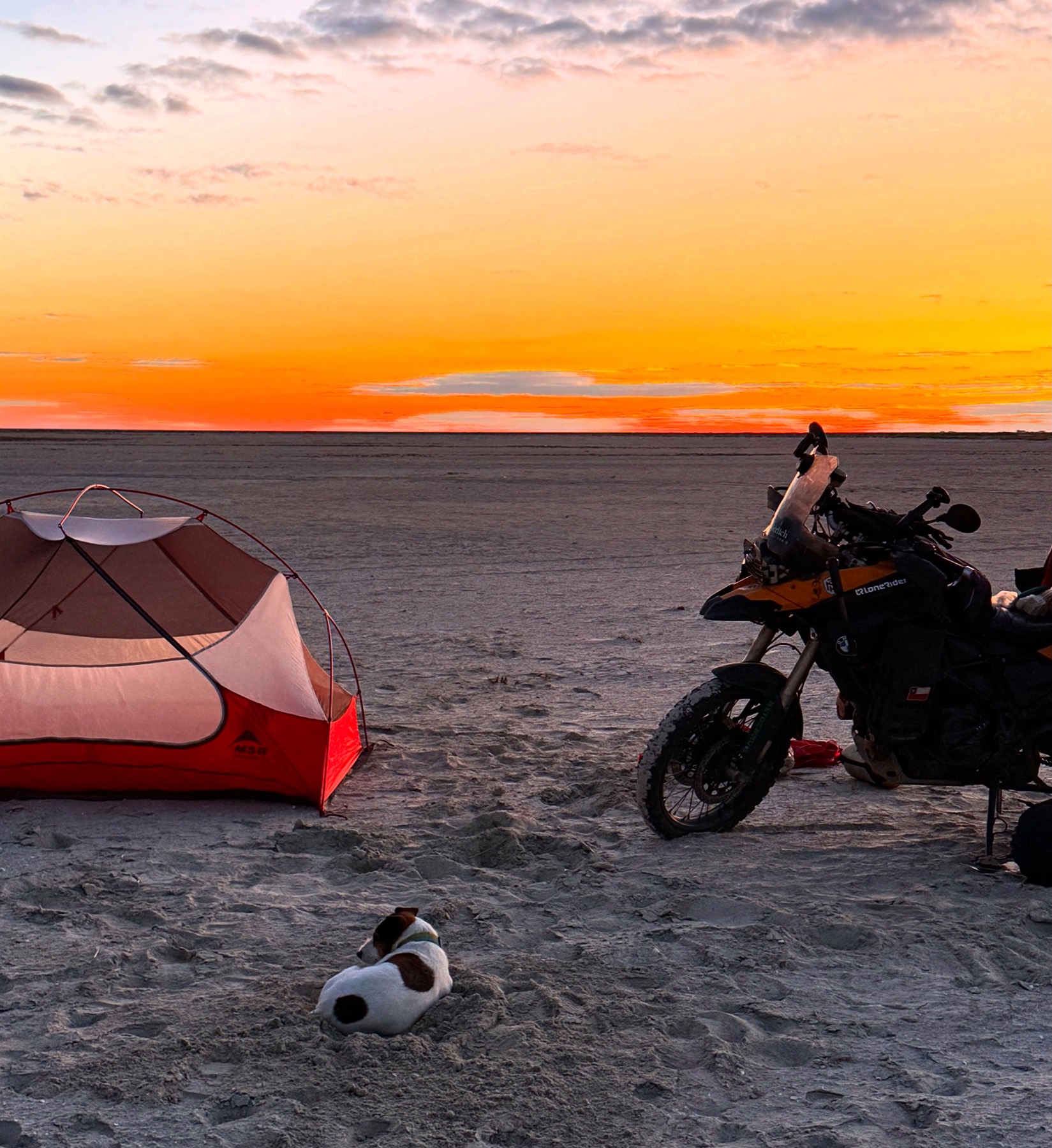
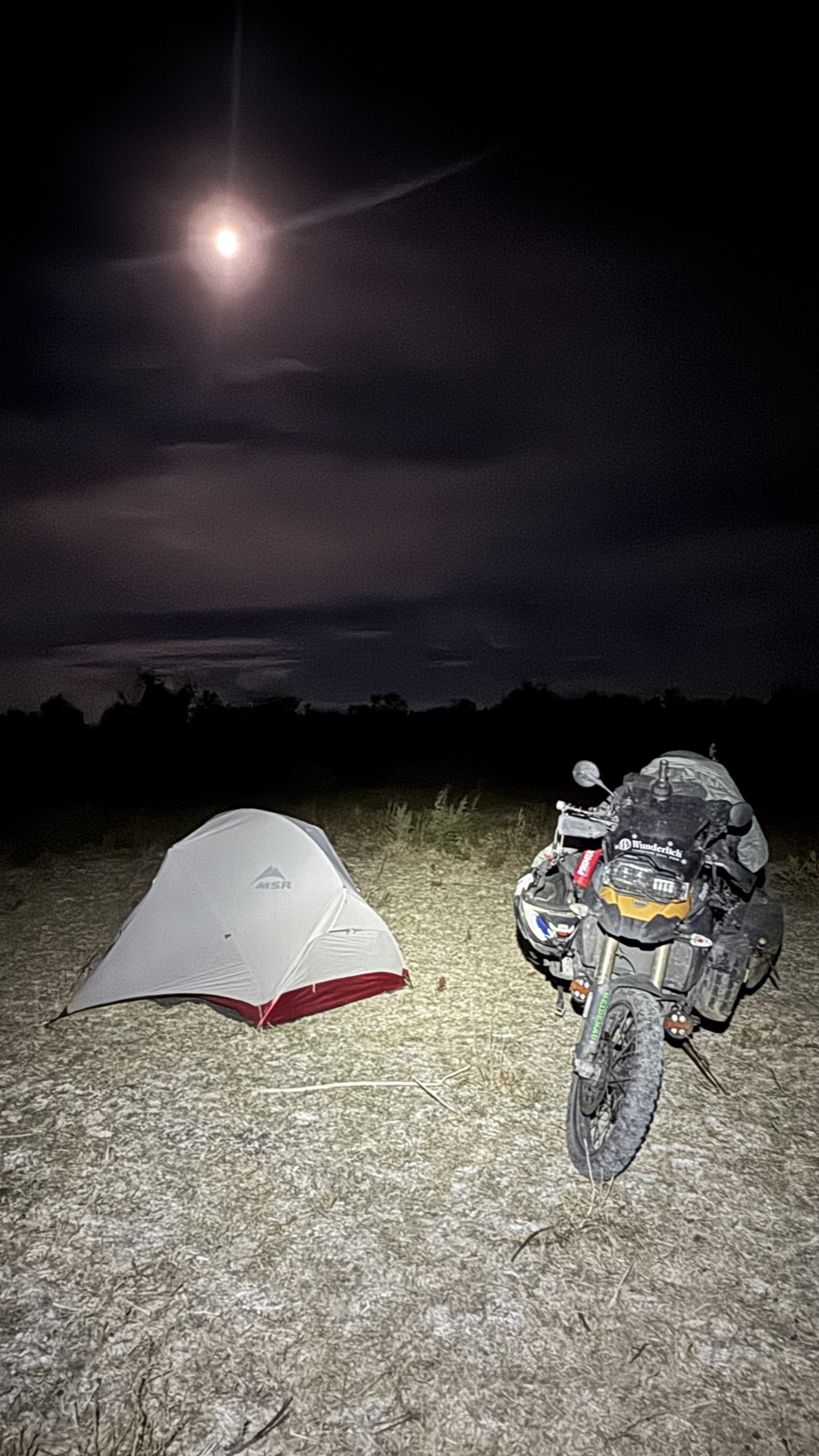
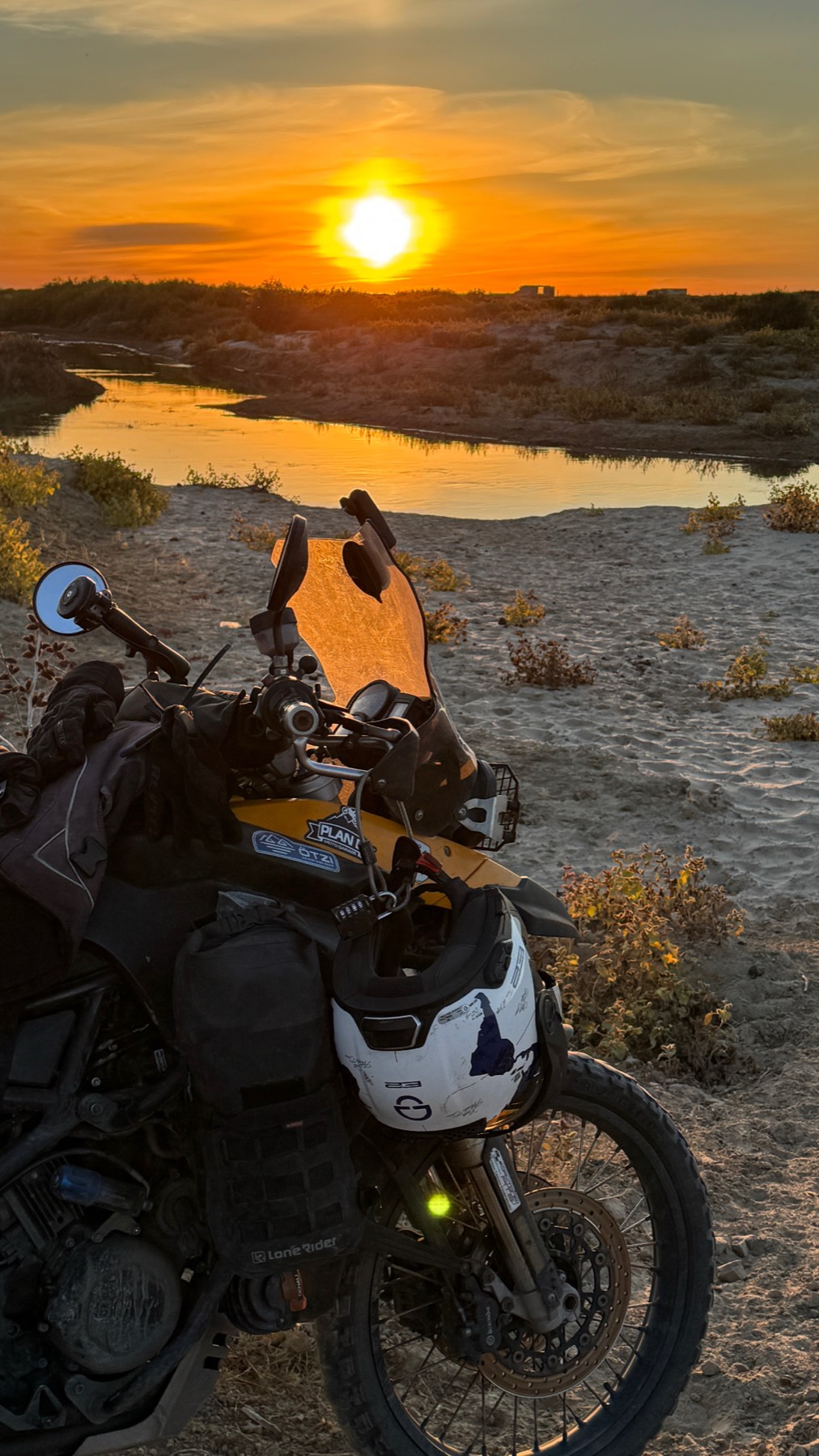
With towns hundreds of kilometres apart, the tent is not a fallback, it is the plan. One night it was a raised path above a swamp near Karmakshi, chosen at the last of the light after a group of fishermen invited me over and I had to decline: the ground was soft and slippery and I do not like pitching in the dark. It turned out to be one of the coldest nights of the trip.
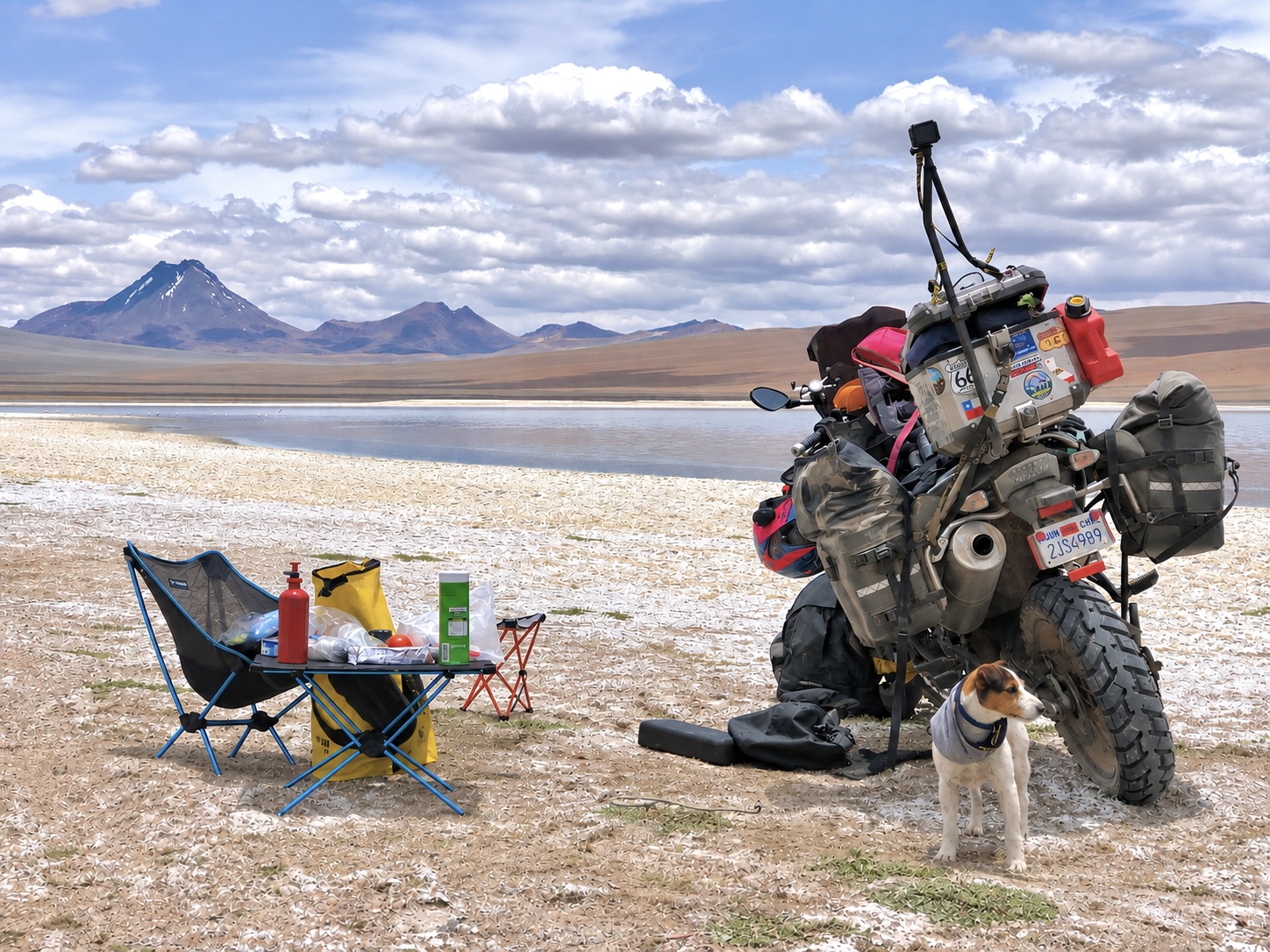
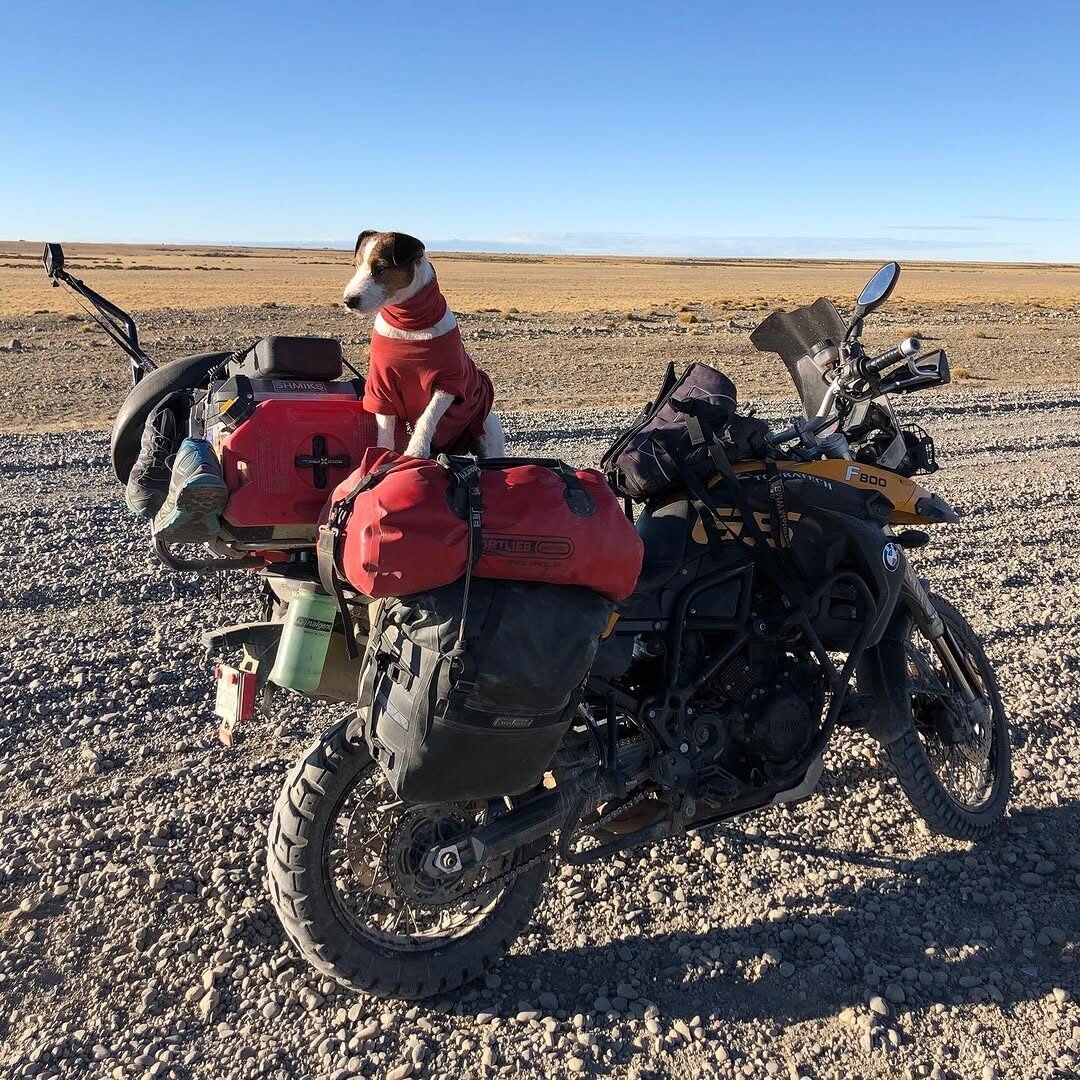
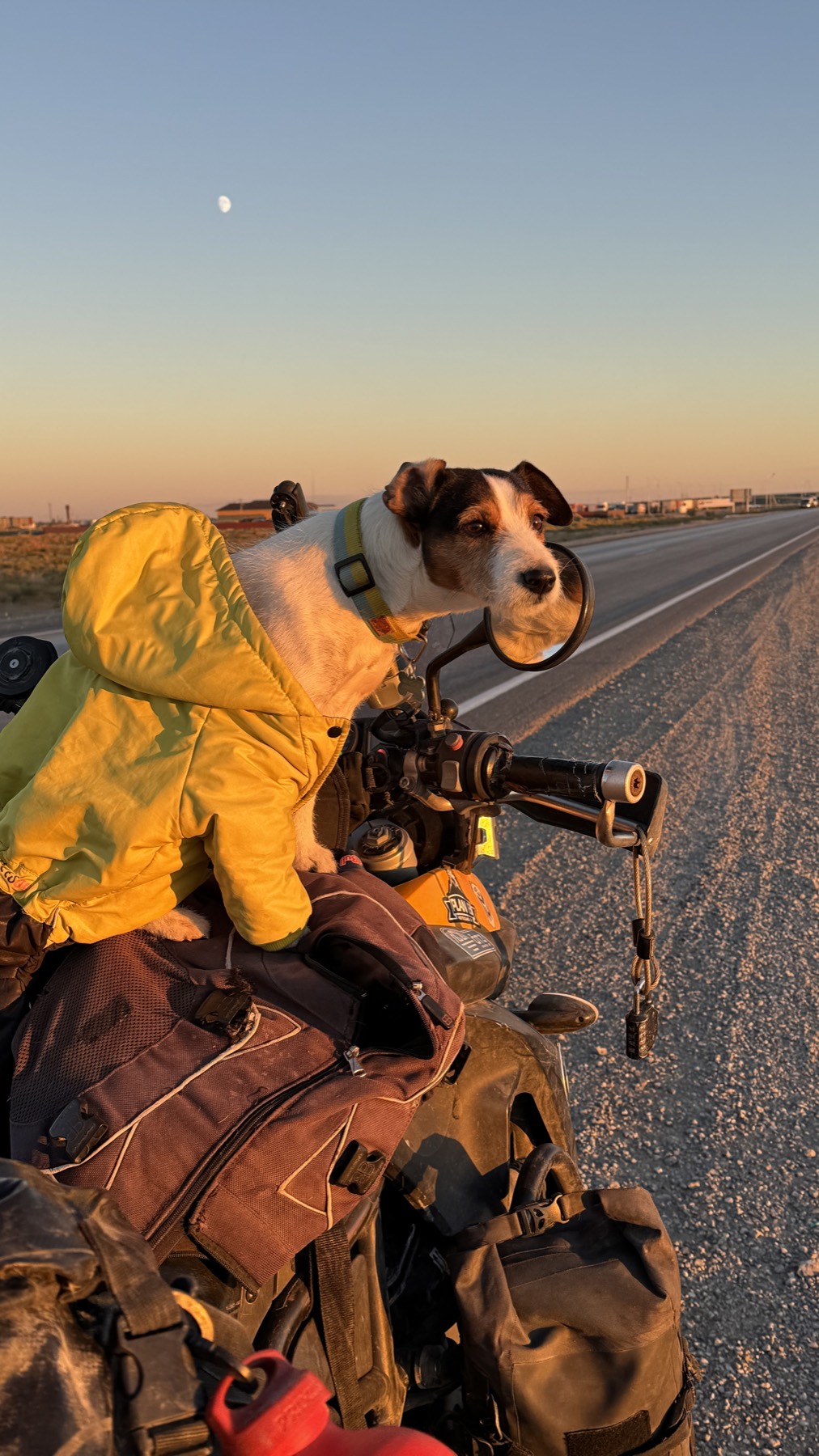
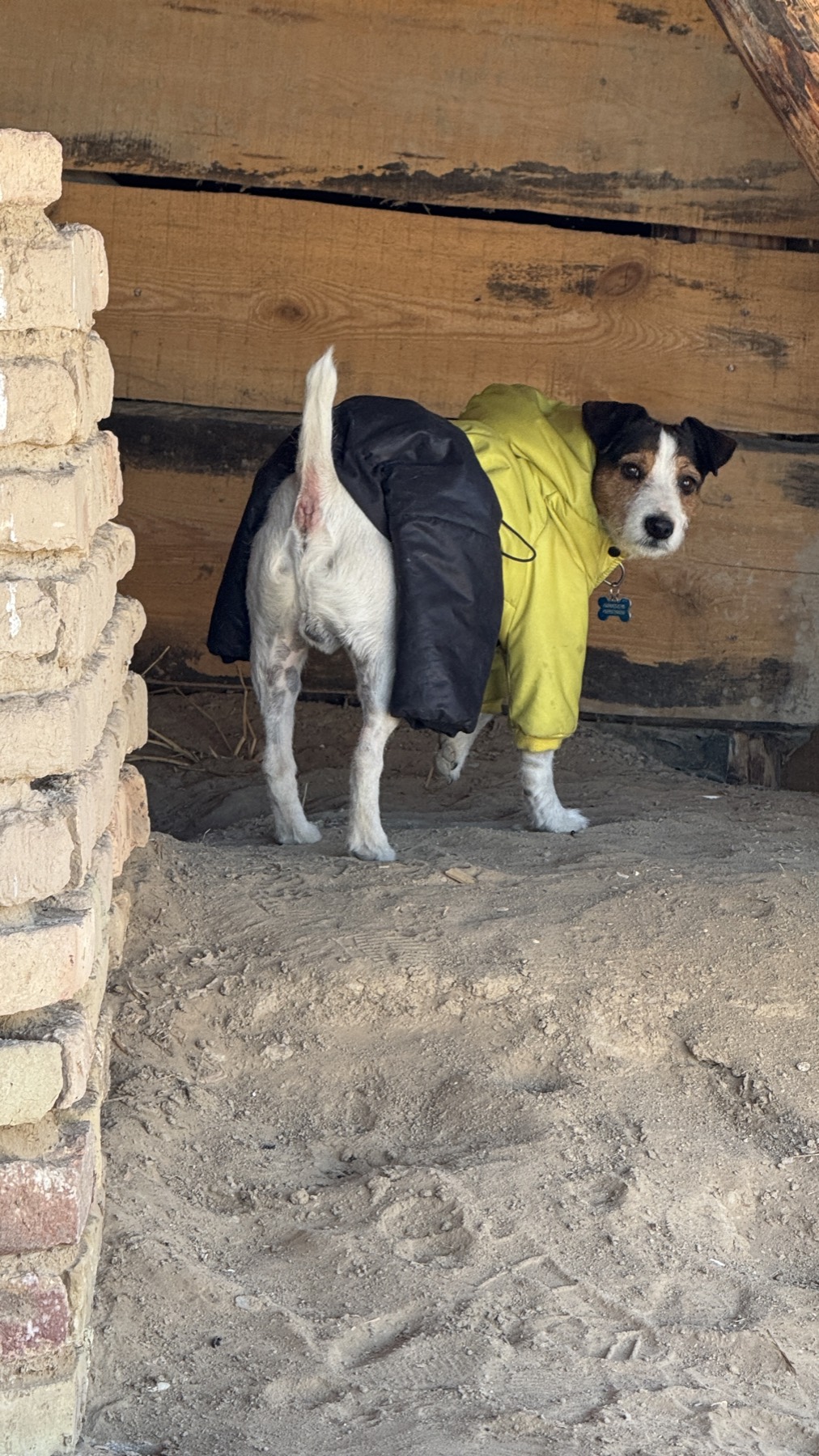
The reward is that camp can be chosen for the view instead of the vacancy sign. The sun goes down enormous and slow, and the temperature follows it. Jacko crosses the steppe in a padded coat, and by dusk both of them are glad of it.
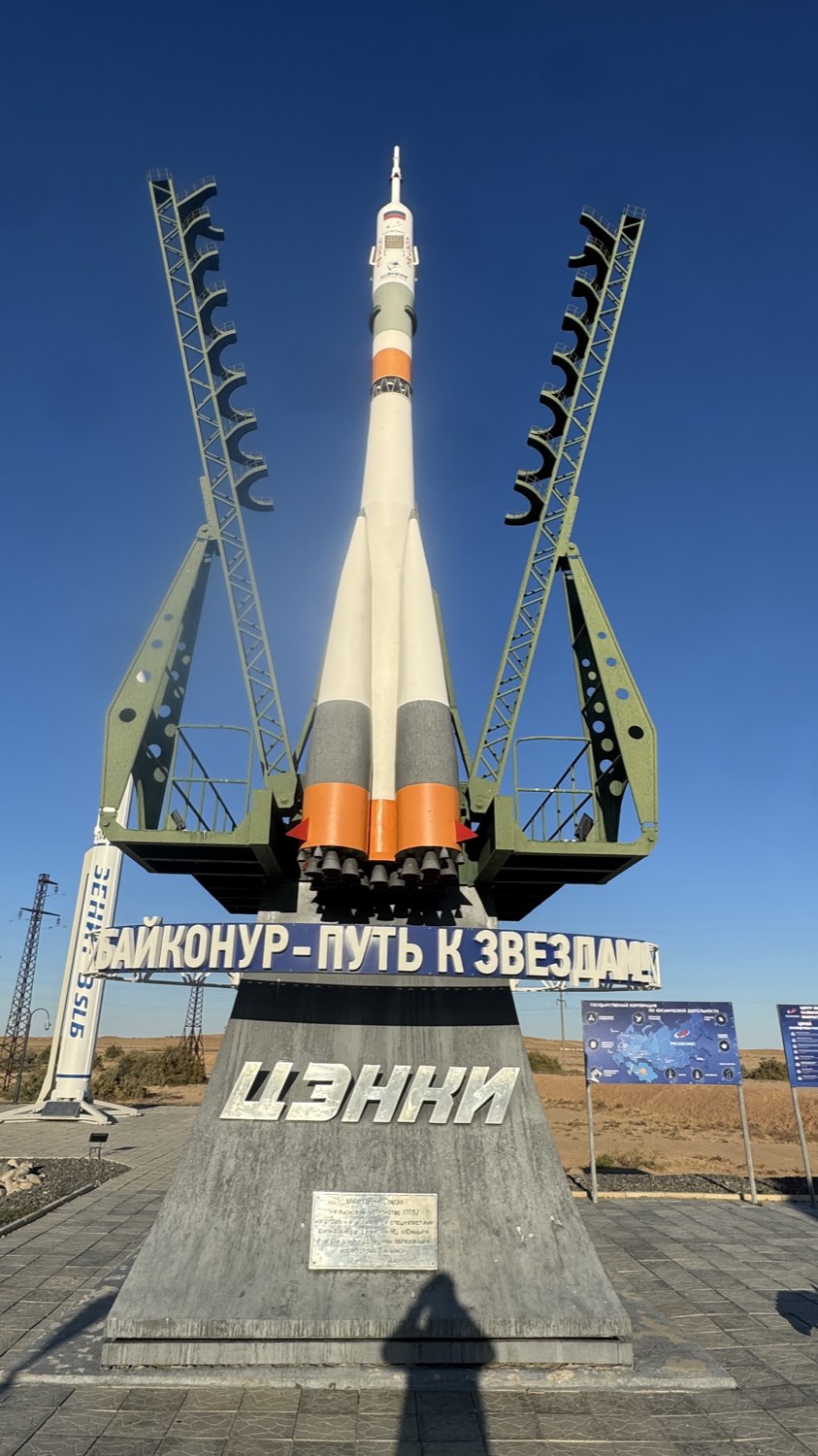
Everything that ever left this planet with a person on it started here.
Baikonur was begun in 1955, out in this same steppe, chosen because it is flat, cloudless most of the year and a very long way from anybody. It is the oldest and largest spaceport in the world. Sputnik went up from here in 1957. Yuri Gagarin, the first person to leave the planet, went up from here in 1961, and every Soyuz crew bound for the International Space Station has left from this patch of desert since.
When the Soviet Union broke up the site ended up inside independent Kazakhstan, so Russia leases it: the cosmodrome and the town beside it, about six and a half thousand square kilometres, on an agreement that runs to 2050. The town keeps Russian time and a checkpoint on the way in. Without a permit arranged weeks earlier, a foreigner does not get past it.
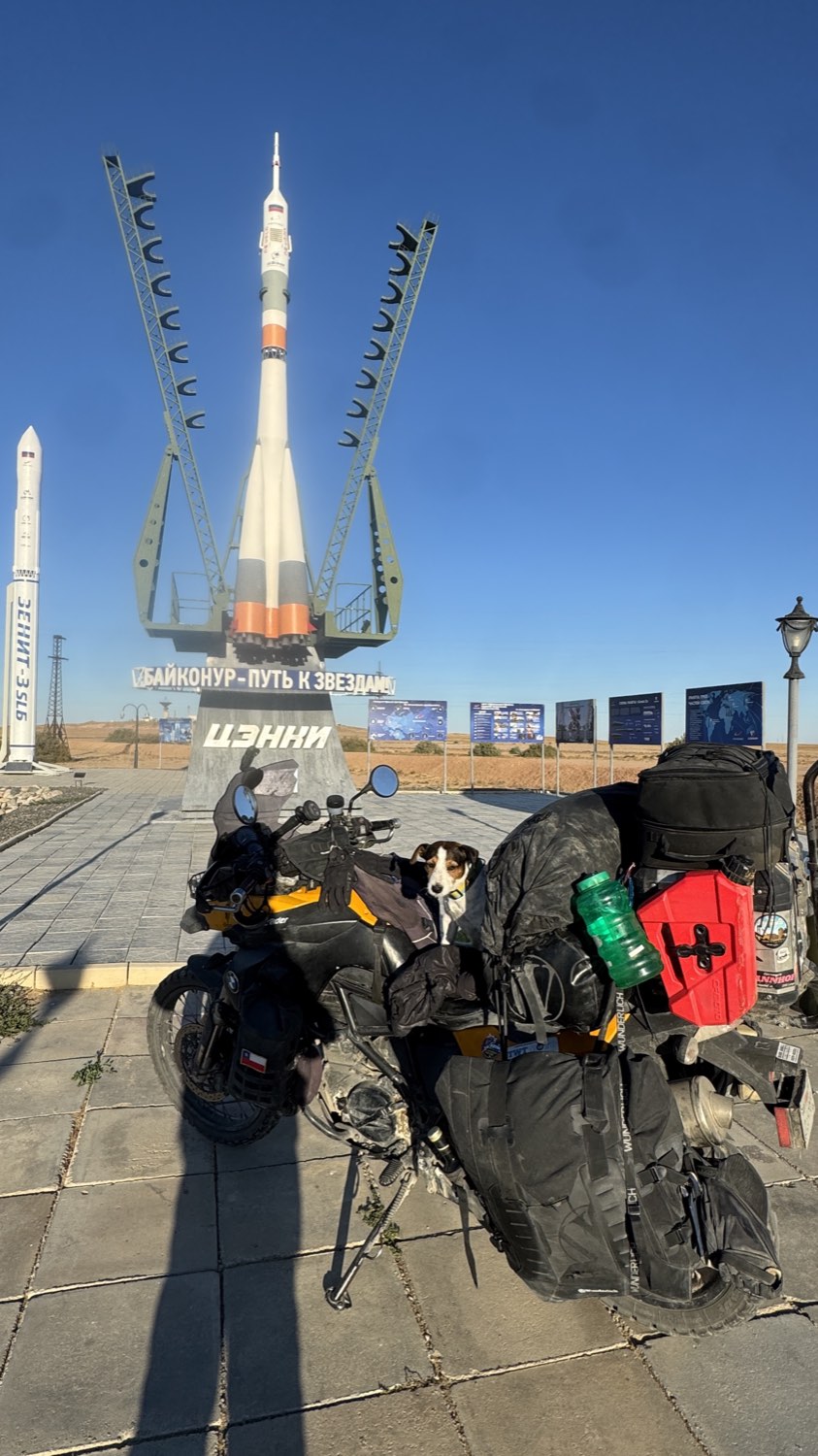
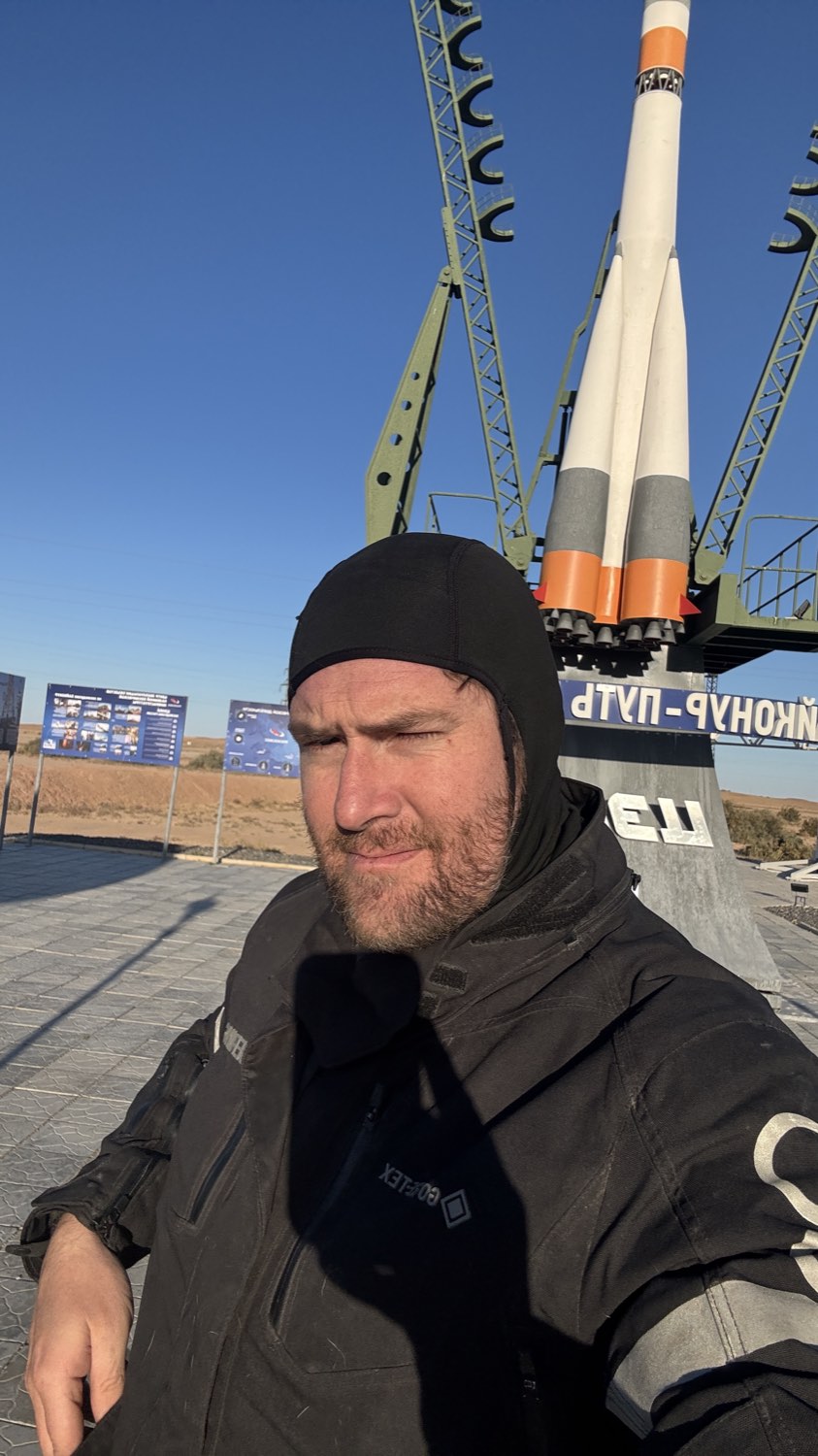
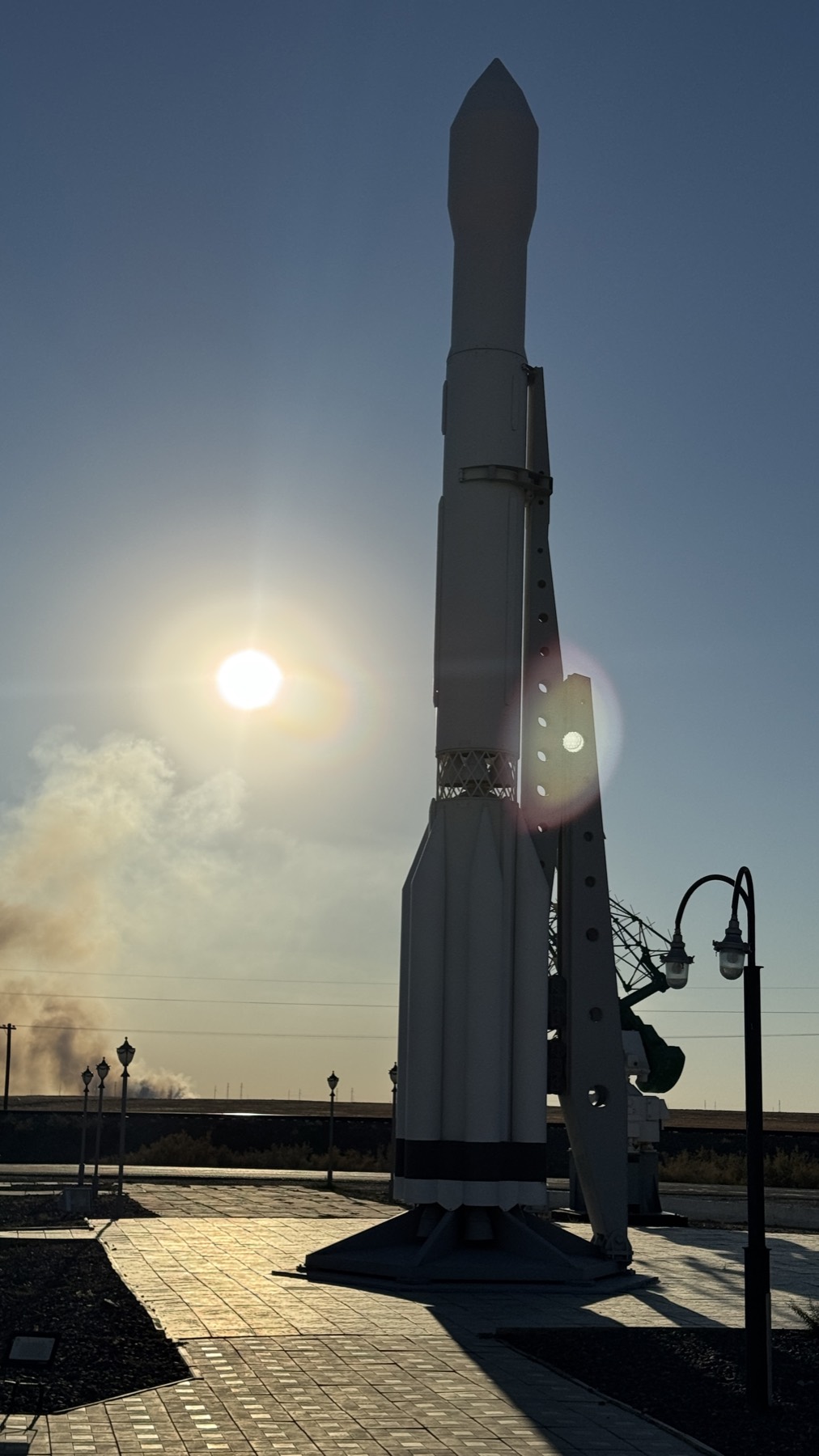
So what I got was the approach: a full size Soyuz stood upright in its service towers at the roadside, with the lettering across the plinth reading Baikonur, the road to the stars. It was cold and completely clear, the way October is out here. I had come 300 kilometres from Aralsk the day before on both reserve cans, because the tank alone does not cover that, and the engine had started that morning trailing blue smoke and sounding wrong.
It was a photograph and a stop, not a visit, and it was still worth the detour. You stand in a car park in the middle of nowhere looking at a rocket, and the sky above it is the one everything went through.
You stand in a car park in the middle of nowhere looking at a rocket, and the sky above it is the one everything went through.
The bike would not idle, and the museum explained everything.
Kyzylorda sits on the Syr Darya, the river the classical world called the Jaxartes, on a stretch of the Silk Road that has carried cities for two thousand years. I came in 170 kilometres from a camp beside some small lakes, the forty third wild camp of the trip, after a night that read six degrees and felt colder than that.
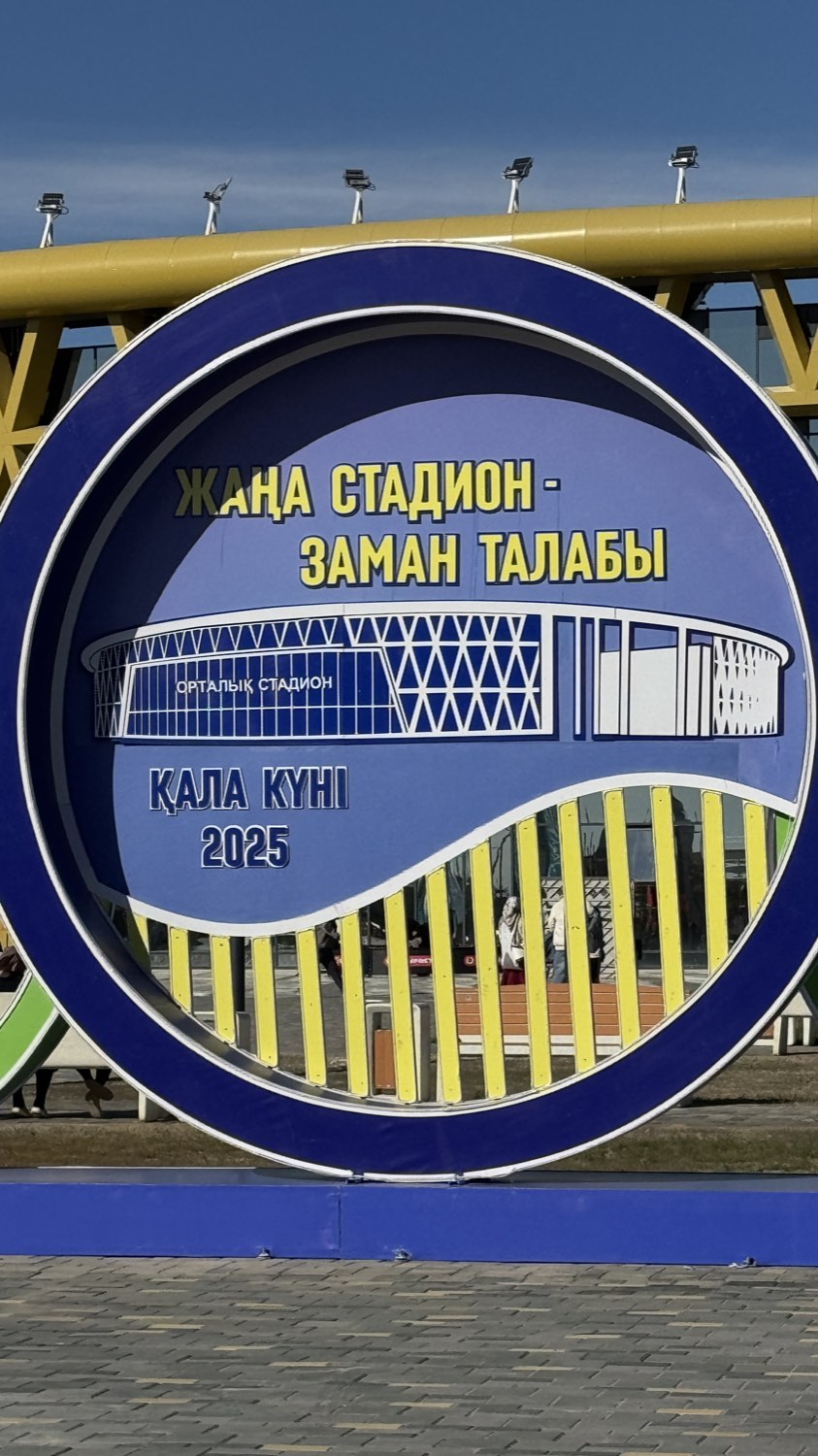
The motorcycle was in its worst state of the whole ride: about 18,000 kilometres in four months, the chain looser than the day before, blue smoke on start up, and cutting out every time the revs dropped. I crossed the city holding the clutch in and blipping the throttle at every junction so it would not stall. Turning back for a look at a brand new stadium, with a crowd outside it for City Day, I came face to face with a pedestrian on a crossing directly in front of a parked police car, and the engine died again at exactly that moment. Stopping meant a dead motorcycle in the middle of a junction in front of the police, so I fired it and went through, close enough to earn a look from both of them.
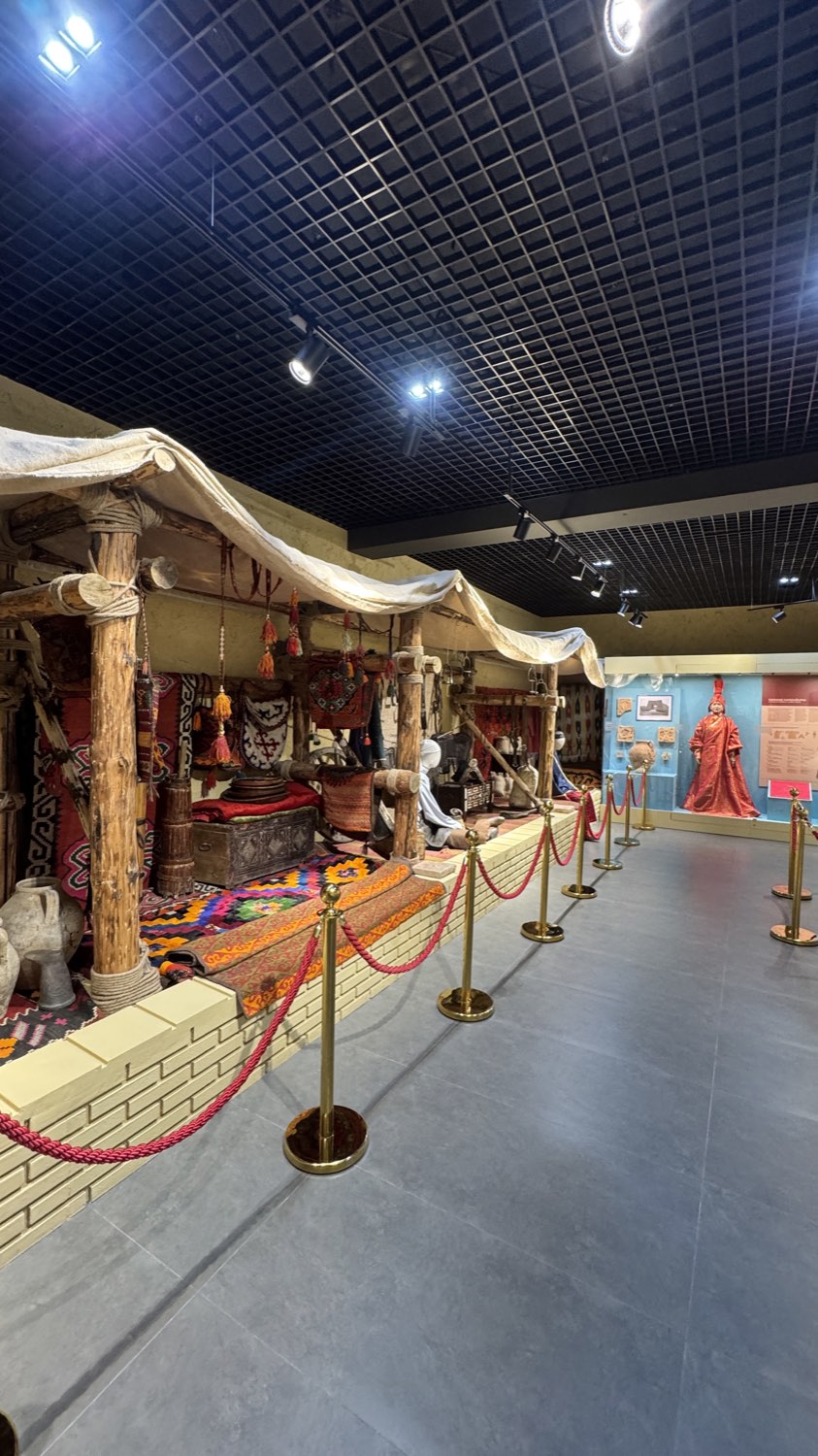
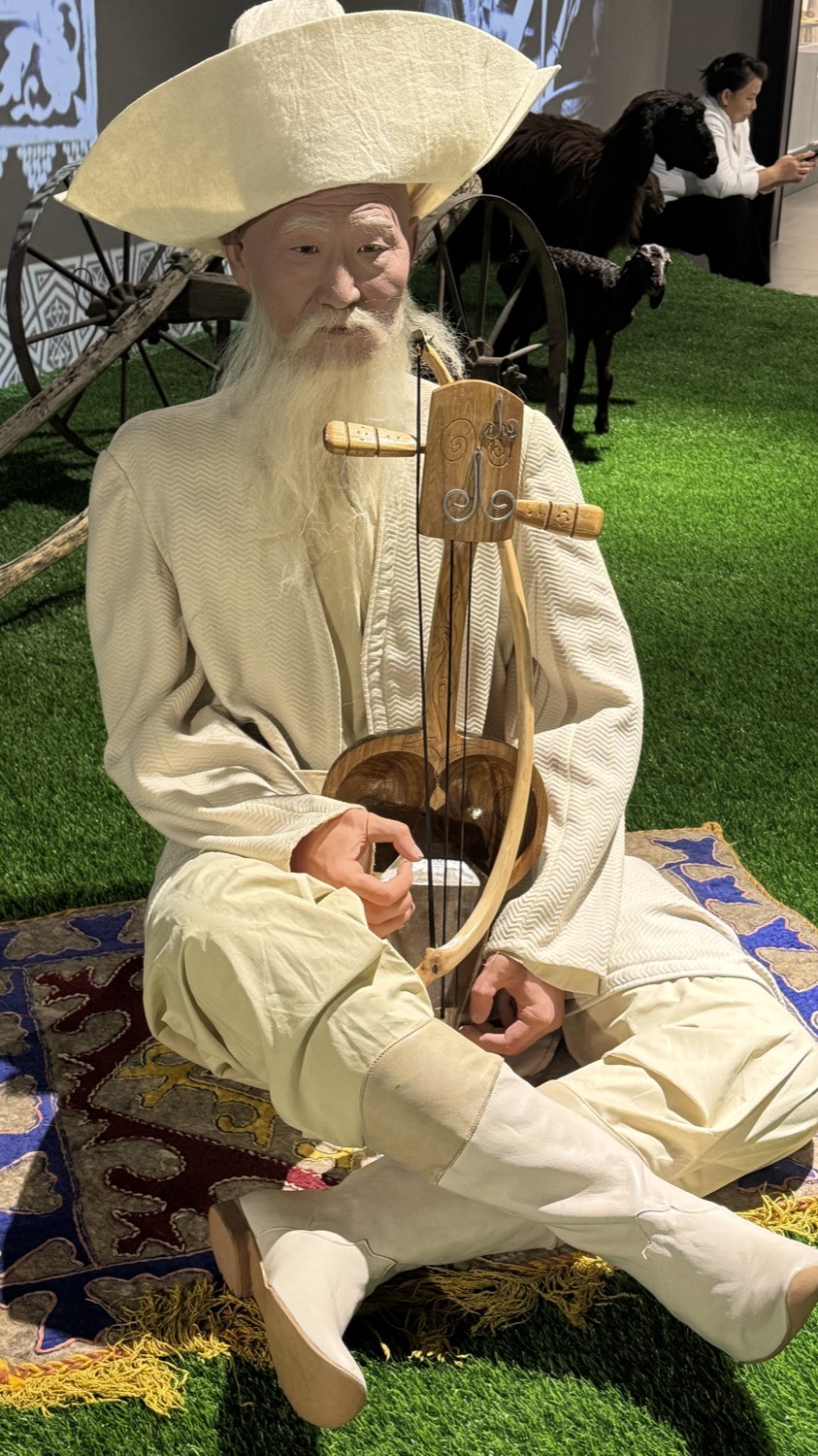
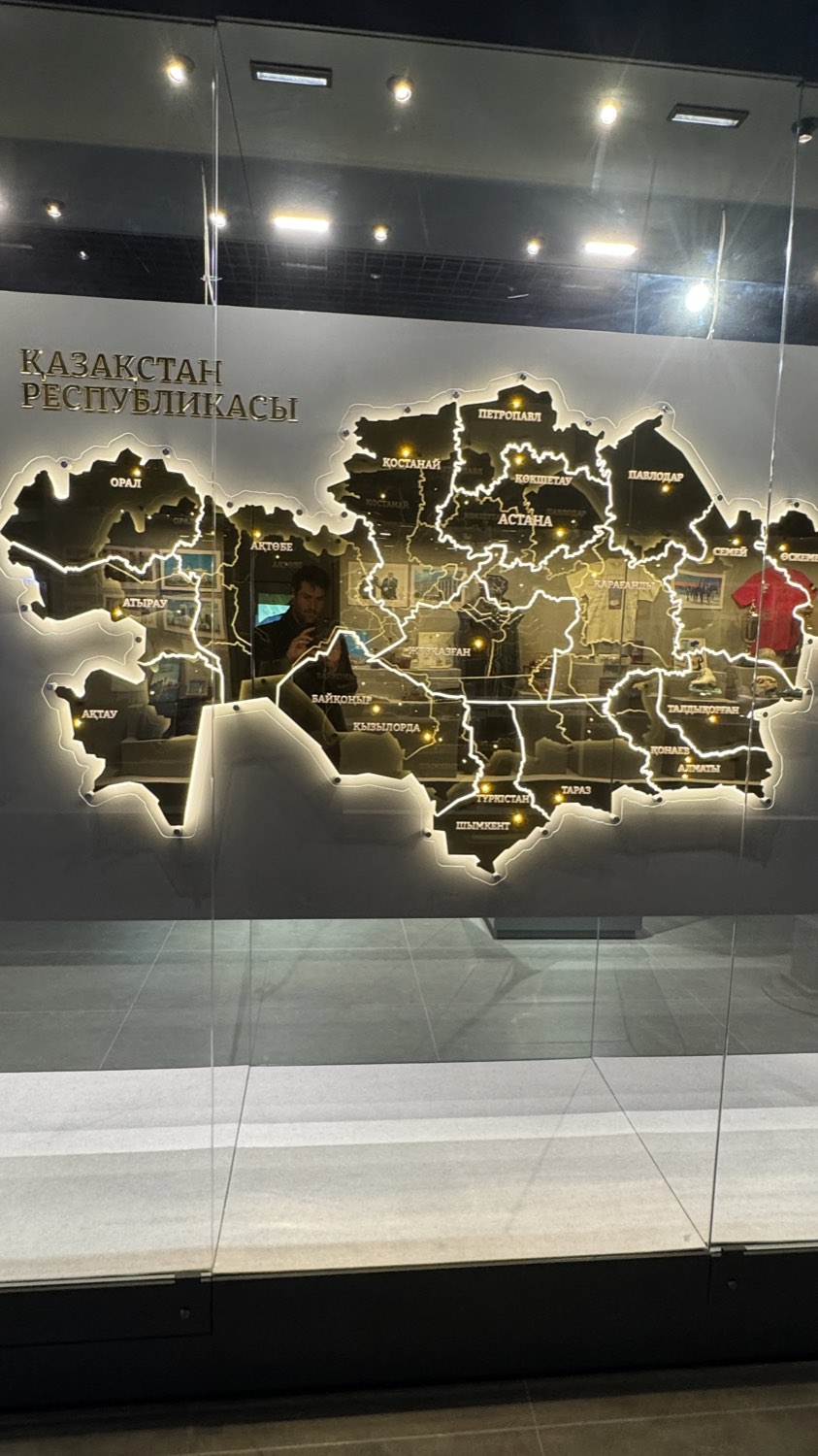
It cut out for good at the stadium, which I took as the day telling me to stop. So I went into the regional museum, and it turned out to be the best hour of the crossing. It runs from the Saka peoples of the fifth century BC through the Silk Road cities of the Syr Darya, the nomad centuries, the Soviet period and the cosmodrome up the road. Every one of those was something I had ridden past in the previous fortnight without understanding it. Laid out in order, it stopped being a series of odd sights and became one story.
One of the staff was so taken with a foreigner turning up on a motorcycle that they walked me through the entire building, room by room, explaining each one through a translator app, while Jacko waited outside on the bike.
Camped outside a city that has been there a thousand years.
South of Kyzylorda I set out for Syganak, an important city on the route since the tenth century, meaning to camp inside the archaeological site. I circled it several times but the whole perimeter was fenced, so I settled for the ground just outside.
Walking around it after dark I kept coming across fragments of pottery, and could not help imagining I was standing in the traces of that culture. I wrote that the night was quiet and pleasant.
Sixty kilometres in, the dashboard went dark.
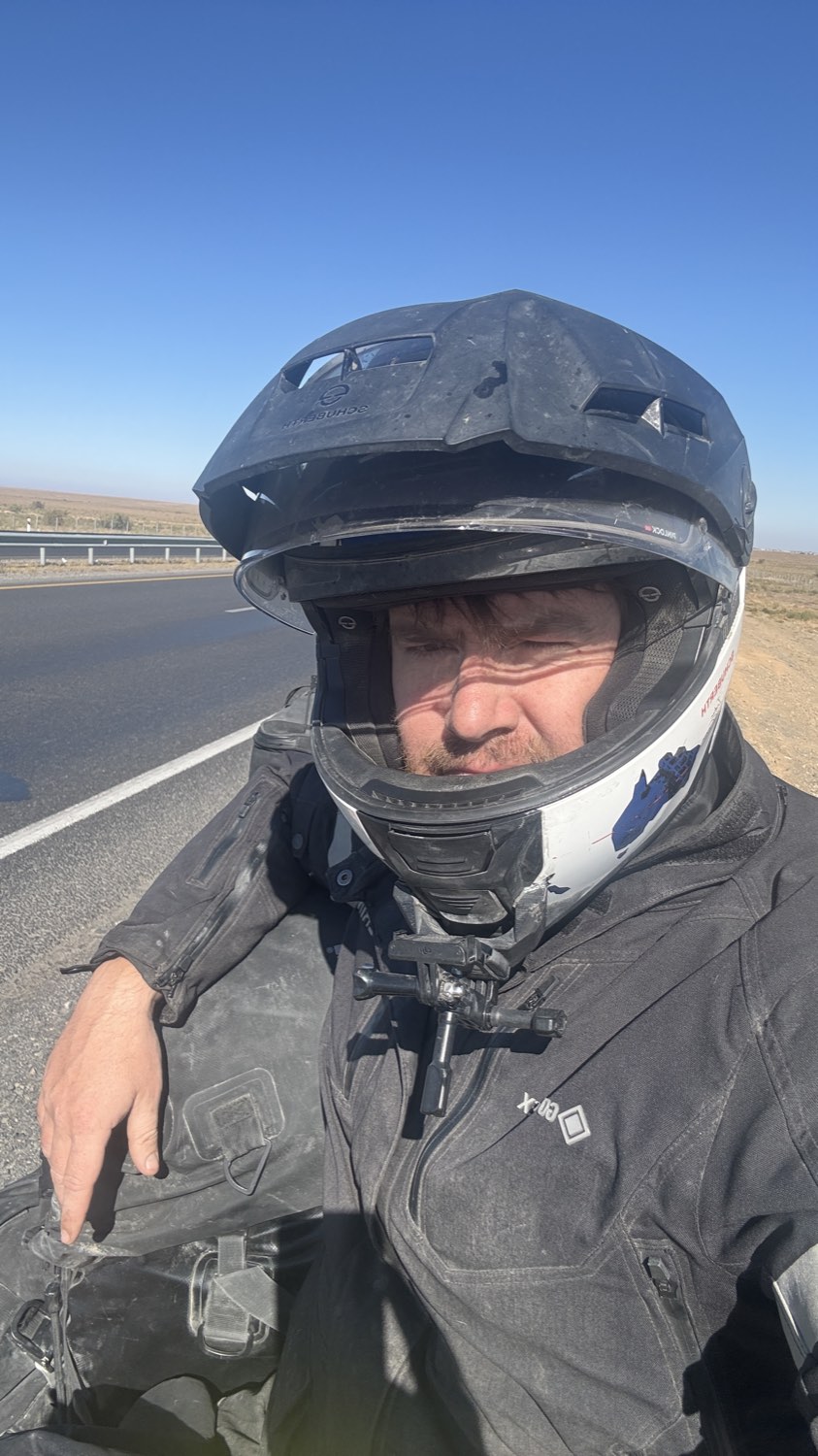
It was meant to be a good day, running the key points of the Silk Road before reaching Shymkent to meet a friend. Sixty kilometres in, the motorcycle stopped in the middle of the road. Just like that.
I pulled over and tried again and again. No sign of life. I sat on the bike with Jacko, in complete desolation, no shop and no building in any direction, and wondered whether the warnings of the past few days had been announcing exactly this.
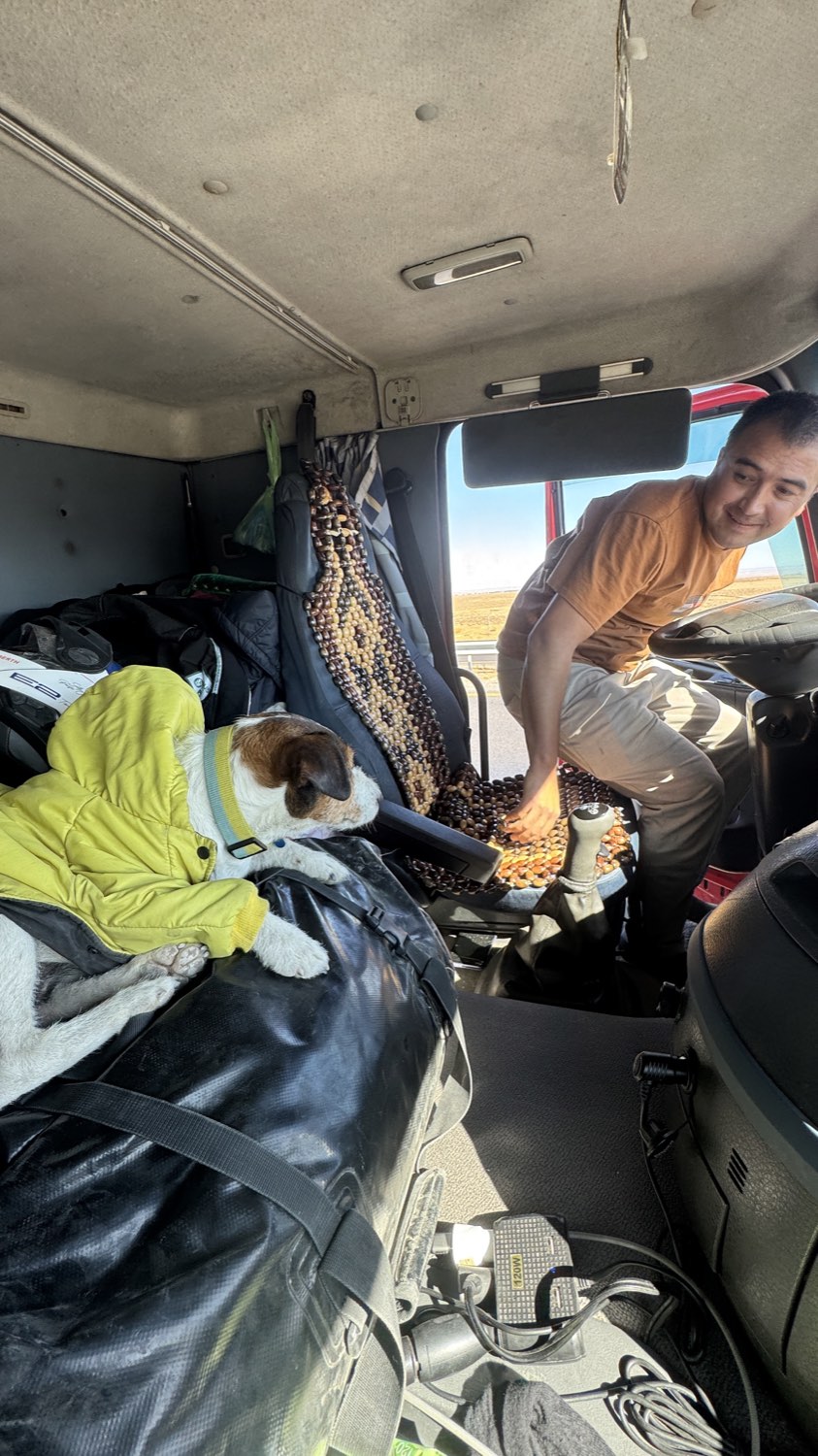
It was much hotter than it had been for weeks. Standing at the roadside I began flagging down lorries until one finally stopped, fifty metres past me because of the speed. I explained with hand gestures: the bike is dead. The driver reversed, lowered the ramp with impressive skill, and they loaded it on.
It lost power, and the dashboard went completely dark. The bike was dead.
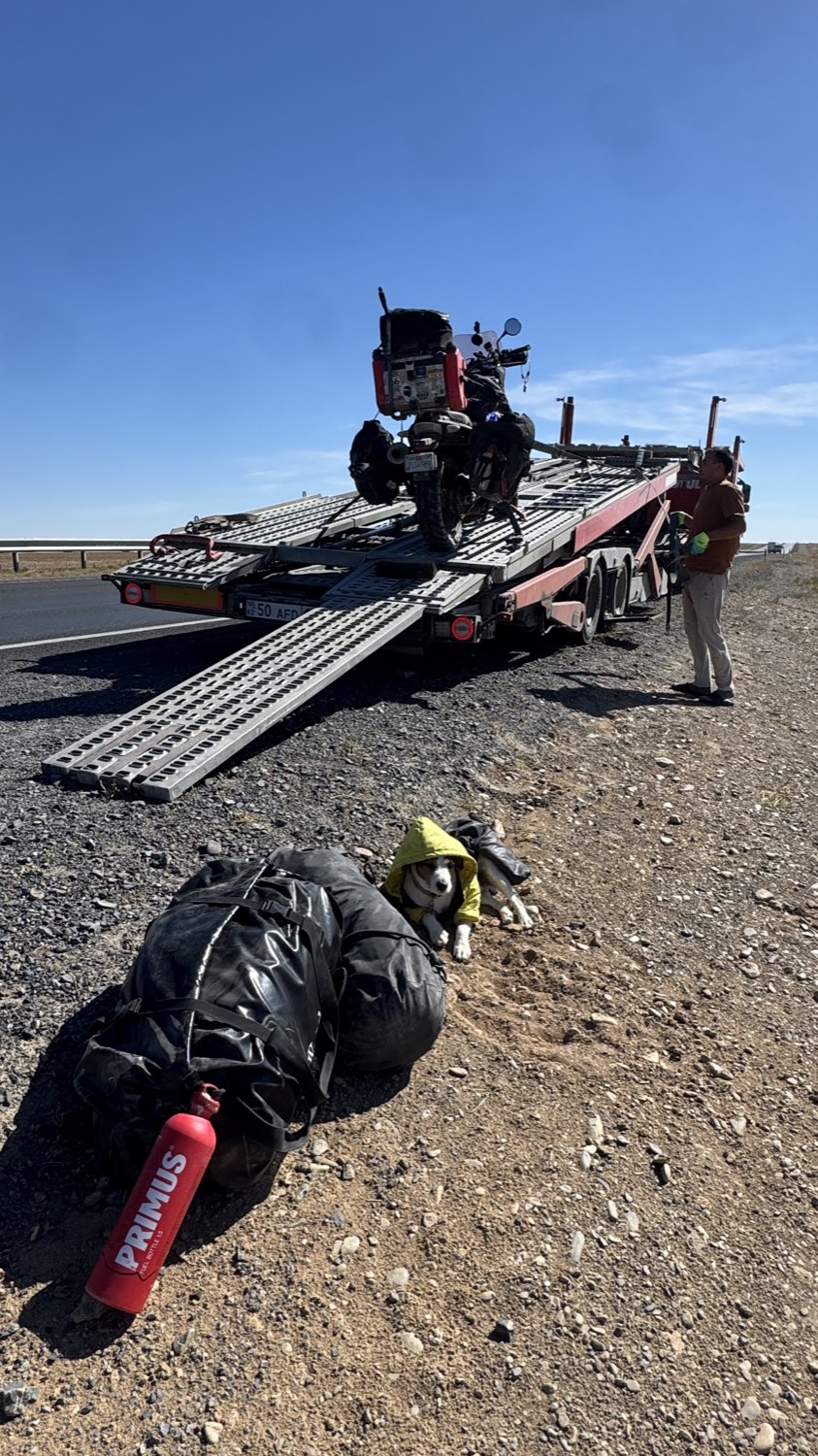
Two hundred and fifty kilometres, and he would not take the money.
The journey to Shymkent took about four hours. They spoke very little, between my exhaustion, my worry and the driver's complete lack of English, and at some point I managed to sleep for two of them.
The driver refused payment. He would not go into the city because he had a new job taking him on to Almaty, so he dropped me and the motorcycle at a roadside hotel on the outskirts. After several days of wild camping, that meant a hot shower and a bed.
Turkestan went past the window. I had been looking forward to it for weeks: the mausoleum of Khoja Ahmed Yasawi, the old walls, the caravanserai. I got a glimpse of it from the back of a lorry and left it behind for good. Further on, a sandstorm was rising in the distance, and both sides of the road were cotton fields.
Those cotton fields are the reason the Aral Sea is not there any more. The rivers that fed it were diverted to irrigate them during the Soviet era, and what had been one of the largest lakes on earth drained away. In Aralsk the fishing boats now sit on dry ground.
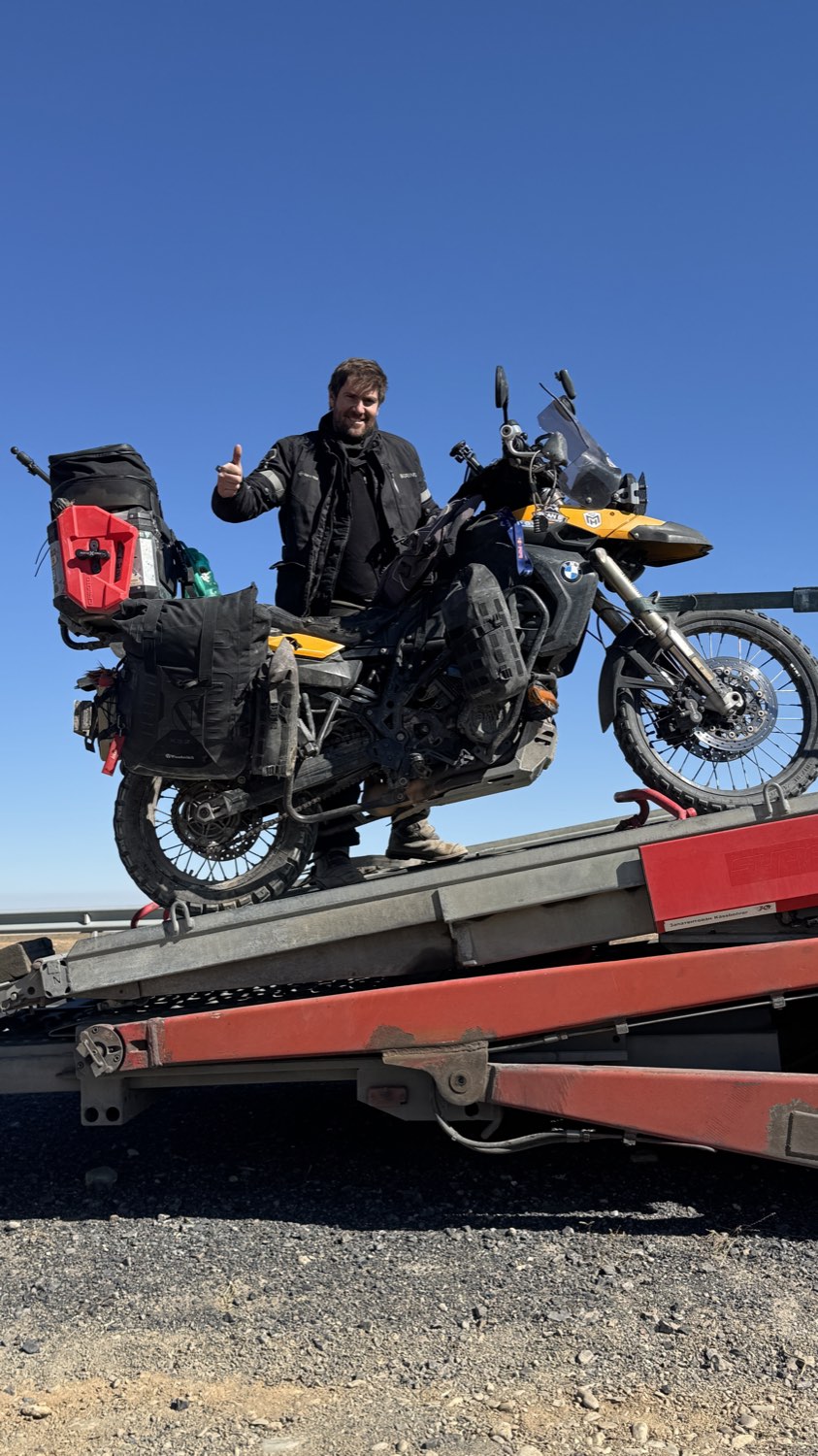
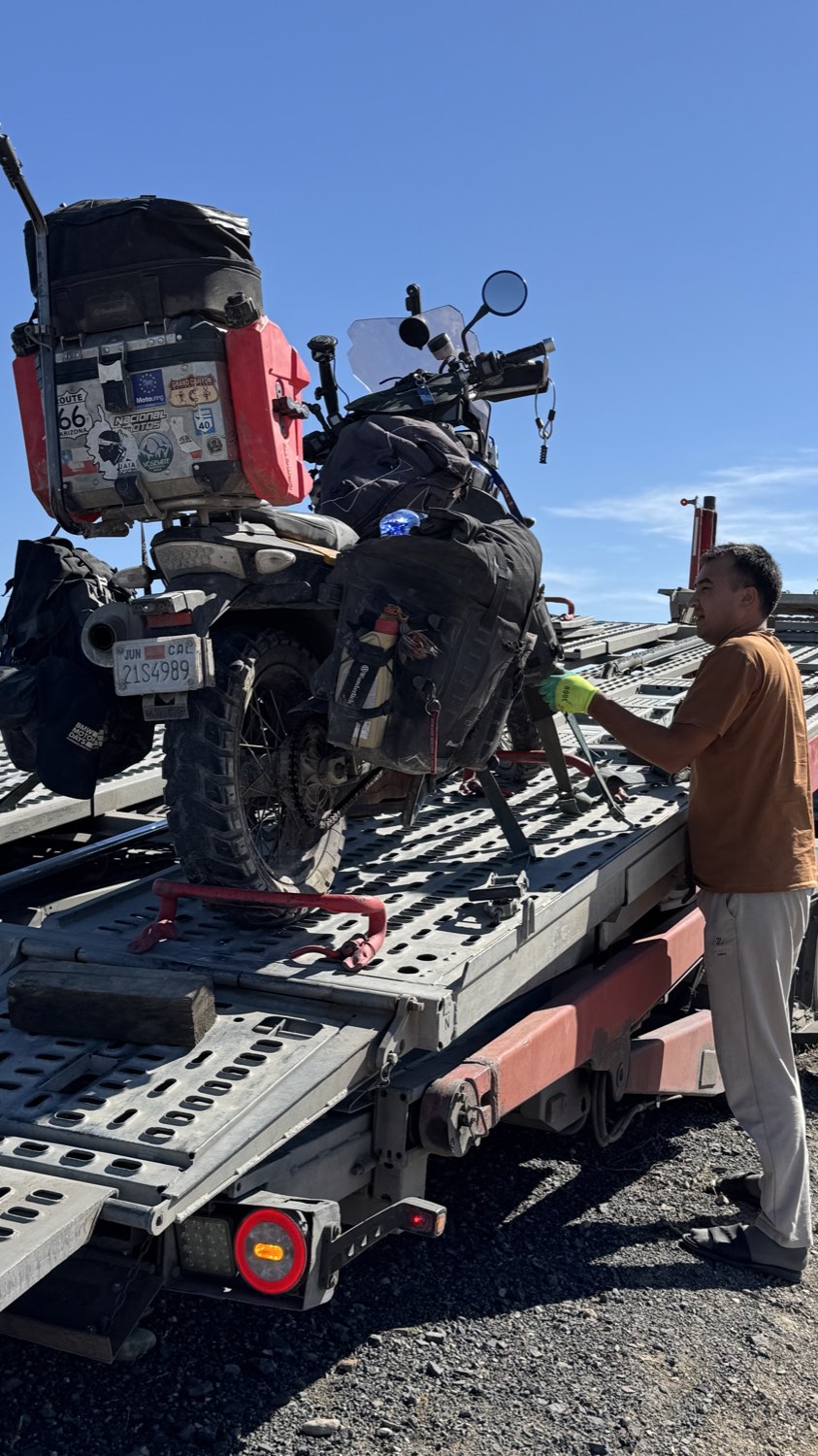
A new battery, a fuel pump, an air filter, and dead cylinders.
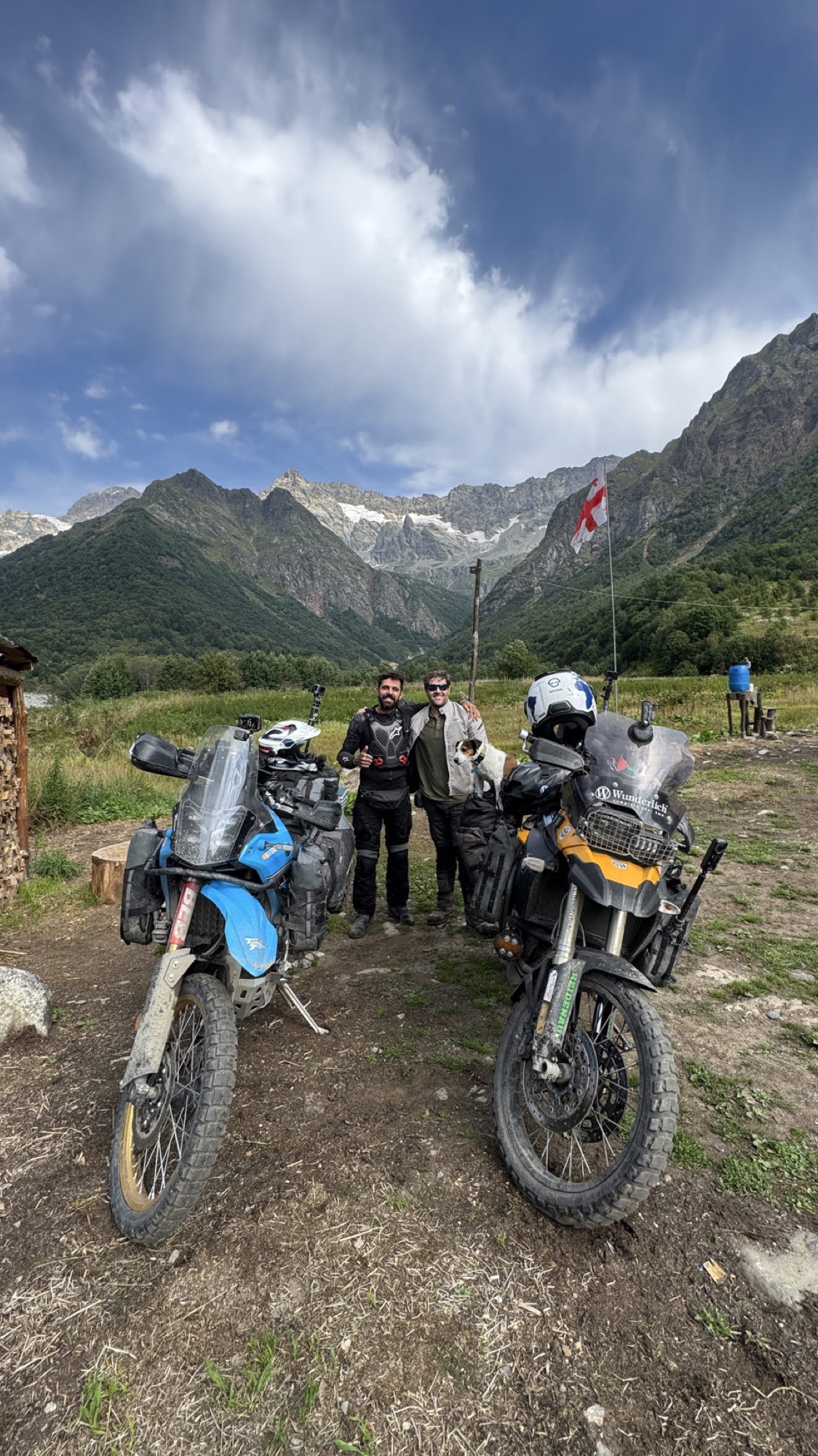
My riding partner Mario arrived from Spain the same week. We had met a month earlier in Georgia and, between maps and wild ideas, agreed to take on the Pamir Highway together. While the bike was supposed to be getting ready for it, Mario had crossed Azerbaijan and the Caspian at seven hundred kilometres a day to catch up.
The workshop fitted a new battery, a fuel pump and an air filter, and then messaged in Russian to say the cylinders were dead. With both tow trucks, the bill came to about two hundred and forty euros and the motorcycle still would not run.
It came back on the same small tow truck the next day, three and a half hours later than agreed, and there was no way to receive it. I found a workshop in Bishkek that specialises in the F800 GS, has opened up several of these engines and even has one to take parts from. Too good to be true, I wrote. We will see.
In total: around €240, including both tow trucks, and my bike is still not running.
The field archive
139 more frames from the road
Everything else from the folder, in the order it was taken.
09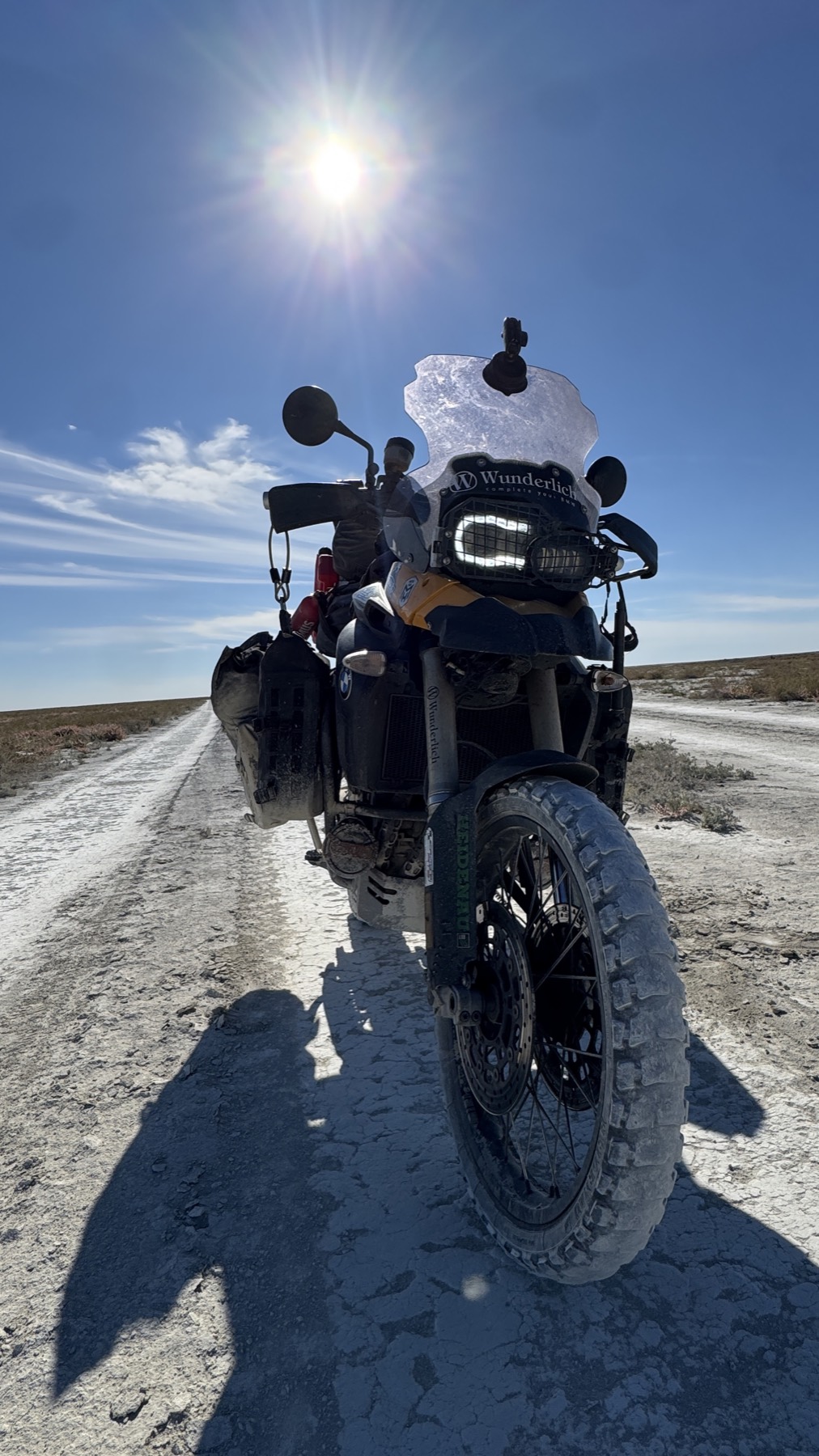 10
10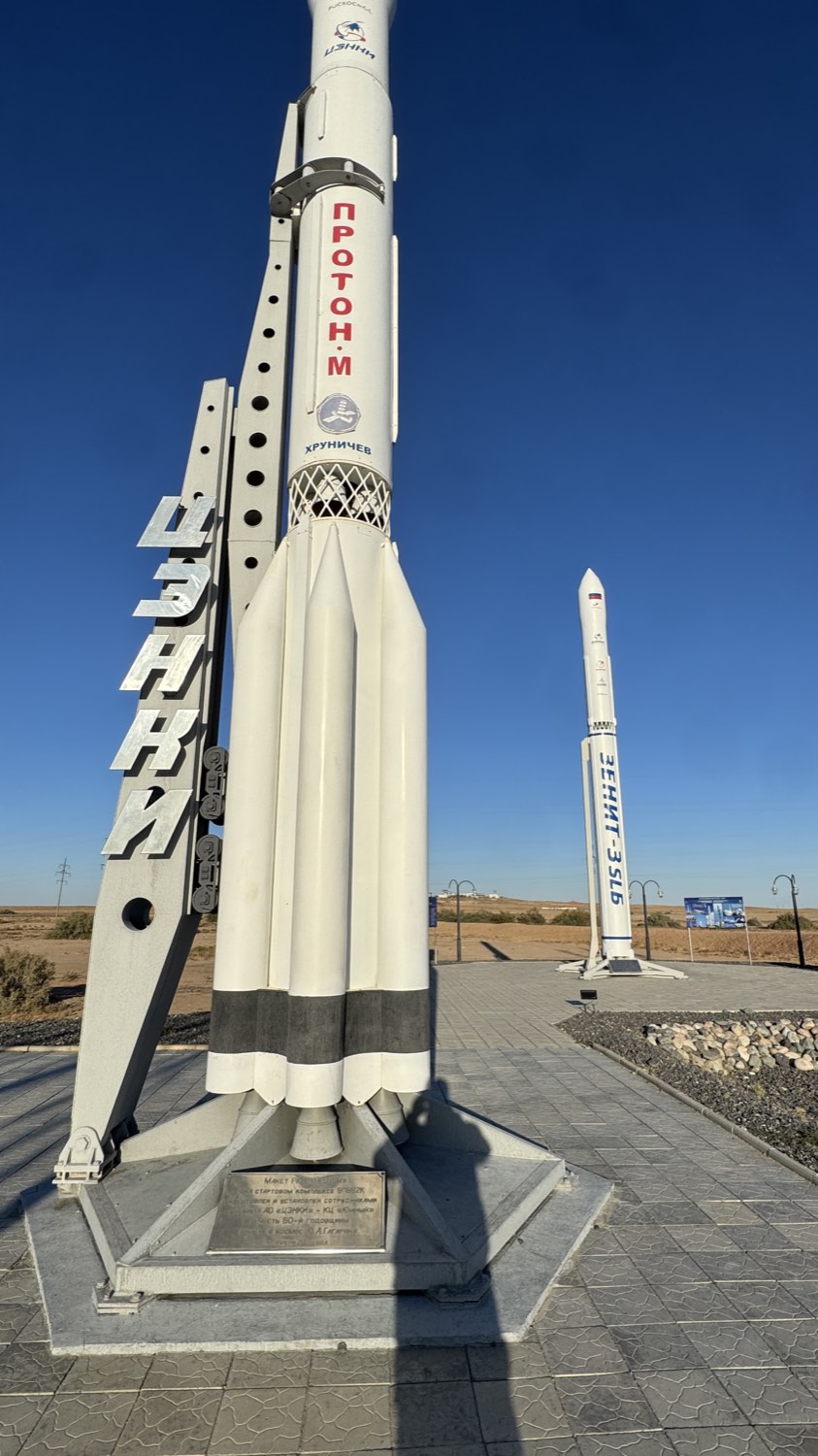 11
11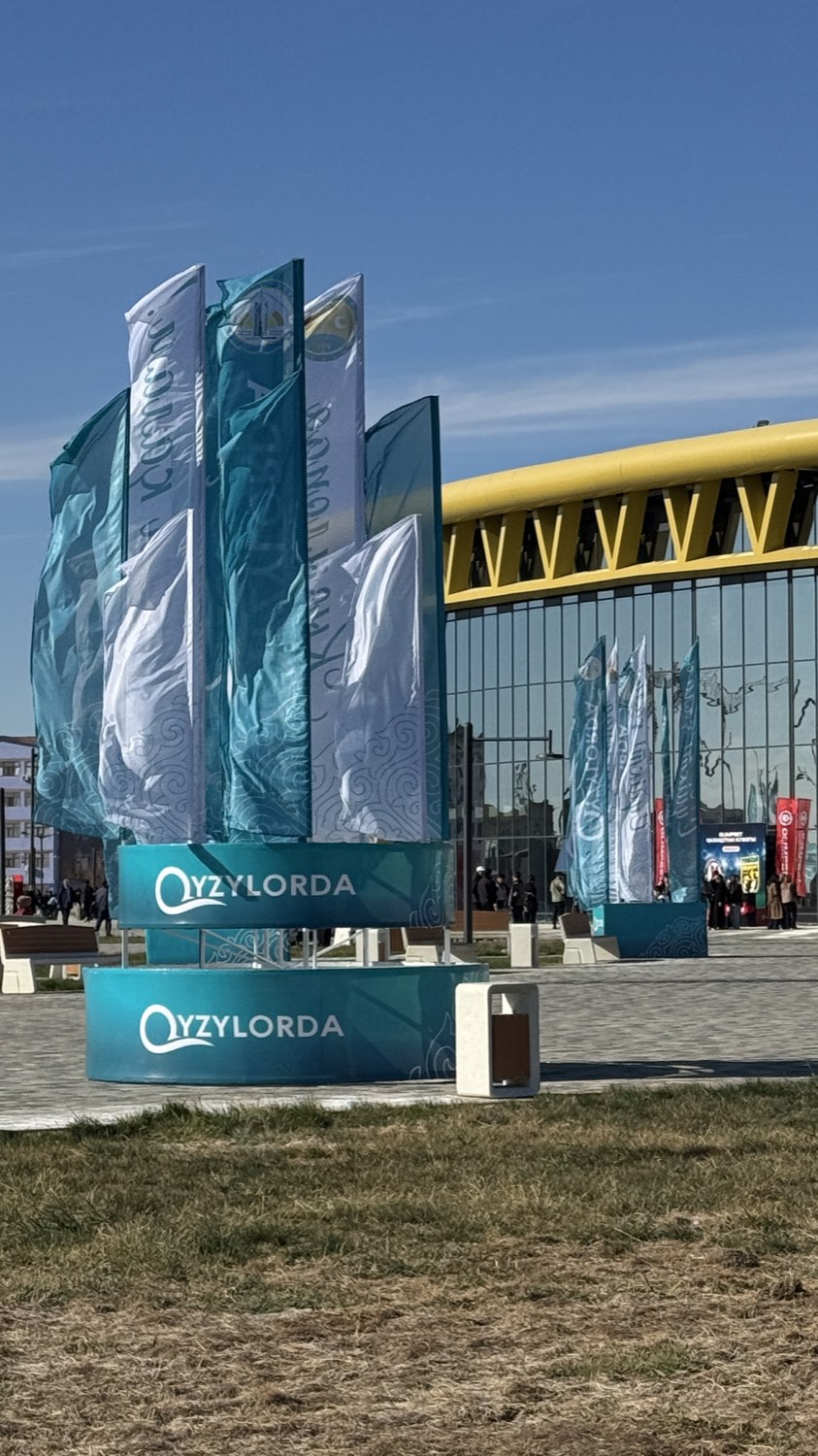 12
12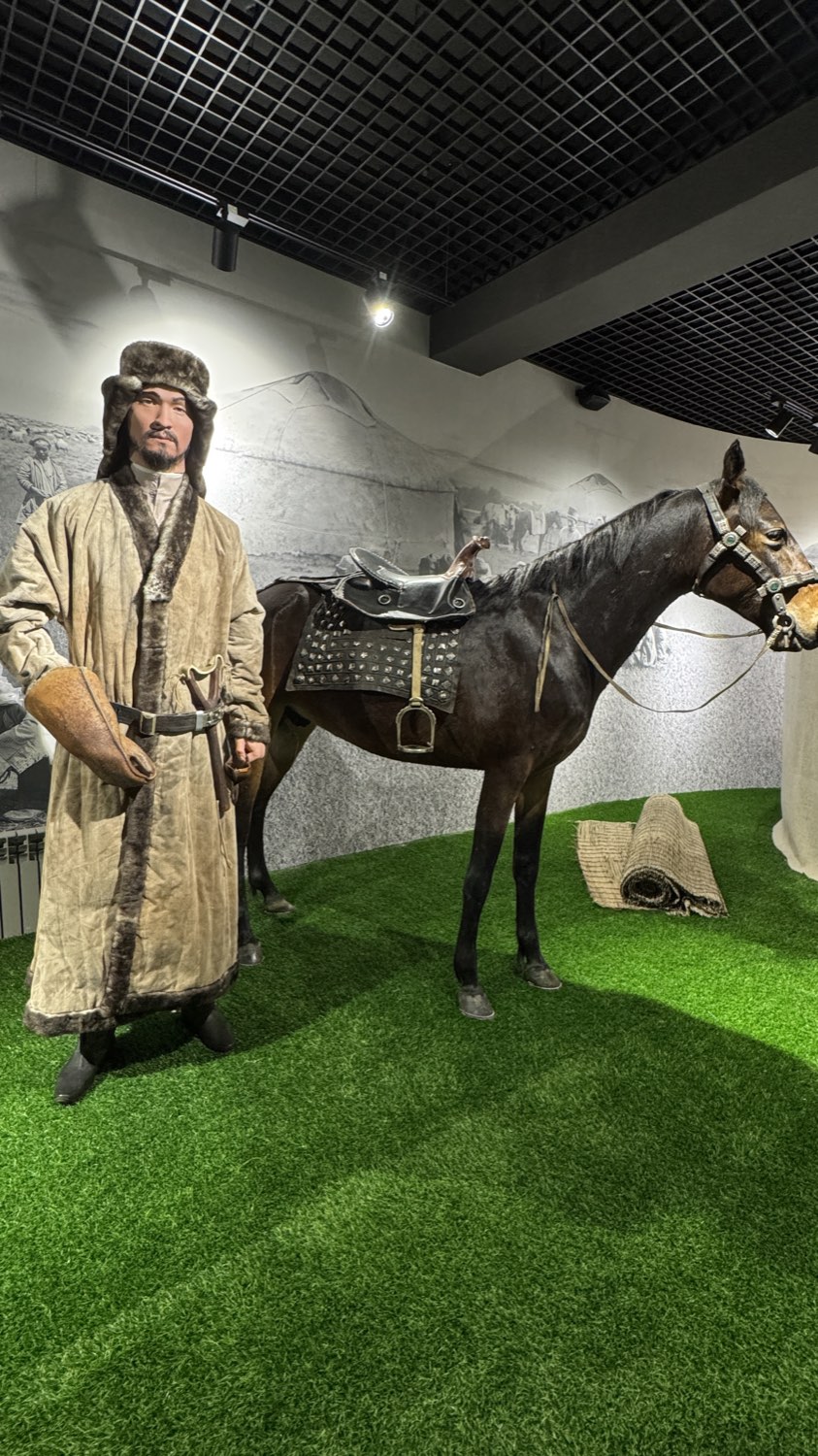 13
13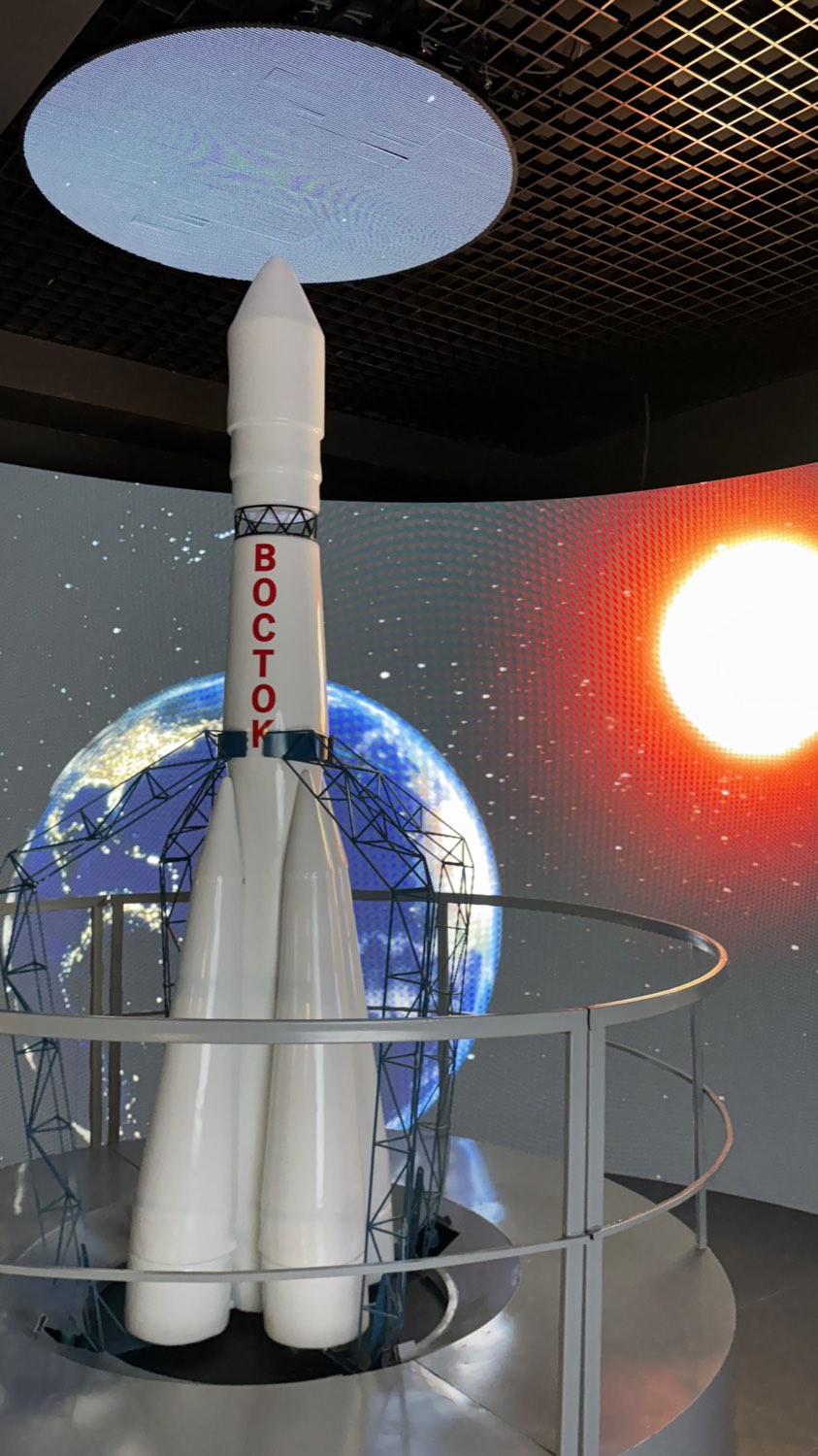 14
14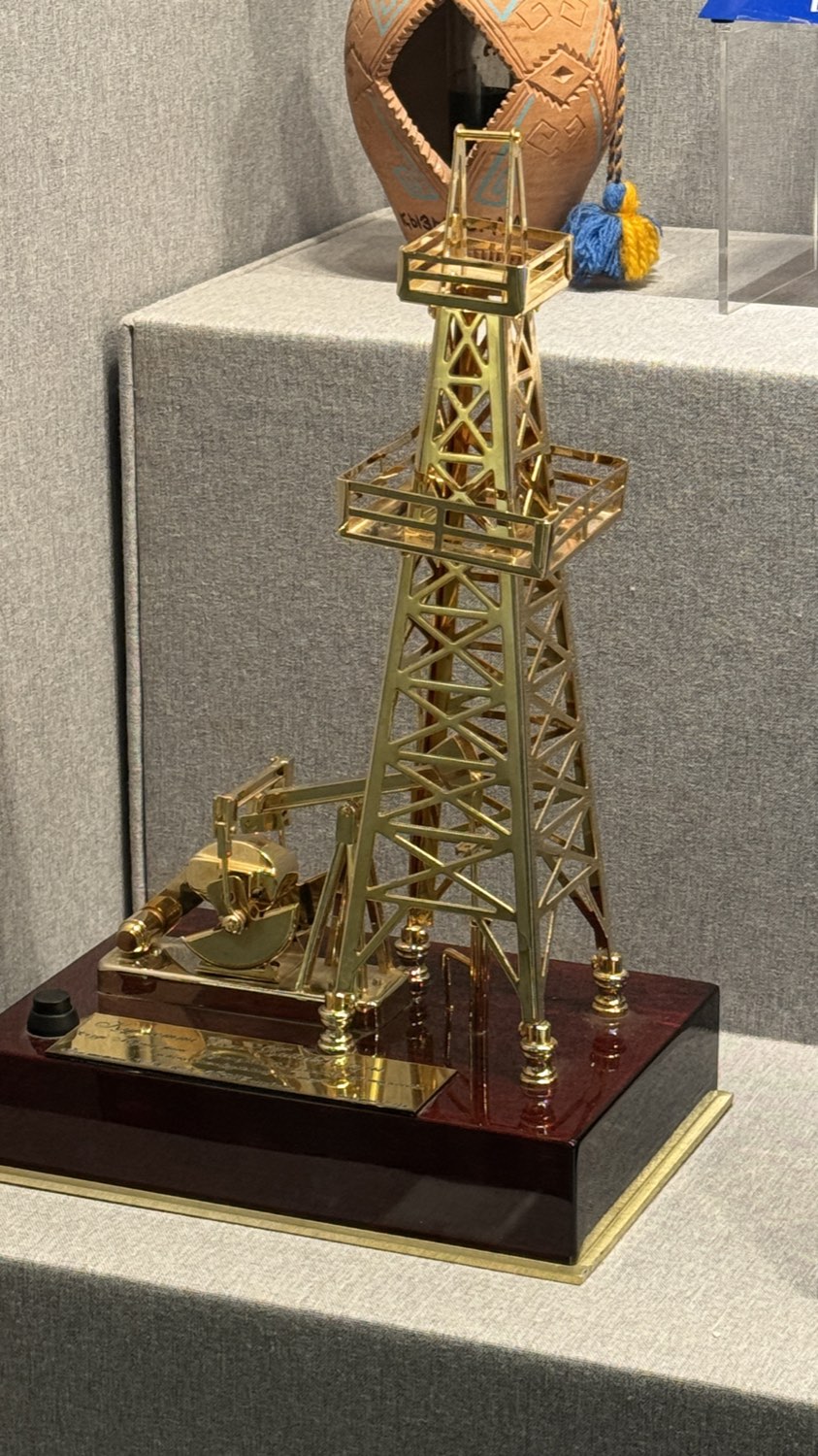 15
15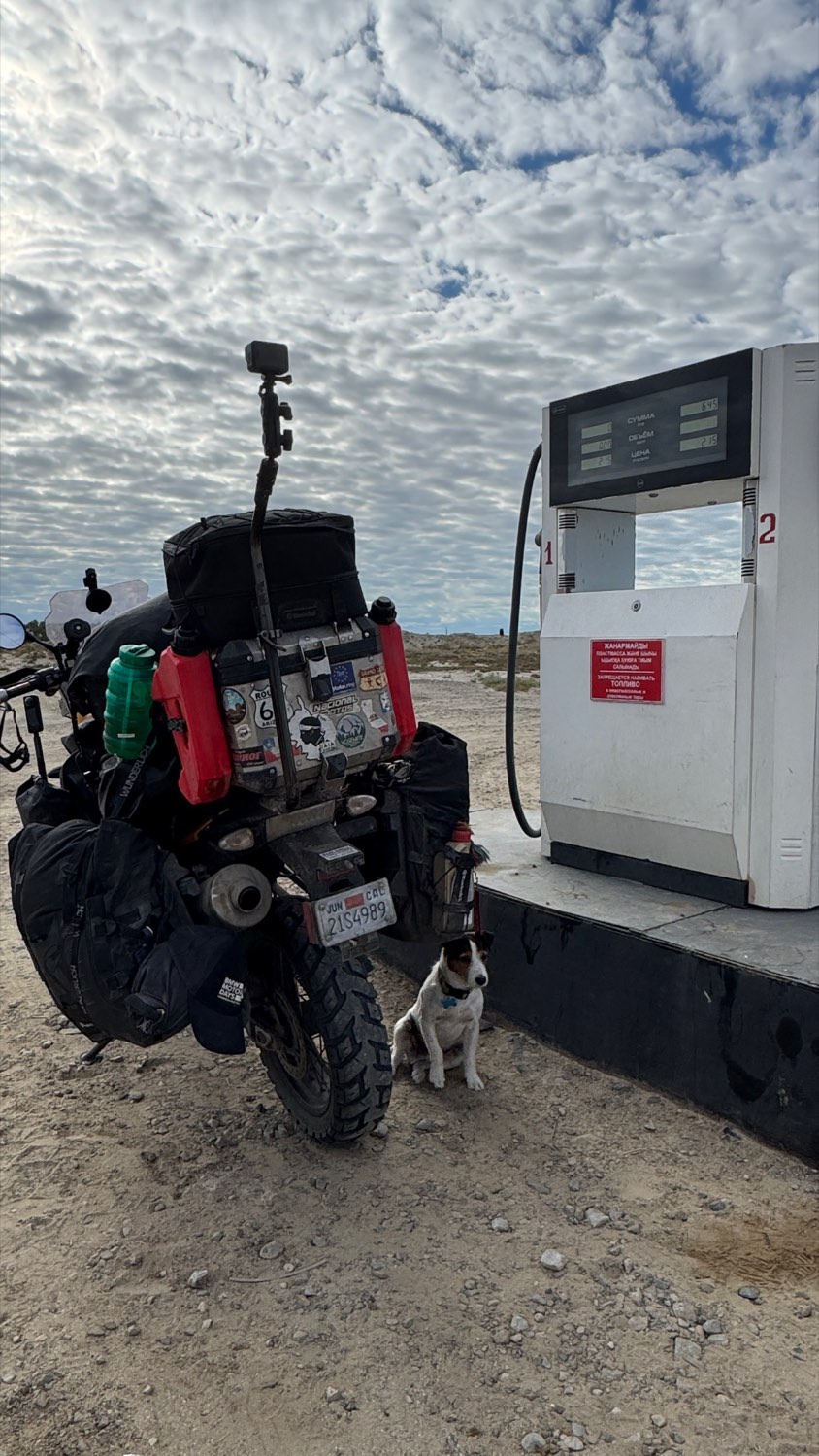 16
16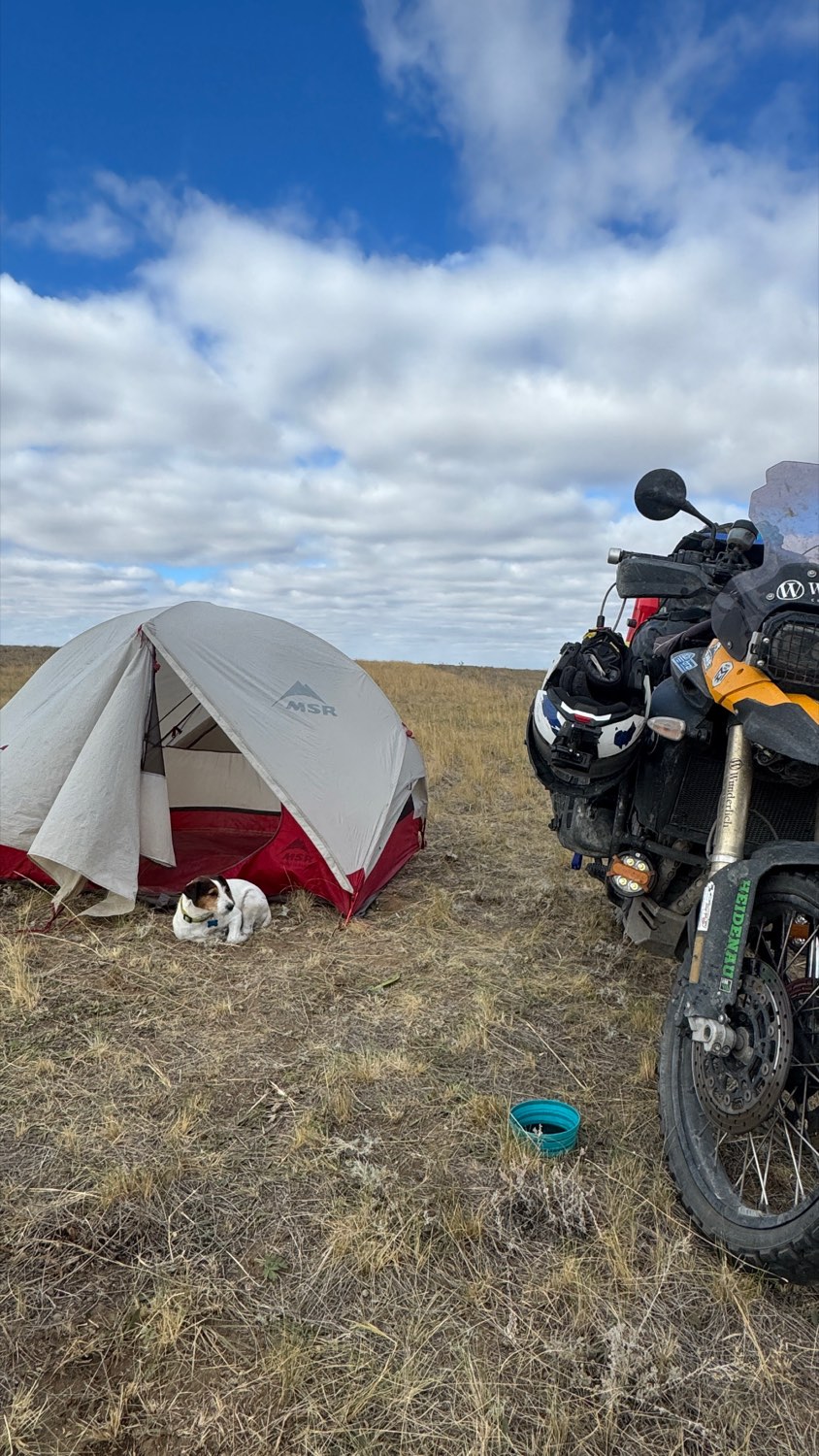 17
17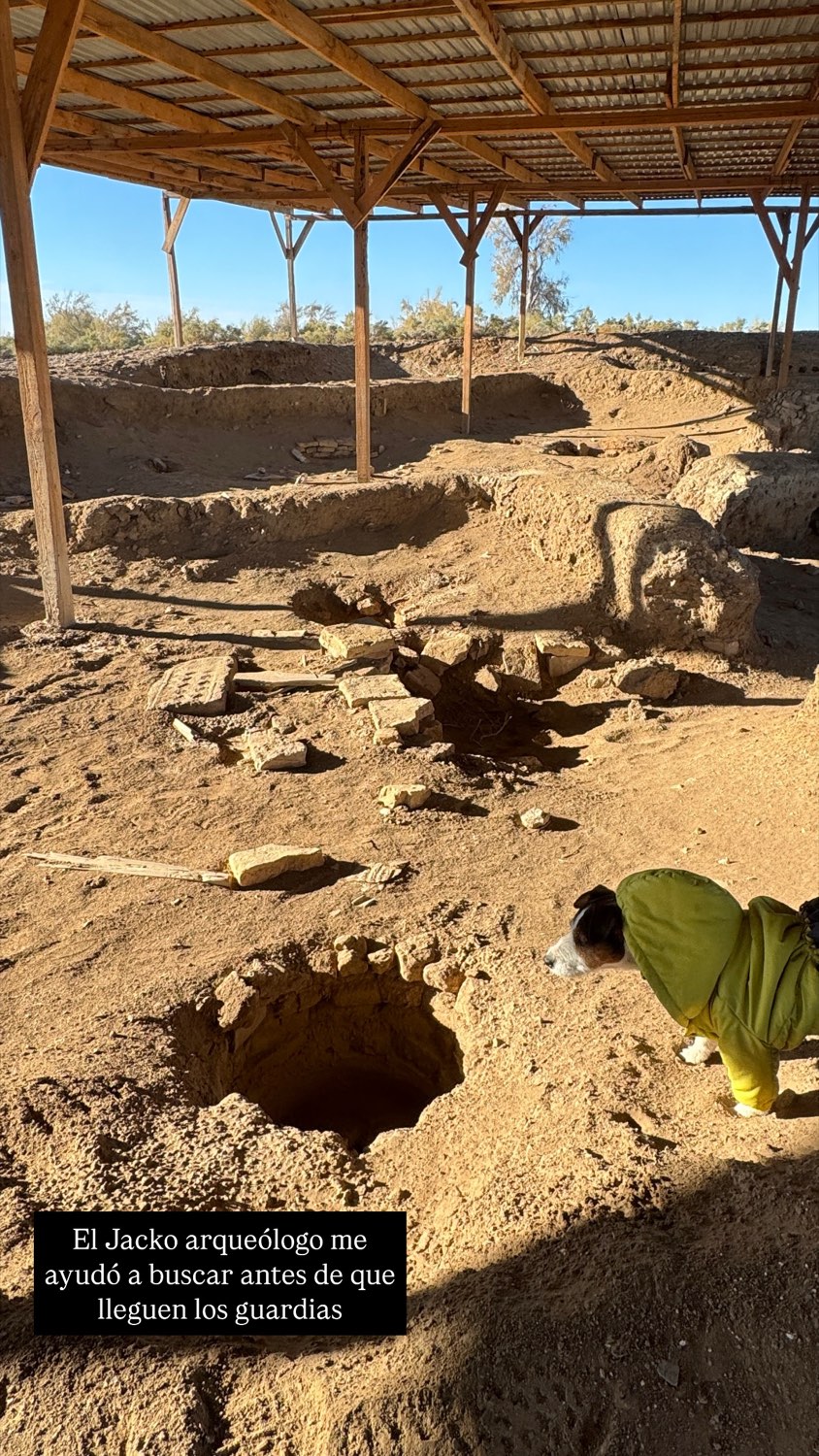 18
18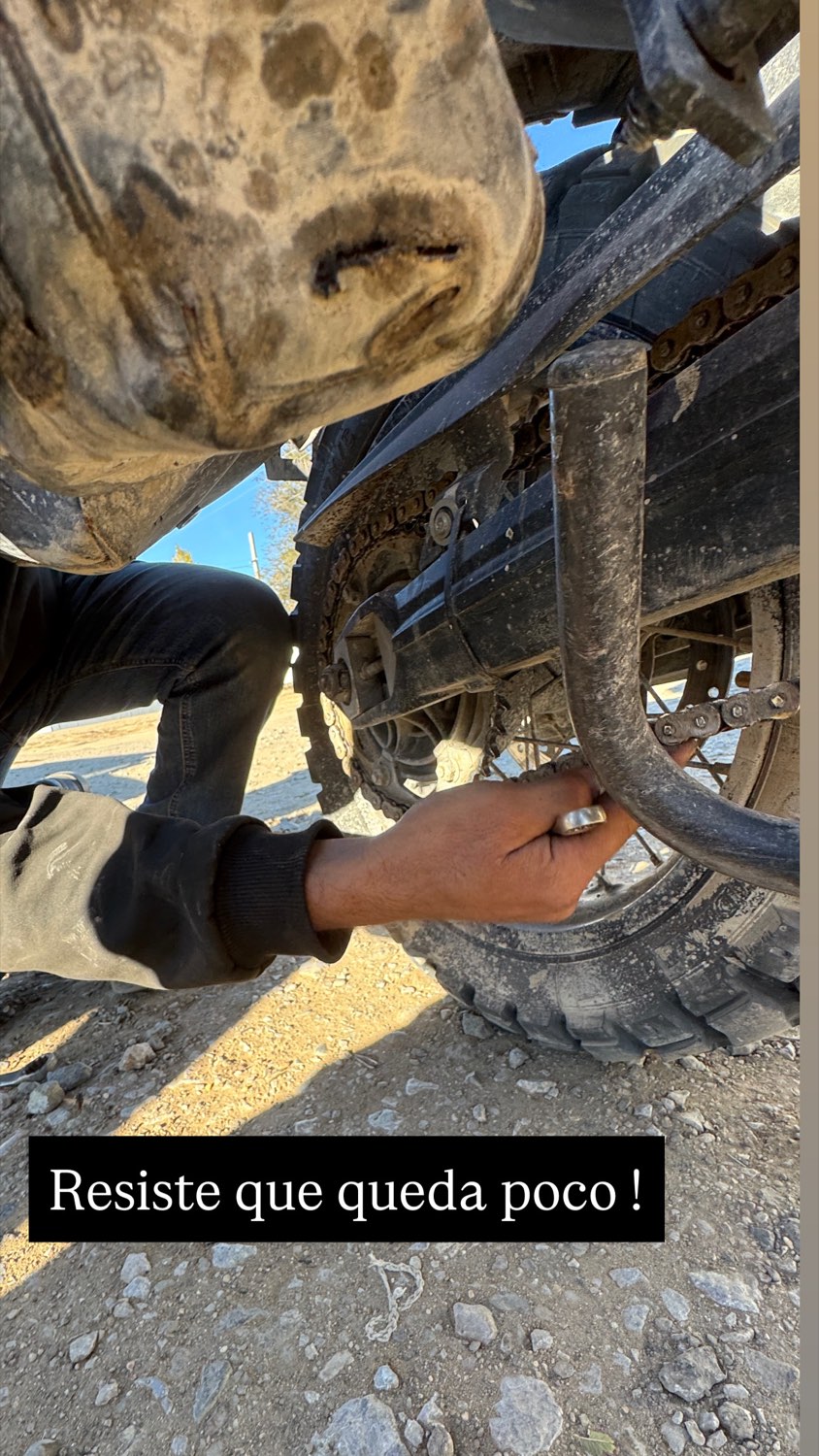 19
19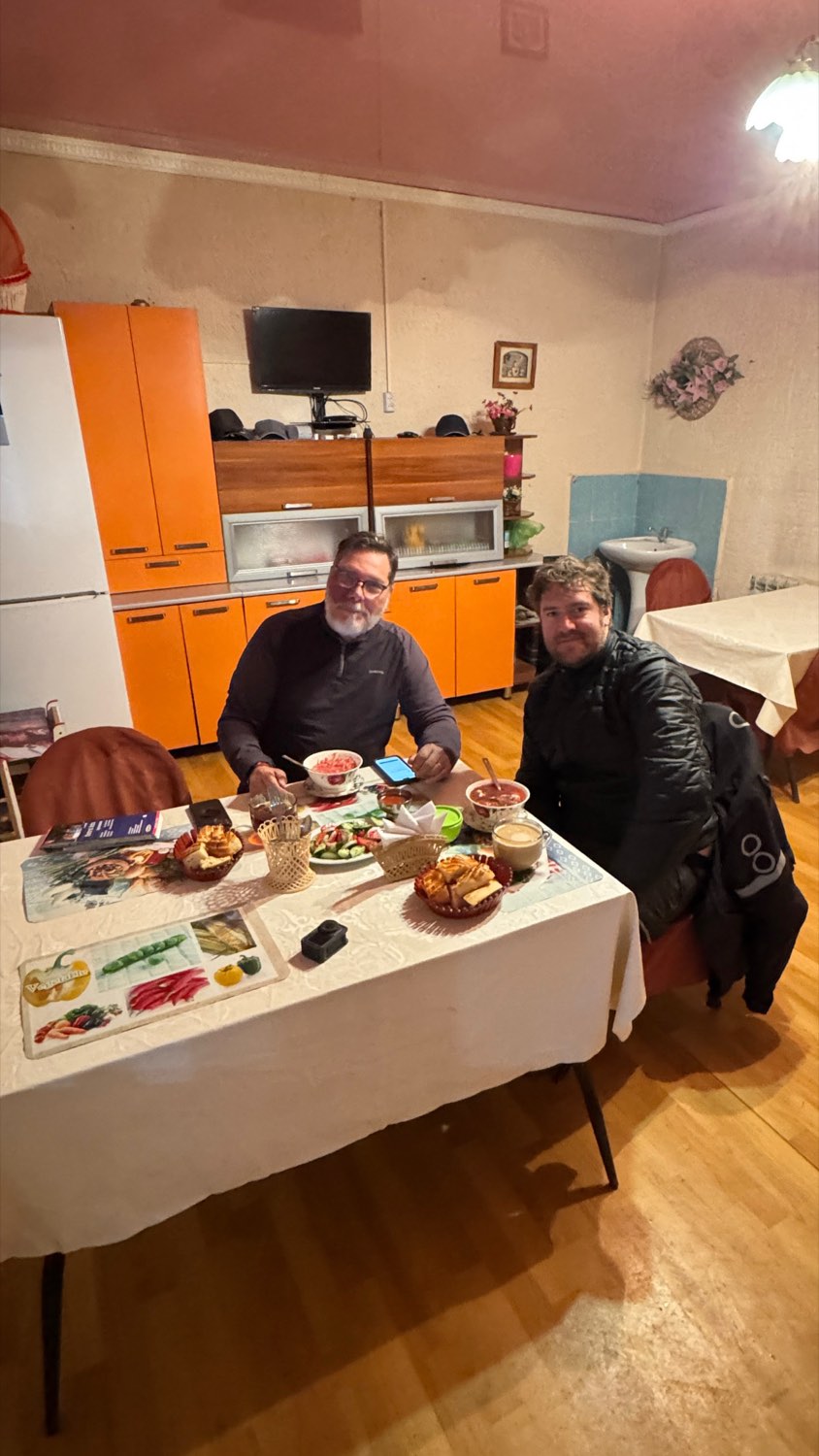 20
20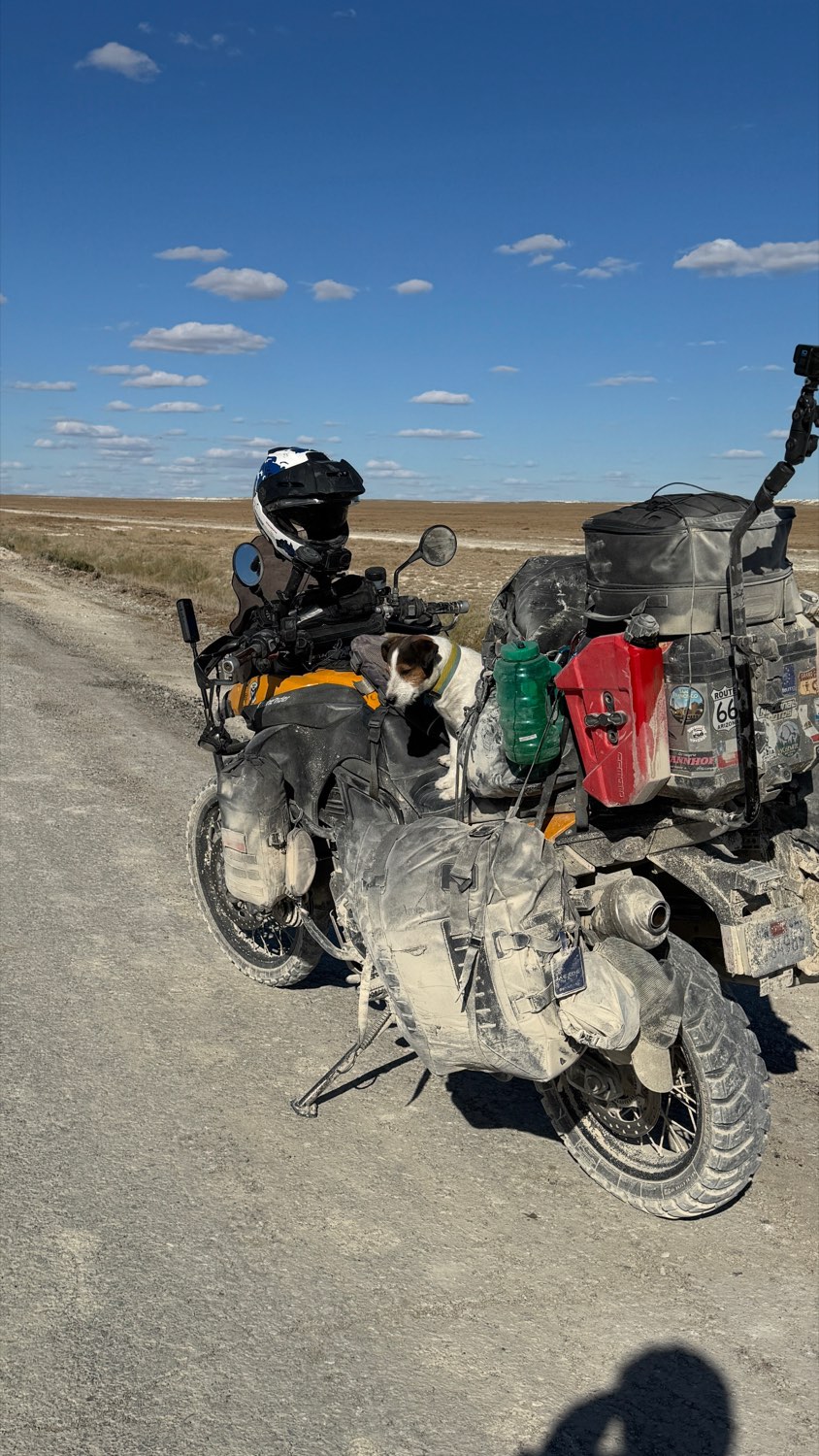 21
21 22
22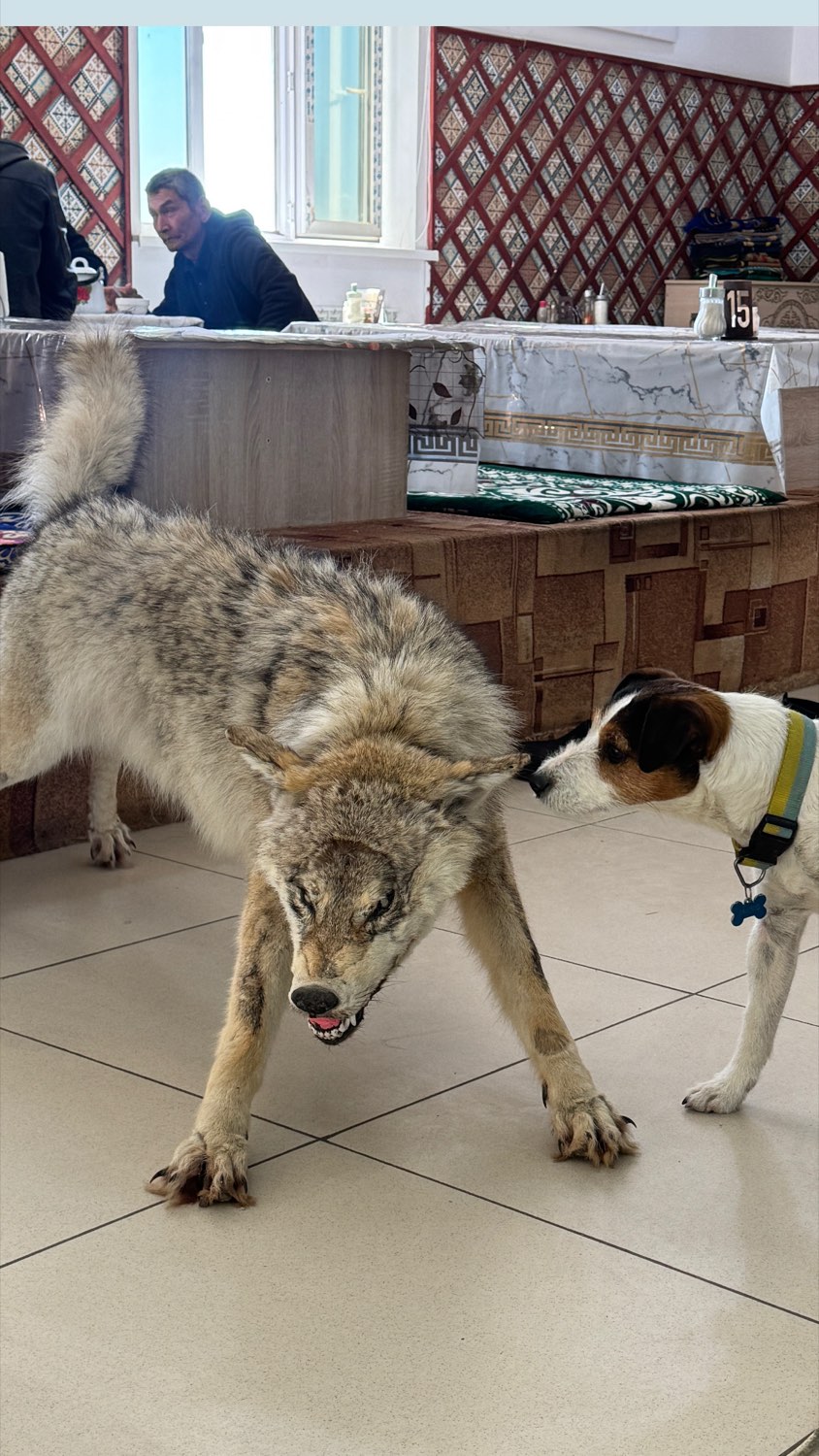 23
23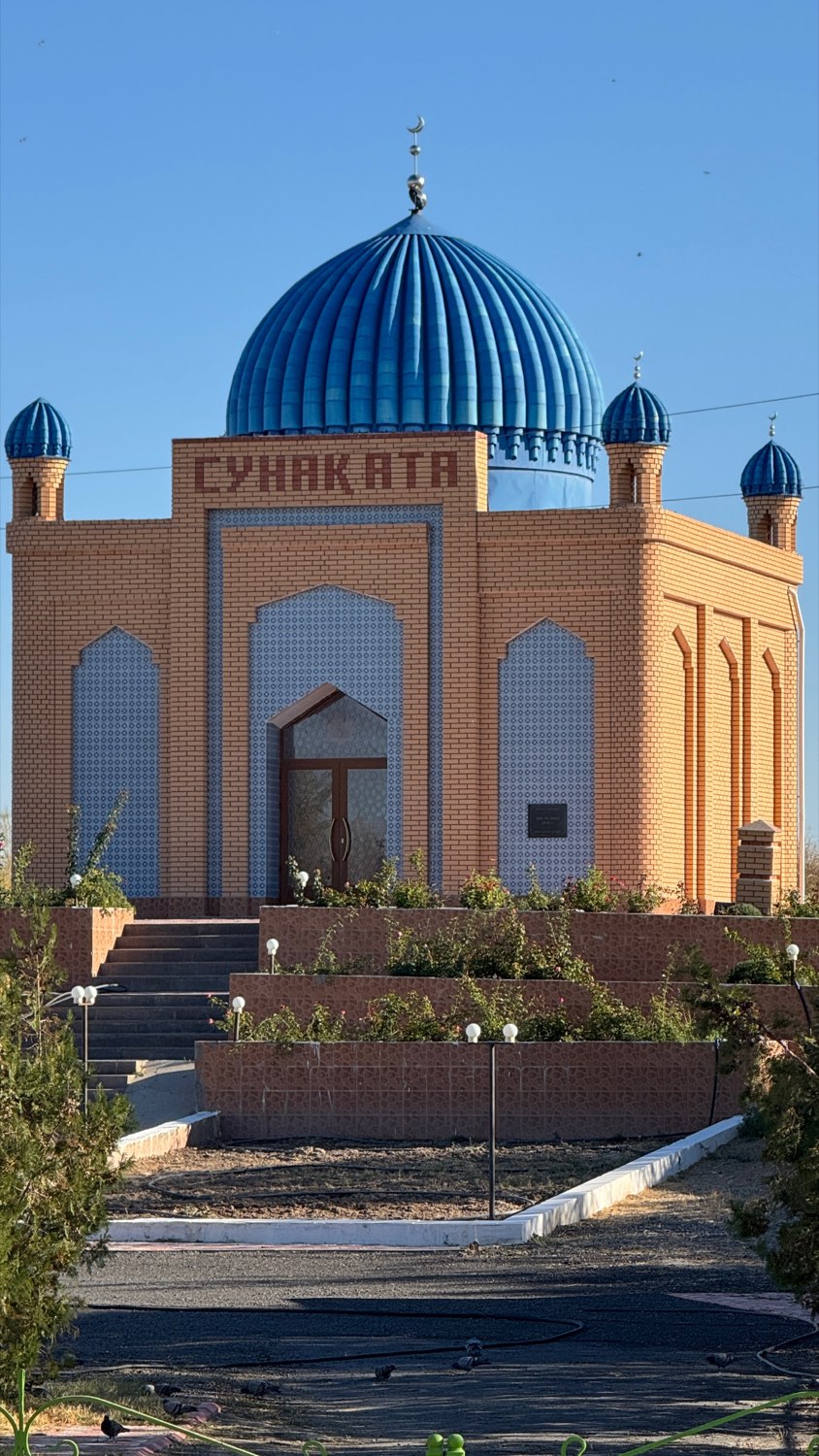 24
24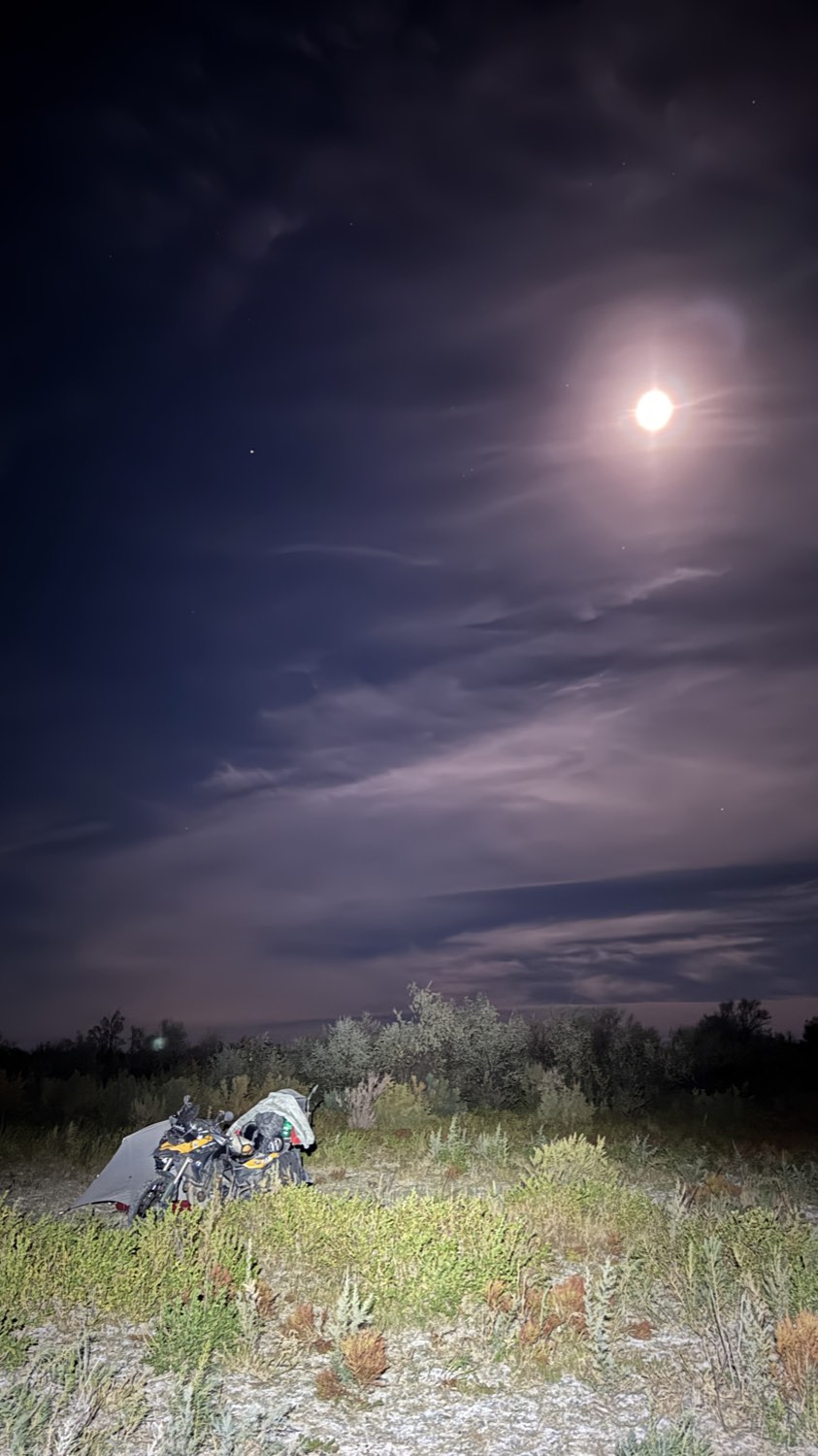 25
25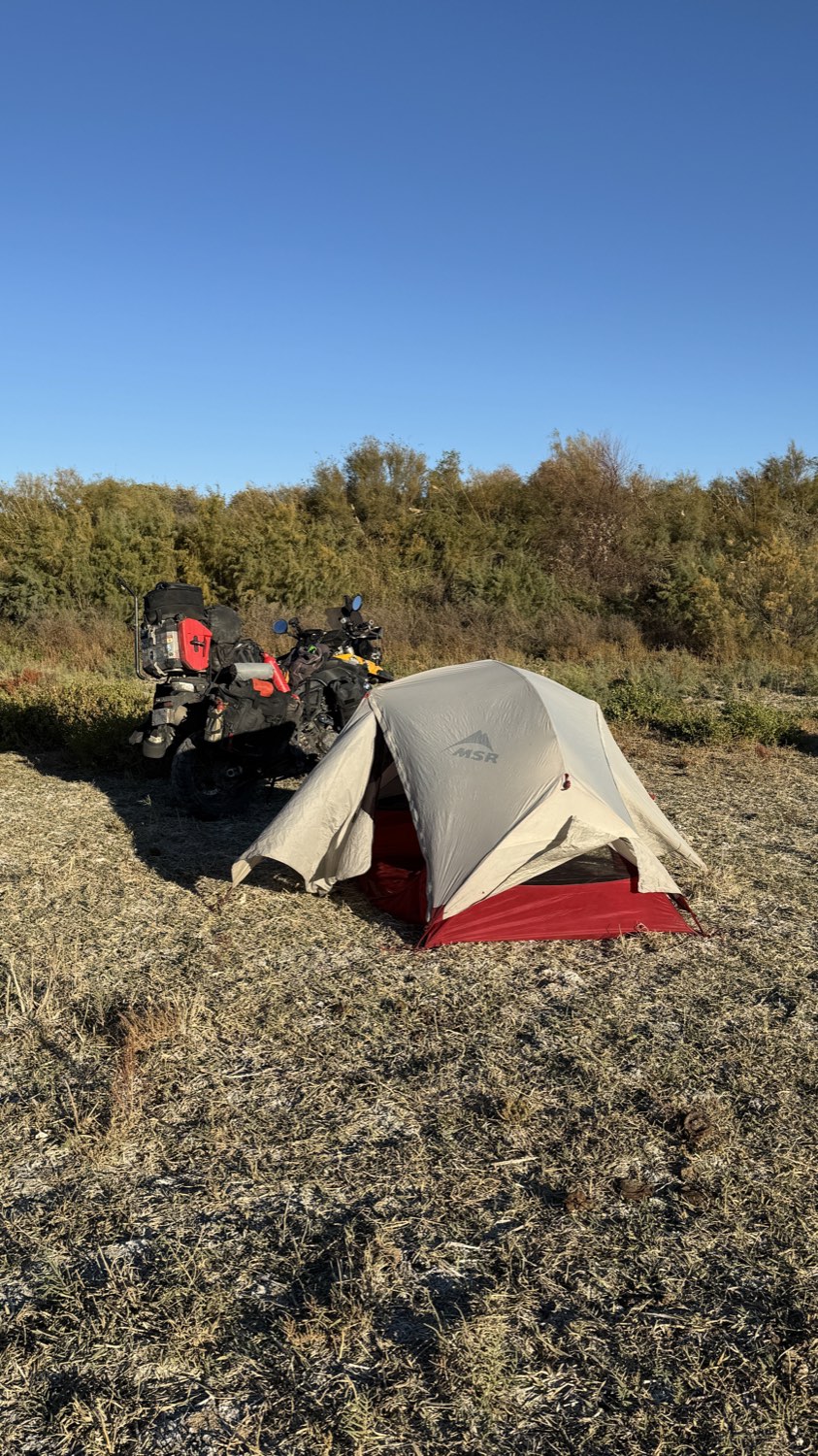 26
26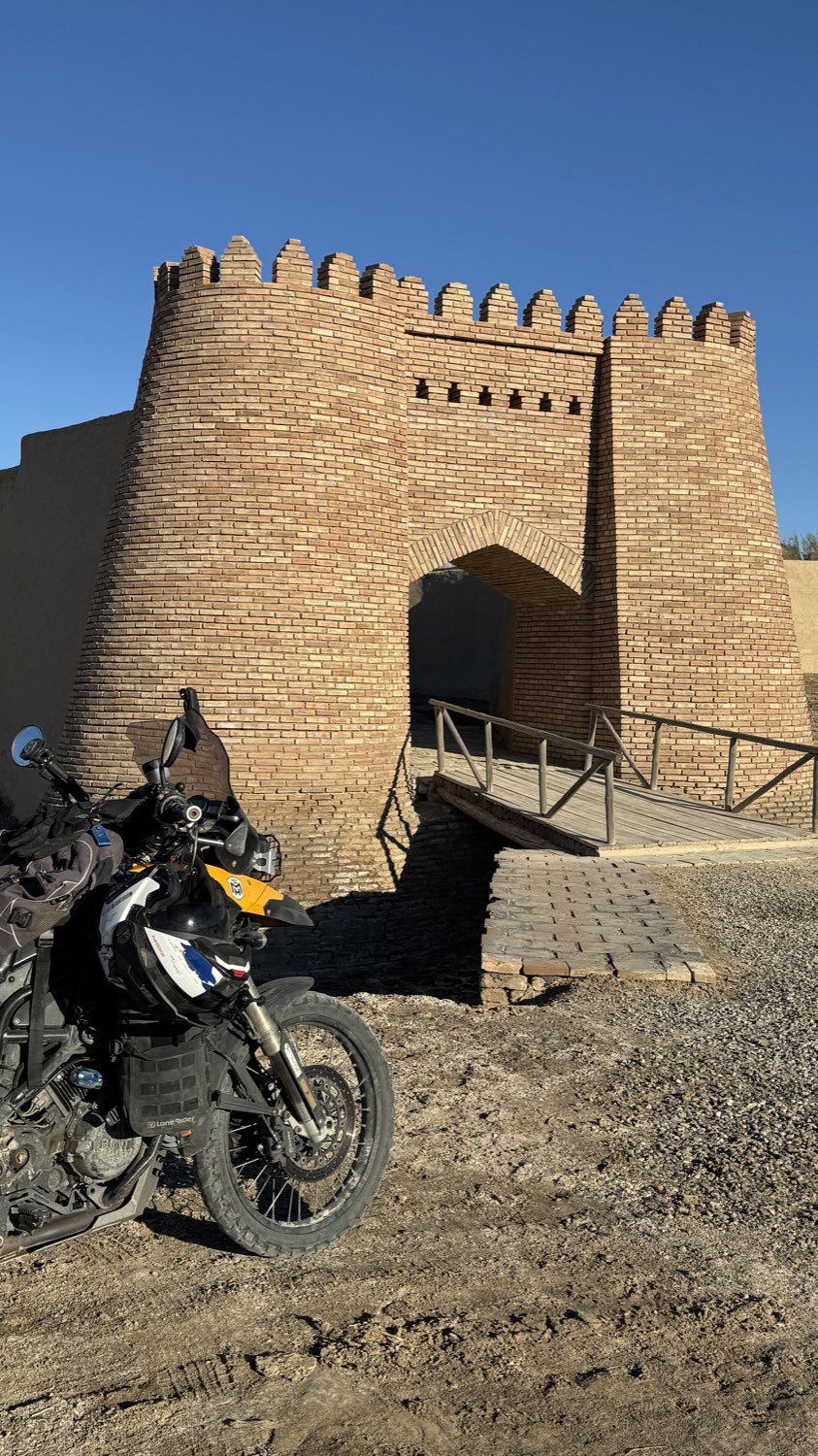 27
27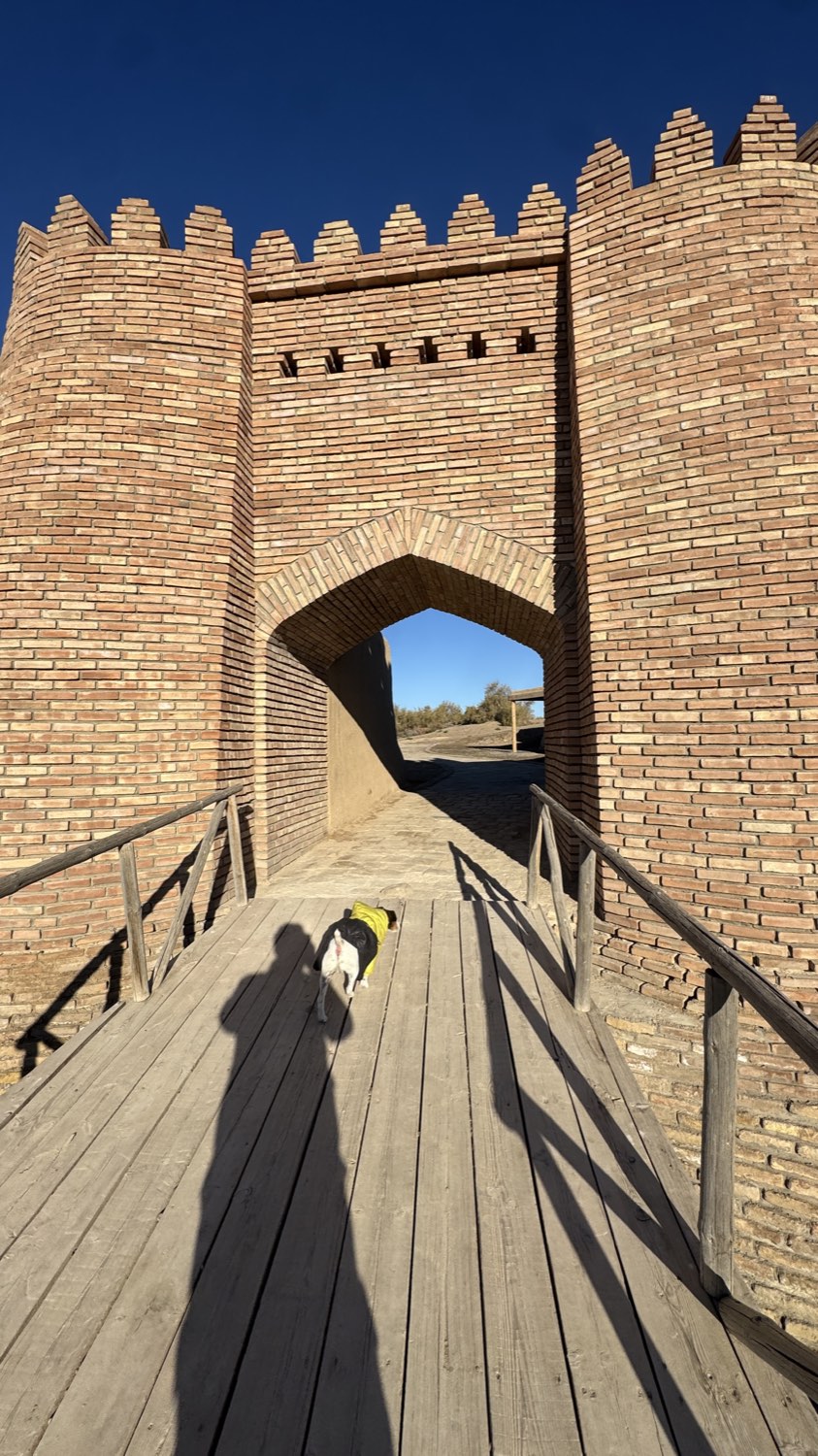 28
28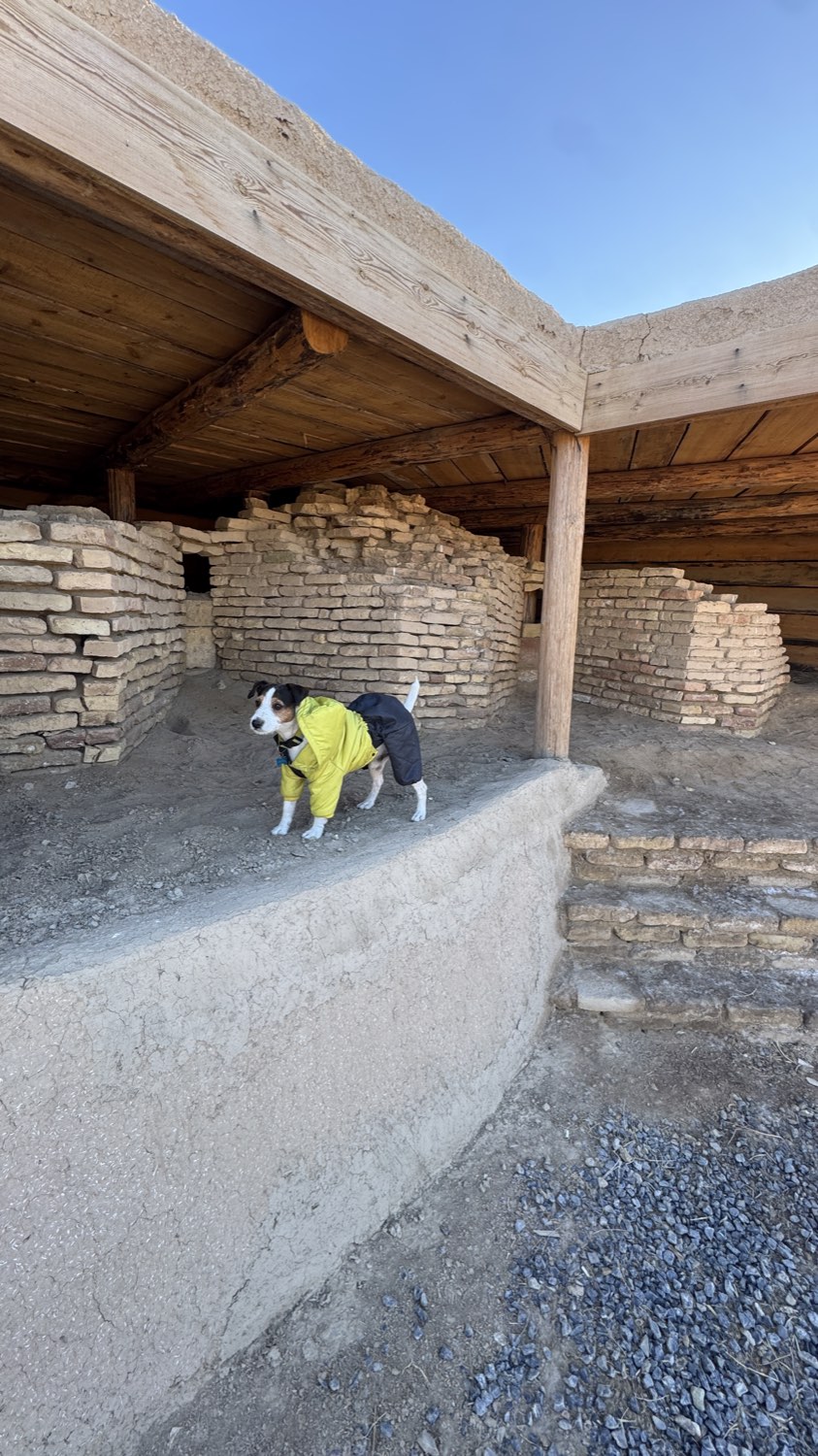 29
29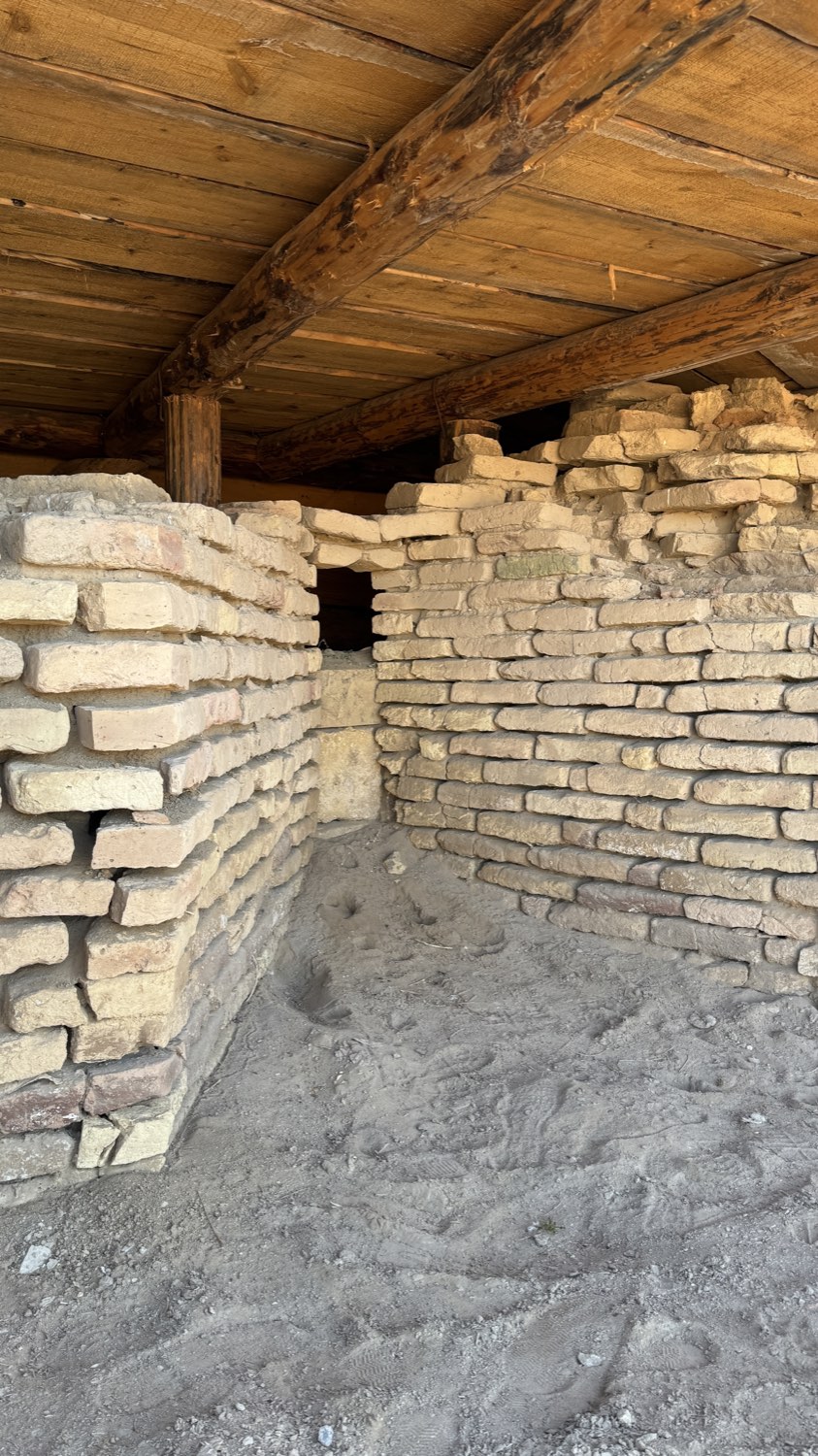 30
30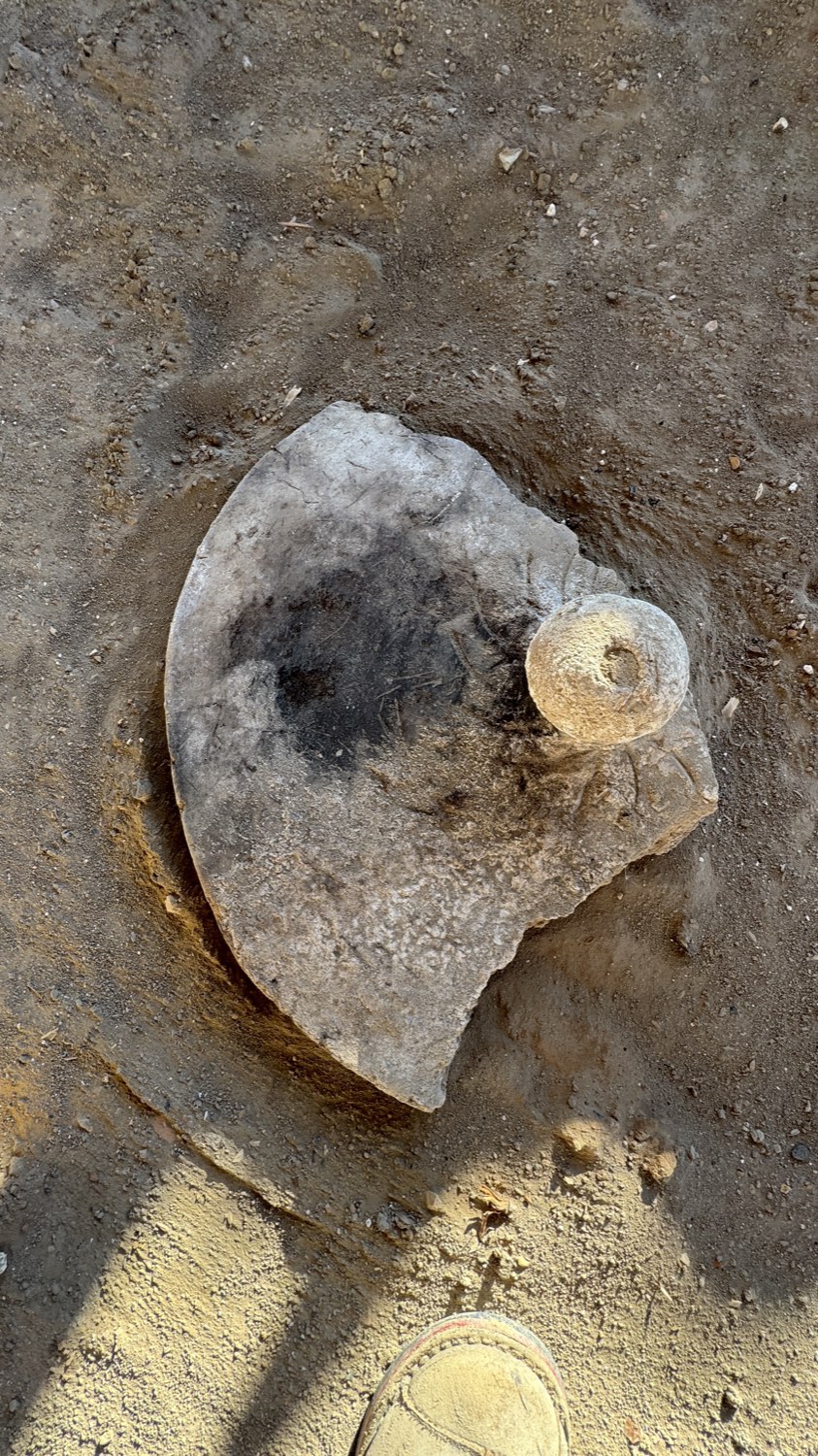 31
31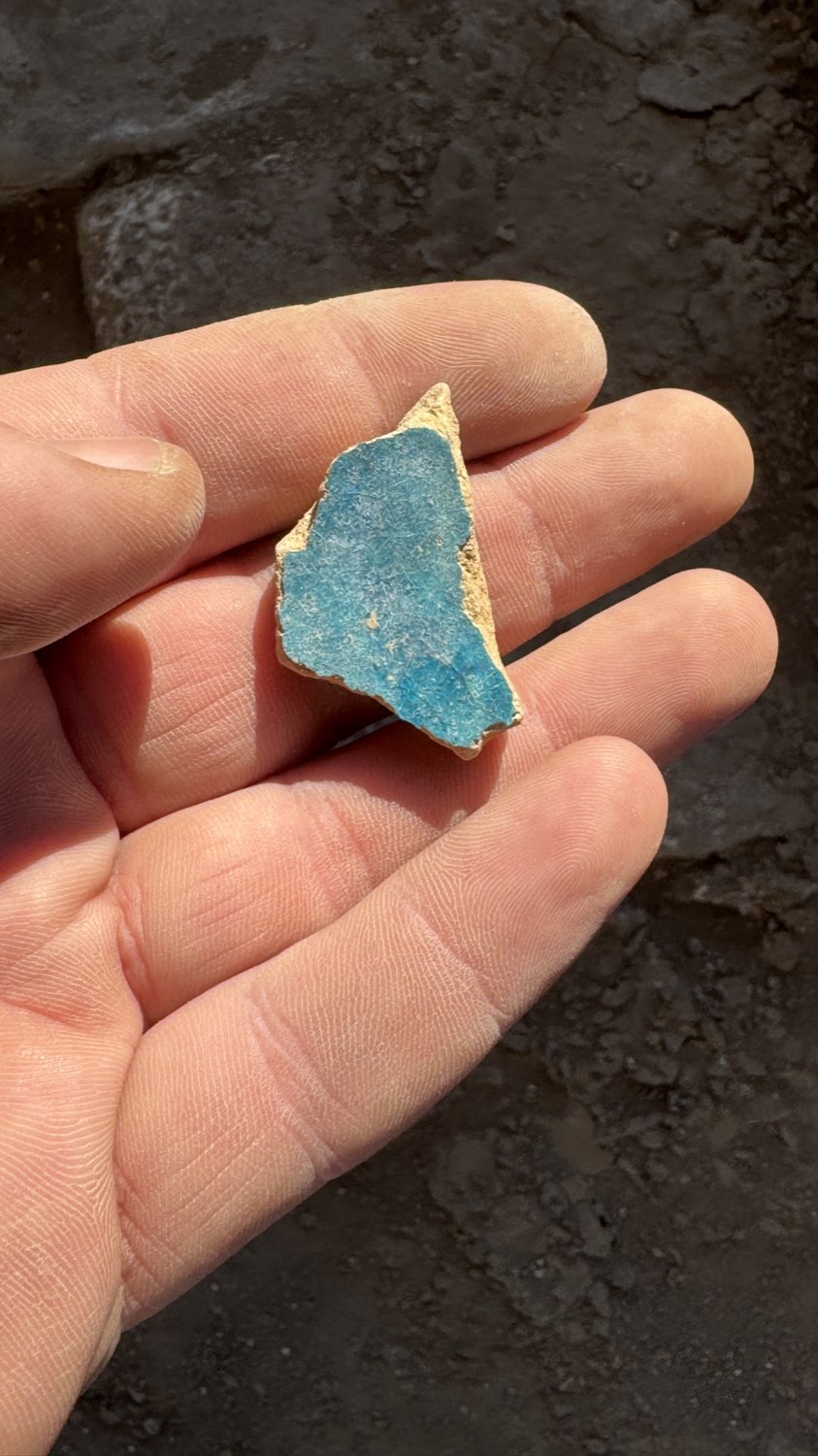 32
32 33
33 34
34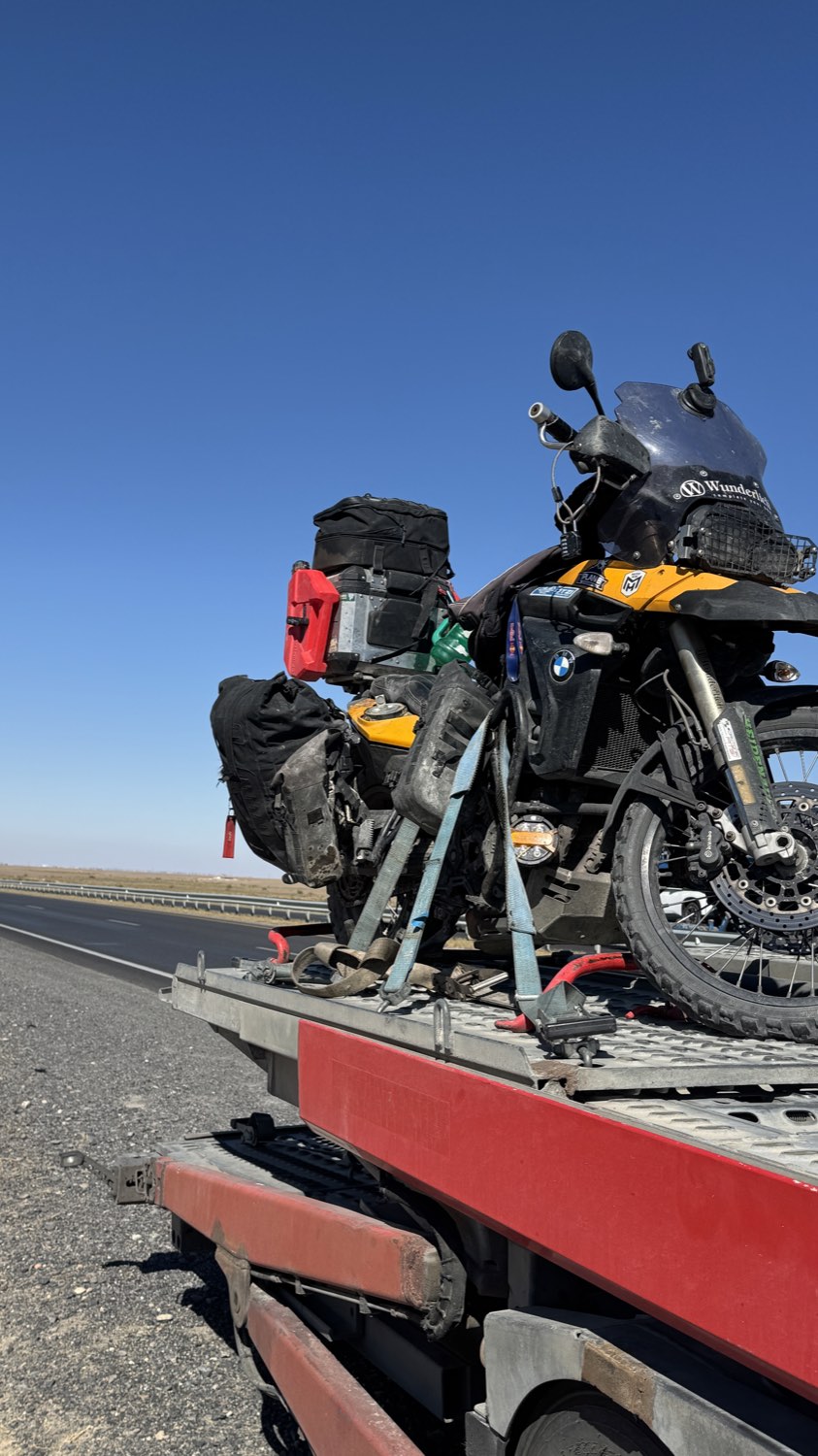 35
35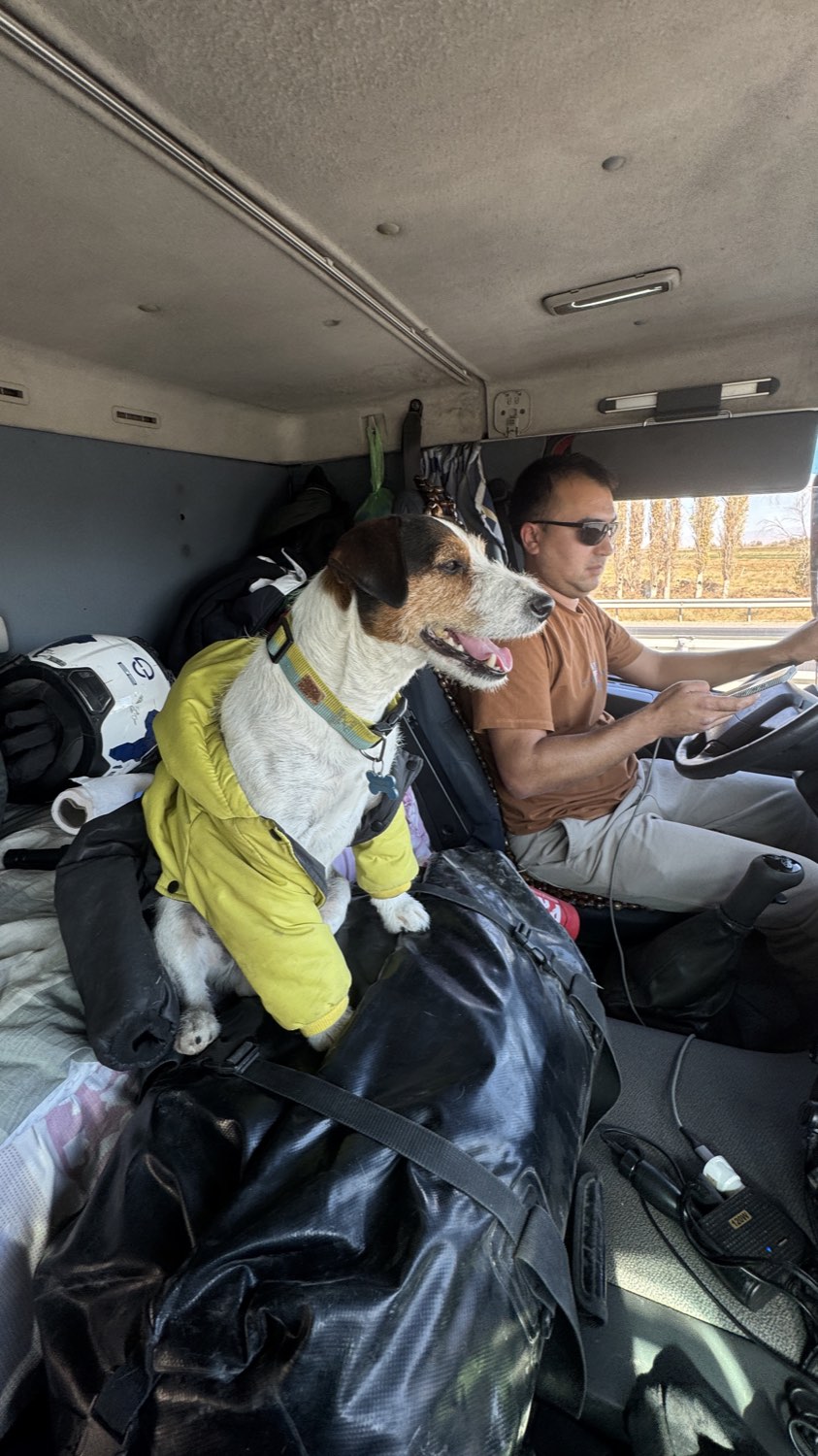 36
36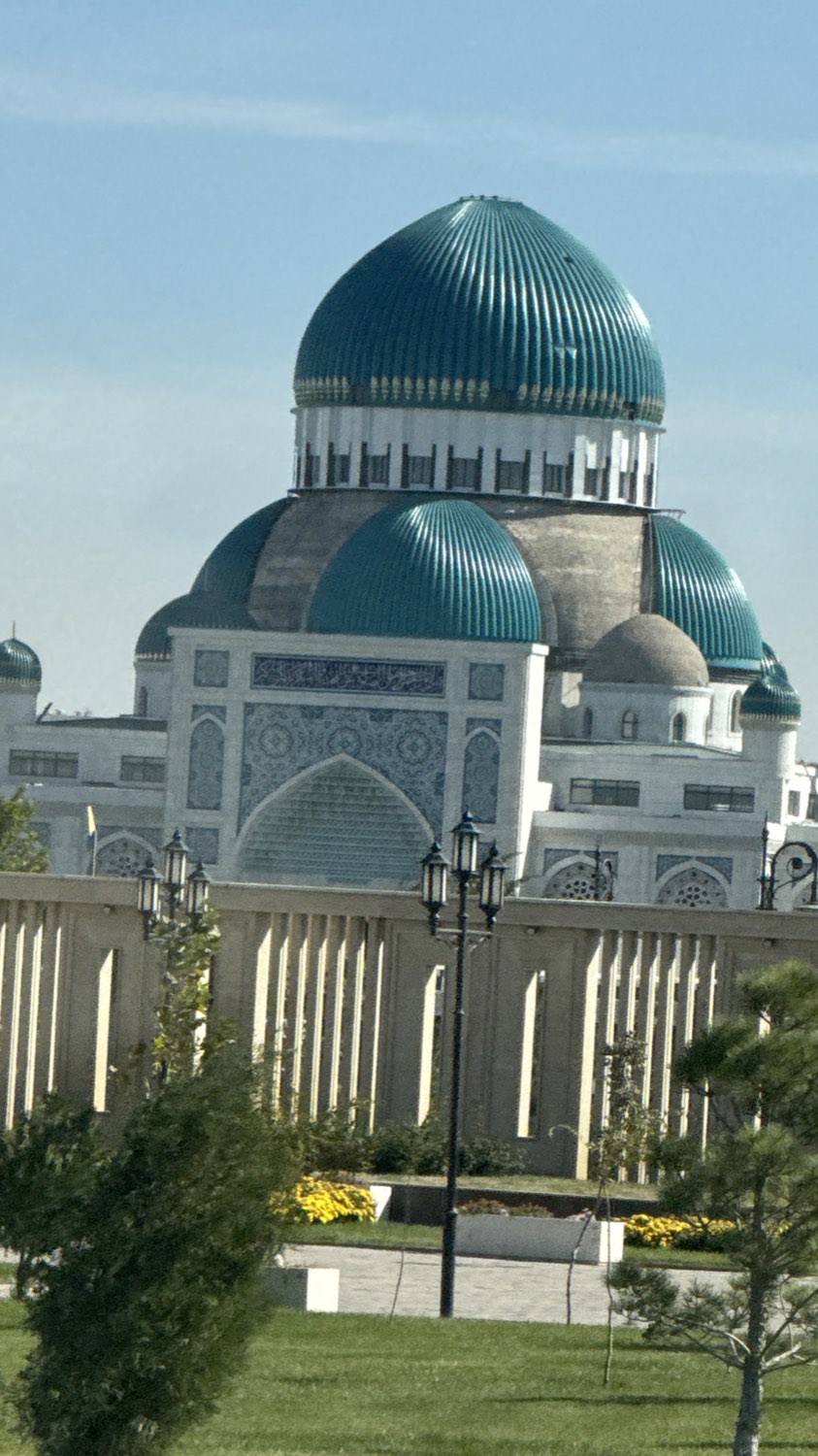 37
37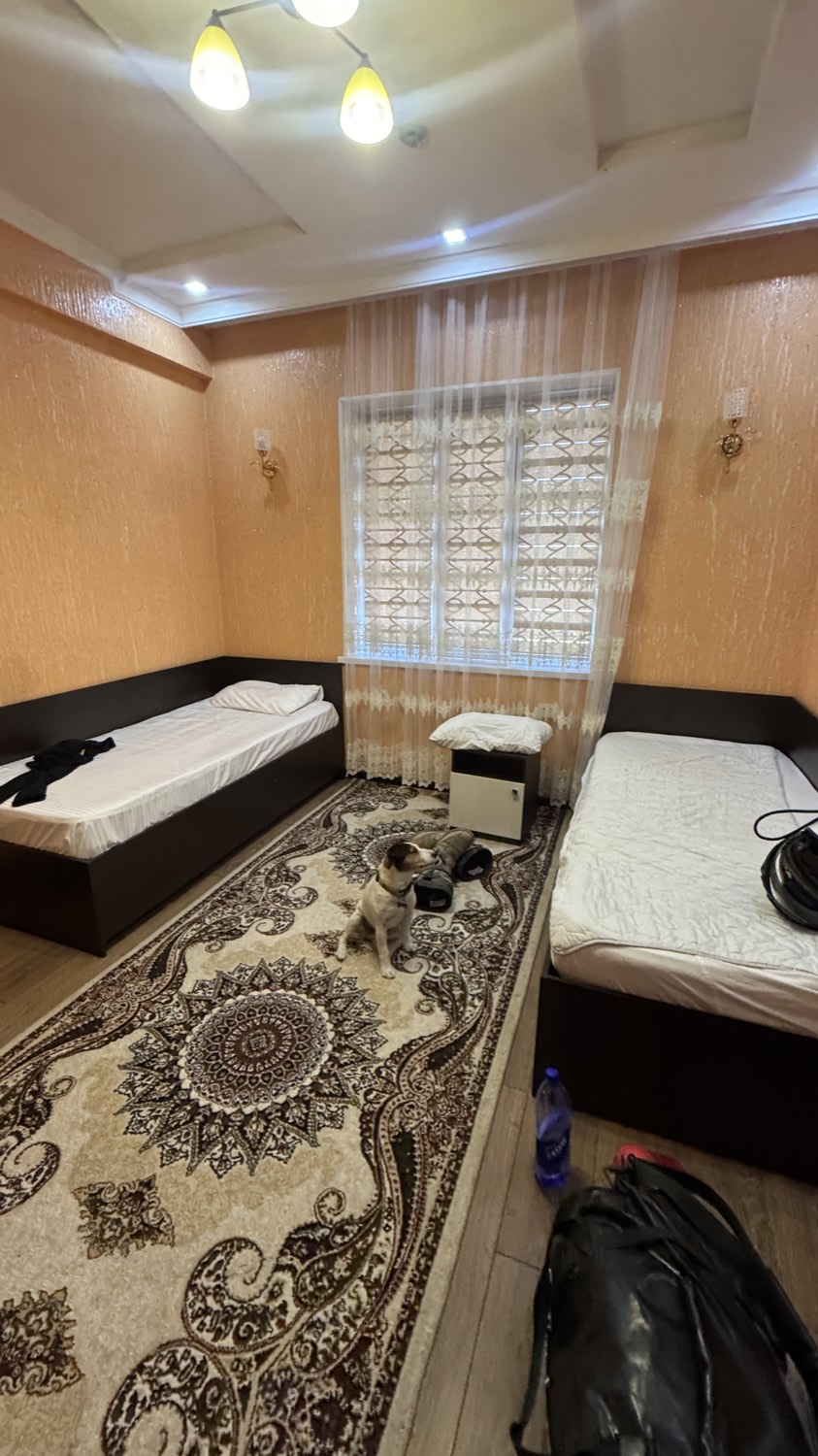 38
38 39
39 40
40 41
41 42
42 43
43 44
44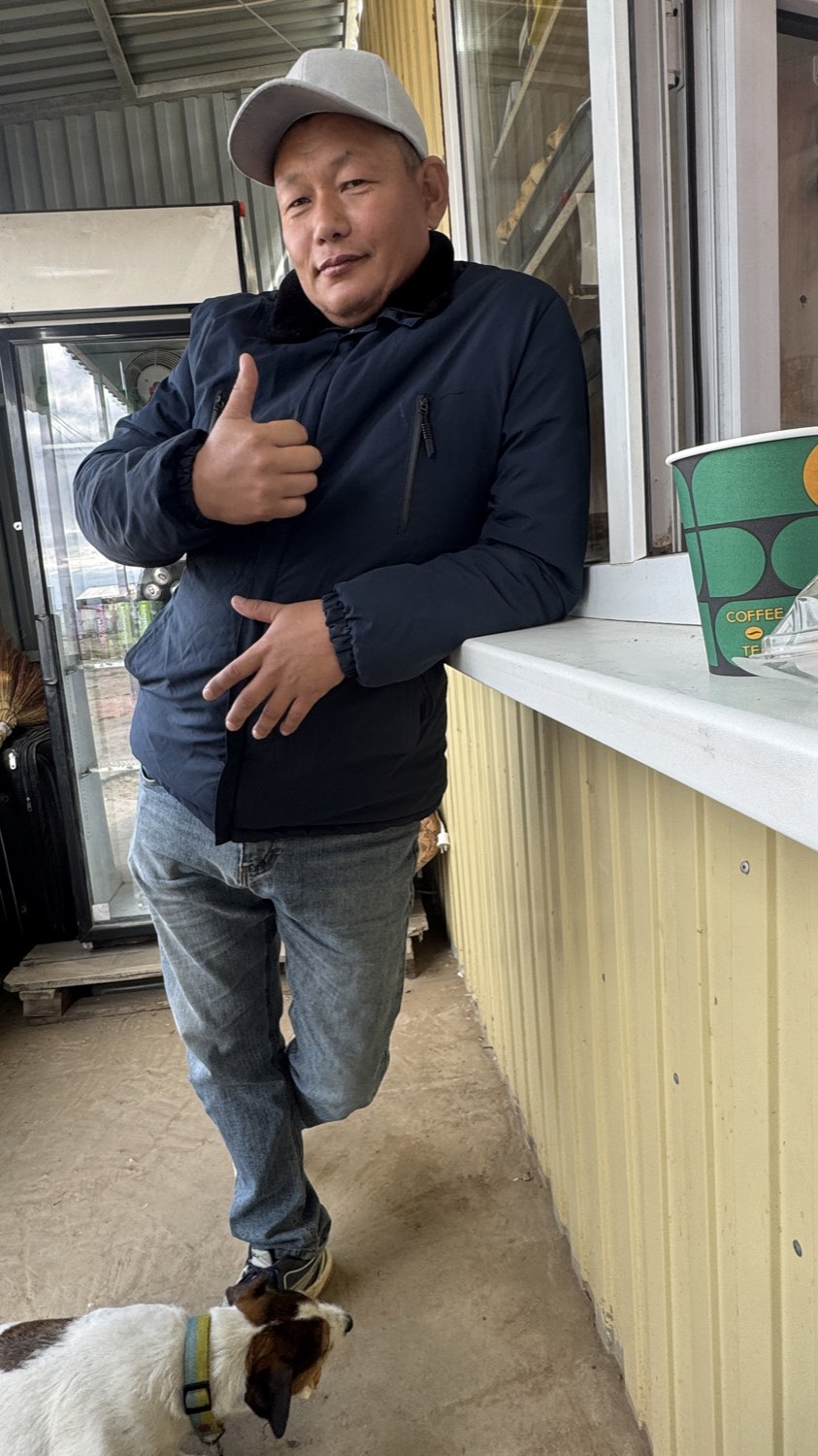 45
45 46
46 47
47 48
48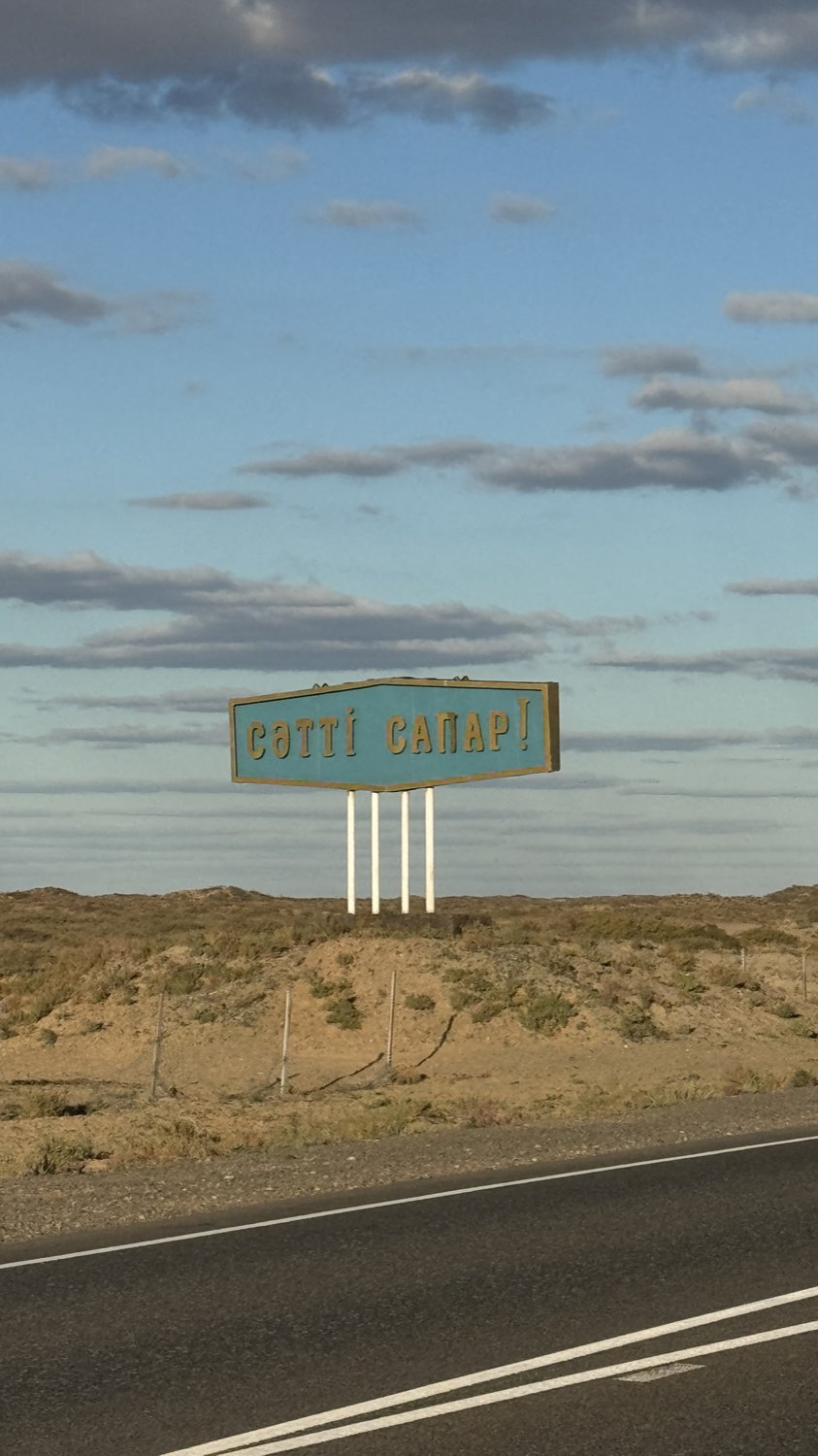 49
49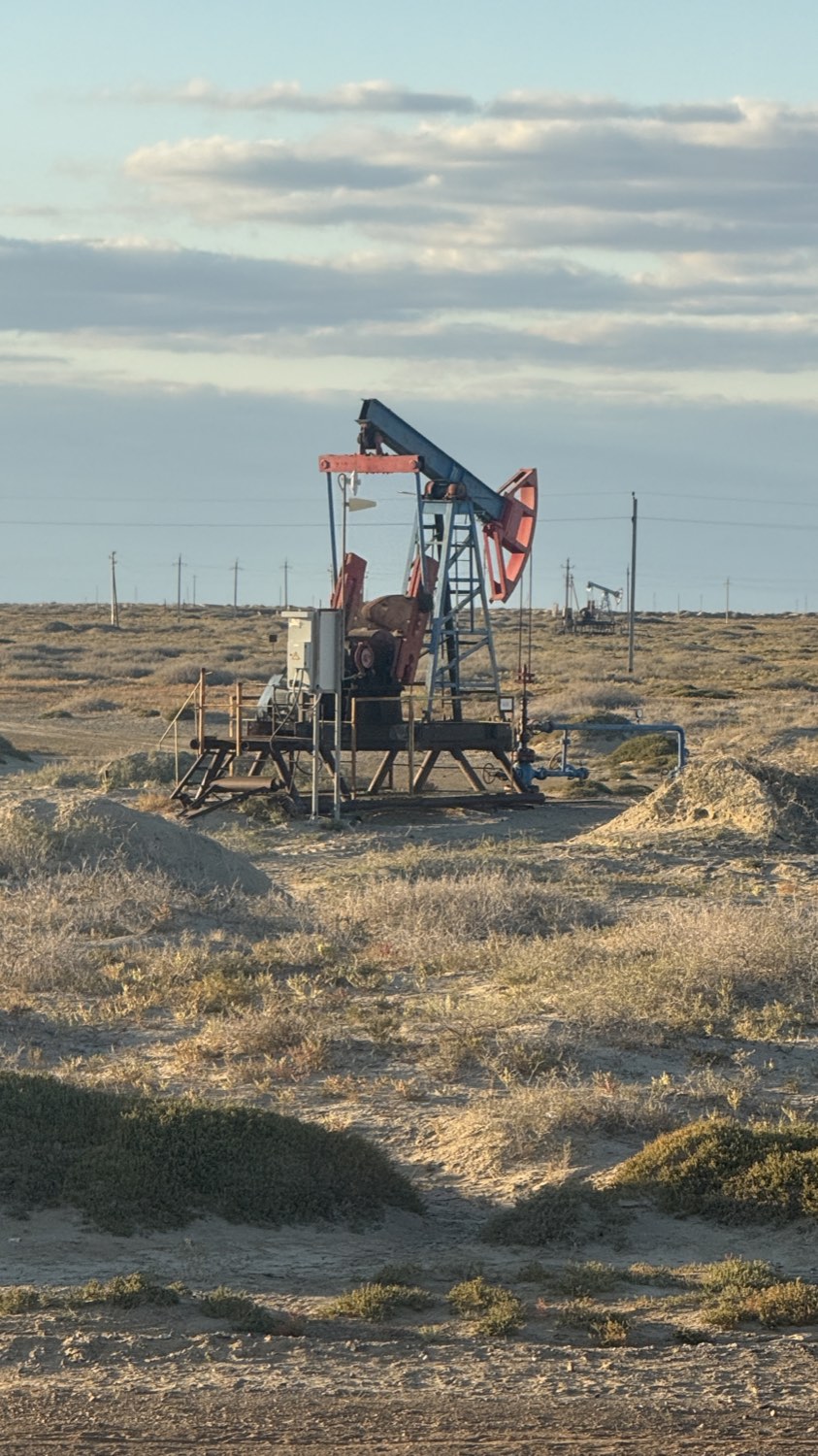 50
50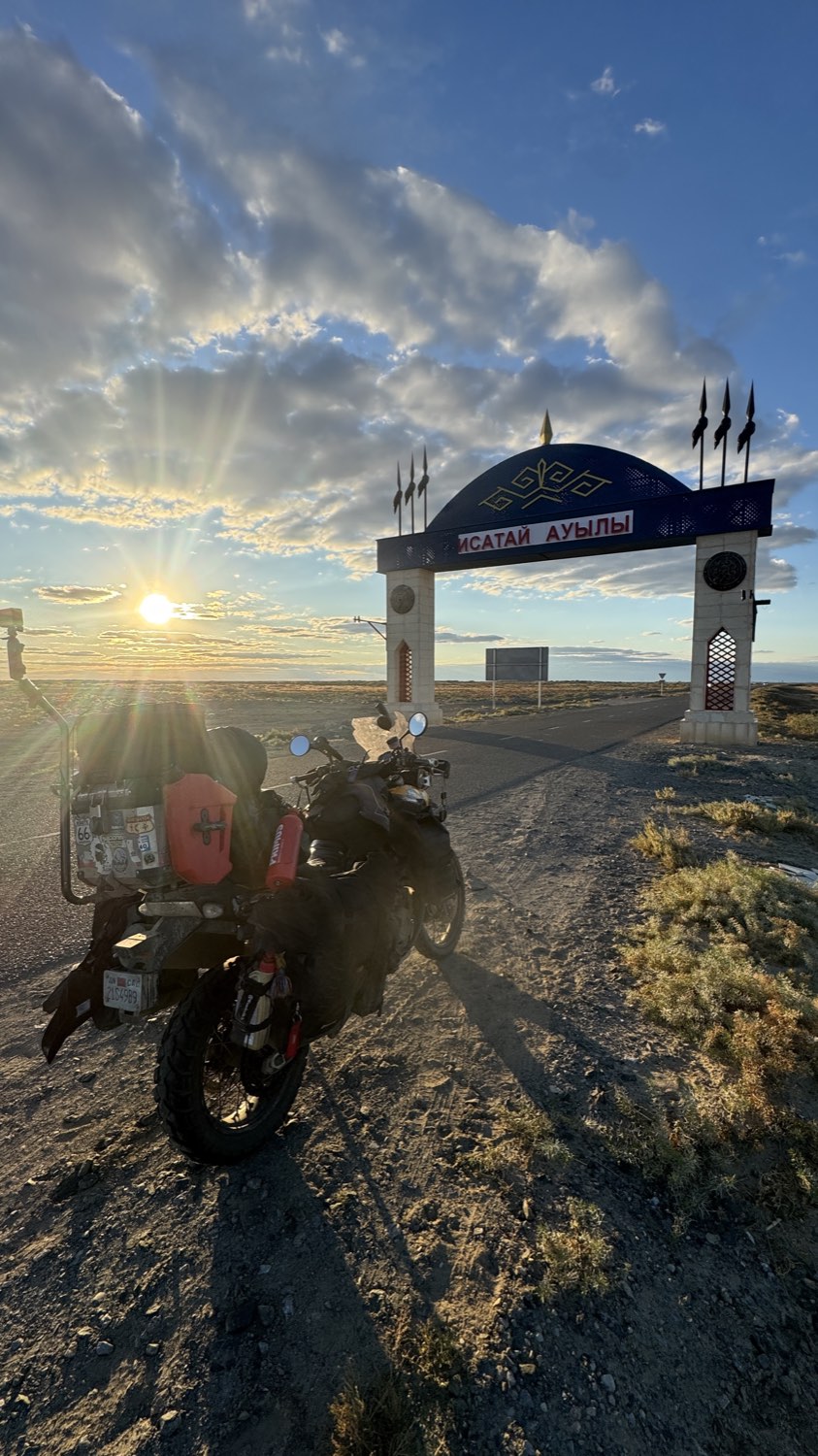 51
51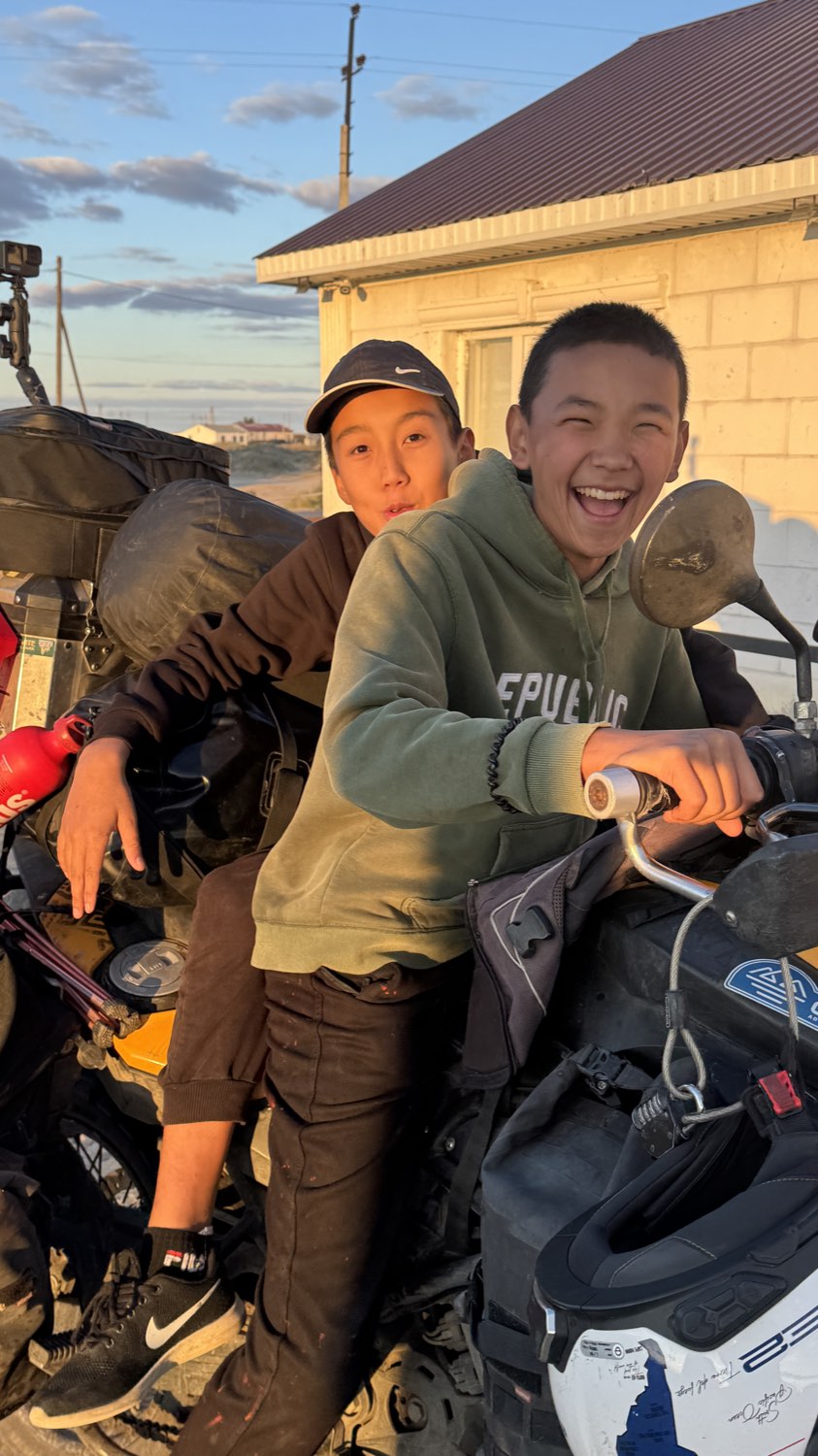 52
52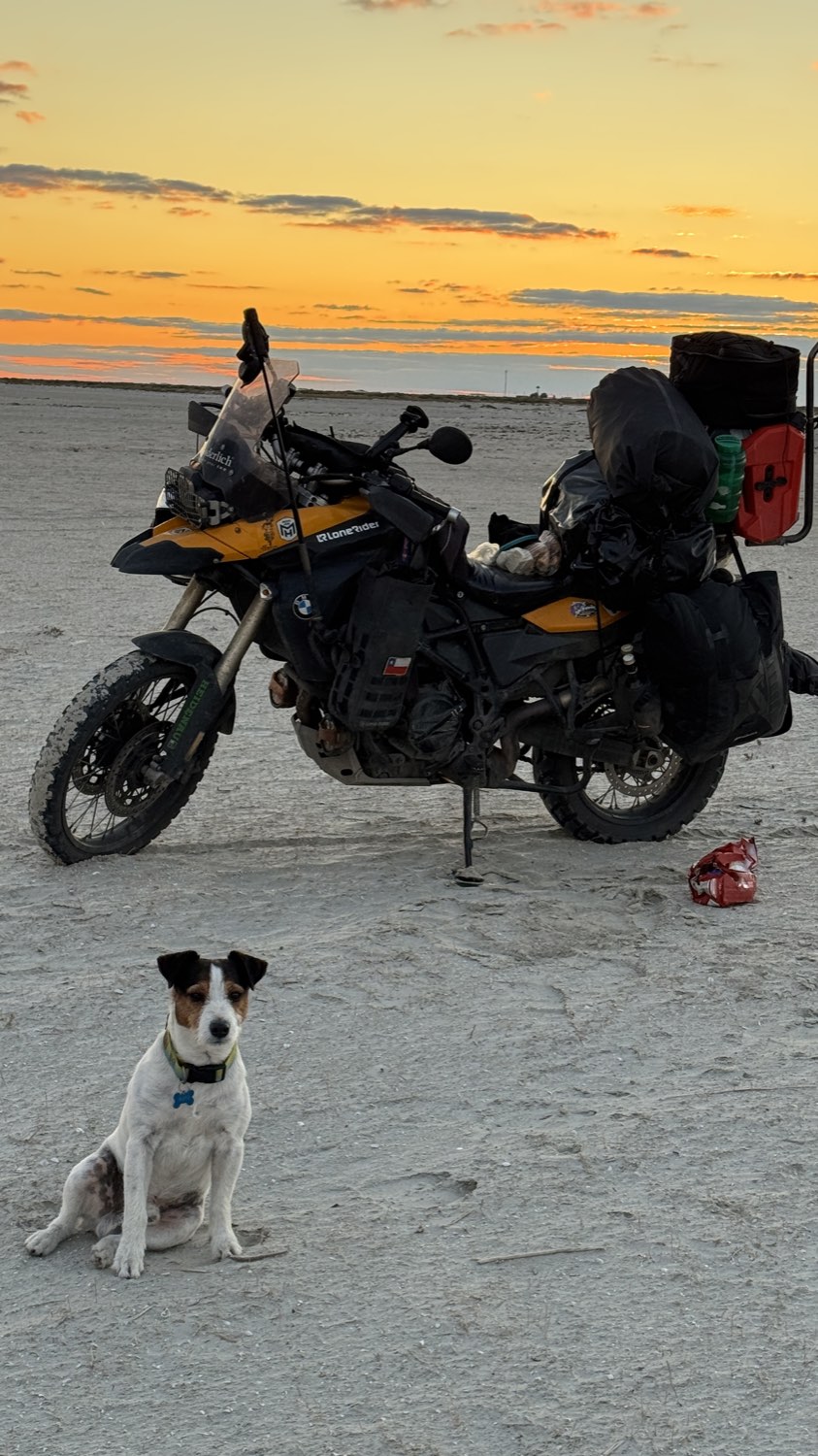 53
53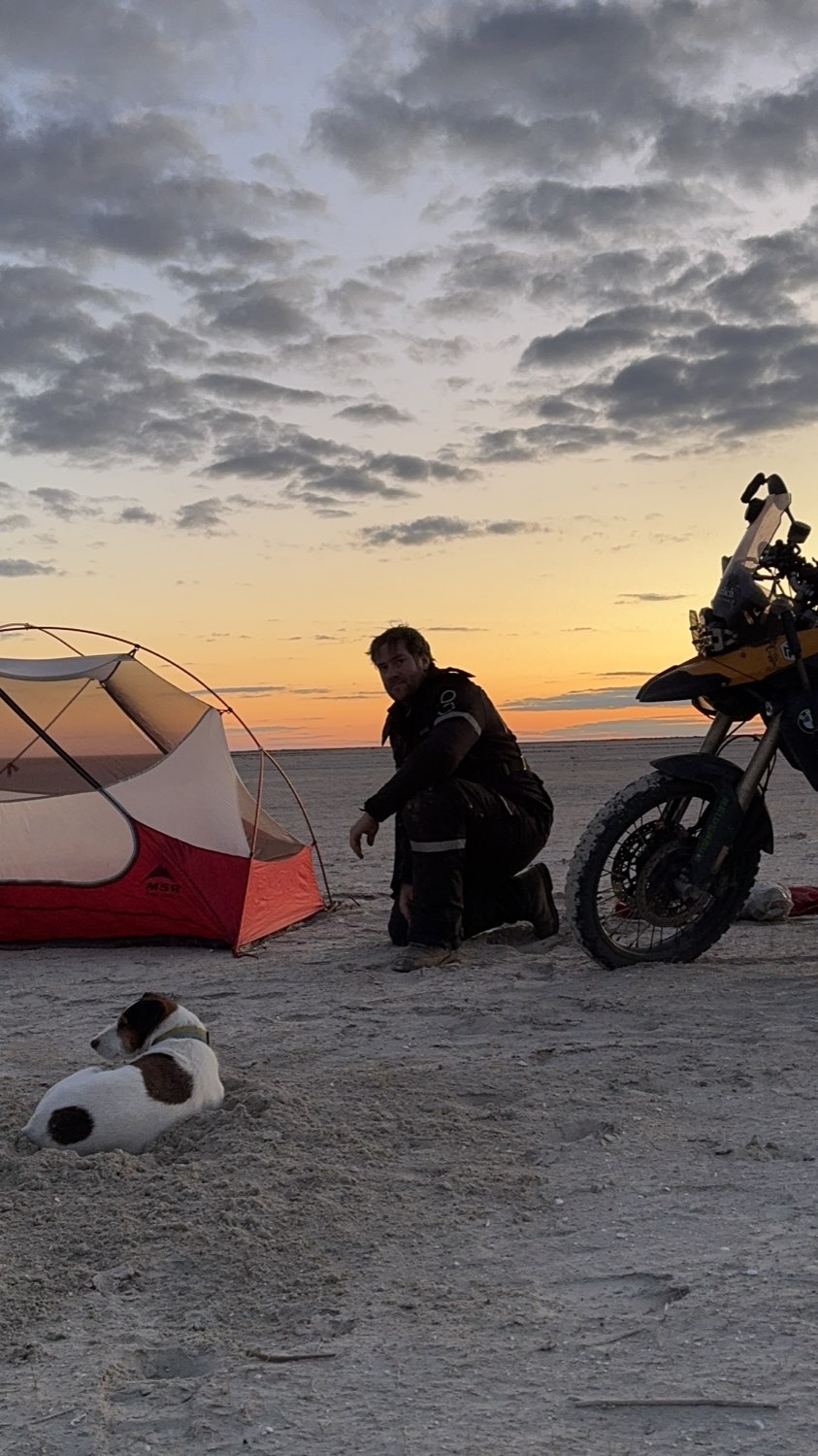 54
54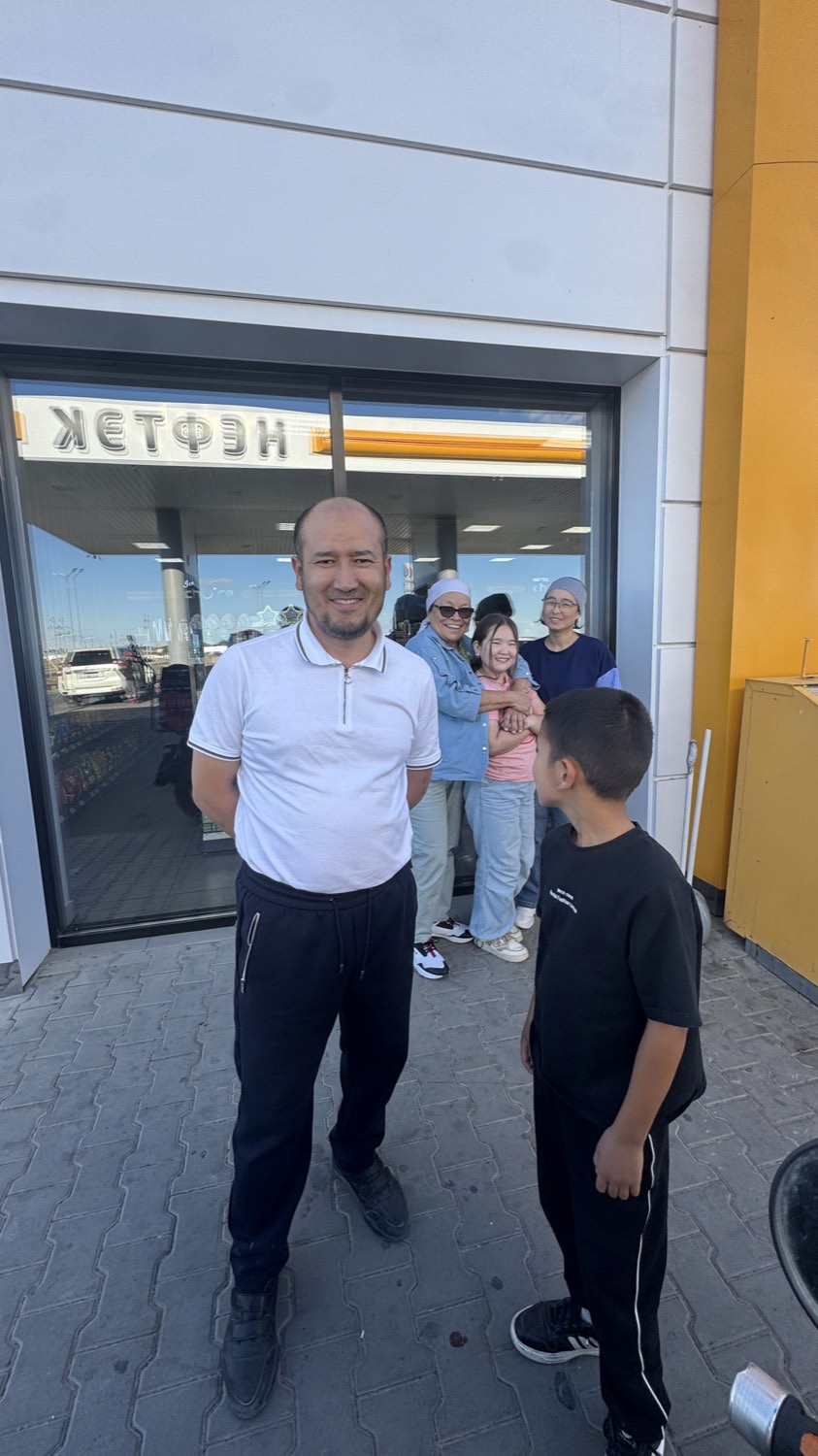 55
55 56
56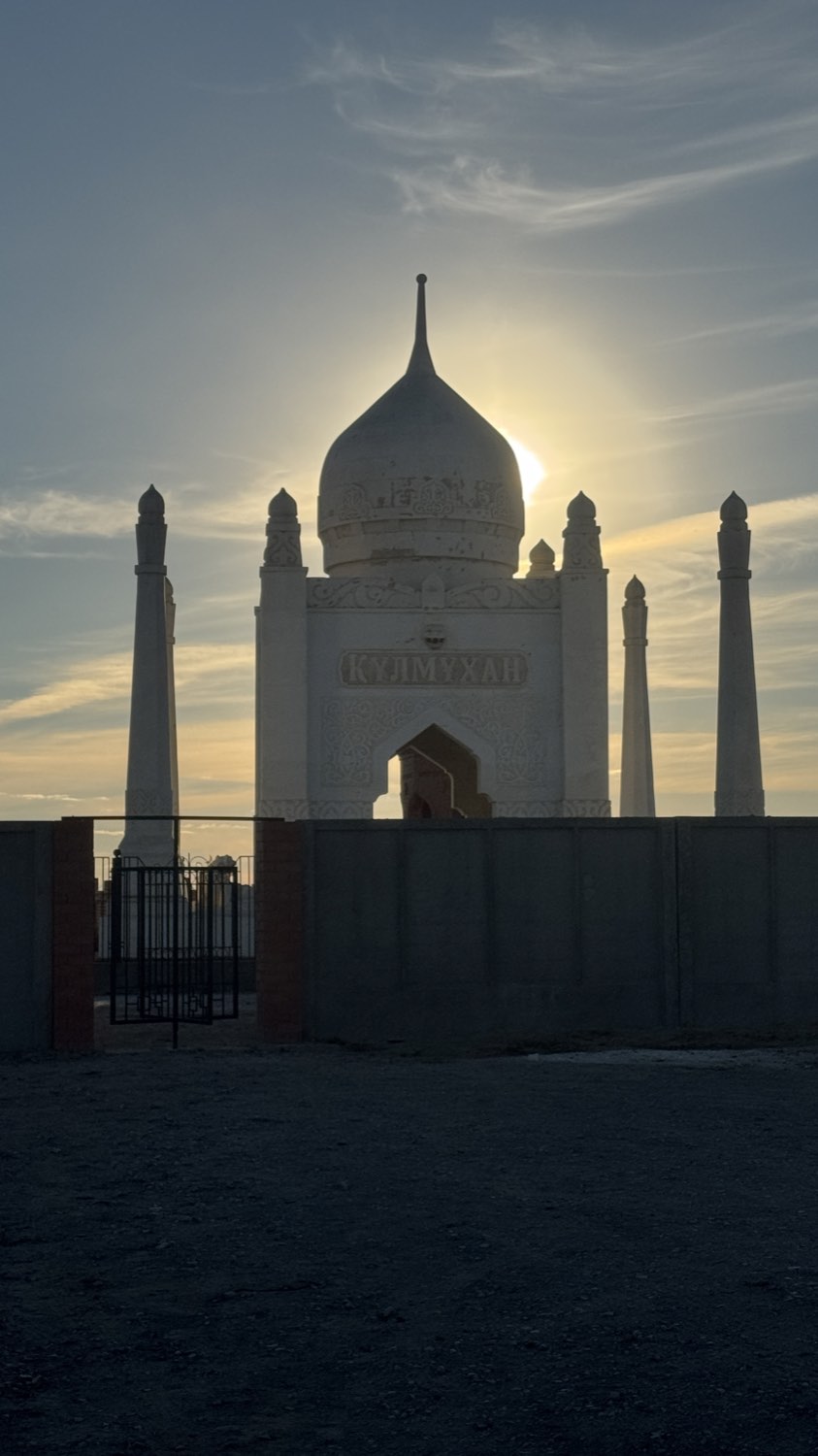 57
57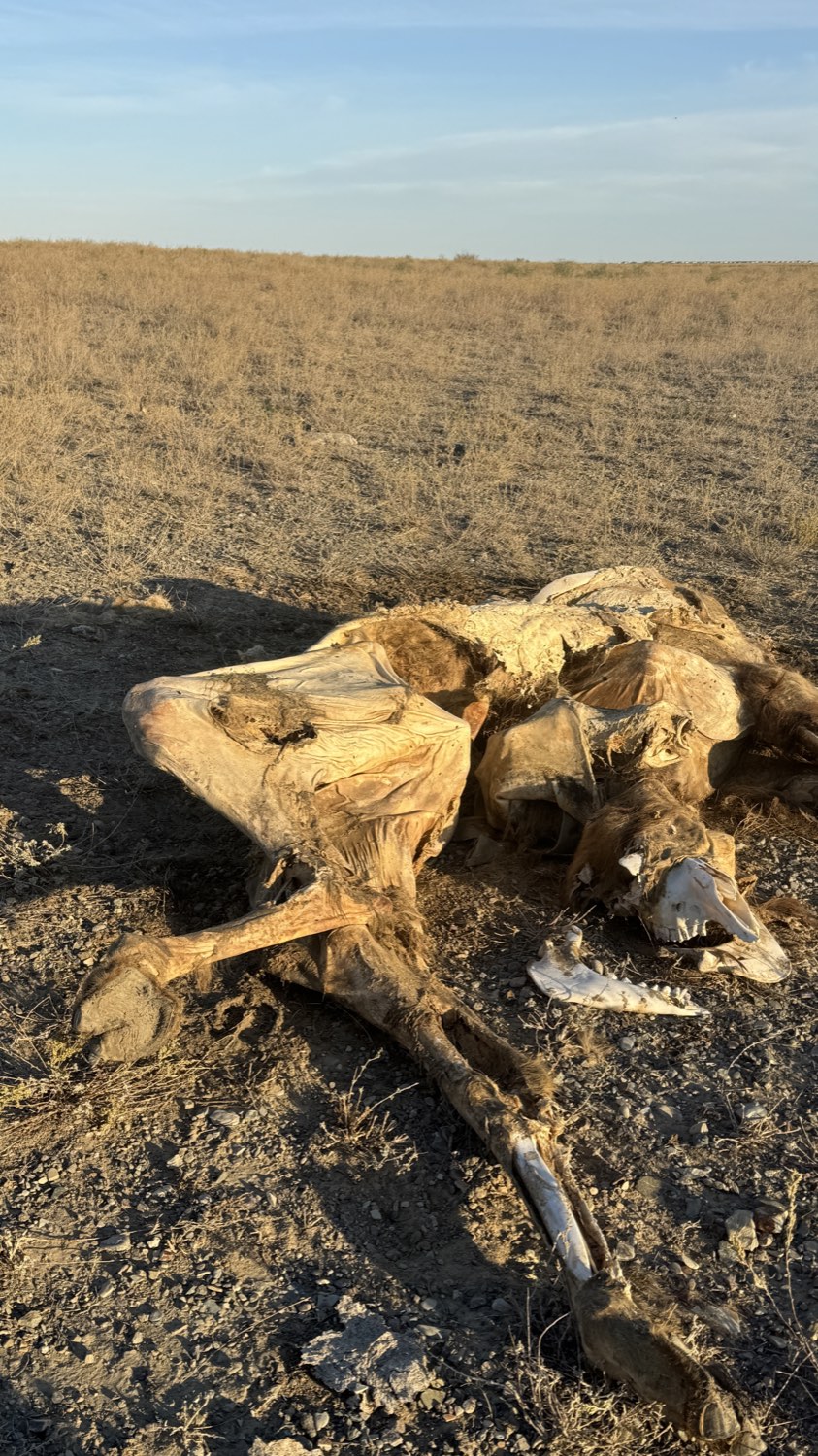 58
58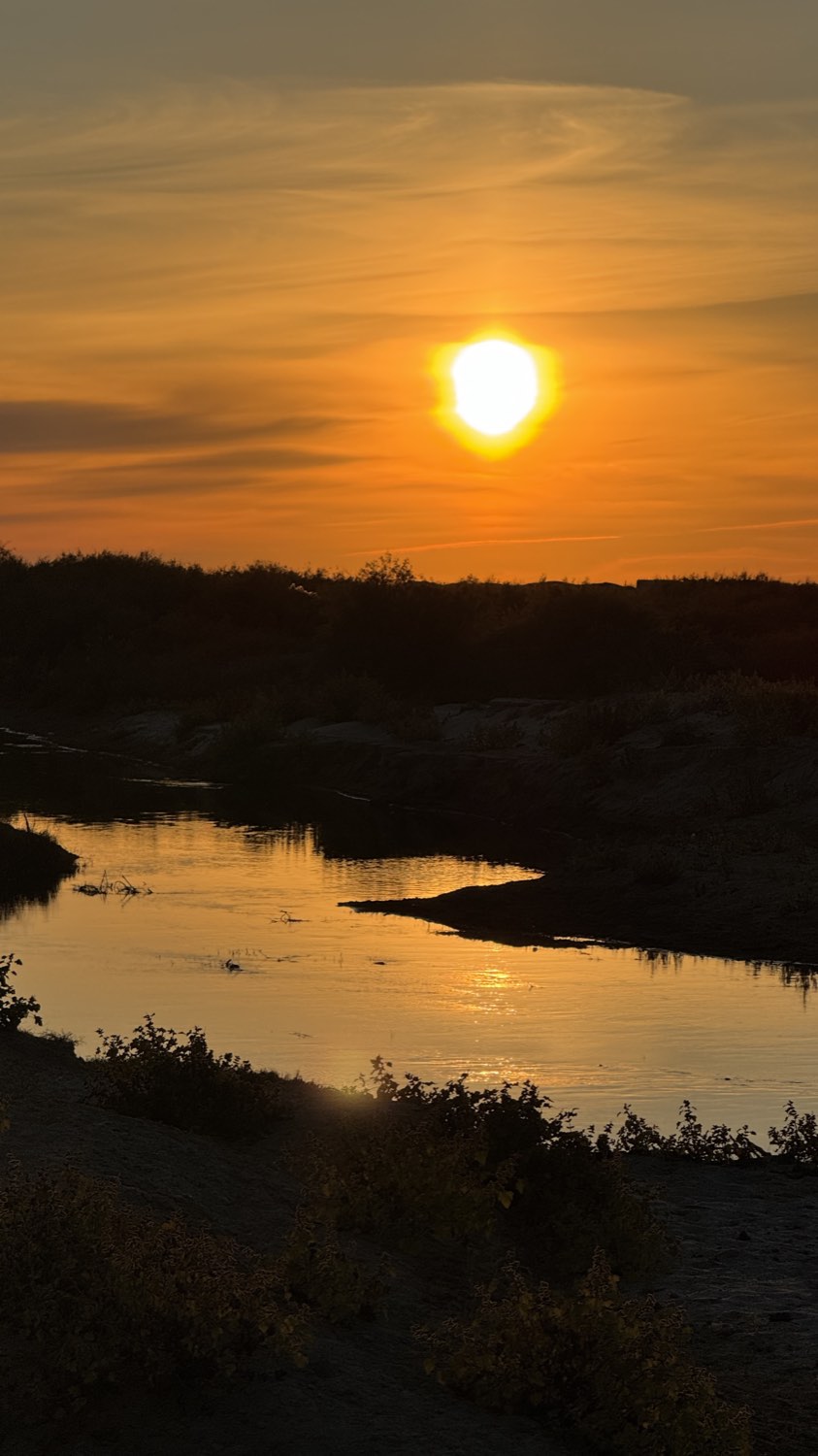 59
59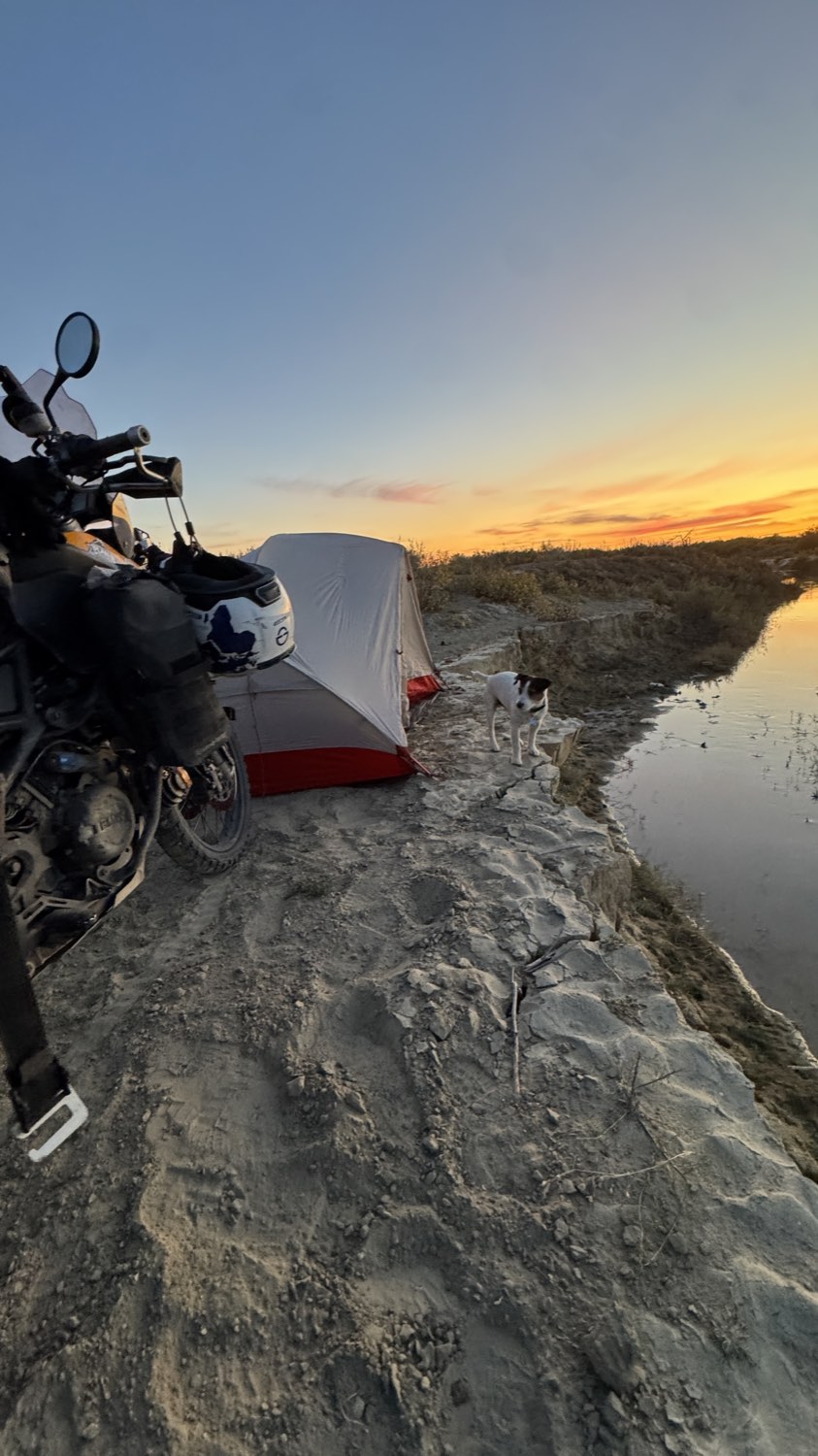 60
60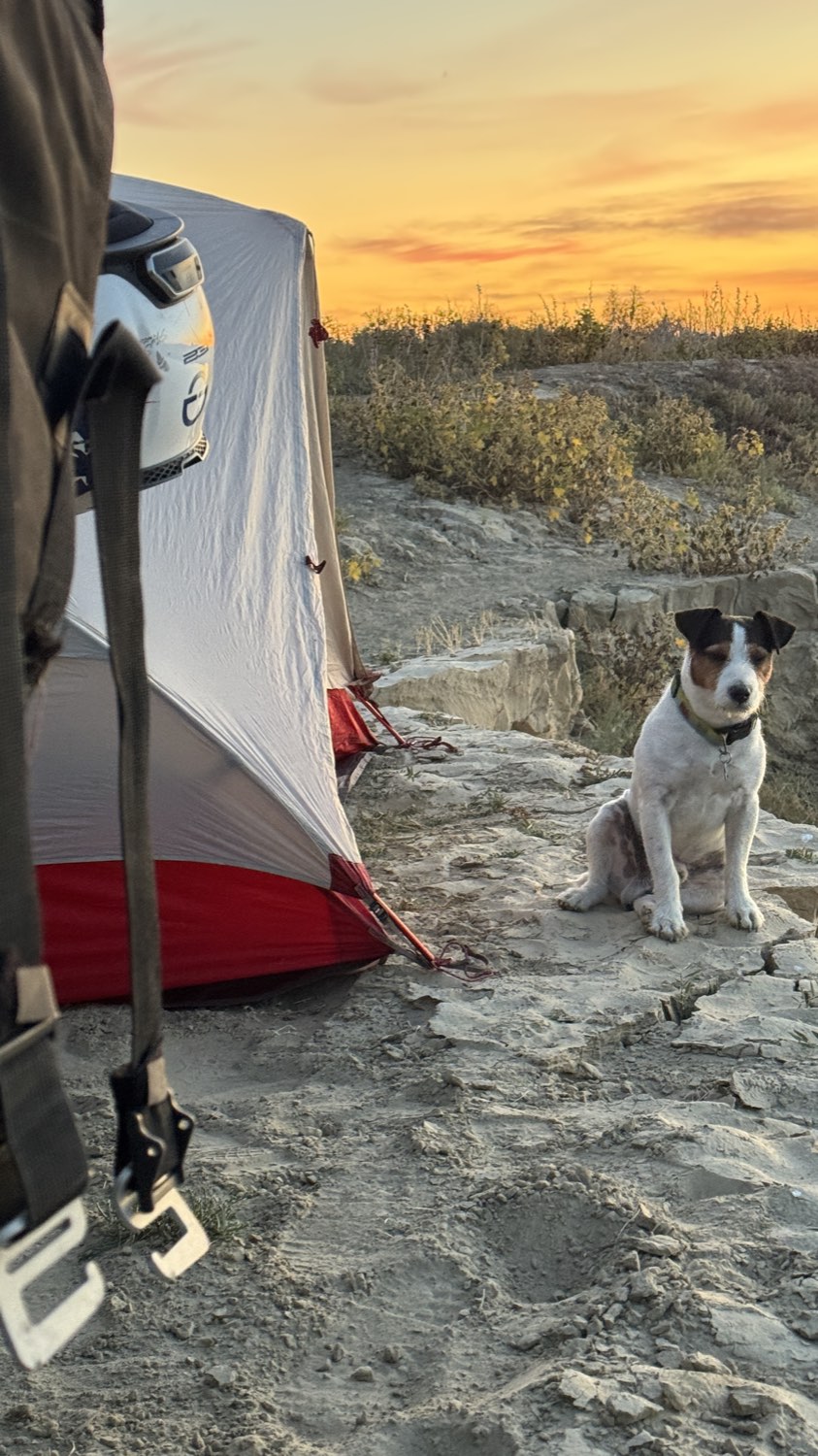 61
61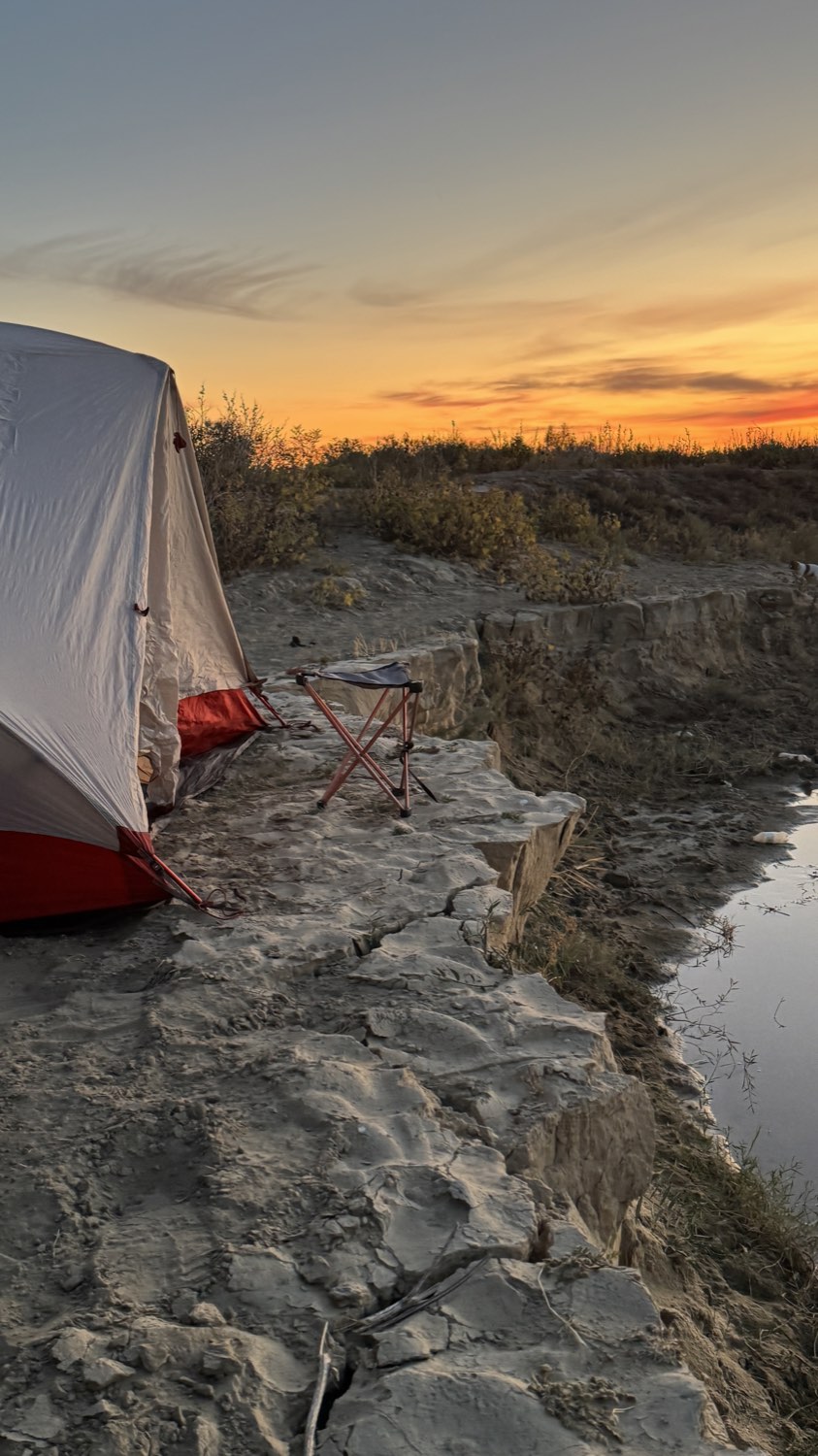 62
62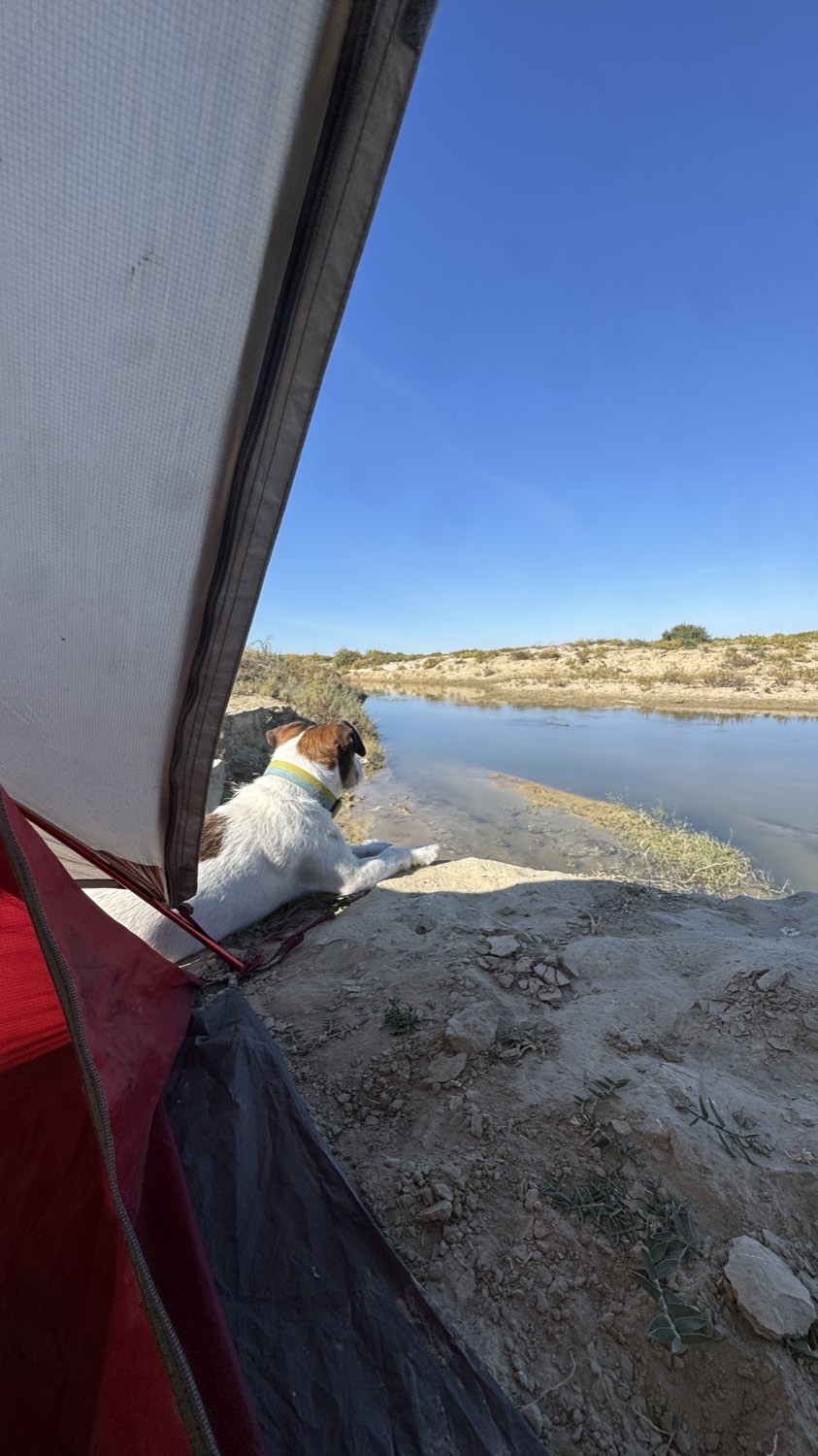 63
63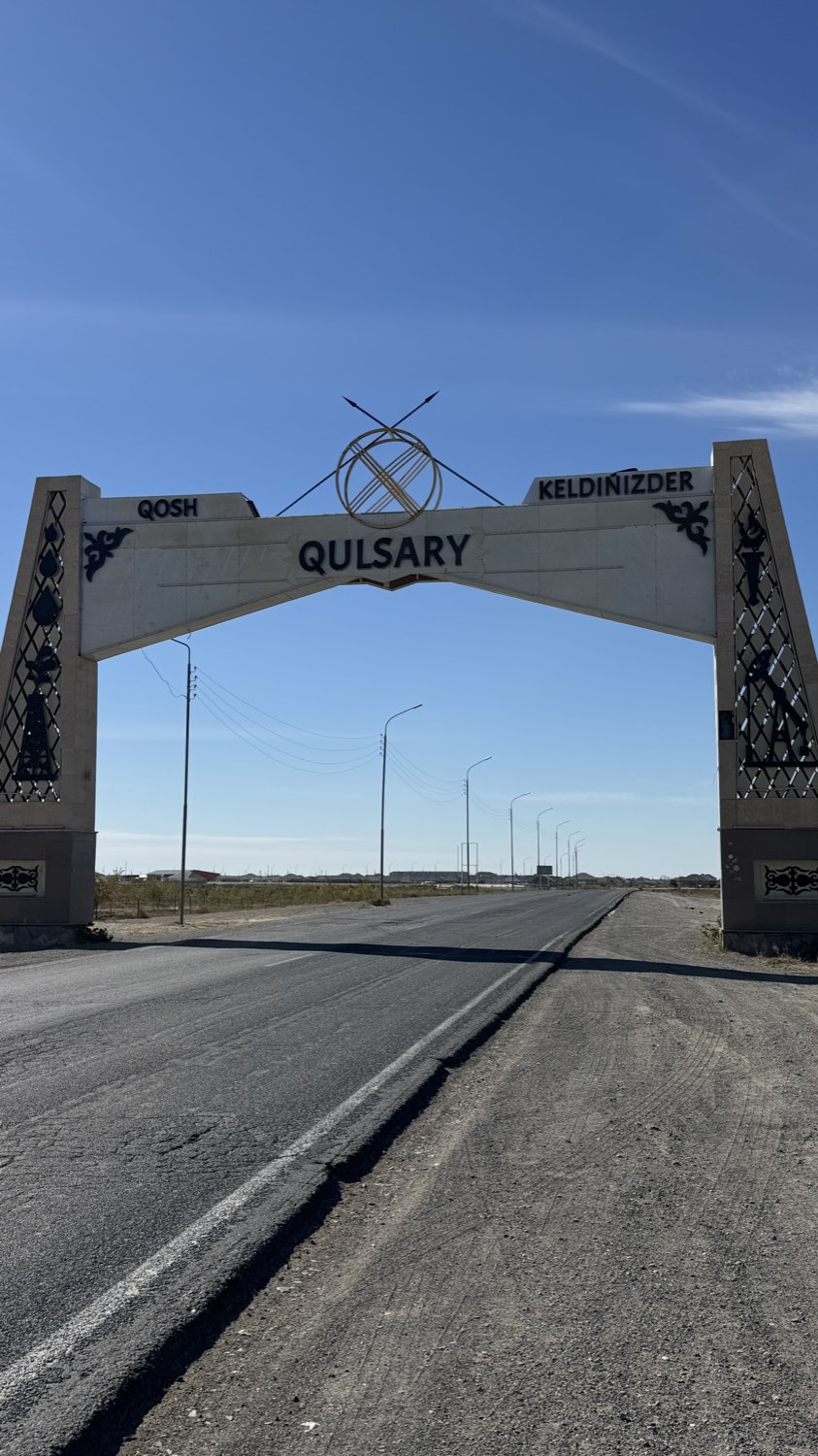 64
64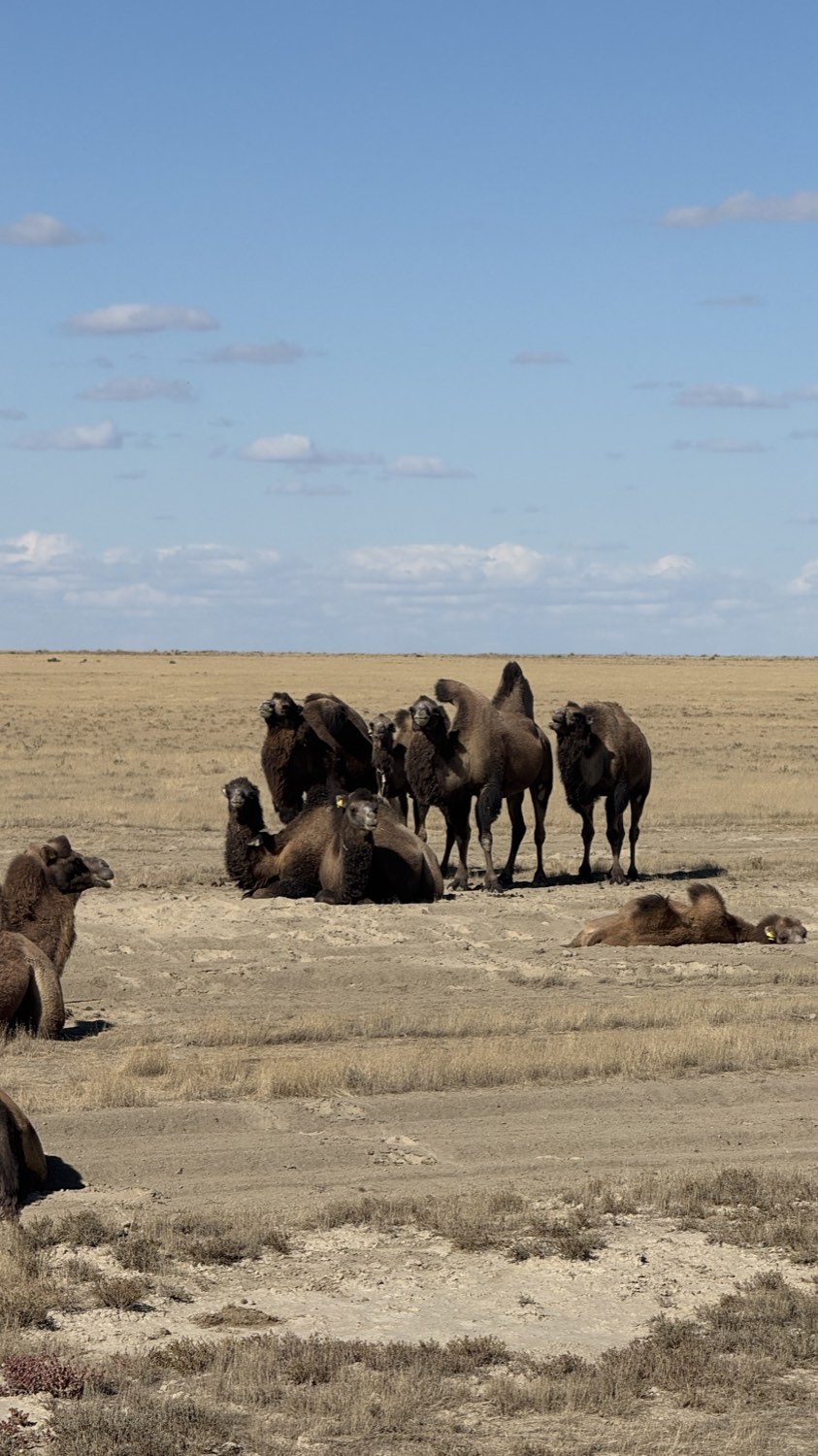 65
65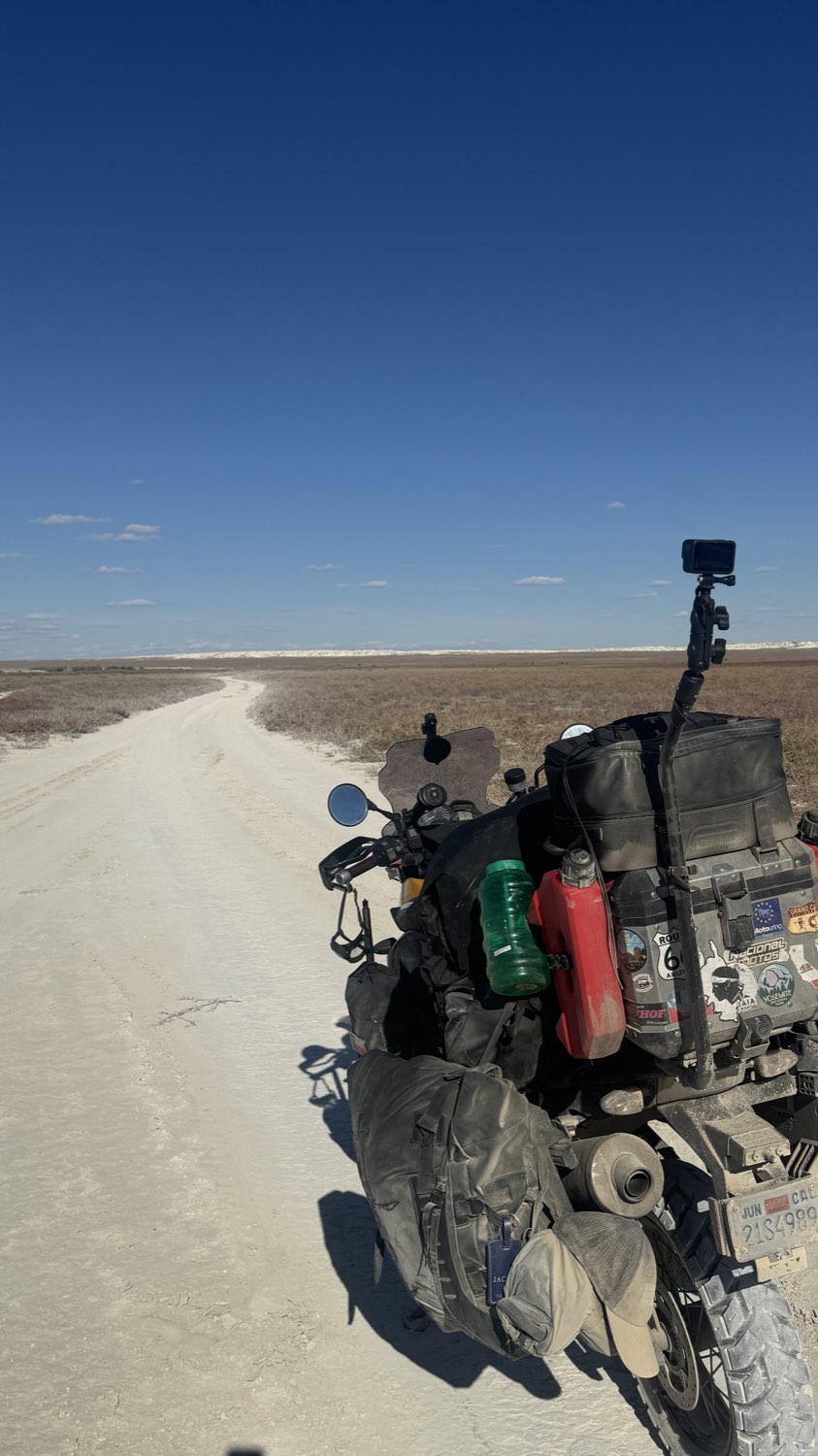 66
66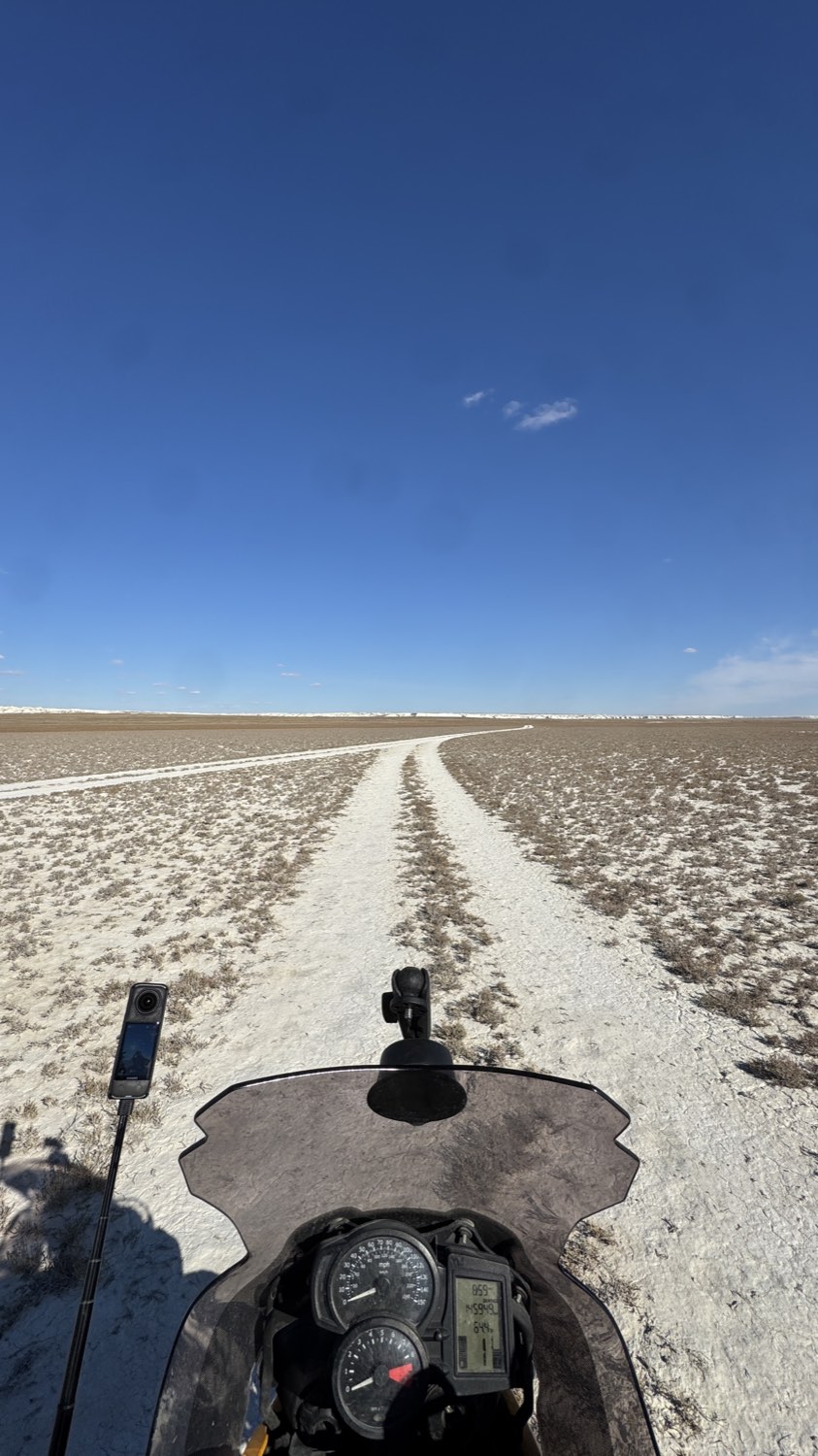 67
67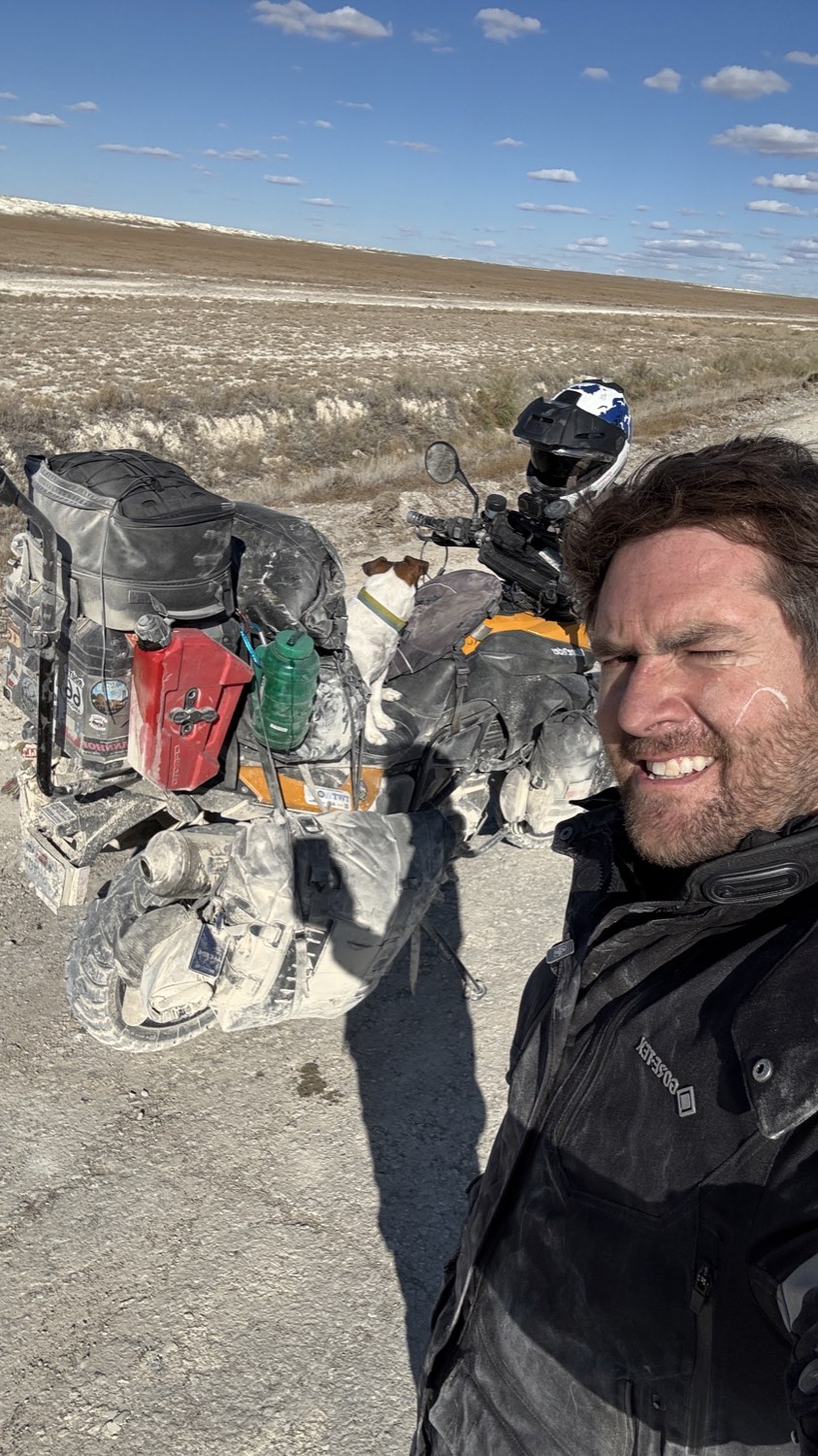 68
68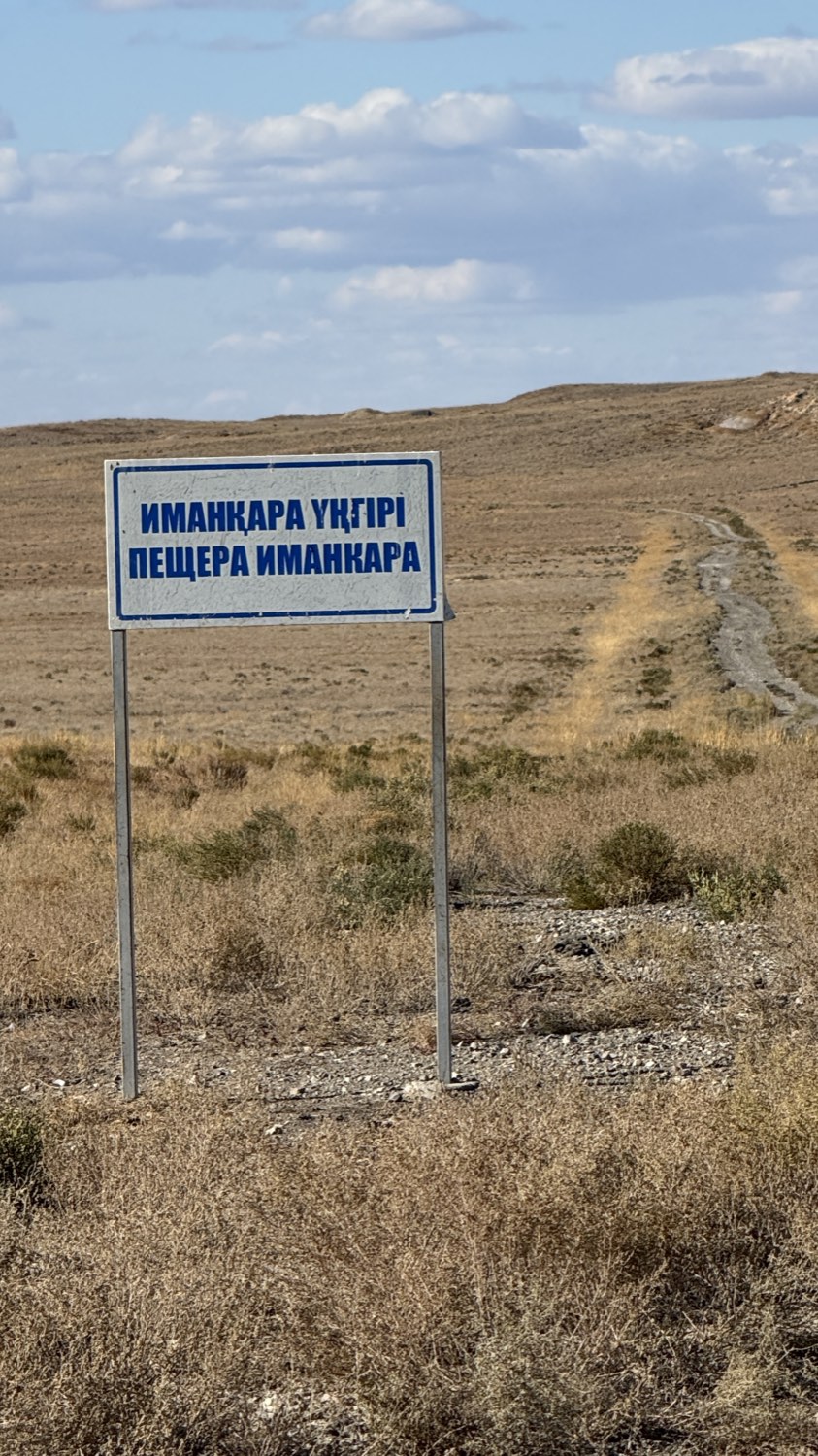 69
69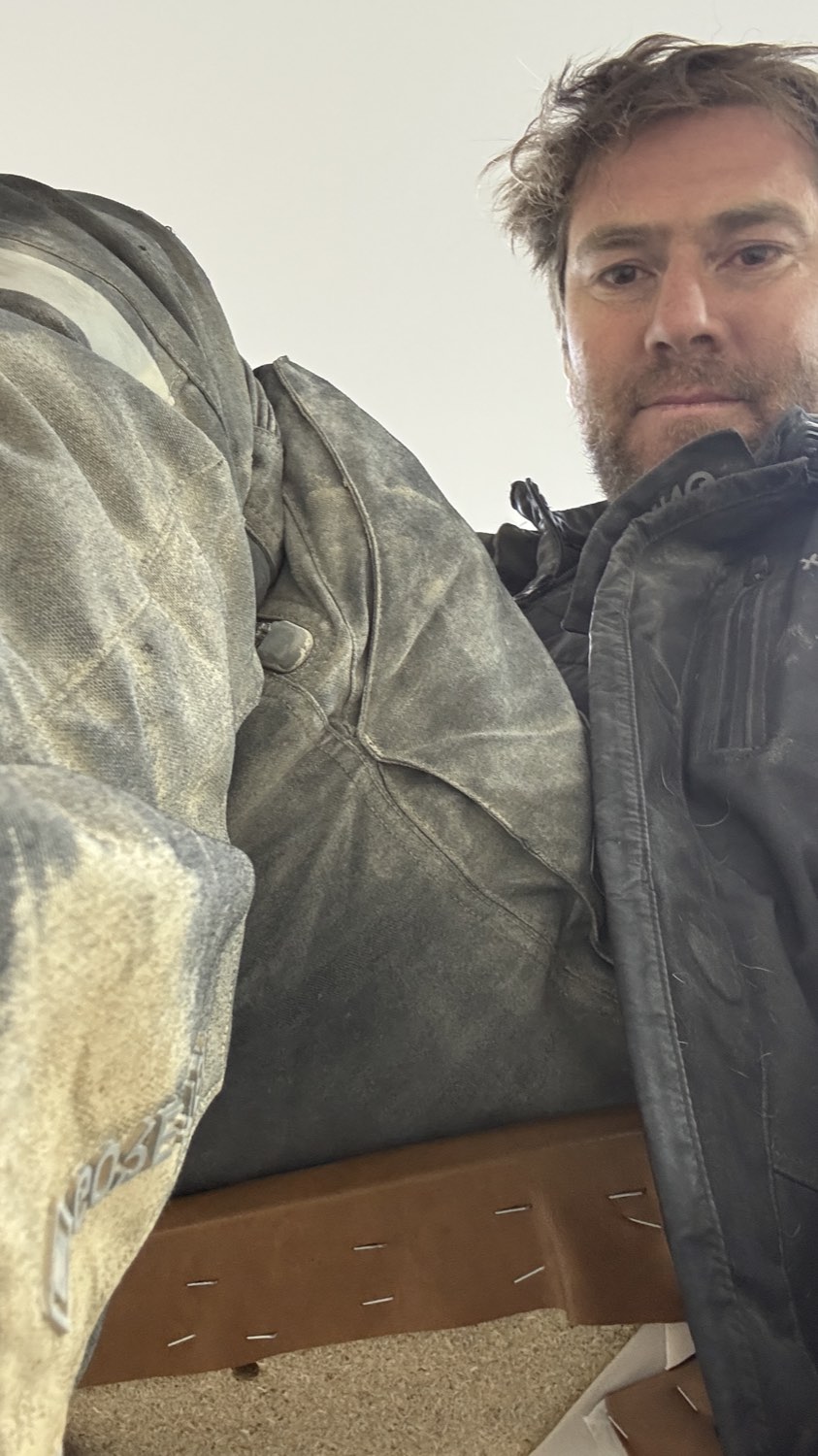 70
70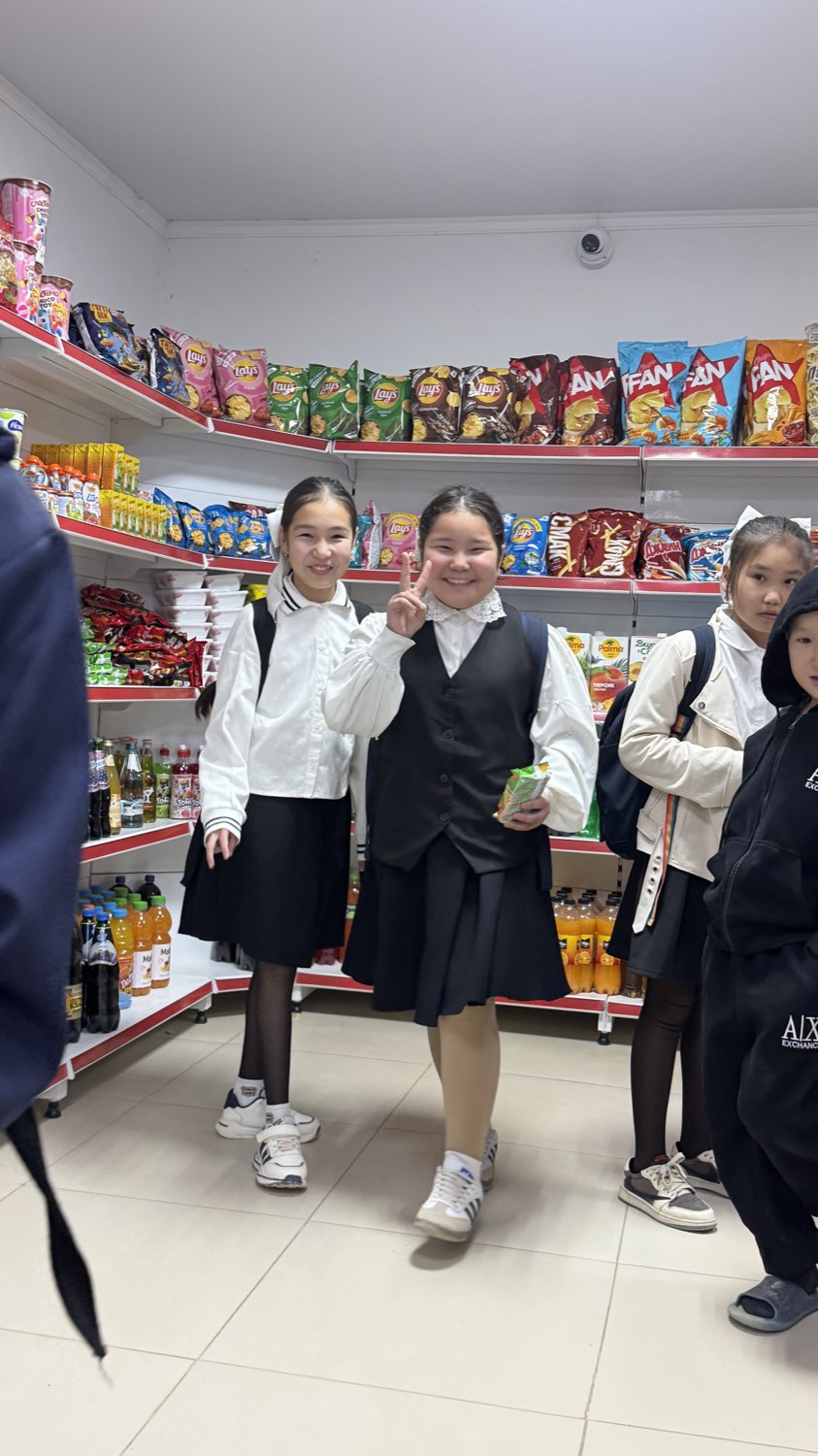 71
71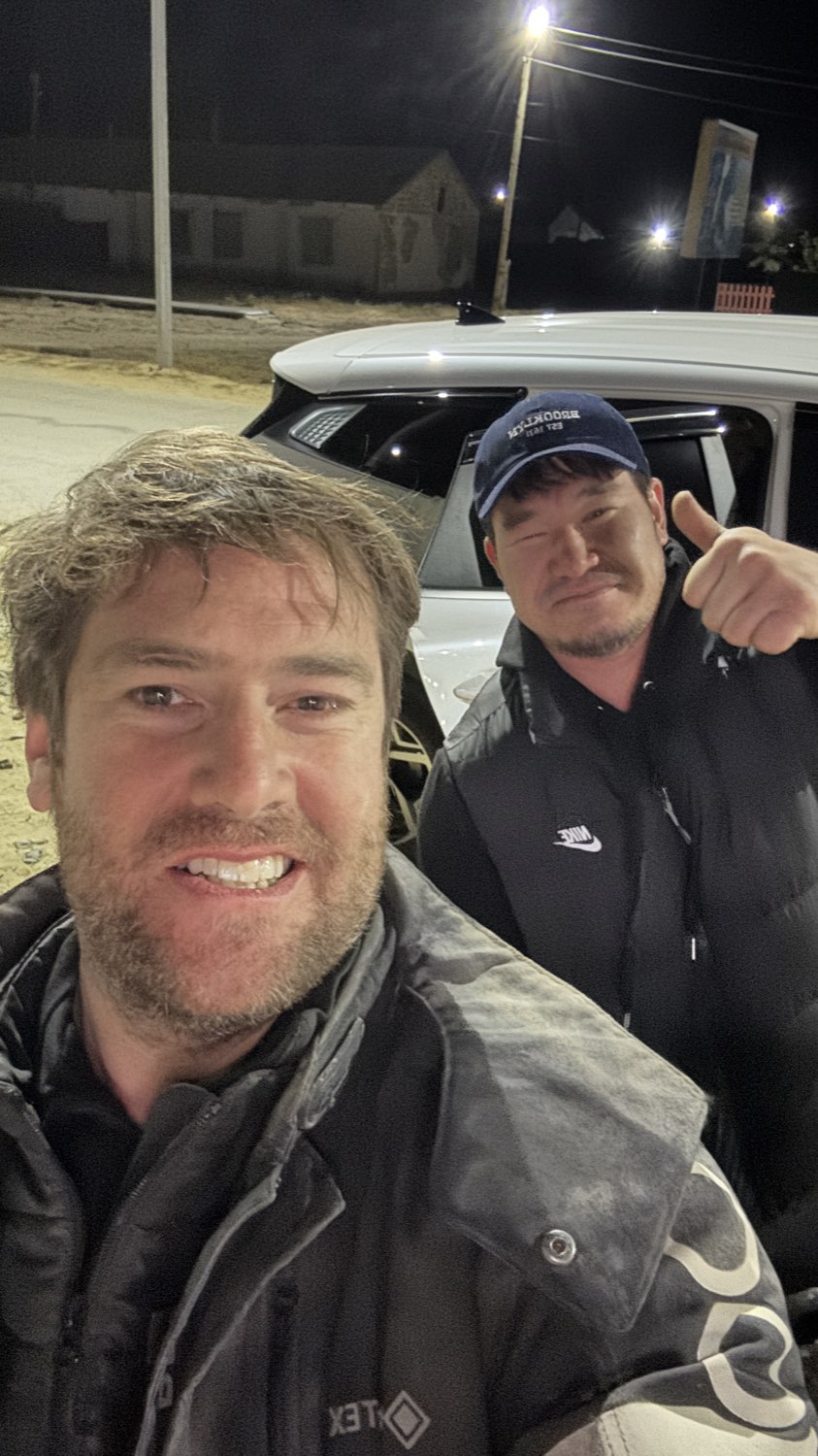 72
72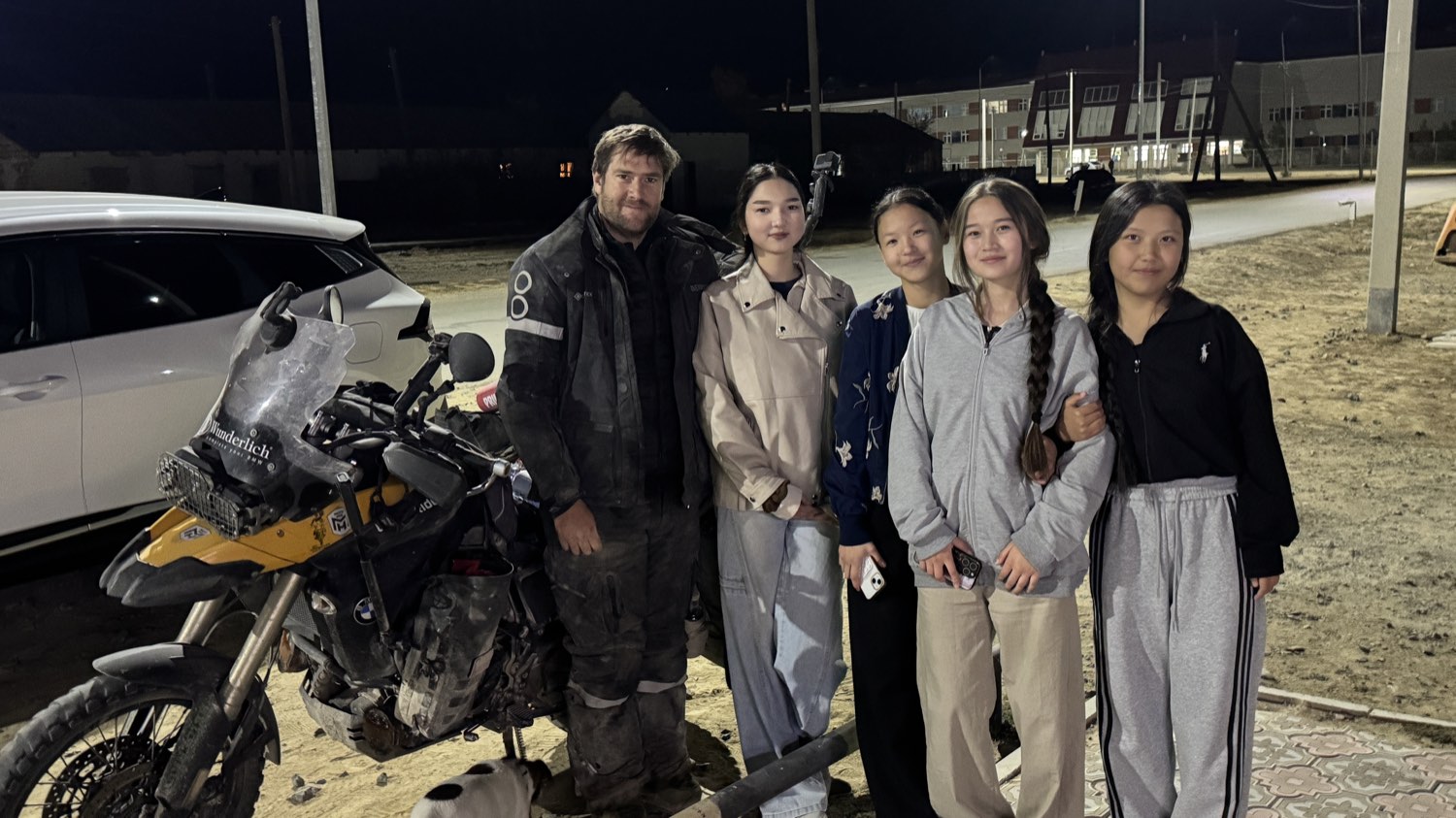 73
73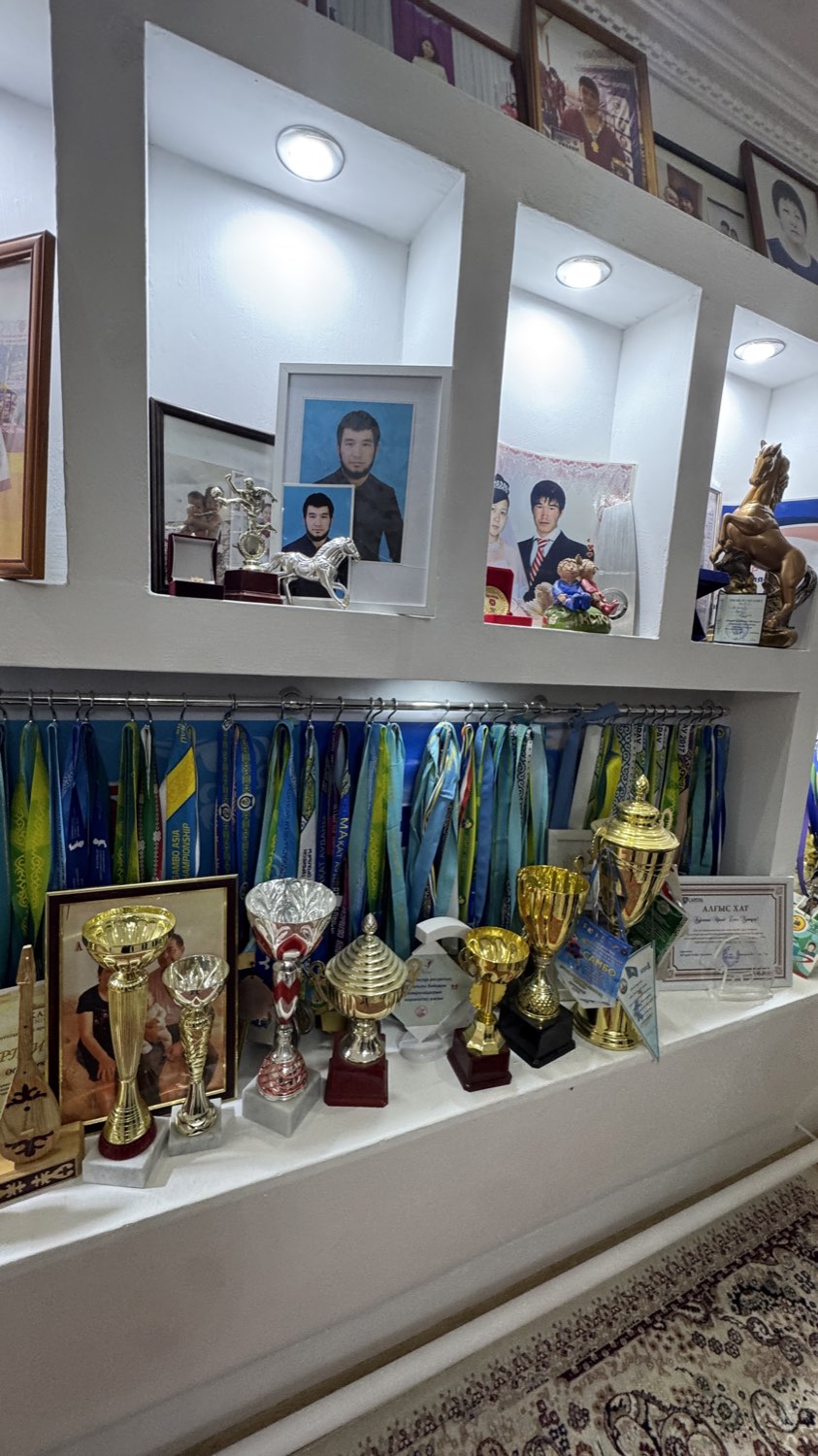 74
74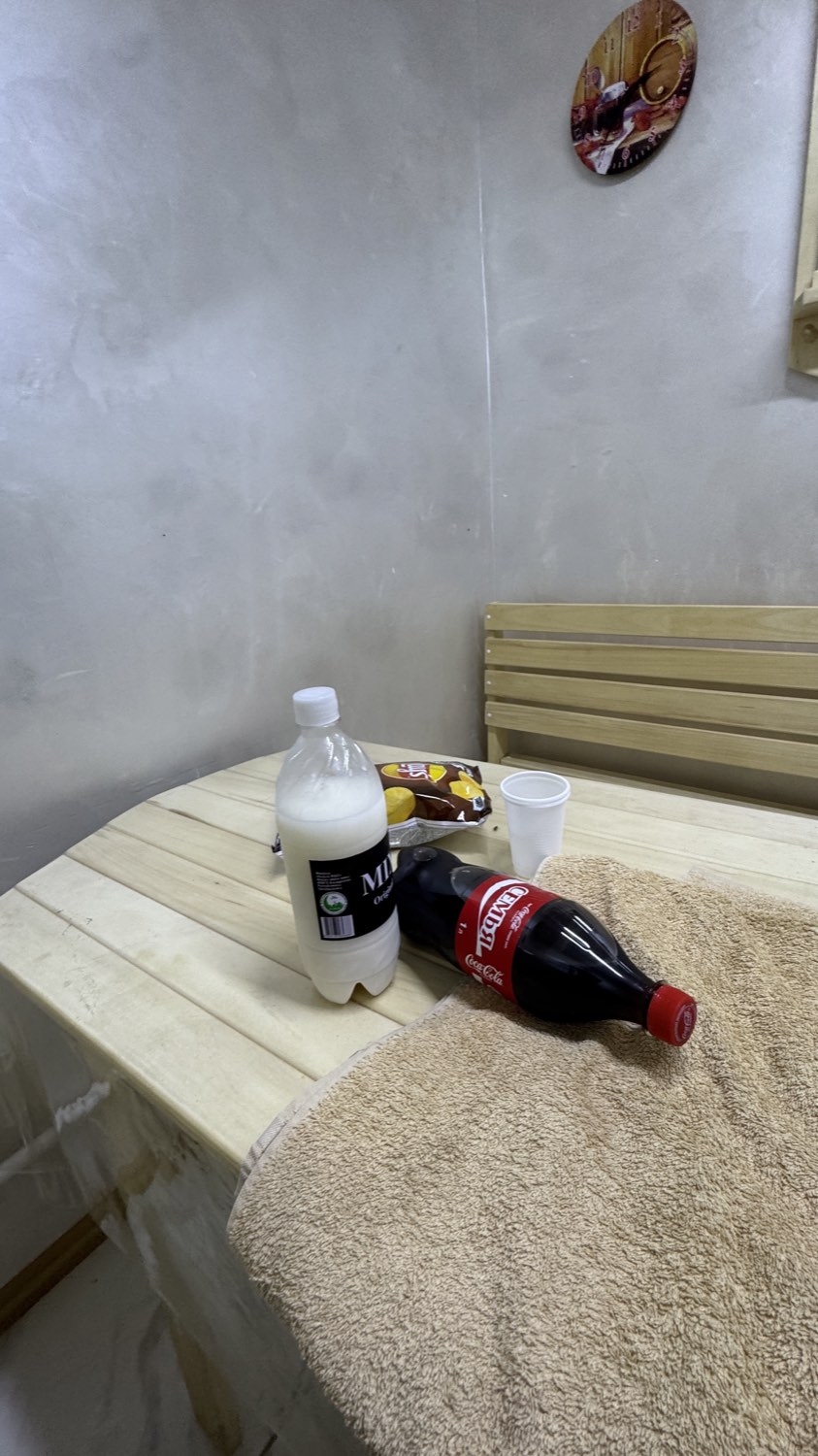 75
75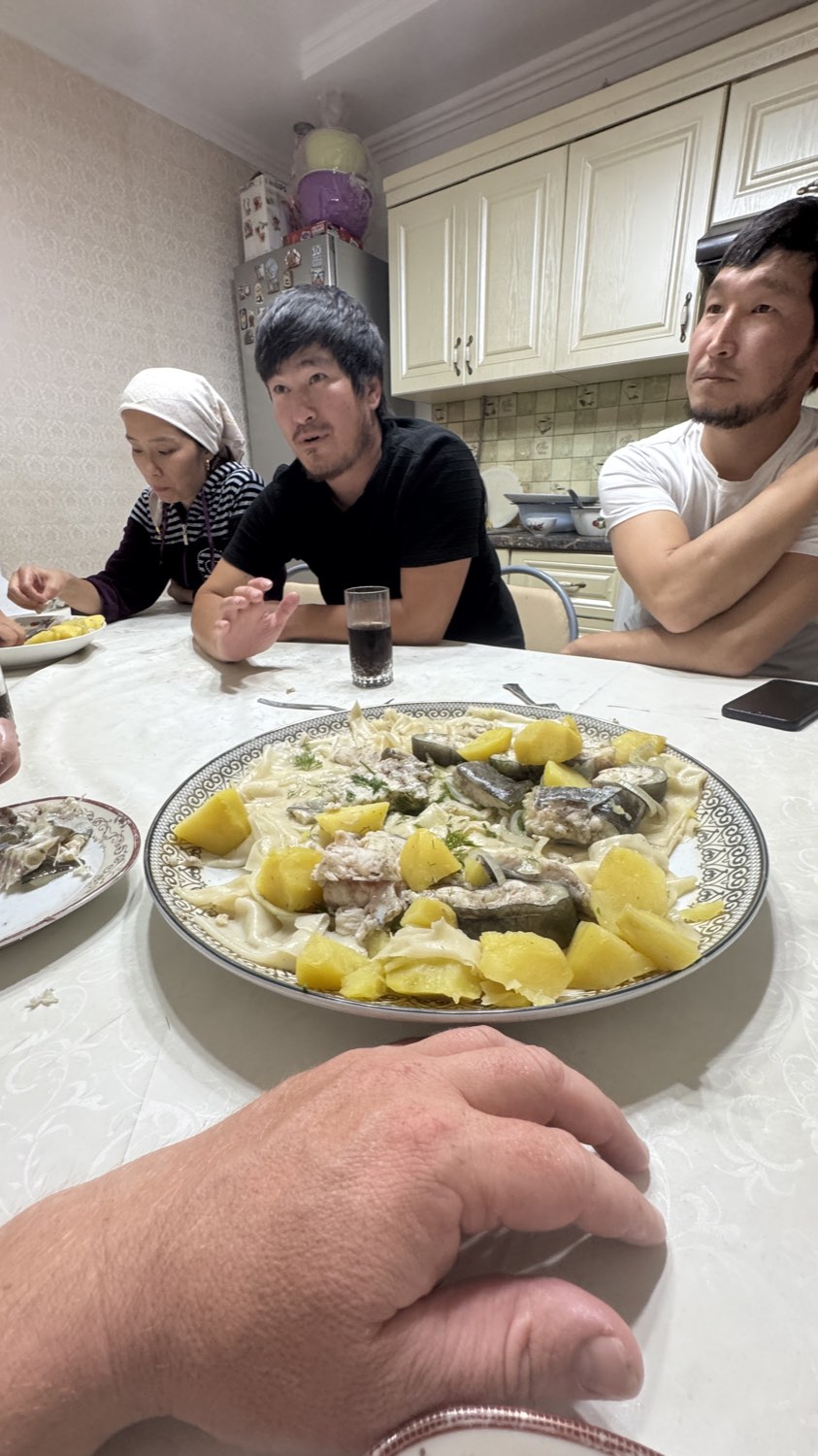 76
76 77
77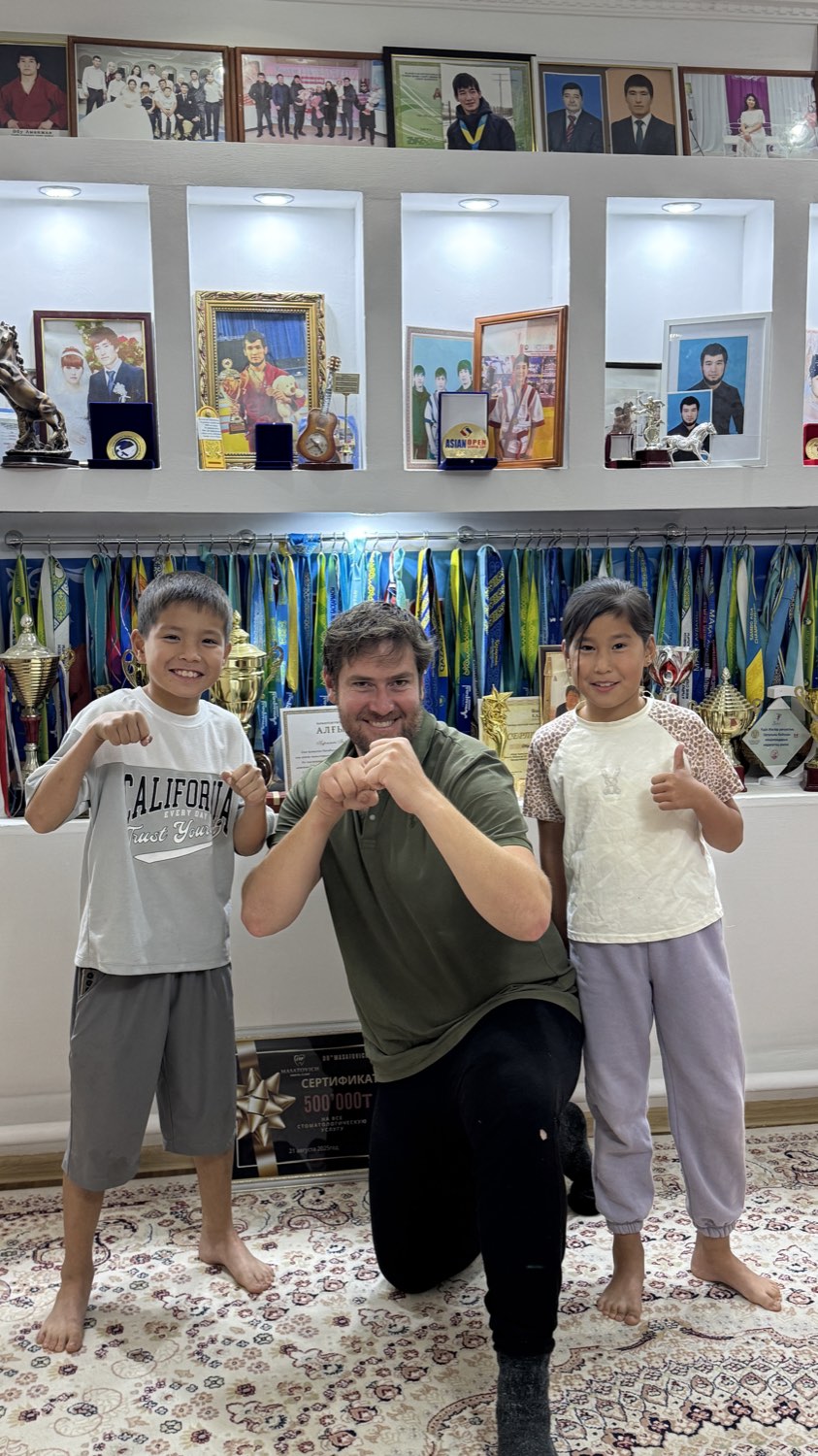 78
78 79
79 80
80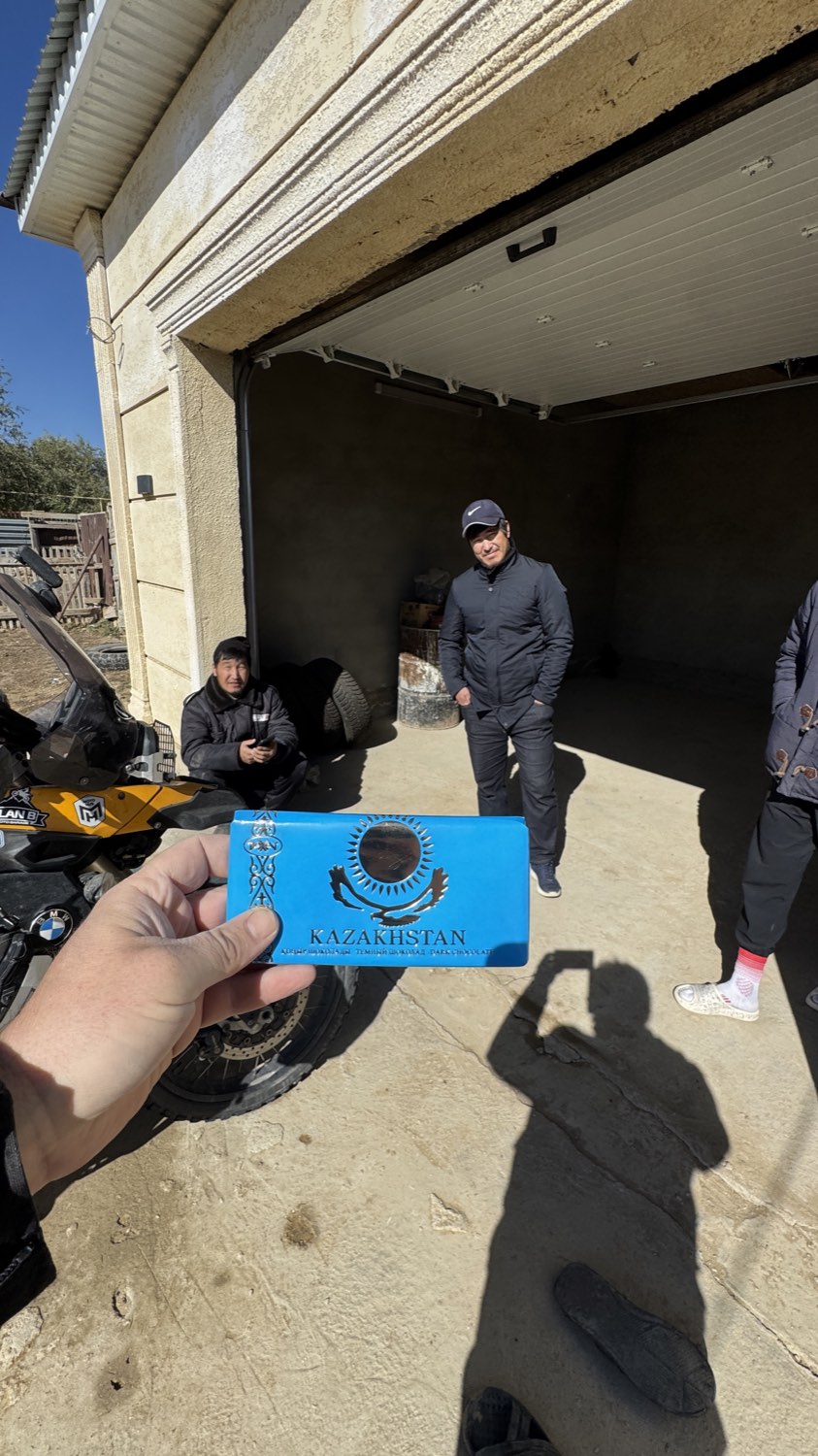 81
81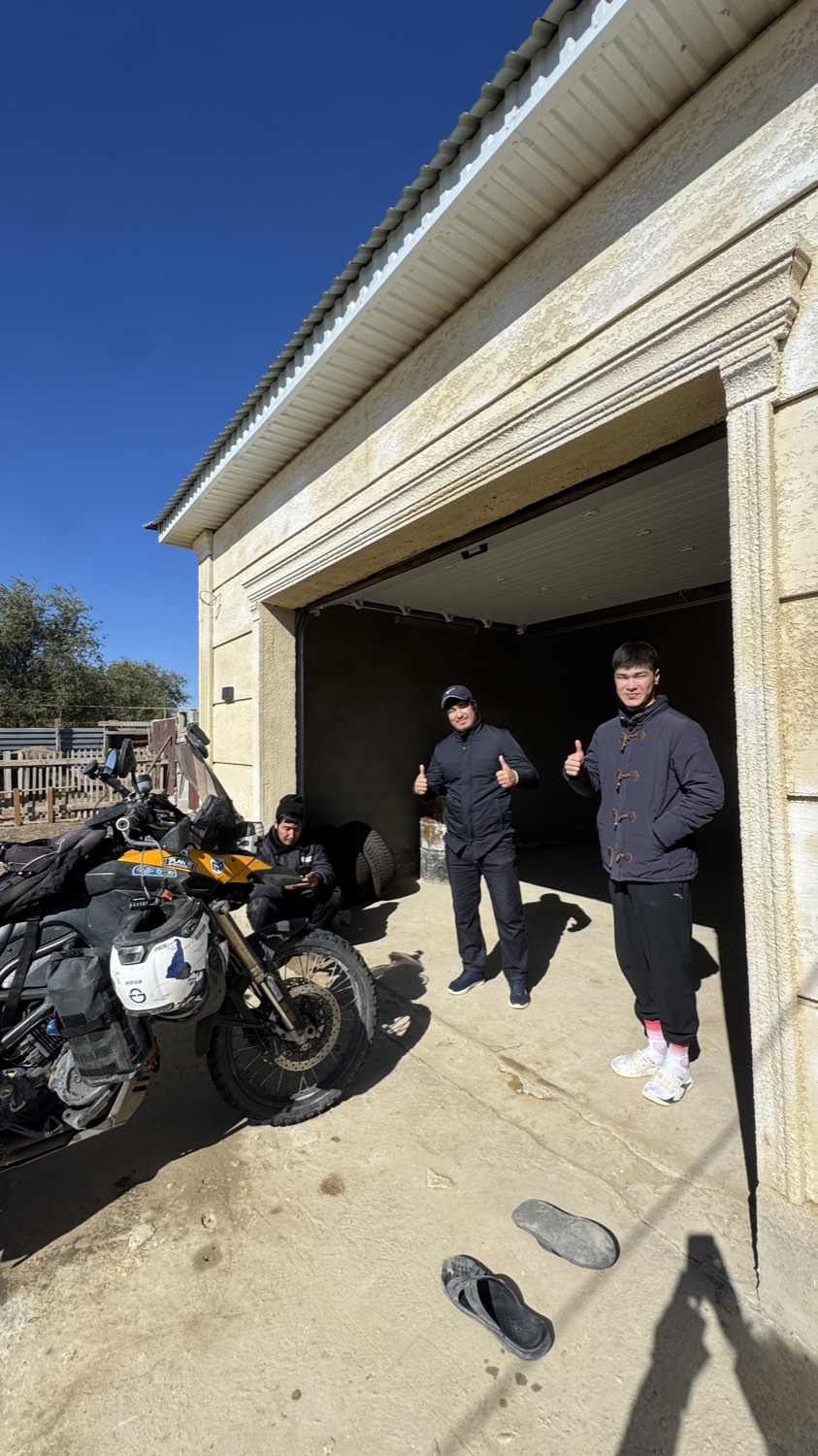 82
82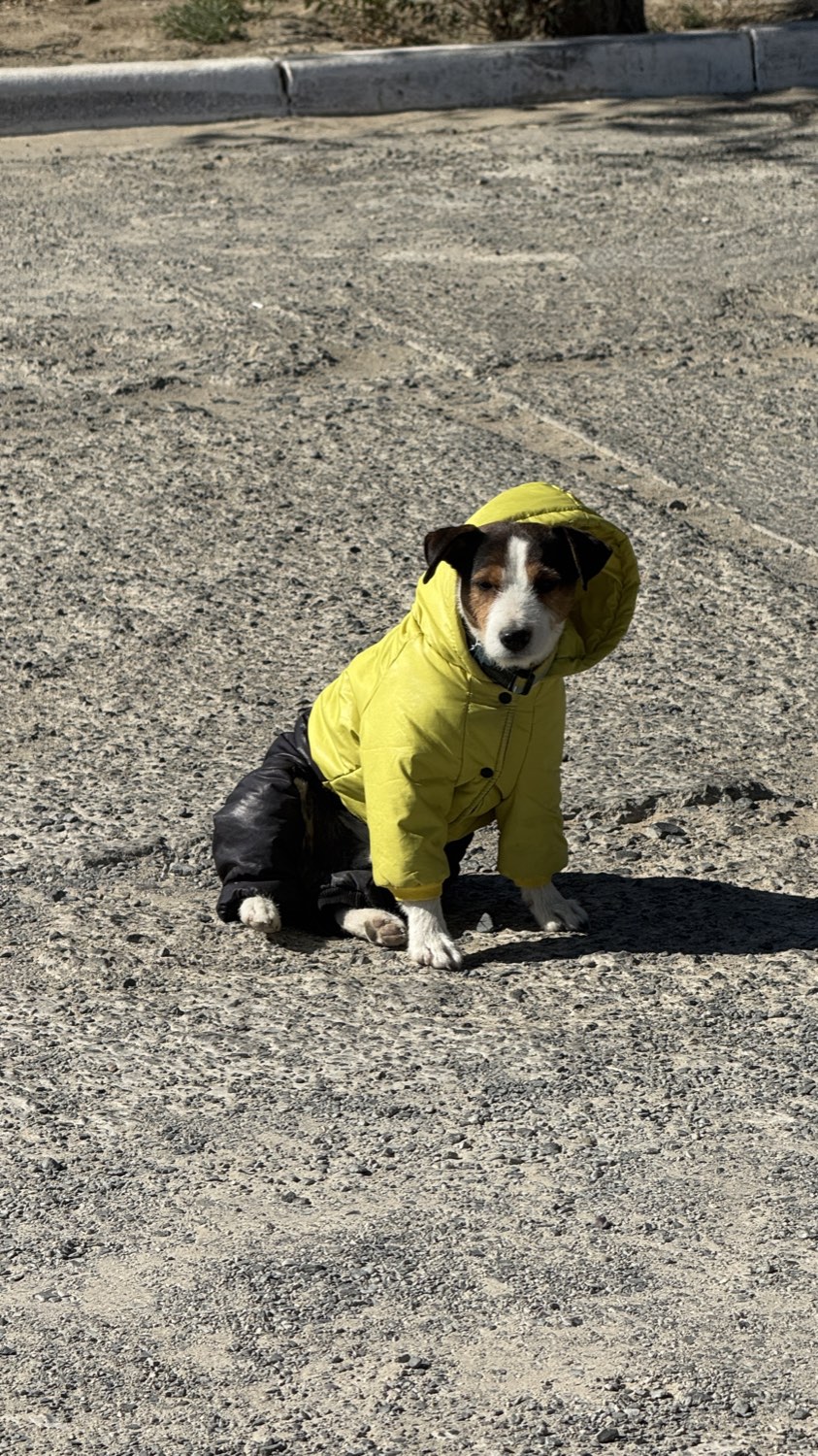 83
83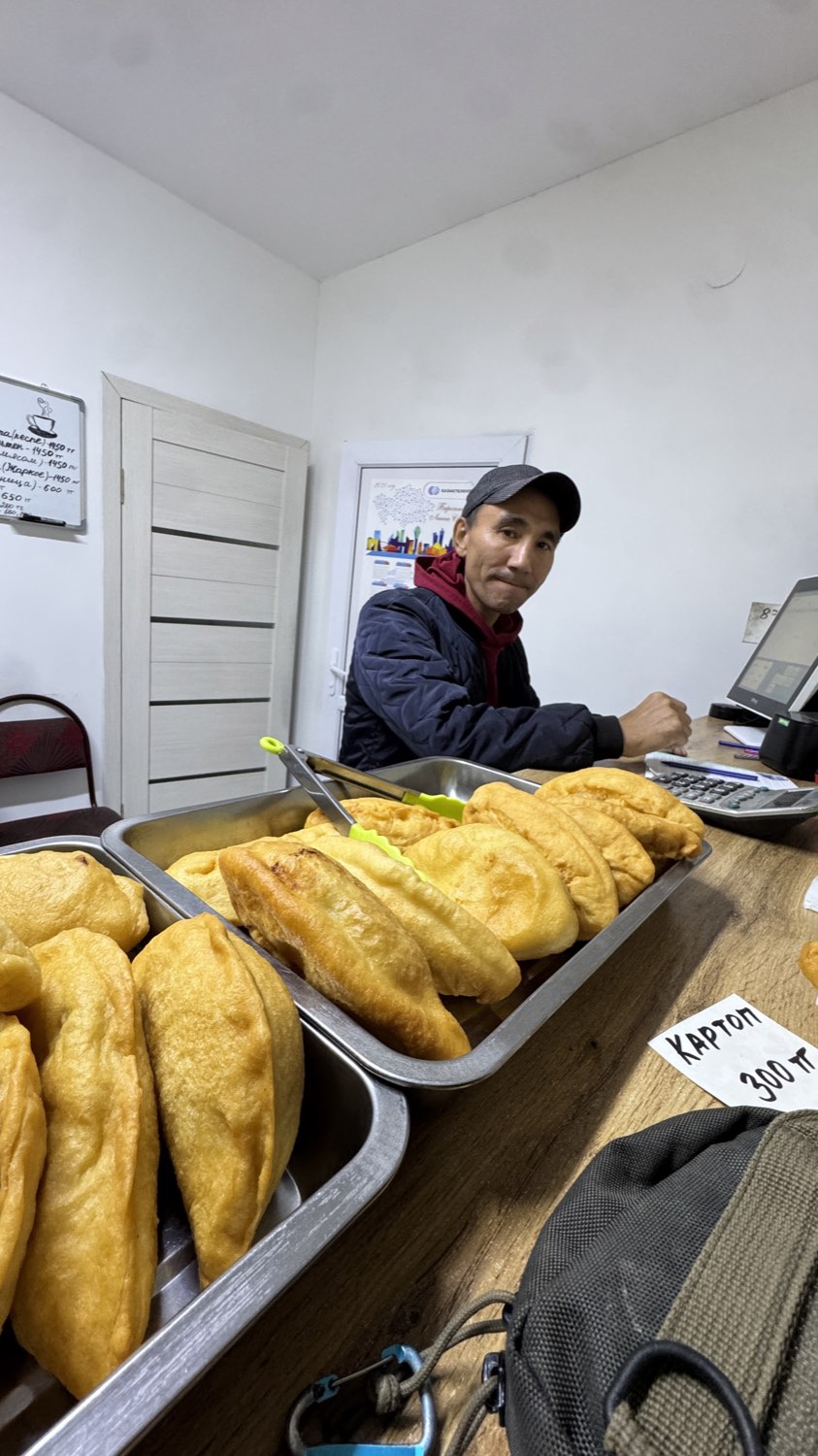 84
84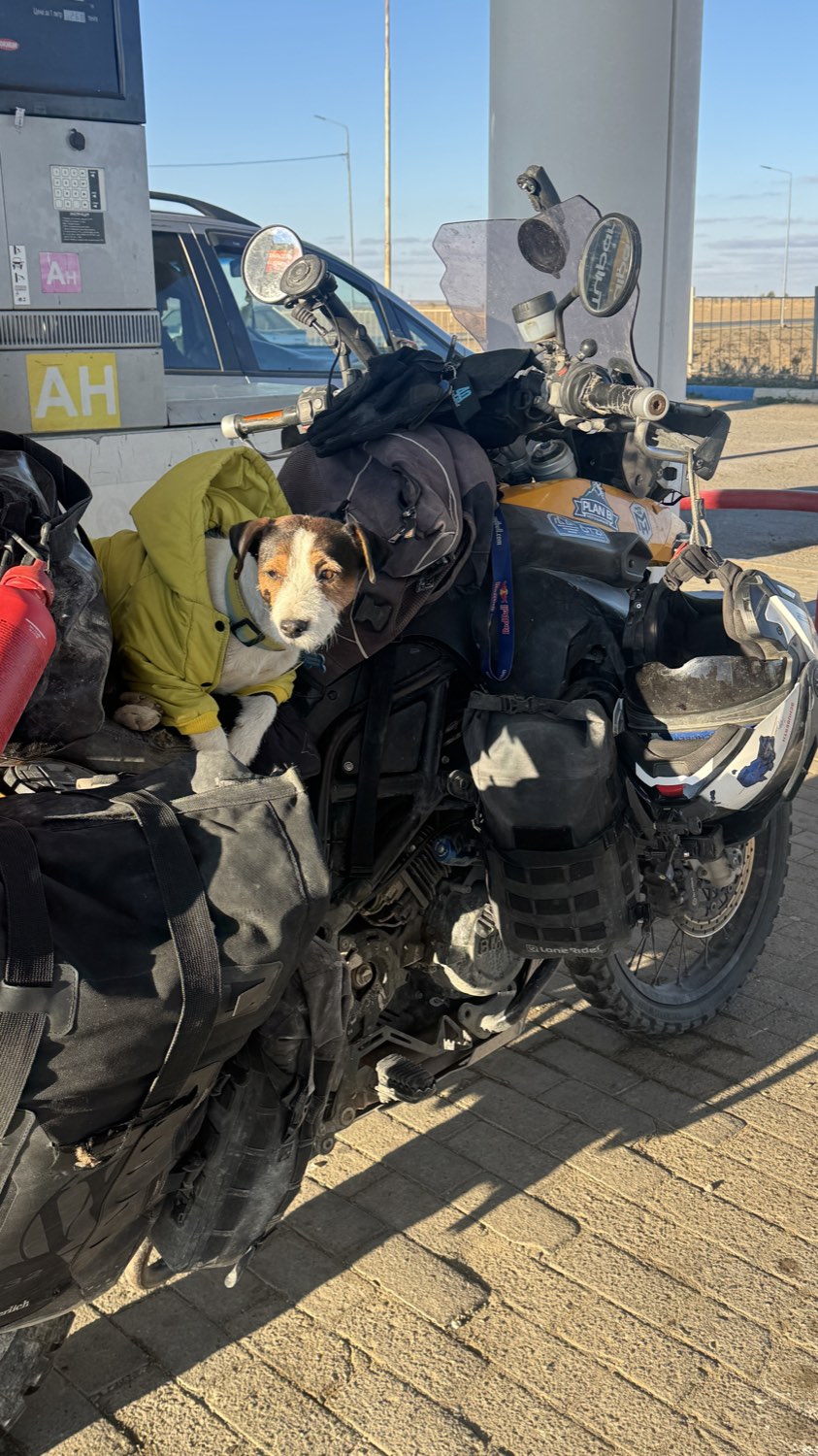 85
85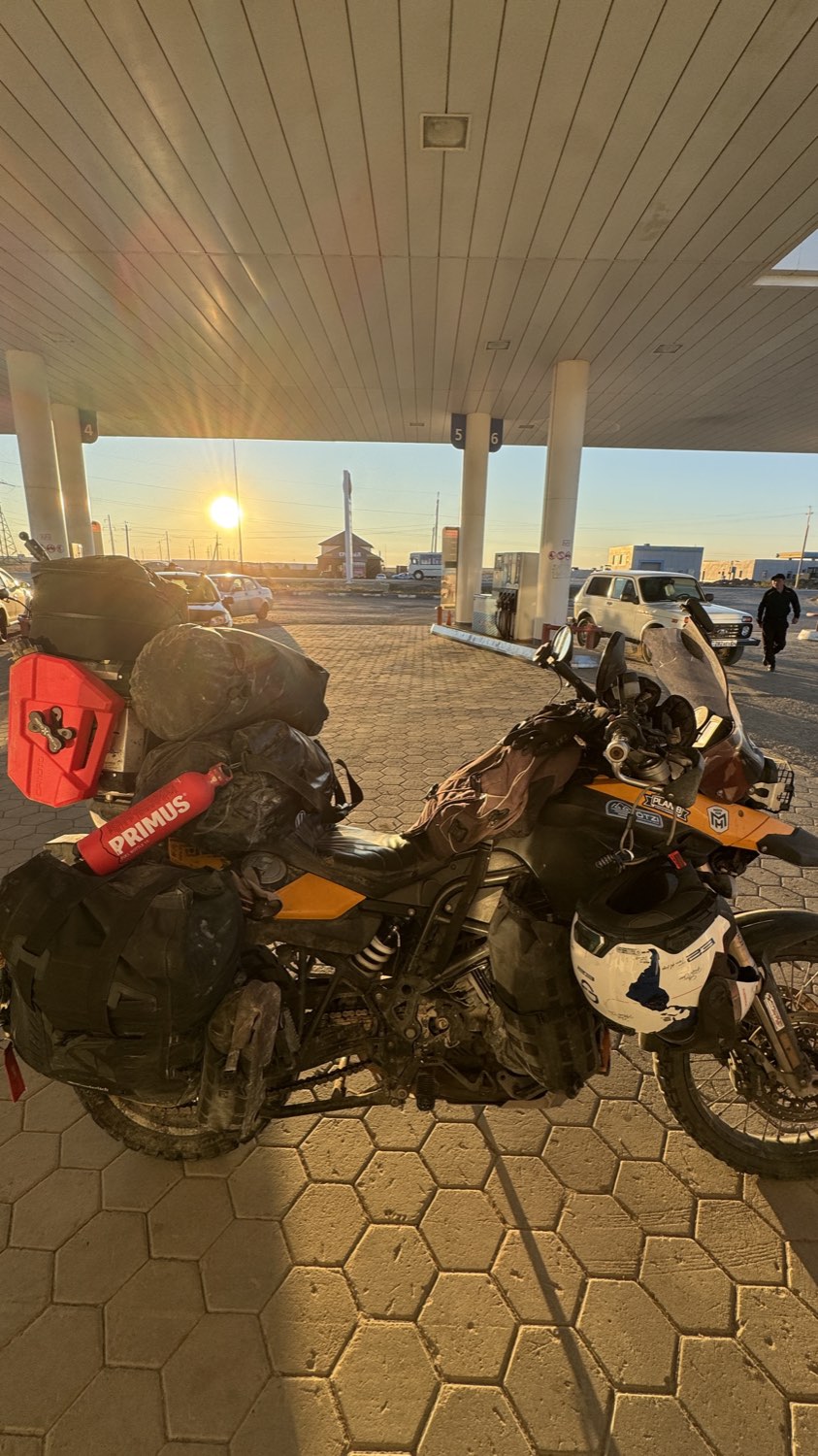 86
86 87
87 88
88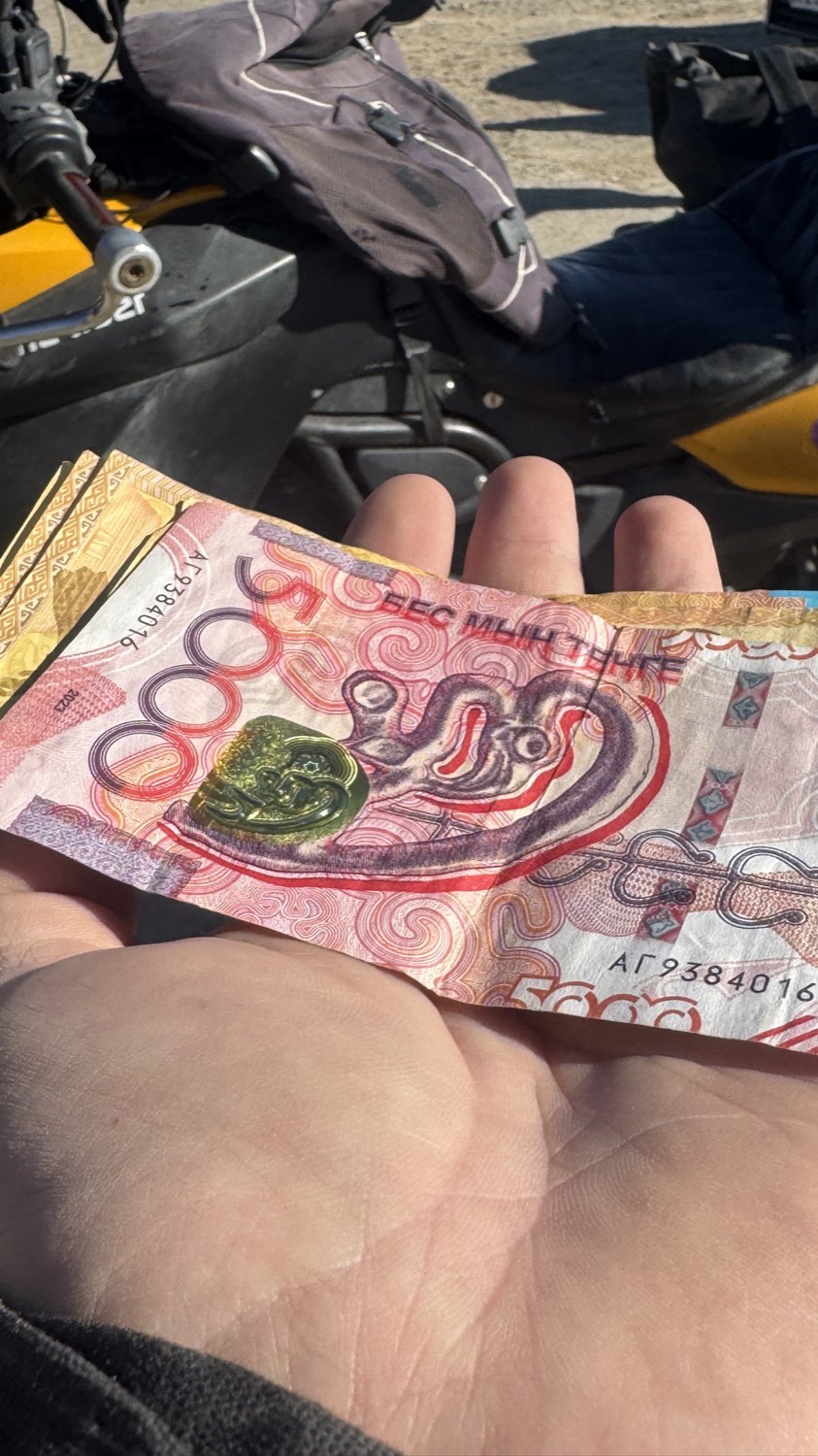 89
89 90
90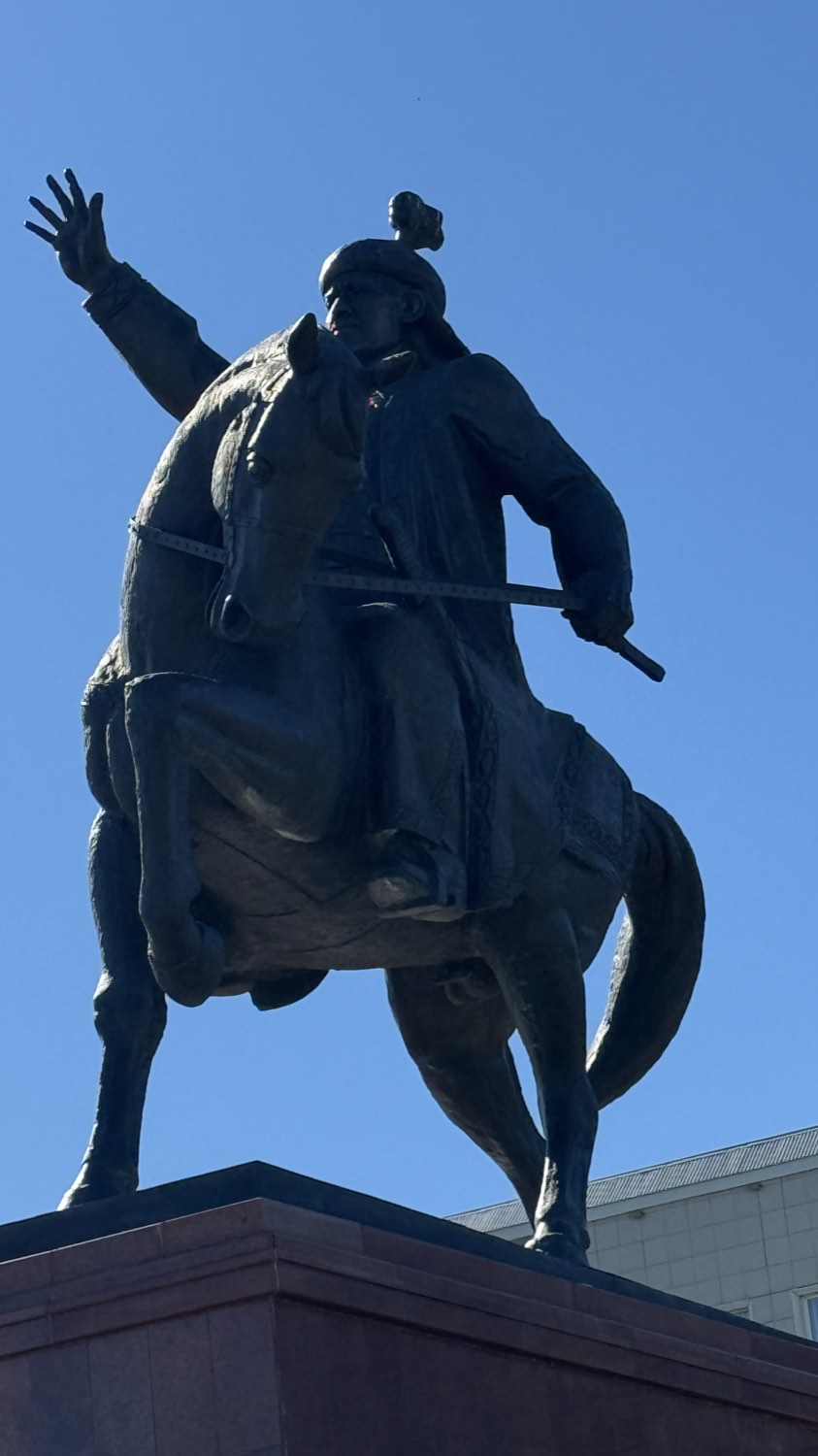 91
91 92
92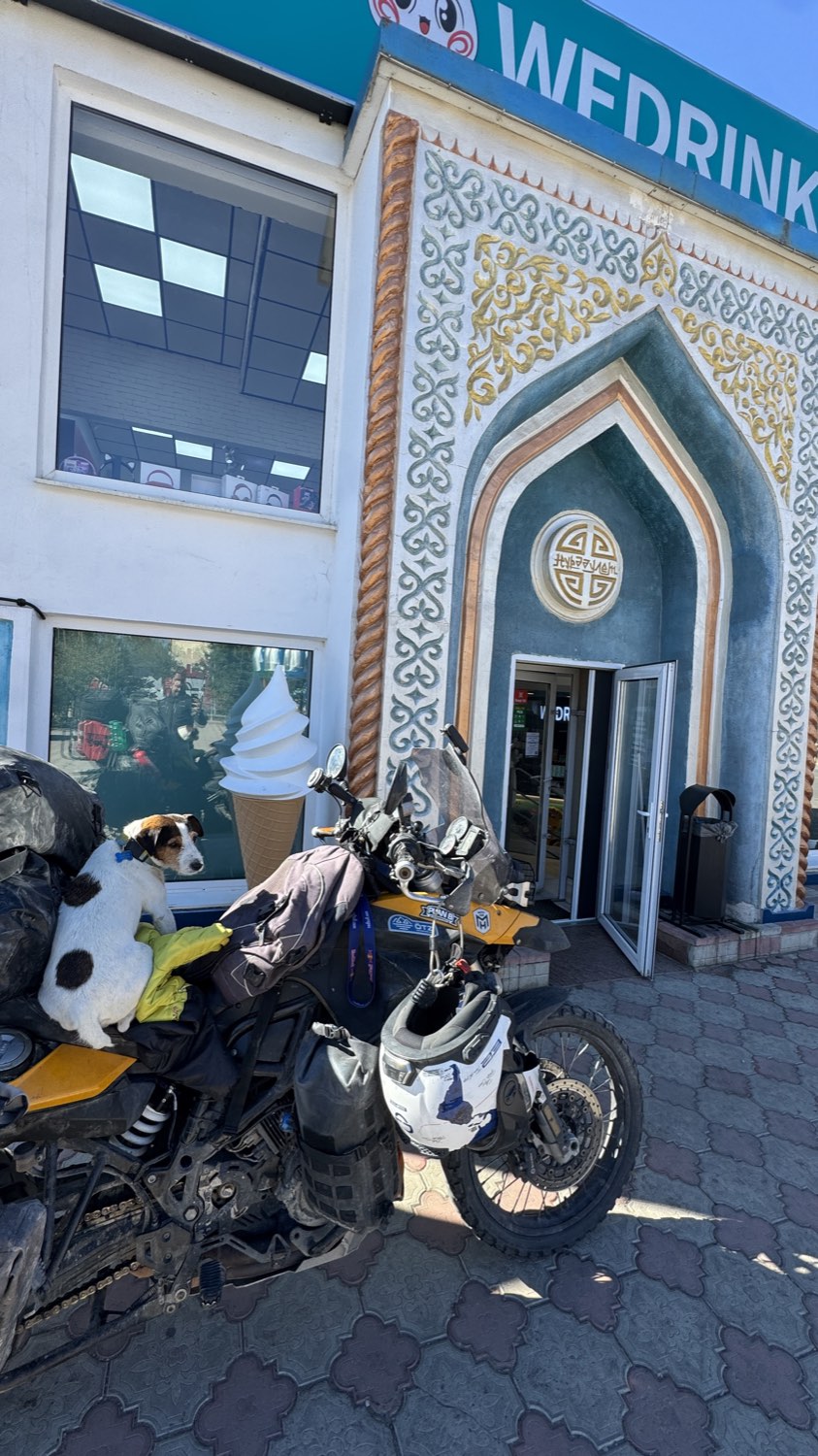 93
93 94
94 95
95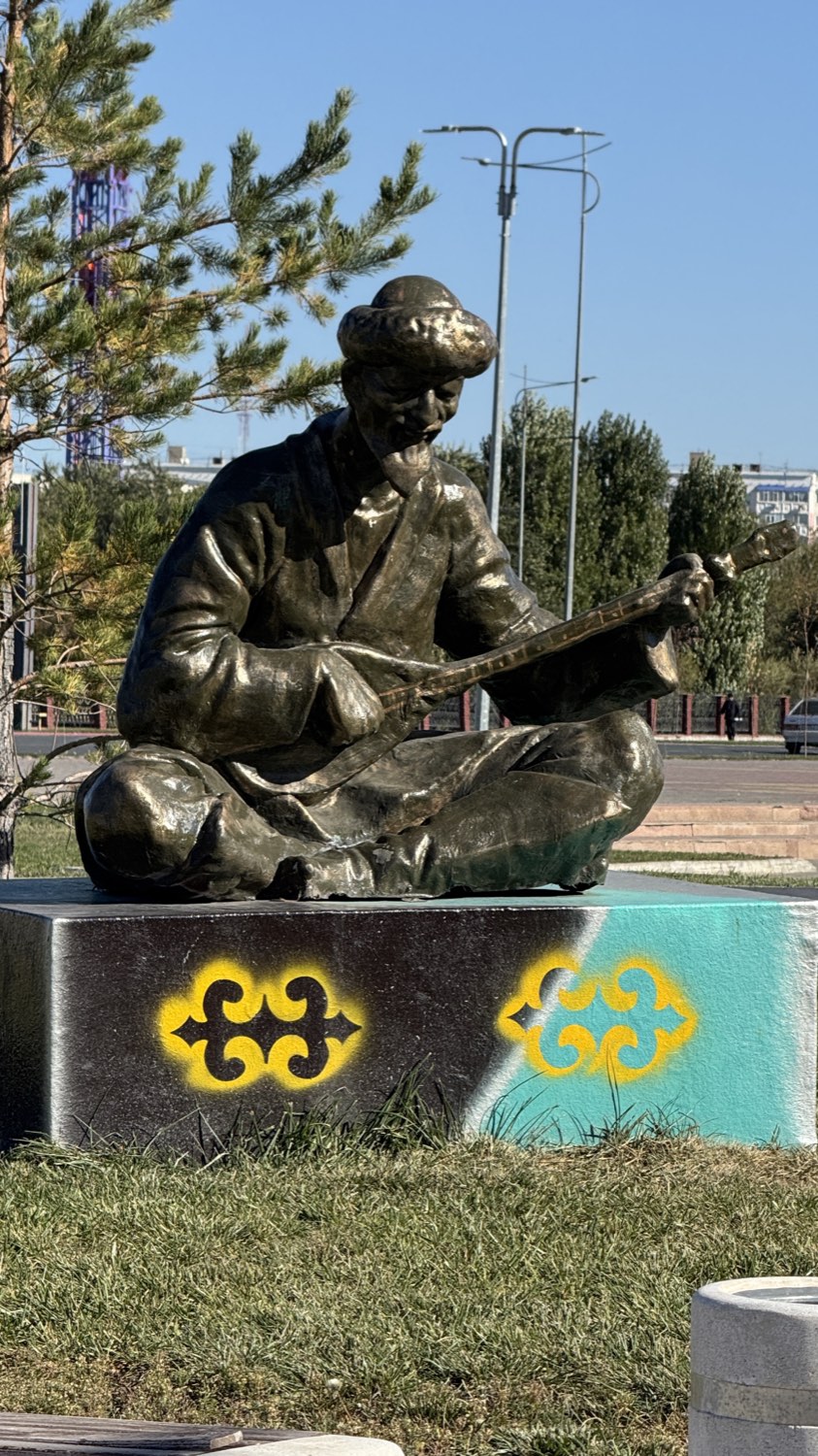 96
96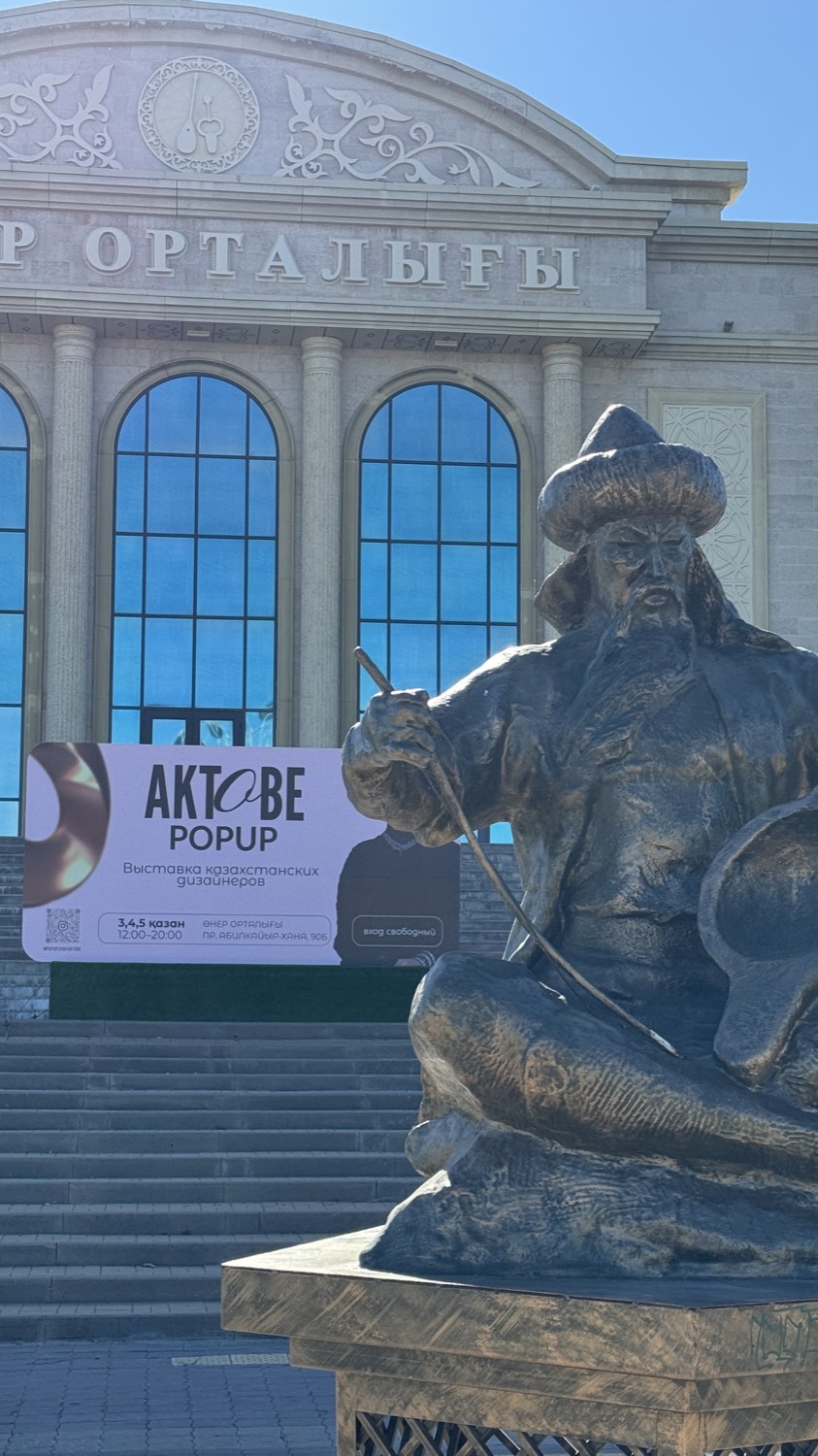 97
97 98
98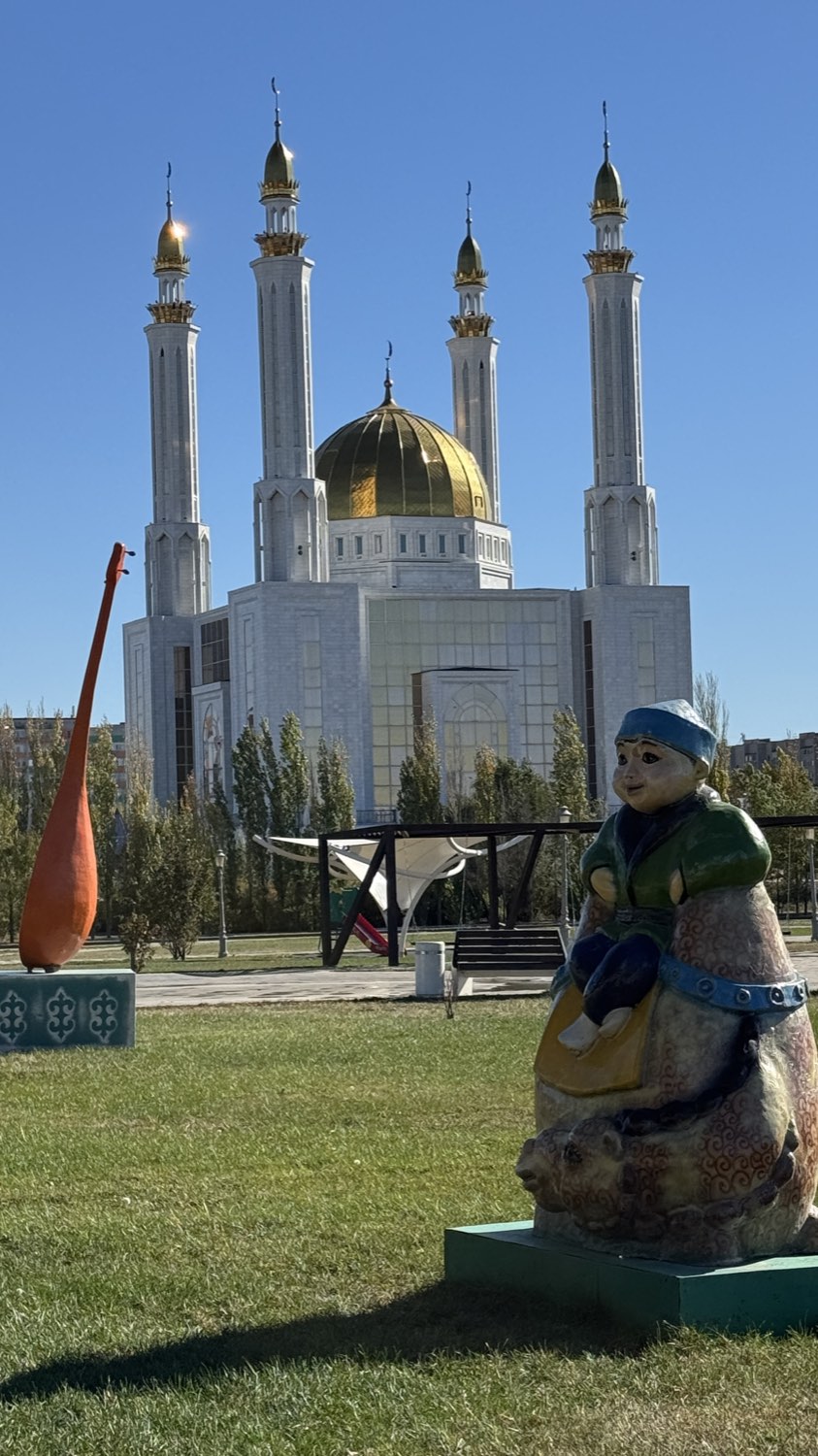 99
99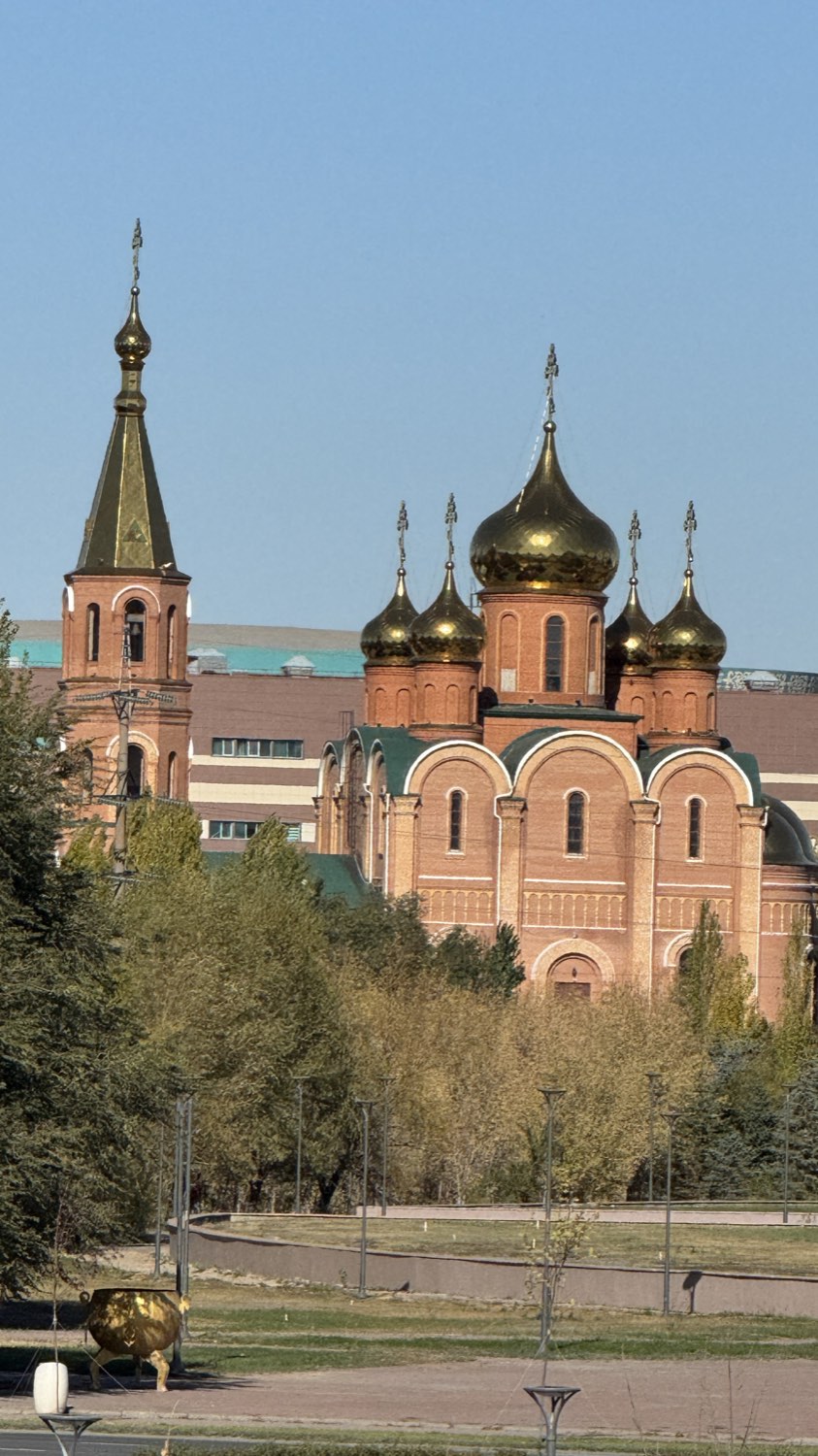 100
100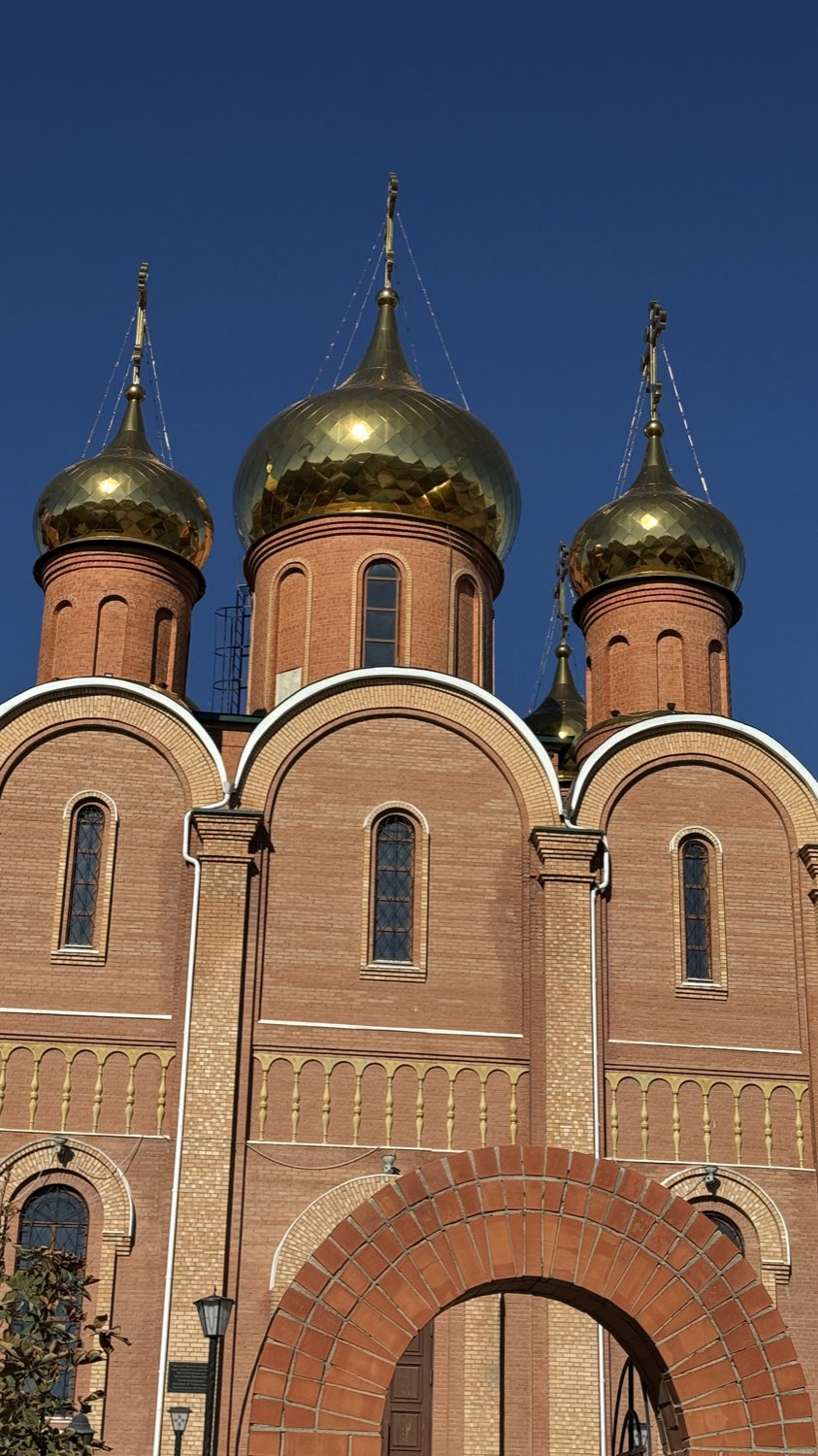 101
101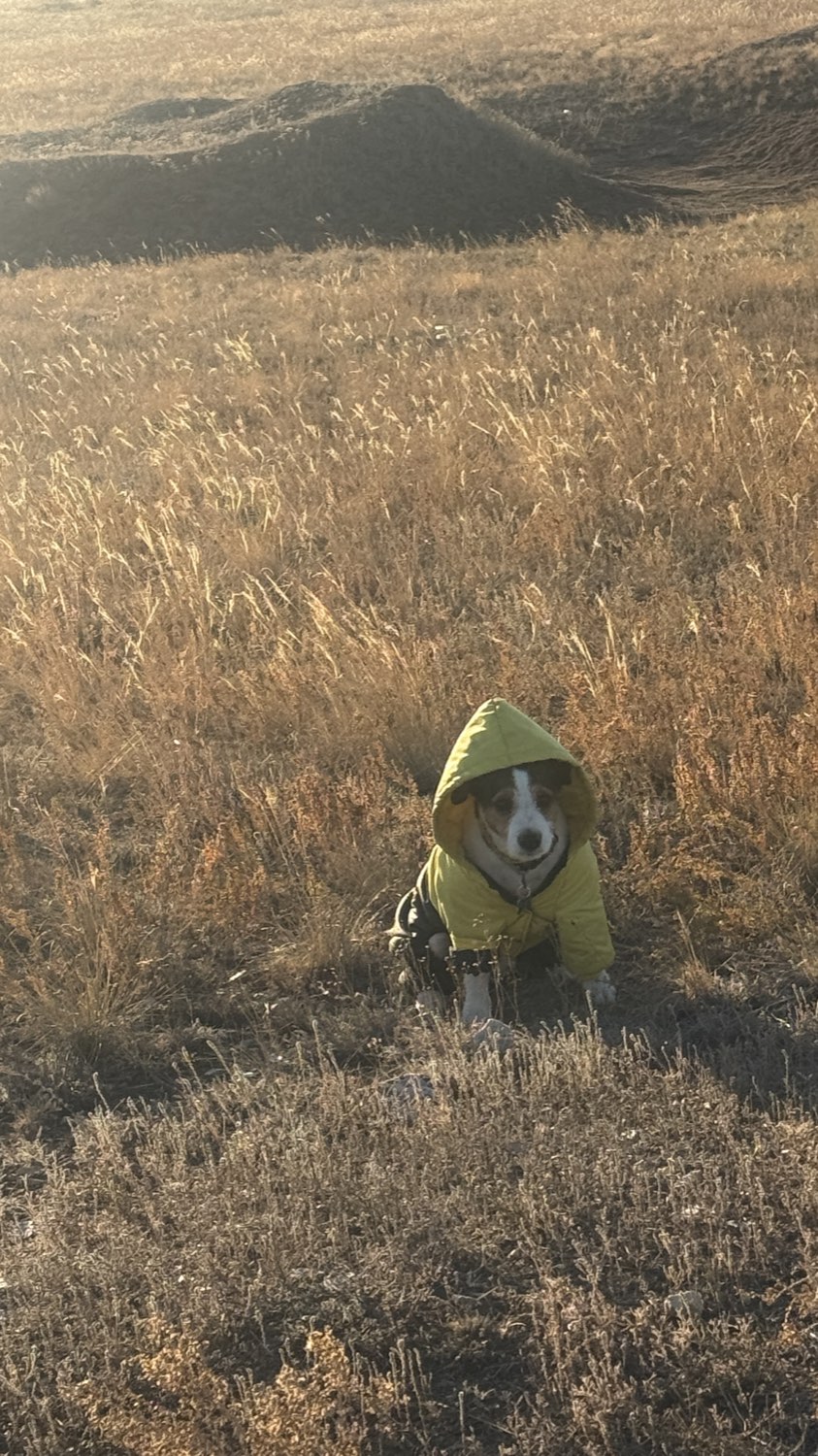 102
102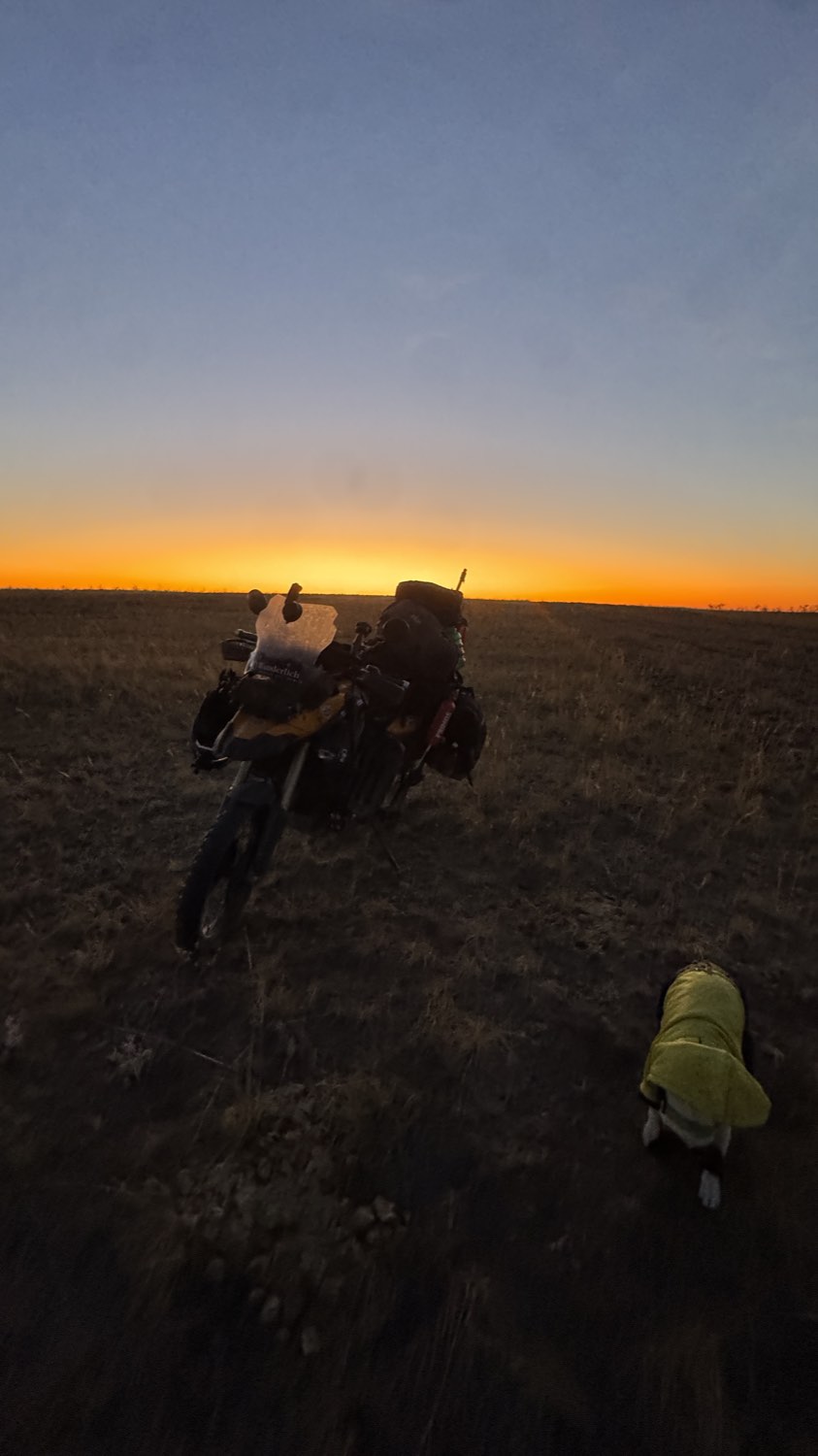 103
103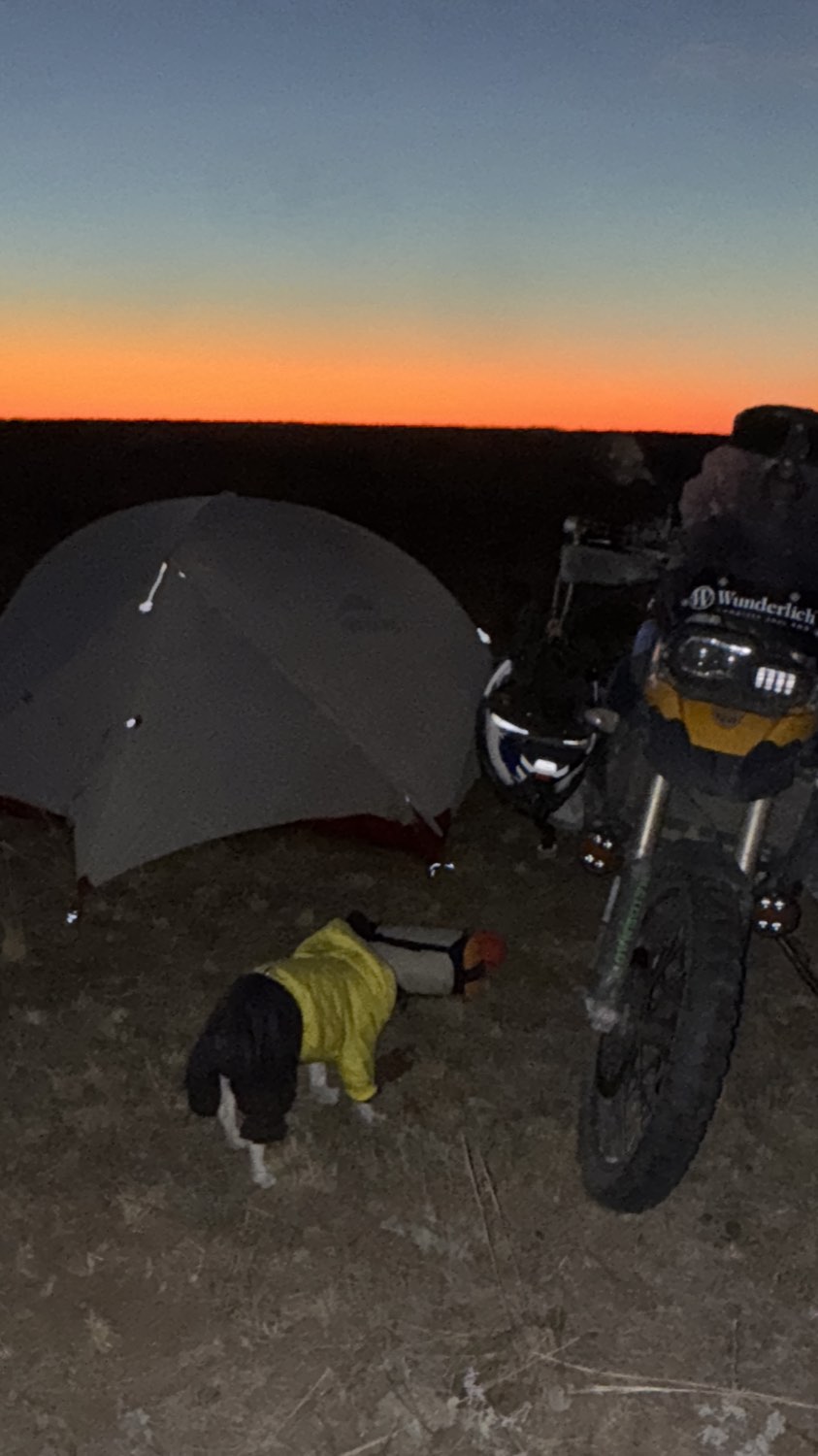 104
104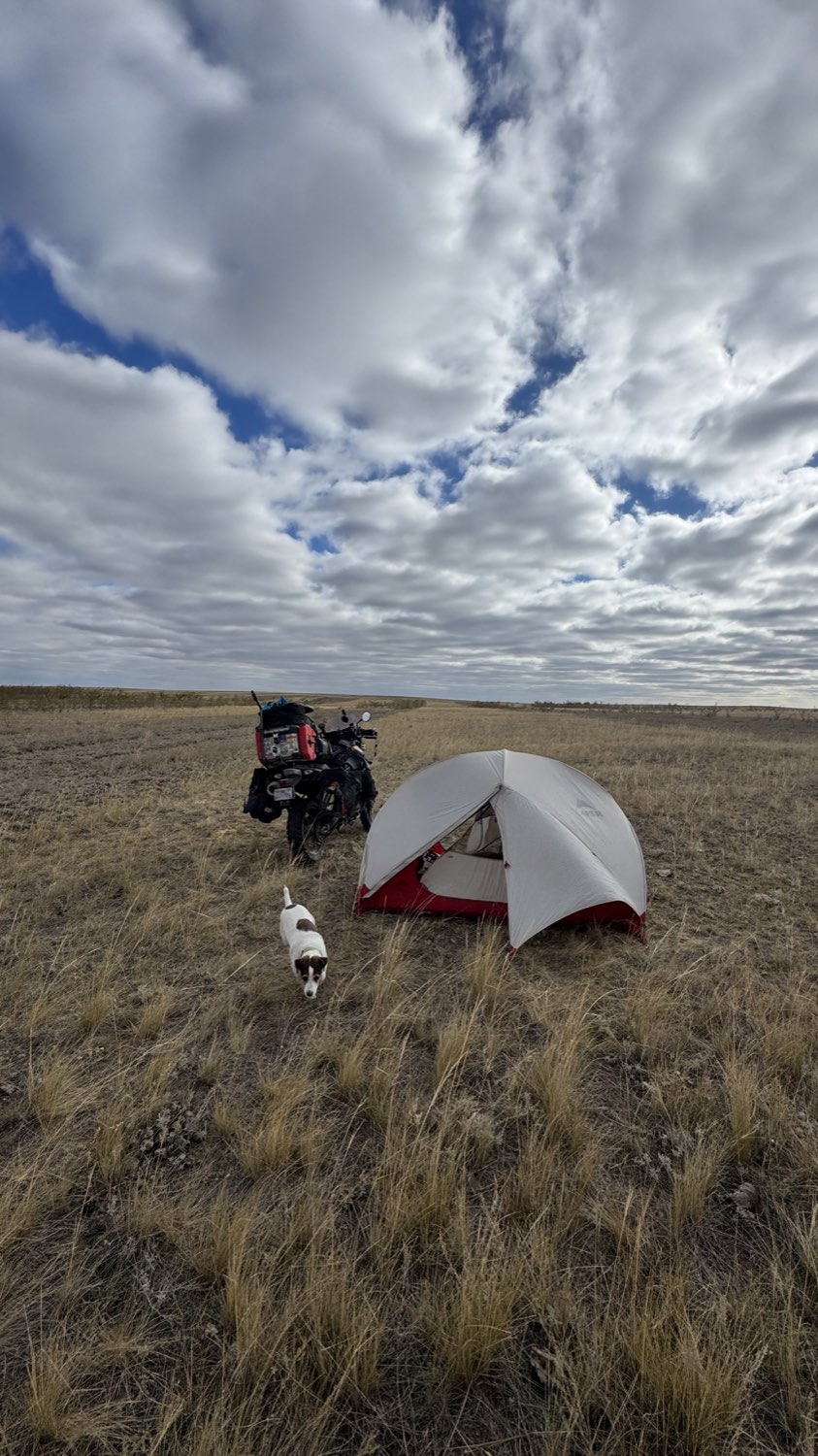 105
105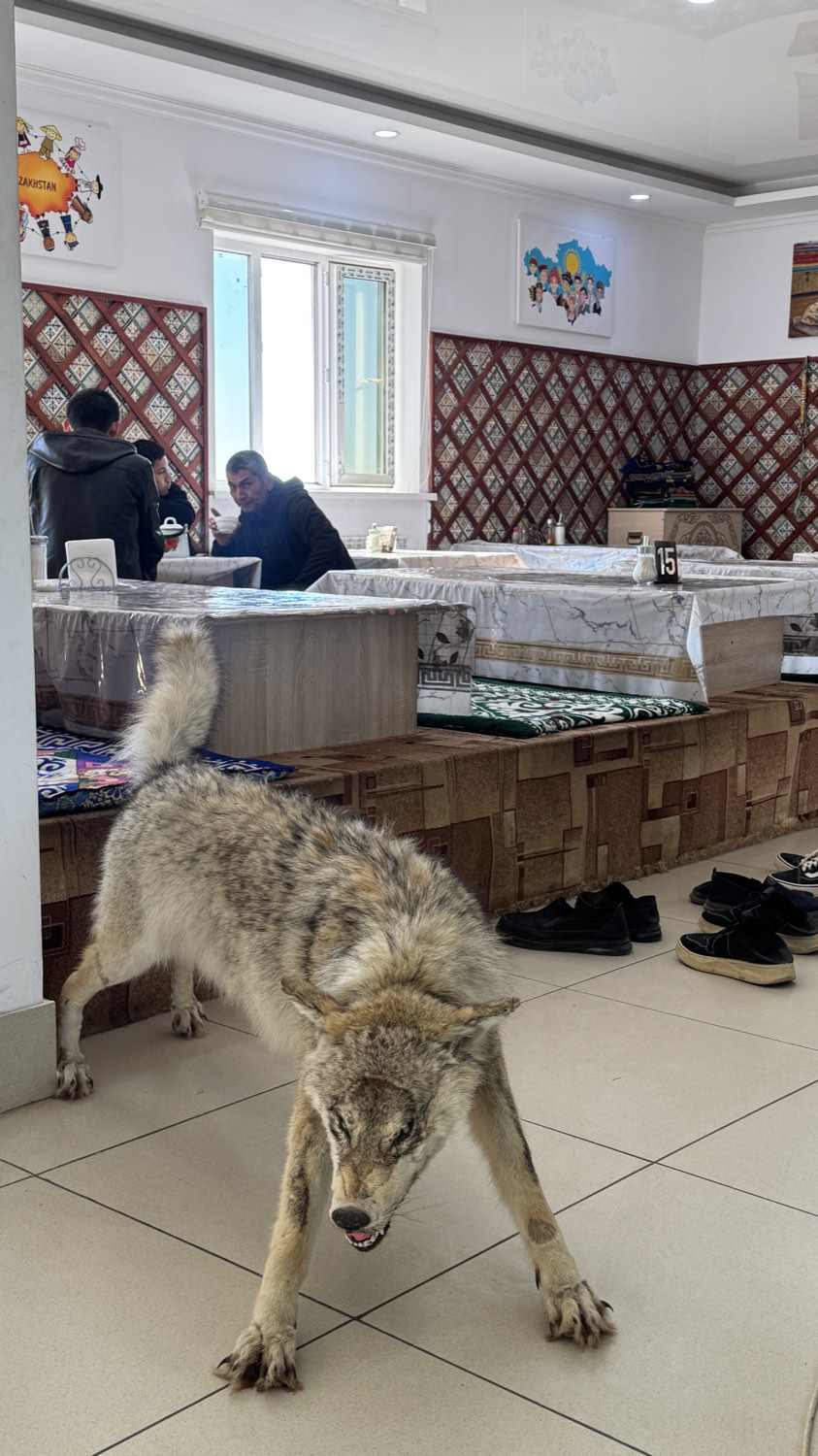 106
106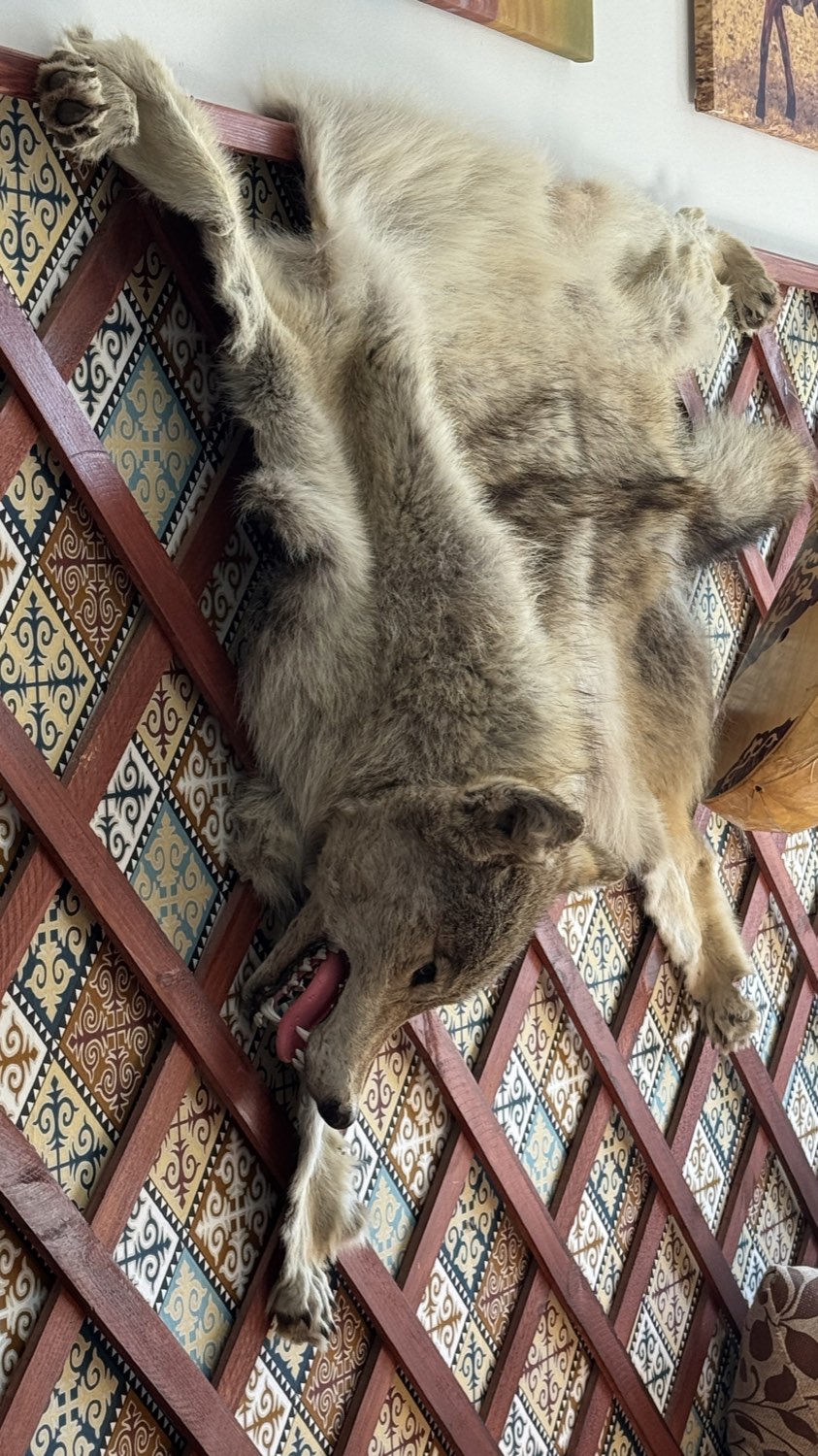 107
107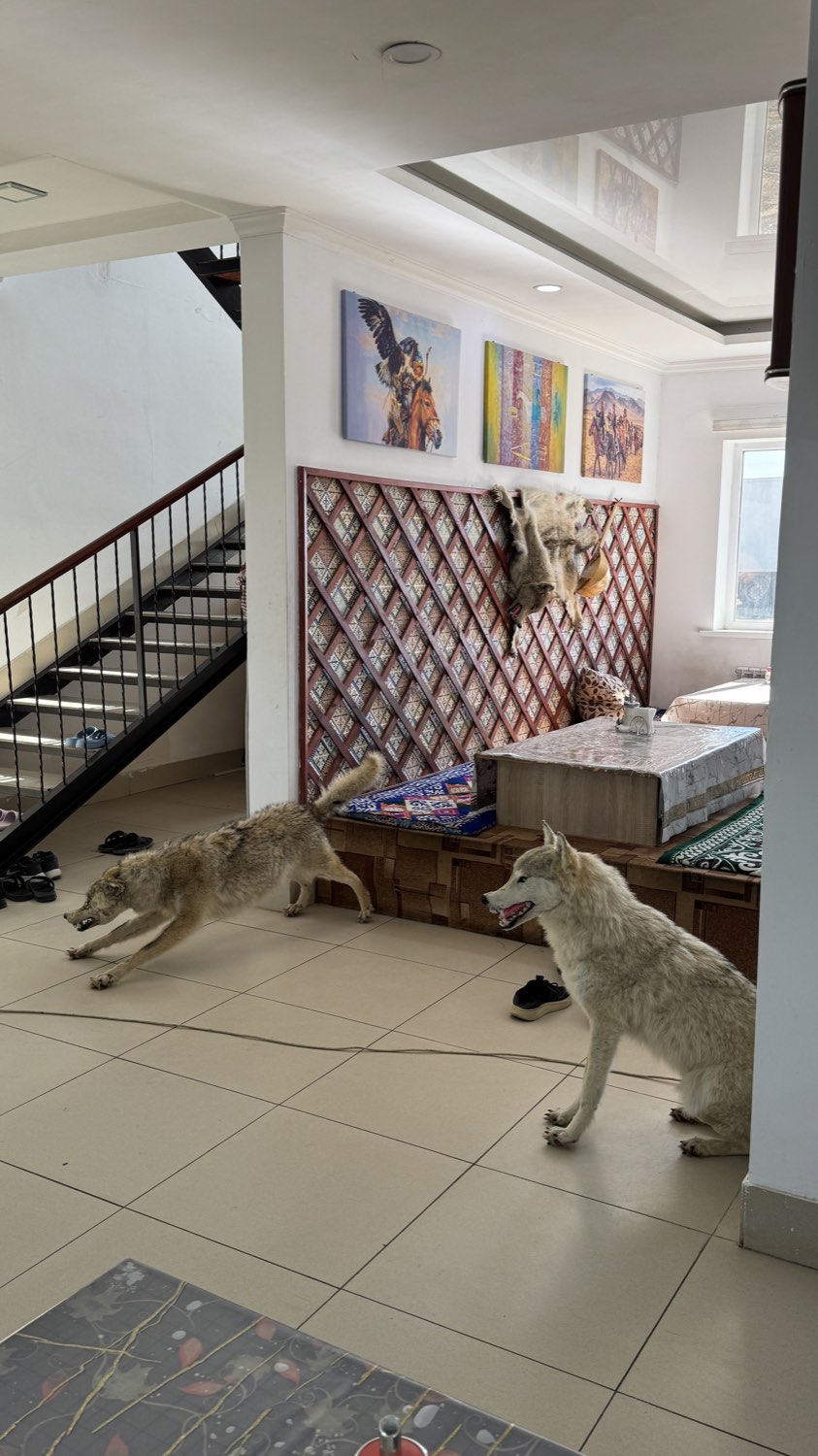 108
108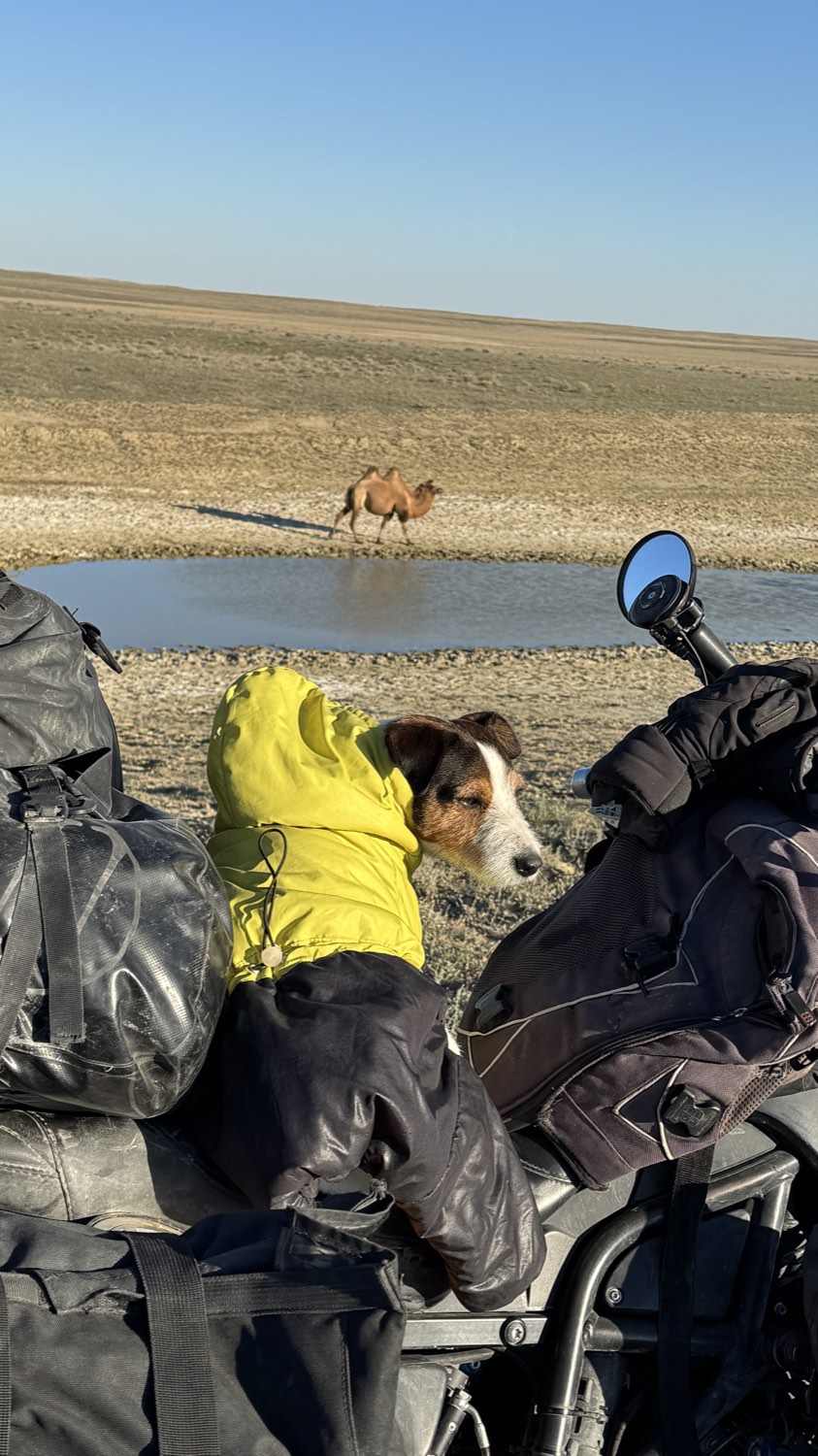 109
109 110
110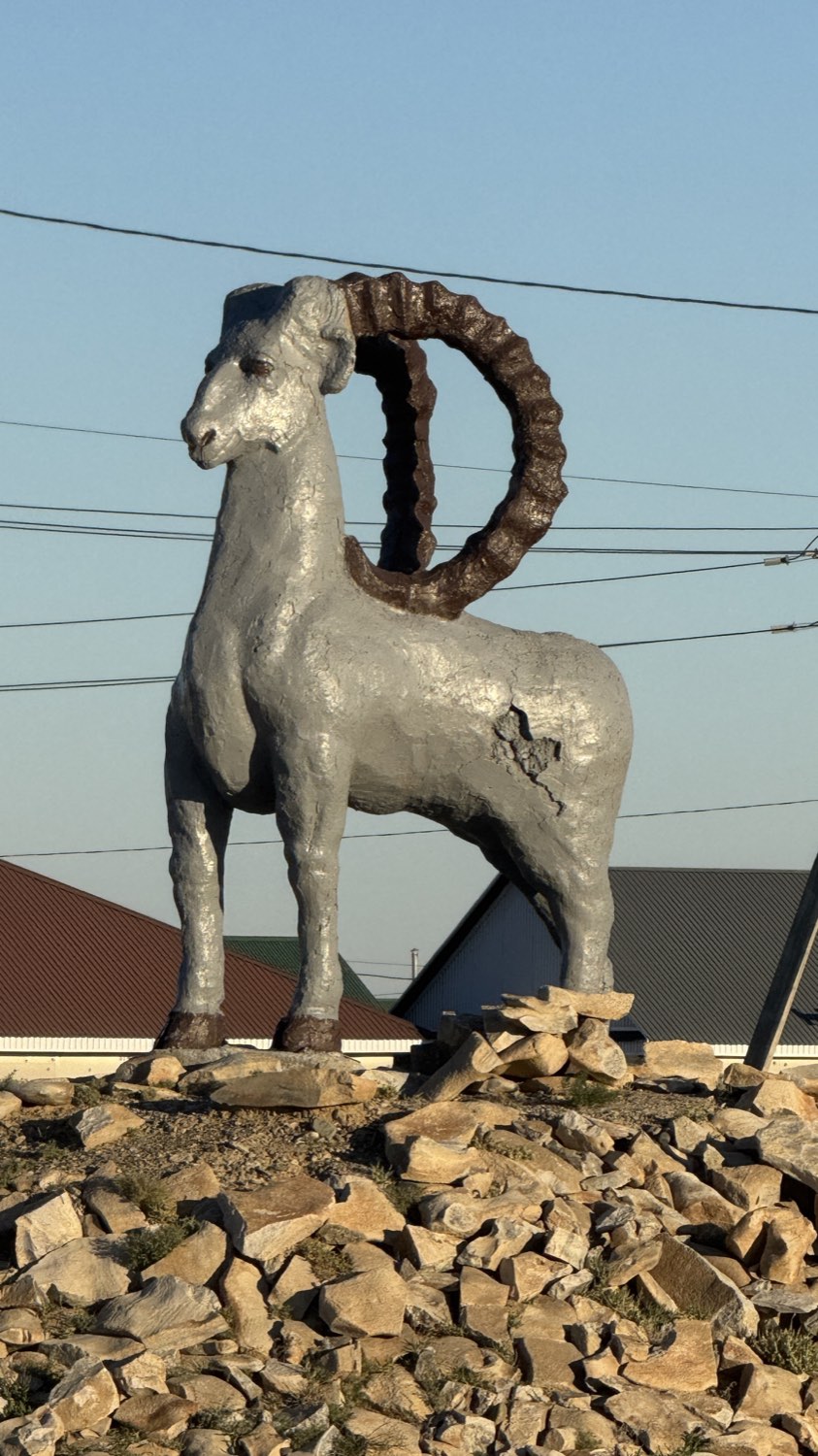 111
111 112
112 113
113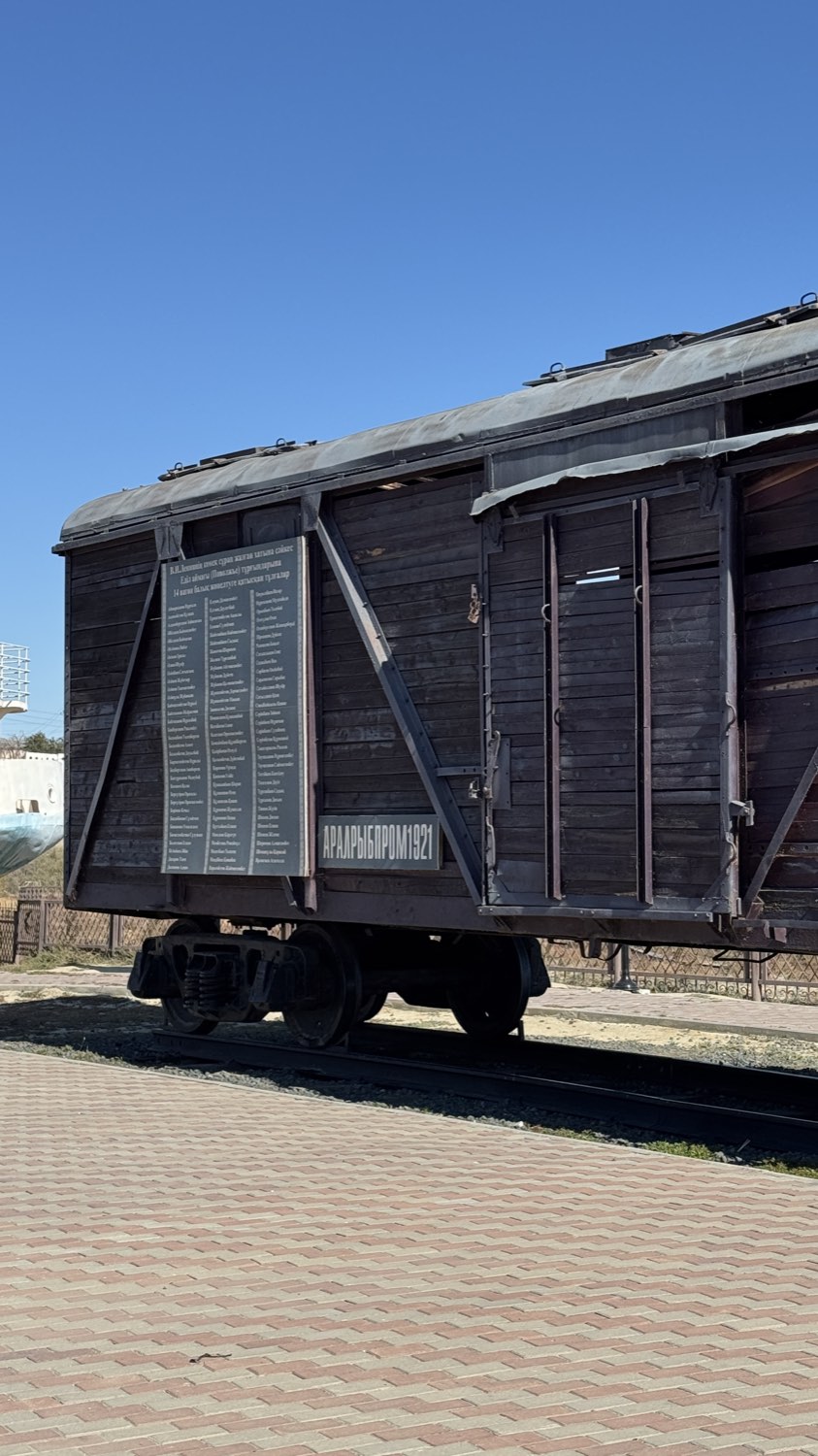 114
114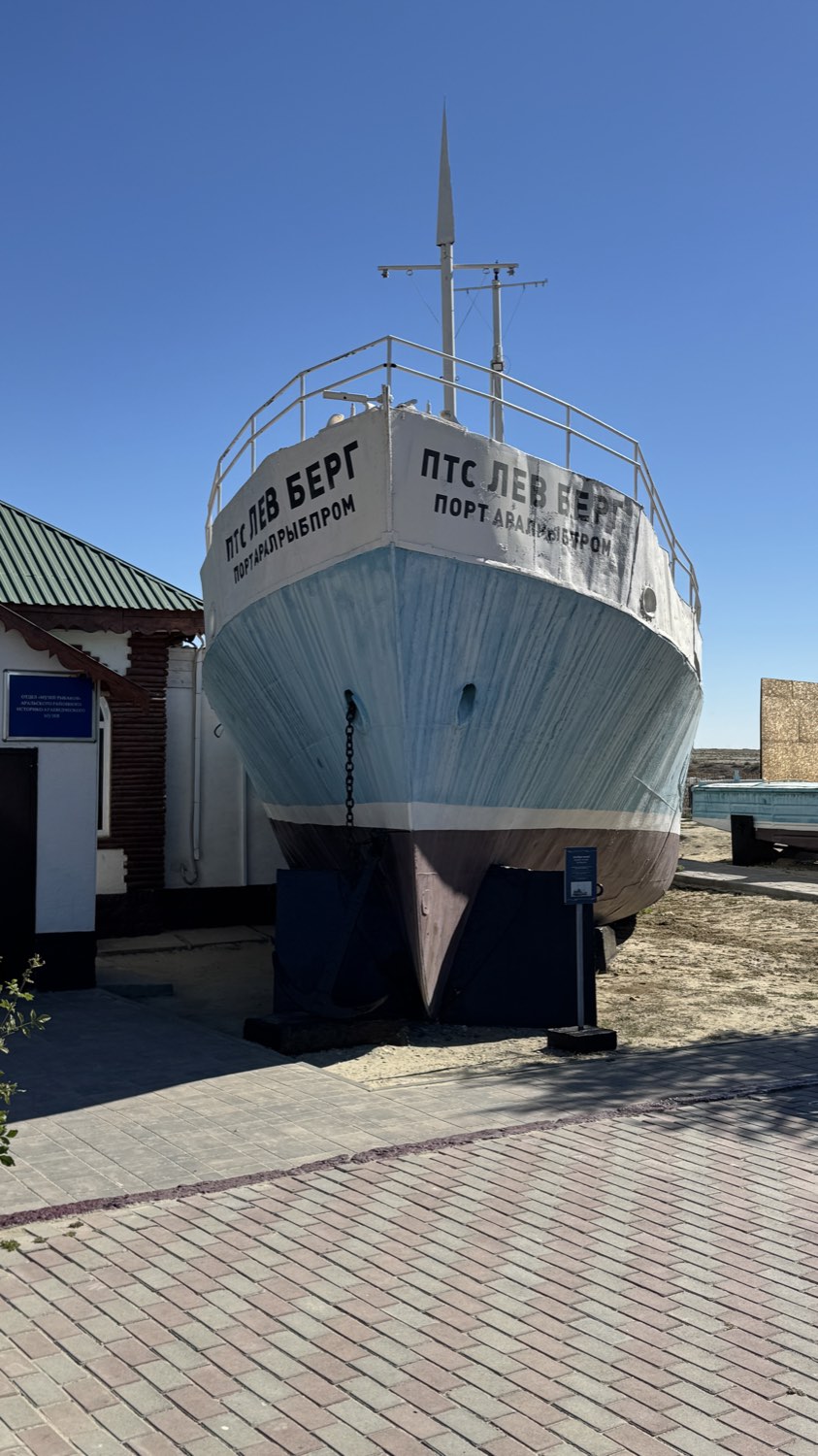 115
115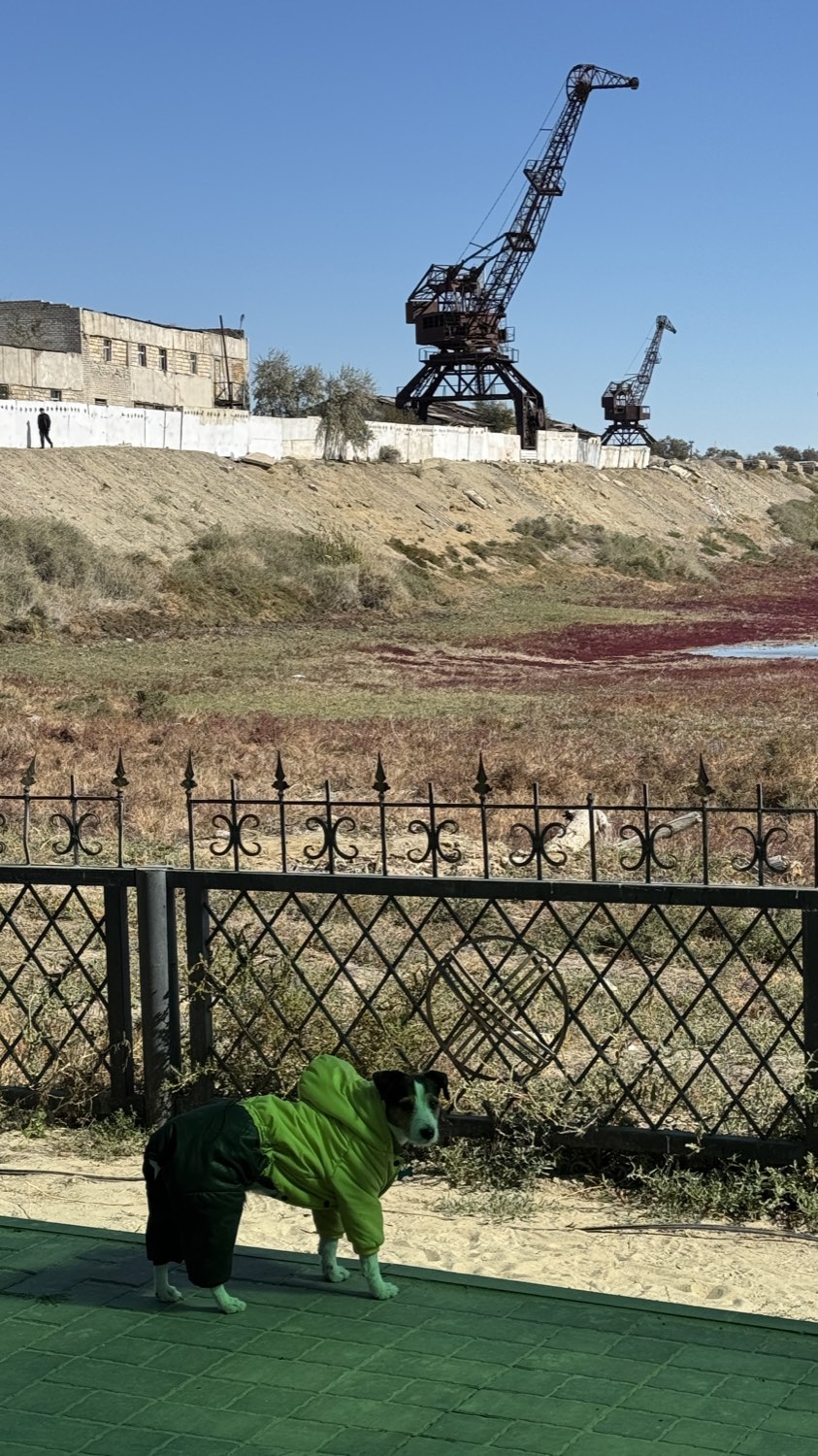 116
116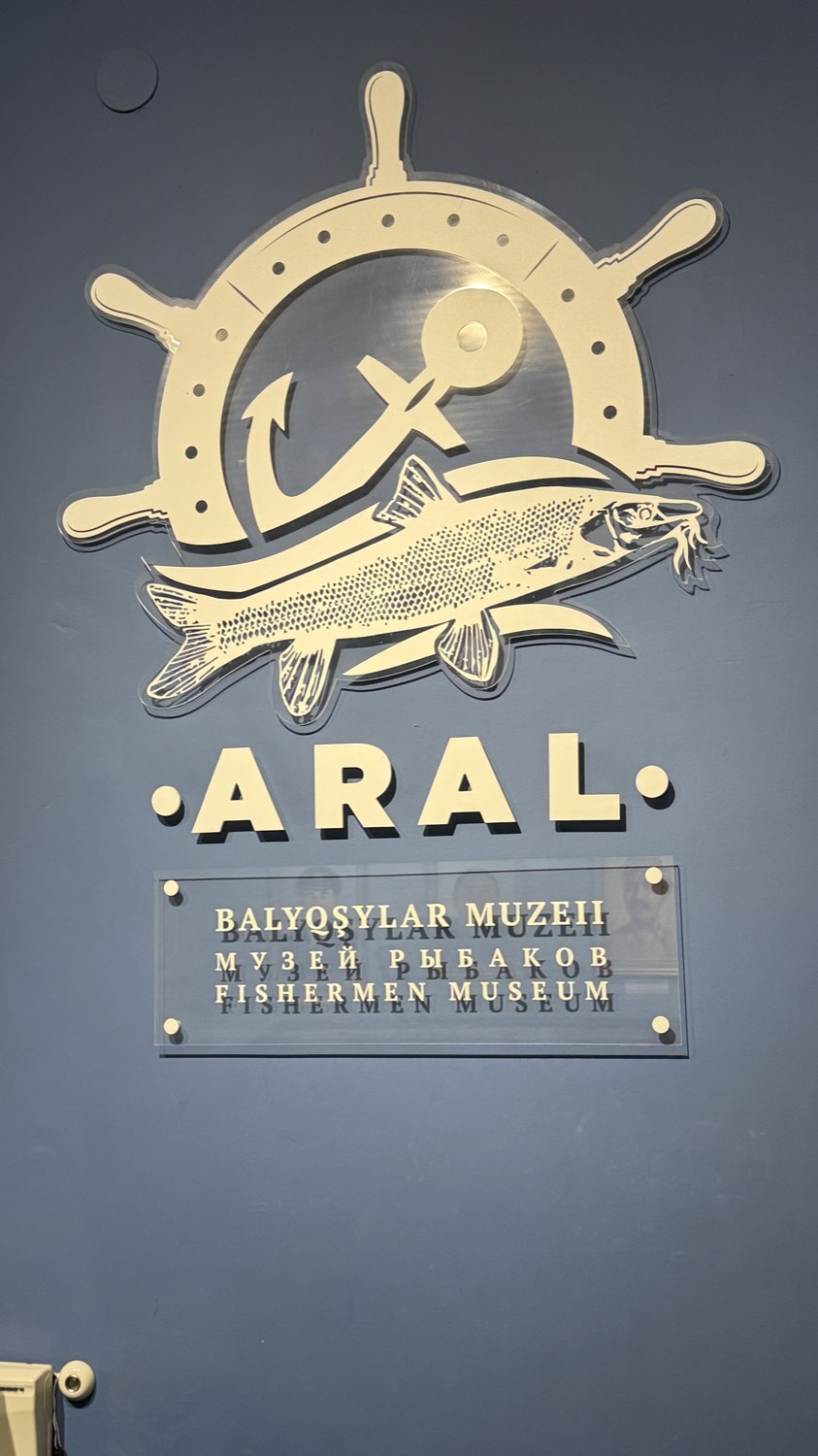 117
117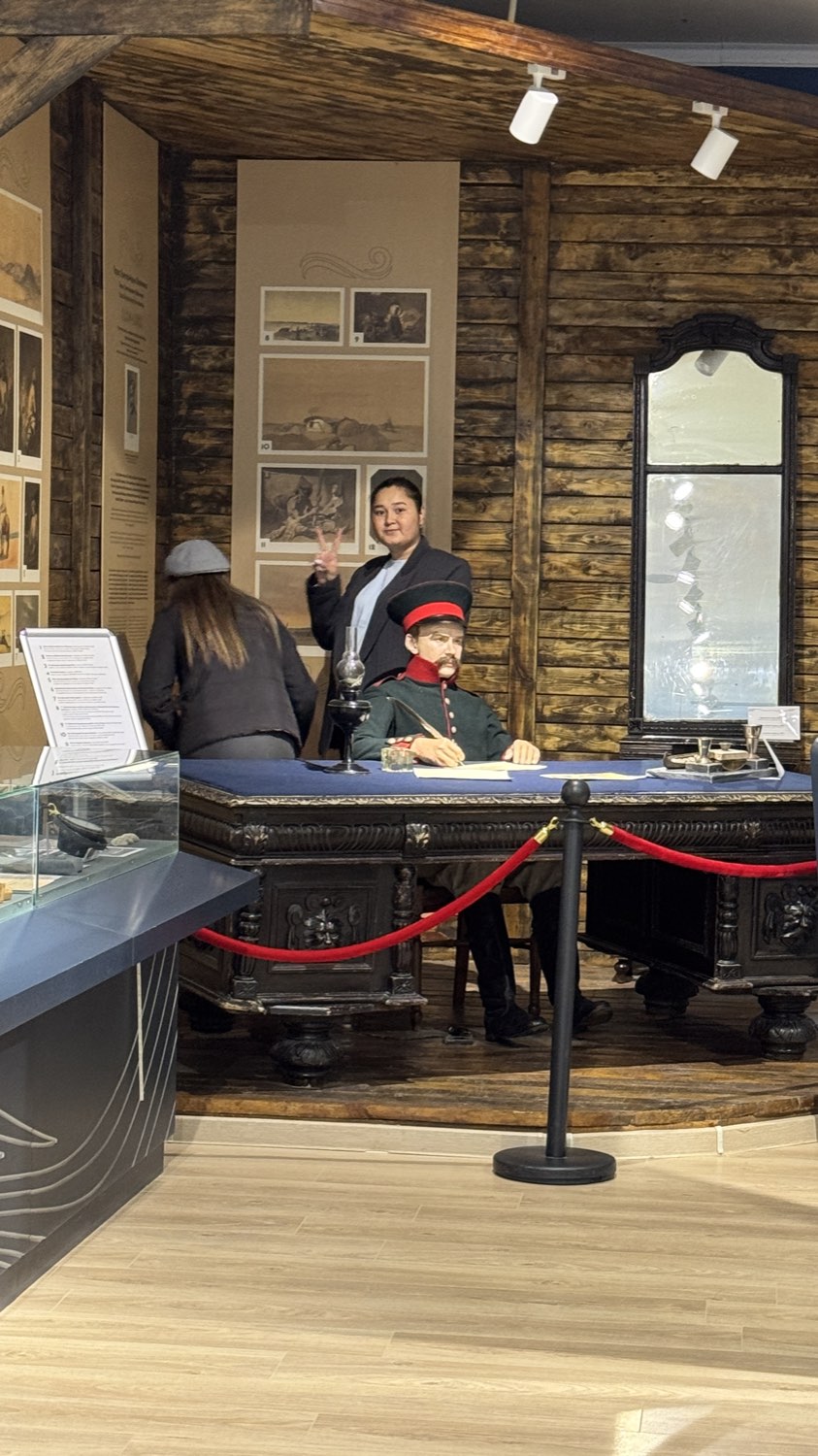 118
118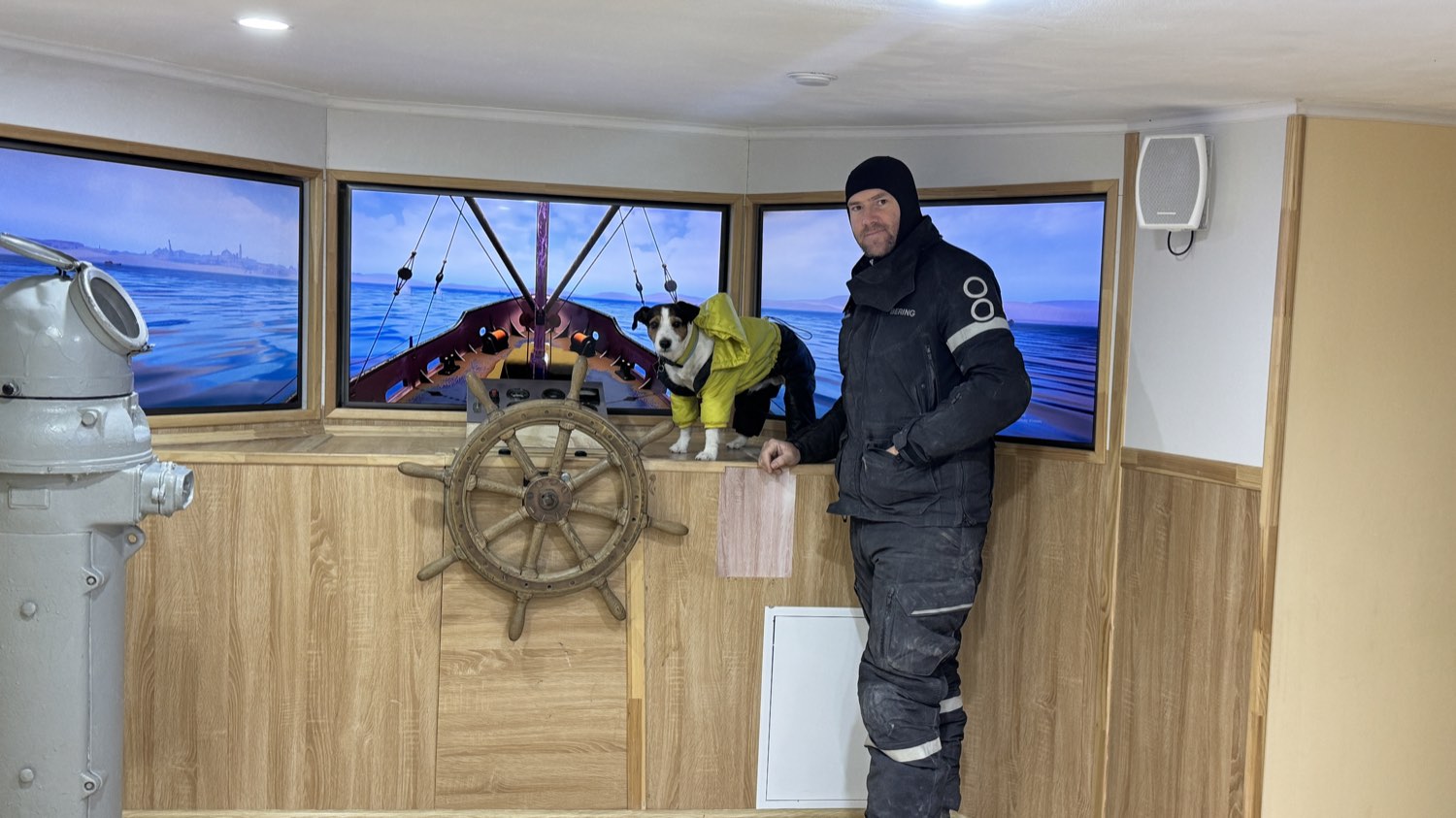 119
119 120
120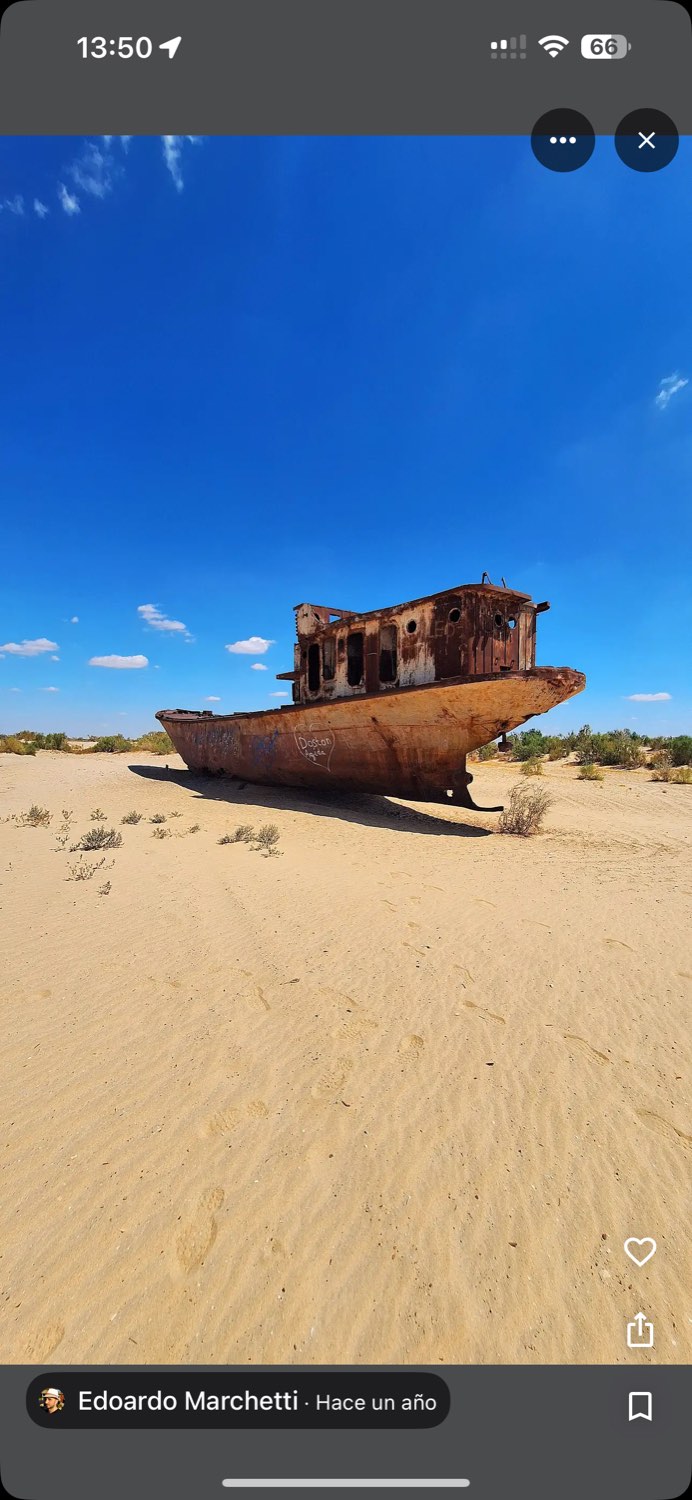 121
121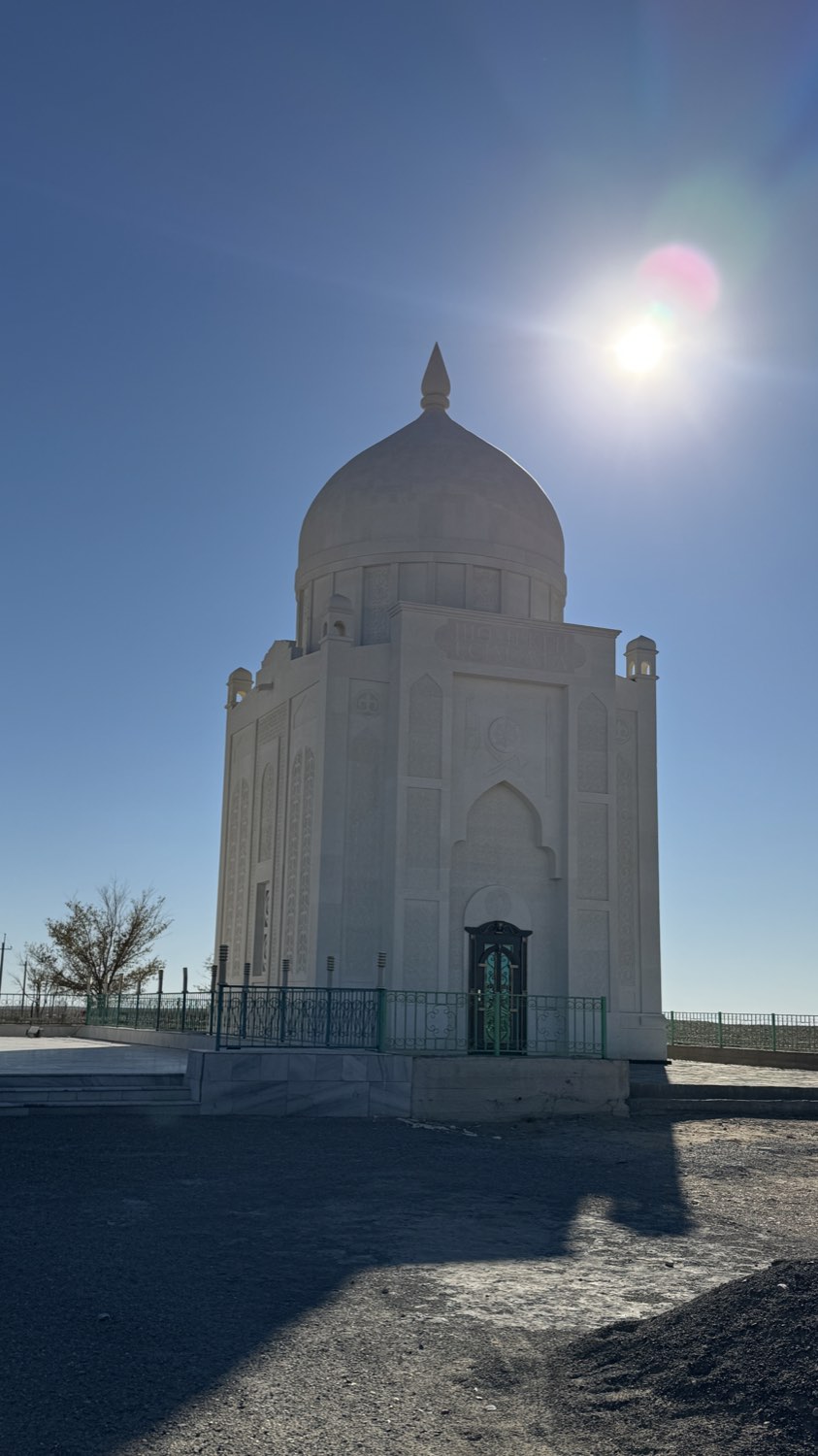 122
122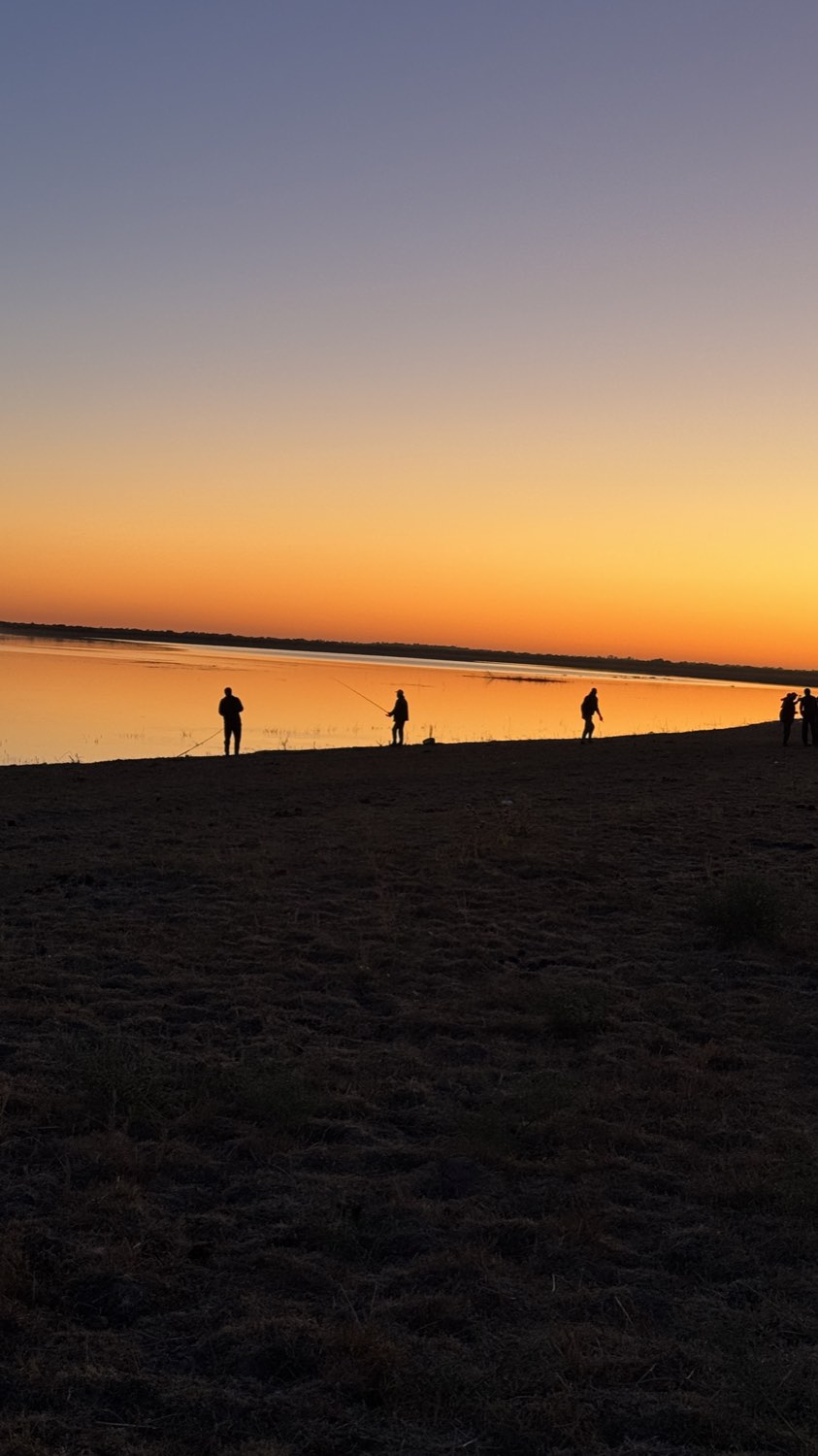 123
123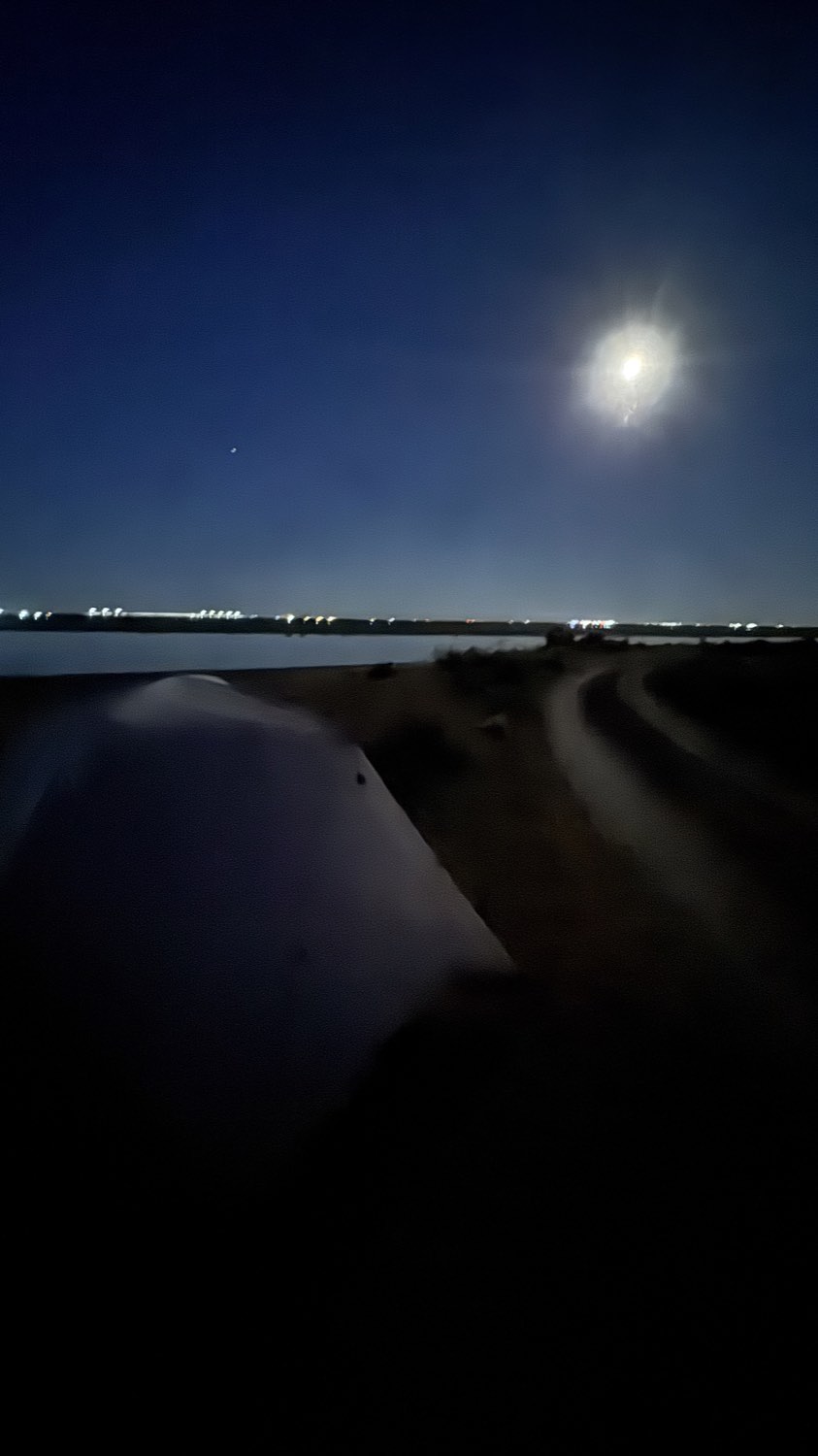 124
124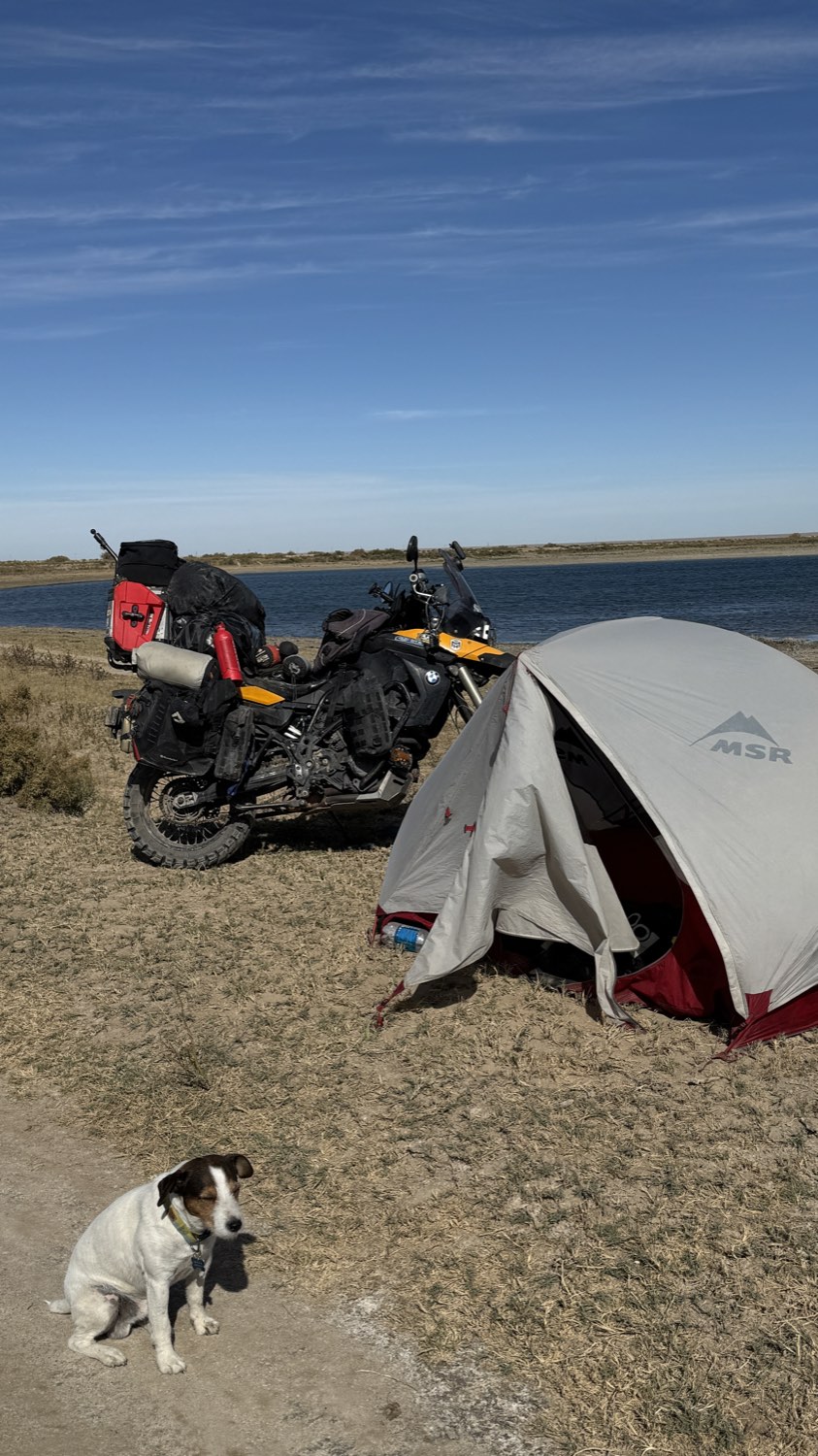 125
125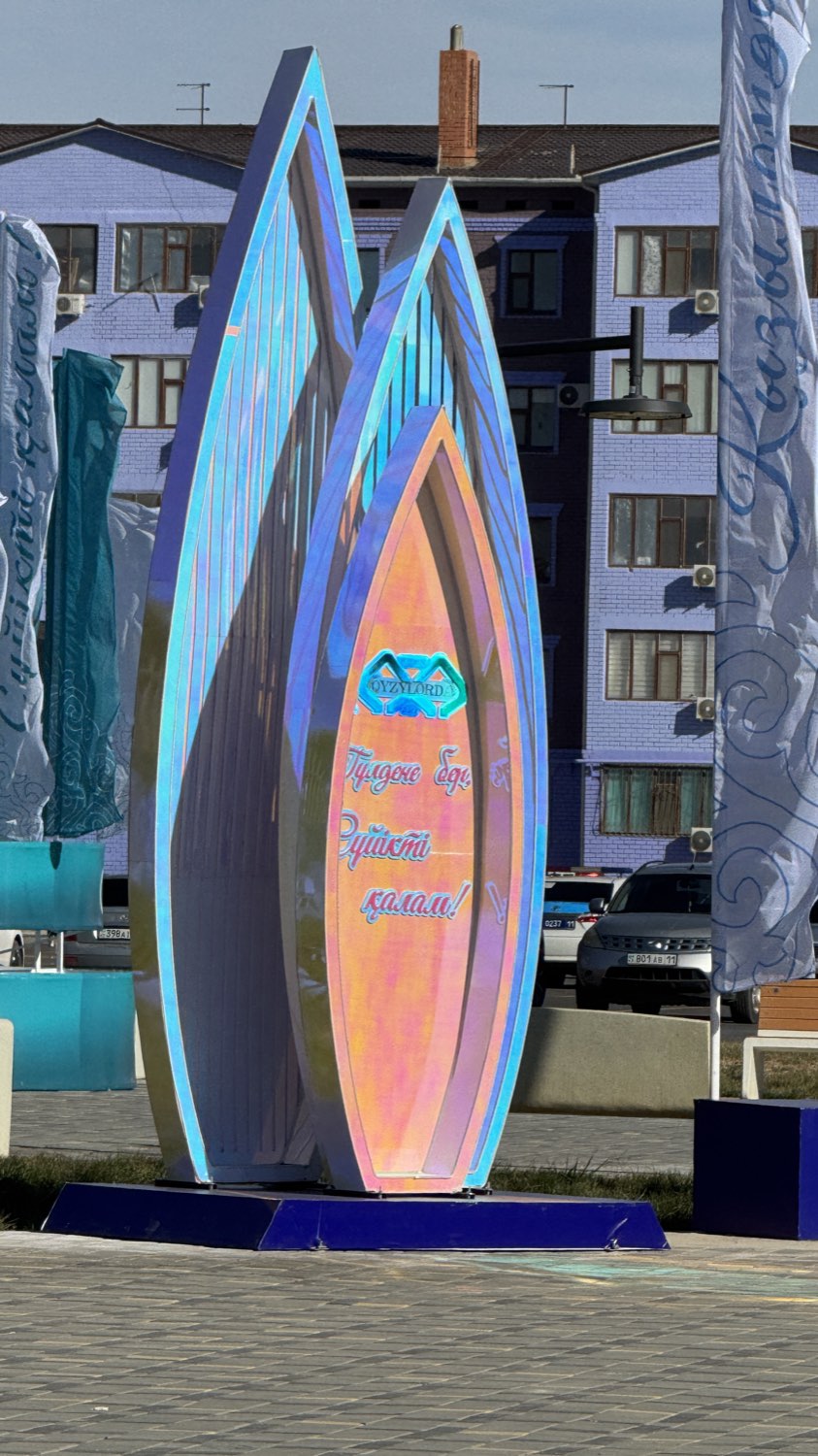 126
126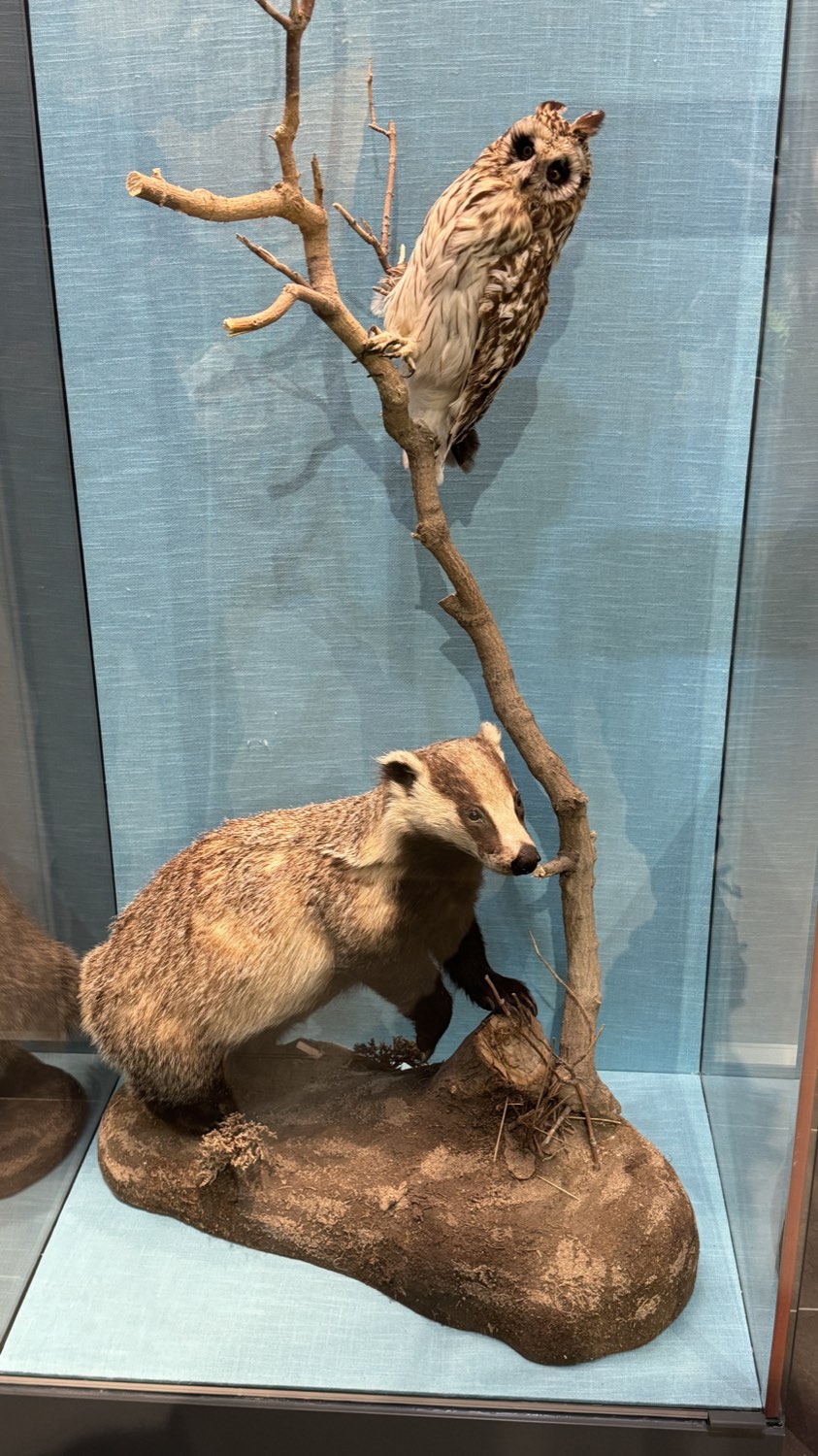 127
127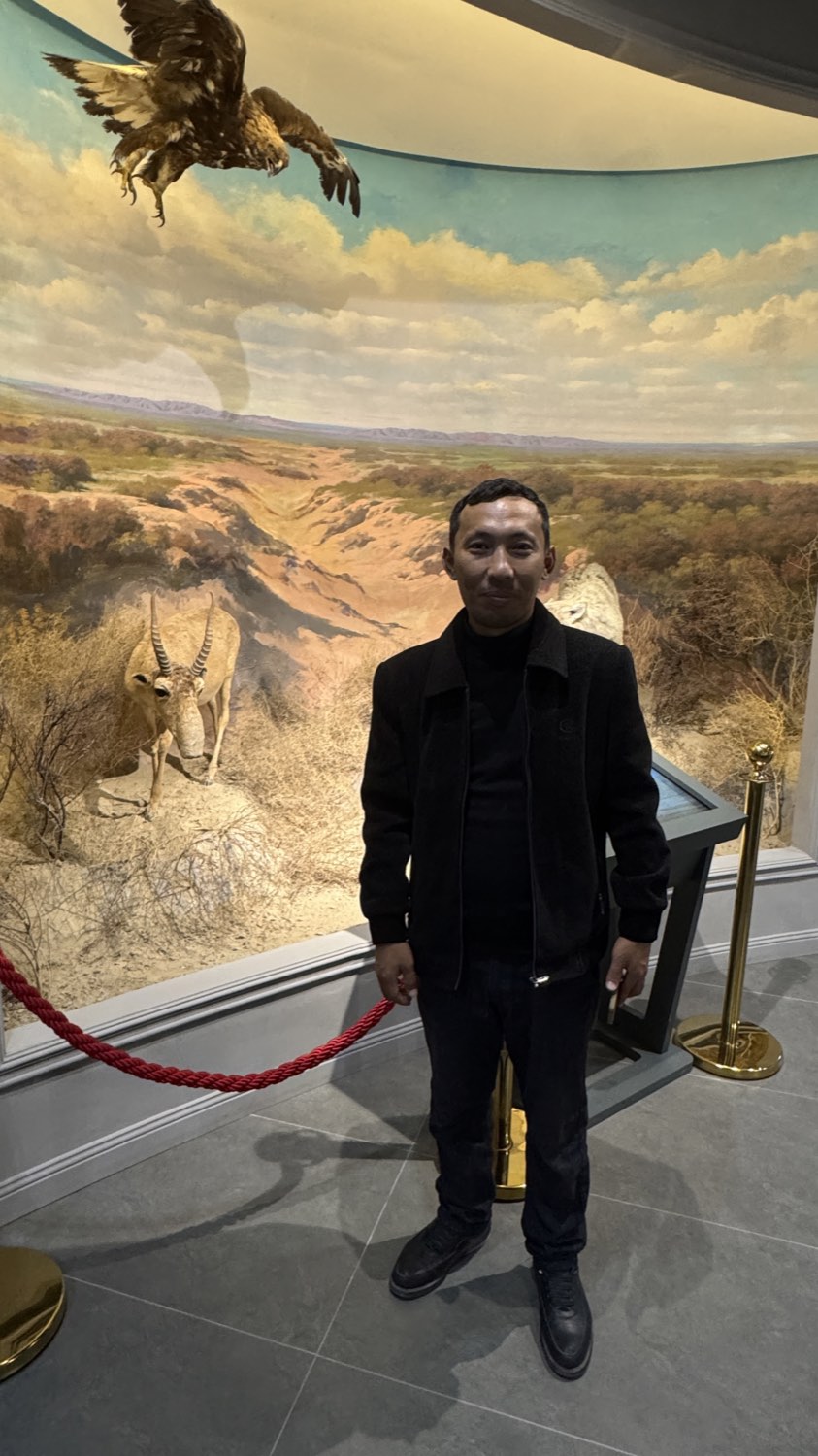 128
128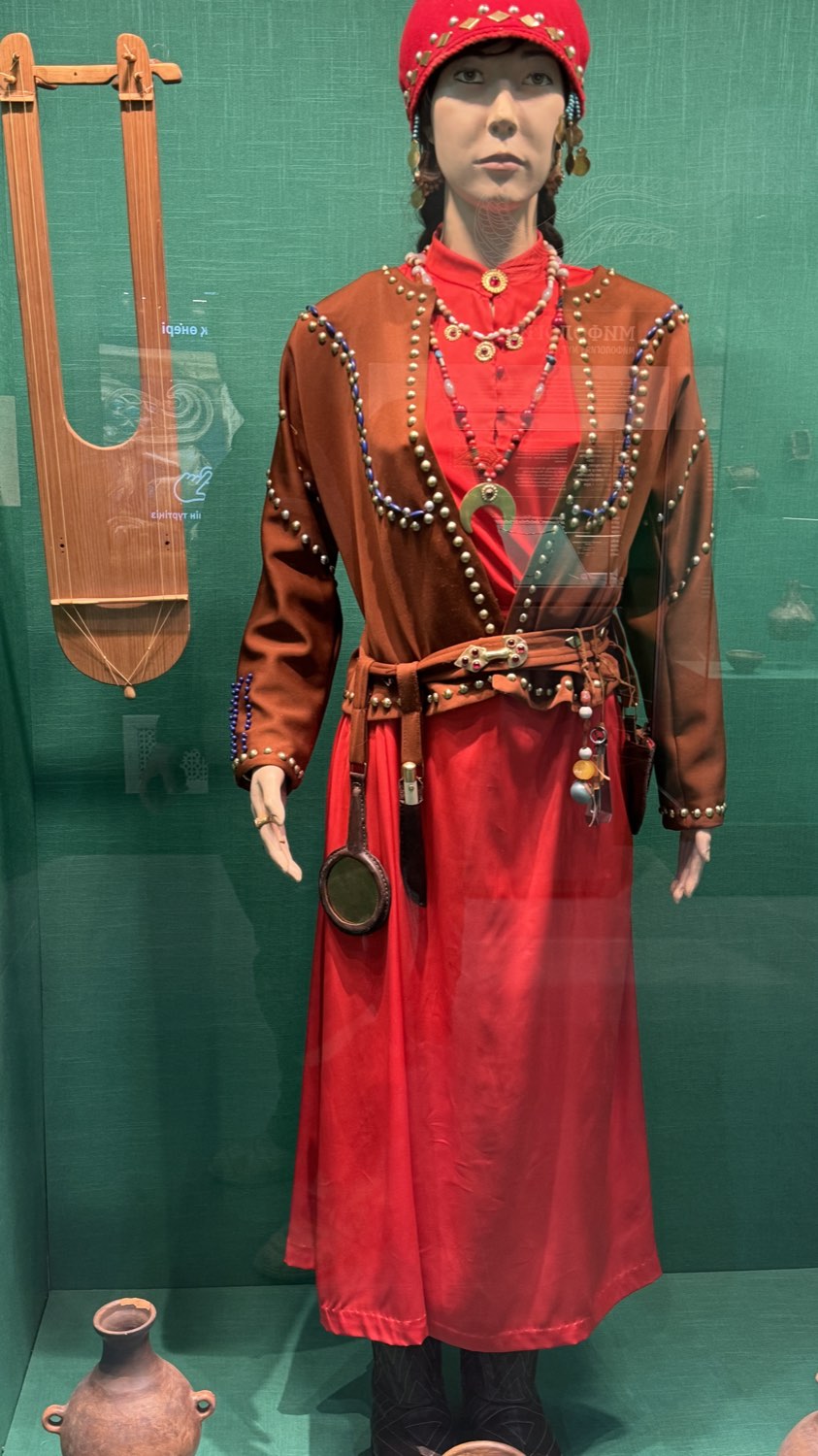 129
129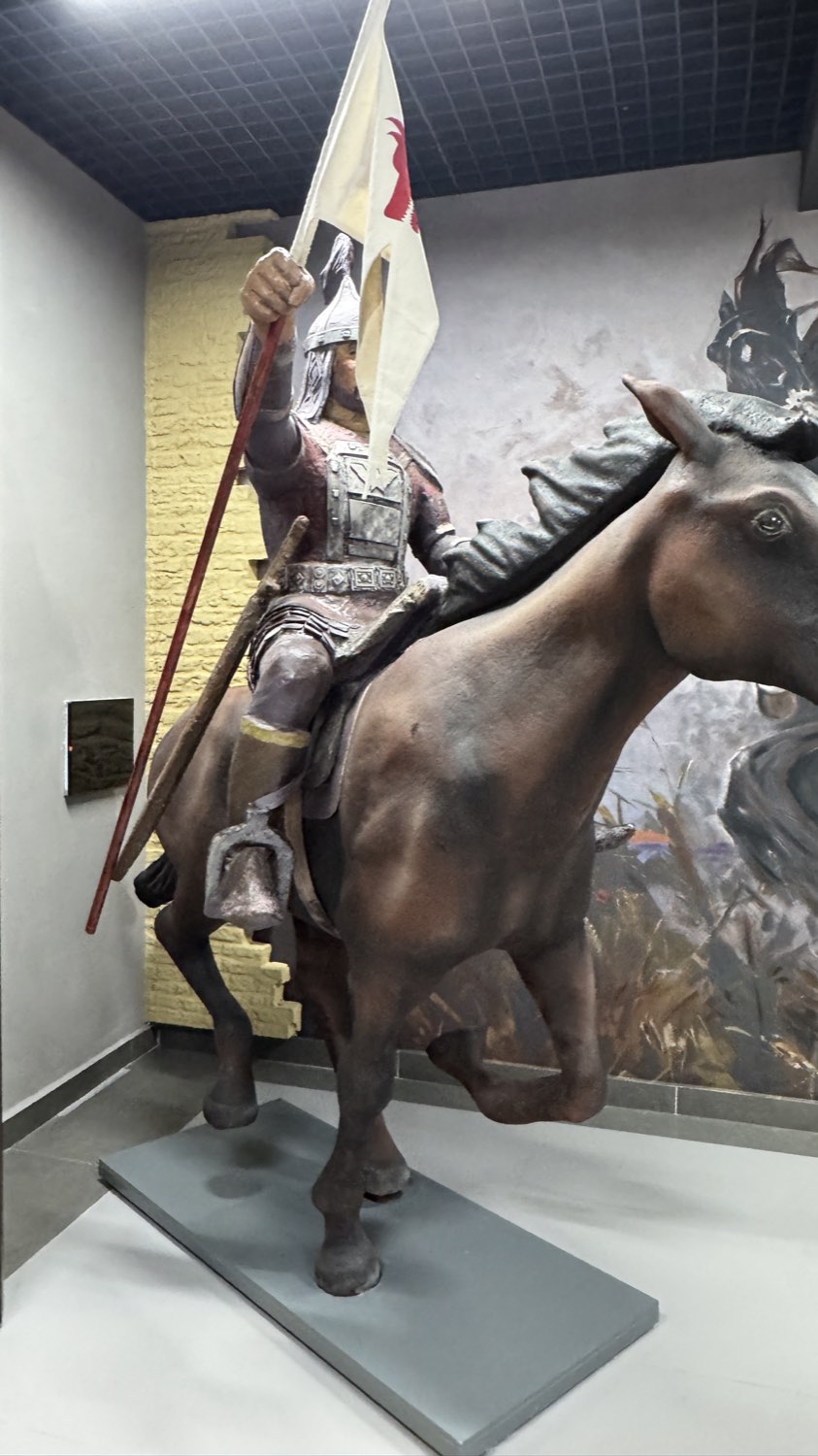 130
130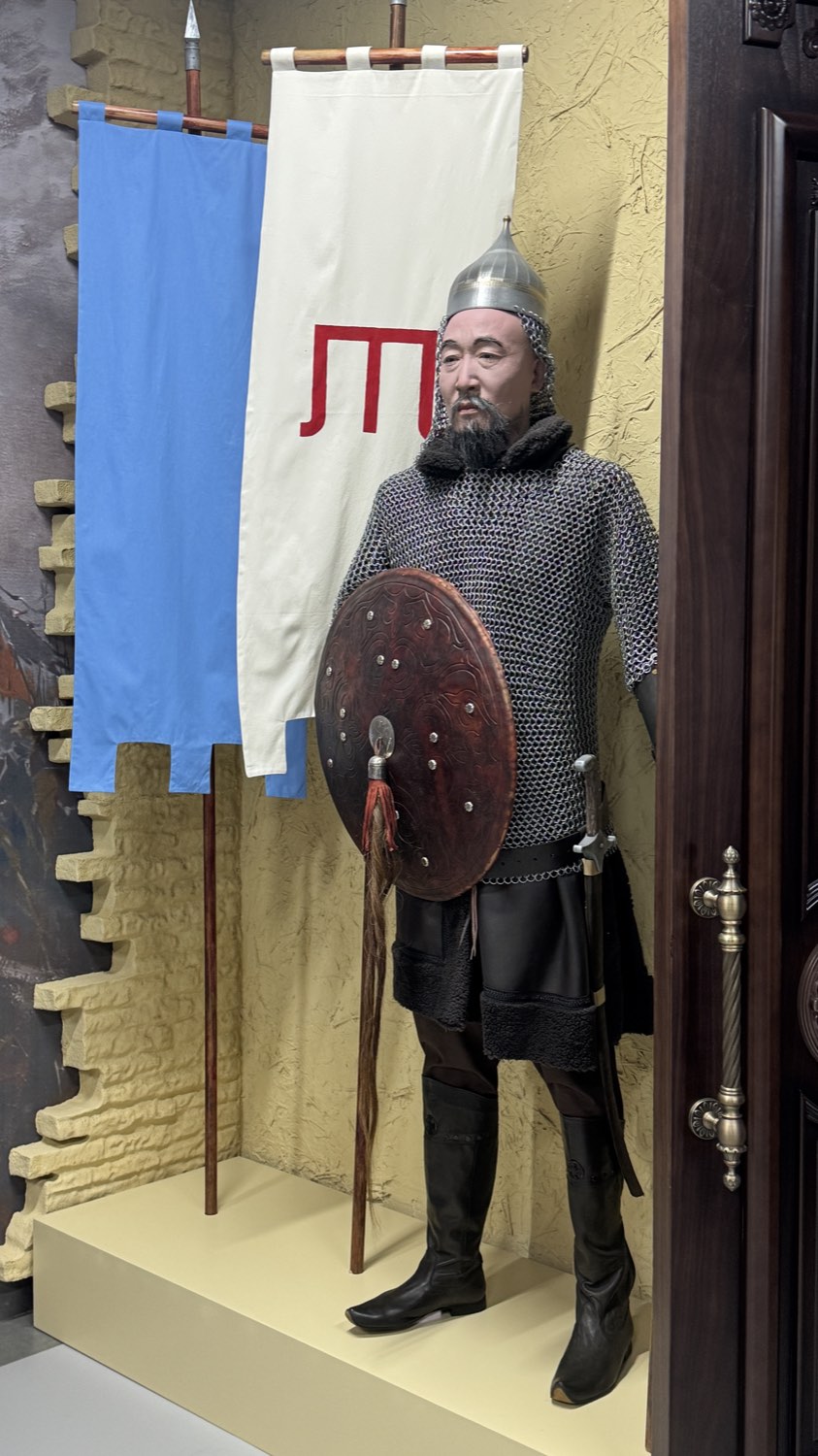 131
131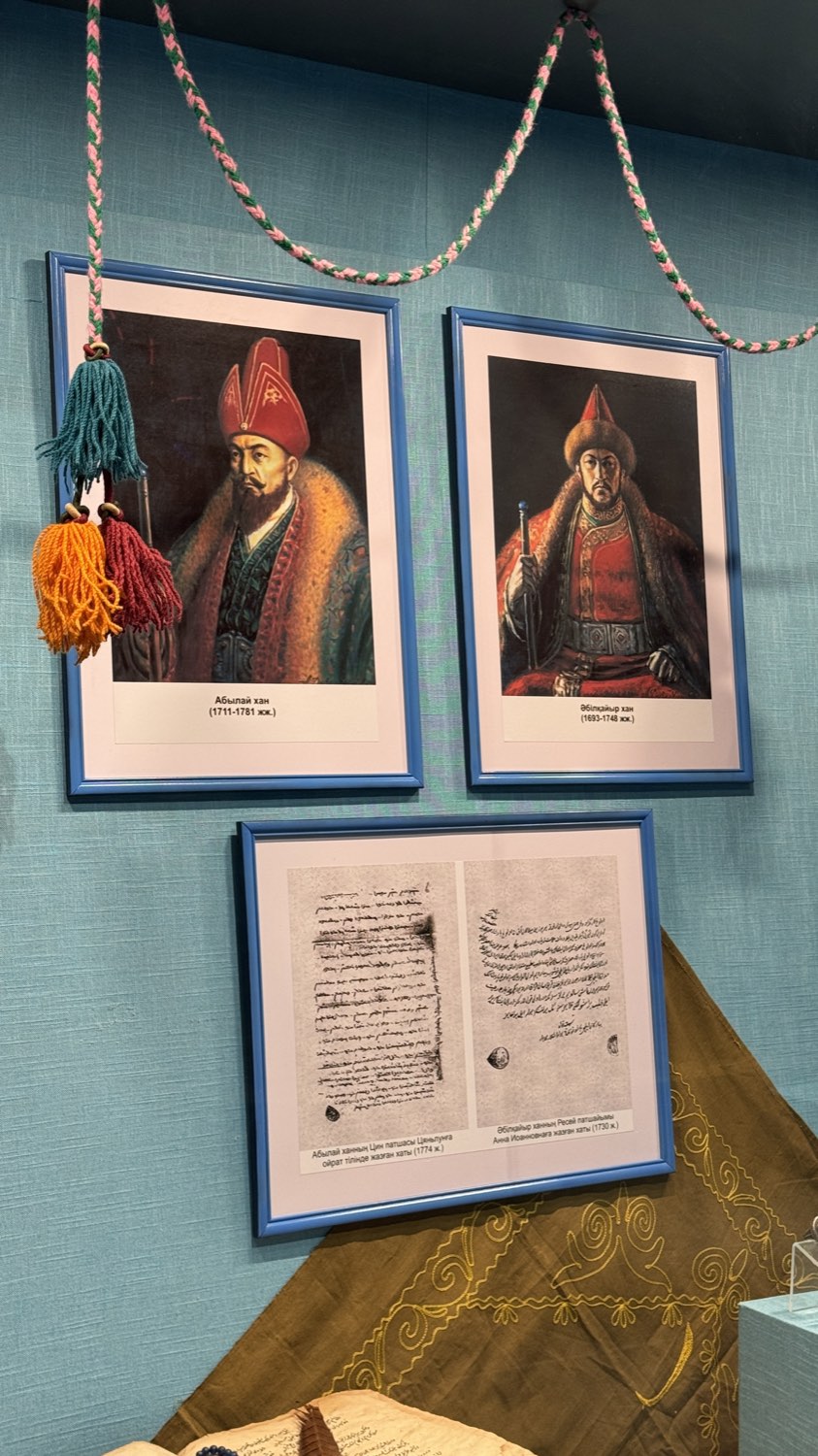 132
132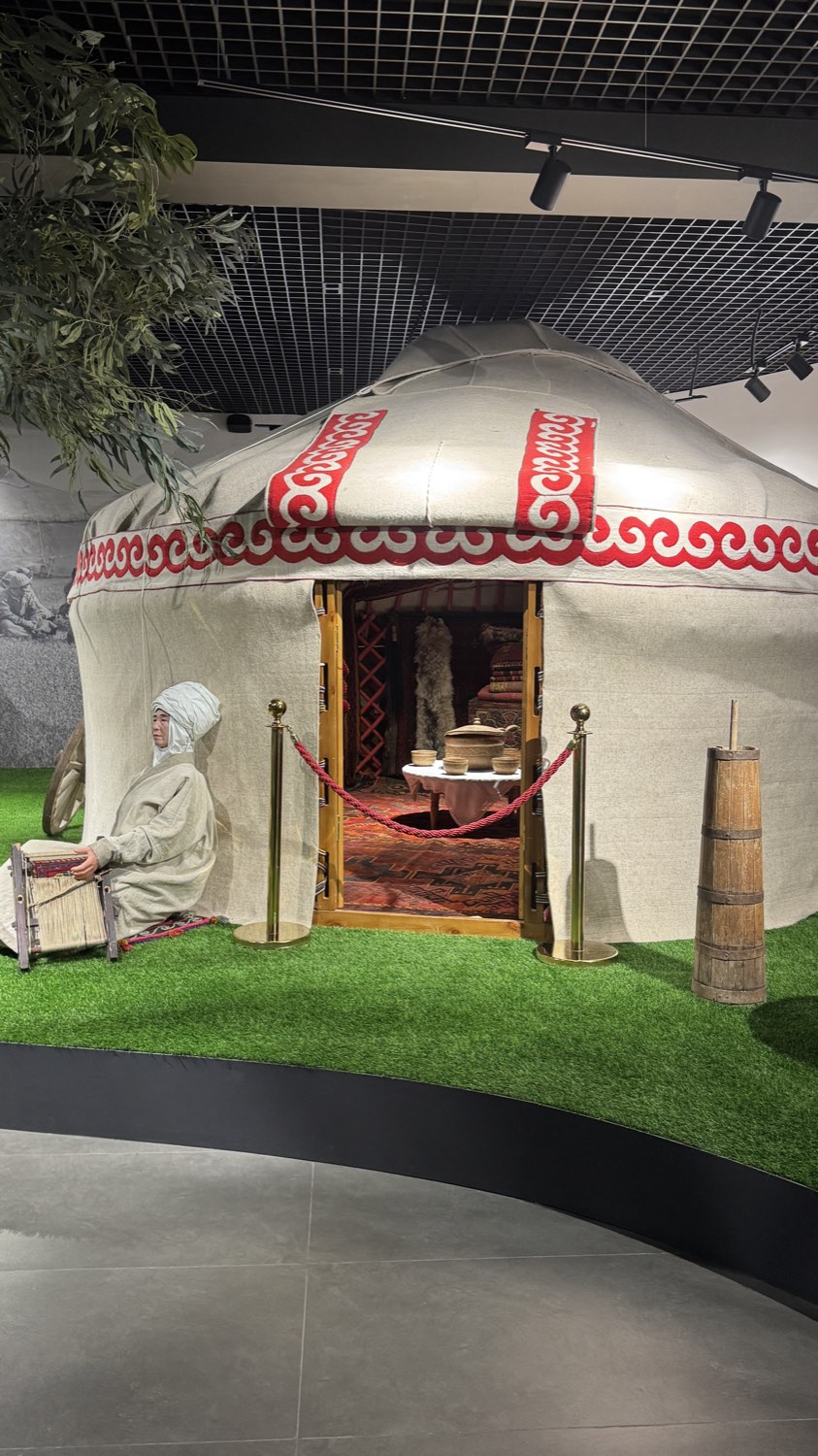 133
133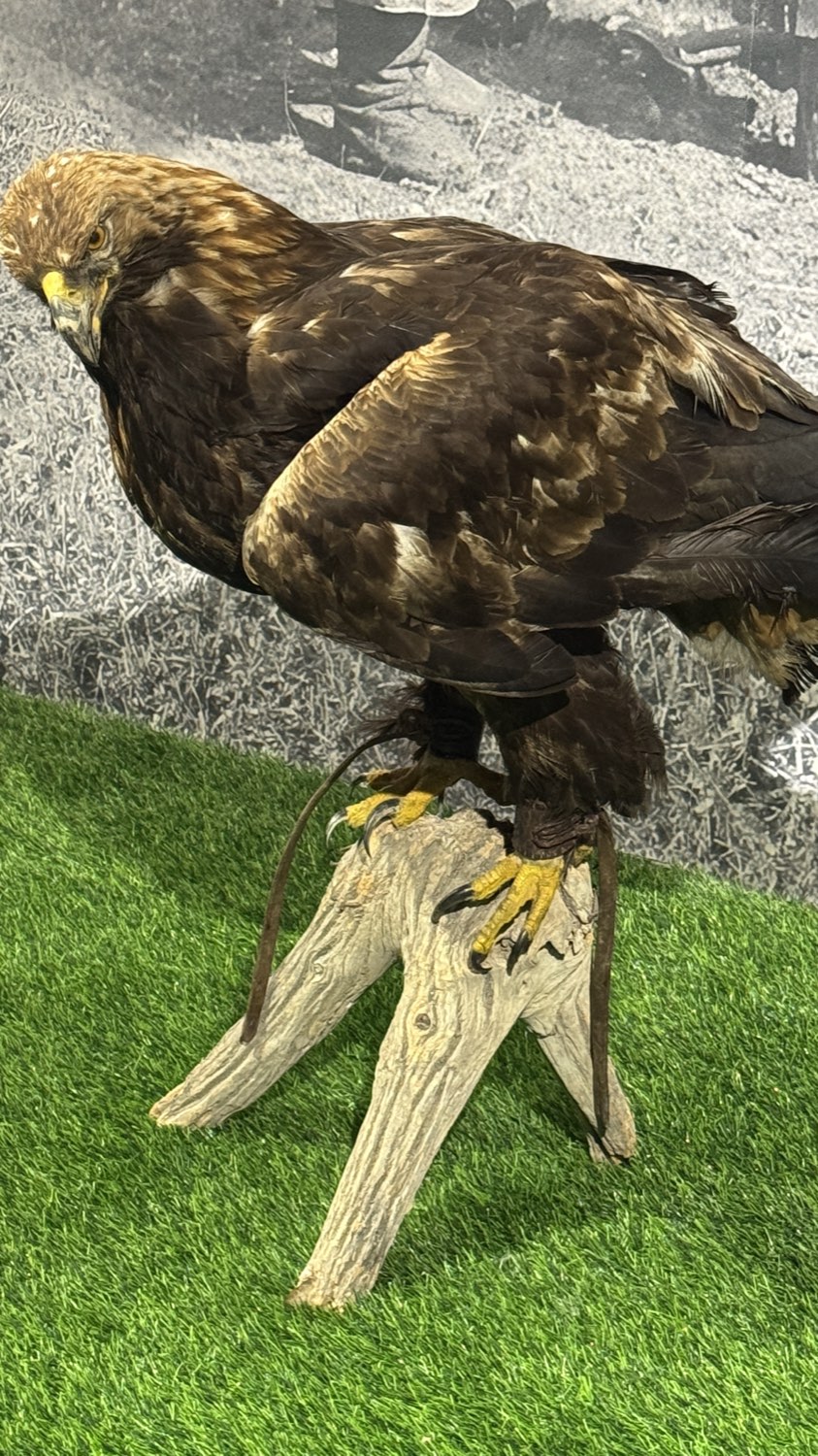 134
134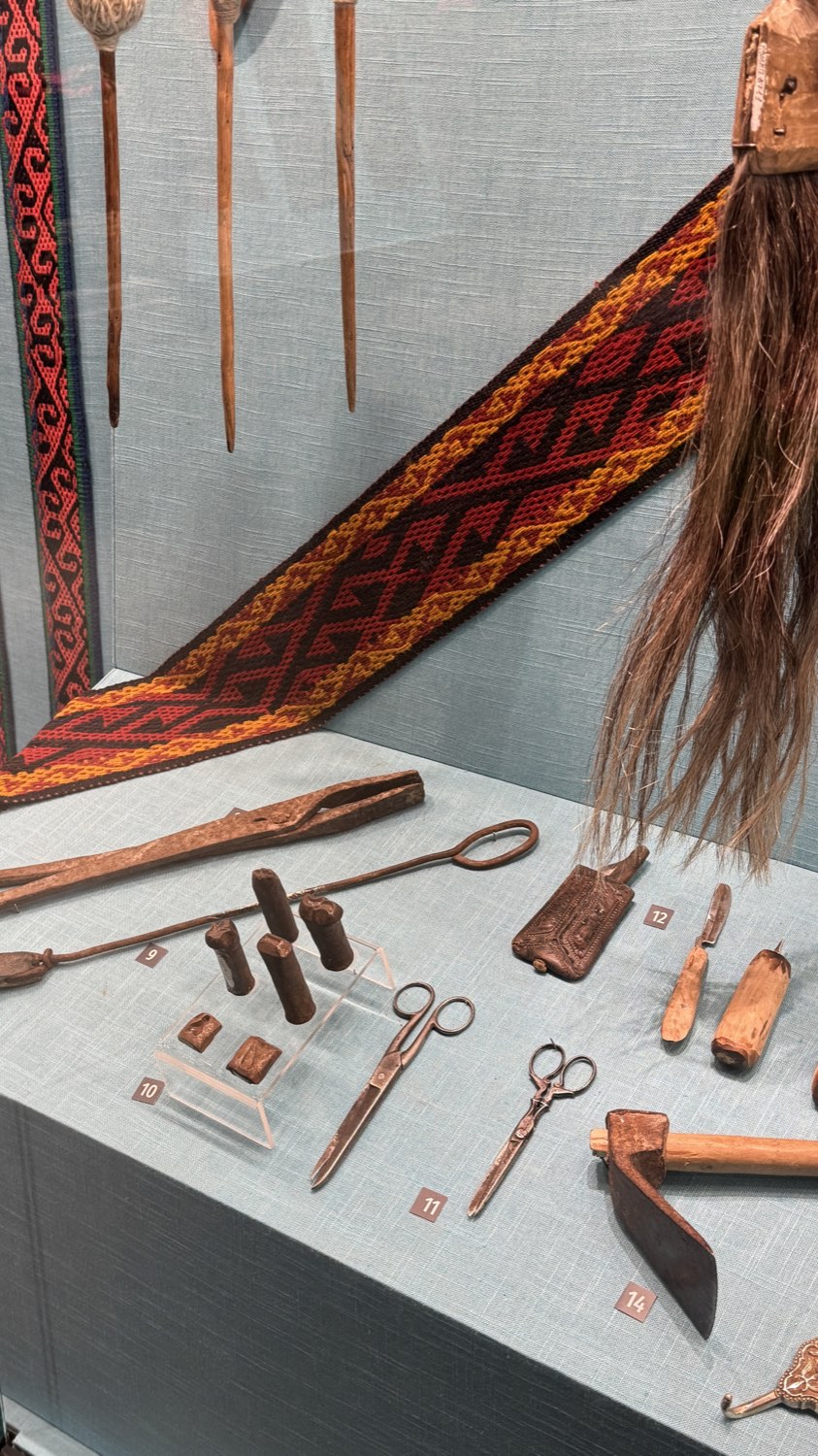 135
135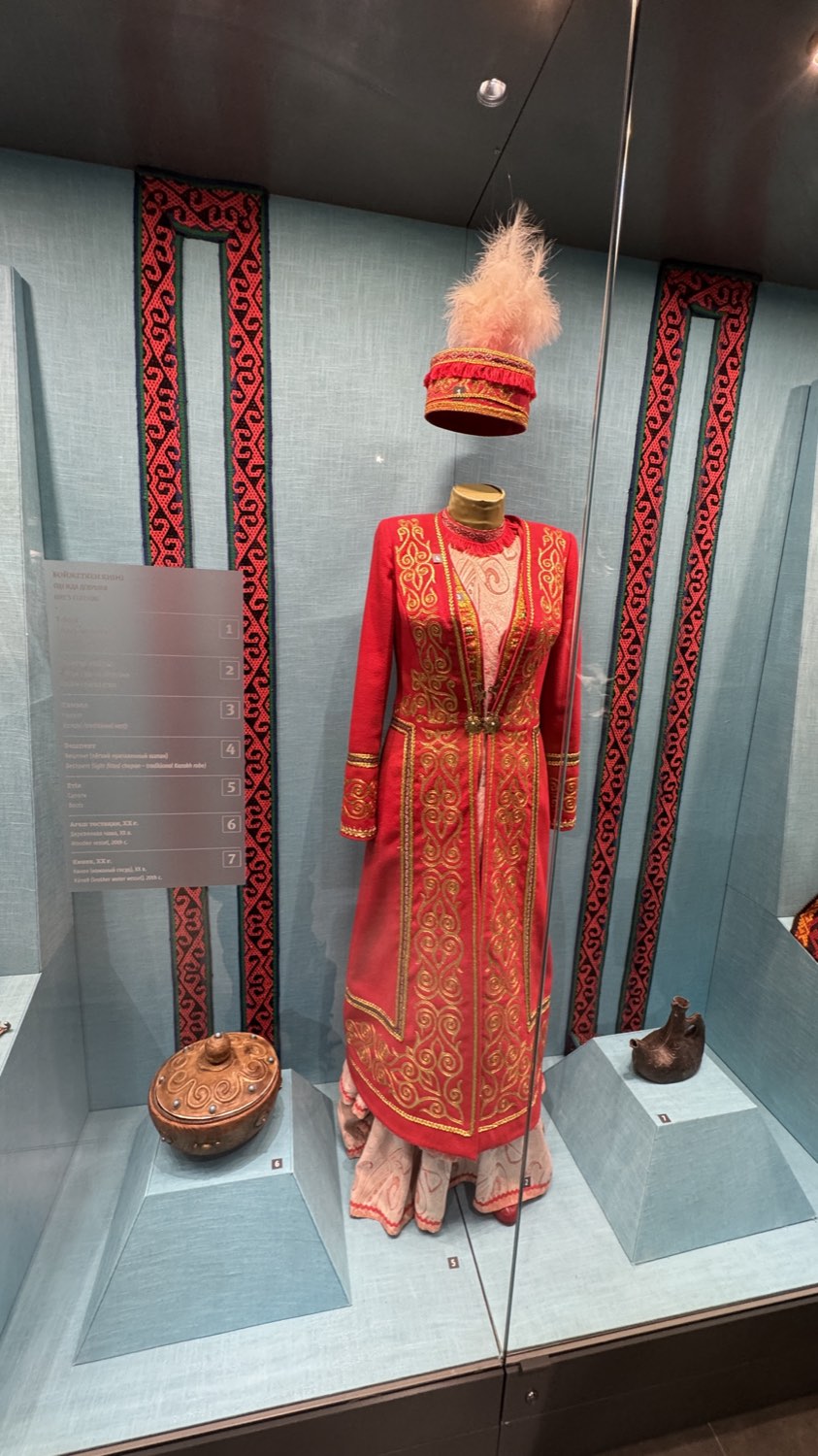 136
136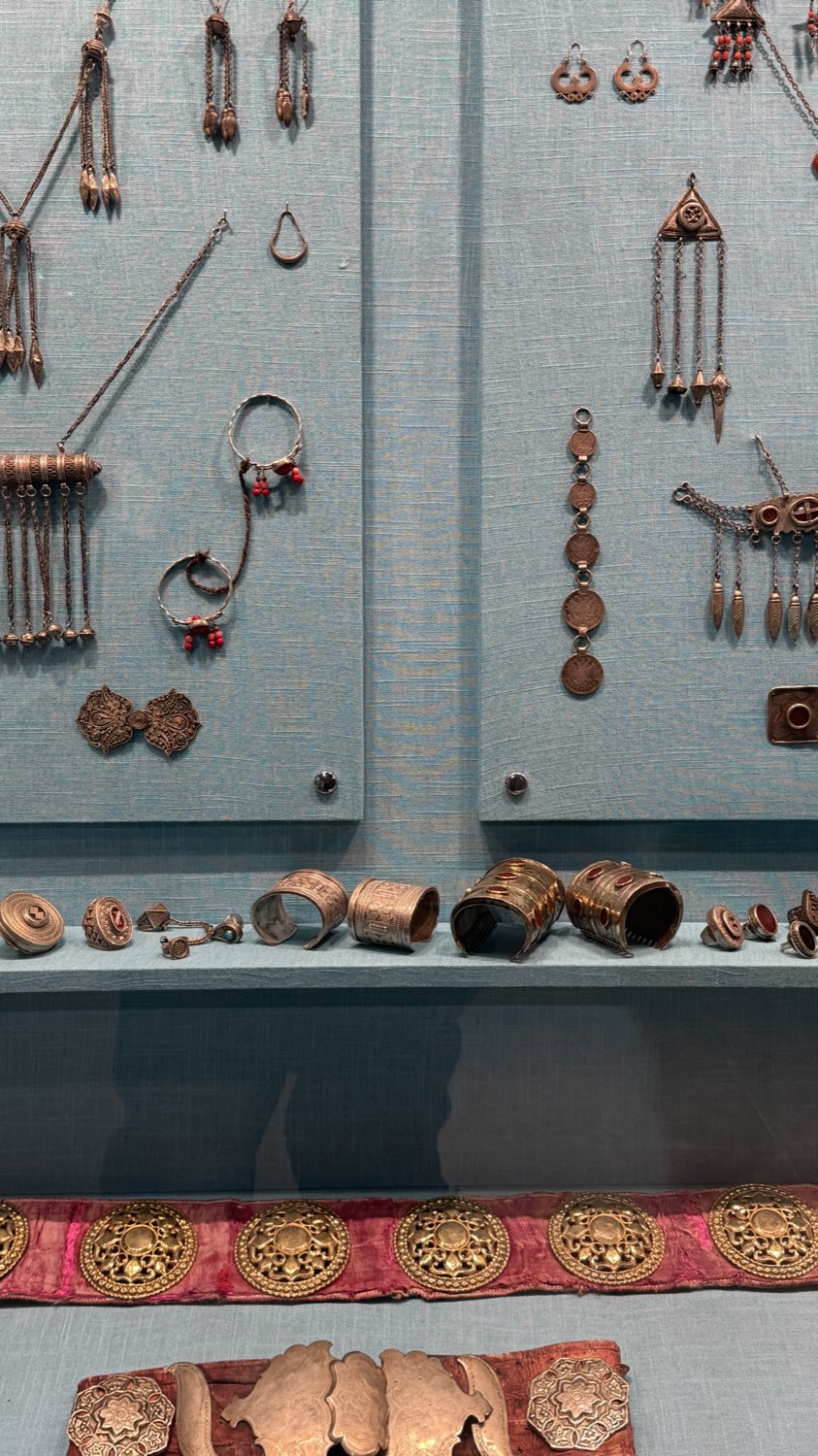 137
137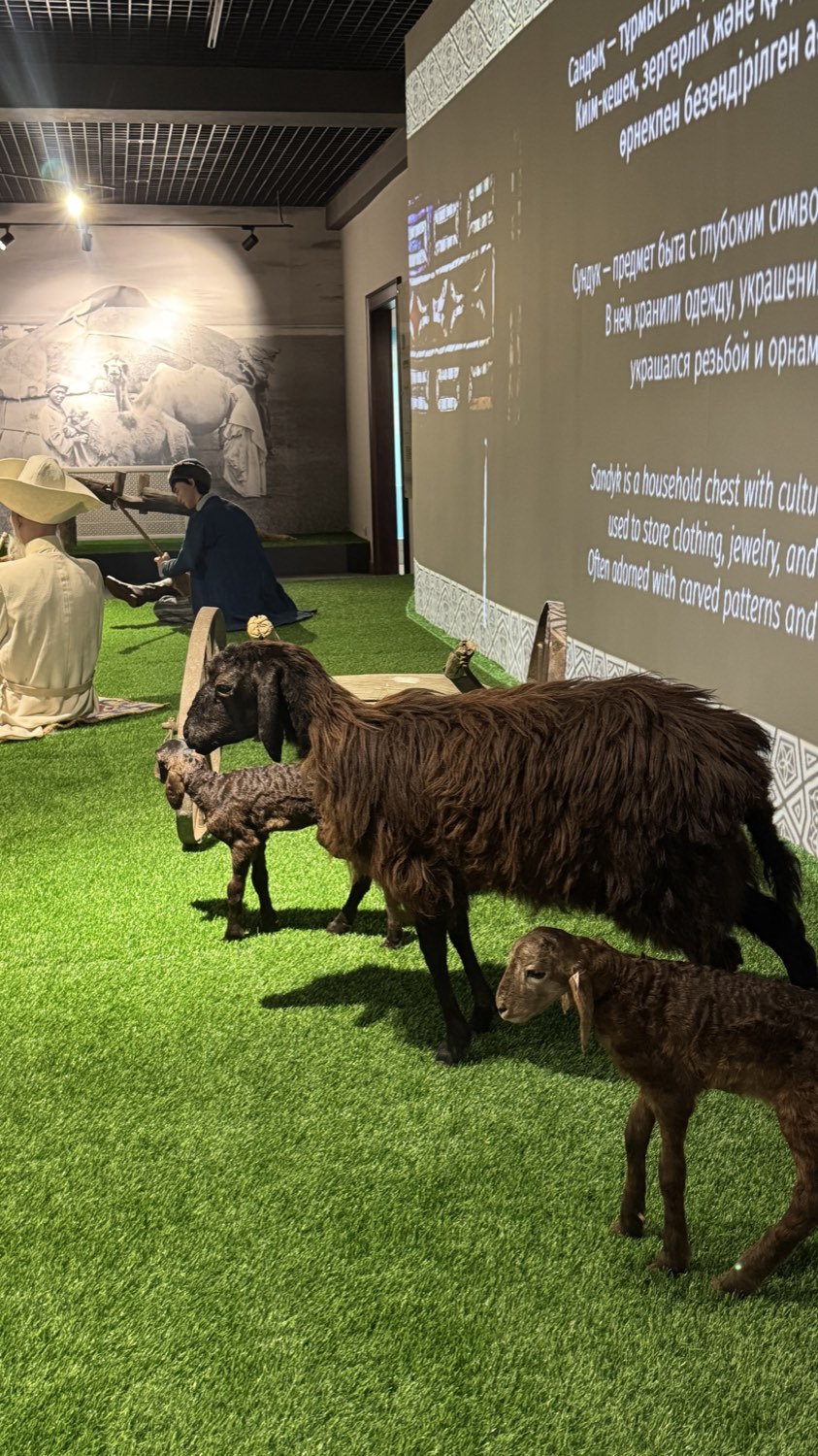 138
138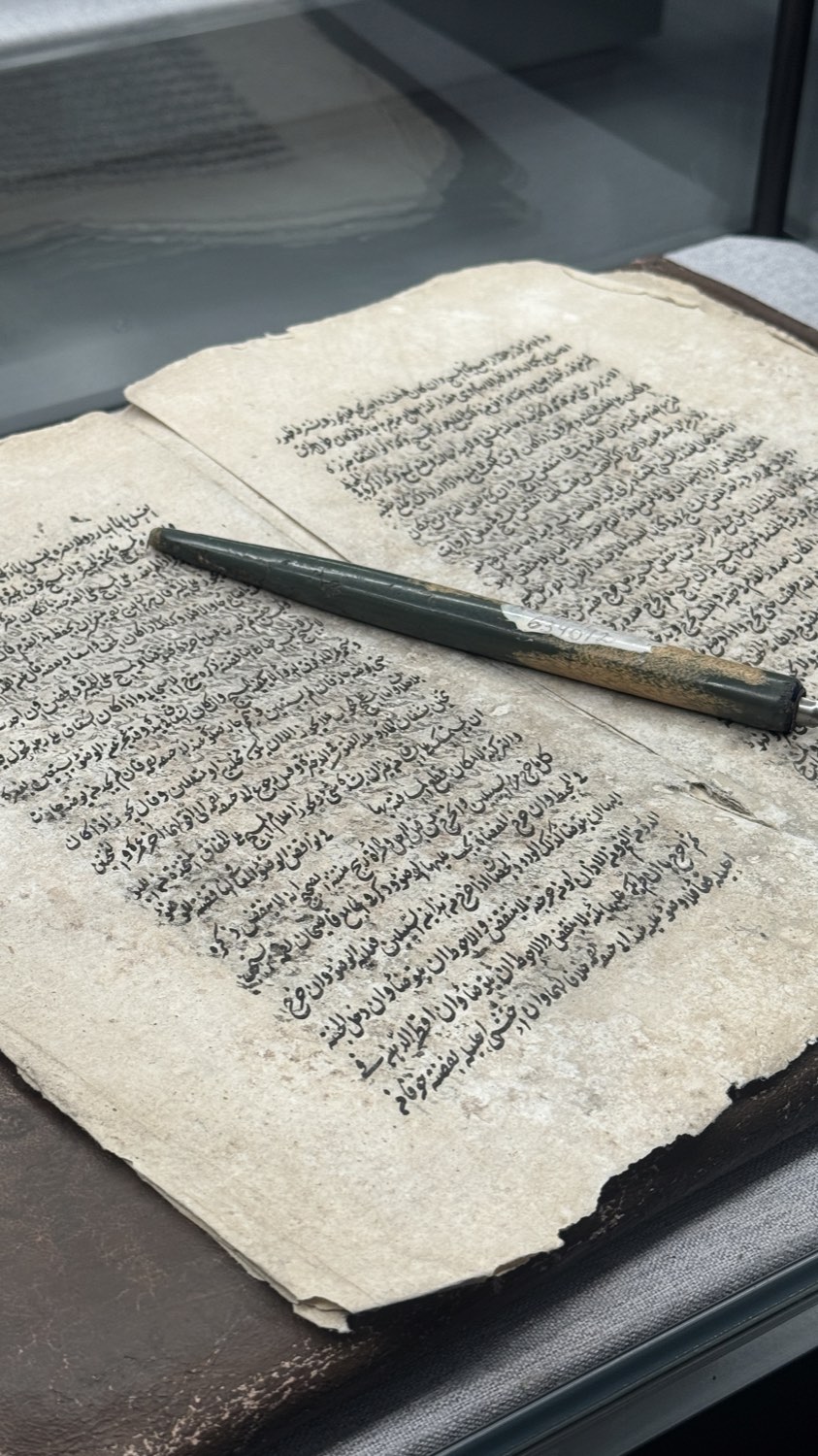 139
139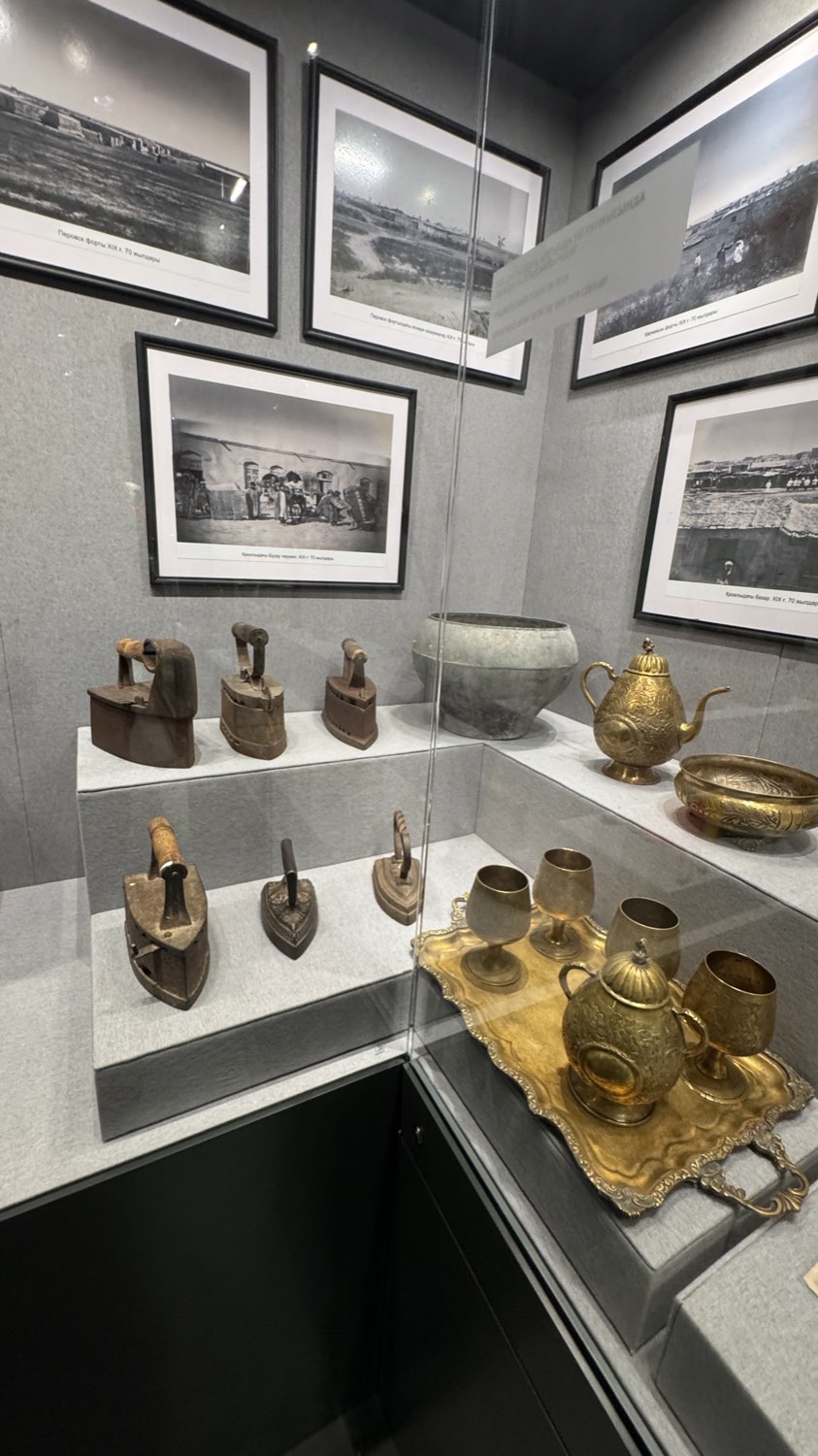 140
140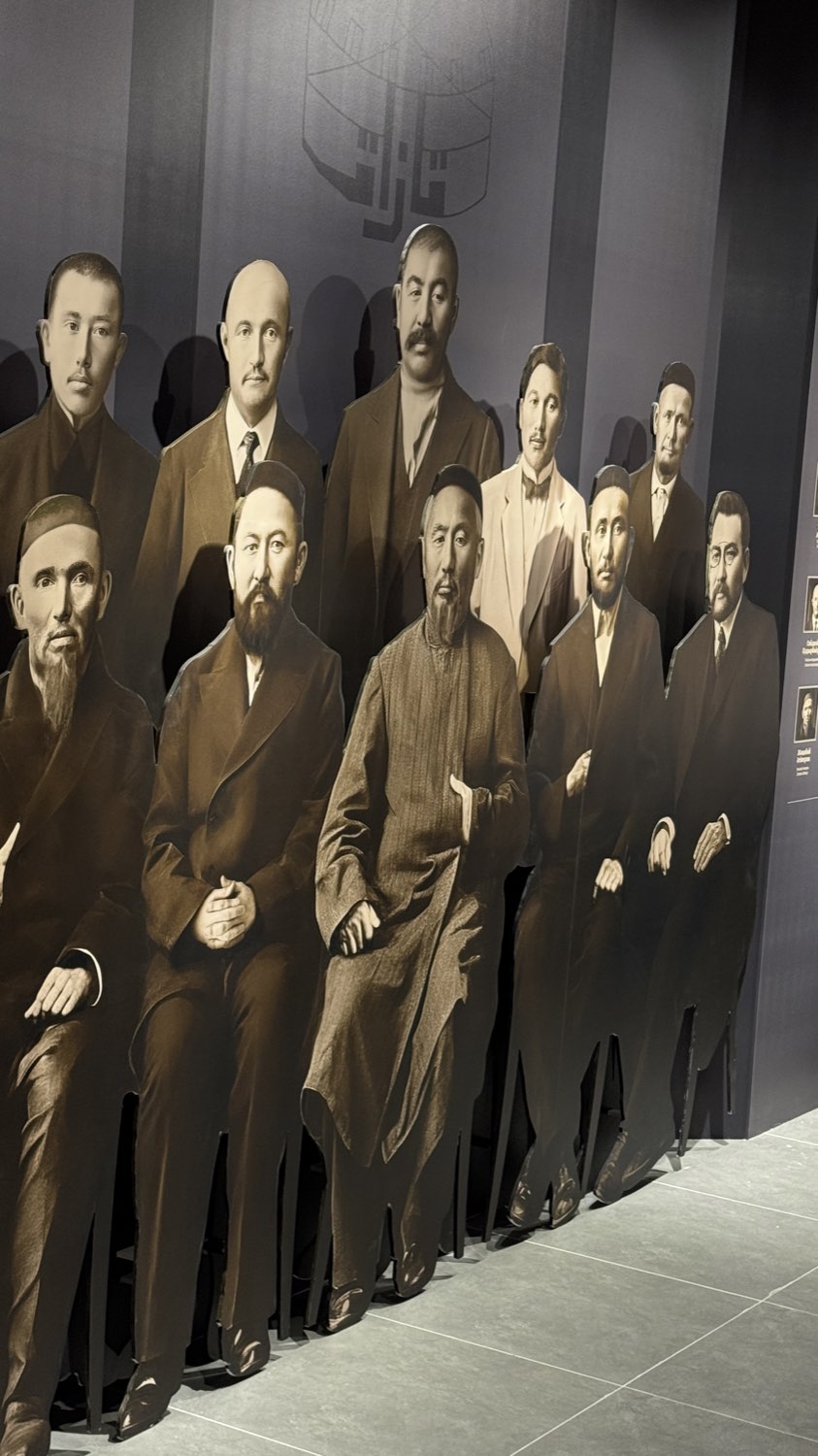 141
141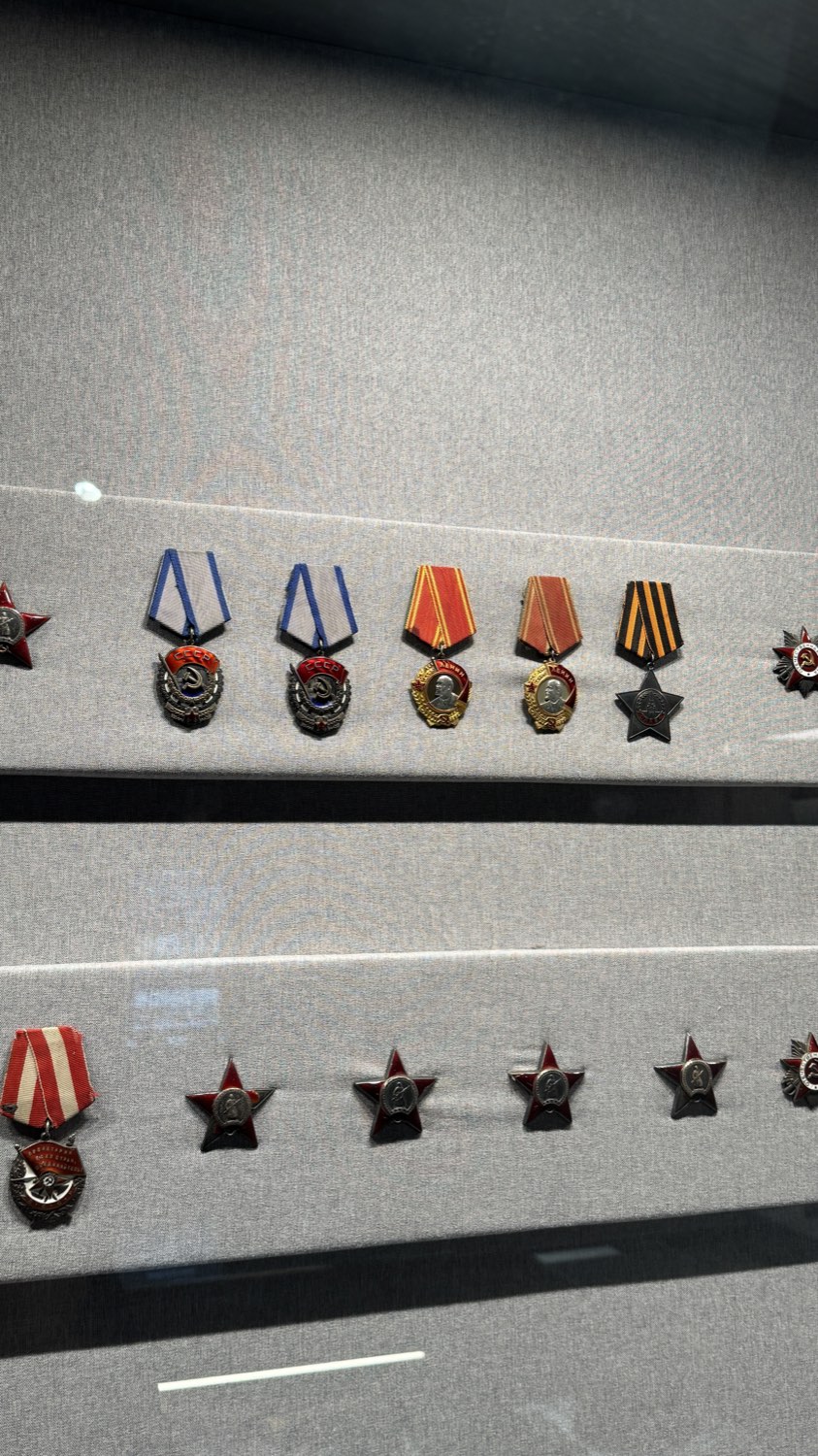 142
142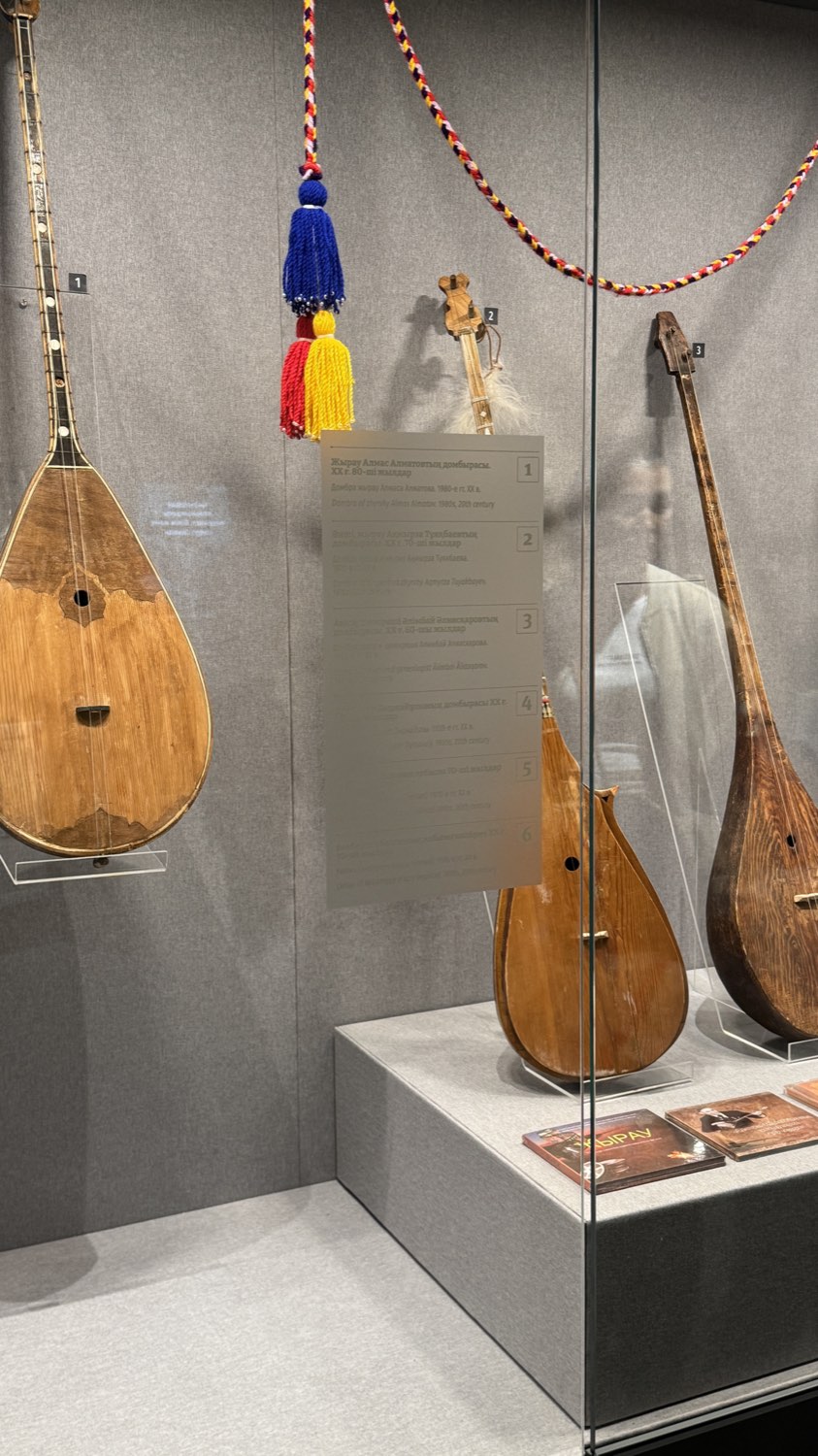 143
143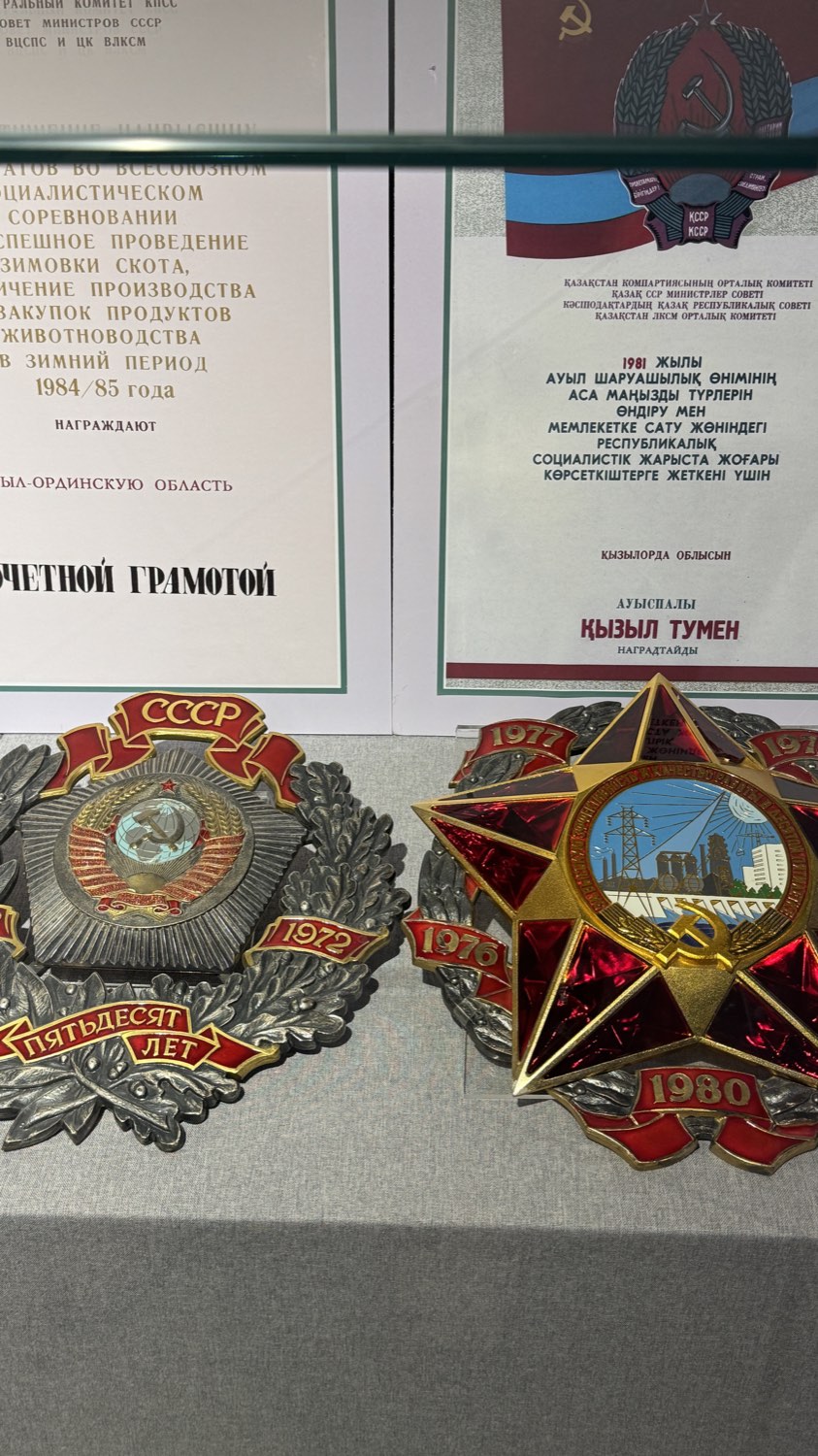 144
144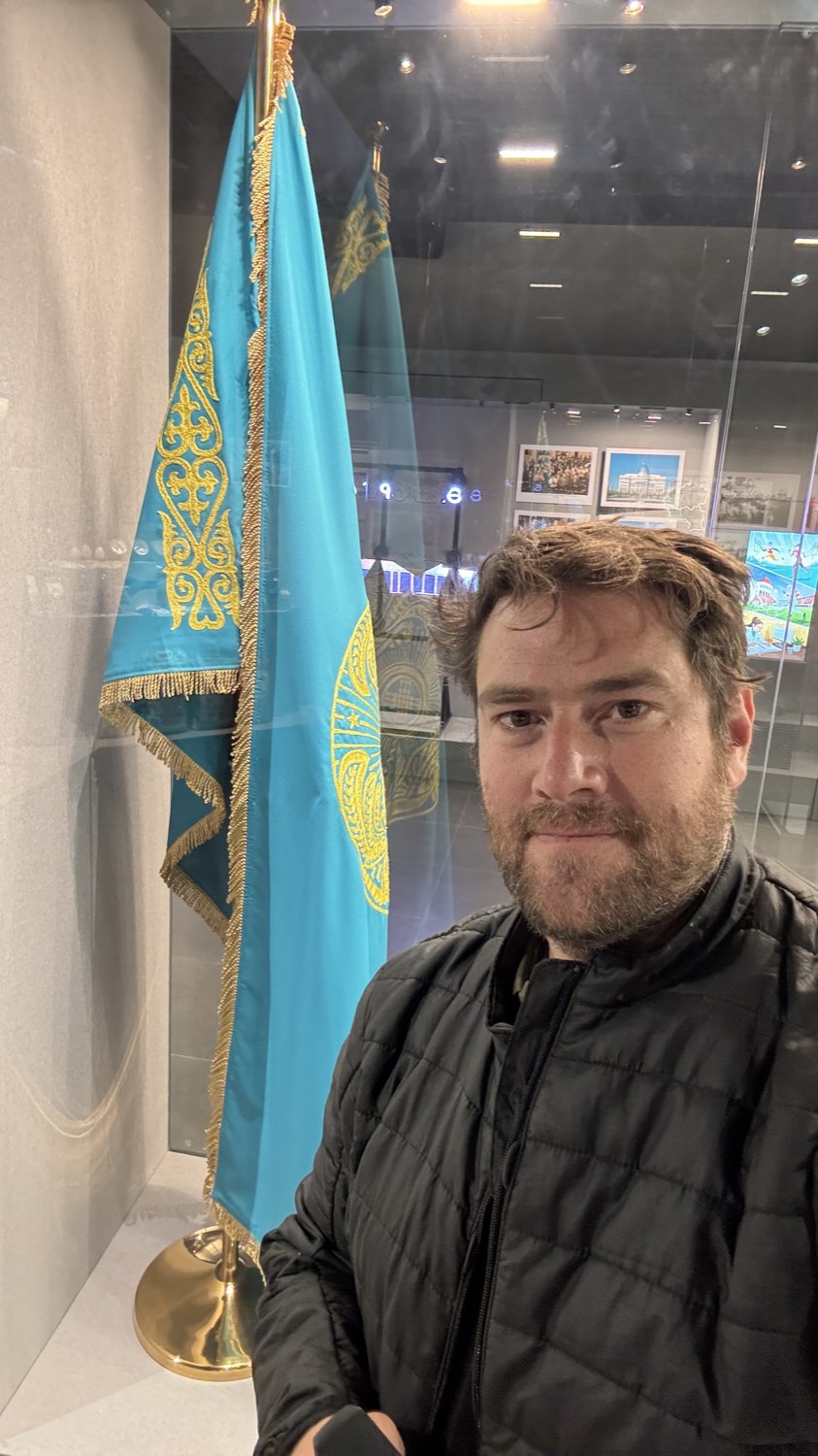 145
145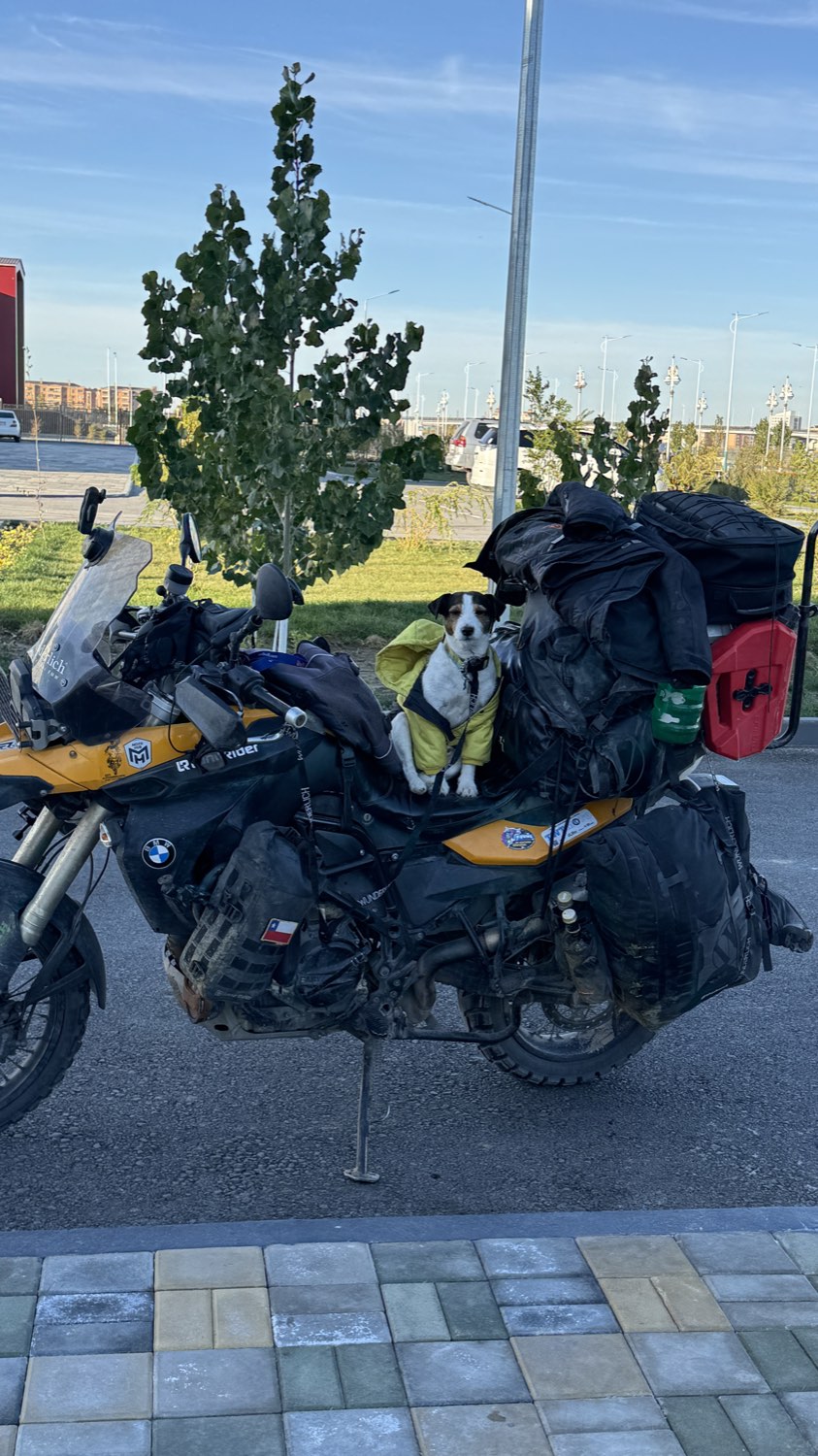 146
146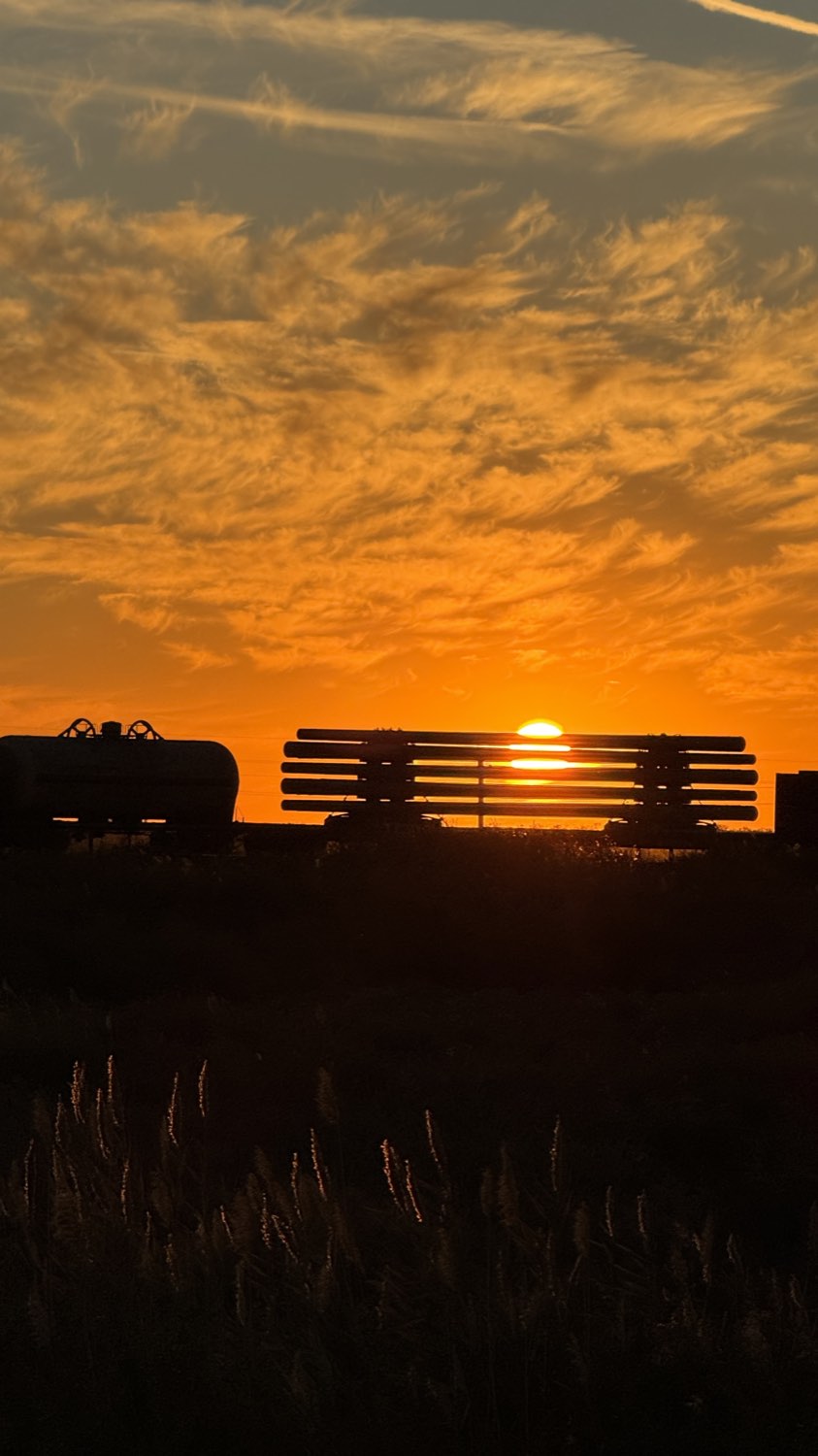 147
147