



Field note 17 The Silk Road
The road runs out at a line nobody agrees on.
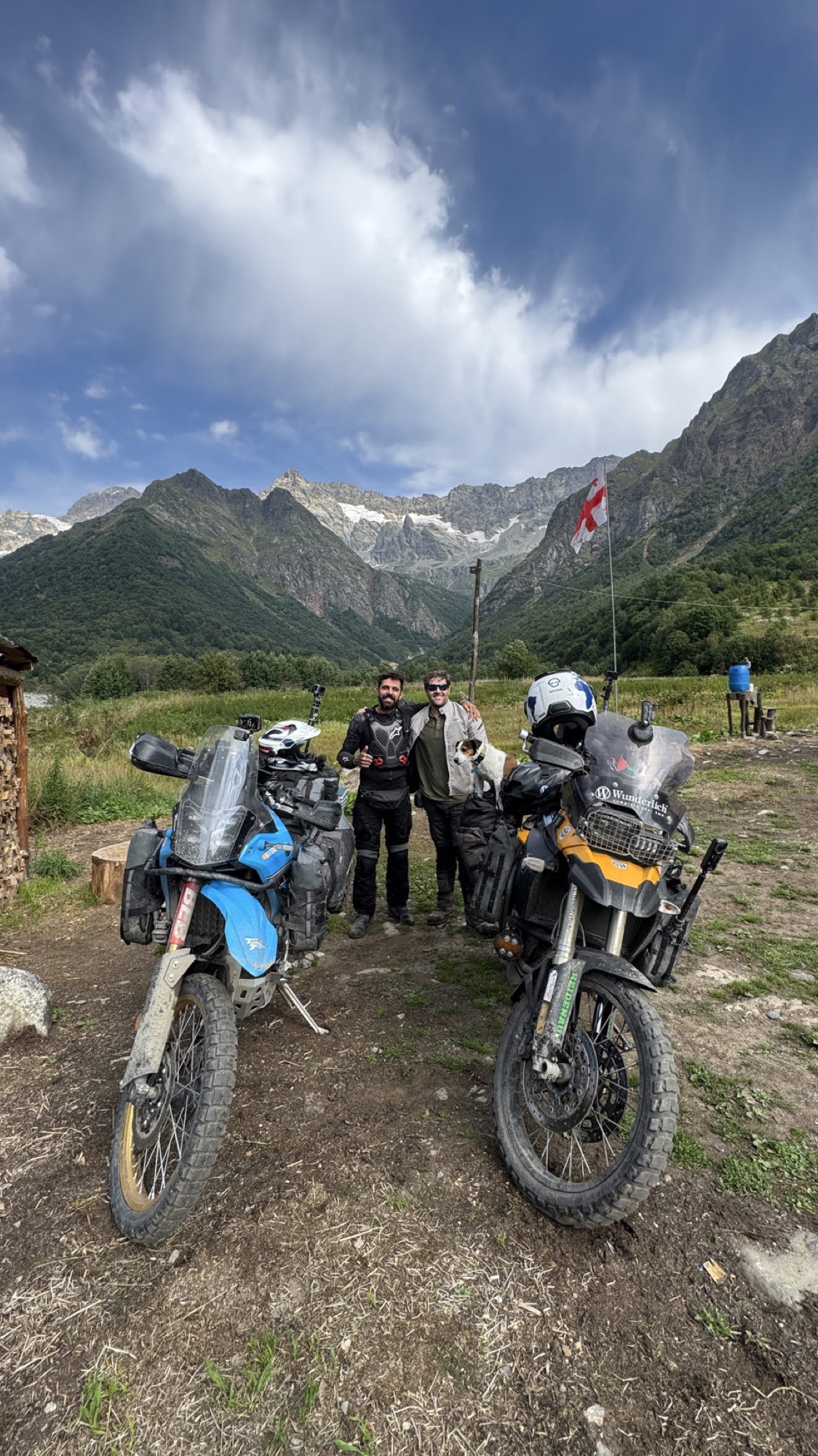
September 2025, in the Georgian mountains below South Ossetia. A track that climbs to well over two thousand metres, a border post with a flag, and a night camped where the road stops.From Rodrigo's road archive
The Silk Road
The road runs out at a line nobody agrees on.
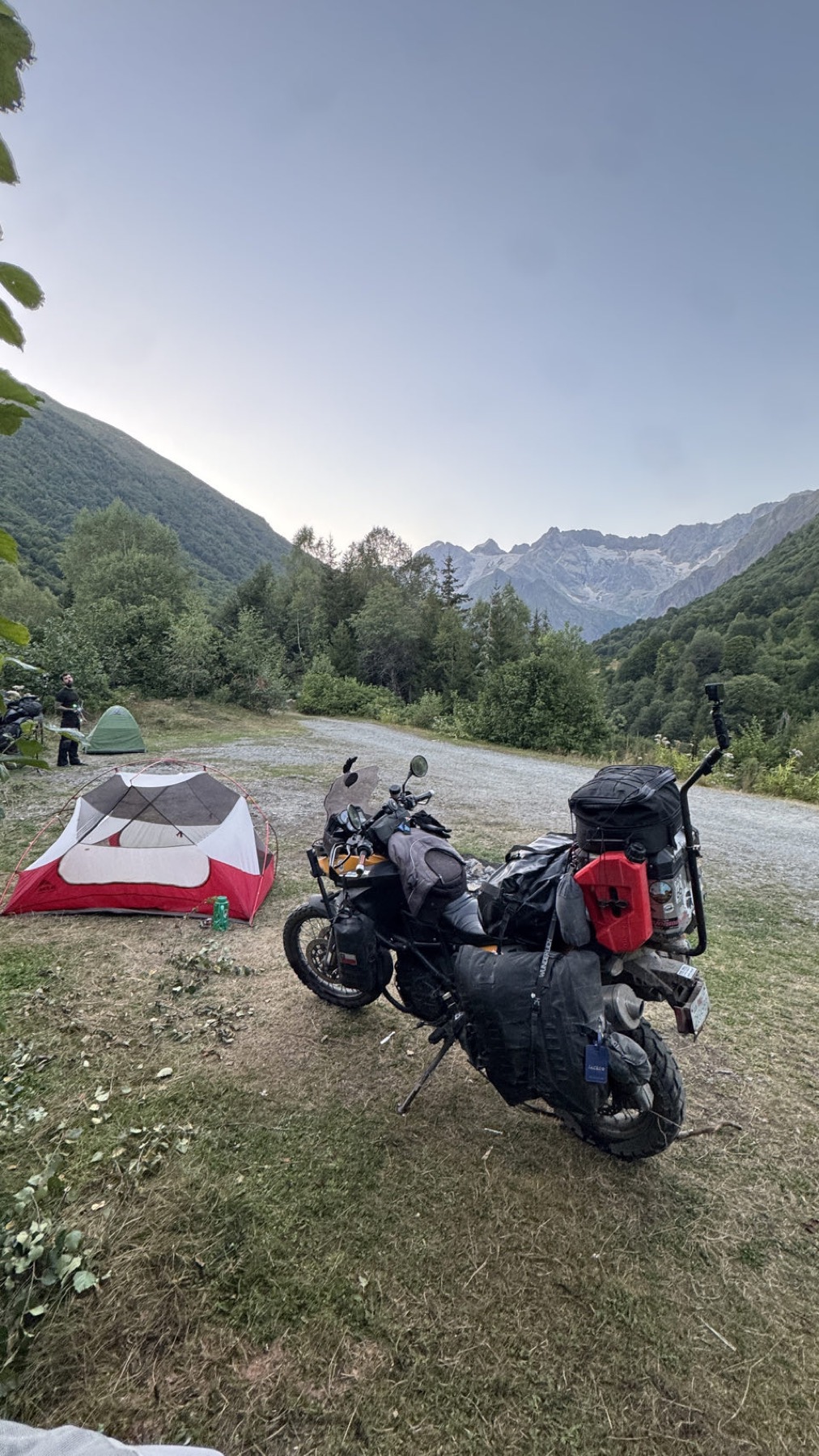
September 2025, in the Georgian mountains below South Ossetia. A track that climbs to well over two thousand metres, a border post with a flag, and a night camped where the road stops.
- 2,240 mWhere the tent went up
- 2008Since the line closed
- 8,000Years of Georgian wine
September 2025, in the Georgian mountains below South Ossetia. A track that climbs to well over two thousand metres, a border post with a flag, and a night camped where the road stops.
A line that exists depending on who you ask.
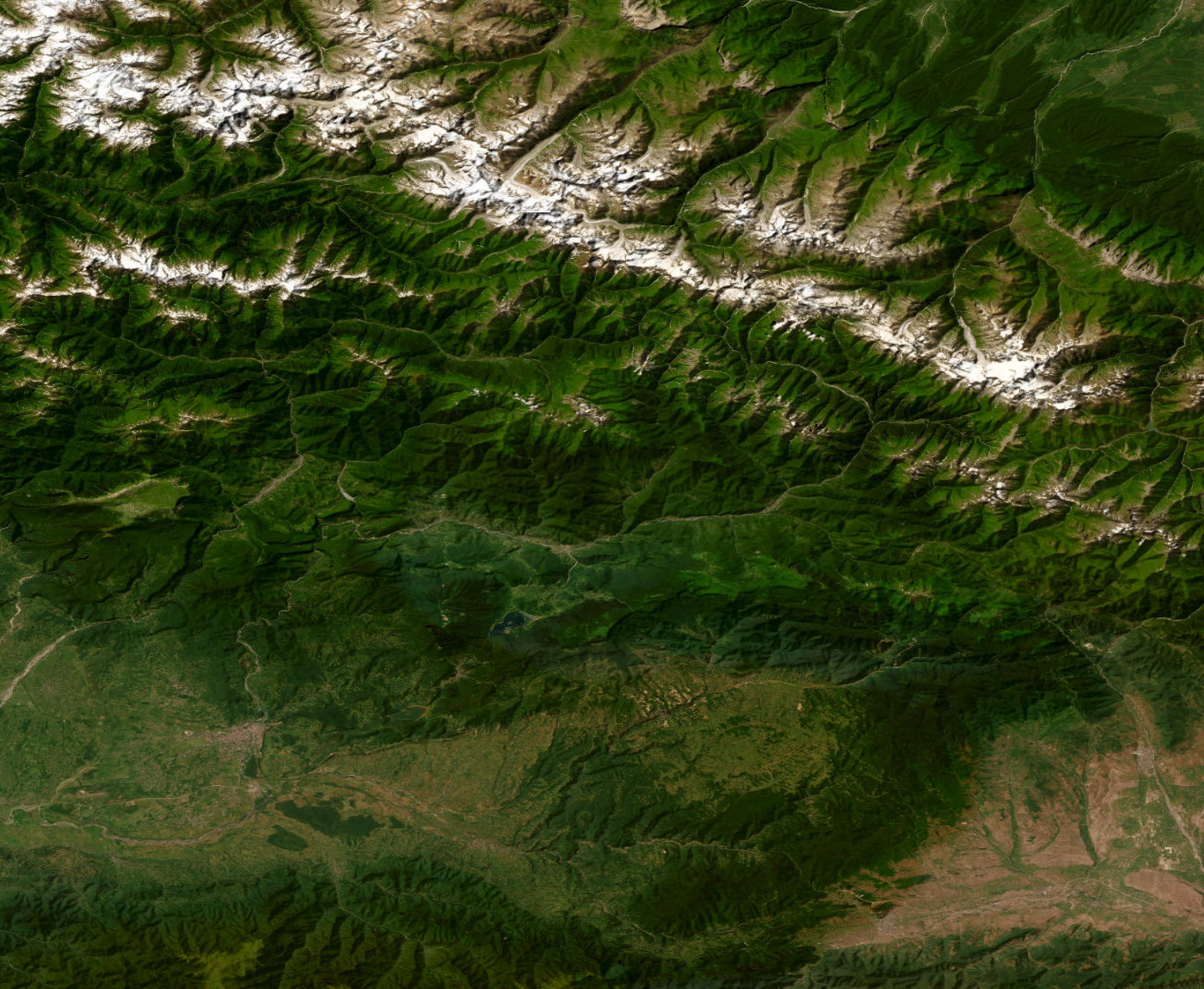
South Ossetia broke away from Georgia after the Soviet Union collapsed, and again after the war of 2008. Russia recognises it as a country. Most of the world recognises it as part of Georgia. Either way, the boundary has been shut from this side since then.
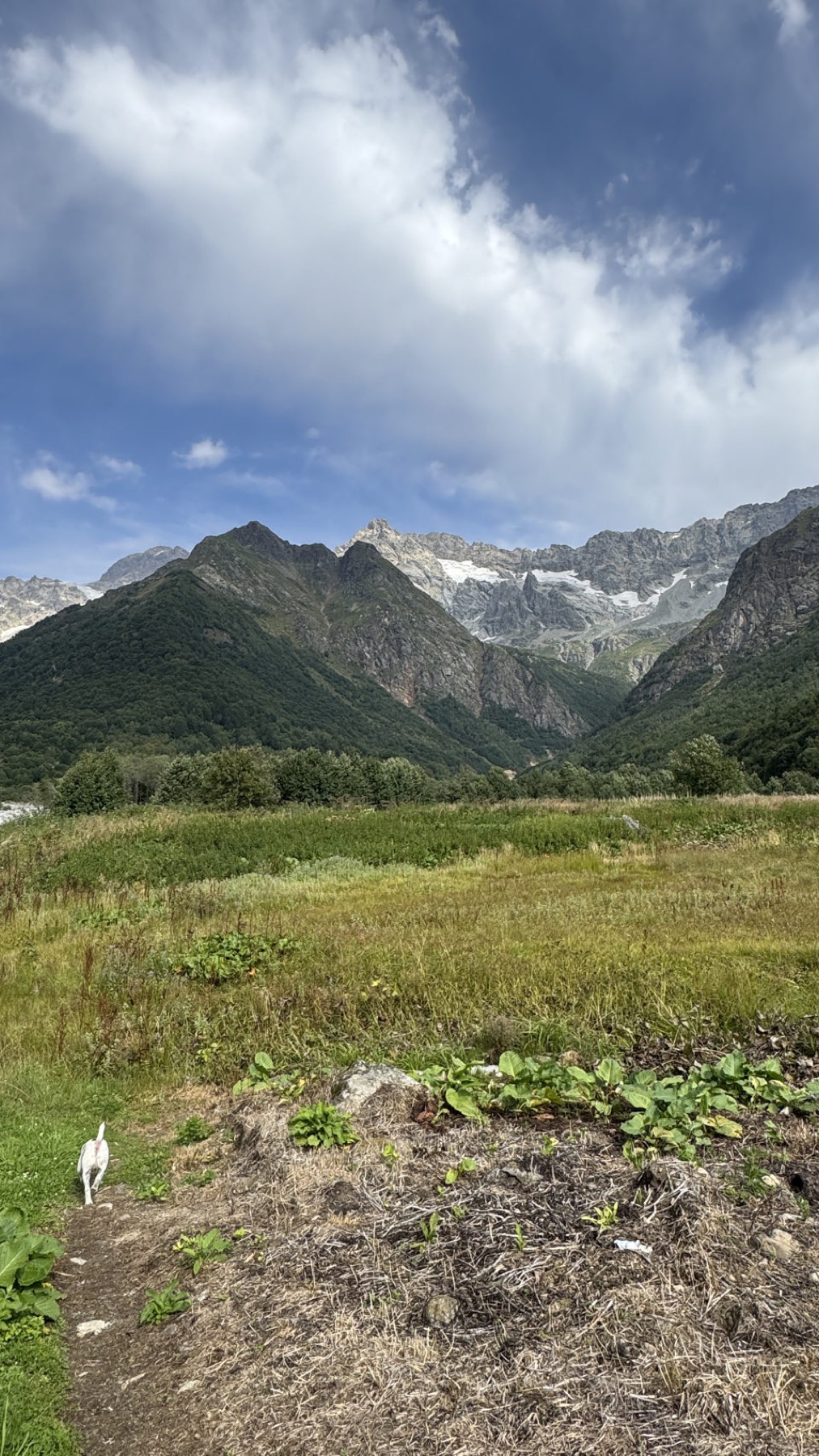
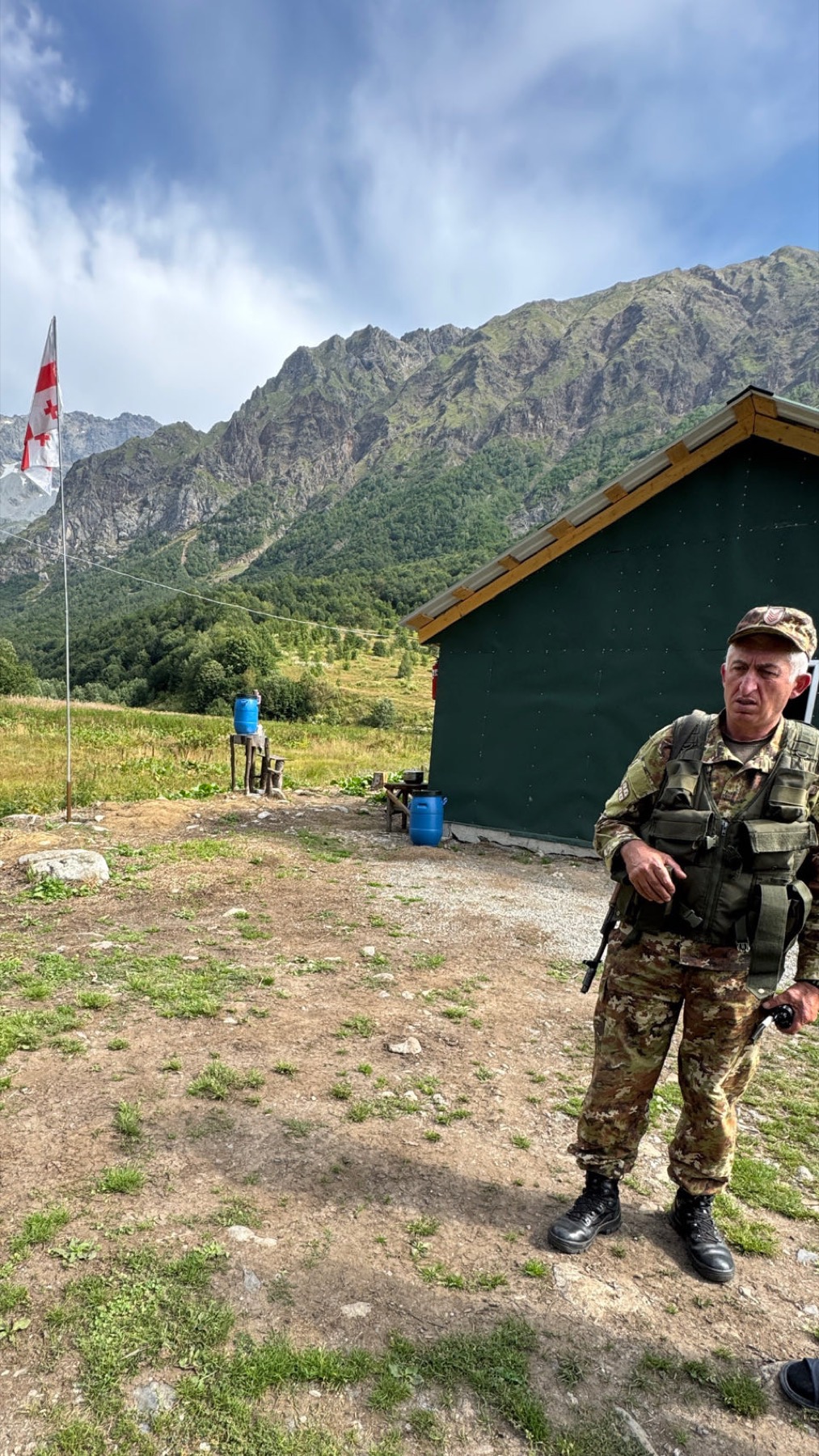
What that means for a rider is simple: the road up the valley climbs, and at some point there is a Georgian post with a flag and a soldier, and that is the end of it. You look at the mountains on the other side and turn around.
What the road kept
Some borders you can only look at.
There is nothing dramatic at the end of that valley: a hut, a flag, a soldier who is perfectly friendly. What is on the other side has been out of reach since 2008, and the mountains do not care either way.Two thousand two hundred metres, and a tent.
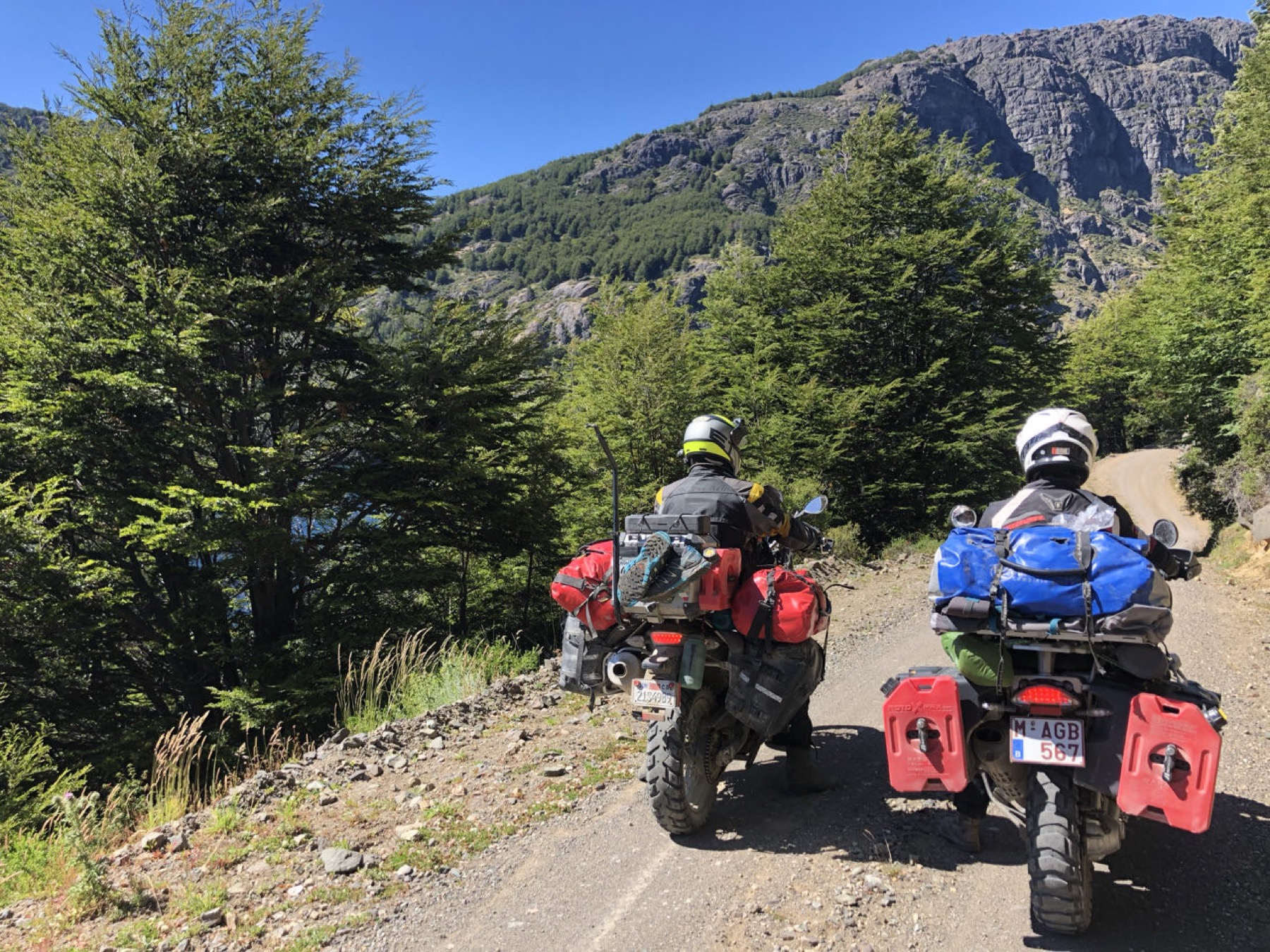
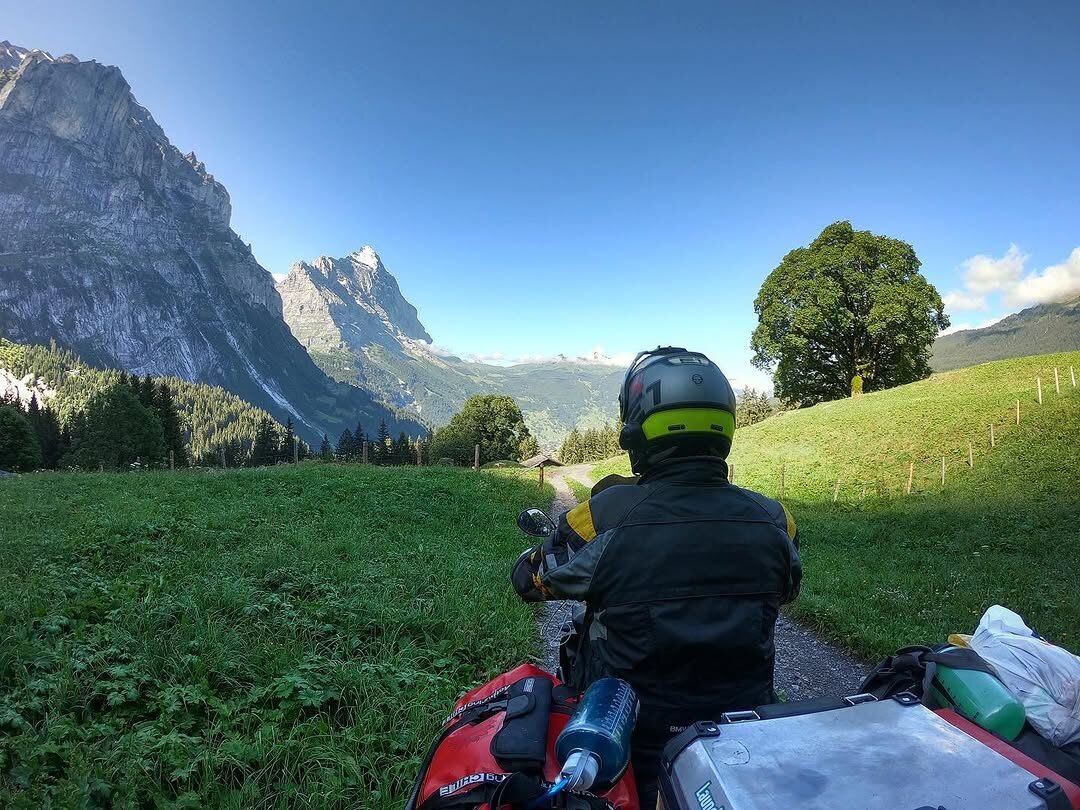
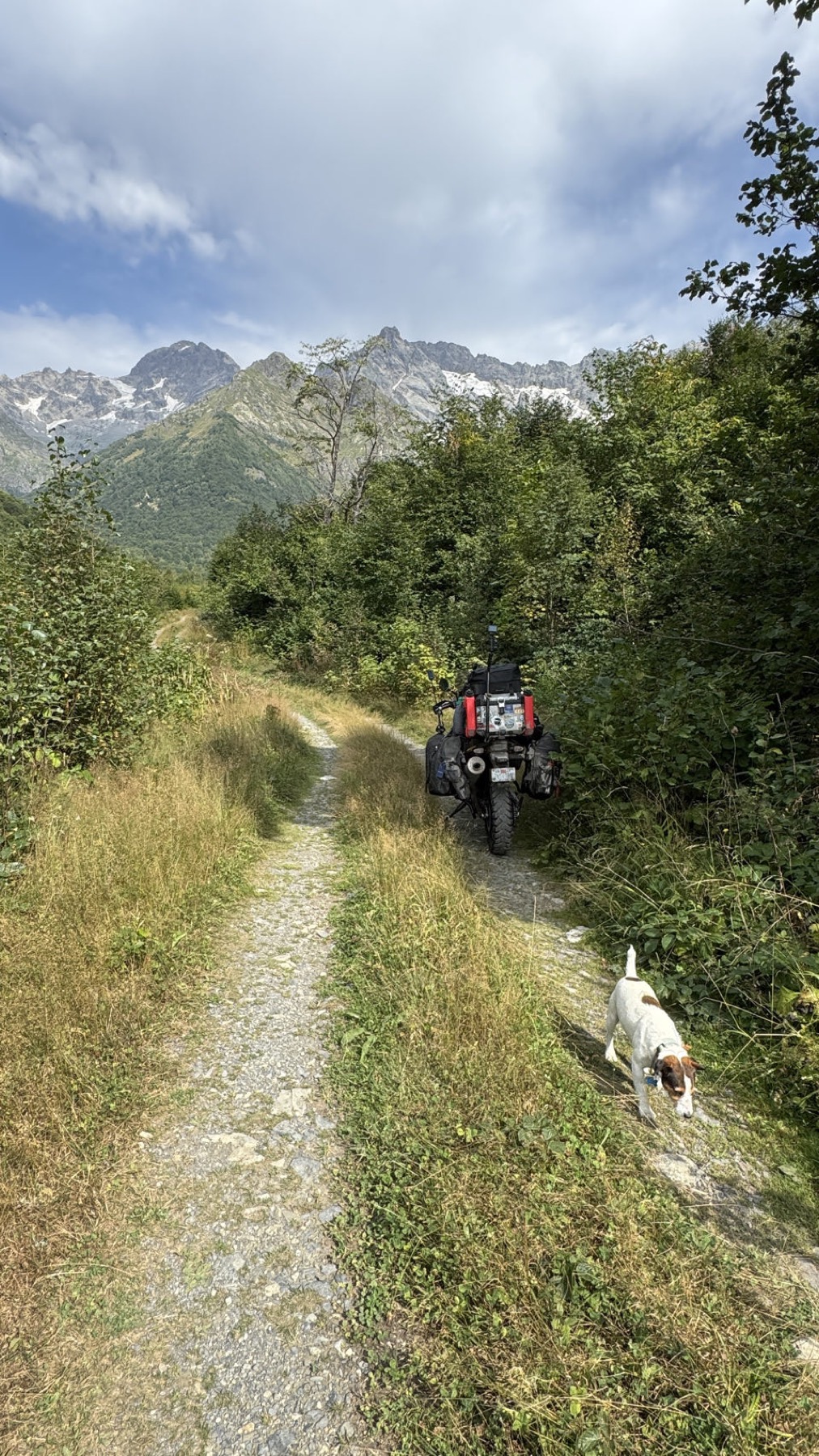
The track leaves the asphalt early and turns to grass and stone. It is the sort of ground that changes completely after rain, and this is the wet side of the range.
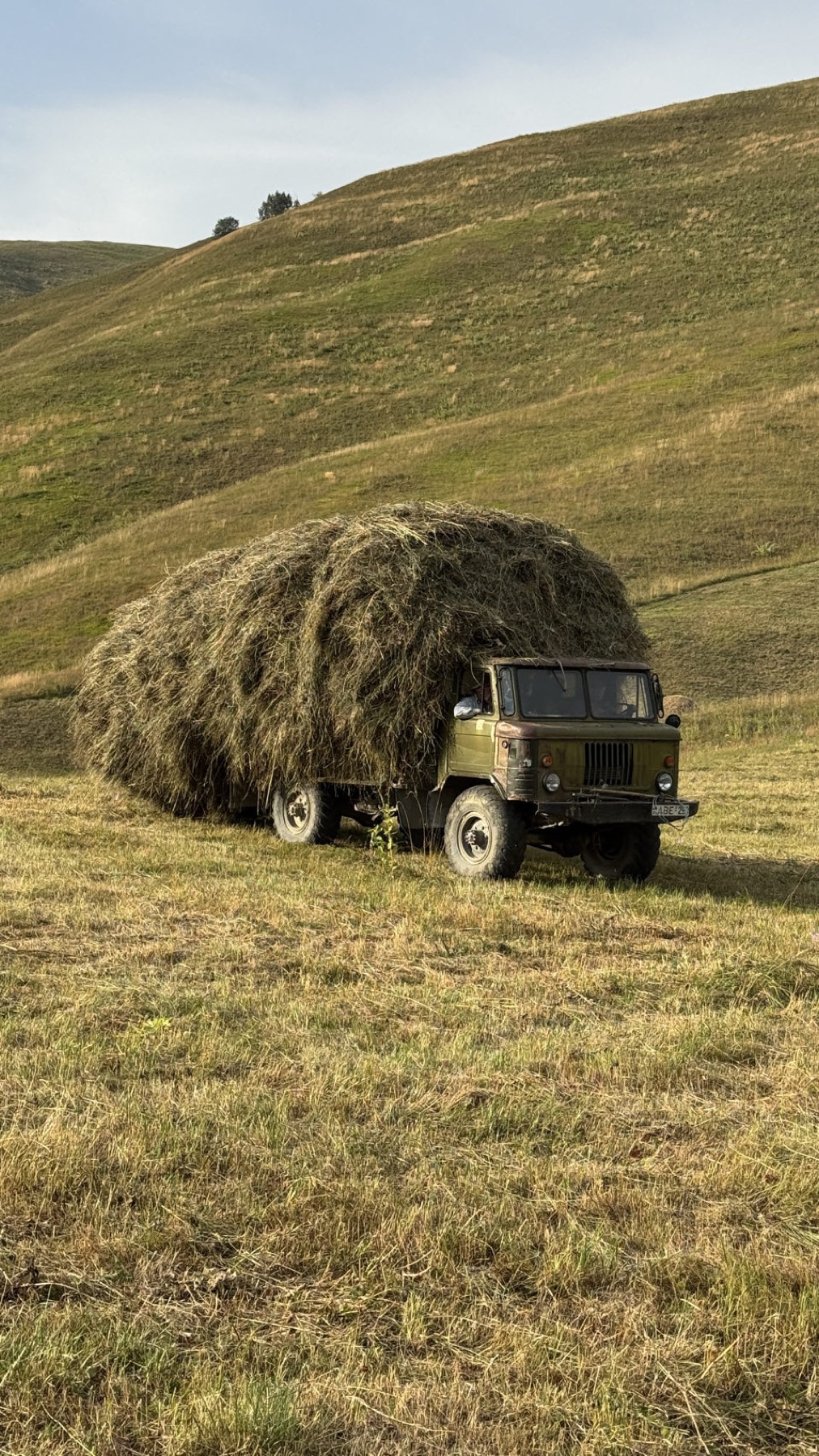
The last pitch up to the camp was the one that mattered: steep, wet grass over loose stone, the kind of ground that puts a loaded bike down if you hesitate on it. There was a second line further over that I only saw afterwards. The hay truck that had come down that side had clearly gone up it too.
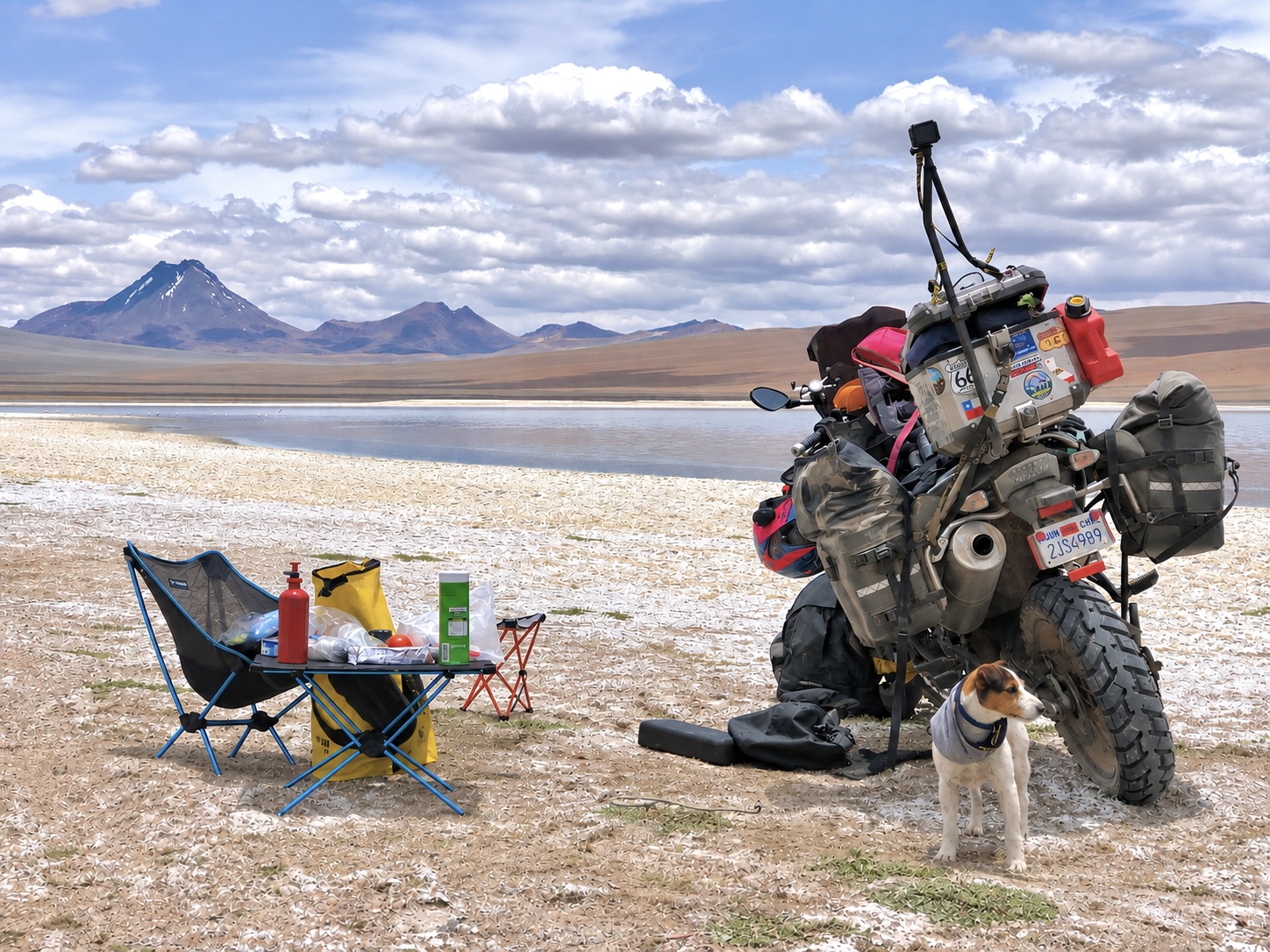
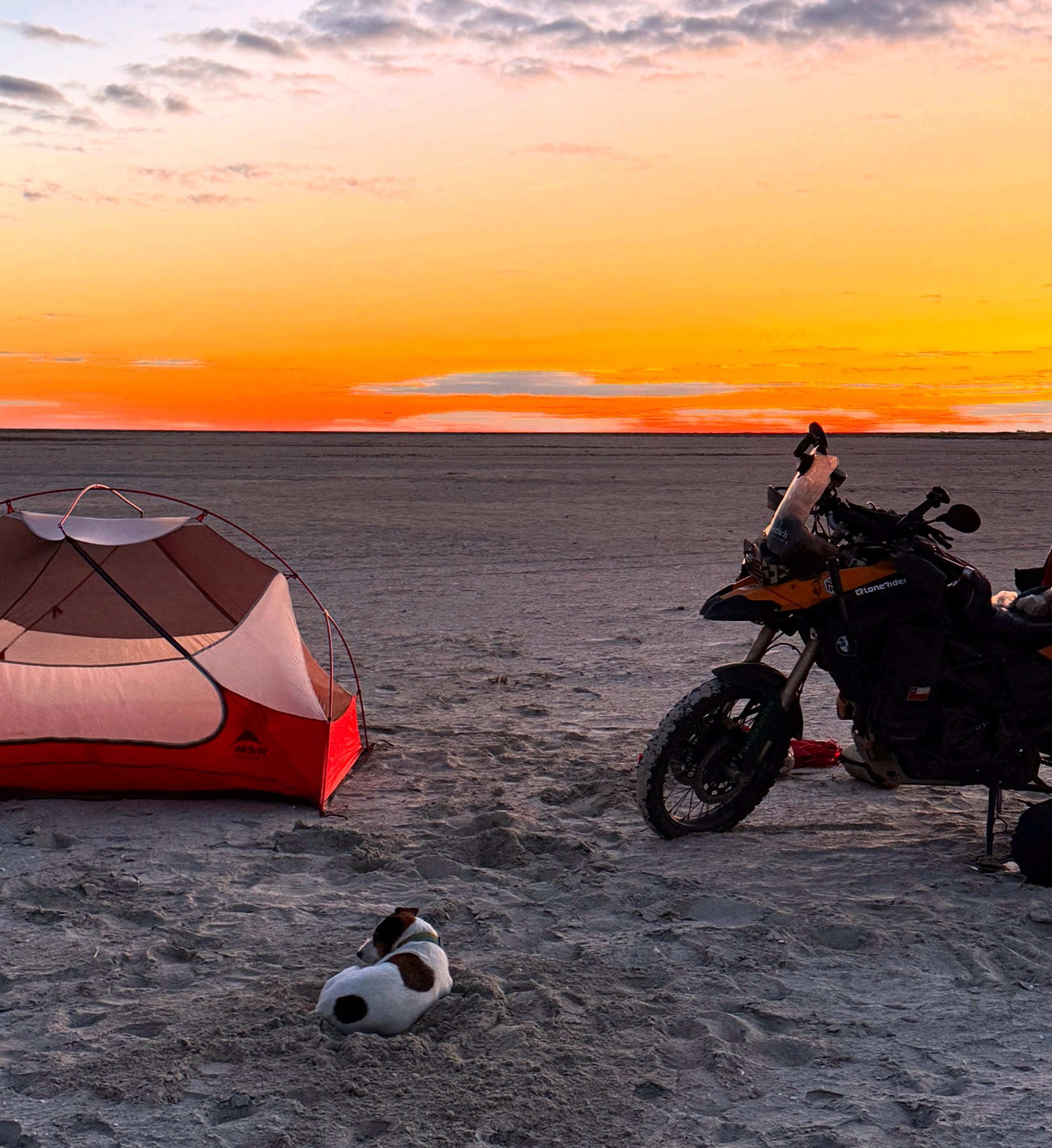
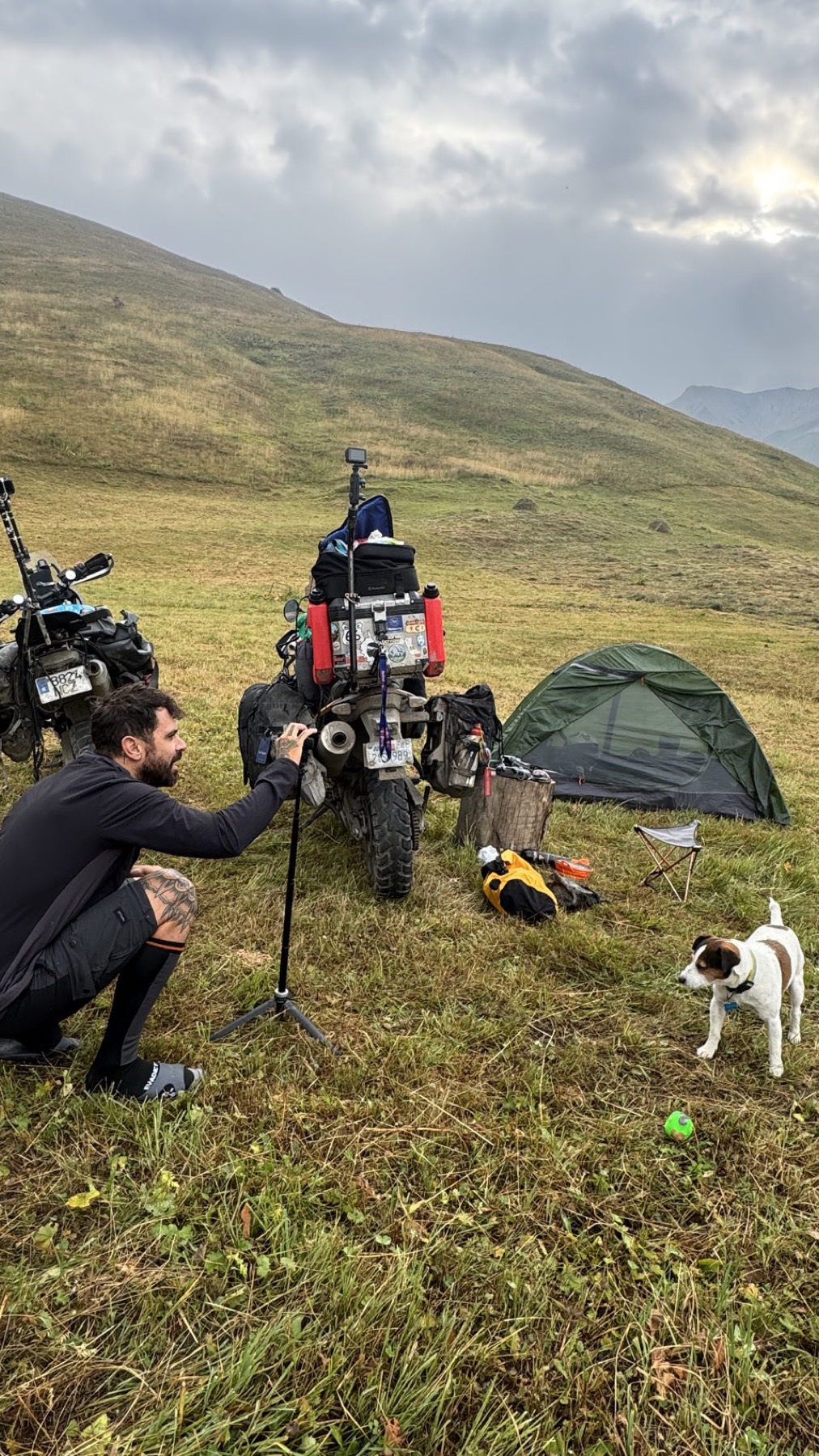
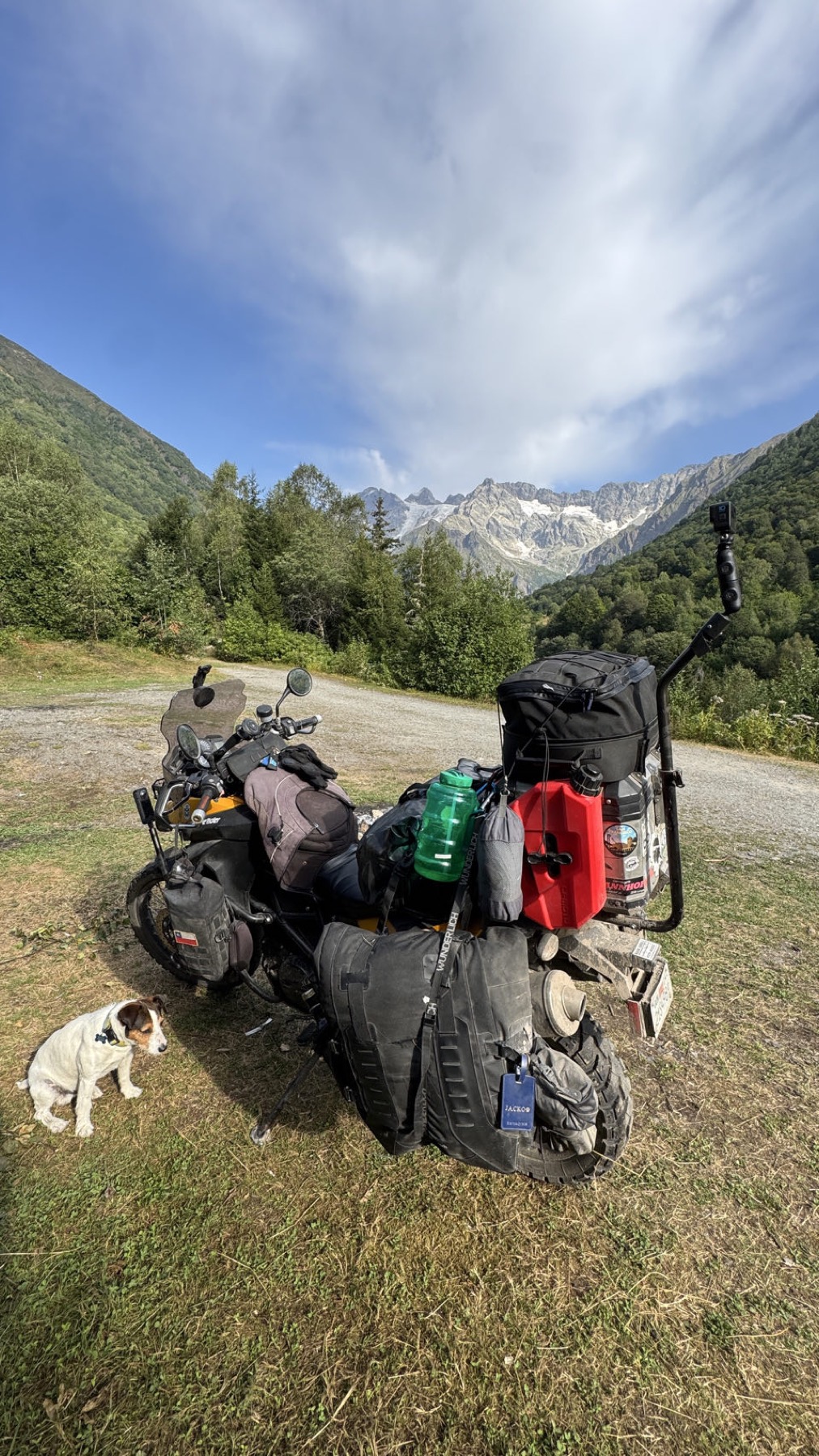
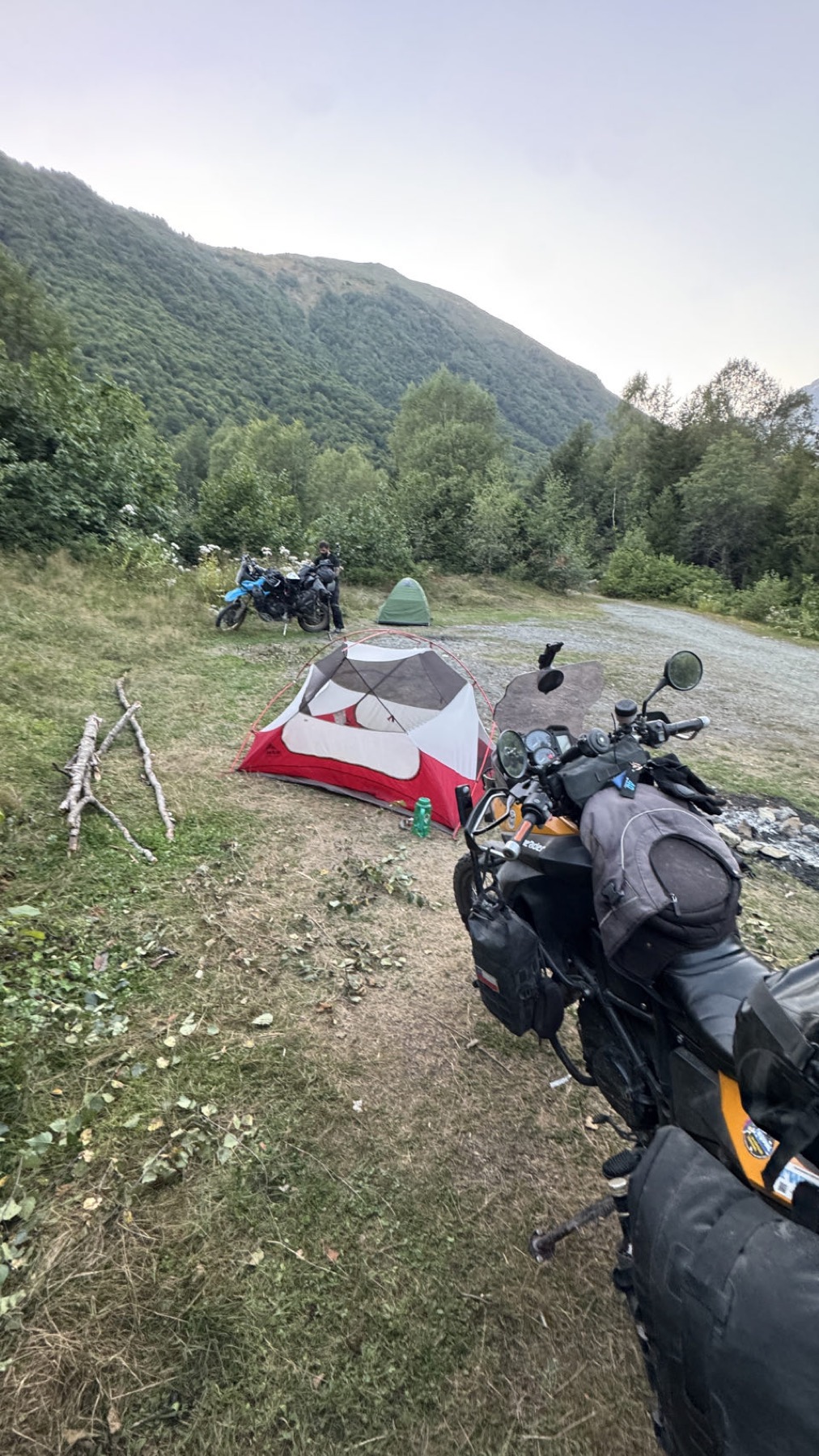
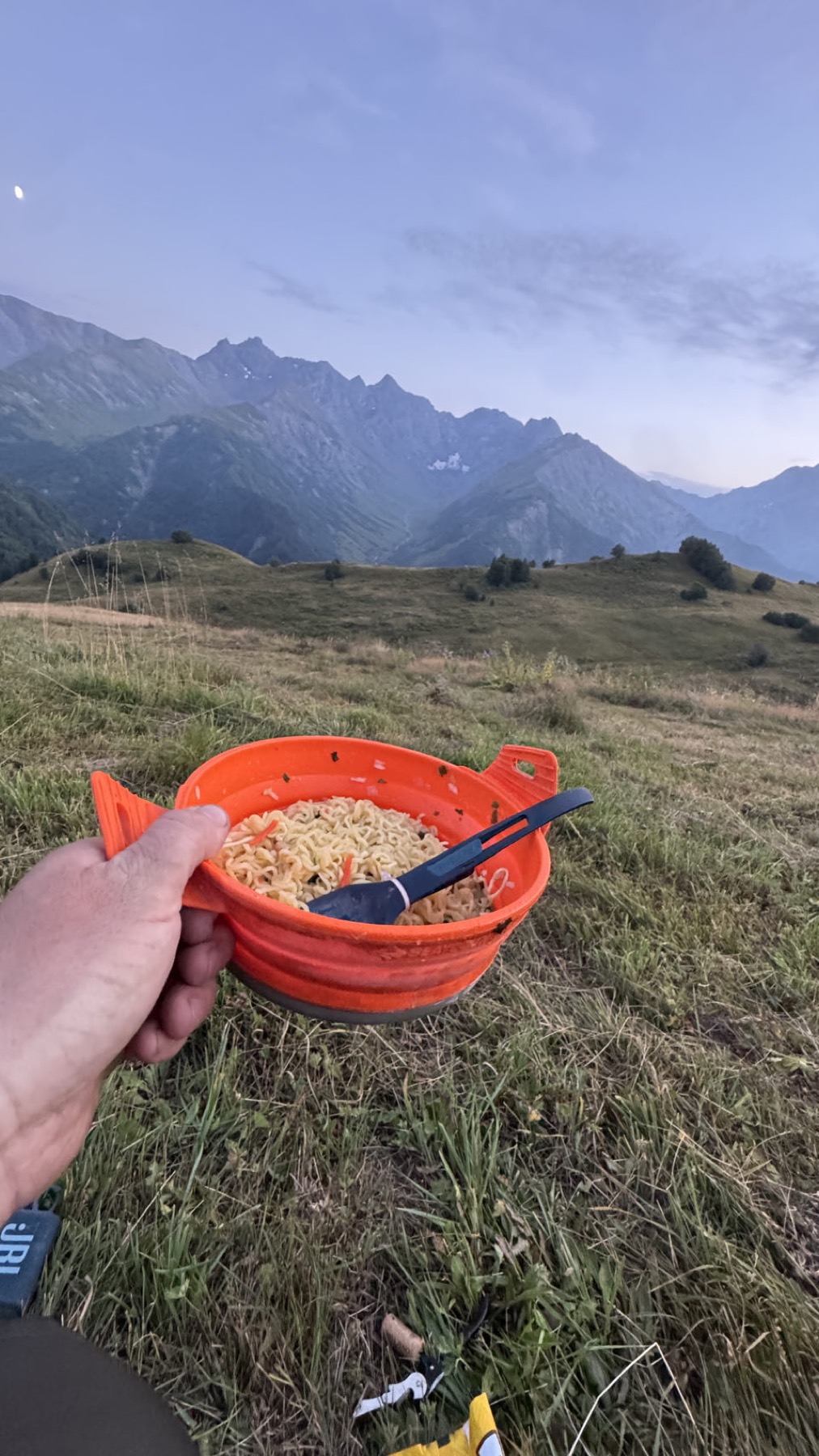
The camp went up at 2,240 metres, high enough that the temperature drops the moment the sun goes behind the ridge. Below, the valleys are still worked the old way, with hay stacked by hand and Soviet era trucks doing the carrying.
Where wine was invented.
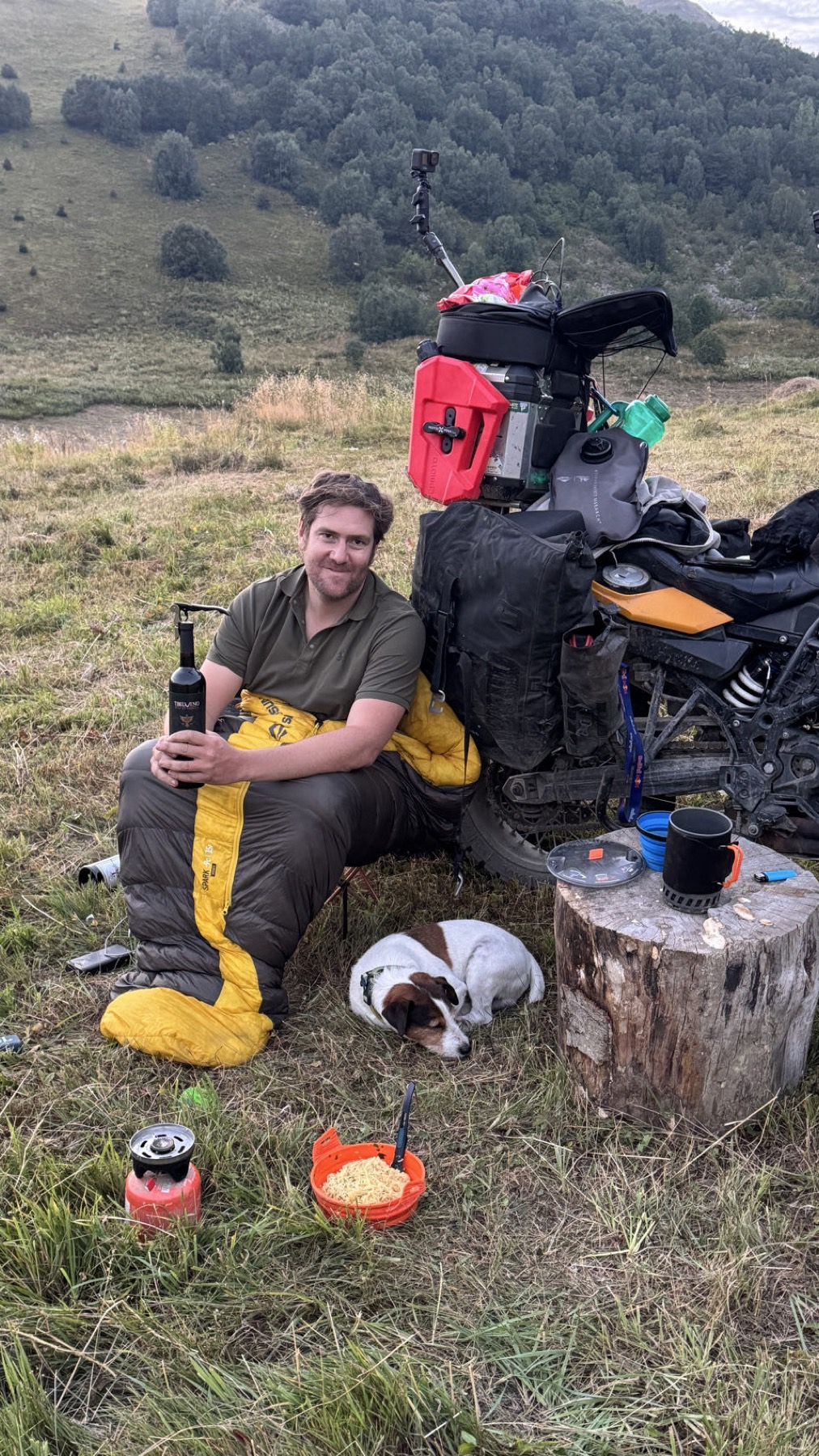
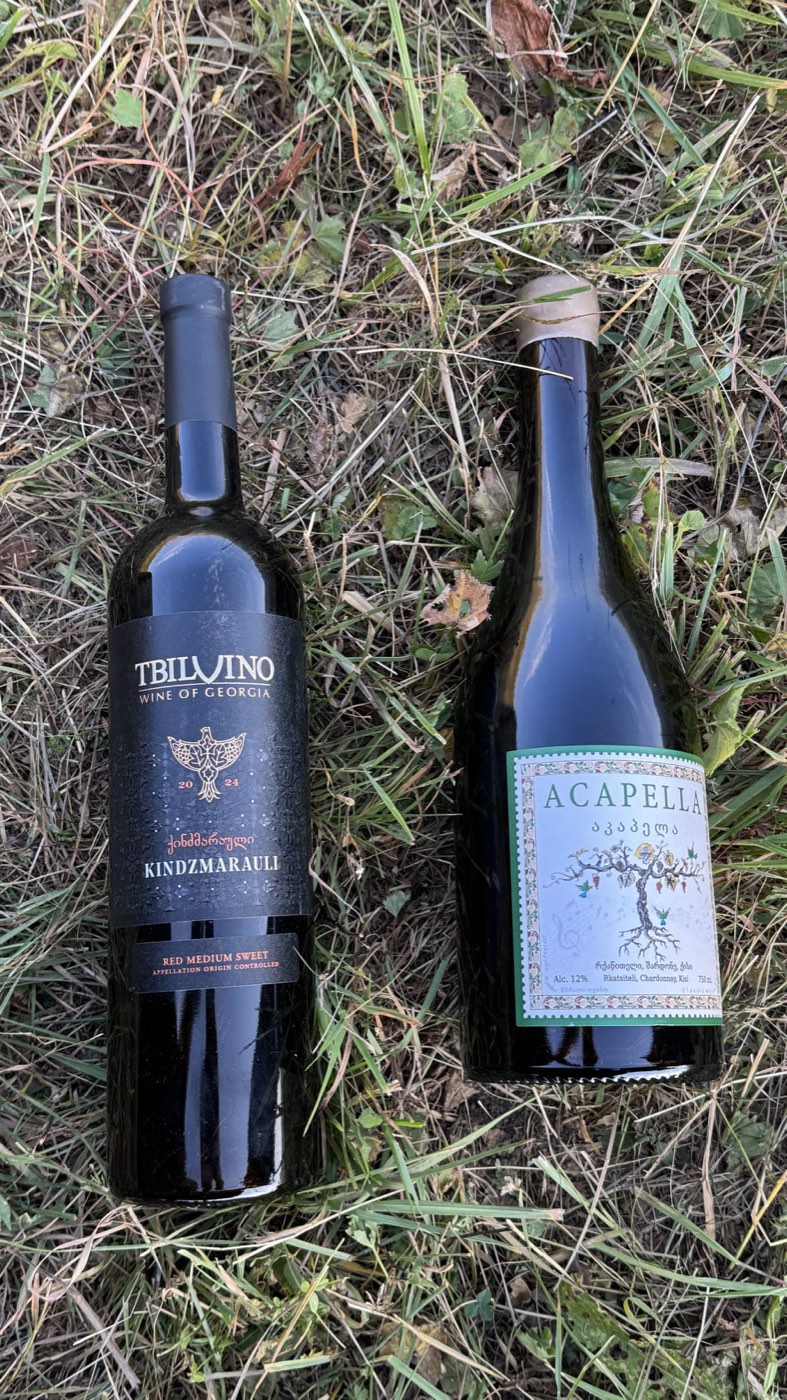
Georgia has been making wine for around eight thousand years, longer than anywhere else that has been found, and it is still fermented in clay vessels buried in the ground. A bottle of it at a camp above two thousand metres is a reasonable end to a day.
I had not liked a single Georgian wine up to that night. This one I did. The label said Acapella, which is what the evening was: no music, no signal, no city noise, nothing but wind and grass and the fire going.
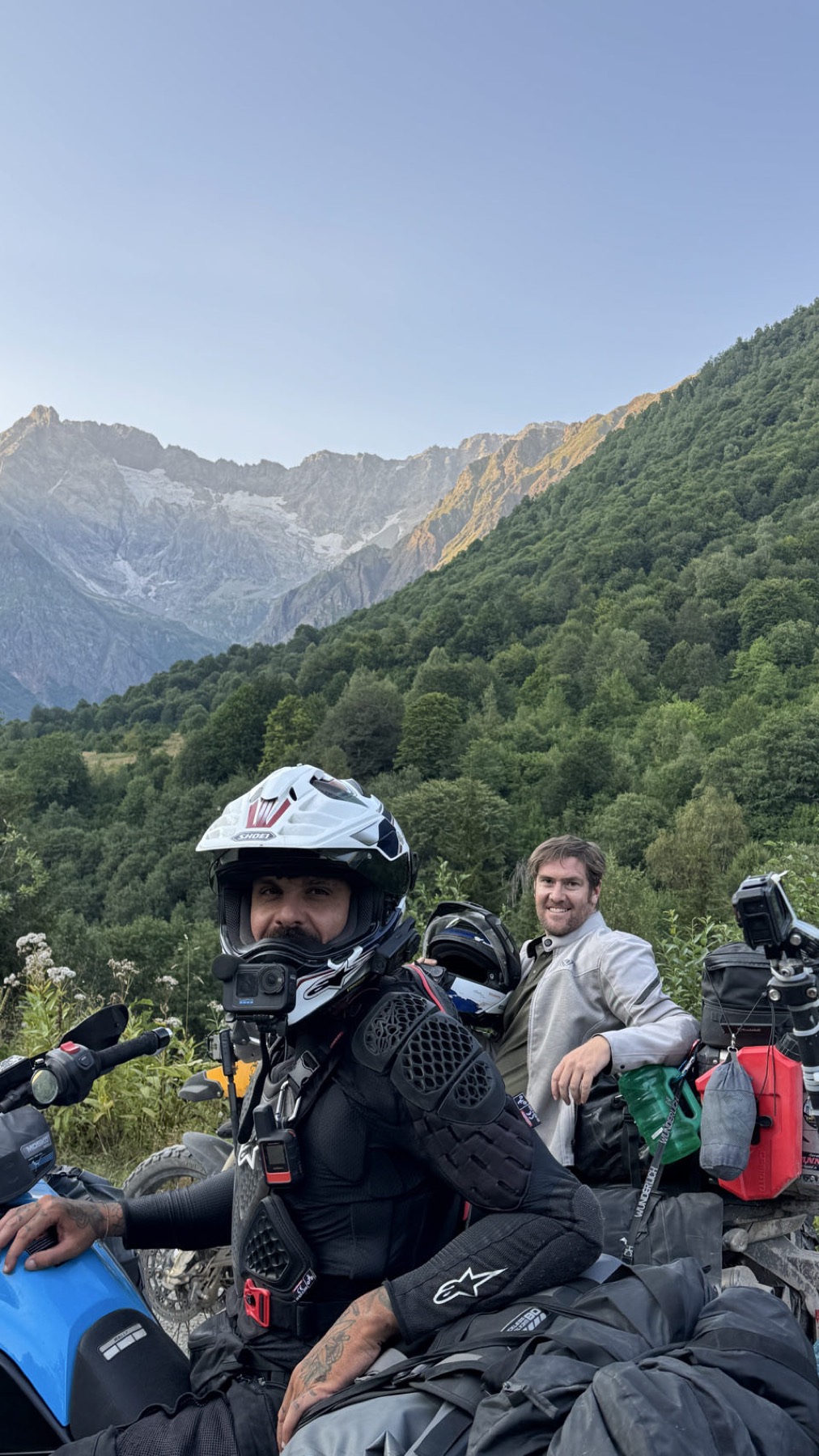
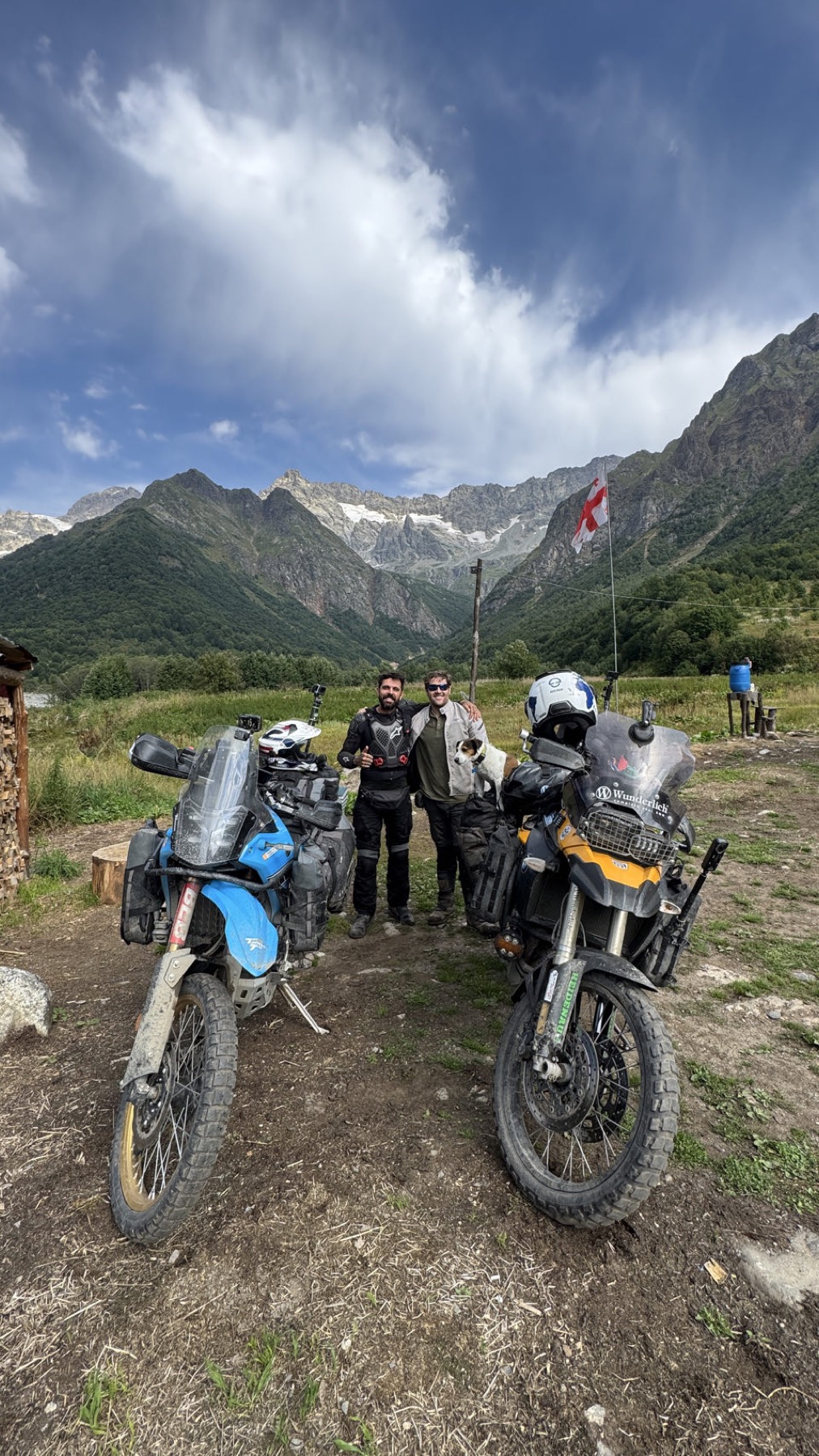
This is also a country where a stranger on the road is treated as something close to a gift. I rode part of this stretch with another traveller met on the way, which is how most of the Caucasus goes. We sat by the fire working out which peak was which, whether the still water down the valley was as harmless as it looked, and which trip either of us would go back and do again. Mine is always the same answer: Puerto Varas to Ushuaia, four and a half thousand kilometres to the end of the continent, done in this format. Dust, camping, wine at night, cold in the morning.
The field archive
17 more frames from the road
Everything else from the folder, in the order it was taken.
 03
03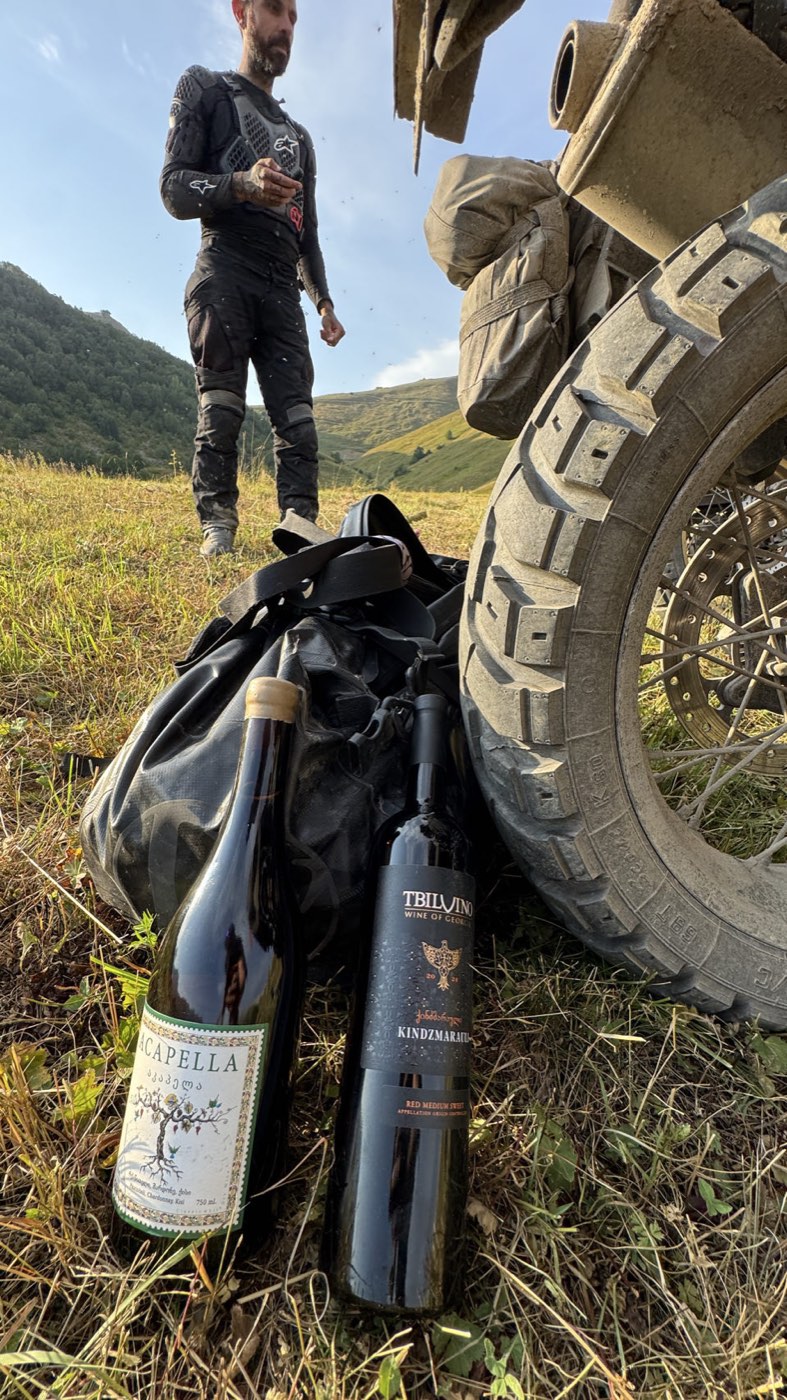 04
04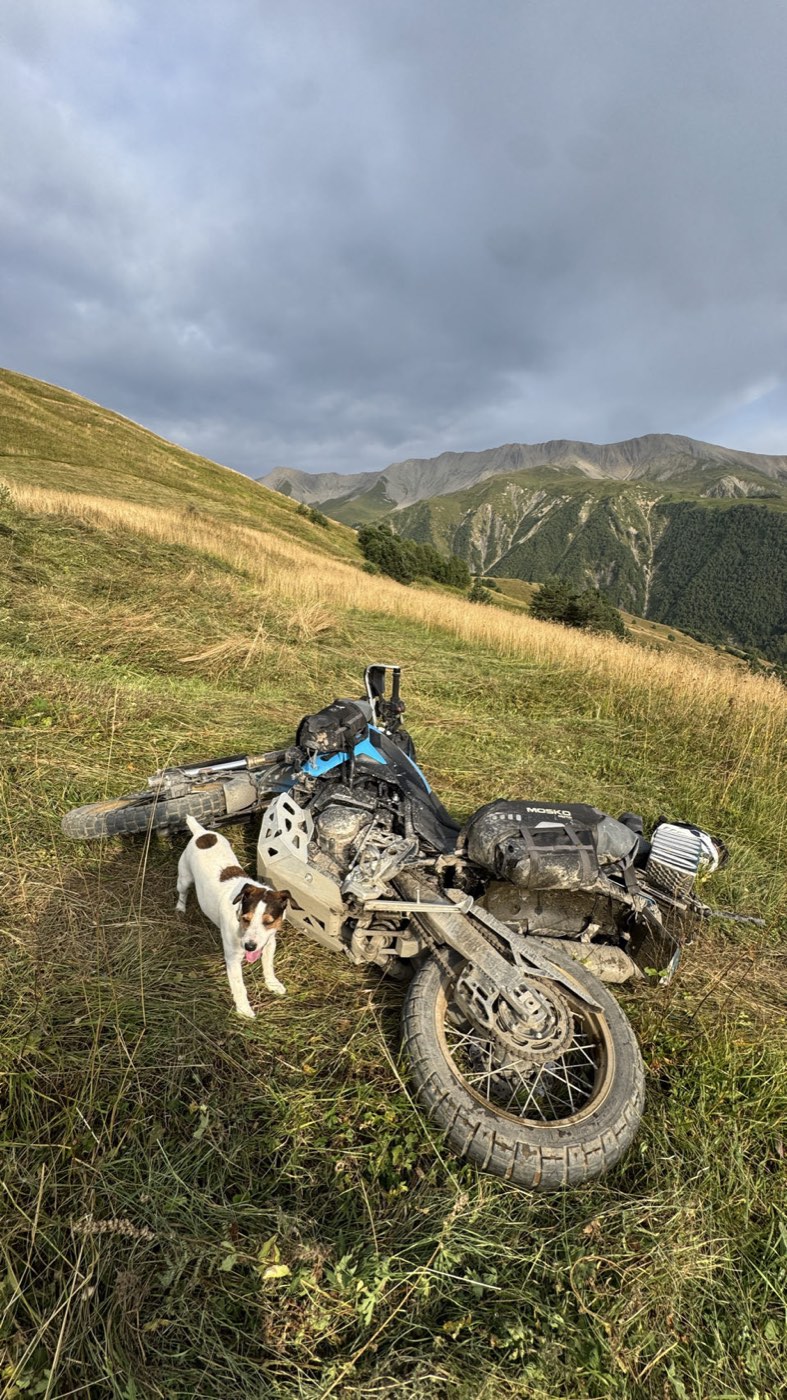 05
05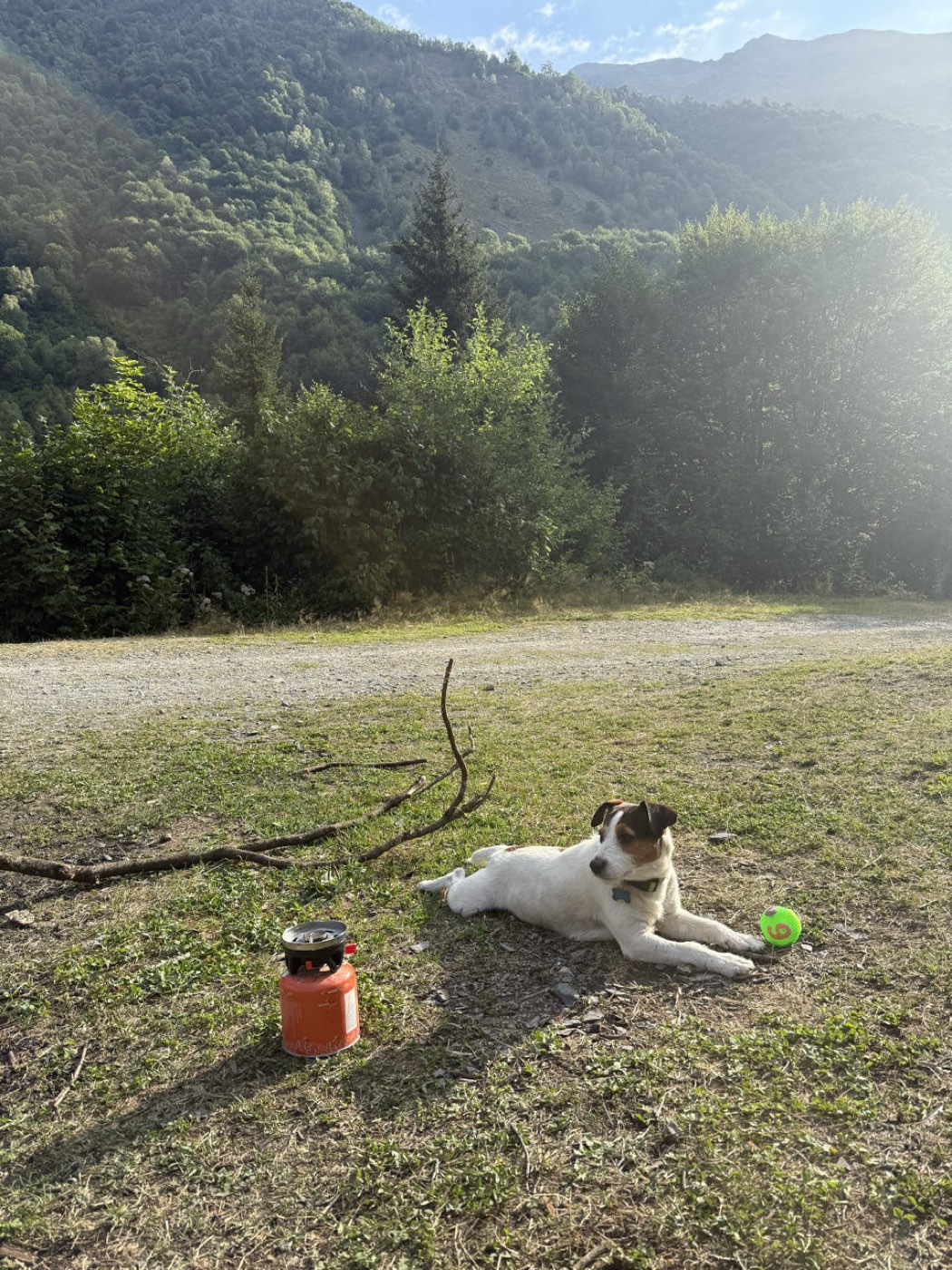 06
06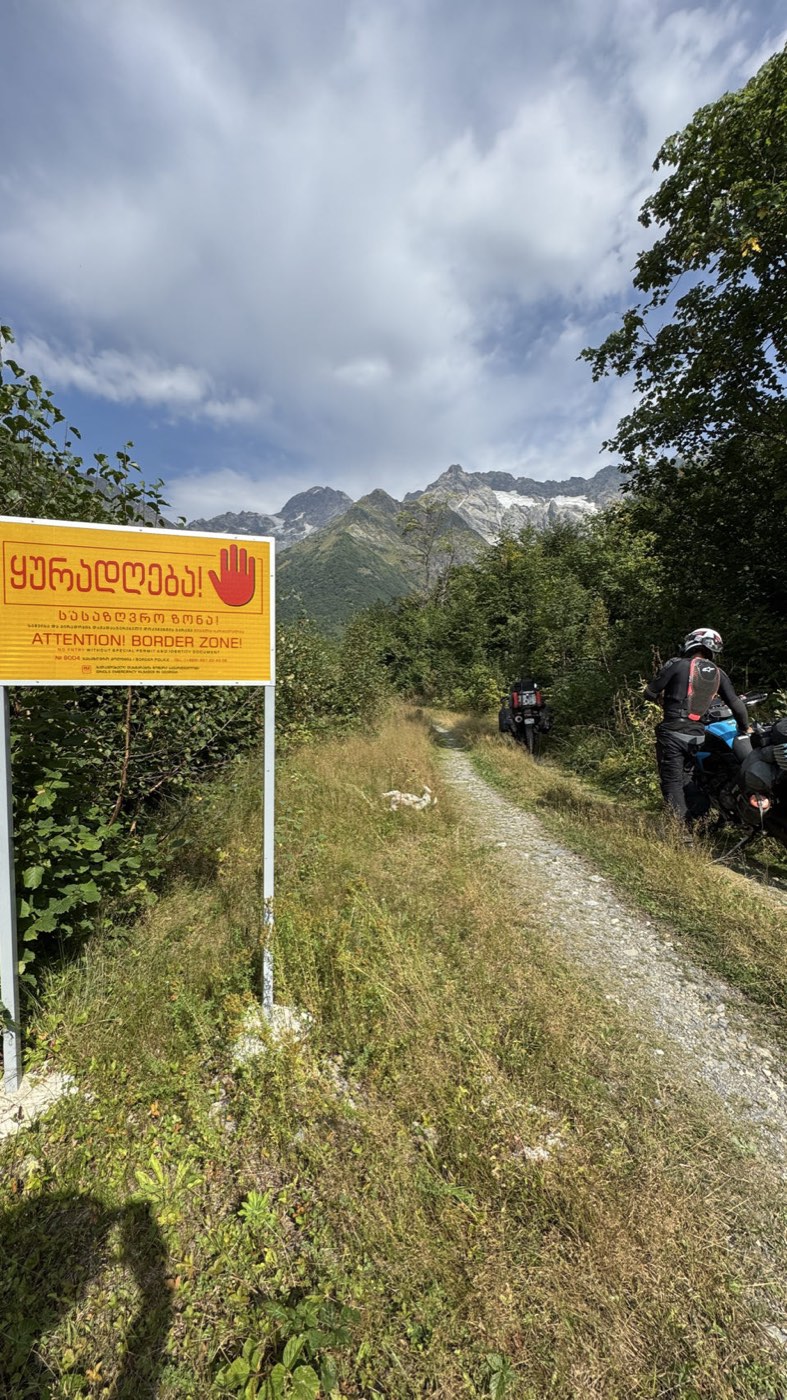 07
07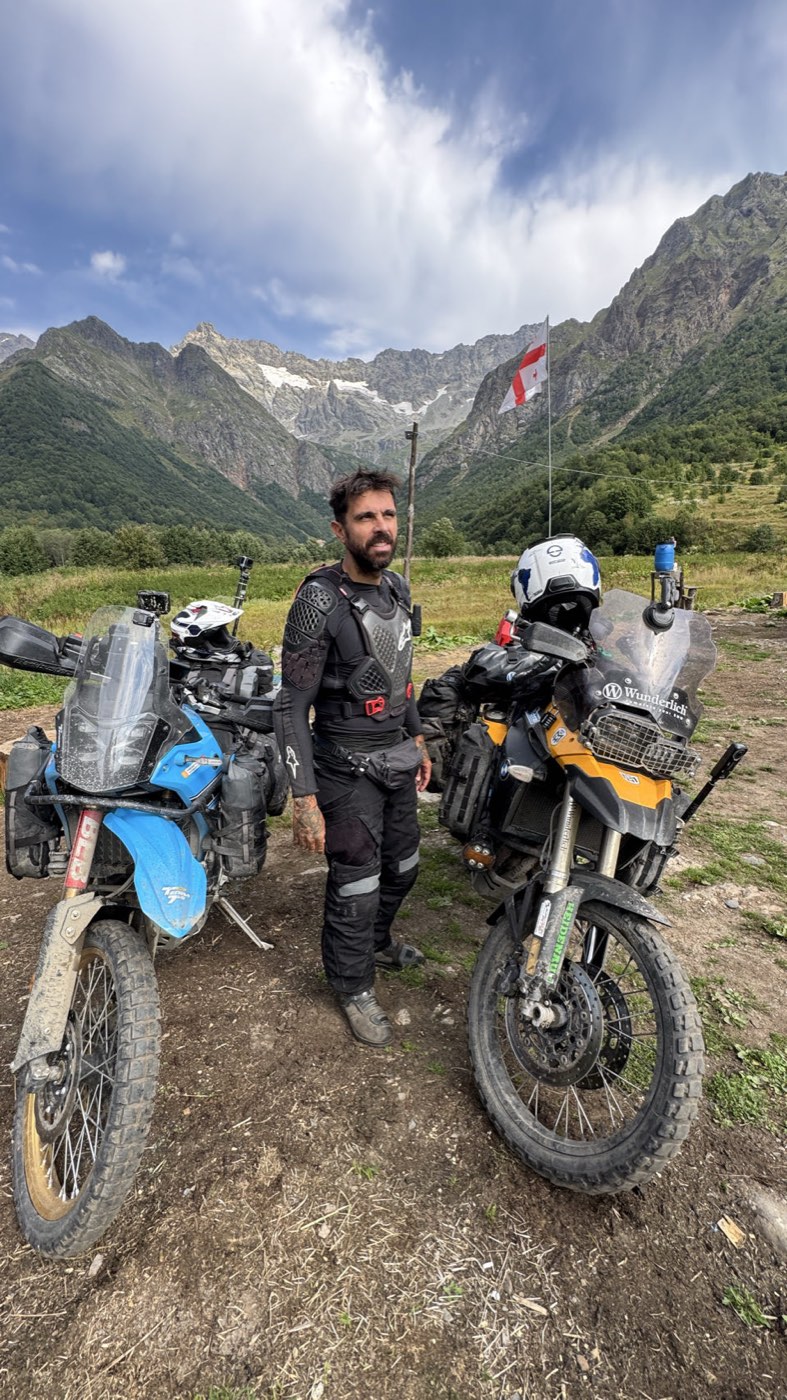 08
08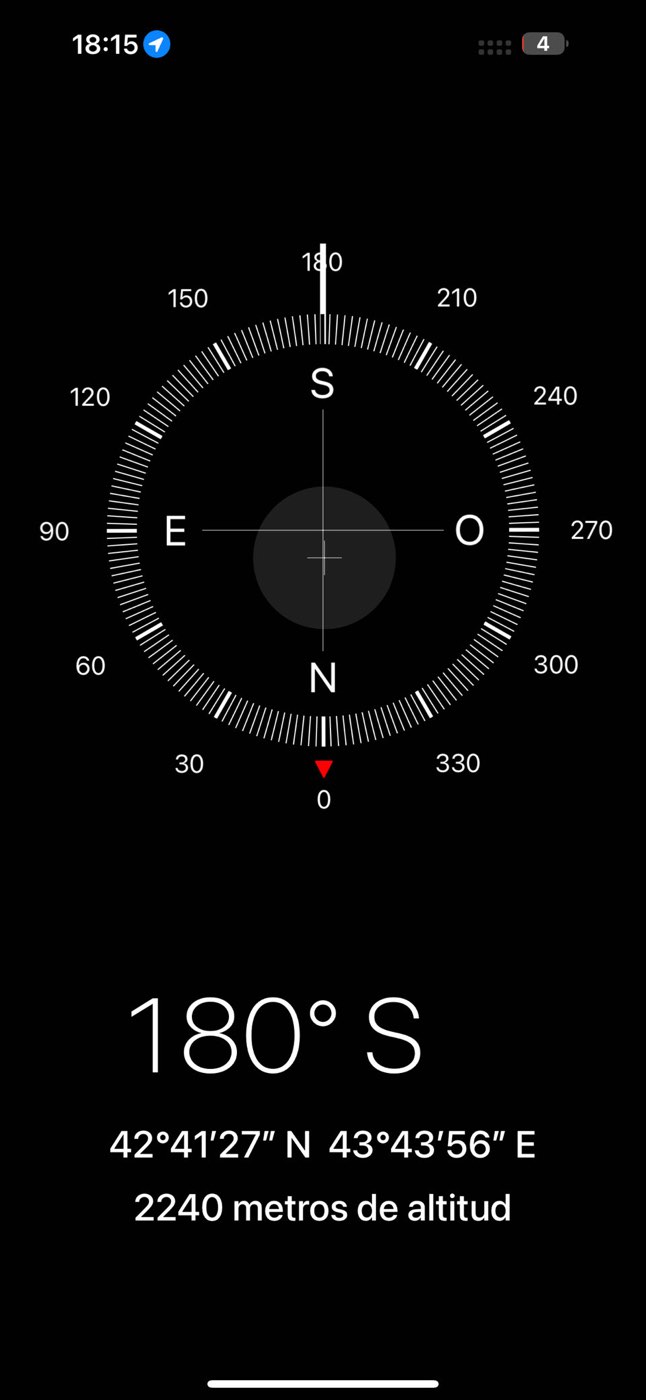 09
09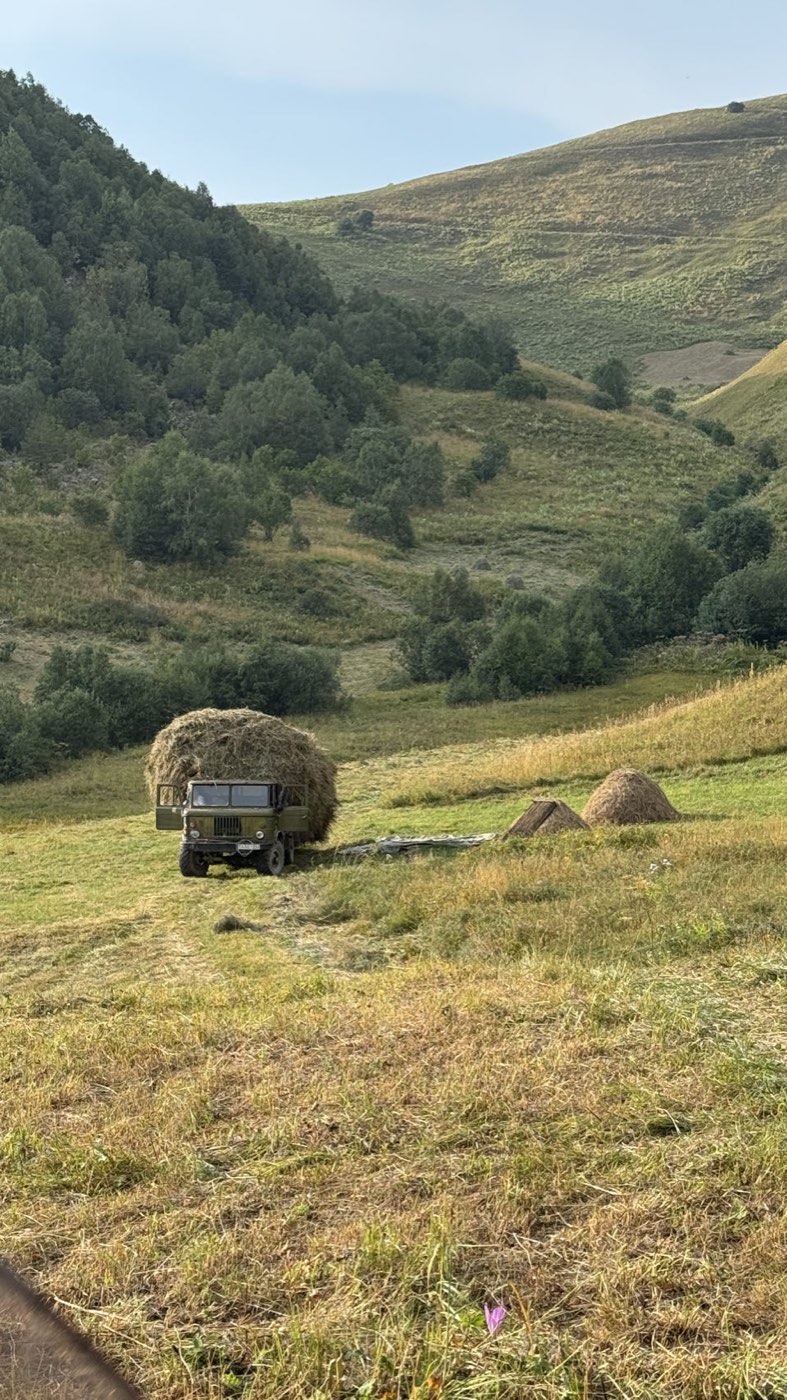 10
10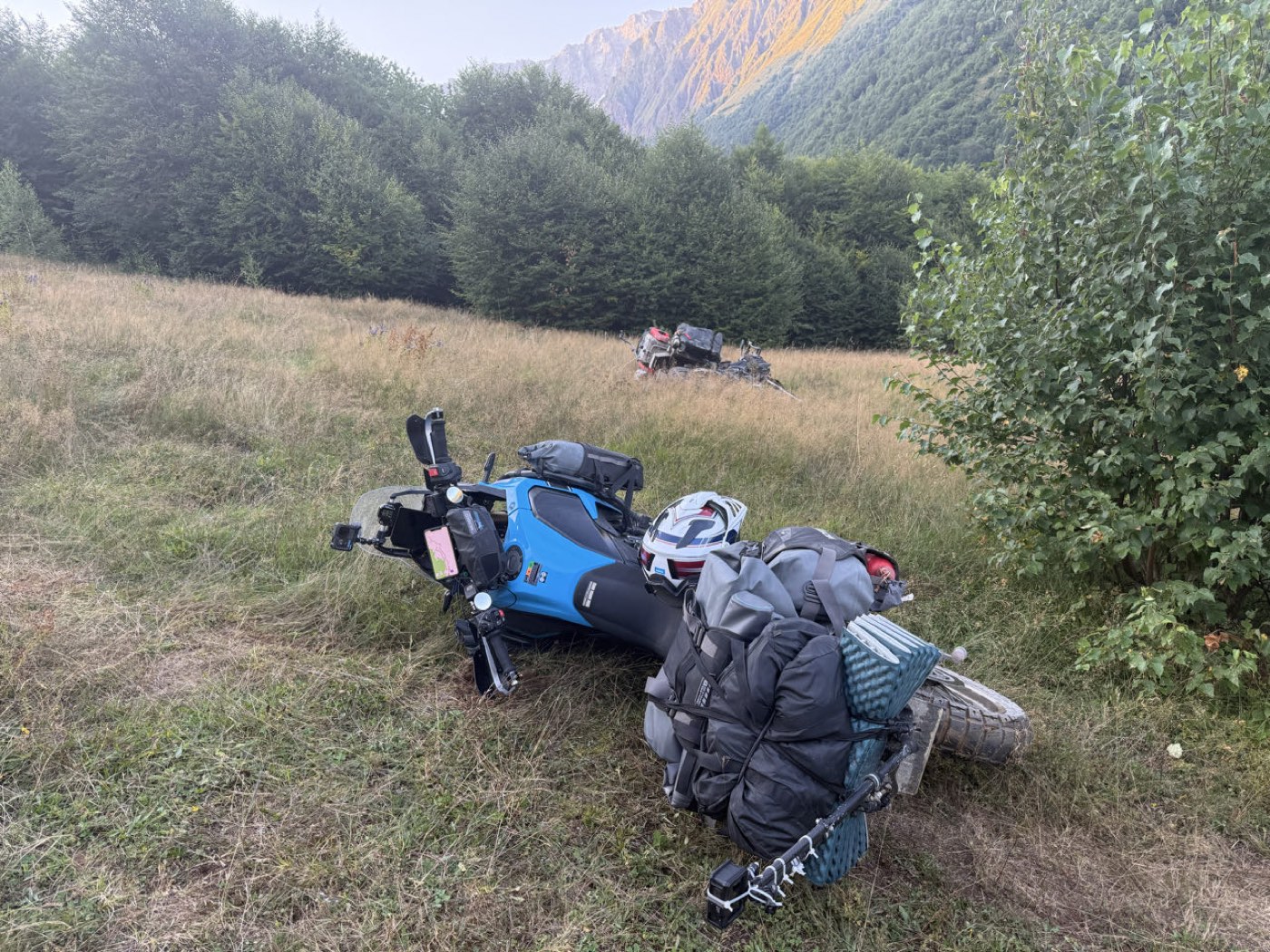 11
11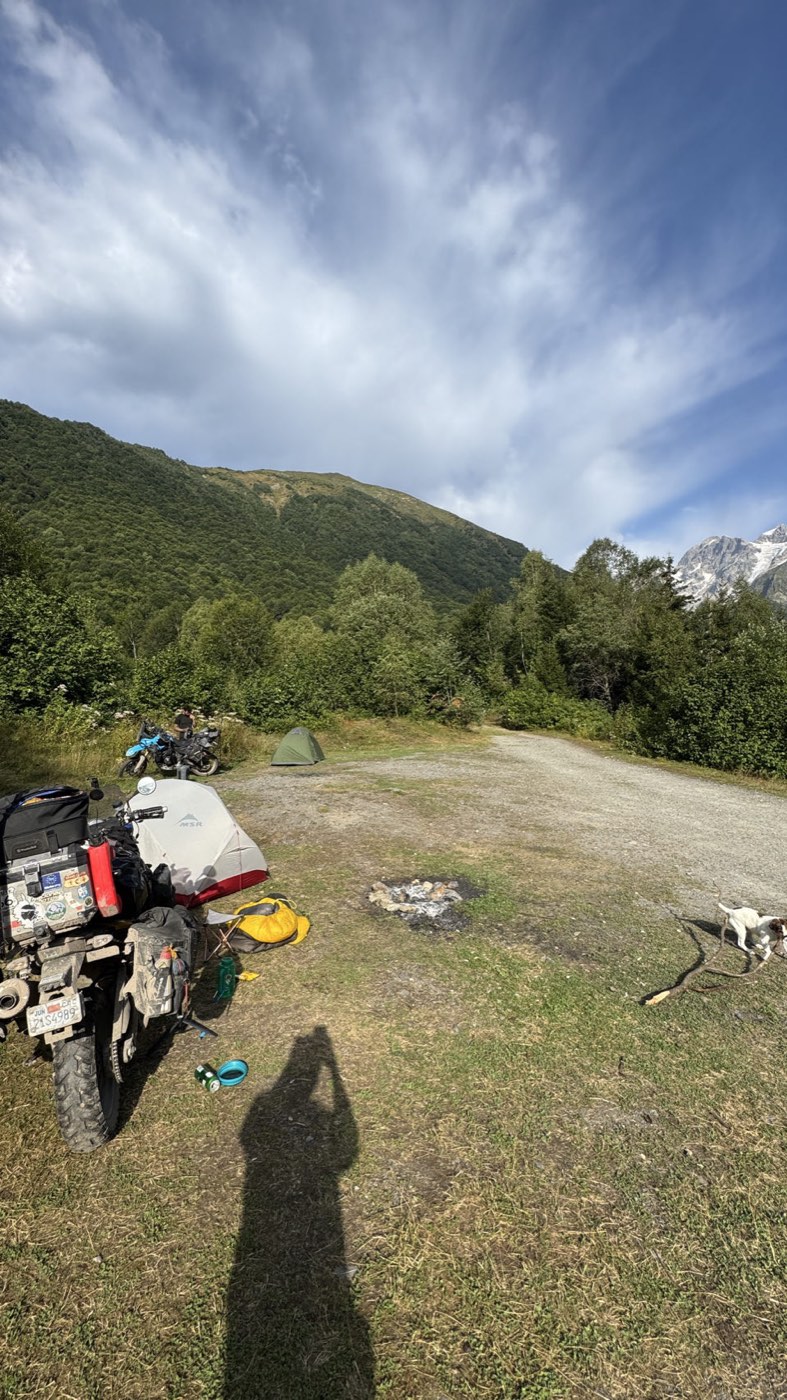 12
12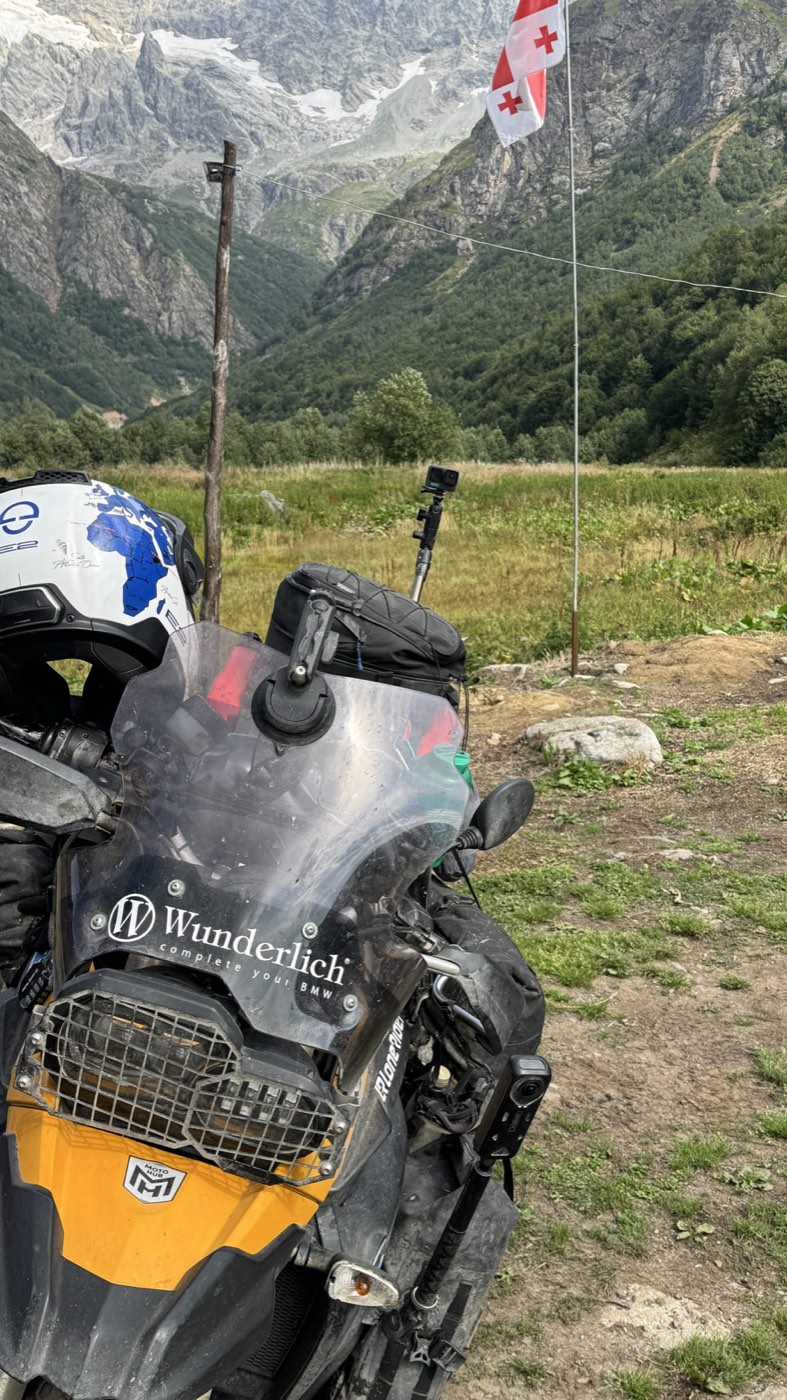 13
13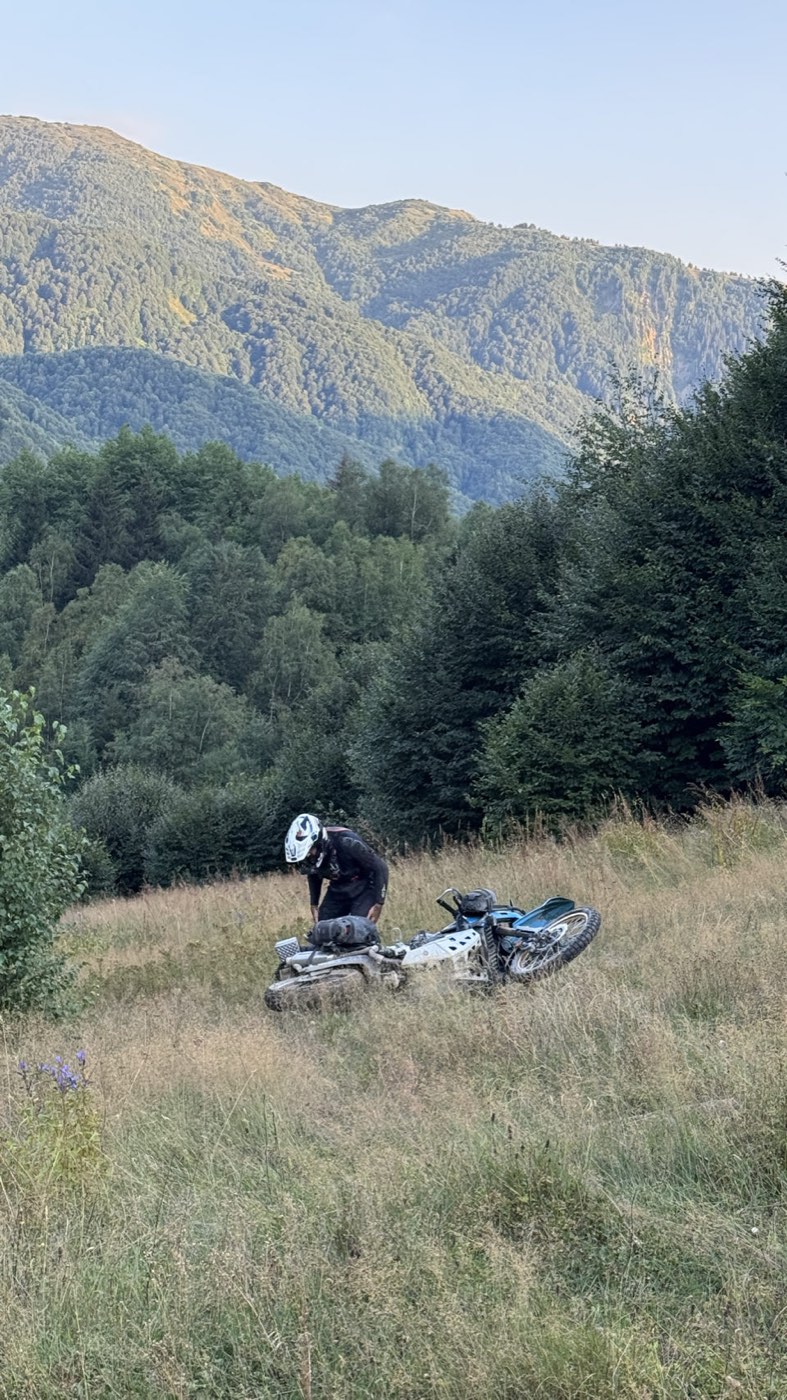 14
14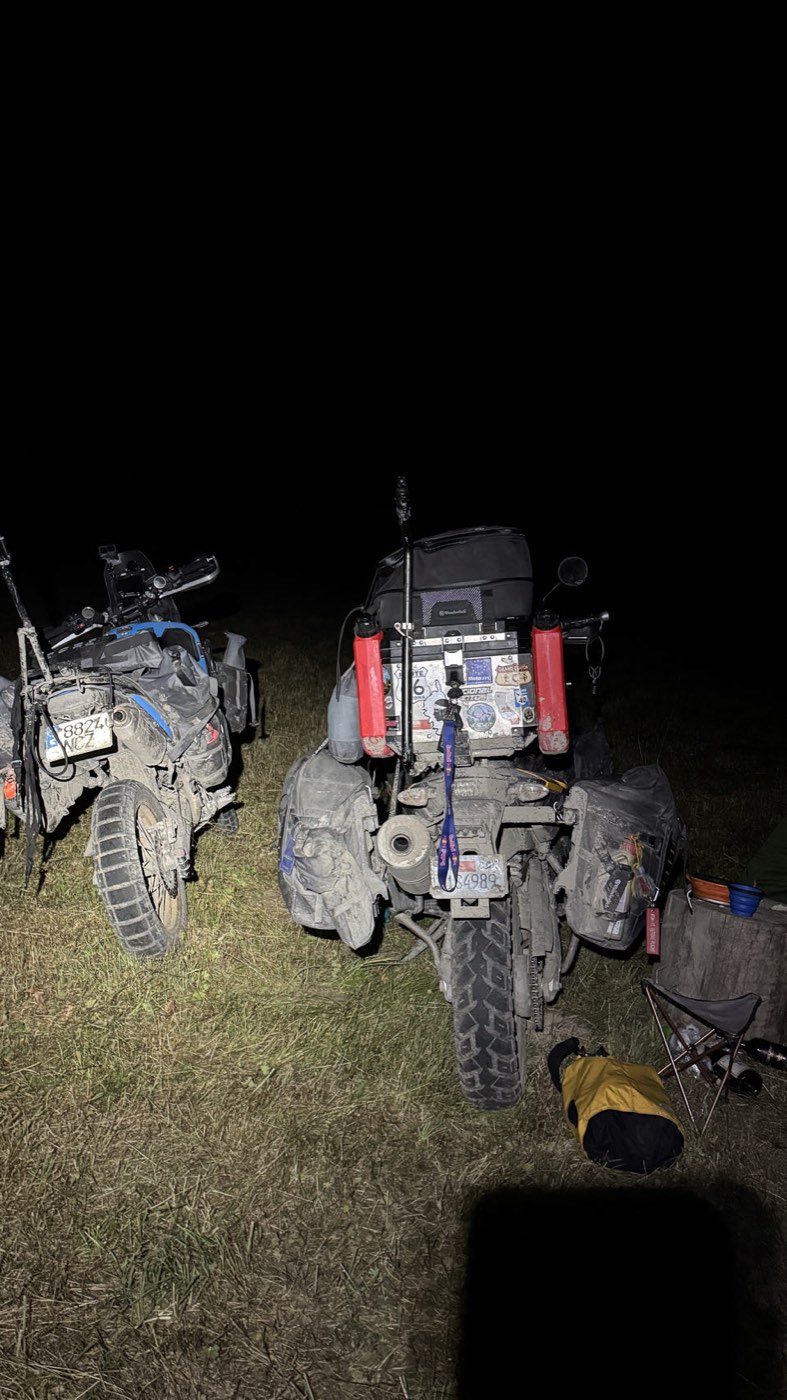 15
15 16
16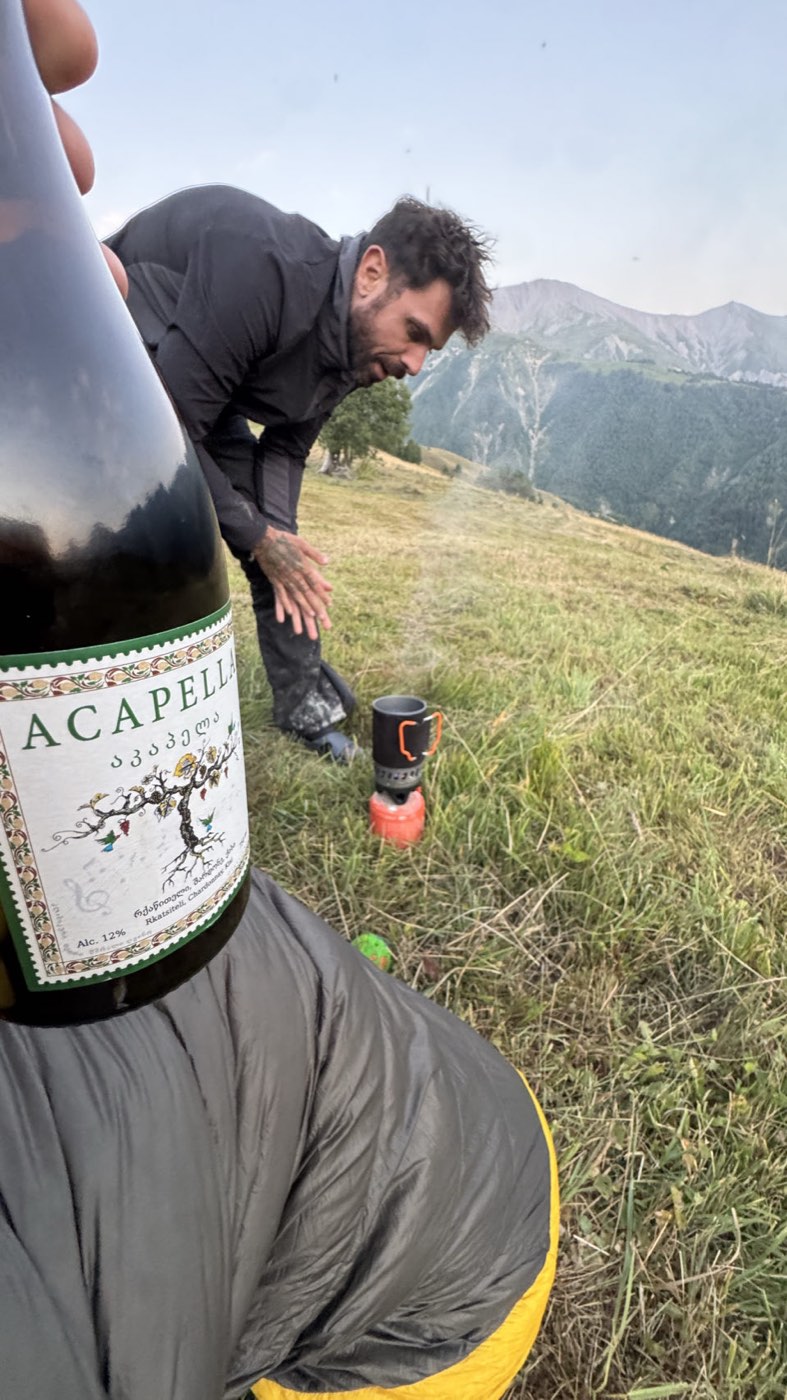 17
17 18
18 19
19